Tag: Joey Gallo

  • Yes Baseball Fans, Joey Gallo Has A League-Leading Defensive Runs Saved Total

    Yes Baseball Fans, Joey Gallo Has A League-Leading Defensive Runs Saved Total

    Photo: Mark Goldman/Icon Sportswire

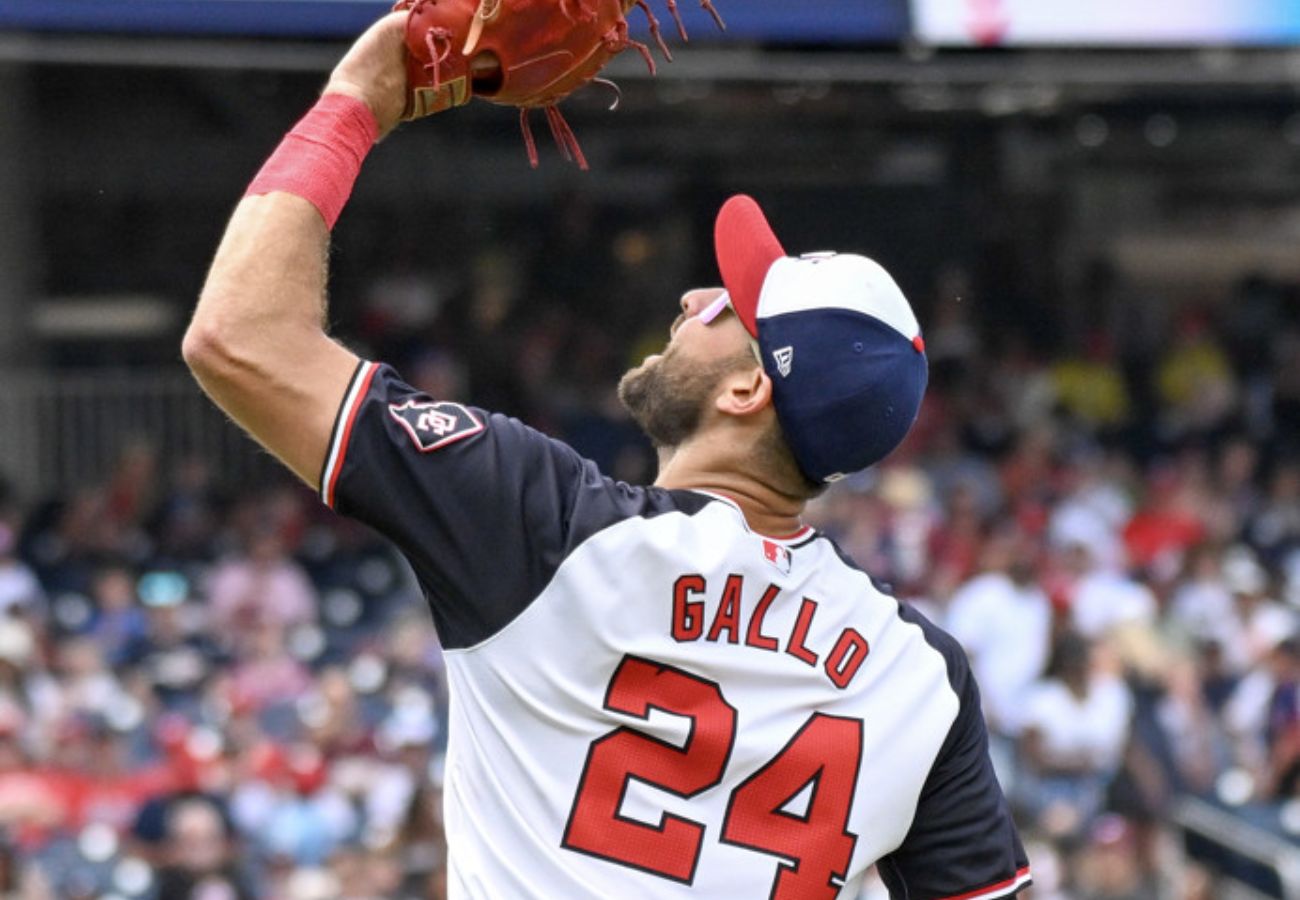
    We posted a Defensive Runs Saved leaderboard on both Twitter and Reddit yesterday and some people got very worked up when they saw that the first base leader was Joey Gallo of the Nationals.

    In honor of Gallo’s 6 Defensive Runs Saved at that position, I have 6 thoughts on that number (and yes, we know Gallo got hurt, but this is intended to be instructive in how DRS works).

    1- It’s a 38-game, just over 300-inning sample. That’s a small number of innings which means a few good plays or bad plays can skew the sample. Just because he has 6 Runs Saved in 300+ innings doesn’t mean you can project out to 1,200 innings and multiply those 6 Runs Saved by 4.

    2- Just because Gallo has 6 Runs Saved and Christian Walker have 6 Runs Saved doesn’t mean the two rate as equals defensively. Walker’s track record of excellence runs thousands of innings. Gallo’s doesn’t. Equal in Runs Saved doesn’t necessarily mean equal in overall skill. 

    3- That said, in these 316 innings, Gallo has done some things right. 


    Gallo has 6 plays made, including this one, on batted balls with an out probability of less than 50%. These have come mostly on hard-hit balls, with this one below registering 105 MPH. 


    A play like this one looks more impressive if you see it in person than on TV where the camera switch doesn’t come until after Gallo has made his initial move for the ball.

    4- Gallo may have missed some balls, but by our calculations entering Tuesday he’d failed to make a play on only one with an out probability of 27% or higher (and that was on a ball that his second baseman got to). In other words, the balls that have gotten through have cost him a very small amount of Runs Saved because most first basemen aren’t fielding those balls. 

    He’s 41-of-42 in making plays on balls with an out probability of at least 27%.

    5- Evaluating first base defense is difficult because we have the tools to focus on range more than we do catching throws. Throw handling is a small component of Defensive Runs Saved. 

    Our Video Scouts reward first basemen for “scoops” and throw handling on balls using a specific set of rules. 

    Gallo has been credited with 7 of these, tied for 7th-most, which is pretty good considering he ranks 25th in innings played. The leaderboard can be found here. The net value of these is approximately 1 Run Saved.


    6- Let’s not forget that there was a time when Gallo’s defense was highly valued, largely for his arm but he could make plays too. From 2020 to 2021, Gallo led all right fielders in Defensive Runs Saved.

    Now he’s trying to put up those kind of numbers at another spot. He may not be hitting, but he’s still contributing.

  • Reviewing Candidates For The New-Look Shift

    Reviewing Candidates For The New-Look Shift

    On March 3, in a spring training game between the Boston Red Sox and Minnesota Twins, the Red Sox deployed a new shift for the first time in a game. Naturally, the Red Sox did this against Joey Gallo, who pulls the ball more than almost anyone in MLB. Gallo ranked No. 1 in pull percentage in 2022 for left-handed hitters with a rate of 55% (among those with a minimum of 250 plate appearances). 

    Boston moved CF Adam Duvall to short right field in the “triangle”. Raimel Tapia, the left fielder, is in CF slightly shaded towards left and the right fielder Alex Verdugo is in straight away RF. Gallo had to be rolling his eyes as he walked into the batter’s box. All this talk in the offseason about short RF being a land full of hits for lefties was quickly shot down by this alignment.

    The key to the new shift rule is that it restricts only infielders from moving. Infielders must be on the infield dirt and on their side of second base. Second basemen can’t be playing in shallow right field and we won’t see 3 infielders in the triangle defense, or as we call it at SIS, “a Full Ted Williams shift.” And of course, there’s no more Manny Machado catching fly balls in the right field corner.

    The new rules don’t have any restrictions for outfielders though. Outfielders can go anywhere they want. Teams can still do 5-man infields if the situation calls for it. This also means that we can see new versions of the Full Ted Williams shift we’ve become so accustomed to.

    As we’ve learned with shifts in the past, hitters won’t change their approach just because the defense is giving them a wide open side of the field. This shift won’t be different, but the risk is certainly higher for defenses than shifts we’ve seen in the past. 

    Data is king when it comes to shifts and Gallo’s data fully supports using this shift against him. This made me wonder, who else could have this shift used against them? 

    I looked at all left-handed hitters and found nine players that have similar ball-in-play data in terms of ground ball rates and pull rates that I wanted to take a closer look at. All these players saw traditional shifts regularly the past few years. The new shift, leaving LF wide open, means a higher degree of risk in shifting these guys. 

    So I’m going to act as if I’m an advance scout, with recommendations on how I would shift these players. I’m also going to keep in mind that I can’t just judge off the hitter’s tendencies. I have to look at my pitcher too and understand there are certain nuances to my choices.

    I used a combination of FanGraphs ball in play data (which we’re the source for) and Sports Info Solutions visuals to make assessments. With each player, you’ll see their outfield fly ball and line drive spray chart, though I also consulted their groundball charts and their charts for offspeed pitches in making these writeups.

    The rankings in each section are percentile rankings of the 132 left-handed hitters with a minimum of 150 plate appearances

    Joey Gallo

    >>Percentile rankings in parentheses

    Pull % Oppo% Fly Ball % GB + LD Pull% Fly Ball Oppo%
    55% (99th) 18% (3rd) 53% (99th) 73% (99th) 24% (1st)

    Gallo meets all the criteria for a player for whom we’d want to use this shift. He rarely hits opposite-field fly balls. He has the highest grounder and liner pull percentage and 85% of his grounders and short liners are to the right side of 2B.

    Here’s his spray chart on flies and liners to the outfield.

    Recommendation: Shift at will. 

    Against RHP, he will hit more fly balls but not many to LF. If he hits a grounder or liner it’s going to be pulled. Also strikes out 38% and walks 14% of the time. 

    Against LHP, Gallo hits a ton of ground balls to the pull side and struggles to put the ball in play, strikes out 48% and walks 12%.

    If he beats us to the opposite field once there’s a good chance it won’t happen twice in a series.

    Daulton Varsho

    >>Percentile rankings in parentheses

    Pull% Oppo% Fly Ball% GB + LD Pull% Fly Ball Oppo%
    55% (99th) 16% (1st) 44% (75th) 63% (92nd) 23% (1st)

    Recommendation: Use shift vs. RHP. Can use vs. LHP but that comes with a high risk factor. Shift more with high-percentage ground ball pitchers and against RHPs with low fastball usage. 

    With RHP on the mound Varsho hits more fly balls but still doesn’t use the opposite field. Hits into the “triangle” position of short RF more than anywhere else on flies and line drives. RHP with low-fastball usage is the best instance to shift. 

    Against LHP he hits more grounders and pulls them. Won’t use the opposite field on fly balls often but he will on line drives. 

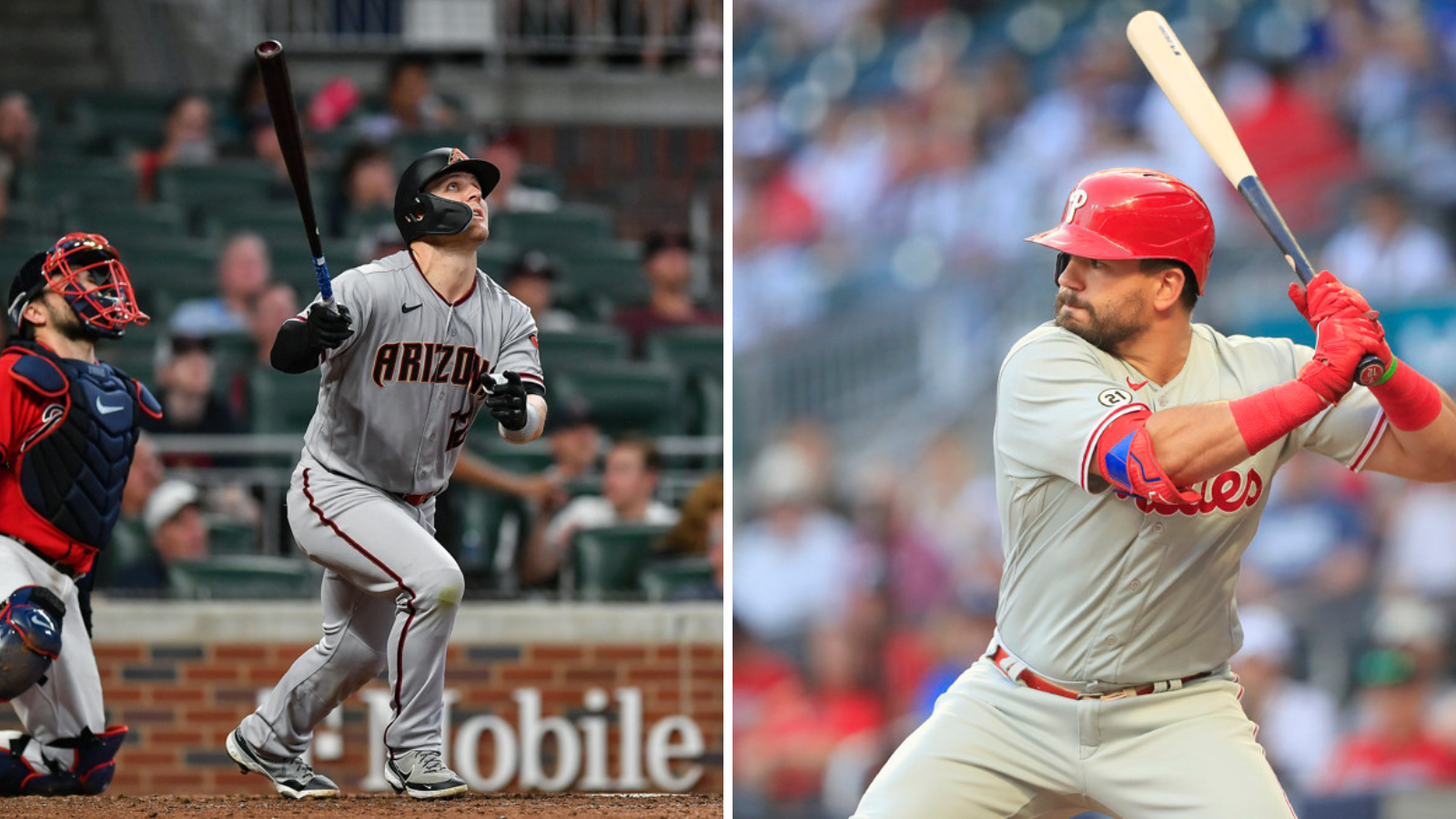
    Kyle Schwarber

    >>Percentile rankings in parentheses

    Pull% Oppo% Fly Ball% GB+LD Pull% Fly Ball Oppo%
    44% (72nd) 19% (8th) 51% (97th) 60% (85th) 27% (2nd)

    Recommendation: Shift with LHP

    Against RHP he will use every part of the field. Takes advantage of pitchers not wanting to throw inside to him. Fly ball percentage and his ability to use all parts of the field make him a no-shift option. 

    When facing LHP, Schwarber doesn’t hit fly balls to the opposite field. He can hit a line drive that way but not frequently enough to worry about. A LHP with low fastball usage is an exceptional time to shift. 

    Jose Ramirez (specifically as an LHB)

    >>Percentile rankings in parentheses

    Pull % Oppo% Fly Ball% GB + LD Pull% Fly Ball Oppo%
    49% (93rd) 20% (13th) 50% (92nd) 59% (83rd) 27% (2nd)

    Recommendation: Do not shift. 


    Ramirez does a great job of using all fields, has barrel control and takes what the pitcher is giving him. He does have the tendency to pull grounders and line drives (did so 83% of the time as a left-handed batter) but his fly ball numbers make shifting dangerous. 

    Mike Yastrzemski

    >>Percentile rankings in parentheses

    Pull% Oppo% Fly Ball% GB + LD Pull% Fly Ball Oppo%
    45% (76th) 23% (32nd) 46% (82nd) 60% (85th) 38% (46th)

    Recommendation: Despite how often he pulls his grounders and short liners (nearly 90% of time), do not shift. Doesn’t hit enough grounders and fly ball trends contradict the shift.

    Against RHP, he has similar numbers, except for the higher line drive% and lower grounder%. Still sprays the ball around the whole field and lifts the ball more times than not.

    Against LHP, Yastrzemski hits a fly ball half the time but uses every part of the field evenly. Line drives he hits mostly up the middle. 

    Trent Grisham

    >>Percentile rankings in parentheses

    Pull% Oppo% Fly Ball% GB + LD Pull% Fly Ball Oppo%
    47% (84th) 25% (53rd) 43% (72nd) 62% (89th) 43% (74th)

    Recommendation: Do not shift. He has too much speed and he sprays his fly balls well.

    Against RHP he pulls more grounders but hits fewer of them. Great ability to use all fields when lifting the ball.

    Against LHP Grisham hits a lot of grounders but also hits a lot of fly balls. He sprays fly balls all around the field which makes him difficult to shift.

    I’m going to summarize three other hitters in brief. If you want to see more details about them, you can find them on my Twitter.

    Anthony Rizzo

    Rizzo is risky to shift but there are a couple of caveats. When playing in Yankee Stadium we can use it with a RHP because of the short porch in RF. Our CF and RF can shade towards the opposite field. Anything hit well to RF is going to be a double or a homerun either way. Also, if you have a left-handed pitcher who is almost exclusively an offspeed pitcher, it could work based on Rizzo’s tendencies.

    Cody Bellinger 

    Though Bellinger pulls a high rate of groundballs and line drives, he hits too many fly balls to center field and the opposite field for a shift to be worth it.

    Max Muncy

    Though Muncy pulls nearly 90% of his grounders and short liners is another for whom it’s mostly high-risk to use this shift, except in highly-specific situations. The one time to use it would be with a lefty pitcher with a high ground ball rate (maybe a Tim Mayza). He sprays his fly balls too much for it to be worthwhile otherwise.

    For more detail on these hitters and “The Joey Gallo Shift,” follow Dom on Twitter at @domricotta15

  • Stat of the Week: Who could be 2022’s Defensive Runs Saved Leader

    Stat of the Week: Who could be 2022’s Defensive Runs Saved Leader

    By MARK SIMON

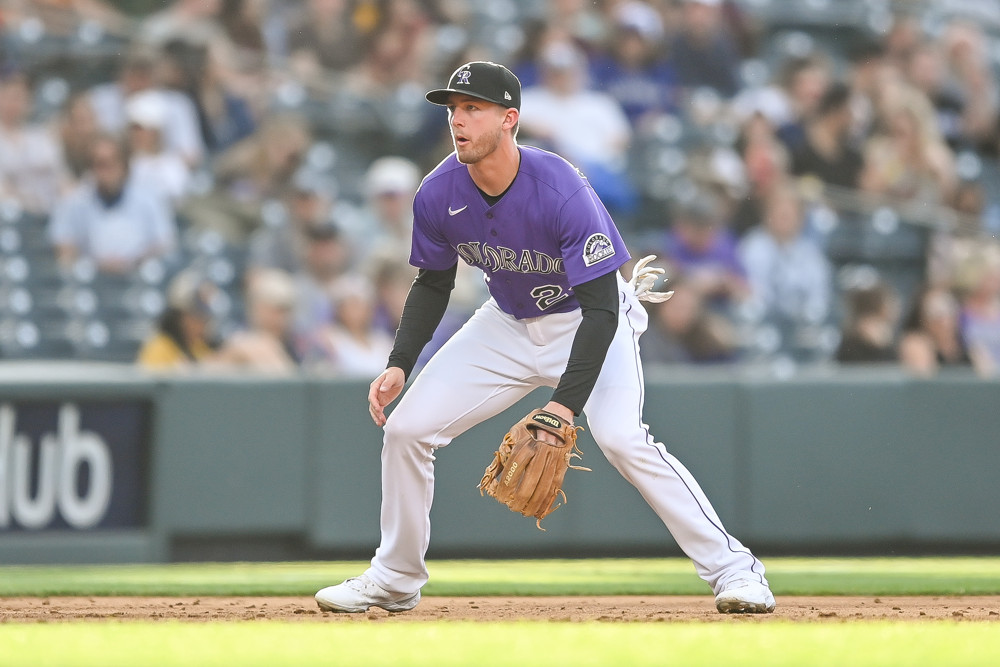
    Rockies infielder Ryan McMahon led the majors with 22 Defensive Runs Saved in 2021. He saved 13 runs at third base and 9 runs at second base, excelling in both spots.

    And though McMahon didn’t win either a Gold Glove or Fielding Bible Award for his efforts, there was a hearty reward waiting for him this season in a 6-year, $70 million contract from the Rockies.

    Now McMahon will be trying to do something that’s never been done since we began tracking Runs Saved in 2003 – lead the majors in that stat in consecutive seasons.

    Normally we focus on positional comparisons for Defensive Runs Saved, but the overall leader makes for some fun defense-related bragging rights.

    McMahon has the skills to repeat. He’s solid at fielding balls to both sides. He also boasts a strong list of highlight-reel plays. He ranked 2nd in Good Fielding Plays per 100 Innings at both third base and second base last season. For those unfamiliar, we track approximately 30 types of Good Fielding Plays, with examples being “Ground Ball (or Line Drive) Out” which references Web Gem-caliber plays, and “Keeping the Ball in the Infield.”

    Two players on the Twins may have something to say about McMahon’s efforts to stand atop the Runs Saved leaderboard. Shortstop Carlos Correa led the position with 20 Runs Saved last season, which ranked 3rd overall in MLB.

    We wrote about Correa’s defensive excellence earlier this winter, noting how he excels at making plays in which he leaves his feet. The key for Correa and especially for his teammate, center fielder Byron Buxton, is health. Correa missed considerable time due to injuries in each season from 2017 to 2019.

    Buxton has saved 21 Runs the last two seasons but has played in only 100 out of a possible 222 games in that time. His single-season career high is 22 Runs Saved, which he did in 2017, the only time in a seven-year career that he played in at least 100 games.

    Playing time would also be a question in considering catcher Jacob Stallings as a possible overall leader. Stallings finished with 21 Runs Saved in 2021, one run shy of the lead, and was among the top pitch blockers and pitch framers in the sport. He’ll have a new team and new pitching staff to work with as he was traded in the offseason from the Pirates to the Marlins.

    There are a good number of other players who are candidates to be the MLB Runs Saved leader, including Royals center fielder Michael A. Taylor, Cardinals center fielder Harrison Bader, Blue Jays third baseman Matt Chapman, and Pirates third baseman Ke’Bryan Hayes.

    Past leaders to consider include Yankees outfielder Joey Gallo and Cardinals third baseman Nolan Arenado, who shared the Runs Saved lead in 2020, new Tigers shortstop Javier Báez, whose 32 Runs Saved in 2019 are the most by anyone in a season within the last five seasons, and Rays center fielder Kevin Kiermaier, whose 38 in 2015 led MLB.

    And speaking of overall leads, Cubs shortstop Andrelton Simmons enters the season with 197 career Runs Saved. That’s three shy of Adrián Beltré, whose 200 are the most total Runs Saved for any player since SIS began tracking the stat in 2003. Simmons, who led MLB with a record 41 Runs Saved in 2017, had 15 Runs Saved at shortstop last season, so he may still be a contender for seasonal honors too.

    MLB Defensive Runs Saved Leaders – Last 5 Seasons

    Season Player
    2017 Andrelton Simmons
    2018 Nick Ahmed
    2019 Javier Báez
    2020 Nolan Arenado & Joey Gallo
    2021 Ryan McMahon
  • Which hitters reach favorable counts?

    Which hitters reach favorable counts?

    By Andrew Kyne

    On the most recent episode of the SIS Baseball Podcast, our guest Mike Ferrin talked about analyzing ball-strike count management among hitters.

    Specifically, which hitters get themselves in favorable counts, like 2-0, 3-0, and 3-1? And which hitters then do damage in those plate appearances? Let’s try to find out.

    For 2019, here are the ten players who have reached 2-0/3-0 or 3-1 in the highest percentage of their plate appearances (minimum 200 PA).

    BatterOverall PAPA w/ HCPct.wOBA
    Justin Smoak2617829.9%.432
    Cody Bellinger3379929.4%.508
    Carlos Santana3419828.7%.499
    Mike Trout34910028.7%.685
    Joey Gallo2276528.6%.544
    Mookie Betts37710728.4%.558
    Daniel Vogelbach3048628.3%.500
    Rhys Hoskins3509928.3%.581
    Tyler White2065627.2%.399
    Kendrys Morales2015426.9%.398

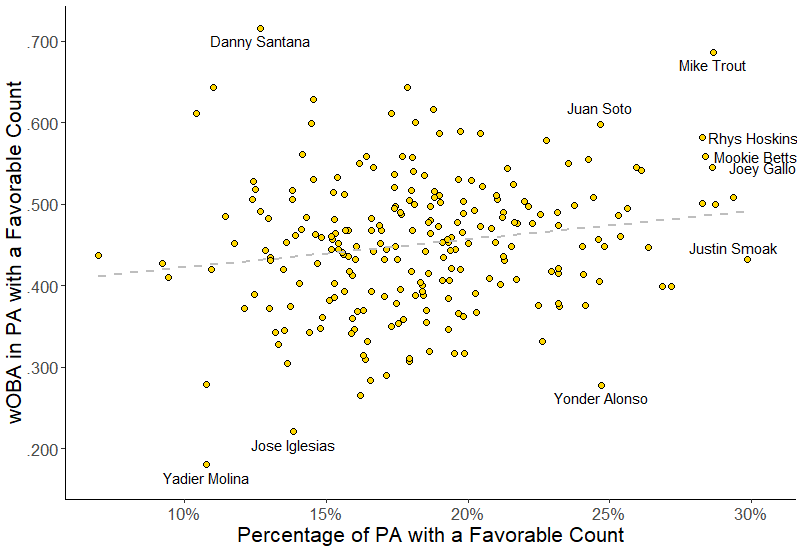
    The wOBA column represents their weighted on-base average in those plate appearances in which they got to a favorable count (but didn’t necessarily end the PA in one of them). So, in the 100 plate appearances in which Mike Trout got to a 2-0/3-0 or 3-1 count, he has an absurd .685 wOBA.

    Being a power hitter with exceptional plate discipline is a good way to make this list. But not everyone has ended up doing damage in those plate appearances, as you can see with Tyler White (who has a 91 wRC+ overall on the year) and Kendrys Morales (who has a 63 wRC+ overall and was just designated for assignment by the Yankees). Justin Smoak tops the list in terms of getting into favorable counts, but his wOBA is lagging a bit behind the others as well.

    The other seven players have been among the best at not only getting into hitter-favorable counts, but also finishing with success, all recording a wOBA of .499 or better in those PA. Trout, Rhys Hoskins, Mookie Betts, and Joey Gallo have been especially good.

    Here’s a look at the relationship in 2019 between getting into favorable counts and then having success:

    Getting into counts like 2-0 and 3-1 is certainly good for hitters, but is it a repeatable skill? Between 2017 and 2018, there was a strong year-to-year correlation (r = 0.76) for hitters with 400+ PA in each season.

    Between 2018 and 2019, Gallo has had one of the most significant increases in generating plate appearances with favorable counts, going from 20% to 29%. Pitchers are surely fearful of his power, and it helps that he’s cut his chase rate from 32% to 23%.

    On the other side, Cleveland’s Jose Ramirez has had one of the sharpest declines, going from 29% to 22%. After turning in consecutive seasons with a 146 wRC+, Ramirez is hitting just .216/.310/.329 in 2019.

    Finally, what about the ability to repeatedly do damage in plate appearances with a favorable count? The correlation isn’t as strong here (r = 0.33) but still positive.

    It’s good for hitters to be in favorable counts, and there’s evidence that being able to get into those situations may be consistent from year to year. That’s perhaps not a surprising conclusion, given batter quality and plate discipline, but it’s ultimately another important piece in hitter evaluation.