Tag: New York Yankees

  • Why Isiah Kiner-Falefa Rates Well in Defensive Runs Saved

    Why Isiah Kiner-Falefa Rates Well in Defensive Runs Saved

    I’m probably going to get roasted by Yankees fans for writing this, but that’s fine.

    I’m here to explain why, at least by Defensive Runs Saved standards, Isiah Kiner-Falefa is a good defensive shortstop.

    Realize that I’m working at a disadvantage here. The court of Yankee fan public opinion is vocally against me. And the other oft-consulted stat for defensive metrics (OAA/Runs Prevented) rates IKF below-average. That’s fine. They might be right. We might be right too (we were heartened that a newly-developed metric views IKF positively). So let’s present the case for why Defensive Runs Saved rates Kiner-Falefa as it does.

    Establishing where IKF stands

    Kiner-Falefa has totaled 10 Runs Saved at shortstop in each of the last two seasons. He’s done that while playing the fourth-most innings at the position in that time.

    So in the aggregate, he’s tied for the third-most Runs Saved there the last two seasons. Being available as much as he has been is meaningful.

    Most Defensive Runs Saved – Shortstops, Last 2 Seasons

    Player Runs Saved
    Carlos Correa 23
    Taylor Walls 21
    Isiah Kiner-Falefa 20
    Miguel Rojas 20

    But if we look at Runs Saved per 1,000 Innings for the 35 shortstops that have played the most the last two seasons, Kiner-Falefa slips to 10th. So he’s in the top-third of those shortstops results wise.

    What we’re saying here is that availability is part of the Kiner-Falefa story. His skill level becomes more important because it’s maintained over time. He’s a top-third defensive shortstop by skill, a better one knowing that he plays as often as he does.

    What may have left a bad feeling about Kiner-Falefa was how he finished the season. After totaling 7 Runs Saved in August, he dipped to -1 in September and October and was benched in the postseason. He’s also not anywhere near the hitter that any of the prominent free agent shortstops are, which probably – at least subtly – impacts how his defense is viewed.

    There’s been good defense if you’ve watched closely

    To trash Kiner-Falefa for his defense last season is to have a selective memory. You’re omitting some of the good things he did.

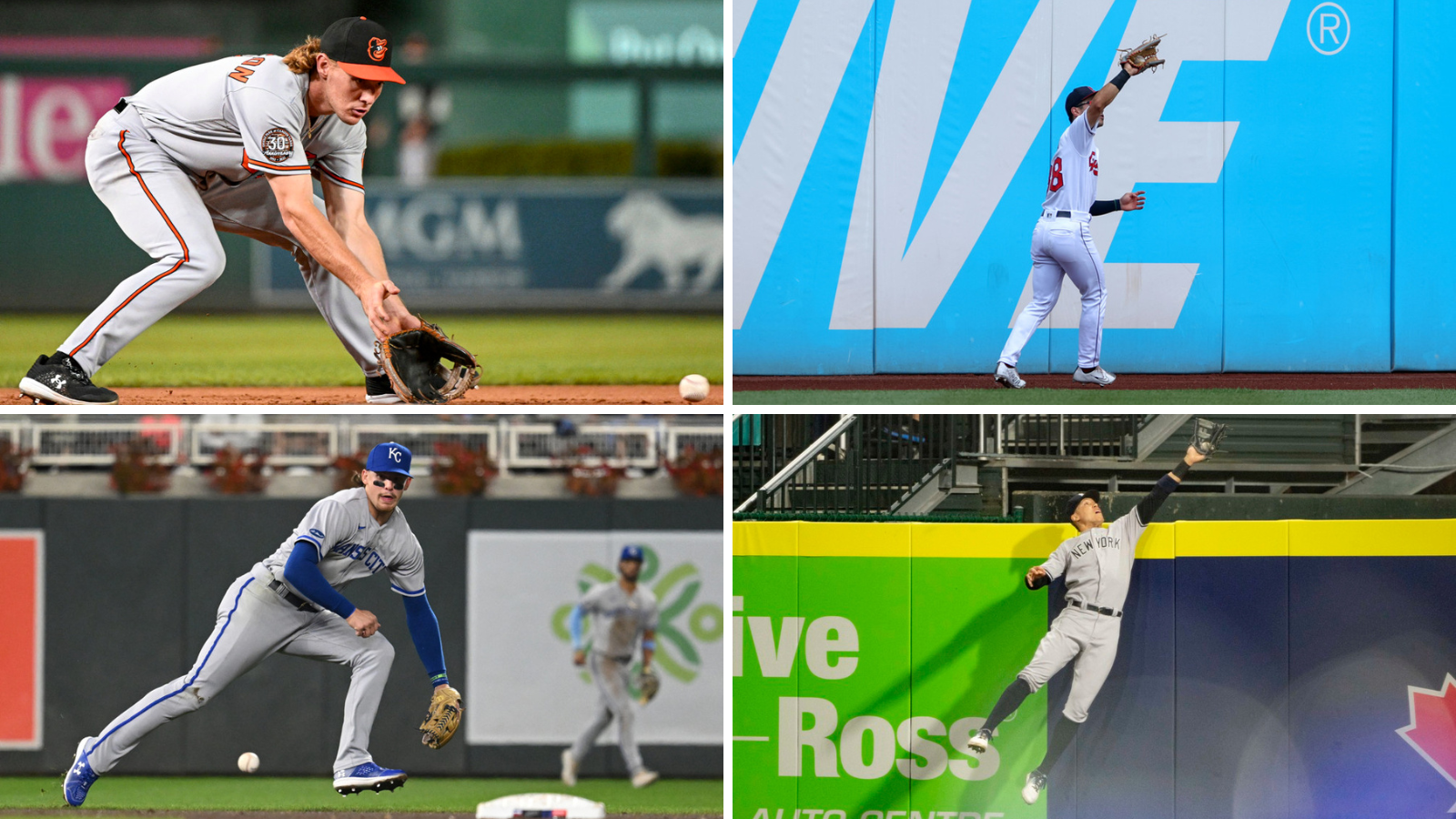
    Let’s start with this play, one worth 0.7 Runs Saved.

    And this one, which was worth another 0.6 Runs Saved.

    And these two plays (against Mike Trout and Shohei Ohtani!) worth 0.6 and 0.5 Runs Saved, respectively.


    And this one, which was worth a half-run.

    and these three plays, which ranked at the bottom of his 20 most valuable ones, also worth about a half-run.


    I’d also point out that TV doesn’t always tell the whole story when it comes to shortstop defense.

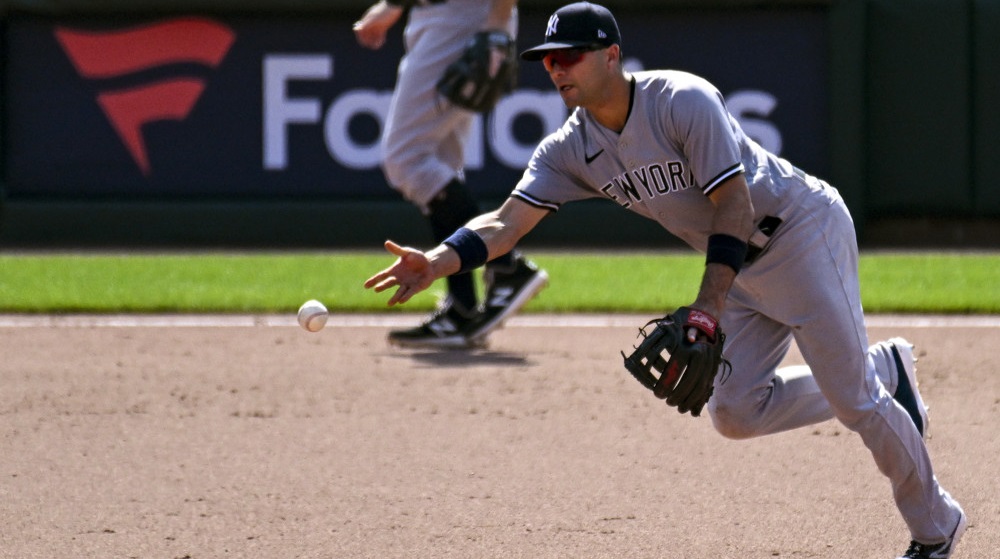
    This play by Kiner-Falefa was worth 0.7 Runs Saved.

    By the time the YES camera switches to him, he’d moved a considerable distance from his initial position. This play was a lot more impressive if you were watching it in the stands rather than watching on TV.

    In all, Kiner-Falefa made 20 plays worth a half-run or more on his defensive ledger, and was demerited a half-run or more on 30.

    For what it’s worth, there are shortstops with better ratios than 20 vs 30, but it’s worth noting that the two Gold Glovers were not among them – Dansby Swanson was 12 vs 29. Jeremy Peña was 10 vs 31.

    By our plus-minus system (a predecessor of and similar to Outs Above Average), Kiner-Falefa made 11 more plays than the average shortstop in both 2021 and 2022.

    In 2021, he excelled on balls hit to his left. In 2022, he did likewise on balls hit to his right (punch his name in here and you’ll see).

    The Yankees positioned him a little differently than the Rangers did, which might account for the change*.

    * Specifically, they did two things – they played him closer to second base than the Rangers did against right-handed batters who weren’t shifted, and they played him across second base moreso than the Rangers did when left-handed batters were shifted. Head over to Baseball Savant to run through all this.

    Regardless, the bottom line was that he and his teammates got results. The Yankees infield converted 77.2% of batted balls into outs, the second-highest rate in MLB (Cardinals, 77.3%). Our data shows that Kiner-Falefa was an important part of that, even with all his misplays.

    I’ll close with a chart – one that compares how the Yankees fared on ground balls hit past the mound in the area ranging from the second base bag to approximately halfway to third base. Let it be a reminder to Yankees fans how much better Kiner-Falefa fared than their shortstops in 2021.

    Versus Ground Balls Hit From 2B Bag to ~Halfway to 3B

    Grounder Out Rate Plays Made/Opportunities
    2022 Yankees w/ IKF* 69% 151/218
    2022 MLB Average 66%
    2021 Yankees 61% 176/288

    IKF’s Flaws

    I’m not hiding from this point: Kiner-Falefa makes a fair number of mistakes. In addition to tracking errors, SIS tallies Defensive Misplays, an advanced scorekeeping notation to denote plays with a negative consequence that weren’t errors.

    Kiner-Falefa has 83 Defensive Misplays and Errors the last two seasons, second-most in MLB (again with a reminder that he ranked fourth in innings played, so lots of chances to make them). To his credit, he’s actually cut down on those considerably – from 53 in 2021 to 30 in 2022.

    Over the last two seasons, he has the sixth-most Misplays & Errors per 1,000 innings among those 35 shortstops referenced earlier. The top of that list has some players that have had mixed success through our numbers. But you know who ranks seventh? The 2022 AL Gold Glove winner,  Peña.

    And if we only look at 2022, Kiner-Falefa sits right in the middle-of-the-pack, the 17th-highest Misplay and Error Per 1,000 Innings rate among the 35 shortstops who played the most. He was at 25 per 1,000 innings to Peña’s 32.

    So admittedly, he’s not necessarily great. But he’s also not necessarily bad.

    Looking Ahead

    Aaron Boone’s past positive comments about Kiner-Falefa’s defense aren’t just empty rhetoric. There are numbers that do in fact back him up.

    The Yankees will have an intense battle at shortstop in spring training with Kiner-Falefa, second-year infielder Oswald Peraza and top prospect Anthony Volpe all in the mix. But we suspect there are other teams that have seen Kiner-Falefa’s defensive track record that will find a spot for him.

  • Reimagining The 2022 Yankees & Giants as Average Defensive Teams

    Reimagining The 2022 Yankees & Giants as Average Defensive Teams

    We know that sometimes we’ve gotten caught up in the idea that Team Defensive Runs Saved are some sort of absolute declaration pinpointing specifically how good or how terrible an MLB team is

    But at a practical level it doesn’t quite work that way.

    Defensive Runs Saved are theoretical. A player and his team don’t receive two Defensive Runs Saved for a diving catch on a ball with runners on second and third and two outs. Our numbers are derived from out probabilities and base/out context-neutral run values.

    Also, the way Defensive Runs Saved was created was to evaluate players, not teams. Thus the combination of our use of rounding (if a player has 0.6 Runs Saved from fielding bunts, it rounds up to 1) and that team out probabilities don’t always match player out probabilities means that our numbers are good at assessing teams from top to bottom, but not necessarily exact when it comes to evaluating actual Runs Saved.

    We bring all that up to get to the fun part. We wanted to look at two MLB teams from 2022 to see how much would change if their defenses were average across the board. Those teams were the No. 1 (Yankees) and No. 30 (Giants) ranked teams in Defensive Runs Saved with 129 and -53, respectively.

    Strat-O-Matic, an industry leader in baseball simulations dating back to 1961 (and a client of ours), was able to help us out. They incorporate our defensive stats as one part of their player evaluations.

    Strat ran 50 computer simulations* of the Yankees and Giants seasons using their pre-generated season ratings and player usage information. We’ll refer to these as the “Real Life” Yankees and Giants.

    They then ran 50 simulations for both teams with every possible defensive component for every player changed to average.

    *In a scientific study, we’d do 10,000 simulations but that was not practical here

    Here’s how the numbers came out

    2022 Yankees (50 Simulations of Each)

    “Real Life Defense”  “Average Defense” 
    W-L 101-61 94-68
    Runs Allowed 583 642
    ERA 3.31 3.67
    Opponents’ BABIP .269 .278

    The Yankees team with an average defense allowed an average of 59 more runs per season and won 7 fewer games per season than their “real life” counterparts.

    They still won at least 90 games in 39 of the 50 simulations (78%) and allowed an average of 4 or more runs per game 22 times (44%), including one aberrational season in which they allowed 753 runs (51 more than any other simulation).

    One thing not mentioned in the chart above was the impact on catcher defense. The team with an average defense allowed 25 more wild pitches and 25 more stolen bases (though with 12 more caught stealing) then its standout counterparts.

    The Yankees team from which we used real-life ratings averaged 101 wins (two more than the actual 2022 Yankees had). They won at least 100 games 30 times (60% of the time), three times as often as their average defense counterparts.

    From all this, we think you can glean that the difference between being average and excellent defensively was the difference between the Yankees being a likely division winner to a near-certain one.

    2022 Giants Averages (50 Simulations of Each)

      “Real Life Defense”  “Average Defense” 
    W-L 77-85 82-80
    Runs Allowed 700 659
    ERA 3.93 3.74
    Opponents’ BABIP .316 .298

     The 2022 Giants were a problematic team defensively, struggling to turn ground balls into outs for most of the season. Fly balls to left field in particular were often an adventure for Joc Pederson and others.

    In looking at the results of 50 simulations of the Giants with their actual defense, they averaged 77 wins. The 2022 Giants won 81, so maybe there’s a message here that the real team overachieved a little bit.

    Nonetheless, within the simulations there’s an average difference of  5 wins and 41 runs allowed between a Giants team with a bad defense and one with an average defense.

    One really big improvement was that the Giants opponents’ BABIP decreased by 18 points with an average defense, which likely would have made things a lot less stressful for their pitchers. The average-defense Giants also made an average of 21 fewer errors and allowed 19 fewer stolen bases (with 2 fewer caught stealings) than their poor-performing counterparts.

    The final playoff spot in 2022 (actual results) went to the 87-win Phillies. The Giants with an average defense won 87 games 10 times (20% of the time). The “real life” team with the problematic defense got to 87 wins 3 times (6% of the time).

    So fair to say, the playoffs were not a likely proposition with an average defensive team. But there was a better path there than what actually existed based on their real-life numbers.

    The best playoff path for the Giants was arguably the best playoff path for most teams: Be one of the better defensive teams in the sport. Nine of the top 15 teams in Defensive Runs Saved made the playoffs last season, including all six division winners.

  • Stat of the Week: What’s Aaron Judge Crushing?

    Stat of the Week: What’s Aaron Judge Crushing?

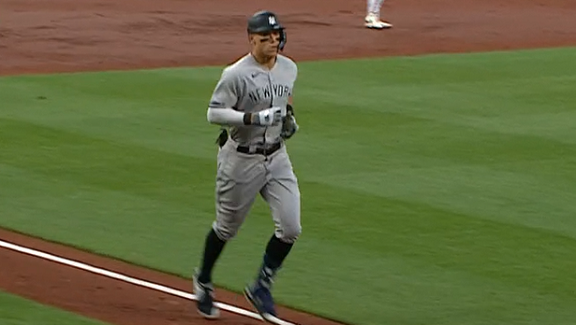
    Did you see Brewers pitcher Luis Perdomo’s reaction to giving up Aaron Judge’s 59th home run of the season?

    Perdomo made the ultimate mistake.

    First off, he threw Judge a slider.

    Per FanGraphs’ pitch values, which have been tracked for the last 20 seasons (using our pitch data), no hitter has had quite a season against sliders like Judge in 2022. He’s hitting .315 and slugging .723 with 15 home runs in at-bats ending against them this season.

    MLB hitters are batting .215 and slugging .359 when an at-bat ends with a slider this season. Judge’s batting average is 100 points higher than average. His slugging percentage is more than double it.

    Judge has tripled his home run total against sliders from last season in roughly the same number of sliders faced. He hit .320/.580 against sliders in 2018 but managed only 6 home runs against them.

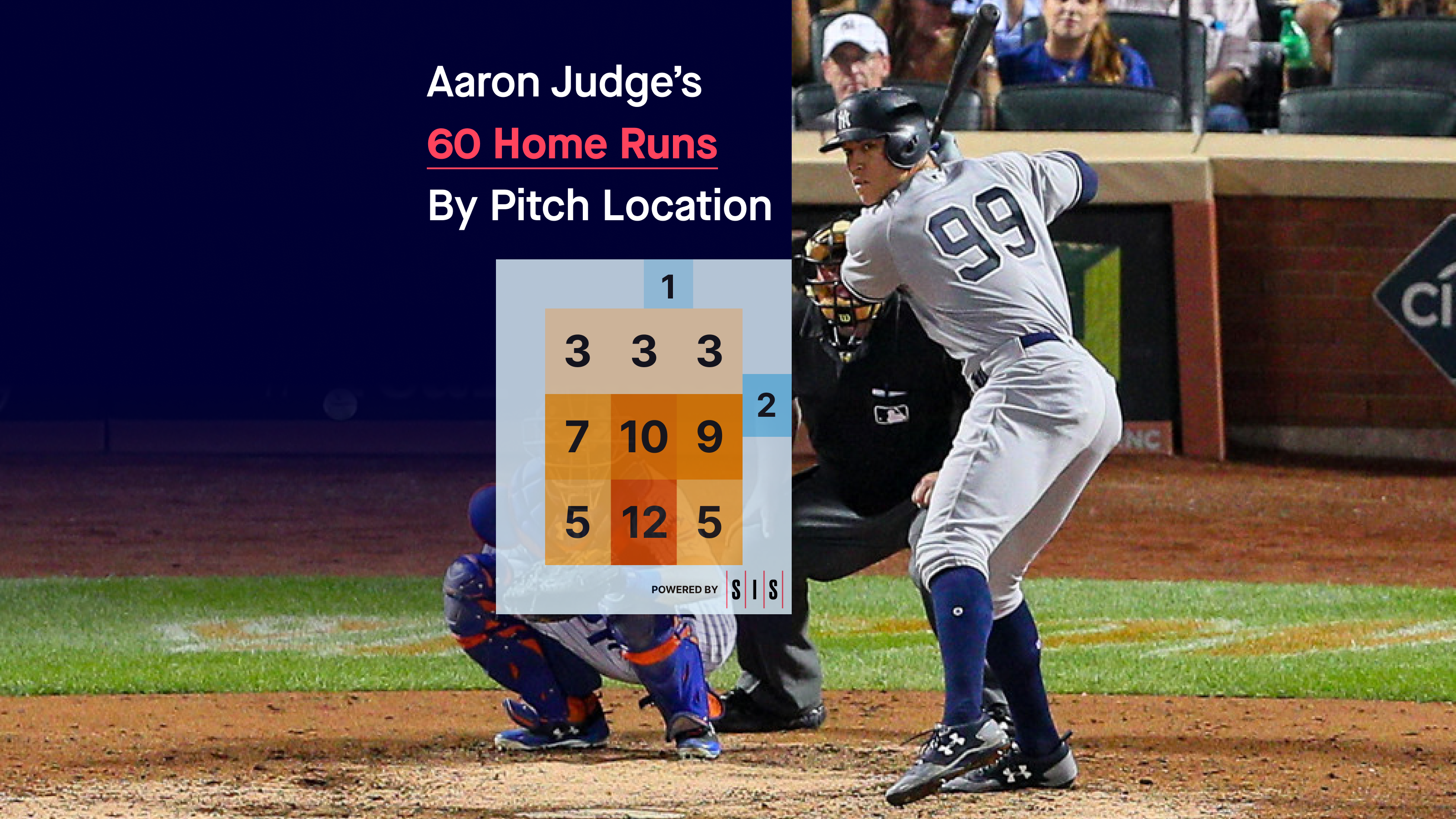
    Secondly for Perdomo, the pitch hung and ended up about as “middle-middle” as you can get.

    Judge has 10 home runs in at-bats ending with middle-middle pitches this season. So does Mookie Betts, who is having a terrific season. But Judge is hitting .477 (21-for-44) on pitches thrown to that area. Betts is at .333 (20-for-60).

    MLB batters are hitting .325 and slugging .596 when at-bats end versus those pitches in 2022. They average a home run every 41 middle-middle pitches. Judge is averaging one every 14 pitches. He’s basically homering at three times the rate of anyone else against them.

    And that’s the story here.

    Judge is on a Triple Crown pace and on track to break Roger Maris’ AL home run record both because he can hit the pitches that very few batters can hit well (admittedly he got an easier one to handle in this instance) and hit the pitches that everyone can hit well, but at an otherworldly level.

  • Stat Of The Week: Aaron Judge’s Amazing Stretch … And Season

    Stat Of The Week: Aaron Judge’s Amazing Stretch … And Season

    By MARK SIMON

    “Oh what a sock it was!”

    “It was one of the sockiest socks we ever saw.”

    Those are the words from the person who wrote the game story in the New York Daily News for the Yankees’ 4-3 win over the Tigers on May 26, 1920 (there’s no byline, so they are forever anonymous to us). They were describing a mammoth home run hit by Babe Ruth (click here to see it in newsprint).

    Ruth’s 60 home run season in 1927 is often acknowledged as one of the best seasons in baseball history. But Ruth’s 1920 actually surpasses it. He hit .376 with an .847 slugging percentage, the latter an MLB record that stood until Barry Bonds surpassed it in 2001 .

    Within that season, Ruth had many incredible stretches.  We want to focus on one that had a lot of socky socks. Over 21 games from May 11 to June 7, Ruth had 33 hits, 6 doubles, 3 triples, and 13 home runs. He slugged 1.183. It’s the best single-season slugging stretch in Yankees history.

    “You never can tell when a man hits his batting stride,” Ruth wrote in a column alongside that game story.

    It’s a stretch that is topped since 1901 only by ones from Bonds in 2004 (thanks, Baseball-Reference!).

    We bring that up in light of Aaron Judge and the amazing season that he’s having. He hasn’t quite been Ruthian, but he has been ridiculous.

    He has an MLB-leading 45 home runs, including 14 in his last 21 games, a run that started with two home runs in a 14-1 win over the Red Sox. His slugging percentage in those games is 1.052.  The only Yankees with better 21-game stretches are Ruth (many instances) and Lou Gehrig (once).

    Look at this statline!

    Aaron Judge’s Last 21 Games  

    Category Stat
    Batting Average .434
    On-Base Percentage .561
    Slugging Percentage 1.053
    Home Runs 14
    RBI 33

    Let’s add in that Judge is playing a premium position in center field and doing it credibly in his final season before free agency. He’d be a candidate for his second straight Fielding Bible Award had circumstances not dictated his move off right field (he could move back to right field when new acquisition Harrison Bader comes off the injured list).

    The long-ago developed stat Offensive Winning Percentage is one we like to dust off every now and then to celebrate a player’s excellence. It calculates how a team would fare if it had nine of that player in their lineup, with average defense and average pitching.

    A team of Aaron Judge’s would win 82% of its games (we’d like to meet the team it would lose to!).

    Judge and Paul Goldschmidt are dueling for the No. 1 spot in that stat this season. Judge currently leads by one-tenth of a percentage point (82.4 to 82.3). They’ve both been amazing, but this current run by Judge has been just otherworldly. By the way, he also easily leads MLB in another Bill James-crafted stat, Win Shares, with 30.

    Admittedly Judge’s stats look a little meager compared to some of Ruth’s best seasons, and we say meager with a chuckle because Judge doesn’t look meager next to anybody.  He’s a giant among men in MLB right now. Or as the Daily News could say, he’s the sockiest socker in the game.

  • Stat of the Week: First Half Defensive Runs Saved Leaders

    Stat of the Week: First Half Defensive Runs Saved Leaders

    BY MARK SIMON

    As we get set to start the second half of the season, let’s run through the MLB leaders in Defensive Runs Saved.

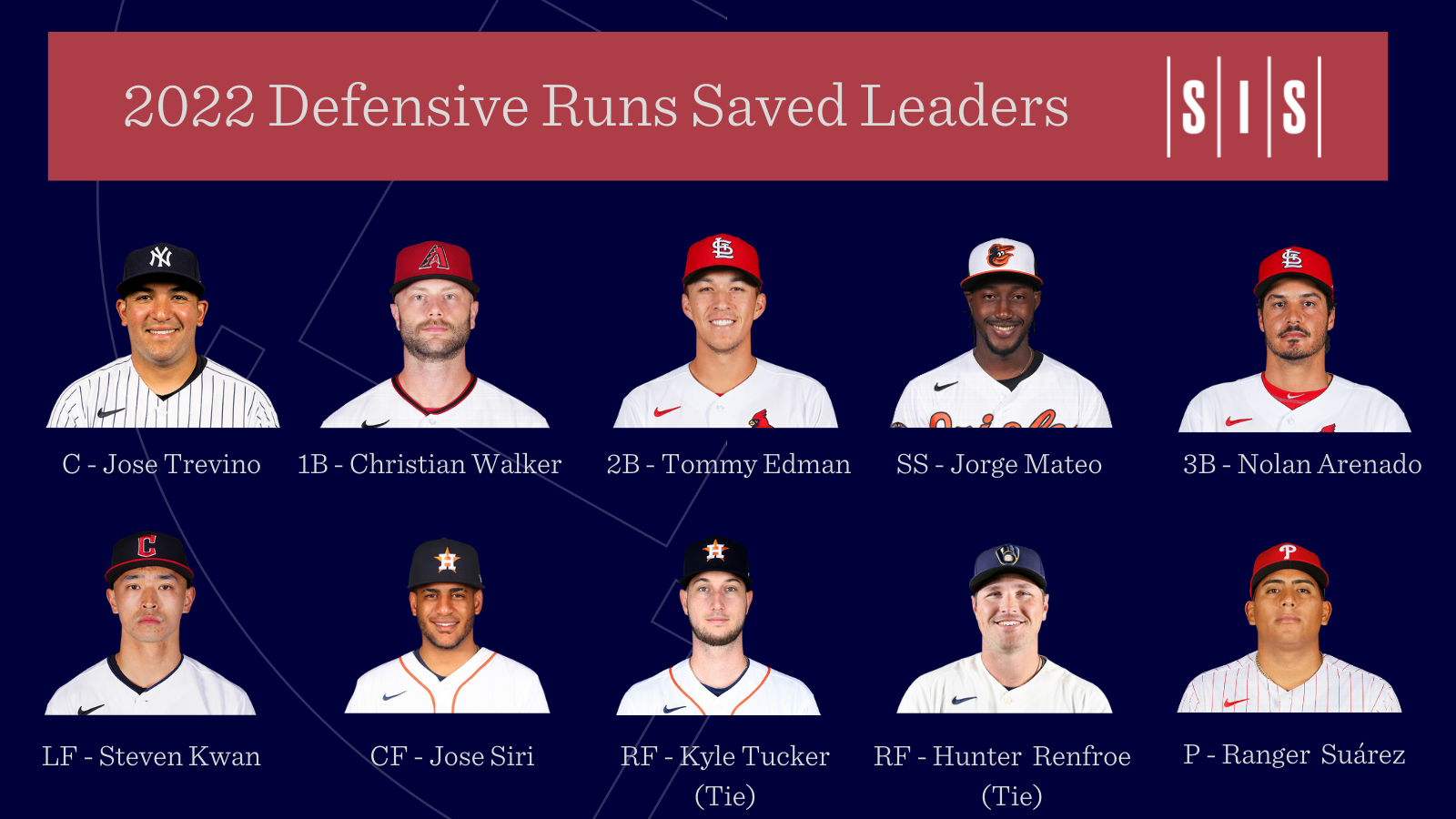
    At catcher, it’s a runaway. Jose Trevino of the Yankees leads all catchers in Runs Saved by a wide margin. His 15 Runs Saved are more than double the next-closest catchers, Reese McGuire and Cal Raleigh (7). Trevino stands out because of his excellent pitch framing. He’s good at stopping the running game too.

    At first base, Christian Walker of the Diamondbacks has range for days. He’s able to get to balls in the 3-4 hole like no one else, while covering first base without issue. He’s at 13 Runs Saved. The next-closest first baseman is Vladimir Guerrero Jr. with 7.

    Tommy Edman of the Cardinals has split time between second base and shortstop. He’s been great at both spots and leads the majors in Runs Saved overall (17) and at second base (11).

    What differentiates Edman from his peers is how infrequently he makes mistakes. He has only 2 Defensive Misplays & Errors at second base. He’s the only second baseman to average less than 1 Misplay & Error per 100 innings among the 40 who have played the most innings this season.

    The Orioles have had a nice resurgence this season and shortstop Jorge Mateo deserves some credit for his great defense. He’s the Runs Saved leader at that position with 13, showing great skill in handling ground balls and line drives, particularly those hit to his right.

    Nolan Arenado’s defense at third base for the Cardinals this season looks a lot like the great defensive work he did for the Rockies. Arenado still seems to be in his defensive prime. He’s the Runs Saved leader at the position with 15, well more than the 6 he had last season.

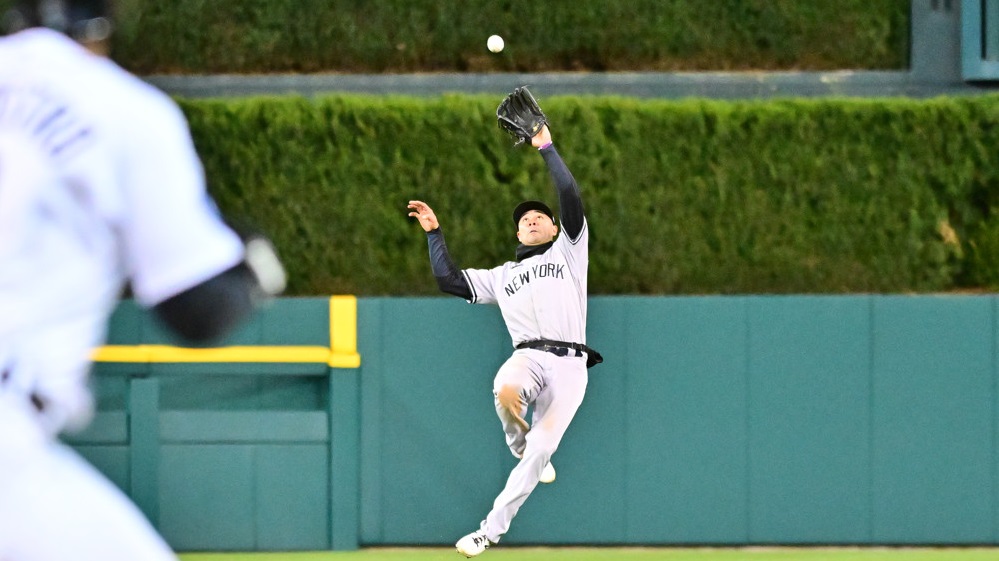
    In left field, remember the hot start Steven Kwan of the Guardians got off to with the bat? Well, he’s pretty good with the glove too. He can catch it (9 Runs Saved for Range) and he can throw it (4 assists in left field without a cutoff man). His 10 Runs Saved as a left fielder are the most in MLB.

    Center field is going to be a tough call for Fielding Bible Awards voters down the road. Right now, the leader is Jose Siri of the Astros, who shows great athleticism on both shallow and deep balls and leads with 8 Runs Saved. A lot of other center fielders are within two runs of his total including Myles Straw, Michael A. Taylor, Michael Harris II, and Cedric Mullins.

    The first half ended with a Defensive Runs Saved tie in right field between Kyle Tucker and Hunter Renfroe, each with 10 Runs Saved. They get it done a little differently. Tucker’s been known to make impressive catches in deep right field. Renfroe has a great throwing arm. Take your pick, they’re both off to great starts.

    At pitcher, it’s the 2nd year in a row that Ranger Suarez of the Phillies has gotten it done both handling comebackers and stopping potential basestealers. He’s yet to allow a stolen base this season.

    The team leader in Defensive Runs Saved is the Yankees. This is quite a turnaround for a team that ranked 29th last season. The Bronx Bombers have become the Bronx Stoppers – remaking their infield into the best in the game at getting outs on ground balls.

  • June’s MLB Defensive Player of the Month

    June’s MLB Defensive Player of the Month

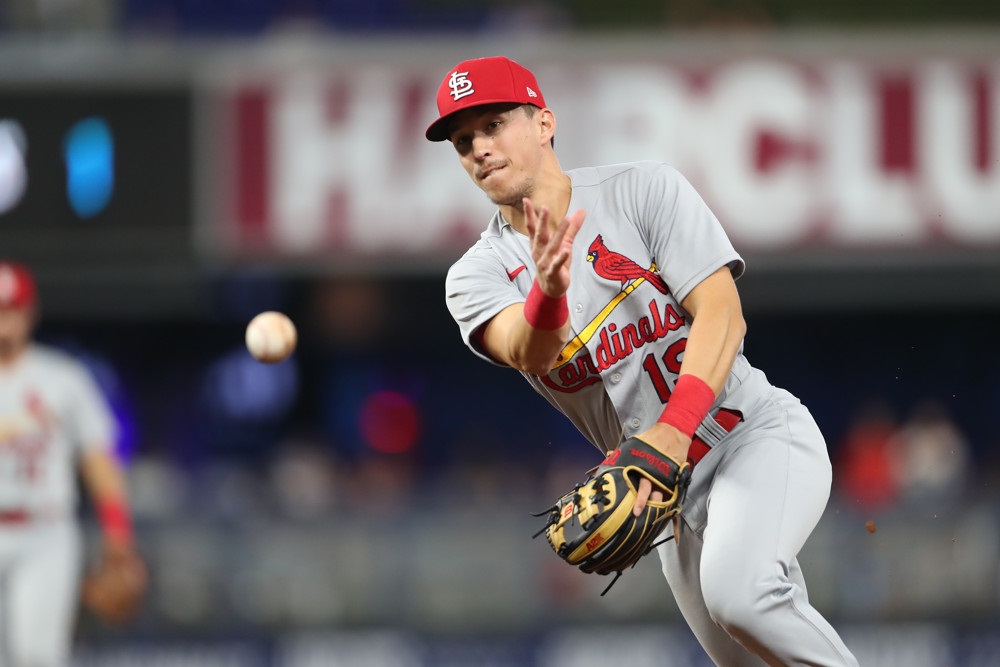
    It doesn’t matter where you put Cardinals infielder Tommy Edman in the field. Wherever he goes, he’s going to make the play.

    Edman is the MLB leader in Defensive Runs Saved this season with 16. He’s also the Sports Info Solutions Defensive Player of the Month for June.

    Edman finished the month with 9 Defensive Runs Saved, the most of any player. He had 5 Runs Saved at shortstop and 4 Runs Saved at second base.

    He joins our previous Defensive Player of the Month winners: Rays outfielder Brett Phillips in April and Orioles shortstop Jorge Mateo in May. Edman was the runner-up to Phillips in voting by Sports Info Solutions staff that month and got the most votes this month.

    What’s most impressive about Edman’s defense this season is not just in how he makes plays but in how he limits mistakes. Our Video Scouts track nearly 60 types of Defensive Misplays & Errors. Edman has only 2 Misplays & Errors in 380 innings as a second baseman this season.

    By comparison, Brewers second baseman Kolten Wong, who has won three of the last four Fielding Bible Awards, has 23. Last year’s winner Whit Merrifield has 9.

    Three other second basemen often lauded for their defense – Trevor Story, Marcus Semien, and Ozzie Albies – have all been charged with Misplays & Errors at a rate at least four times higher than Edman has.

    Similarly at shortstop, Edman has 4 Misplays & Errors in 265 innings. His per-inning Misplay & Error rate ranks 1st.

    Our runner-ups for the honor this month were Rockies second baseman Brendan Rodgers and Yankees catcher Jose Trevino.

    Rodgers had 7 Defensive Runs Saved in June, the most by a second baseman. His 8 Good Fielding Plays, which are awarded for more than 30 types of plays a player can make, were the most of any second baseman.

    Rodgers has engineered quite the defensive turnaround this season, improving from -5 Runs Saved at second base in 2021. The notable differences in his game are in fielding balls hit to his right and in converting double play opportunities.

    Trevino has been the perfect pickup for the Yankees, who obtained him from the Rangers just before the season started. He easily led catchers in Defensive Runs Saved in June and is the runaway leader this season with 12. He ranks No. 1 in our pitch-framing stat, Strike Zone Runs Saved.

    To listen to an interview we did with Tommy Edman on The Sports Info Solutions Baseball Podcast last season, click here

  • Start Spreading The News: A Great Month for the Yankees Infield

    Start Spreading The News: A Great Month for the Yankees Infield

    The Yankees enter Friday tied with the Mariners for second in the majors in Defensive Runs Saved.

    That’s pretty remarkable given that in 2021, they finished next-to-last in the majors in that stat.

    It’s only a month into the season but the remaking of the Yankees infield has been a significant contributor to their 18-7 record and 2.5 game lead in the AL East.

    This was a necessity. Last season, the Yankees got negative Runs Saved at each of the four infield spots.

    What impact have the changes had?

    The Yankees have converted 78% of groundballs and bunts into outs this season. That’s the fifth-highest out rate in MLB. The Yankees ranked 23rd in that stat in 2021 at 73%.

    The difference of 5 percentage points equates to this – The Yankees have turned 216 of 277 groundballs and bunts into outs this season. Had they performed at the 2021 rate, they would have converted 201.

    That’s not just 15 potential baserunners wiped out. It’s trading potential baserunners for outs.

    On an individual level, three things have paid dividends. Runs Saved is one way to illustrate that but let’s go one step beyond that and show the out-getting numbers to provide a more tangible illustration.

    One was that the Yankees moved Gleyber Torres back to being a full-time second basemen. Torres saved 5 runs there in 2018, then struggled at both second base and shortstop the next three seasons.

    Torres has played 18 games at second base this season. He’s gotten at least one out on 39 of 55 balls on which he had a >0% chance of recording an out (we’ll call the potential outs “opportunities” going forward).

    In 2021, he played 19 games at second base. That season, he got outs on 39 of 67 opportunities. That’s the same number of plays made on 12 fewer opportunities.

    Torres moved to second base because the Yankees traded to get shortstop Isiah Kiner-Falefa. Kiner-Falefa saved 10 runs at shortstop last season. Torres was the Yankees primary shortstop last season. He cost them 10 runs with his defense.

    Torres got an out on 60% of his opportunities as a shortstop last season. His expected out rate against those balls (yep, we track that) was 62%.

    Kiner-Falefa has turned 60 of 96 opportunities into outs this season. That’s a 63% out rate. He was expected to convert 55, an expected out rate of 57%.

    Though Gio Urshela’s defense at third base last season passed the eye test, it was a net negative for the Yankees, costing them 4 runs.

    The Kiner-Falefa trade also brought Josh Donaldson, a third baseman with a good defensive track record.

    Donaldson and DJ LeMahieu have combined to convert 63 of 89 opportunities into outs. That’s a 71% out rate within a small sample. Urshela’s out rate last season was 61%.

    You may be wondering why we haven’t mentioned first baseman Anthony Rizzo yet. That’s because Rizzo’s defensive numbers aren’t good since he joined the Yankees last season. He’s cost them 6 runs in his 74 games, including 1 in 25 games in 2022.

    But Rizzo’s track record is pretty good. He posted positive Runs Saved in every season from 2013 to 2020. If he performs at the level he’s shown in the past and the other Yankees infielders maintain what they’ve done, we may be talking about this as the best defensive infield in the American League in a few months.

  • Help!  3 Playoff Contenders Have Defensive Challenges

    Help! 3 Playoff Contenders Have Defensive Challenges

    By MARK SIMON

    As Friday’s trade deadline approaches, there are three contending teams in the bottom 10 in MLB in Defensive Runs Saved. The Phillies, Yankees, and White Sox all seem to be playing for 2021, so it seems a worthwhile exercise to check out where their needs lie.

    Phillies

    MLB Rank in Defensive Runs Saved: Last

    The Phillies enter Wednesday within 3 ½ games of the Mets in the NL East. Recent reports indicate ownership’s willingness to go for the division and make big moves to do so.

    It would behoove them to acquire a shortstop and third baseman, not just because Didi Gregorius and Alec Bohm haven’t hit well this season. They haven’t fielded well either.

    Shortstop defense has cost the Phillies 17 runs. Third base defense has cost them 13. Those are worst-in-MLB numbers at both spots. You could make a good case that no team would benefit more from trading for Javier Baez (or Trevor Story) and Kris Bryant than the Phillies would.

    Those two positions aren’t the only problematic ones but the Phillies are locked in at both catcher (J.T. Realmuto, -4 Runs Saved) and left field (Andrew McCutchen, -7) given that both are mainstays and have hit more than enough such that they aren’t budging in the lineup.

    Yankees

    MLB Rank in Defensive Runs Saved: 25th

    The Yankees trail the Athletics by 2 ½ games for the second Wild Card spot, close enough for them to at least consider being a buyer.

    Their defense isn’t quite as problematic as the Phillies, but it has notable holes up the middle.

    Shortstop Gleyber Torres, who saved 5 runs at second base as a rookie in 2018, has never come close to matching that at either infield spot. His defense has cost the Yankees 6 runs at shortstop.

    Neither Rougned Odor nor normally reliable infielder DJ LeMahieu have put up good numbers at second base. Each has cost the Yankees 3 runs there and Tyler Wade has cost them 4.

    The Yankees have one good defensive catcher in Kyle Higashioka. But Gary Sánchez plays the most there and he’s at -5 Runs Saved. This could be the third straight season that he finishes with a negative Defensive Runs Saved total.

    Getting an outfielder would also fill a need as someone like Starling Marte could slot into center field, allowing Brett Gardner to play left field more often. Though Gardner is currently at -3 Runs Saved in left, his track record indicates that he’s likely the best defensive option ahead of Miguel Andujar and injured outfielder Clint Frazier (who has cost the Yankees 6 runs with his defense in left field).

    White Sox

    Defensive Runs Saved Rank: 22nd

    The White Sox might be able to get around most of their defensive deficiencies without having to make a deal. Two of their key defenders, center fielder Luis Robert and catcher Yasmani Grandal are recovering from injury. Robert is in Triple-A getting ready to come off the injured list. His injury was a hip injury. Grandal is recovering from a torn tendon in his knee.

    Still, there are fillable spots. Grandal’s backup, Zack Collins, hasn’t had a good time of it this year. He ranks last among catchers in Runs Saved at -14 and the stats indicate he’s not a good pitch framer or pitch blocker.

    And at second base, the White Sox have tried Nick Madrigal, Leury García, and Danny Mendick, but the three have combined for -10 Runs Saved and Madrigal is out for the season with a hamstring injury.

    If the White Sox can convince the Blue Jays that they’re out of the race (a hard sell), perhaps there’s a match for converted shortstop Marcus Semien, who is not only hitting like a superstar (.870 OPS) but fielding like one as well. He leads second basemen in Runs Saved with 11. More realistic might be a deal with a division rival, like the Tigers, for Jonathan Schoop, who is also having a great offensive season and has three years with at least 10 Runs Saved at second base to his credit.

    Such a move wouldn’t just improve their defense. It might put the White Sox at the front of the line among AL teams to go to the World Series.

    MLB Contenders Defensive Runs Saved Ranks

    Team DRS
    Rays 2nd
    Astros 3rd
    Brewers T-4th
    Mets T-4th
    Giants T-8th
    Blue Jays T-10th
    Red Sox 12th
    Dodgers 13th
    Braves T-15th
    Padres 17th
    Mariners 18th
    Athletics 19th
    White Sox 22nd
    Yankees 25th
    Phillies 30th
  • How Each Postseason Contender Could Build Their Rosters for October

    By Corey Eiferman

    *All stats are as of September 23rd

    With the Major League Baseball postseason just a few days away, discussions are being held on which players should be on postseason rosters. Several times per postseason, you’ll hear a player say how it “takes 25 guys” to win one round, and hopefully, subsequent rounds of postseason. I aimed to try to use both recent history of the rosters of pennant winning teams, and the performance of the players of each team this year, to try to generate a hybrid of both a prediction and a suggestion of the rosters should look like.

    While teams will shuffle guys on and off their rosters between rounds, 50% of the last ten pennant winners carried 12 pitchers and 13 position players in the LCS and World Series. However, three of the last five World Series winners, the 2018 Red Sox, the 2016 Cubs, and 2015 Royals, carried 11 pitchers and 14 position players, showing that there is never an exact template, and there’s no right answer.

    The Red Sox didn’t shuffle their roster between rounds in 2018. The Cubs and Royals switched out one position player for another before the World Series. Both were notable cases- in 2016 Kyle Schwarber famously battled back from ACL surgery in April to hit .412 for the Cubs in the World Series. The Royals added Adalberto Mondesi in 2015. He became the first player to play in the modern-day World Series before his regular-season debut.

    I also looked at trends within the rosters of recent pennant winners. None of the last six pennant winners carried traditional Pinch Runners and Pinch Hitters, opting instead for players like Marwin Gonzalez, who embodied the evolution of the classic utility infielders into super-utility players.

    I looked at the teams that have clinched a spot as of Thursday. As an aside, all rosters are composed with the caveat that the team has hypothetically won their Division or their League’s Wild Card Game, and these are for the Divisional and Championship Series.:

    *denotes potential platoon

    New York Yankees

    Starting Pitchers, including “Piggyback” Tandems: James Paxton, Masahiro Tanaka, Luis Severino + J.A. Happ, CC Sabathia + Jonathan Loaisiga

    Bullpen: Aroldis Chapman, Adam Ottavino, Tommy Kahnle, Zack Britton, Chad Green, Luis Cessa,

    Lineup: C-Gary Sanchez, 1B-Edwin Encarnacion, 2B-D.J. LeMahieu, SS-Gleyber Torres, 3B- Gio Urshela, LF- Giancarlo Stanton, CF- Brett Gardner, RF- Aaron Judge, DH- Luke Voit

    Bench: Austin Romine, Didi Gregorius, Tyler Wade, Cameron Maybin

    Key decisions: Tandem starters; What to do with Didi Gregorius

    On September 17, a story by Tom Verducci for Sports Illustrated quoted Yankees’ manager Aaron Boone as saying he might use tandem starters or “piggyback” strategy in the playoffs, similar to how the 2017 Astros piggybacked Charlie Morton and Lance McCullers Jr in Games 7 of both the 2017 ALCS and World Series.

    After Boone named offseason acquisition James Paxton as the only one who would make a traditional start in the playoffs, Masahiro Tanaka bounced back with his best start since August 27, in the Yankees’ AL East clinching game, possibly causing Boone to alter his plans again. Look for none of the quartet of Luis Severino, who is battling back from both a rotator cuff injury and a lat strain, Jonathan Loaisiga, recovering from a shoulder strain, and veterans CC Sabathia and J.A. Happ, to face more than 18 batters by design, as Boone navigates through the playoffs.

    Boone said he would carry six “key” relievers on top of his starters and piggybackers. The Yankees still possess a bullpen that could arguably be more intimidating than the mid-2010s Royals. The trio of closer Aroldis Chapman, Set-up Man Zack Britton, and 7th-inning man Tommy Kahnle all have accumulated more than 1.2 Win Probability Added.

    The Yankees are the only team to have nine players with an OPS+ of 110 this season (minimum 200 plate appearances). Their best offensive lineup would be one without Didi Gregorius starting. Gio Urshela has has been a revelation. Gregorius could come in for defense late in games, and the Yankees could shift LeMahieu over to first, and Torres over to second, while also subbing in the veteran Cameron Maybin for Giancarlo Stanton.

    Minnesota Twins

    Starting Pitchers: José Berrios, Jake Odorizzi, Martin Perez, Kyle Gibson

    Bullpen: Randy Dobnak, Tyler Duffey, Brusdar Graterol, Ryne Harper, Trevor May, Taylor Rogers, Sergio Romo, Devin Smeltzer

    Lineup: C- Mitch Garver, 1B- C.J. Cron, 2B- Jonathan Schoop, SS- Jorge Polanco, 3B- Miguel Sano, LF- Eddie Rosario, CF- Max Kepler, RF- Marwin Gonzalez, DH- Nelson Cruz

    Bench: Jason Castro, Willians Astudillo, Luis Arraez, Ehire Adrianza

    Key decision: Bullpen composition

    Much has been written about the Twins’ offense, the team that might have most benefited from the possibly, allegedly, juiced balls. They are the first team with five players with 30 home runs, with Nelson Cruz, Eddie Rosario, Max Kepler, Miguel Sano and Mitch Garver.

    In Garver’s surprising breakout, the Twins catcher’s barrel percentage went up 10 percentage points, his average exit velocity is up 2 MPH runs, and he snatched the starting job away from Jason Castro.

    Speaking of catchers (sort of) Willians Astudillo has played at least games at every position except pitcher, shortstop, and center field, and with injuries to Ehire Adrianza and Max Kepler, should bring that unique versatility to the roster.

    Going into the postseason, if you find a hot hand, you ride that hot hand. The Twins should make sure their postseason roster has a spot for Brusdar Graterol, who, as laid out by Baseball Prospectus’ Aaron Gleeman, only needed to throw one pitch to become the hardest throwing pitcher in Twins history. Graterol has hit 100 MPH in seven of his eight appearances since being called up in September.

    After struggling in his first-full season as a starter in 2016, Tyler Duffey’s been able to transition to being a reliever, with a curveball that could register anywhere between 70 and 88 mph. Left-handed Swingman Devin Smeltzer has reverse splits, limiting righties to a .721 OPS, with lefties at .869, so the Twins could carry two non-lefty specialists alongside closer Taylor Rogers. The inverse of Smeltzer, Randy Dobnak is a right-hander with reverse splits, and has pitched well whether he’s been an opener, long man, or a starter in just 22 1/3 innings.

    Houston Astros

    Starting Pitchers: Justin Verlander, Gerrit Cole, Zack Greinke

    Bullpen: Chris Devenski, Will Harris, Josh James, Roberto Osuna, Brad Peacock, Ryan Pressly, Joe Smith, Framber Valdez

    Lineup: C- Robinson Chirinos, 1B- Yuli Gurriel, 2B- Jose Altuve, SS- Carlos Correa, 3B- Alex Bregman, LF- Michael Brantley, CF- George Springer, RF- Josh Reddick, DH- Yordan Alvarez

    Bench: Martin Maldonado, Aledmys Diaz, Jake Marisnick, Kyle Tucker, Myles Straw

    Key decisions: 3 starters or 4? Myles Straw’s role

    The 2009 Yankees were the only team in the modern-divisional era to win a World Series with just three Starting Pitchers. Following a September in which Wade Miley lasted, zero, one-third, and one inning in starts, the Astros might try to replicate that with Justin Verlander, Gerrit Cole, and Zack Greinke. If that trio, containing two Cy Young winners and a pitcher drafted No. 1 overall, all pitch to their talent level, the Astros are very likely to hoist their second World Series trophy in three years, with more ease than those 2009 Yankees.

    If the Astros do go with three starters, they will still need some key outs from their bullpen. The 35-year-old sidearmer Joe Smith is in his 13th Major League Season. He has never had an ERA over 4.00, and has a 1.16 ERA and a 0.90 WHIP in 23 1/3 innings pitched this year, while battling back from Achilles surgery. Smith’s 54% ground ball rate (albeit in a small sample) is his highest since 2014, when he was with the Angels the year they snuck past the Athletics to win the AL West.

    Myles Straw could emerge as the next Kiké Hernandez or Chris Taylor, having saved one run at shortstop, center field, and left field this year. Kyle Tucker’s hot September may be forgotten amidst the otherworldly rookie season of Yordan Alvarez, but the outfielder has hit over .300 and slugged over .500 since his first start in right field in September.

    Atlanta Braves

    Starting Pitchers: Mike Soroka, Max Fried, Dallas Keuchel, Julio Teheran

    Bullpen: Mark Melancon, Shane Greene, Chris Martin, Anthony Swarzak, Jerry Blevins, Josh Tomlin, Sean Newcomb, Mike Foltynewicz

    Lineup: C*- Brian McCann/Tyler Flowers, 1B- Freddie Freeman, 2B- Ozzie Albies, SS- Dansby Swanson, 3B- Josh Donaldson, LF- Austin Riley, CF- Ronald Acuña, RF- Nick Markakis

    Bench: Johan Camargo, Ender Inciarte, Matt Joyce, Billy Hamilton

    Key decisions: Using Billy Hamilton; putting starters in the bullpen

    The Braves are easily the team with the best chance of preventing the Dodgers from making their third straight trip to the World Series. Their starting lineup is remarkably deep, with a mix of young stars players still in their primes, and veterans. Ozzie Albies, Ronald Acuña Jr., and Austin Riley are the first trio of players younger than 23 to each hit 15 home runs in a season.

    While a pennant winner hasn’t carried a player to strictly pinch run since the Royals in 2015, look for a player who began the year in Kansas City to do that for the Braves this year, Billy Hamilton. Even though his average sprint speed has dipped, he still ranks among the fastest 3% of players in that stat in baseball.

    The Braves will be armed with a better bullpen, at least on paper, than the Dodgers, after acquiring Chris Martin, Shane Greene, and Mark Melancon at the deadline. The trio got off to a rough start, as through August 14 their combined ERA with the Braves was 11.15, but they’ve collectively righted the ship, with a combined 1.85 ERA since.

    The front-end of the Braves’ bullpen could feature two of the Braves postseason starters from last season. Both righty Mike Foltynewicz and lefty Sean Newcomb struggled in the beginning of 2019, but Foltynewicz has a 2.35 ERA in 8 starts since returning from Gwinnett, and Sean Newcomb has a 2.80 ERA since being moved to the bullpen in May, Newcomb’s Runs Above Average on his curveball has improved from -0.6 to 2.6 this year.

    St. Louis Cardinals

    Starting Pitchers: Jack Flaherty, Dakota Hudson, Miles Mikolas, Adam Wainwright

    Bullpen: John Brebbia, Giovanny Gallegos, John Gant, Ryan Helsley, Carlos Martinez, Andrew Miller, Daniel Ponce de Leon, Tyler Webb

    Lineup: C-Yadier Molina, 1B- Paul Goldschmidt, 2B- Kolten Wong, SS- Paul DeJong, 3B- Matt Carpenter, LF- Marcell Ozuna, CF- Harrison Bader, RF- Dexter Fowler

    Bench: Matt Wieters, Tommy Edman, Yairo Muñoz, Tyler O’Neill, Jose Martinez

    Key decisions: Roles for Ryan Helsley and Tommy Edman

    The Cardinals’ quietly ascended from being five games back as late as June 12, to holding sole possession of first place in the NL Central from August 23rd on. The Cardinals playoff teams usually feature a midseason bullpen addition. But not in 2019.

    The quartet of Carlos Martinez, John Brebbia, John Gant, and Giovanny Gallegos is the only set of four relievers with ERAs under 3.50 in the NL, who spent all of 2019 with that same team. The trade that sent Luke Voit to the Yankees will not be looked at as catastrophic for the Cardinals, as Gallegos is second in the MLB in WHIP with 0.80, and his slider is second in Runs Above Average to the Reds’ Robert Stephenson.

    One hot hand for the Cardinals down the stretch has been reliever Ryan Helsley. The fifth-round pick from Northeastern State is this year’s Cardinal to come out of nowhere and help the big club. The 24-year-old has a 2.41 ERA in 21 appearances, and has hit 100 MPH on the radar gun in 14 of them. The versatile Tommy Edman has hit .317 since August 1 while seeing playing time at every position except first, shortstop, and catcher. He’s at second base now while Kolten Wong recovers from a hamstring injury. The Cardinals will need to figure out where Helsley and Edman fit best come October.

    Los Angeles Dodgers

    Starting Pitchers: Hyun-Jin Ryu, Clayton Kershaw, Walker Buehler, Rich Hill

    Bullpen: Pedro Baez, Yimi Garcia, Kenley Jansen, Joe Kelly, Adam Kolarek, Kenta Maeda, Ross Stripling, Julio Urias

    Starting Lineup: C-Will Smith, 1B- Max Muncy, 2B- Gavin Lux, SS- Corey Seager, 3B- Justin Turner, LF- A.J. Pollock, CF- Cody Bellinger, RF- Joc Pederson

    Bench: Russell Martin, David Freese, Chris Taylor, Enrique Hernandez, Matt Beaty

    Key decision: Gavin Lux’s usage

    Right now, probably only Dave Roberts knows exactly how he’ll employ and move his players around, as in one game this year, he changed seven players positions before the top of the 10th, but top prospect Gavin Lux might have hit well enough to be inserted into the lineup at second base every game, à la Corey Seager in 2015. While Kiké Hernandez and Chris Taylor might be the two best super-utility men of the last few years, they will likely see fewer starts in years past, if Lux is entrenched as their second baseman, and with either Cody Bellinger or A.J. Pollock in center field.

    After hitting on numerous first round picks in recent years in Walker Buehler, Corey Seager, and Clayton Kershaw, a 12th-round pick has been another important rookie for the Dodgers’ offense. Matt Beaty, who has seen time at first, third, left, and right field, has slugged .479 in 253 plate appearances.

    In the end, the question will be whether the bridge to Kenley Jansen is sturdy enough to put the Dodgers over the top. Over the years, it seems like the Dodgers always have plenty of relievers who are well-above average in the regular season, but just can’t get it done in the most important moments in the postseason. This year, two frequently-used relievers, Pedro Baez and Yimi Garcia, still have worrisome peripherals. Baez’ opponents’ swing percentage is at a career low 51%, and Garcia has a drastic separation between his ERA, which is sub 3.50, and his FIP, which is above 5.00, the only reliever with that distinguishable a separation.

    Washington Nationals
    Starting Pitchers: Max Scherzer, Stephen Strasburg, Patrick Corbin, Anibal Sanchez
    Bullpen: Sean Doolittle, Erick Fedde, Daniel Hudson, Tanner Rainey, Fernando Rodney, Hunter Strickland, Wander Suero
    Lineup: C- Yan Gomes, 1B- Howie Kendrick/Matt Adams/Ryan Zimmerman 2B*- Asdrubal Cabrera/Brian Dozier, SS- Trea Turner, 3B- Anthony Rendon, LF- Juan Soto, CF- Victor Robles, RF- Adam Eaton
    Bench: Kurt Suzuki, Michael A. Taylor, Gerardo Parra

    Key decisions: Bullpen composition and usage

    The last two times the Nationals were in the playoffs, in 2016, and 2017, they carried only 11 pitchers, which is something they can do again in 2019, simply because they don’t have 12 pitchers Davey Martinez should trust to get big outs in October. The Nationals are going to need their big three of Max Scherzer, Stephen Strasburg, and Patrick Corbin to all go deep into games.

    The Nationals, like the Braves, made three relief acquisitions, and they haven’t worked out quite as well. Daniel Hudson has been dependable, but Roenis Elias is out with a hamstring strain, while old foe Hunter Strickland has an 8.59 ERA in September, far from the perfect form he displayed when he was called up in September of 2014 by the Giants on their way to a World Series. Elsewhere in the bullpen, walks have been a problem for Tanner Rainey, but his fastball does rank in the top five in the Majors among relievers with a 97.9 average velocity.

    You may think veteran Howie Kendrick may lack the power you’d want from a prototypical first baseman, but he still possesses some sneaky power with a .237 ISO (Slugging Percentage – Batting Average), which ranks 13th among 38 players with 300 Plate Appearances and 40% of games played at first base. Kendrick is hitting .341 this season, and .421 since his return from injury on August 12th, which should get him most, if not all the starts at first over sluggers Matt Adams and Ryan Zimmerman. While Victor Robles’ defensive breakout has been everything the Nationals fans’ have wanted lest no one forget that Michael A. Taylor is coming off two seasons where he collectively saved 18 runs, and is a perfect fourth outfielder for the playoffs.

    Milwaukee Brewers
    Pitching Staff: Matt Albers, Chase Anderson, Ray Black, Alex Claudio, Kyle Davies, Gio Gonzalez, Junior Guerra, Josh Hader, Adrian Houser, Jordan Lyles, Drew Pomeranz, Brandon Woodruff
    Lineup: C- Yasmani Grandal, 1B- Eric Thames, 2B- Keston Huira, SS- Orlando Arcia, 3B- Mike Moustakas, LF- Ryan Braun, CF- Lorenzo Cain, RF- Trent Grisham
    Bench: Manny Piña, Travis Shaw, Hernan Perez, Ben Gamel, Tyler Austin

    Key decisions: Use an opener?

    Everyone counted out the Milwaukee Brewers when they lost reigning NL MVP, Christian Yelich. Somehow, the Brewers went on a huge run in September. The run has drawn comparison to their late-September run to the NL Wild Card in 2008, led by the aforementioned, and soon-to-be-retiring CC Sabathia.

    First round pick Trent Grisham has filled in nicely for Yelich, hitting .265/.409/.529 since the rightfielder was injured. Tyler Austin, who was in the Yankees’ Opening Day lineup in 2018, is with his fourth team since, and has two big go-ahead RBIs this month.

    The Brewers might get as creative as they did last year, when they took on a postseason version of the Rays’ Opener strategy, including duping the entire baseball world when they used started Wade Miley as an opener. Jordan Lyles has become for the Brewers’ what Kelly Johnson was for the Mets, being acquired mid-season for the second straight year. The swingman has only started for the Brewers this year, after only relieving for them last year. Over the past two seasons, Lyles has a combined 4.86 ERA with the two teams he was acquired from, and a 2.62 ERA with the Brewers.

    Junior Guerra has transitioned into the bullpen nicely and could be key in getting the ball to Josh Hader at game’s end. He’s mixing his pitches as much as he did when he was a starter, he throws his fastball 60% of the time, with the distribution of two-seam and four-seam being almost almost even at 29% and 31%, his splitter at 22%, and his curveball at 19%.

    Whatever formula the general managers of each team do go with, the construction of rosters, whether for the regular season, the Wild Card Game, or for a postseason series, always fascinates me.

    While I might not be able to tell you who this year’s Steve Pearce will be, I can say that some of the decisions made will likely have significant ramifications on who wins the World Series.

  • How does Mike Tauchman have 14 Defensive Runs Saved?

    By Mark Simon

    The New York Yankees outfield has been overwhelmed by injuries this season. At various times, Aaron Judge, Aaron Hicks, and Giancarlo Stanton have been sidelined. In looking for someone who could fill in at all three spots off the bench, they turned to 28-year-old Mike Tauchman as a replacement.

    Tauchman has been great, both at the plate and in the field, and it’s the latter that we’ll focus on here.

    Tauchman has saved 14 runs with his defense, which ranks tied for sixth among outfielders this season. Of the outfielders ranked in the top 17, Tauchman has the third-fewest innings played. He’s made the most of his time in the field.

    How has Tauchman reached such lofty numbers, normally reserved in the Yankees outfield for Brett Gardner?

    He has nine Runs Saved in left, one in center and four in right.

    Let’s focus specifically on left field and right field.

    Sports Info Solutions divides each outfield into three sections – shallow, medium, and deep. Tauchman gets a statistical credit or debit on any ball hit to those spots in which he has a greater than zero percent chance at making the catch. The credit or debit is based on the historical probability of each batted ball being caught.

    If Tauchman makes a catch on a ball that is typically caught by a left fielder 40 percent of the time, he gets a credit of 0.6 (1 minus 0.4). If he misses it, he gets a debit of 0.4 (for the 40 percent of the time the ball is caught). Credits and debits are added up to get a player’s Range and Positioning rating, which is converted into Runs Saved.

    Here’s how Tauchman has done on shallow, medium, and deep balls in the two corner outfield spots.

    You can read this as (for example): “Mike Tauchman has 29 outs on 44 plays in which he had a greater than zero percent chance to make the play. The average player would have recorded 24 outs (29 minus 5).”

    Mike Tauchman – 2019 Season (LF & RF)
    Outs Plays with >0%

    out probability

    Plays Made

    Above Average

    Shallow Balls 29 44 5
    Medium Balls 41 50 3
    Deep Balls 36 45 3

    Of note, Tauchman has 15 catches on balls with an out probability of 50 percent or less and has failed to make the play in only five instances with an out probability of less than 50 percent. That number of high-value catches and the lack of high-value misses leads to a combined run value of nine runs at the corner outfield spots.

    Now why is Tauchman making those catches? Surveying the video of those plays found two common themes. One was that he was well positioned, likely by a combination of the Yankees coaches and the analytics department. Tauchman’s most valuable play is this catch on a ball hit by Tommy La Stella of the Angels. It doesn’t look like a difficult catch, but given where the ball was hit (the right-center gap) and how long it was in the air for, that’s a ball that is caught by the right fielder only six percent of the time.

    That play does show something else that holds up. Tauchman is good at reading the low line drive and closing ground on it quickly. This catch against Cavan Biggio of the Blue Jays came on a ball that is turned into an out 13% of the time. He has another catch of that ilk on a ball hit by Yonder Alonso of the White Sox. That ball had an out probability of 26%.

    SIS Video Scouts chart Good Fielding Plays and Defensive Misplays & Errors, and players have a chance to gain or lose Defensive Runs Saved based on how they fare in each of those areas. Tauchman has 9 Good Fielding Plays and only 4 Misplays & Errors. Converting each of those plays to a run value gives Tauchman a net of three more Runs Saved. He receives his biggest spike (1.2 Runs Saved) for having a home run robbery against Pedro Severino of the Orioles.

    Lastly, let’s look at the deterrent value of his arm.

    Tauchman doesn’t have a large sample of plays involving baserunner advancement in center or right field. But in left field, he’s recorded three assists without a cutoff man and allowed 17 out of 38 baserunners to advance on base hits on balls he’s fielded. The 45 percent advancement rate is around MLB average.

    The bigger deal is those three instances in which he erased a baserunner (the value in doing so is significant). For that, he receives two runs of credit. The best of the plays he’s made with his arm might be this one nailing Garrett Hampson of the Rockies at home plate.

    Putting it all together, Tauchman gets:

    • +10 Runs Saved for his Range & Positioning (9 for the corners, 1 for centerfield),
    • +3 Runs Saved for his Good Fielding Plays
    • and +1 Run Saved for the deterrent value of his arm.

    That combination makes him one of the most valuable defensive outfielders and one of the best stories in MLB (for more on Tauchman check out either of those links).

    Most Defensive Runs Saved – Yankees
    Mike Tauchman 14
    Aaron Judge 11
    Brett Gardner 8

    For more stories like this that go inside the numbers, check out our Stat of the Week and the SIS Baseball Podcast.