Category: Baseball

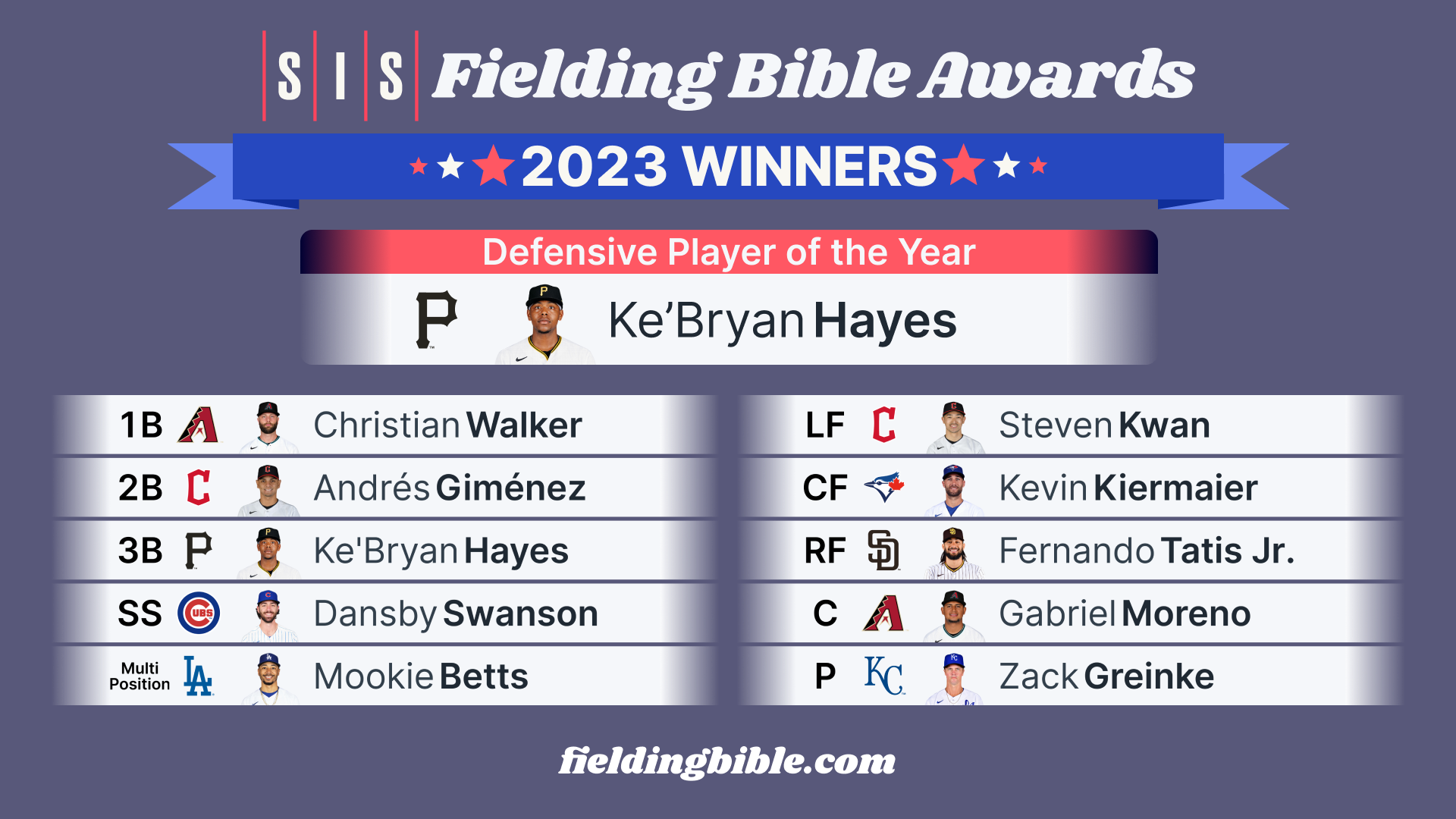
  • 2023 Defensive Player of the Year: Ke’Bryan Hayes

    2023 Defensive Player of the Year: Ke’Bryan Hayes

    When we talk about defensive excellence, all too often we talk about great plays. We’re wowed by the spectacular, the diving, the sliding, and the jumping. Whatever makes for good social media and gets shared a million times over is what we see the most.

    And that’s great. It’s fun.  Fans love it. Players love it.

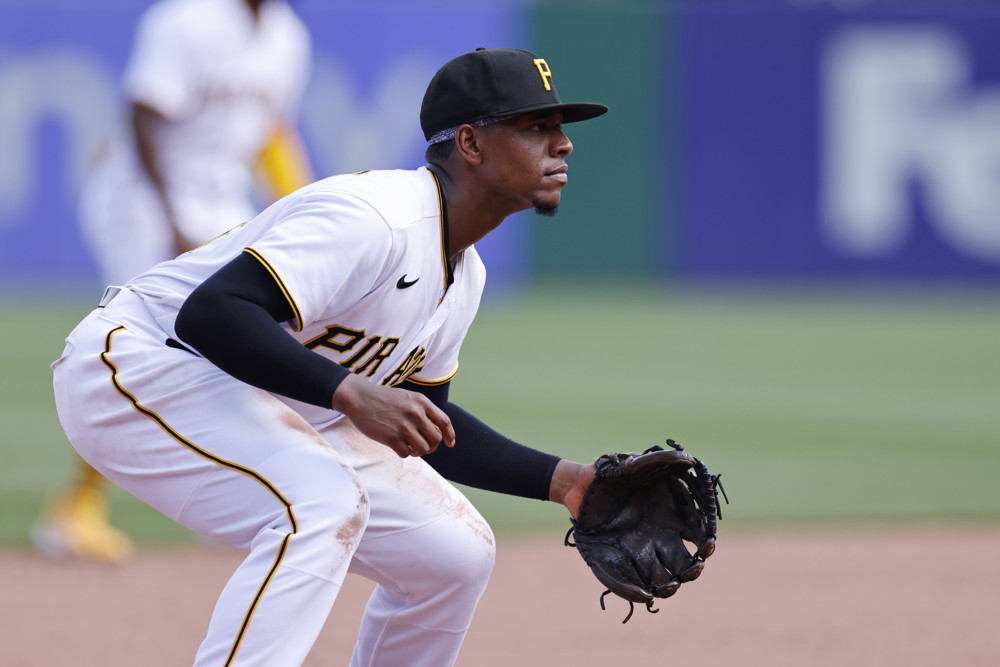
    But maybe with our inaugural Defensive Player of the Year, Ke’Bryan Hayes, we need to look at this differently. Maybe what defensive excellence is for Hayes is a little different than what it is for someone else.

    Hayes’ great plays are high quality but not necessarily high in quantity. Our Video Scouts track Good Fielding Plays. These are largely the highlight-reel plays I mentioned a couple of paragraphs ago, along with (in smaller numbers) things like keeping the ball on the infield to keep a run from scoring.

    Here’s one example, and another. They’re really good plays. By our count, Hayes had 14 Good Fielding Plays in 2023. On a per-1,000-inning basis, he wasn’t close to the MLB leaders at third base. He was middle-of-the-pack.

    I have a theory here, though it’s a hard one to prove statistically. It’s that Hayes doesn’t have a lot of Good Fielding Plays because that’s not how he does things. As Pirates manager Derek Shelton told me “He makes really, really difficult plays look routine.”

    For example, this play doesn’t look that difficult on TV.


    But I watched a ballpark All-9 camera view of it (we can’t show it due to MLB rules). It was a tougher play than you think. Hayes reacted quickly to the ball. Some players might have dove for it. He didn’t need to.

    “The thing that impresses me most is the consistency,” Shelton said. “He’s just so good.”

    That Hayes can make defense look easy makes sense given that he’s basically been preparing to be a major leaguer since he began playing baseball as a kid. In two conversations with him, a few years apart, Hayes brought up how one of the most important things he learned as a kid was how to throw a ball to his first baseman. The first baseman wore a Superman t-shirt, and it was Hayes’ job to throw to the ‘S.’ He picked this up well.

    “I remember his mom asking me why I hit ground balls so hard to him,” said Ke’Bryan’s father, former 14-year major leaguer Charlie Hayes. “He was blessed with great hands. I told her that he was better than most, so I needed to challenge him more. Catching and throwing is the easiest thing to do on a baseball field so there’s no reason not to be great at it. He bought into it all.”

    There’s another point that’s important to consider when watching how Hayes defends.

    What makes Hayes great is not that he makes great plays. It’s that he makes very few mistakes.

    In addition to tracking Good Fielding Plays, our Video Scouts also track Defensive Misplays. Those are things that aren’t scored errors but that have a negative consequence.

    Bobble a ball such that you get only a force out rather than a double play? That’s a Defensive Misplay.

    Slip and fall trying to catch a popup and have the ball drop behind you or in front of you?  That’s a Defensive Misplay.

    At SIS, we combine those Defensive Misplays with Errors to provide another data point for defensive evaluation.

    Let’s compare Hayes’ 2023 Defensive Misplay and Errors per 1,000 innings to five other third basemen considered to be among the best in MLB.

    Player Team Misplays & Errors Per 1,000 Innings
    Ke’Bryan Hayes Pirates 12.5
    Manny Machado Padres 18.5
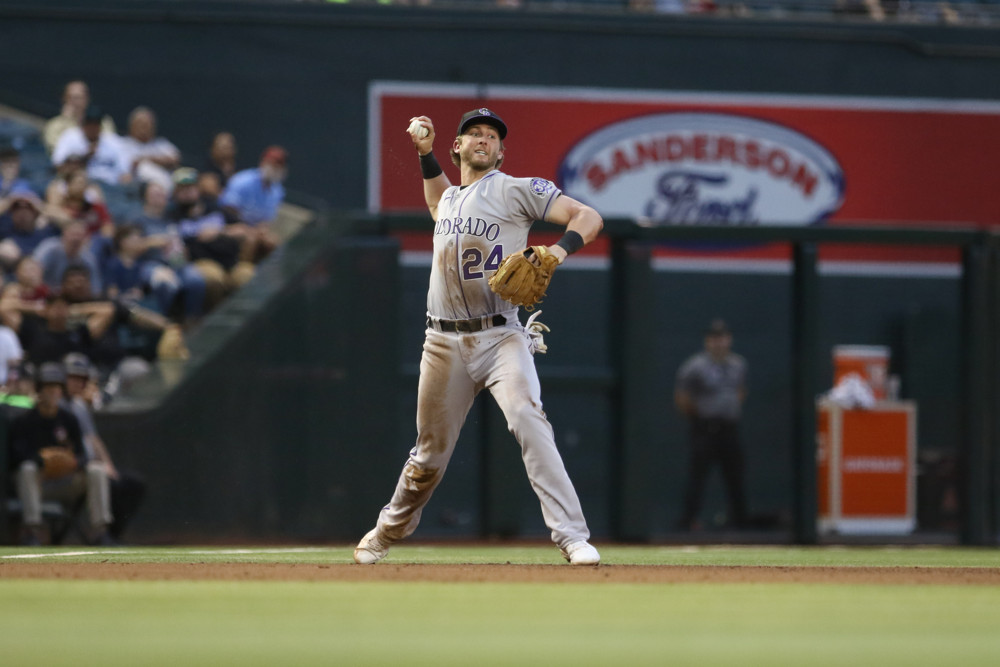
    Ryan McMahon Rockies 19.0
    Alex Bregman Astros 21.9
    Nolan Arenado Cardinals 21.9
    Matt Chapman Blue Jays 26.4

    Hayes crushed all of those guys this season.

    The only player to have a better rate at third base than Hayes in 2023 was DJ LeMahieu of the Yankees. Hayes played about 450 more innings at third base than LeMahieu did. Look at this stat for the last 4 seasons and it’s LeMahieu and Hayes as the best, with Hayes having played about 1,700 more innings than LeMahieu has.

    This low misplay total is particularly impressive for 2 other reasons.

    And it’s all done very calmly and with an ease that other players don’t necessarily have.

    A high school coach used to tell Hayes to be extraordinary at the ordinary. Hayes lives that saying. To do that he embraced the other side of playing defense.

    “The mental side has been the biggest thing for me,” Ke’Bryan Hayes said. “Playing outcomes in my head before they happen. Knowing the runners, knowing who’s pitching, knowing how they hit the ball off that pitcher.  I try to break down everything and that way, whatever it does happen, I kind of just let my instincts take over. I just trust myself.”

    SIS VP of Baseball Bobby Scales said on our baseball podcast “Ke’Bryan Hayes never panics on any ball.”

    All the work Hayes put in pays off and you can see that if you watch him up close every day.

    “He has the ability to read hops that no one else has,” said Shelton. “That’s not something you can teach. One of the things that elite third basemen do is have the ability to decide if they’re going to come get the ball or if they’re going to take a drop step to get it. It’s not even something he has to think about. It’s just something that he does.”

    Hayes’ role is changing. At age 26, he’s no longer the youngest infielder on the team. He’s now the player the younger infield prospects watch to see how he does things.

    “At the end of the day, I’m just trying to go out there and be an example of just doing things the right way,” Hayes said.

  • 2023 Fielding Bible Awards Voting

    2023 Fielding Bible Awards Voting

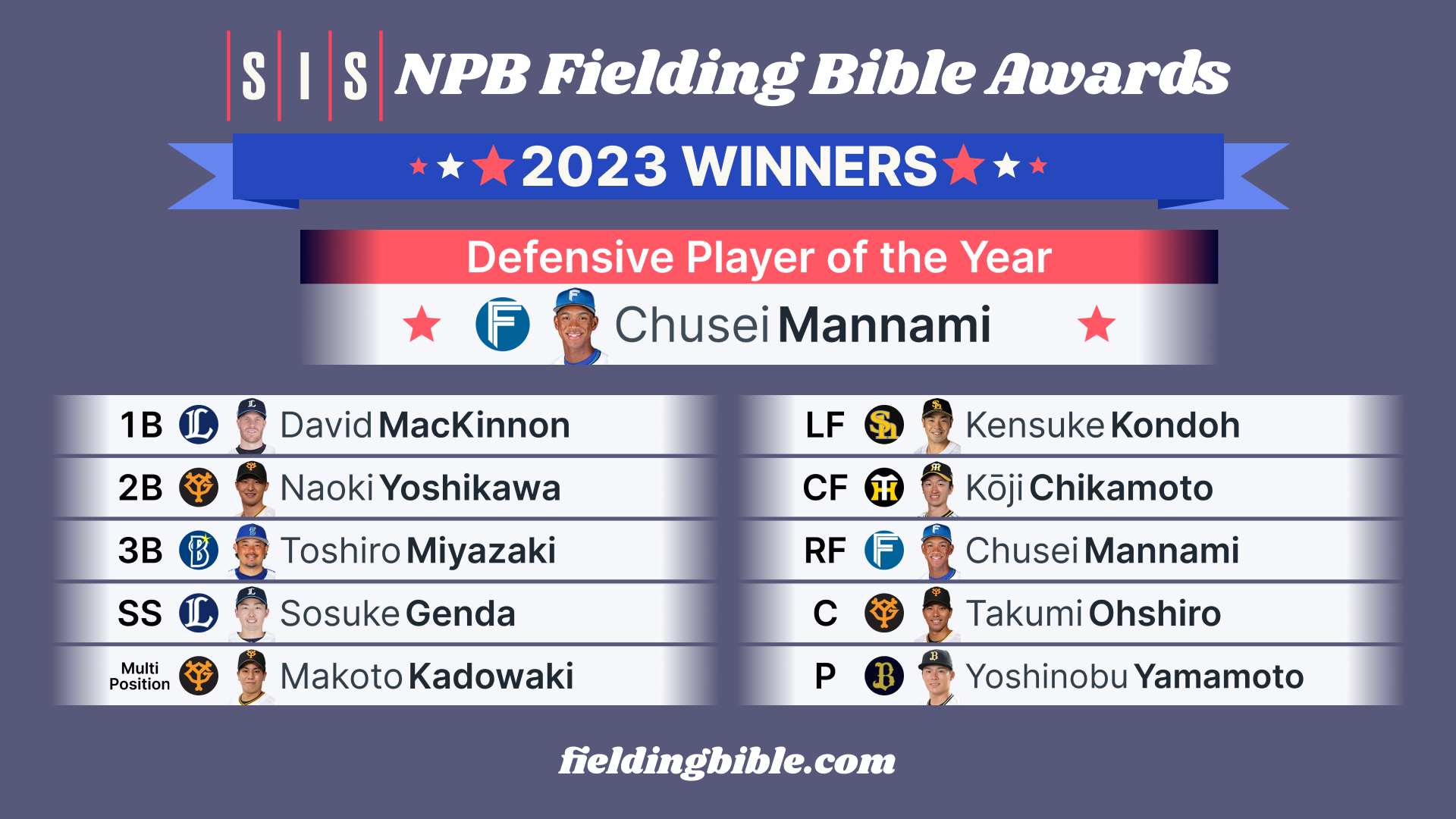
    Below we show the final point tally for The Fielding Bible Awards in the 2023 season. We asked a panel of experts to complete a 10-man ballot ranking players from 1 to 10 based on their defensive abilities. We show the ranks in the tables below. We then awarded 10 points for a first place vote, 9 for second, etc., down to 1 point for 10th place. We cover all nine positions, looking at only their fielding work for the 2023 season. Position players are eligible if they played at least 600 innings while catchers require a minimum of 500 innings. Either can qualify with 10 Runs Saved, as well. Pitchers require a minimum of 120 innings pitched or 5 Runs Saved. 

    In 2014, we introduced a Multi-Position Award for fielders who are excellent defensive players but do not call any one position their home. Eligible players include those who exhibit a high degree of positional versatility and value; players who usually play many positions over the course of the season, might move from position to position within a game, and have demonstrated the ability to handle high leverage positions when the team needs him to.

    In 2023, we added an award for Defensive Player of the Year. All players eligible for a Fielding Bible Award can be voted on for this award. All voters ranked players from 1 to 3, with 5 points for a first place vote, 3 for a second place vote, and 1 for a third place vote.

    Voters were Alyson Footer (MLB.com), Bill James, Bill Ladson (MLB.com), Bobby Scales (SIS), Chris Dial, Dani Wexelman (MLB Network Radio), Daniel Alvarez-Montes (El Extra Base), Eduardo Perez (ESPN), Hal Richman (Strat-O-Matic), Joe Sheehan, John Dewan, Mark Simon (SIS), Peter Gammons, Travis Sawchik (The Score), Tyler Kepner (The Athletic), and the Sports Info Solutions Video Scouts.

  • Fielding Bible Awards Preview (Part II)

    Fielding Bible Awards Preview (Part II)

     Photo: Joe Robbins/Icon Sportswire

    This is the second part of our two-part preview that will focus on the top candidates for The Fielding Bible Awards, which will be announced next Thursday, October 26.

    This week, Part II of our preview looks at outfielders, pitchers, our multi-position award, and something new this year – our inaugural Defensive Player of the Year Award.

    The Defensive Player of the Year will go to the player that our voting panel believes was the top defensive performer in 2023.

    The Fielding Bible Awards is voted on by a panel of experts who can vote based on whatever criteria they choose, including observation and subjective judgement, as well as statistical analysis. Each position has one overall winner, different from the Gold Gloves, which has one in each league. Similarly, the Defensive Player of the Year is only given to one player, whereas the Platinum Glove Award is given to one in each league.

    (Defensive Runs Saved totals in parentheses)

    Left Field

    Fielding Bible Award Favorites: Steven Kwan (16), Lourdes Gurriel Jr. (14)

    NL Gold Glove Favorite: David Peralta (7)

    AL Gold Glove Favorite: Kwan

    NL Top Contender: Nolan Jones (9)

    AL Top Contender: Daulton Varsho (11)

     Kwan will be looking to win his 2nd straight Fielding Bible Award after leading his position in Defensive Runs Saved for the 2nd straight season. Gurriel Jr. is a pretty good challenger. He ranked 16th among left fielders in innings played but finished 2nd in Runs Saved. Jones, who led all left fielders in Outfield Arm Runs Saved, is also formidable.

     One note here: Peralta is listed as the NL Gold Glove favorite. Based on previously published eligibility requirements, neither Gurriel nor Jones are eligible for a Gold Glove this year.

    Center Field

    Fielding Bible Award Favorite: Brenton Doyle (19), Kevin Kiermaier (18)

    NL Gold Glove Favorite: Doyle

    AL Gold Glove Favorite: Kiermaier

    NL Top Contenders: Johan Rojas (15), Alek Thomas (5)

    AL Top Contenders: Kyle Isbel (13), Cedric Mullins (7)

    This is one of the most fun positional races to discuss. Doyle had an incredible season. He led all center fielders in Runs Saved as a rookie playing regularly in the toughest outfield to play in the majors, Coors Field. No other Rockies center fielder has ever saved more than 6 runs in a season. Meanwhile, Kiermaier was great from start to finish. He led all center fielders in the Range component of Runs Saved despite ranking 10th in innings played.

    Right Field

    Fielding Bible Award Favorite: Fernando Tatis Jr. (29)

    NL Gold Glove Favorite: Tatis Jr.

    AL Gold Glove Favorites: Alex Verdugo (9), Adolis García (7)

    NL Top Contenders: Jason Heyward (5), Mookie Betts (3)

    AL Top Contender: Kyle Tucker (1)

    Statistically, this one is a runaway. In his first year playing the position, Tatis led all right fielders in Runs Saved, with the next-closest player 20 runs behind. He left some of the game’s top defensive right fielders in the dust. The suspense here is in which player wins the AL Gold Glove, which figures to be a close vote between Verdugo and Garcia, with perhaps last year’s Gold Glove winner, Tucker, snagging some votes too.

     Pitcher

    Fielding Bible Award Favorites: Jesús Luzardo (7), Zack Greinke (6)

    NL Gold Glove Favorite: Luzardo

    AL Gold Glove Favorite:  José Berríos (5)

    NL Top Contenders: Taijuan Walker (5), Zack Wheeler (4)

    AL Top Contender: Sonny Gray (4), Pablo López (4)

    Luzardo edged out Greinke by 1 run for the Runs Saved lead for pitchers this year. He also led in the Range component of Runs Saved but Greinke edged him out by a run in another component, Stolen Base Runs Saved. Greinke also has a strong defensive history. He’s previously won 2 Fielding Bible Awards and 6 Gold Glove Awards. However, he’s only eligible for a Fielding Bible Award due to Gold Glove eligibility requirements.

    Walker also deserves a mention. He finished 2 Runs Saved off the MLB lead for pitchers this year. He’s yet to win any defensive awards but is the position’s Runs Saved leader over the last 3 seasons.

    Multi-Position

    Fielding Bible Award Favorite: Mookie Betts (9)

    NL Utility Player Gold Glove Favorite: Betts

    AL Utility Player Gold Glove Favorites: Taylor Walls (10)

    NL Top Contenders: Jon Berti (5), Tommy Edman (3)

    AL Top Contender: Mauricio Dubón (5) Zach McKinstry (1)

    Betts has won 5 Fielding Bible Awards previously, all in right field, but this season he split time between right field, second base and shortstop. Of those, he actually fared best statistically at 2nd base, saving 6 runs.

    Betts’ competition includes a mix of players who moved around the diamond a little more than he did but didn’t quite match Betts in Runs Saved, like Dubón and Castro. There’s also McKinstry, who played at least 90 innings at 5 different positions.

    The Fielding Bible Awards panel votes for this award based on a list of 15 players generated from a Defensive Versatility Score formula created by Bill James to measure a combination of defensive versatility and value. The stat rewards players who usually play many positions in a season, might move from position to position, and have demonstrated the ability to handle high-leverage positions when the team needs them to.

    Rawlings’ criteria for the definition of a utility player for the Gold Glove Award have not been shared publicly.

    Defensive Player of the Year

    Fielding Bible Award Favorites: Daulton Varsho (29), Fernando Tatis Jr. (27)

    NL Platinum Glove Favorites: Tatis, Ke’Bryan Hayes (21), Brenton Doyle (19)

    AL Platinum Glove Favorite: Varsho, Andrés Giménez (23), Kevin Kiermaier (18)

    NL Top Contenders: Gabriel Moreno (20), Dansby Swanson (18)

    AL Top Contenders: Marcus Semien (16)

    Our inaugural award could go to any number of players. Varsho led the majors in Runs Saved, with 18 in center field and 11 in left field (he was eligible to win only in left field). Tatis had the most Runs Saved of any player at any position. Swanson, Doyle, and Moreno play premium positions. Giménez and Hayes have repeatedly put up great numbers at their respective positions.

    Voters on our panel could vote for any player who was eligible for The Fielding Bible Awards for Defensive Player of the Year.

    The Platinum Glove is selected by fan voting among the Gold Glove winners and thus Varsho, who faces tough competition in left field, might not end up in the mix, which opens the door for Kiermaier to be a strong contender.


  • Fielding Bible Awards Preview: Part I

    Fielding Bible Awards Preview: Part I

     Photo: Jeff Robinson/Icon Sportswire

    Our next two Stat of the Weeks will focus on the top candidates for The Fielding Bible Awards, which will be announced later this month.

    The Fielding Bible Awards is voted on by a panel of experts who can vote based on whatever criteria they choose, including observation and subjective judgement, as well as statistical analysis. Each position has one overall winner, different from the Gold Gloves which has one in each league.

    This week, Part I of our preview looks at catchers and infielders.

    (Defensive Runs Saved totals in parentheses)

    Catcher

    Fielding Bible Award Favorite: Gabriel Moreno (20)

    NL Gold Glove Favorite: Moreno 

    AL Gold Glove Favorite: Alejandro Kirk (17)

    NL Top Contenders: Patrick Bailey (13), Will Smith (12), Sean Murphy (8)

    AL Top Contender: Jonah Heim (6)

    Moreno pulled away from a tight field late in the season. His MLB-leading Defensive Runs Saved total was partly a product of being one of the few catchers who could throw out basestealers at a high rate this season, and his pitch blocking was excellent.

    The vote might be close because Moreno had a weakness: pitch framing. Kirk was basically a match for Moreno in pitch blocking and rated considerably better in our framing metric, Strike Zone Runs Saved.

    First Baseman

    Fielding Bible Award Favorites: Carlos Santana (11), Christian Walker (9), Matt Olson (8)

    NL Gold Glove Favorite: Walker

    AL Gold Glove Favorites: Anthony Rizzo (3), Nathaniel Lowe (3)

    NL Top Contender: Pete Alonso (6), Dominic Smith (5), Paul Goldschmidt (3) 

    AL Top Contender: Ryan Mountcastle (2)

    We list three favorites here because we’re expecting a close vote between this trio. Santana is the surprise of the group. His defense has improved with age. This is his fourth straight season with positive Runs Saved and the 11 Runs Saved is a career high. Walker and Olson have the benefit of reputation. Walker won the Award last season. Olson has won three times previously.

    In the AL, Lowe winning a Gold Glove would be notable. He was one of MLB’s most-improved defenders, going from -9 Runs Saved last season to 3 Runs Saved in 2023. His most formidable competition is Rizzo, whose season was halted in August by injury.

    Second Baseman

    Fielding Bible Award Favorite: Andrés Giménez (23)

    NL Gold Glove Favorites: Nico Hoerner (12), Brice Turang (12)

    AL Favorite: Giménez

    NL Top Contender: Ha-Seong Kim (10)

    AL Top Contender: Marcus Semien (16)

    Giménez was our co-Defensive Player of the Month for September and was another player who pulled away from the rest of the field for the positional lead in Defensive Runs Saved. He has a good chance to win a year after finishing second in the Fielding Bible voting to Brendan Rodgers. Semien is good competition. He leads all second basemen in Runs Saved over the last 3 seasons.

    In the NL, Hoerner made the transition from full-time shortstop last season to second base in 2023 to accommodate the Cubs’ acquisition of Dansby Swanson. He’s in a tight race for the Gold Glove with an impressive rookie, Turang, and Kim, who has put up very strong defensive numbers wherever he’s played since joining the Padres in 2021.

    Shortstop

    Fielding Bible Award Favorite: Dansby Swanson (18)

    NL Gold Glove Favorite: Swanson

    AL Gold Glove Favorite: Anthony Volpe (15)

    NL Top Contenders: Ezequiel Tovar (13), Miguel Rojas (12)

    AL Top Contender: Jeremy Peña (7)

    Swanson gave the Cubs exactly what they were looking for in his first year with the team. There are a lot of good candidates here, including a pair of rookies. Anthony Volpe didn’t hit much for the Yankees but put up strong overall defensive numbers. The Gold Glove Award may come down to him and last year’s winner, Peña.

    Third Baseman

    Fielding Bible Award Favorite: Ke’Bryan Hayes (21)

    NL Gold Glove Favorite: Hayes

    AL Gold Glove Favorite: Matt Chapman (12)

    NL Top Contender: Ryan McMahon (17)

    AL Top Contender: Alex Bregman (5)

    Even with a midseason injury, Hayes was easily the leader in Runs Saved among third basemen. Hayes came in 2nd to Nolan Arenado in last year’s Fielding Bible Awards, but this season, Hayes has him beat in Runs Saved, 21-1. It’s actually McMahon who might be Hayes’ most formidable competitor for both Fielding Bible and Gold Glove wins this season.

    In the AL, Chapman looked something like his 2-time Fielding Bible Award-winning self this season. There aren’t any other Gold Glove Award-eligible 3rd basemen close to his Runs Saved total. That doesn’t necessarily mean he’ll win, but he has a good chance.


  • Stat of the Week: Premier Playoff Defenders

    Stat of the Week: Premier Playoff Defenders

    Have you liked the defense so far this postseason?

    Hope so! There’s been some pretty good glovework all the way around, and even a few highly-impressive pickoffs at key moments.

    With 8 teams remaining after all the Wild Card sweeps, there are plenty of standout players still in the field.

    Let’s go position-by-position to find the players with the most Defensive Runs Saved who are still playing as the LDS begins.

    First Base – Christian Walker ranked 2nd in Runs Saved at first base this season, two runs behind the leader, Carlos Santana, and one run better than another playoff participant, Matt Olson. Walker is the reigning Fielding Bible Award winner at the position. Olson’s pretty good too. He won the Award 3 years in a row from 2018 to 2020.

    Second Base – Marcus Semien ranked 2nd in Defensive Runs Saved this season but over the last 3 seasons, he’s No. 1 at the position. He brings it every game. Semien led all second basemen in innings played and since 2021, he has played 700 more innings than the next-closest second baseman.

    Shortstop – Like Semien, veteran Miguel Rojas leads shortstops in Runs Saved over the last 3 seasons. Rojas finished tied for 4th in Runs Saved in 2023 and has been particularly good at fielding balls in the shortstop-third base hole the last 2 seasons.

    Third Base – Austin Riley has also done well by Defensive Runs Saved the last 3 seasons, ranking 3rd among third basemen in that time behind Ke’Bryan Hayes and Ryan McMahon. The two guys ranking 4th and 5th behind Riley are two defensive superstars, Nolan Arenado and Matt Chapman. Riley ranked 4th at the position this season.

    Left Field Lourdes Gurriel Jr. totaled 14 Runs Saved this season and ranked 2nd at the position, just behind Steven Kwan. How did Gurriel do it in only 95 games in left field? He ranked 2nd in the range component of Runs Saved AND 2nd in the throwing component.

    Center Field – We’ve written about Johan Rojas before and we acknowledge him here again. He handily leads the remaining playoff center fielders in Runs Saved despite not even having played 400 innings there this season. The next-closest playoff center fielder to Rojas’ 14 is Cedric Mullins, with 7.

    Right Field Adolís Garcia’s cannon of an arm was responsible for all 7 of his Runs Saved this season. Garcia and Fernando Tatis Jr. trailed only Nolan Jones of the Rockies for most Outfield Arm Runs Saved in MLB in 2023.

    CatcherGabriel Moreno led all catchers in Runs Saved this season. He was the top catcher at thwarting basestealers by our measures and one of the best pitch blockers too. His status is in question after getting injured in Game 2 against the Brewers. If he’s out, the top remaining catcher is Will Smith, whose 12 Runs Saved ranked 4th overall.

    Pitcher – The Phillies ranked 25th in Defensive Runs Saved during the regular season, but they’ve got some good gloves on the pitching staff. Taijuan Walker came in 2nd in the Fielding Bible Awards to teammate Ranger Suárez last season. His 18 Runs Saved over the last 3 seasons are the most of any pitcher in MLB.

    Most Defensive Runs Saved – Players on LDS Teams

    Player Team Runs Saved
    1B- Christian Walker Diamondbacks 9
    2B- Marcus Semien Rangers 16
    SS- Miguel Rojas Dodgers 12
    3B- Austin Riley Braves 9
    LF- Lourdes Gurriel Jr. Diamondbacks 14
    CF- Johan Rojas Phillies 15
    RF- Adolís Garcia Rangers 7
    C- Gabriel Moreno Diamondbacks 20
    P- Taijuan Walker Phillies 5


  • 2023 Postseason Player To Watch: Bryson Stott

    2023 Postseason Player To Watch: Bryson Stott

    Photo: Gregory Fisher/Icon Sportswire

    As the Phillies head to the postseason for the second year in a row, it’s worth noting that national viewers were first introduced to Bryson Stott around this time last year. This time around they’ll be seeing a considerably improved player.

    In 2022, Stott hit.279 with a 107 WRC+ from August until the end of the season. He also began to display some key traits during the Phillies deep playoff run that foreshadowed future success.

    Despite only posting a .482 OPS in last year’s postseason, Stott was able to work deep counts by fouling off pitches and generally being a pest at the bottom of the Phillies potent lineup. He ended the postseason averaging over 4.6 pitches per plate appearance, including a 12-pitch walk against Rafael Montero and a 10-pitch walk against Justin Verlander.

    Moving into the 2023 season, Stott shifted to second base to accommodate Trea Turner. This paid off immediately, as Stott put together a 17-game hitting streak to begin the season and continued to provide solid performance in all aspects of the game.

    Before a cold September, Stott maintained a batting average near .300 for almost the entire year, en route to a 4-bWAR season. Now established as an excellent starter on a playoff team, it’s worth looking at how he reached this point so quickly and how these experiences point toward greater success moving forward.

    Plate Approach

    While Stott had some success golfing low-and-in pitches early last season, the gains were largely offset by his struggles in other areas.

    Baseball Savant summarized his struggles against four seamers in general His -14 Run Value ranked 6th-worst in MLB. He hit .119 with a .214 slugging percentage against what our pitch classification system labeled high fastballs. Stott worked to flatten his bat path and give himself a better chance to do damage against high heat. After undergoing several mechanical tweaks it appears he has found a suitable approach for his profile.

    Here are some examples of these changes:

    April 8 2022:

    August 22 2022

    September 12 2023

    Take note of both his lower-body stability and hand positioning as the pitch is released. Early in his career, he used a two-piece low leg kick where his foot is in the air at release. He would then pivot the foot back open and combined with his high upright hand position, this allowed him to open his hips and attack pitches low and in.

    However, upon recommendation from Jean Segura and hitting coach Kevin Long (as documented by the Philadelphia Inquirer’s Alex Coffey), Stott began using a more conservative two-strike approach at all times starting in August. As seen in the second clip, Stott has crouched down significantly, lowered the angle of his hands, and kept his feet quieter by loading with an exaggerated rock and lean.

    Moving to the most recent clip, Stott adjusted further this season. Here, he lowered his hands again, adopted a heel tap for better balance, and closed off his front foot a bit. Each aspect generally assumed a more natural position, giving him a very relaxed and controlled demeanor at the plate.

    As a result of these changes, Stott posted a .278 average and .454 slugging percentage against high fastballs this year. In addition, he’s boosted his numbers against fastballs in general, with his average jumping up over 100 points and his slugging nearly 150 points.

    With his primary weakness addressed, Stott was now free to demonstrate more of his skill set. As demonstrated during the playoffs last year, Stott is well suited to working long at bats, possessing a patient early approach with the 7th-lowest first pitch swing rate (16%) and strong bat-to-ball skills with the 8th highest contact rate (85%). As a result, he ranks 17th out of 137 qualifiers in pitches per plate appearance at 4.17, putting him in the same neighborhood as other notably selective hitters such as J.P. Crawford, Ian Happ, and Juan Soto.

    The combination of contact and contact quality is in question for every hitter, so it is interesting to look at some of Stott’s peers in regards to contact and how he stacks up in some other relevant batted-ball numbers. Here are the 10 best hitters by swinging-strike rate.

    Name Swinging Strike Rate Avg exit velo Opposite-Field%
    Luis Arraez 3.1% 88.3 31.%
    Steven Kwan 3.9% 86.0 31%
    Alex Bregman 4.9% 88.6 22%
    Myles Straw 5.1% 86.3 35%
    Nico Hoerner 5.1% 86.6 29%
    Alex Verdugo 5.6% 89.2 25%
    Adley Rutschman 5.6% 88.4 29%
    Mookie Betts 5.8% 92.4 18%
    Lars Nootbaar 5.8% 89.1 25%
    Bryson Stott 6.0% 88.1 32%

    Players such as Adley Rutschman and Mookie Betts present some outliers since they possess enviable amounts of both contact and power, but it’s encouraging to see that Stott seems to slot into a second tier here, frequently producing useful contact but also providing better raw power indicators than the purely slap hitters on this list. Opposite-field percentage is also included to show that Stott is skilled at making contact to all fields but still makes authoritative contact when given the chance to pull the ball.

    Defense and Baserunning

    Bryson Stott’s defensive improvements should also be noted. After putting up mixed defensive numbers at shortstop, he has adapted quite well to second base, as he is tied for sixth at the position with +7 Defensive Runs Saved. In particular, his progress seems to stem from better arm utility. He exhibited plus range at shortstop last year, saving six runs with his range, but this was offset by his -7 throwing runs. Now at second base, he continues to show off his range (+6) but is able to pair this with improved throwing numbers (+3).

    Stott played an aggressive second base. His 80 sliding, diving, and jumping attempts ranked 2nd in MLB. His 31 plays made on slides, dives, and jumps was surpasses at second base only by Andres Gimenez. Here are two examples of how he uses a dive and a slide to each side, executing both smoothly to adjust his momentum and prepare him for the throw to first.


    One area that could still see future improvement is his general chemistry with Trea Turner, specifically demonstrated in their double play numbers. While not as drastic as primary defensive numbers, double play turns are another way that a good second baseman and shortstop can make an impact. Both Stott and Turner have struggled to convert double plays and are rated at -4 runs in this area, which is the worst mark at each position. Turner has not been a good defender this year and with both players still adjusting to this configuration there is still some room for growth here.

    Stott is also a plus baserunner and is an especially efficient base stealer, with 31 steals in 34 attempts. By Bill James’ baserunning stats, his +25 Stolen Base Gain rating tied for 8th in baseball behind names such as Ronald Acuna Jr., Corbin Carroll, and Turner (this stat values both volume of steals and success rate).

    Dancing On My Own

    On top of everything else, he is a great presence in postgame interviews, as some combination of Stott, Bohm, and Marsh shower the interviewee with water cups, sunflower seeds, and anything else from the dugout that is readily available. Here is what it looked like after the final game of the regular season:

    View post on imgur.com

    With so many talented young stars in the game, Bryson Stott has quietly turned himself into one of the most well-rounded ones in only his second season. It will be exciting to track his development not only in this postseason but for many years to come.

  • Stat of the Week: Brooks Robinson’s Legacy

    Stat of the Week: Brooks Robinson’s Legacy

     Photo: The Rucker Archive/Icon Sportswire

    If you’re going to talk about legends of defensive excellence, the first few names you come up with should include Willie Mays, Ozzie Smith, Roberto Clemente, and of course, Brooks Robinson.

    Robinson, the former Orioles third baseman, died earlier this week at age 86.

    Robinson won 16 Gold Glove awards. Though two pitchers – Greg Maddux (18 Gold Gloves) and Jim Kaat (16) have won as many as Robinson has, Robinson is the only player to win 16 in a row, doing so every year from 1960 to 1975. The next-most Gold Gloves by a third baseman is 10 by Mike Schmidt and Nolan
    Arenado.

    Defensive Runs Saved didn’t exist in the 1950s, 1960s, and 1970s, but others have tried to create stats to illustrate defensive value. Win Shares is one and Robinson ranks first among third basemen in a component of that, Defensive Win Shares. Another developed by a researcher named Sean Smith exists on Baseball-Reference.com and is called Total Zone Runs. You can learn more about it here.

    I feel confident in Total Zone Runs for a few reasons, one being that its Top 5 players overall are Robinson, Andruw Jones, Mark Belanger, Smith, and Clemente and its Top 3 third basemen are Robinson, Adrián Beltré, and Buddy Bell. All of these players were extremely highly regarded for their defense in their respective eras.

    For those who might think that Robinson won his last couple of Gold Gloves based on his reputation, a look at Total Zone Runs refutes that. He led AL third basemen in that stat the last 2 years he won the award.

    Total Zone Runs draws upon the basic stats, like putouts, assists, and double plays. He’s the all-time third base leader in those too.

    Robinson’s most famous defensive play came in the 1970 World Series, when he fielded a smash down the third base line and threw out Lee May from well into foul territory. The Orioles won two World Series with Robinson, the first in 1966 against the Dodgers and this one in 1970 against the Reds. Robinson won
    MVP in the latter with both his defense and his offense. He hit .429 with 2 home runs and 6 RBI in 5 games.

    Robinson could hit some too. In 23 seasons he totaled 2,848 hits and 268 home runs. He won the AL MVP in 1964, hitting .317 with 28 home runs, an AL-best 118 RBI, and an .889 OPS.

    Robinson was immensely popular. He became an Orioles player in 1955 and remained associated with the team until his death. He was known as Mr. Oriole.

    When I was maybe 11 or 12 years old, I waited in line for Robinson’s autograph at a baseball card show in New York. It was a long wait because Robinson took the time to talk to and pose for a picture with everyone (myself included). He left as great an impression on someone like me, a kid who never got to see him play, as he did for those who watched him play at a Hall of Fame level. I’ve read numerous tributes that said similar.

  • Stat of the Week: Updates on HR Robs, Pitcher Injuries, Arenado & More

    Stat of the Week: Updates on HR Robs, Pitcher Injuries, Arenado & More

    Photo: Rick Ulreich/Icon Sportswire

    As the MLB season nears an end there are a lot of things that we wrote about at some point this season that we’d like to update you on. But we only have so much space and so much time with which to work. 

    So rather than try to tell you a lot about one particular thing this week, let’s update you on 5 things that we either wrote about or frequently tweeted about from @sis_baseball this season.

    HR Robberies 

    The 2023 season has had more home run robberies than any season since we began tracking them in 2004. The current tally stands at 73, surpassing the previous mark of 69 set in 2019.

    The individual leaders in home run robberies are Mickey Moniak, Luis Robert Jr., Mike Trout, Cedric Mullins, and Kyle Tucker with 3 apiece. Angels outfielders have 10 home run robberies this season, the most by any team in any year since 2004. The 2005 Tigers had the previous mark with 9.  

    Pitchers Hit By Batted Balls 

    Earlier this season we addressed the number of pitchers being hit by comebackers, resulting in either the pitcher leaving the game or a considerable delay due to injury. 

    The count currently stands at 18 such incidents, an unusual and scary total given that there were 19 from 2020 to 2022 combined. The total number of pitchers hit with a batted ball, regardless of severity of injury, is comparable to the last two seasons – 169 in both 2022 and 2023 and 160 in 2021.

    Hitters Deserving A Better Fate 

    In April we wrote about how Starling Marte and Nick Gordon had been repeatedly denied hits by either good-looking defensive plays or plays that may have been tougher than they looked. 

    Both Gordon and Marte got injured and neither rated among the players most thwarted by defenses in 2023.
    It looks like the best-defensed hitter this season is going to be Lourdes Gurriel Jr. of the Diamondbacks. Opposing defenses have recorded 21 Runs Saved against Gurriel this season. He’s followed by Alec Bohm and Steven Kwan (18 Runs Saved against them).

    Another way of looking at it: the hitter with the most “Good Fielding Plays” against him specific to plays that took away hits is José Ramírez with 21. 

    Nolan Arenado

    Perennial Gold Glove and 5-time Fielding Bible Award winner Nolan Arenado had a disappointing 2023 season as far as his defensive stats went. He spent most of the year with a negative Defensive Runs Saved. 

    But Arenado has looked better of late. After heading into the All-Star Break with -4 Runs Saved, Arenado has since saved 5. With 1 Run Saved, Arenado is not likely to contend for a Fielding Bible Award this season, but he’s shown that he still has some of the skills that made his metrics so good. 

    NPB’s Top Defensive Team 

    You may have noticed us regularly tweeting about Japanese baseball in the latter part of the year as we noticed there’s an avid following and not a lot of defensive data accessible for NPB fans.

    With that in mind, we can tell you that the best defensive team you don’t know about is the NPB’s Hanshin Tigers. The Tigers, who won the Central League title for the first time since 2005, currently have 29 Runs Saved and have a comfortable advantage in Defensive Runs Saved over the next-closest NPB team, the Nippon-Ham Fighters, who have 6. 

    NPB out probabilities are created from the same basis we use for MLB ones. Most NPB team totals are either negative or slightly positive. Hanshin has been the exception.

    Hanshin’s top defensive players are catcher Seishiro Sakamoto (T-1st among C in Runs Saved), second baseman Takumu Nakano (2nd, 2B), center fielder Koji Chikamoto (T-1st, CF), right fielder Shota Morishita (T-4th, RF), and pitcher Koutaro Ohtake (1st, P). 

    Sakamoto in particular is considerably popular among fans because of his pitch-framing skill. (we’ve heard from many on social media). Hanshin pitchers are 49-19 with a 2.12 ERA this season when Sakamoto catches.

  • Examining the Relationship Between Pitch Delivery Type and Stolen Bases

    Examining the Relationship Between Pitch Delivery Type and Stolen Bases

    With a few weeks remaining in the season, there have been more than 3,000 stolen bases for the first time since 2012. Both the AL and NL stolen base leaders have over 60 apiece for the first time since Michael Bourn and Jacoby Ellsbury did it in 2009, and Trea Turner is a perfect 28-for-28 on stolen base attempts.

    Obviously, MLB’s new rules changes are the largest contributing factor to this meteoric rise, but I became curious about what else might influence the stolen base rate. That’s when I started digging into the pitch delivery type.

    Pitch delivery type is one of the many things we track at SIS. We categorize deliveries into three different types:

    Full-Leg Kick

    In-Between

    Slide Step

    We found one with a side angle that makes it more obvious.

    Now, I understand that it’s not exactly rocket science to know that the more time a pitcher takes to deliver the pitch, the better the runner’s chances are of stealing the base. The goal here is simply to apply data to help better understand the disparities between delivery types, as they relate to stolen bases.

    I began by collecting some data from this season. The following tables show the number of steal attempts per each delivery type along with the success rate of the baserunners. I separated the data into two different tables: steal attempts into 2nd and steal attempts into 3rd.

    A) Attempting to Steal 2nd (2023)

    Delivery Type # of Attempts SB Success Rate
    Full Leg Kick 2,095 84%
    In-Between 653 77%
    Slide Step 102 79%

    B) Attempting to Steal 3rd (2023)

    Delivery Type # of Attempts SB Success Rate
    Full Leg Kick 261 89%
    In-Between 51 84%
    Slide Step 6 100%

    Looking at the previous two tables, there is one fatal flaw that jumps out immediately. Sample size. There simply isn’t a large enough sample size from 2023 to draw any sort of conclusion about a relationship between stolen bases and delivery types.

    So I started doing a little more digging and collected data from the previous six seasons, ranging from 2017 to 2022. I intentionally kept data from 2023 out of this sample because of the impact that the rule changes might have on it.

    C) Attempting to Steal 2nd (2017 – 2022)

    Delivery Type # of Attempts SB Success Rate
    Full Leg Kick 9,249 79%
    In-Between 3,346 71%
    Slide Step 660 68%


    D) Attempting to Steal 3rd (2017 – 2022)

    Delivery Type # of Attempts SB Success Rate
    Full Leg Kick 1,121 82%
    In-Between 211 77%
    Slide Step 55 75%

     Now that’s a sample size I can work with.

    As expected, runners are more successful on delivery types that take more time. I found it interesting though that runners have a higher success rate stealing 3rd as opposed to 2nd. Stealing 3rd is inherently much more difficult than its counterpart, so why is this?

    This is likely due to the fact that attempting to steal 3rd is a task that’s generally reserved for only the fastest players on the team. Runners must be more certain of success before trying to steal 3rd.

    Sample size is also worth noting here, particularly when looking at attempts into 3rd on slide steps. The random variability in 55 attempts could possibly be skewing this number but it’s a significant step up from the 6 attempts in 2023 alone.

    When initially looking at the tables above, I noticed how the number of attempts decrease as you go down from full leg kick to slide step. Ultimately, the goal is to prevent the runner from advancing, so preventing him from even trying is a success in its own right. The problem is, the tables above lack a crucial piece of data.

    In order to know how effective a delivery type truly is at preventing runners from trying, you must know the total number of times pitchers used each delivery type. I divided the total number of steal attempts per delivery type by the total number of times each type was used with runners on. As you can see below, not all delivery types are used the same amount.

     E) 2017-2022 

    Delivery Type Total # of Steal Attempts # of Times Used

    (Runners On)

    Effectiveness
    Full Leg Kick 10,370 525,310 2%
    In-Between 3,557 182,118 2%
    Slide Step 715 56,470 1.3%

    As the table reads, runners are just as likely to take off on an in-between delivery as they are on a full leg kick – 2% of the time. This is a little surprising because runners are thrown out significantly more on in-between deliveries than full leg kicks. Referring back to tables C and D, runners are thrown out 8% more of the time attempting to take 2nd and 5% more attempting to take 3rd. Perhaps in-between deliveries could be the sweet spot for baiting the runner into going then having the catcher throw him out.

    Less surprising is the 0.7% drop when a slide step is used. The purpose of a slide step is to speed up the delivery and it’s not exactly hard for runners to notice.

    I want to acknowledge that expecting every pitcher to start changing their delivery type is ridiculous. Pitchers use leg kicks for many different reasons including rhythm, timing, and getting their momentum towards the plate. Some pitchers will be able to adapt, many will not. Ultimately, a pitcher’s main focus should be pitch quality. But the information above is worth knowing nonetheless so that we can better understand what we’re seeing.

  • Defensive Excellence Q&A: Tucker Frawley, Minnesota Twins Infield and Catching Coordinator

    Defensive Excellence Q&A: Tucker Frawley, Minnesota Twins Infield and Catching Coordinator

    This is the 12th interview in our series of articles on coaching defensive excellence the last two years, likely our final one for 2023.

    This season, we’ve talked to people from a few different nationalities, three female coaches working with male and female baseball players, and the head of a baseball academy focused specifically on defense. You can find the full series here.

    This week we talk to Tucker Frawley. He’s the Twins minor league infield and catching coordinator. Tucker played one year in the pros and then went into coaching. Prior to joining the Twins he was the associate head coach at Yale. One of Tucker’s focal points, which you’ll read about here, is integrating data into coaching.

    This interview has been edited for clarity and length. 

    Mark: What does defensive excellence mean to you and how do you go about teaching it?  

    Tucker: Defensive excellence is constantly trying to perform at a level that is an elite clip relative to our peers and I think that over the course of the last several years, that bar may have changed.

    What my offseason job is to do a whole bunch of research to ensure that we have MLB-level benchmarks that our minor leaguers are in tune with for every part of their game. I want them to know when they’re within an MLB spectrum in any of the tools or KPIs (Key Performance Indicators) that we want them to highlight and hone in their training.

    I want them to know when they’re at an MLB average in each of those areas. And we ultimately want to get to a point where we can get them to an elite level in each of those areas. Now, obviously getting to an elite level in all of them is a tall order, but they’re still just good north stars of sorts for us to try to follow and pursue. 

    At the very least, I want to give them consistent knowledge of results from month to month and make sure that they understand just how they’re performing relative to the average MLB player and the MLB spectrum as a whole.

    Mark: Can you explain this using a specific example? 

    Tucker: The best example I can give is arm strength.

    I use the term KPI. Another word for it, is just the tools that we want to own in each of our players. So, let’s use arm strength as an example for a tool that we’ve highlighted as a high-level KPI for an infielder, or a really important tool for an infielder.

    A really simple way of going about this is going on Baseball Savant or any of the other great resources out there and getting a sense of what that MLB spectrum is. And I think we highlighted for shortstops that the best arm velo was around 98 miles an hour, Oneil Cruz. But on the low end of that spectrum is a guy like Dansby Swanson, who gets it up as high as 83 or 84. And both those guys are phenomenal defenders, very good shortstops. It’s a healthy thing to remind guys, if we have guys that are outside of that range, let’s say they’re only able to get their arm strength up to 81 or 82, they now have a good sense of just how much more improvement they need to be considered MLB caliber.

    I think the average MLB arm strength, the average top velo that shortstops show is about 86 miles an hour, and that’s one that we hold every single one of our shortstops to. That’s again just a KPI, a tool of sorts that we’re constantly trying to gauge our monthly performance with, both in practice and in games. 

    Mark: Ok, so how do you go about teaching technique?

    Tucker: Technique-wise, I want to make sure that everything, every technique that we are stressing, it still comes back to something objective. The best way for me to explain this is, there’s a lot of infielders out there, both at the college and pro level, that aesthetically look phenomenal.

    They are smooth, they have great arm actions, they’re what we prototypically want to see out of an infielder. But when you actually pay attention to how often they catch it, and how accurately they throw it, they are the furthest thing from an efficient infielder. 

    From an infield standpoint, I want us to chase aesthetics less, and efficiency more, and I often equate things to hitting, where there are just some hitters who have a knack of consistently finding the barrel and hitting the ball hard, and when they’re able to do that, there’s usually some freedom that the hitting coaches give them.

    I think as an infield coach, we need to just hit pause on a lot of the aesthetics that we’ve been accustomed to wanting to see out of our infielders. And if it comes back to something objective, that we know is ultimately going to help them make more plays and collect more outs, then I am all for that.

    To use a catcher analogy and not just focus solely on infield: Blocking is a really good topic where we have an emotional attachment to a ball that hits the dirt and squares us up in the chest and the catcher recovers and keeps the guy from moving on to the next base. When in reality, if we just pick that clean or our depth is good enough where we don’t even have to pick it, it’s in a sense just as efficient as the ball that we were accustomed to calling an actual block.

    Mark: Can you give an example of what it’s like to teach someone who’s a visual learner versus someone who is not? Maybe walk us through the different learners you deal with and how you talk to them.

    Tucker: All of us have learned some things through conversation. We’ve learned other things through visual aids. And what I try to do is equip myself with that whole gamut, that whole buffet of things and what ultimately sticks is going to be completely unique to the topic at hand and what clicks for that player.

    So for some guys, showing them an actual visual of what it means to throw from different slots and the role that posture plays in impacting that slot and the role that their feet play in impacting that posture. Sometimes seeing video is a great thing. Sometimes using still shots is a great thing.

    Sometimes it’s getting them up on their feet and putting their bodies in that posture with our hands and helping them hold positions and feel exactly what we want them to feel like. We’ve done it all with guys, some of which has clicked, and if it hasn’t, we’ve moved on to the next one and we’ve tried the next-best thing.

    But even just using that as an example, throwing from different slots and when to use it. We’ve tried to show our guys in a number of different teaching points and teaching aids to hopefully make sure that we’re not leaving anyone behind who may be in the minority in terms of how they’re learning it.

    Mark: What’s the hardest thing to teach a pro at the various positions that you’re teaching them? 

    Tucker: The drop step is the hardest thing. When we basically look at balls within 10 feet of infielders and the ones that they actually kick that are still really high probability, they’re the rockets that hit the infield dirt first. 

    So that low line drive, if their feet don’t gain any or lose any ground, it eats them up. Now, they may have good enough hands where they’re able to stab at it and get it.

    The guys that are able to work backwards, lose ground, and actually create an easier-to-handle hop, those are the ones that make it look easy. But, when we bring that over to the practice setting, it is the hardest thing to replicate. 

    You’re talking about balls that are rockets, so if you’re using real balls you’re putting them in harm’s way.

    Second, if they know it’s coming, it is so much different than developing the reaction that comes with that play. So, we’ve tried everything under the moon but I have not felt like we’ve really nailed any drill series that really hones that ability to read a low line drive, give ground, and make it basically a long hop that’s a lot easier to handle than when your feet just kind of stay put.

    That is far and away something that applies to every one of the four infield positions that I have not been able to crack the code on. 

    Mark: What’s the most fun thing to teach? 

    Tucker: The most fun thing to teach is actually showing these guys what separates the below-average infielder from the average and the above-average from the average.

    We use a football analogy a lot where it’s like we’re an NFL kicker offered 30 kicks a day, about the same number of ground balls that we usually get as infielders. And we asked them how they would kick, and some guys will reference the fact that the most frequent kick is an extra point after a touchdown.

    But when you actually look at field goal kickers, even the worst field goal kicker in the NFL misses that one once a season. It’s basically automatic for guys in the NFL, and it’s the 40-yarders, the 50s, the 60s, the kicking it from the hash marks, or in inclement weather, that ultimately separates the best from the average.

    And, for us as infielders, it’s teaching them that the more rangy plays, the ones that force them to field with one hand, or their backhand, or when they’re pressed for time, those are the separator plays.

    On the pro side, it’s really difficult to really squeeze that into a weekly work week, where these guys are forced to play every night. But it forces us to be creative, it forces us to be really cognizant of our workloads, and when we’re squeezing those types of drill packages in, and how we do it. But once that lightbulb goes off in their head that the routine ground ball isn’t going to be the thing that separates me from my peers in the big leagues, then it’s fun to talk about how we’re going to attack things with them from there. 

    Mark: Is there a player for whom you could point to and say, wow, that guy did a really good job of learning how to play defense. 

    Tucker: Edouard Julien. A guy that, early on in his career, it was a huge question mark where his defense would ultimately lead him.

    Anyone who watches him, I don’t think anyone would consider him for a Gold Glove right now. But, if you knew where Eddie was three or four years ago, even if you knew where he was at the beginning of this season, he’s a rising star because of his work ethic.

    He’s taken all the talking points that we’ve had relative to those separator areas that we mentioned earlier, and the drills and what they mean. He has been as much of a student as anyone we’ve had. He’s the poster child for what a really good, purposeful training plan can do for you. And I really hope that people see that even years down the road, because again, he’s a rising star. He’s getting better every single month, let alone every single year.

    And he’s the first guy that comes to mind 

    Mark: If you were gonna give a blanket piece of advice to adults coaching kids with regards to defense and I’m talking kids of Little League age, what would you say?

    Tucker: Yeah, my son’s actually 10, so that’s a great question.

    I have a very healthy viewpoint right now because I have that 10-year-old, I’m able to see big leaguers, and everything in between. For my son, my No. 1 goal with him, no matter whether I’m the one coaching him, or he’s playing a game for someone else is making sure he’s having enough fun to want to be back out there the next time.

    In terms of the actual technique it’s pretty darn similar to the way I practice with our minor leaguers. Now, the speed at which we go, I try to match it up with the speed of his game. But the tools that we’re asking him to use in terms of dealing with two hands, and one hand, backhand and being able to throw on the run and range to his left and right, it’s all the same stuff. It’s just done on a smaller field with balls that aren’t hit as hard, and with a lot more encouragement and pleasantries along the way.

    He’s a catcher right now and I want him to be able to receive from all stances and understand how important blocking is in addition to receiving and throwing, since he’s at a level where those things mean that much more. 

    And then as he grows up, hopefully that skill set he learns to apply it in a way that is a little bit more in line with whatever level he’s playing and whatever coach he’s playing for. But, it’s super similar. So the biggest advice is just make sure that the speed of the game is matched up with what those kids see at whatever level they find themselves in.