Category: Baseball

  • Stat of the Week: Fun Facts About Hitting a HR and Robbing One Too

    Stat of the Week: Fun Facts About Hitting a HR and Robbing One Too

    BY MARK SIMON

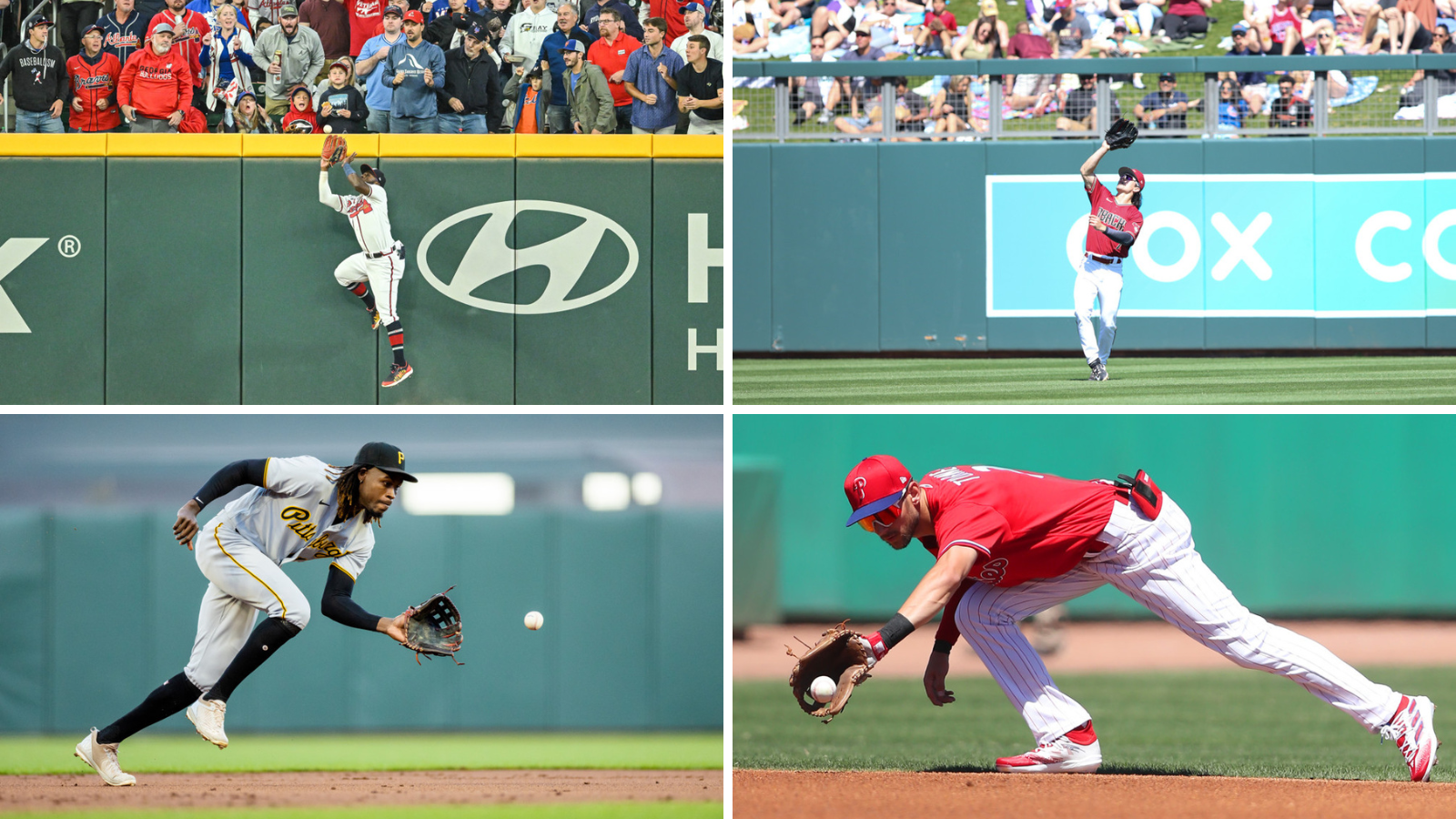
    Every year around this time, we use this space to take a look at home run robberies while we wait for defensive stats to accumulate to a more meaningful sample size. Home run robberies make for a fun diversion.

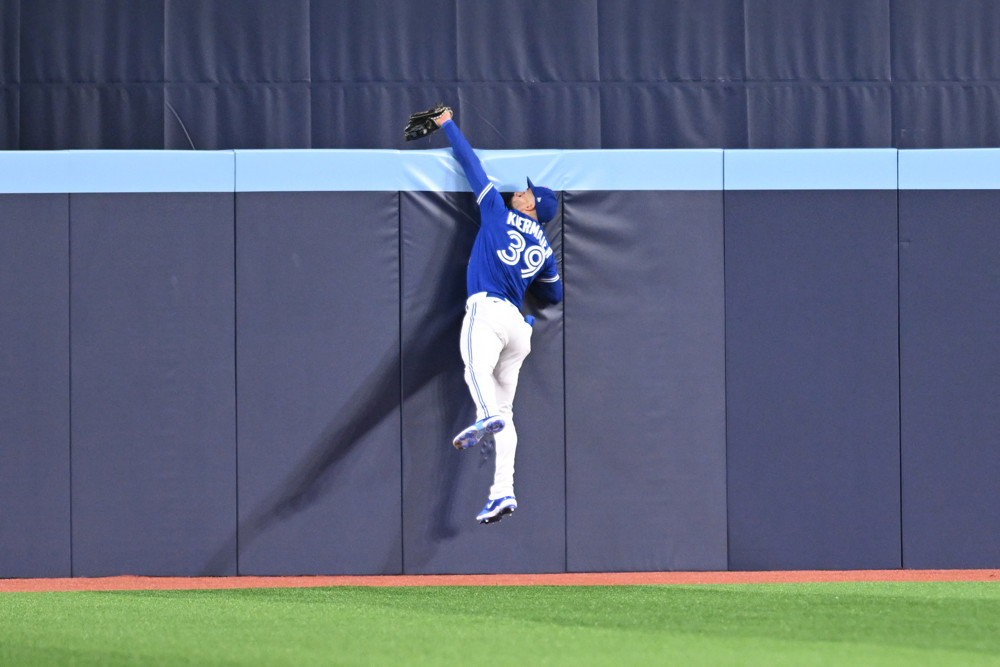
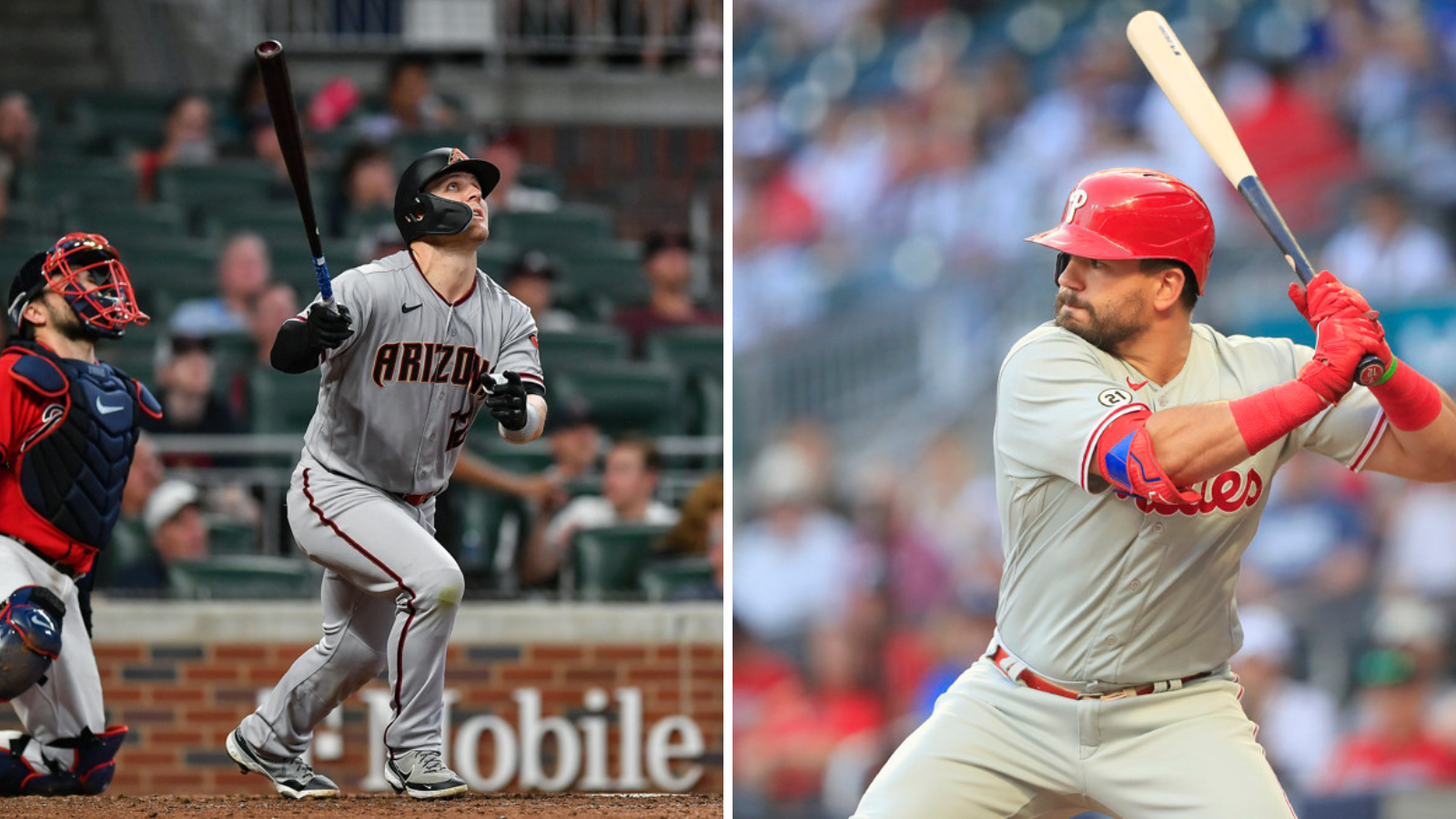
    Kevin Kiermaier’s good at them. He had an impressive one on Tuesday to take a homer away from Kerry Carpenter of the Tigers. Kiermaier didn’t just rob a home run. He hit one that day too.

    Though Kiermaier had robbed a home run either by catching a ball or keeping it in the ballpark on six previous occasions, this was the first time that Kiermaier both hit a home run and robbed one in the same game. People are usually surprised when we tell them that this combination isn’t that unusual an accomplishment.

    In fact, in four of the last six instances in which a player has robbed a home run, he’s homered in that same game! That encompasses both Kiermaier and Luis Robert Jr. this season and Peyton Burdick and Manuel Margot in 2022.

    We’ve tracked every home run robbery in MLB back to 2004, which gives us 20 seasons worth of data to sift through. So here’s a brief history lesson on hitting a home run and robbing one (or more) in the same game.

    * On average, a player hits a home run and robs one in the same game about 5.7 times per season (103 instances from 2004 to 2022, excluding 2020, when it happened three times in the shortened season). It happened as many as 12 times in 2019 and as few as twice in 2008.

    * The leader in most times hitting a home run and robbing a home run in the same game is Nick Markakis, who did it three times in his career. There are 16 players who have had two such games since 2004, including Aaron Judge, Mookie Betts, Ronald Acuña Jr., and Mike Trout.

    Two of the three for Markakis came with the Orioles, whose players have had 10 ‘hit a homer, rob a homer’ games, the most of any team in this timespan. The Angels, Athletics, and Dodgers have all had six.

    Camden Yards has been the site of 10 such games, though none of Markakis’ hit one/rob one games came there.

    * A batter has hit more than one home run and robbed a home run 11 times since 2004. Most recently, Judge and Juan Soto did it last season (see the catches here and here).

    Not included in our data set: In 2002, Mike Cameron hit four home runs and robbed Magglio Ordóñez of a grand slam. We’d like to see someone top that! We don’t have any examples in our 20-year data set of a player robbing a grand slam and even hitting one home run that day.

    * One other favorite: On April 13, 2006, Brewers left fielder Carlos Lee made a leaping catch at the fence to rob Cardinals right fielder Juan Encarnación

    of a walk-off home run in the bottom of the 10th inning, then made another catch at the fence to take a hit from Jim Edmonds later in the inning.

    Lee then homered to win the game in the top of the 11th.

    “That’s baseball,” he told reporters after the game.

    Indeed.

  • Defensive Excellence Q&A: Carlos Muñoz, Catching Coach

    Defensive Excellence Q&A: Carlos Muñoz, Catching Coach

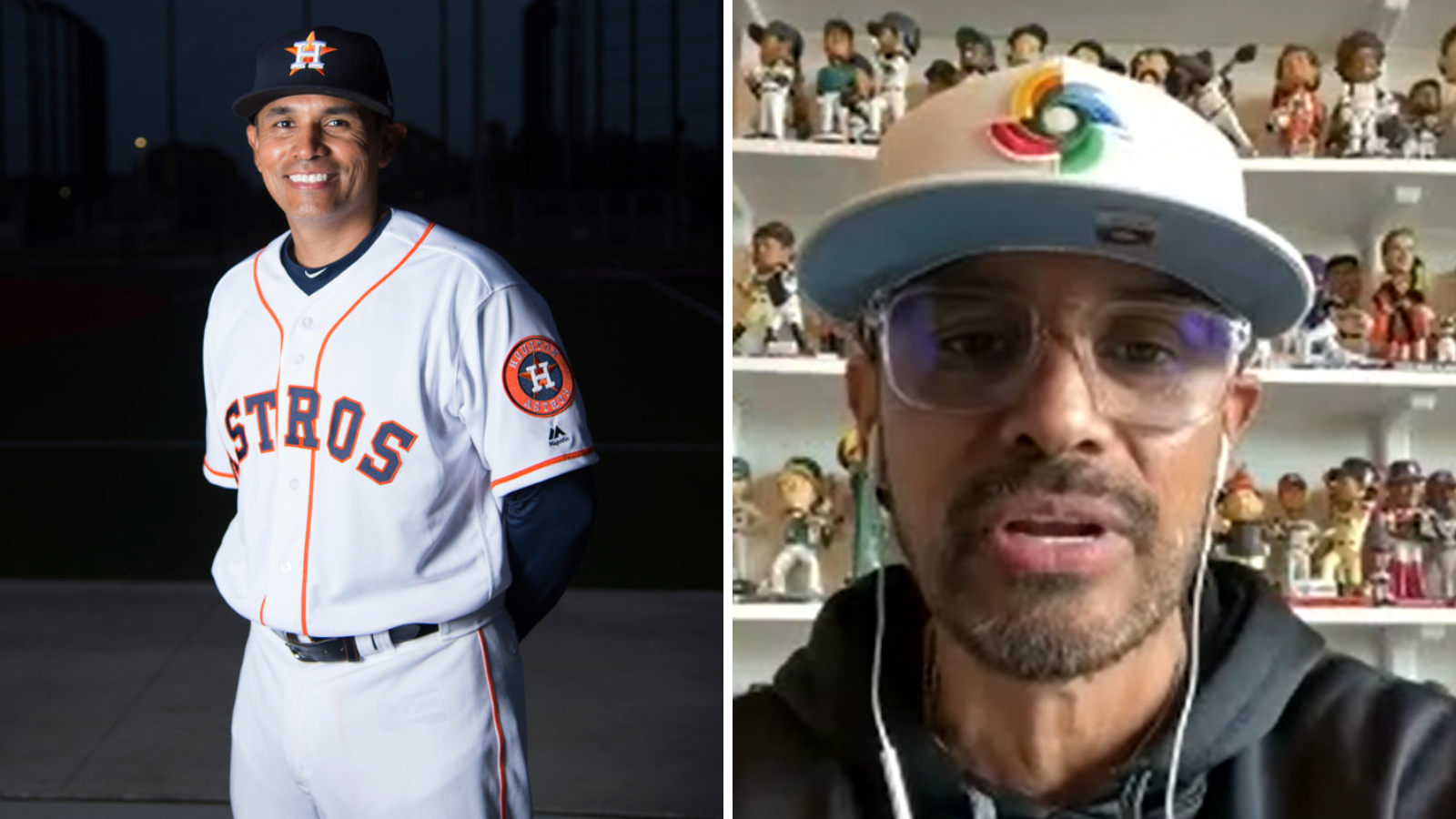
    Carlos Muñoz is a native of Venezuela who moved to the states as a teenager and began his career as a Spanish-language TV anchor and then sportswriter in Houston. A career change netted him an opportunity with the Astros as an associate scout and then nine seasons as a bullpen catcher (even though Muñoz had only minimal collegiate catching experience).

    He’s since been an associate scout with the Reds and was the catching coach for Team USA at this year’s World Baseball Classic. Now, he works with catchers in the area as both a volunteer baseball coach and private instructor to kids ages 8-17. He works with up to 21 kids per week.

    We spoke to him as part of our series on coaching defensive excellence that began with four interviews last year and now two more this season. The interview has been edited for length and clarity. Thanks to Paul Carr of TruMedia Networks for the introduction.

    Mark: What does defensive excellence mean to you?

    Carlos: One thing I teach to my guys: You are a big wall behind the plate. If we have a situation where they have a runner on third base and we need to throw a breaking ball, like a low breaking ball to this batter, I trust you because we’ve been working on this. I’m not gonna worry about a passed ball or wild pitch because you’re gonna be keeping the ball in front of you and doing it for the team.

    Mark: How did you learn to be an excellent defensive catcher?

    Carlos: I caught three innings in college, in junior college. And it was because my junior college coach told me, ‘You know what, we’ve got somebody at second base, third base is covered. Why don’t you catch it today? And we’ll see what happens.’

    The leadoff guy for the other team got on base and he ran on me and then I remember catching the ball, transferring the ball, and throwing as hard as I could to second base. And I got this guy out by five feet.

    The second time I caught was when I was working with the Astros as a BP pitcher, shagging flies in the outfield, and the bullpen coach, Doug Brocail, said, ‘We need you in the bullpen.’ So, I was catching guys in the bullpen during BP. From that day on, everything started.

    Mark: What do you tell kids about the mental side of catching?

    Carlos: Well, first of all, I tell ’em, dude, you are my extra coach out there. I want you to call your game.

    Sometimes they look at me like, ‘What do I do here, coach?’ And I say, I don’t know. It’s up to you. Let’s go be smart. And then they look again after that pitch.

    I tell them that I want them to let me know when they notice their pitcher losing speed, like he’s getting fatigued. I want you to be their leader out there.

    I’m going to correct you throughout the game, but don’t take it personal. Be smart. Alright? Read tendencies from the batters.

    Mark: How do give a kid that’s eight years old, nine years old, that’s still kind of wondering if he should be doing this, the courage to squat behind the plate and take it?

    Carlos: Be involved in the game pitch by pitch and be vocal and have fun. Don’t show negative body language if an umpire calls a pitch a ball. Talk to your pitchers, talk to your infielders, talk to the outfielders.

    If you get hit, it’s part of the process. If you get hit and then you cry, it’s part of the process. If you get hit and then you get scared, pick another position. It’s part of the process. I love catching. That’s what I tell them every day.

    Mark: How do you teach blocking pitches?

    Carlos: I tell them to get on their knees, show me their target. As soon as the ball hits your chest, make sure you go after the ball. Don’t let the ball run away from you.

    I also tell him there’s no rules for blocking.

    You might get to the side, to the left or the right, and then you keep the ball in front of you and you think that was an ugly block. That’s fine as long as you keep the ball in front, that’s what really matters. Don’t try to do too much.

    Get there on time. Keep the ball in front. Don’t try to do too much.

    Mark: How do you teach receiving the ball?

    Carlos: Some guys, they show the target and then they show (the back of their hand), and then they drop the hand. I tell them that if they do that, they’re going to end up pushing away the outside pitch, turning a strike into a ball.

    I teach them to have a pre-pitch target and then drop the hand, relax your body, locate the pitch, and go from there. I tell them from the chest to the shoulders that they have 100% control of the pitch. But what I care about is from (the waist) to the ankles. Because when the pitcher throws a low pitch, they can catch the ball and bring it up in one move.

    Mark: How do you teach basestealing prevention?

    Carlos: I’m coaching an under-14 team now and this is what I tell them. It’s like a basketball pickup game. I tell the second baseman, shortstop, and first baseman to know that the runner is taking a big lead. The guy getting to second base because one of you dropped the ball on that – that’s not acceptable.

    The pitchers, they work hard during the week and when it comes to Friday and Saturday, they want to break the radar gun. They want to throw in the 80s. With a runner on first base, they say they’re going to screw the slide step. But you’ve got to go slide step and give your catcher an opportunity to throw.

    Mark: What are the most common mistakes that you see kids that you try to fix with all the things that I’ve asked about?

    Carlos: I will say it’s more consistency. We work on receiving and throws to the bases and even how we show the signs, because some catchers show signs with their knees wide open.

    We went through everything, he did everything perfectly, but in games, he forgot. But we’ve got to be patient and look for consistency in everything.

    Mark: Are there players who you show them video of – or they show video to you and say they want to be like them?

    Carlos: Yeah, they say I like the way Jose Trevino or J.T Realmuto catches. So, I tell them to go do bullpens, catch a real pitcher (as opposed to a pitching machine) and do what J.T. and Trevino are doing. Show me your target, load or relax your body, and then go from there.

    Mark: Do you have go-to drills?

    Carlos: I have an eight-pound little medicine ball that I have them do a 10-minute warmup with. After 8 minutes, some guys, they’re like, ‘Oh my god.’

    They catch the ball with two hands, and they do some full motion and footwork to second base, like six, seven reps. Okay, let’s do third base. Now let’s do first base. And then the last three, I want you to react to backpicking this guy on first base from your knees. And I put them in front of a brick wall and do the same thing. After 10 reps, they’re ready to go.

    Mark: Do you do that with 8-year-olds too?

    Carlos: Sure. I have this guy, he’s 10, he’s got some power, he’s got some real strength. So that a 2-pound ball for him.

    Mark: Is there anything you’re planning to work on with catchers more?

    Carlos: Some guys, they tend to frame strikes, like they catch the ball here (in the zone), a perfect pitch, and then they go from here (in the zone) to here (moving it away from the zone).

    I’m like, dude, didn’t you notice that was a perfect pitch from your pitcher? If the pitch is in front of your mask, leave it there.

    I’m trying to get more consistency. Consistency, because you can teach, you can spend 15 to 20 minutes on receiving or even more. And then these guys, they go back to the field, to the real action, and then they completely forget about it.

    So, I’m trying to get to how I can get guys to be more consistent on receiving. I show more videos on how big league guys are catching from pitch No. 1 to pitch No. 95 with the same receiving consistency.

    Mark: Is there anything else that you want to address?

    Carlos: For those catching coaches out there, just try to teach the consistency side of the game, just keep it simple.

    I have so many kids telling me that a catching coach told them to do this (like blocking and then sliding to the left or right). No, you’re doing too much. If you do that, the ball is going to bounce away. Keep it simple.

    Mark: You have a large knowledge base for someone who never caught.

    Carlos: It’s all about educating yourself if you want to be the best. If you see a catching coach on Twitter or Instagram and he’s in Alabama, ask him something. Don’t be afraid. Ask him why he’s doing what he’s doing in that drill. Ask in a nice way. Or ask what he recommends. You may know an answer, but maybe he gives you something different (you can follow Carlos on Twitter here and on Instagram here).

    This is the fifth interview in Mark Simon’s series on the teaching of defensive excellence in baseball.

    We’ve previously talked to Red Sox minor league infield coordinator Darren Fenster, Hawaii high school baseball coaching legend Dunn MuramaruNelson Cooper IV of the Pittsburgh Hardball Academy, and Loren Torres of Point Park University.

  • What We Noticed About Defense From Opening Week

    What We Noticed About Defense From Opening Week

    BY MARK SIMON

    It’s too early to draw conclusions from much of anything in small-sample-size land these days. So rather than write a highly-detailed analysis and extrapolation of anything, we’ll just point out some of the things we’ve noticed defensively from the first week of the season.

    * White Sox center fielder Luis Robert Jr. has looked like a player in want of a Fielding Bible Award. He’s already made 3 spectacular catches (we call them “Good Fielding Plays”), including the season’s second home run robbery (Bubba Thompson had the first). Robert Jr. totaled 4 Good Fielding Plays all last season. It’s good to see him healthy.

    * Speaking of outfielder-related subjects, the Dodgers outfield has been catching everything, relatively speaking. The Dodgers have caught 44 of 60 balls hit in the air to the outfield, good for an MLB-best 73% rate. Past performance doesn’t equal future results, but the Dodgers led the majors in that stat in 2020 and 2022, snagging 65% of flies and liners to the outfield in the latter season. They finished second in that stat in 2021.

    * The Dodgers infield hasn’t been quite as sharp, but they’ve played against the top infield defense so far. The Diamondbacks, who opened with the Dodgers, have gotten at least one out on 44 of 50 groundballs hit against their defense. Arizona regularly starts past Fielding Bible Award winners Christian Walker and Nick Ahmed at first base and shortstop, respectively, and if they’re healthy, Arizona’s infield defense should be pretty good.

    One thing we’ll point out – 88% success rates don’t hold up over 162 games. The MLB team leader in each of the last five seasons has had either a 77% or 78% rate.

    * Putting three infielders on the pull side of second base is now verboten, but teams are still making plenty of defensive adjustments. SIS tracks what we call partial shifts, which are instances in which two fielders deviate considerably from “normal” positioning. Think of those as instances in which the shortstop or second baseman was almost at second base but not quite there.

    Anyway, 62.3% of balls in play this season have come against a partially-shifted defense. For context, last season, 61.5% of balls in play came against full and partial shifts combined.

    * A lot has been made of how stolen bases are up – and they are – to 0.68 per team game through one week of the season. That’s a pace for more than 3,300 stolen bases this season. MLB hasn’t even reached 3,000 since 2012.

    But you wouldn’t know they’re up if you watched the Braves. They’re the only team in the majors not to allow a stolen base this season. In fact, they’ve surrendered only one attempt. Five teams have allowed only one: the Orioles, the Rays, the Cubs, the Rockies, and the Diamondbacks.

    Again, we don’t want to draw any conclusions from anything just yet. The only conclusion that’s worth drawing is that it’s great that baseball is back.

  • Reviewing Candidates For The New-Look Shift

    Reviewing Candidates For The New-Look Shift

    On March 3, in a spring training game between the Boston Red Sox and Minnesota Twins, the Red Sox deployed a new shift for the first time in a game. Naturally, the Red Sox did this against Joey Gallo, who pulls the ball more than almost anyone in MLB. Gallo ranked No. 1 in pull percentage in 2022 for left-handed hitters with a rate of 55% (among those with a minimum of 250 plate appearances). 

    Boston moved CF Adam Duvall to short right field in the “triangle”. Raimel Tapia, the left fielder, is in CF slightly shaded towards left and the right fielder Alex Verdugo is in straight away RF. Gallo had to be rolling his eyes as he walked into the batter’s box. All this talk in the offseason about short RF being a land full of hits for lefties was quickly shot down by this alignment.

    The key to the new shift rule is that it restricts only infielders from moving. Infielders must be on the infield dirt and on their side of second base. Second basemen can’t be playing in shallow right field and we won’t see 3 infielders in the triangle defense, or as we call it at SIS, “a Full Ted Williams shift.” And of course, there’s no more Manny Machado catching fly balls in the right field corner.

    The new rules don’t have any restrictions for outfielders though. Outfielders can go anywhere they want. Teams can still do 5-man infields if the situation calls for it. This also means that we can see new versions of the Full Ted Williams shift we’ve become so accustomed to.

    As we’ve learned with shifts in the past, hitters won’t change their approach just because the defense is giving them a wide open side of the field. This shift won’t be different, but the risk is certainly higher for defenses than shifts we’ve seen in the past. 

    Data is king when it comes to shifts and Gallo’s data fully supports using this shift against him. This made me wonder, who else could have this shift used against them? 

    I looked at all left-handed hitters and found nine players that have similar ball-in-play data in terms of ground ball rates and pull rates that I wanted to take a closer look at. All these players saw traditional shifts regularly the past few years. The new shift, leaving LF wide open, means a higher degree of risk in shifting these guys. 

    So I’m going to act as if I’m an advance scout, with recommendations on how I would shift these players. I’m also going to keep in mind that I can’t just judge off the hitter’s tendencies. I have to look at my pitcher too and understand there are certain nuances to my choices.

    I used a combination of FanGraphs ball in play data (which we’re the source for) and Sports Info Solutions visuals to make assessments. With each player, you’ll see their outfield fly ball and line drive spray chart, though I also consulted their groundball charts and their charts for offspeed pitches in making these writeups.

    The rankings in each section are percentile rankings of the 132 left-handed hitters with a minimum of 150 plate appearances

    Joey Gallo

    >>Percentile rankings in parentheses

    Pull % Oppo% Fly Ball % GB + LD Pull% Fly Ball Oppo%
    55% (99th) 18% (3rd) 53% (99th) 73% (99th) 24% (1st)

    Gallo meets all the criteria for a player for whom we’d want to use this shift. He rarely hits opposite-field fly balls. He has the highest grounder and liner pull percentage and 85% of his grounders and short liners are to the right side of 2B.

    Here’s his spray chart on flies and liners to the outfield.

    Recommendation: Shift at will. 

    Against RHP, he will hit more fly balls but not many to LF. If he hits a grounder or liner it’s going to be pulled. Also strikes out 38% and walks 14% of the time. 

    Against LHP, Gallo hits a ton of ground balls to the pull side and struggles to put the ball in play, strikes out 48% and walks 12%.

    If he beats us to the opposite field once there’s a good chance it won’t happen twice in a series.

    Daulton Varsho

    >>Percentile rankings in parentheses

    Pull% Oppo% Fly Ball% GB + LD Pull% Fly Ball Oppo%
    55% (99th) 16% (1st) 44% (75th) 63% (92nd) 23% (1st)

    Recommendation: Use shift vs. RHP. Can use vs. LHP but that comes with a high risk factor. Shift more with high-percentage ground ball pitchers and against RHPs with low fastball usage. 

    With RHP on the mound Varsho hits more fly balls but still doesn’t use the opposite field. Hits into the “triangle” position of short RF more than anywhere else on flies and line drives. RHP with low-fastball usage is the best instance to shift. 

    Against LHP he hits more grounders and pulls them. Won’t use the opposite field on fly balls often but he will on line drives. 

    Kyle Schwarber

    >>Percentile rankings in parentheses

    Pull% Oppo% Fly Ball% GB+LD Pull% Fly Ball Oppo%
    44% (72nd) 19% (8th) 51% (97th) 60% (85th) 27% (2nd)

    Recommendation: Shift with LHP

    Against RHP he will use every part of the field. Takes advantage of pitchers not wanting to throw inside to him. Fly ball percentage and his ability to use all parts of the field make him a no-shift option. 

    When facing LHP, Schwarber doesn’t hit fly balls to the opposite field. He can hit a line drive that way but not frequently enough to worry about. A LHP with low fastball usage is an exceptional time to shift. 

    Jose Ramirez (specifically as an LHB)

    >>Percentile rankings in parentheses

    Pull % Oppo% Fly Ball% GB + LD Pull% Fly Ball Oppo%
    49% (93rd) 20% (13th) 50% (92nd) 59% (83rd) 27% (2nd)

    Recommendation: Do not shift. 


    Ramirez does a great job of using all fields, has barrel control and takes what the pitcher is giving him. He does have the tendency to pull grounders and line drives (did so 83% of the time as a left-handed batter) but his fly ball numbers make shifting dangerous. 

    Mike Yastrzemski

    >>Percentile rankings in parentheses

    Pull% Oppo% Fly Ball% GB + LD Pull% Fly Ball Oppo%
    45% (76th) 23% (32nd) 46% (82nd) 60% (85th) 38% (46th)

    Recommendation: Despite how often he pulls his grounders and short liners (nearly 90% of time), do not shift. Doesn’t hit enough grounders and fly ball trends contradict the shift.

    Against RHP, he has similar numbers, except for the higher line drive% and lower grounder%. Still sprays the ball around the whole field and lifts the ball more times than not.

    Against LHP, Yastrzemski hits a fly ball half the time but uses every part of the field evenly. Line drives he hits mostly up the middle. 

    Trent Grisham

    >>Percentile rankings in parentheses

    Pull% Oppo% Fly Ball% GB + LD Pull% Fly Ball Oppo%
    47% (84th) 25% (53rd) 43% (72nd) 62% (89th) 43% (74th)

    Recommendation: Do not shift. He has too much speed and he sprays his fly balls well.

    Against RHP he pulls more grounders but hits fewer of them. Great ability to use all fields when lifting the ball.

    Against LHP Grisham hits a lot of grounders but also hits a lot of fly balls. He sprays fly balls all around the field which makes him difficult to shift.

    I’m going to summarize three other hitters in brief. If you want to see more details about them, you can find them on my Twitter.

    Anthony Rizzo

    Rizzo is risky to shift but there are a couple of caveats. When playing in Yankee Stadium we can use it with a RHP because of the short porch in RF. Our CF and RF can shade towards the opposite field. Anything hit well to RF is going to be a double or a homerun either way. Also, if you have a left-handed pitcher who is almost exclusively an offspeed pitcher, it could work based on Rizzo’s tendencies.

    Cody Bellinger 

    Though Bellinger pulls a high rate of groundballs and line drives, he hits too many fly balls to center field and the opposite field for a shift to be worth it.

    Max Muncy

    Though Muncy pulls nearly 90% of his grounders and short liners is another for whom it’s mostly high-risk to use this shift, except in highly-specific situations. The one time to use it would be with a lefty pitcher with a high ground ball rate (maybe a Tim Mayza). He sprays his fly balls too much for it to be worthwhile otherwise.

    For more detail on these hitters and “The Joey Gallo Shift,” follow Dom on Twitter at @domricotta15

  • Stat of the Week: NL Team Defensive Previews

    Stat of the Week: NL Team Defensive Previews

    BY MARK SIMON

    Continuing what we started last week with the AL, we’ve got a stat-driven defensive theme or story to watch for each NL team. Play ball!

    Braves – We’re curious to see what Michael Harris II’s defensive ceiling is. Harris has already won a Minor League Gold Glove and at times showed the potential to be the best defensive center fielder in MLB. His 8 Runs Saved tied for 4th-most. We wouldn’t be surprised if he led MLB in 2023.

    Brewers – Said manager Craig Counsell of rookie second baseman Brice Turang: “He showed us this camp that he is going to win games playing defense.” Counsell knows of what he speaks. His 30 Runs Saved at second base in 2005 are tied for the most by anyone at the position.

    Cardinals – The most intriguing thing to watch will be how Willson Contreras steps into the shoes of Yadier Molina as the team’s new catcher. Contreras’ throwing and blocking stats are typically top-notch but he’s historically a below-average pitch framer.

    Cubs – The Cubs seemed to prioritize defense in their offseason maneuvers. The team has the potential to be great up-the-middle, as new acquisitions Tucker Barnhart, Dansby Swanson, and Cody Bellinger all come with solid defensive pedigrees and Nico Hoerner’s move from shortstop to second base should be seamless.

    Diamondbacks The Diamondbacks will start perhaps the fastest outfield in the game with Corbin Carroll in left field, Alek Thomas in center, and Jake McCarthy in right (all three rank Top-50 in 90-foot speed). If the Diamondbacks are going to contend for a playoff spot, they’re going to need these three to turn a lot of potential extra-base hits into outs.

    Dodgers 53% of ground balls and short line drives versus the Dodgers last season were hit against full infield shifts (those with three defenders on the pull side), the highest rate in MLB. In fact, the Dodgers led the majors in how often they full shifted in each of the last four seasons. They’ll have an adjustment to make to baseball’s new rules.

    Giants – For much of last season, the Giants defense was hard to watch. The team finished last in the majors in Defensive Runs Saved. But if they can play some combo of Mike Yastrzemski, Michael Conforto, Mitch Haniger, and Bryce Johnson in the outfield, their outfield defense should be much improved from the -47 Runs Saved that it combined for last season.

    Marlins Can Jazz Chisholm make the transition from middle infield to center field without it being too costly defensively? We love Chisholm the athlete, but we’re a little skeptical based on past history of others trying to make the move (which we wrote about).

    Mets – As good as the Mets were last season, they had a defensive weakness. They ranked 26th in turning groundballs and bunts into outs. Francisco Lindor has said he doesn’t like shifts. He had -11 Runs Saved in them last season. He’ll get a chance to play straight-up a lot more in 2023.

    Nationals – The Nationals set a 20-year MLB low for Defensive Runs Saved at shortstop last season (-34). But they looked a lot better once they put C.J. Abrams there and moved Luis Garcia to second base. They’ll get a chance to grow together for a full season in 2023.

    Padres – Fernando Tatis Jr. is going to find a spot somewhere and for now that looks like it will be right field. We know from Tatis’ history at shortstop that he has great arm strength but has a hard time throwing accurately. The Padres and their fans will find out how Tatis acclimates to his new spot together.

    Phillies – Only three teams finished worse in Defensive Runs Saved by their shortstops than the Phillies did last season. They signed Trea Turner for $300 million for his bat and his speed, but watch how his glove should help too. The last two seasons, he’s played exactly average defense at shortstop, which would be a considerable step up for the Phillies.

    Pirates – Oneil Cruz can get outs that other shortstops can’t get because of his arm strength (per Statcast, his throws average nearly 94 MPH – no other shortstop exceeds 90). He just needs to limit his mistakes. On a per-inning basis, he made a lot (4.3 Defensive Misplays & Errors per 100 innings, the 6th-highest rate at the position).

    Reds – With Aristides Aquino now playing in Japan, the Reds are lacking for interesting defensive players, as the ones to watch are in the minors (top prospects Elly De La Cruz and Cam Collier). For now, the attempted bounceback of second baseman Jonathan India (-14 Runs Saved last season) serves as one notable story.

    Rockies – Top prospect Ezequiel Tovar will be the starting shortstop. The position was a problematic one for the Rockies last season (-12 Runs Saved), but the future looks bright. Tovar played close to average shortstop in the minors per our data and Fangraphs’ Eric Longenhagen gives Tovar a 60 future fielding grade on the 20-80 scouting scale.

  • SIS Baseball Podcast Spotlights Women Working in Baseball Analysis

    SIS Baseball Podcast Spotlights Women Working in Baseball Analysis

    On the most recent episode of the Sports Info Solutions Baseball Podcast (link here), we honored Women’s History Month with three guests who, each in their own way, are shaping how baseball analysis will be done in the future.

    They were

    * Chelsea Janes, national baseball writer for The Washington Post

    * Andrea Arcidipane, former baseball operations associate for Yankees, best known as “ScoutgirlReport” on social media

    * Sarah Thompson, research analyst for Sports Info Solutions

    In addition to talking about typical baseball conversations, like those about rules changes and players to watch, we asked them to share perspective about what it’s like to do what they do.

    Chelsea Janes on clubhouses being more accommodating to women

    “In the 10 years since I’ve been in clubhouses, it’s become a lot more normal to see other women in there. We’ve been joking about it. Hannah (Keyser), Lindsey (Adler), Stephanie Apstein, Britt (Ghiroli) – we were all in one clubhouse and it was just funny the conversations we were having, they were conversations I’m sure had not been heard in a clubhouse before … And I think we all kind of slowly realized that oh wow, this is new, this is unprecedented for all of us to be here. In a lot of ways, the climate has adjusted to be more accommodating …

    I credit Stephanie Apstein from Sports Illustrated – we saw in 2019 when Brandon Taubman, the Astros executive implied that he didn’t care about domestic violence with regards to Roberto Osuna and yelled at some women in the clubhouse. Steph and others wrote about this and said this is not a safe space for you to just be a jerk. I think that was meaningful, because it was like ‘We’re here too and we deserve to feel safe here.’ There’s no safe space to be sexist or misogynist.”

    Andrea Arcidipane (“ScoutGirlReport”) on why her social media videos and scouting reports are produced in the way that they are.

    “My goal is to just have fun and share my passion for baseball. I know from experience how hard it can be to start watching baseball and learn the intricacies of it without help, so I just want to make content as beginner-friendly as possible and help translate some of those advanced topics to fans in what I think is a fun way.

    What’s helped my videos stand out a bit is that they’re easy to comprehend for anyone. It’s easy in social settings, on Twitter, to feel embarrassed about asking questions. But baseball is supposed to be fun and it’s supposed to be something we can all enjoy and talk about. The simpler I can get the message across the better.

    I get messages sometimes that say I’m trying to get into baseball. This storytelling that you do is a nice way to translate advanced data to a more casual fan. I’ve gotten that feedback from teams, from players, from managers/coaches, from all different people in baseball. I figure I must be doing something right.”

    Sarah Thompson on advice for those who want to become baseball data analysts

    “First and foremost, love your domain, whether it’s sports or something else. Secondly, ask questions and answer them with research projects. Most importantly, showcase them, put them on the internet, don’t worry that it might look stupid. You just want people to know that you have work out there, that you care about something, and that you’re curious to try to answer questions. And don’t be afraid to fail.

    One more. Strengthen those written and verbal communication skills. We heard that a lot at SABR Analytics.”

  • 2023 MLB Defensive Preview: American League

    2023 MLB Defensive Preview: American League

    BY MARK SIMON

    With Opening Day approaching, we wanted to preview the 2023 season from a defensive perspective. So to be fair to all 30 teams, we’ve got a stat-driven theme or story to watch for each team. We’ll do the AL teams this week, the NL next week.

    Angels – The Angels have a good defensive group for use at the end of games in catcher Max Stassi (one of the best pitch framers in MLB), infielder Gio Urshela, and outfielder Brett Phillips (as good as it gets on a per-inning basis in right field). The question becomes whether they’ll have enough leads at the end of games to make a full-scale deployment of those defensive resources relevant.

    Astros – The Astros led MLB in Defensive Runs Saved from their outfielders last season and should again be up among the leaders in 2023. With shifts out of the picture, we’re curious how the infield will fare, particularly on the right side with 36-year-old first baseman José Abreu and (currently injured) second baseman José Altuve. The latter ranked last in Runs Saved by a second baseman last season.

    Athletics – If Nick Allen can hit enough to stay in the lineup look out. He might be a dark horse for a Fielding Bible Award. He saved 6 Runs in ~500 innings at shortstop in 2022.

    Blue Jays – If every “if” goes their way, the Blue Jays could have the best defensive team in MLB. Those “ifs” center around second baseman Whit Merrifield, third baseman Matt Chapman, and center fielder Kevin Kiermaier. If each can defy age and play to the capabilities of their past Fielding Bible Award-winning seasons, Toronto will have highlight shows on defense almost every night.

    Guardians – The Guardians could also be the best defensive team in baseball. They return two 2022 Fielding Bible Award winners in left fielder Steven Kwan and center fielder Myles Straw, and a runner-up, second baseman Andrés Giménez.

    Mariners – We previously wrote about Julio Rodríguez and how he’s shown the potential to be a great defender, so long as he doesn’t overtax his body (he ranked 6th in sliding, diving, and jumping catches for outfielders in 2022). We look forward to seeing what he looks like in 2023

    Orioles – Just how good are Adley Rutschman and Gunnar Henderson? Rutschman ranked second among catchers in Defensive Runs Saved in 2022 and easily led catchers in DRS after the All-Star Break. He could be a Fielding Bible Award winner for years to come. Henderson could play shortstop or third base. His minor league numbers indicate he’s a better fit at third.

    Rangers – Can the Rangers provide the defensive support needed behind a starting rotation that has been remade from 1-to-5 the last two years? The Rangers should be solid at second base (Marcus Semien), right field (Adolis García) and catcher (Jonah Heim) but have regulars who rate below average at first base (Nathaniel Lowe) and shortstop (Corey Seager). 

    Rays – Left fielder Randy Arozarena was an impactful defender as a rookie in 2021 (7 Runs Saved), less so in 2022 (-4). Do any vibes from his play in the World Baseball Classic carry over to Tampa Bay for 2023?

    Red Sox Andrea Arcidipane nailed it on the latest SIS Baseball Podcast – Adam Duvall playing center field full time at age 34, with half his games in Fenway Park, will be an interesting challenge. To his credit, Duvall has 4 Runs Saved in ~600 career innings in center, so the move could turn out alright.

    Royals – Bobby Witt Jr. ranked last among shortstops in Runs Saved last season. Will he make the adjustments needed in Year 2 or is a position switch to third base in his future?

    Tigers – Javier Báez’s defense disappointed big time in what was a miserable season for the Tigers. His -4 Runs Saved at shortstop were a career worst. Is he capable of returning to the form he had in 2020 and 2021, when he combined for 9 Runs Saved there?

    Twins – We have to ask, right? How healthy is Carlos Correa and is he capable of returning to the level of play that netted him a Fielding Bible Award and a Platinum Glove in 2021? Correa had potential deals with the Giants and Mets snuffed by injury concerns. We’ll see how he holds up with Minnesota.

    White Sox – New manager Pedro Grifol has promised better attention to detail all around in 2023. So we’re looking for that on the defensive end. The White Sox need it. They ranked T-26th in Defensive Runs Saved last season and didn’t get positive Runs Saved from any position on the field. They’ll shift some parts around, with Andrew Vaughn moving to first base full-time and Elvis Andrus playing second base for the first time as an MLB player.

    Yankees – What can they do for an encore? The Yankees led MLB in Runs Saved in 2022 and it wasn’t close. They return almost the same position player roster that they had last season, so they should still be very good. No team has led the majors in Runs Saved in back-to-back seasons.

  • Stat of the Week: Comparing Outfield Defense In The Minors & MLB

    Stat of the Week: Comparing Outfield Defense In The Minors & MLB

    At Sports Info Solutions, we developed the PART system to better analyze the different components of defensive play in MLB. PART, which stands for Positioning, Air Balls, Range and (Infield) Throwing, has allowed us to best assess how much of a fielder’s defensive performance is based on his positioning (which is assessed to his team) as compared to his skill (for which the player is credited or debited). 

    Now, we’re able to take that and utilize it in the minor leagues.

    At the SABR Analytics Conference last weekend, our research analyst Sarah Thompson did a presentation titled “Evaluation of Minor League Defense Using Detailed Contextual Data.” She walked through how we’ve applied our methodology to players across different levels.

    One of the cool things to come out of this work was an all-inclusive look at how outfielders fare against different levels of play difficulty. Below is a chart that compares minor league and major league out rates across different expected out rate groups.

    MLB Out Rate Group MiLB Out Rate MLB Out Rate
    96-100% 98% 99%
    86-95% 85% 92%
    76-85% 71% 82%
    66-75% 58% 70%
    56-65% 42% 61%

    As the degree of difficulty of the play increases, so does the gap between the minor league and major league out rates.

    To hone in more specifically on what kinds of plays make up those disparate groups, take a look at the following chart.

    Pos Travel Distance & Direction Hang Time

    (Seconds)

    MiLB Out Rate MLB

    Out Rate

    LF 90 feet straight back >5.0 56% 85%
    CF 90 feet lateral 4.2 – 5.0 55% 87%
    RF 90 feet lateral 4.2 – 5.0 46% 79%

    Those outfielders who can make catches of this nature in the minor leagues, like Michael Harris II of the Braves, generally have their skills translate well to the majors. Harris averaged 10 Runs Saved specific to Range & Positioning per 1,000 innings in the minors and then was credited with 6 PART Runs Saved in 1,021 innings this past season with the Braves.

    There are some outfielders whose minor league numbers may not look as good but who are able to live up to their potential once they reach the major leagues. Cristian Pache of the Athletics averaged -8 PART Runs Saved per 1,000 innings in the minor leagues but then had a PART Runs Saved of 9 per 1,000 innings in his brief stint with the Athletics.

    Pache fared better at the tougher plays after his ascension.

    On plays with an estimated out rate between 56 and 65%, Pache caught only 3 of 11 of those in the minors in 2021. But at the major league level, he caught 8 of 9 of those plays. That alone explains a decent chunk of that gap between the levels.

    As SIS continues to innovate and further develop its minor league defensive evaluation tools, we’ll try to provide more data and context in the future. Our biggest takeaway from this subject: You have to be pretty good to be playing outfield in the major leagues.

  • Stat of the Week: A Defensive Look for Team USA

    Stat of the Week: A Defensive Look for Team USA

    You might have noticed that over the last couple of years we’ve transitioned our thinking on Stat of the Week to make it largely based around defensive excellence.

    We consider that our beat here. Some people cover teams. We cover a way to play. As such, we think of things with defensive excellence first in mind.

    That brings us to the World Baseball Classic and with defensive excellence at the forefront, we wondered what Team USA’s position player roster would look like if defense was the primary priority.

    For the purposes of this exercise, we’ll presume that players that could have played for the United States but who are playing with other countries chose to stay on those teams. Our choices may differ from yours and that’s fine. There are lots of ways to do this. These are our selections.

    Catcher – Adley Rutschman was so good in his debut season, finishing second to Jose Trevino in Defensive Runs Saved. The latter won the 2022 Fielding Bible Award. We’re taking both of them along with 2021 Fielding Bible Award winner Jacob Stallings.

    First Base – Christian Walker would undoubtedly make the team. He won the Fielding Bible Award at the position last year and he’s the leader in Defensive Runs Saved at the position since 2020. Walker’s backup would be a tough call. We’d lean to three-time Fielding Bible Award winner Matt Olson, who ranks third in Runs Saved at the position over the last three seasons behind Walker and Lewin Díaz.

    Second Base – 2022 Fielding Bible Multi-Position Award winner Tommy Edman chose to play for Korea and Brendan Rodgers is injured, so that makes a tough call a little easier. We’ll take Marcus Semien, who’s someone who has been very good at second base the last two seasons (most Runs Saved in MLB in that time) and offers additional defensive flexibility because he can play shortstop.

    Shortstop – We can garner some more positional flexibility with our pick here, Taylor Walls. Walls, who also plays second base and third base, ranks second to Carlos Correa in Runs Saved at shortstop the last two seasons, though he’s played less than half as many innings as Correa has in that time.

    Third Base – The actual Team USA took six infielders, so we’ll take six as well. That means our squad has room for both Ke’Bryan Hayes and Nolan Arenado. This one is clearcut. They rank 1-2 in Defensive Runs Saved at the position over the last three seasons.

    Outfield – Team USA took six outfielders, so we’ll match that. Mookie Betts, who has won five Fielding Bible Awards, is our No. 1 choice. Michael A. Taylor, who won a Fielding Bible Award in 2021 and leads center fielders in Runs Saved over the last three seasons, is next on our list.

    It gets harder after that as we ponder whether to reward outstanding performance accumulated in short periods of time. We’ll do that by adding Byron Buxton and Brett Phillips to the squad.

    Buxton is second to Taylor in Runs Saved since 2020 even playing 1,000 fewer innings than Taylor has. Phillips has 17 Runs Saved in just over 600 innings in right field the last two seasons, which is too good to pass up. Plus, we know he’d bring the fun.

    Steven Kwan was deemed ineligible to play for Japan or China (read more about it here) in the actual WBC. But we’d welcome the 2022 Fielding Bible Award winner for left field on our team. He led the position in Runs Saved last season.

    The last slot is a tough one. Apologies to Kevin Kiermaier, Daulton Varsho, Joey Gallo, and a lot of other worthy options. We’re going to give it to Kyle Tucker, who leads right fielders in Defensive Runs Saved the last two seasons.

    Here’s our full roster. We think they’d be pretty good.

    Position Player
    C Adley Rutschman
    C Jose Trevino
    C Jacob Stallings
    1B Christian Walker
    1B Matt Olson
    2B Marcus Semien
    SS Taylor Walls
    3B Ke’Bryan Hayes
    3B Nolan Arenado
    LF Steven Kwan
    CF Michael A. Taylor
    CF Byron Buxton
    RF Mookie Betts
    RF Kyle Tucker
    OF Brett Phillips
  • WBC Players to Watch: Cuba, Chinese Taipei, China

    WBC Players to Watch: Cuba, Chinese Taipei, China

    There are many players participating in the World Baseball Classic that will be familiar to MLB fans. Team USA, among others, will be made up entirely of current Major League players. However, many teams will be featuring professional players outside of North America. In previous pieces, we looked at prominent NPB hitters & fielders and pitchers and KBO hitters, fielders, and pitchers.

    That doesn’t quite cover everyone that we want to talk about. Remember, we cover the game globally, and thanks to our NPB and KBO data we can tell you about players on some of the other WBC teams that you might want to check out.

    Cuba

    Team Cuba features many talented Cuban players and for the first time Major League stars will be participating in WBC play as well. Team Cuba features a nasty bullpen with two relievers from NPB who have been at times dominant out of the pen in Japan. 

    Starting with Liván Moinelo who is as nasty as they come. Moinelo took over the closer role this season for the Softbank Hawks and produced his best season so far in NPB. Last season he posted his best K/9 at 14.9 and actually got his BB/9 down to 3.4, the lowest of his career last season. 

    The stuff is there but control has always been the question mark for him as he can snap his head off target causing him trouble in locating his pitches consistently. His 43% strikeout rate ranks 1st among the 66 pitchers with at least 35 innings pitched. His 9.9 % walk rate was the 15th-highest. 

    He has a 12.7 K/9 and 4.2 BB/9 in his six seasons in Japan. Moinelo is a wild card in terms of control but if he is throwing strikes, Team Cuba will have a menace on the mound because of his pure stuff. 

    Moinelo’s heater sits around 94-95 mph and has amazing ride at the top of the zone. Here he is slamming the door shut for one of his 24 saves last season. 

    via GIPHY

    Add in a slider at 88 mph and a changeup around 83 mph and Moinelo at times is unhittable in NPB. The lefty power pitcher has racked up his fair share of swords with all of his offerings. Here’s a look at the slider and changeup. His stare in after a decent take on his changeup shows just how much he expects to strike guys out when he’s dialed in.

    via GIPHY

    via GIPHY

    By the numbers, his changeup is his best offering with an opponent batting average of just .036 and a whiff rate of 35% on the pitch. His ability to neutralize right handed hitters with the pitch was a big step this season.

    To me his curveball has the most potential though, and is arguably one of the best curveballs not in MLB. The breaking pitch is a lethal mix of spin and velocity. The curve just drops out of the sky and into the strike zone at around 80 mph.

    via GIPHY

    Raidel Martinez was the most successful closer last season in NPB. He led the league in saves with 39 and had a sub one ERA at 0.97 Moinelo was at 1.03. Pitching for the last-place Chunichi Dragons in the Central league, Martinez was lights out. 

    He’s 95-97 mph with the fastball from the right side mainly thrown at the top of the zone.It has good ride when it’s on, but can flatten out if he doesn’t stay on top of the ball and repeat his delivery well. At its best it stays above the barrel as a swing-and-miss pitch.

    via GIPHY

    He also has a slider that generates depth hovering around 90 mph. It’s average but flashes potential and is a pitch he can mix in to keep hitters off of his fastball up.

    via GIPHY

    His splitter is late diving and his best secondary offering. He racks up a lot of strikeouts with the pitch but has also been using it as a weak contact inducer. Getting lefthanded hitters to roll over on the pitch a lot this past season.

    via GIPHY

    He keeps mixing in a slower changeup as a change of speed pitch especially early last season this one was around 82 mph. It’s solid but the splitter is always going to be his main secondary.

    via GIPHY

    Something in his back pocket is the ability to quick-pitch with such a high leg kick and slower tempo Martinez does speed up his delivery at times and catches batters looking. This at-bat ended in a quick pitch as Shiomi Yasutaka goes back to the dugout shaking his head. With major strides in control, Martinez is able to do more things like this to disrupt timing.

    via GIPHY

    Both of these Cubans will get a chance to display their talents to scouts this WBC and both might have futures as high-leverage relievers in MLB if they choose to ever sign with a team. After battling control issues early both seem to have turned the corner and are ready to shut down teams when the bullpen door swings open for Team Cuba.

    Chinese Taipei (Taiwan)

    Team Chinese Taipei will showcase many players with brief MLB experience, such as pitchers C.C. Lee and Chih-Wei Hu, and defensive standout infielder Tzu-Wei Lin. Current Red Sox infielder Yu Chang will likely also play a big role on the team.

    The most interesting pitcher on Team Chinese Taipei is 21 year old right hander Jyun-Yue Tseng. Tseng has a very small frame for a pitcher (he’s listed at 5’8” and 149 lbs), but he can still generate high velocity. Here he is throwing 96 MPH with some tailing action:


    Tseng has been a dominant reliever in Taiwan so far, striking out 126 hitters and posting a 2.31 ERA over 105 ⅓ innings. The WBC is a good opportunity for Tseng to showcase his stuff against teams with multiple major leaguers like The Netherlands and Cuba in pool play.

    On the position player side, Po-Jung Wang and Nien-Ting Wu both have significant playing time in NPB.

    Wang is a legend in Taiwanese baseball, though he has struggled recently in Japan. The 2016 season was his first full season playing in Taiwan, and he dominated the league. He became the first player in CPBL history to reach 200 hits in a season (the previous record was 176), and finished the year with a .414 batting average.

    From 2015 through 2018 Wang hit .386 with a 1.100 OPS and 86 home runs in 378 games in Taiwan. He was posted after the 2018 season and signed with the Nippon-Ham Fighters. While he has punished farm team pitching, he has struggled in NPB games, as the outfielder has managed only a .235 career average since the move.

    Wang has primarily played left field for Nippon-Ham, with occasional appearances in right field and at DH. He grades out really well as a left fielder by DRS, but his playing time has diminished as his hitting struggles have continued. Wang will hope that getting some games against lesser pitching in WBC pool play will jump-start his bat for this season.

    Wu is a utility infielder who spent time at first, second, and third base last year for Seibu and graded out as serviceable at all three spots, with his range holding him back.

    As a hitter, Wu has struggled to hit for average in NPB, but has managed to post on-base percentages above .300 in each of the last three years due to his approach at the plate. Like Wang, Wu will hope to have a surprise showing facing pitching that is not of the same caliber he is used to facing in NPB.

    China

    Team China does not have many familiar names to North American fans. Veteran minor leaguer Ray Chang is the most accomplished player on the team, having spent 12 seasons in the minor leagues. However, Chang has not played affiliated baseball since 2016.

    On the pitching side, Team China features an interesting KBO pitcher Kwon Ju of the KT Wiz. Ju has spent the last 4 seasons pitching exclusively in relief, and has averaged less than an inning per appearance in the last three seasons.

    Ju takes the idea of pitching backwards to the extreme. He only averages 89 MPH with his fastball, but he only threw a fastball 31% of the time last year. He leans on his changeup and the occasional splitter (he threw them a combined 62% of the time) to mess with a hitter’s timing.

    Since Ju’s changeup is not as taxing on the arm, Team China may opt to use him in longer outings or potentially as a starter (he has 51 career KBO starts). Regardless of how he is used, hitters will have to adjust to his unique approach on the mound.