Author: Stephen Polacheck

  • NFL Draft Pick AnalySIS: New York Jets

    NFL Draft Pick AnalySIS:
    New York Jets

    The State of the Jets:

    The Jets re-invented themselves in 2021, hiring a new head coach in Robert Saleh and using the #2 selection on quarterback Zach Wilson. 

    The team is full of NFL-level players, but there are no difference-makers, players the opposing coaches really need to plan for. Simply put, the Jets don’t have the “needs” at any specific positions, but they have room to improve in all of them. 

    While the team operated below average in almost all offensive and defensive stats, a sophomore step forward from Zach Wilson with two first and second round picks can quickly improve those numbers.

    #4 Overall

    Ikem Ekwonu – OT – NC State

    Ekwonu isn’t clean in all technical areas, and his ability to blind-side pass protect against elite finesse rushers could be a concern, but his combination of size, power, athleticism, and finishing tenacity are rare, regardless of position.

    With a 2023 free agent LT George Fant, and a lost 2021 season from RT Mekhi Becton, another dominant tackle offers OL security.

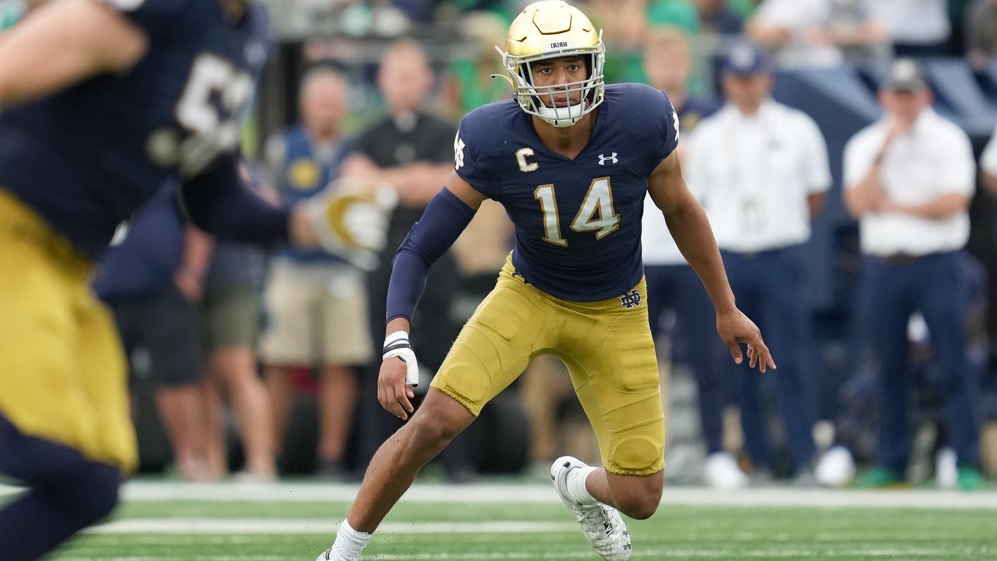
    Kyle Hamilton – S – Notre Dame

    Hamilton is a versatile safety who impacts all three levels of the field and is a rangy playmaker with the cover skills, speed, and athleticism to be an elite-level defender against both the run and pass.

    The Jamal Adams trade netted an extra top 10 pick this year, so the Jets could use one to draft a more versatile and younger safety.

    Derek Stingley Jr. – CB – LSU

    Stingley has the man coverage, athleticism, and ball skills to be an NFL defense’s No. 1 cornerback, but his injury history and dip in on-field production since his freshman year are concerns that need to be vetted.

    Bryce Hall had a great 2021. This gives him a shutdown opposite who has shown top-end athleticism and dominance as a freshman.

    #10 Overall

    Garrett Wilson – WR – Ohio State

    Wilson has the speed, route running, and ballcarrying traits that excite teams, and if he can work on attacking the ball when it’s in the air and improving his ability along the sideline, he will be a strong starter very early in his NFL career.

    The Jets need a top-end outside receiver, and Wilson’s well-rounded skill set and success against top-end defenders is a perfect solution.

    Treylon Burks – WR – Arkansas

    Burks will have to improve as a sharp route separator as his tree expands moving forward, but his body control, catching skills, and competitive speed make him an impact player at all levels of the field.

    If the Jets prefer a more “Alpha” style receiver with great YAC ability, Burks fits the mold as a player requiring defensive attention.

    Jermaine Johnson II – Edge – Florida State

    With his pass rush ability, strength, and power, Johnson should make an instant impact at the next level, though he needs to become more consistent across all areas of the game to hit his full potential.

    The Jets don’t have a star edge rusher, Johnson comes with elite 2021 production even while facing constant double-teams and chips.

    #35 Overall

    David Ojabo – Edge – Michigan

    Ojabo is an excellent athlete with the speed, range, bend, and flexibility to be a force as a pass-rush specialist, but he needs to get stronger and just see more reps in order to develop into an all-around player at the next level.

    The Jets likely aren’t looking to compete for a playoff run this season, Ojabo’s Achilles can get a full year to heal while the Jets plethora of other picks help immediately.

    Tyler Smith – OT – Tulsa

    Smith consistently puts defenders on the ground while using heavy hands and generating tons of movement in the run game, and while he should be tabbed as a starter, he needs to clean up the holding penalties and become a better space player.

    Smith is a good tackle prospect that could use the reps vs NFL defenders before becoming a full-time franchise LT.

    #38 Overall

    Breece Hall – RB – Iowa State

    Hall has the patience, vision, burst, and make-you-miss style of running to be a productive starter at the next level, but his still-improving pass game impact may hold him back from consistently playing on all three downs.

    Michael Carter was very good in 2021, and his pass-game impact paired with Hall’s rushing ability would make for a dominant and deep backfield.

    George Pickens – WR – Georgia

    Pickens is a big-bodied, big-play threat whose hands, tracking ability and competitiveness will make him a consistent contributor, especially once he learns an NFL route tree and if he becomes more dynamic after the catch.

    Pickens is a perfect complementary WR to Elijah Moore, Corey Davis, and Braxton Berrios, he can open up Zach Wilson’s deep range.

    #69 Overall

    Nik Bonitto – Edge – Oklahoma

    Bonitto is an athletic, rangy, bendy pass rusher who should excel at getting to the passer with his lack of strength and run game stoutness limiting him to just third downs early in his career at the next level.

    Another edge defender that the Jets can use their selection on to bet on the tools.

    Jalyn Armour-Davis – CB – Alabama

    Armour-Davis’ one year of playing time on Alabama’s defense showed technical inconsistencies but also quality physical tools to develop into a potential low-end starter on the outside moving forward.

    Lacking reps, Armour-Davis shows great physical traits and good production against top-end talents.

    Jalen Tolbert – WR – South Alabama

    Tolbert has the size, speed, and athletic body control to take the top off a defense at the next level, but he’ll need to improve on the finer points of receiver play to become a more versatile offensive contributor.

    A big-bodied deep threat that can take the top off a defense to allow Moore and Berrios to operate underneath.

    To learn more about the Jets and their needs, visit their team page on our NFL Draft website here.

  • NFL Draft Pick AnalySIS:New York Giants

    NFL Draft Pick AnalySIS:
    New York Giants

    The State of the Giants:

    The New York Giants have revamped. Bringing in a pair of leaders from the other blue New York team (Bills), new GM Joe Schoen and Head Coach Brian Daboll have an arsenal of picks to mold this roster into their liking. 

    All reports suggest the team giving Daniel Jones another shot, and a weak QB class doesn’t present a lot of alternatives. 

    The team as a whole needs more blue-chip talent, but two top 7 picks will surely help address that. The offense was league worst in most efficiency metrics, even with talented playmakers such as Saquon Barkley, Kenny Golladay, and Kadarius Toney. 

    The offensive line remains to be a massive weakness, as the team has continued to sputter with limited protection, is likely to be a huge focus of this draft. 

    The defense also needs work, so “best player available” is likely the primary draft strategy for the new-look Giants.

    #5 Overall

    Ikem Ekwonu – OT – NC State

    Ekwonu isn’t clean in all technical areas, and his ability to blind-side pass protect against elite finesse rushers could be a concern, but his combination of size, power, athleticism, and finishing tenacity are rare, regardless of position.

    Ekwonu’s tenacity and play speed are something the Giants do not have up front.

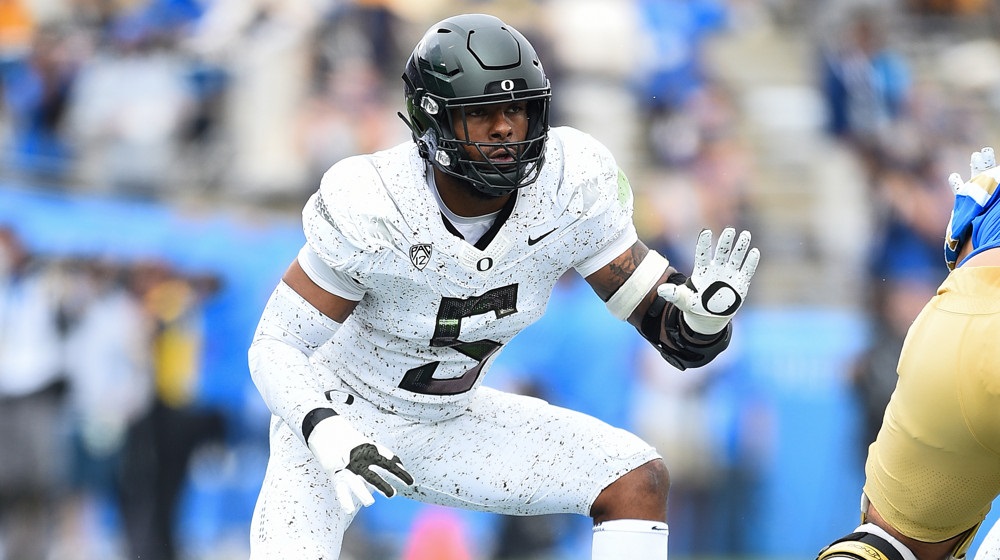
    Kayvon Thibodeaux – Edge – Oregon

    Thibodeaux is a game-changing pass rusher and strong run defender who plays with heavy hands and good leverage, though he needs to improve his flexibility and run a hotter motor to become a more complete player.

    If Thibodeaux is somehow available at No. 5, the Giants would be foolish to pass on the upside and freakish athleticism that he brings.

    Charles Cross – OT – Mississippi State

    Cross’ transition to a more diverse offense will be an adjustment, but he’s a true pass protecting left tackle displaying outstanding athleticism and body control, whose improvements already at a young age suggest a very high ceiling.

    Cross being a high ceiling LT, this would necessitate a move of Andrew Thomas elsewhere on the line. Cross’ ability to hold the blindside of a fumble-prone QB would do wonders to improve the offense.


    #7 Overall

    With only one (likely quarterback) pick between 5 and 7, the Giants could see an almost back-to-back selection scenario.

    Travon Walker – Edge – Georgia

    Walker has the physical and athletic traits that are highly coveted as a versatile defensive lineman, and if he can reach his potential as a pass rusher at the next level, he can be a special pass rushing talent.

    Looking for blue chip talent? Bet on the highly athletic traits that Walker brings if the other Edge prospects are gone.

    Ahmad Gardner – CB – Cincinnati

    Gardner is a press-man corner with length, athleticism, and natural cover talent to become a top lockdown cover man in the NFL, though he just needs to get stronger and refine his off-coverage skills to take his game to the next level.

    Trustworthy man-coverage corners are almost a necessity in the modern NFL. “Sauce” Gardner would give the Giants a huge boost, even if their corner play last year was one of their few positives.

    #36 Overall

    Tyler Smith – OT – Tulsa

    Smith consistently puts defenders on the ground while using heavy hands and generating tons of movement in the run game, and while he should be tabbed as a starter, he needs to clean up the holding penalties and become a better space player.

    Saquon can’t show off the unbelievable abilities in space if he constantly gets hit behind the line. Smith is a huge run blocker to help fix that.

    Lewis Cine – S – Georgia

    Cine has very good tracking and ball skills with the speed and smarts to play on the back end, but his inconsistencies in run support and as a tackler may hold him back from reaching his full potential.

    After losing Logan Ryan and Jabrill Peppers to free agency, the Giants need a safety counterpart to Xavier McKinney.

    Bernhard Raimann – OT – Central Michigan

    Raimann is a raw athlete with good size and the strength to hold up early at the next level, though refining his hands and overall skill set as a lineman could allow him to develop into a solid starter one day.

    A former TE, Raimann is an immediate athletic upgrade, and his consistent improvement with reps is encouraging.

    #67 Overall

    Jalen Pitre – S – Baylor

    Pitre is a super twitched-up athlete with very good instincts for when to attack and a skill set that will have him making plays all over the field, but limited deep cover skills likely limit him to exclusively playing near the LOS.

    Pitre is how the Giants replicate Jabrill Peppers’ box presence without sacrificing significant capital.

    Cameron Thomas – Edge – San Diego State

    Thomas is a heat-seeking edge with the power and techniques to be a starter at the next level, but needs some development in play recognition and working leverages to hit his higher ceiling.

    Speedy and powerful edge that brings needed athletic upside to the defensive front.

    Darian Kinnard – OG – Kentucky

    Kinnard is a big, strong blocker with a mauling mentality in the run game, but needs to refine his footwork, hand accuracy, and overall technique in the pass game to be an effective starter at the next level.

    A physically imposing guard to help support a run game to improve the offense and give Daniel Jones some breathing room.

    #81 Overall

    Dylan Parham – C – Memphis

    Parham is a smart player with the athleticism and quickness to be a versatile lineman, but will need to get stronger and more physical to maximize his potential at the next level.

    Experienced and smart, while dominant upside may not be there, should be a valuable starter for this team.

    Josh Paschal – Edge – Kentucky

    Paschal is a strong run defender and brings power as a pass rusher, but needs to get much more consistent and detailed with his pass rush plan in order to really be a three-down player at the next level.

    A bottom 5 team at defending runs last year, the Giants could use help in run defense with Paschal as an upside pick.

  • NFL Draft Pick AnalySIS: Jacksonville Jaguars

    NFL Draft Pick AnalySIS: Jacksonville Jaguars

    The State of the Jaguars:

    The Jaguars 2021 season was almost entirely negative. Urban Meyer’s tenure will forever be one of the worst coaching jobs in NFL history. After picking No. 1 for the first time in franchise history, the Jaguars find themselves right back in the same situation, selecting first. While No. 1 picks have recently been for QBs, combining a weak class with a team that holds Trevor Lawrence means that is likely not going to happen this year. Here are some players the Jaguars may be considering at each of their Day 1 & 2 picks.

    #1 Overall

    Aidan Hutchinson – Edge – Michigan

    Hutchinson is the ideal modern NFL edge with a special blend of pass rush skills, athleticism, strength, hand use, and competitiveness that will make him a cornerstone player for an NFL franchise. 

    Josh Allen has been a reputable force on one edge, but a counterpart hasn’t stepped up. Hutchinson is comes with production & athleticism who could help resurrect the 2017 “Sacksonville” moniker.

    Evan Neal – OT – Alabama

    Neal is a young prospect with the rare combination of size and athletic ability that give him both a high floor and a Hall of Fame ceiling as a blind-side protector.

    Giving your young quarterback offensive line protection is paramount to their longevity and ability to succeed. Neal is a long-term immediate starter to protect Lawrence.

    Kayvon Thibodeaux – Edge – Oregon

    Thibodeaux is a game-changing pass rusher and strong run defender who plays with heavy hands and good leverage, though he needs to improve his flexibility and run a hotter motor to become a more complete player.

    A preseason favorite for the No. 1 pick, Thibodeaux would create a hyper-athletic edge tandem that can succeed on all three downs.

    #33 Overall

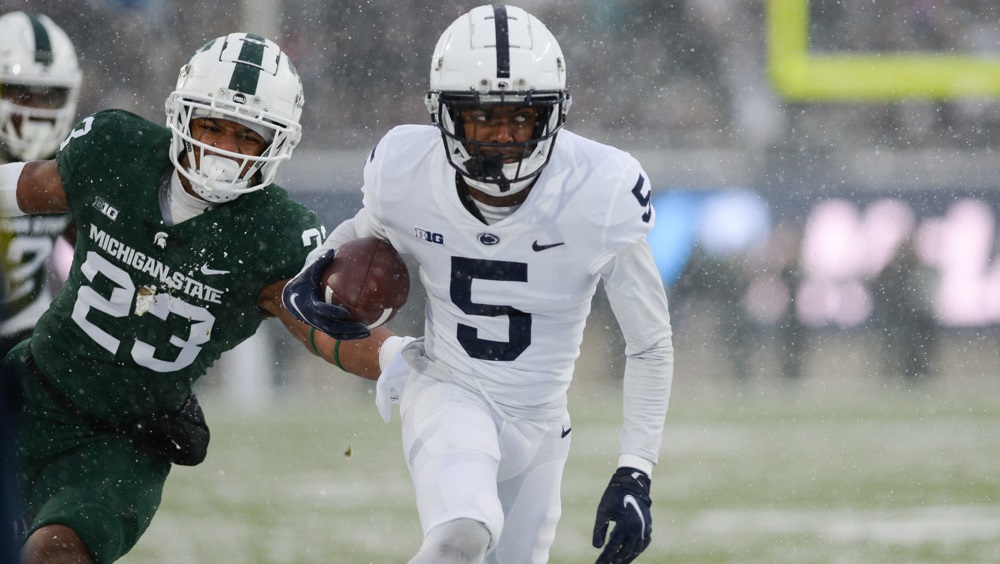
    Jahan Dotson – WR – Penn State

    Dotson’s size and toughness limit him in certain situations, but his explosiveness and body control allow him to make spectacular plays at all levels of the field.

    Dotson is a versatile weapon with sure hands and can easily become a heavy target-share player, who can win at all levels from the outside, something the Jaguars must acquire.

    Bernhard Raimann – OT – Central Michigan

    Raimann is a raw athlete with good size and the strength to hold up early at the next level, though refining his hands and overall skill set as a lineman could allow him to develop into a solid starter one day.

    With Cam Robinson’s second franchise tag, the Jaguars can afford to take the swing on the Austrian’s upside while he refines his technique.

    George Pickens – WR – Georgia

    Pickens is a big-bodied, big-play threat whose hands, tracking ability and competitiveness will make him a consistent contributor, especially once he learns an NFL route tree and if he becomes more dynamic after the catch.

    A downfield threat that is a great replacement for DJ Chark, and his contested-catch ability is something the Jaguars don’t have anywhere on the roster.

    #65 Overall

    Trey McBride – TE – Colorado State

    McBride has the hands, catch radius and body control as a receiver with the willingness and competitiveness as a blocker to start at the next level, but inconsistent separation skills and run block effectiveness could hold him back.

    Doug Pederson previously emphasized TEs in Philadelphia, and McBride joining that room being a surehanded receiving tight end is a great fit.

    Channing Tindall – LB – Georgia

    While Tindall never started a game at Georgia, he has the athleticism, man coverage skills, and tackling prowess to be a starter in the NFL and he just needs to improve his power and intelligence to hit his ceiling.

    Tindall’s athletic ability to play both against the run and in the pass gives the Jaguars a quality defensive player to build with, something they simply don’t have many of.

    David Bell – WR – Purdue

    Bell needs to improve his route running separation skills, but his deep ball tracking and slippery ball carrying abilities should make for a multi-level threat and a reliable, alignment-versatile third option.

    Bell’s after-catch abilities and downfield play from a wide position is something the Jaguars lack, and is capable of moving safeties back to allow Christian Kirk and TEs to operate underneath.

    #70 Overall

    Chad Muma – LB – Wyoming

    Muma is an explosive player with ideal size and a motor that does not quit in order to make splash plays and contribute as a core special teamer, but he needs to refine his skills to make a consistent impact in all areas.

    Muma’s high motor and ability to shed blocks becomes a great fit alongside Oluokun if they want to have an answer for division rivals Derrick Henry and Jonathan Taylor.

    Kerby Joseph – S – Illinois

    Joseph is a rangy, ball-hawking deep safety who has the smarts and skills to be a starter at the next level, though he’d become more of a threat if he gets a little more physical and is willing to mix it up more often.

    Joseph would give the Jaguars a true no-fly-zone safety tandem along with Andre Cisco. 

    Myjai Sanders – Edge – Cincinnati

    Sanders has a relentless mindset with the length, repertoire, and hand use to be an effective three-down player, but he’ll need to keep his pad level down and focus on mixing up his pass rush moves in order to hit his ceiling.

    Growing up in Jacksonville, Sanders is an athletic upside rusher who consistently generated pressures with Cincinnati.

    To learn more about the Jaguars and their needs, visit their team page on our NFL Draft website here.

  • Re-imagining the Draft Pick Trade Value Chart with Total Points

    Re-imagining the Draft Pick Trade Value Chart with Total Points

    Introduction

    Every April, NFL GMs are given the task to take their allocated amounts of “draft selections” in efforts to better the team in both the short- and long-term. This process of player entry into the league is meant to increase parity and allow the formerly bad teams to get marginally better in a fair manner. Maximizing value in this process is a key factor in what teams continue to play football in February.

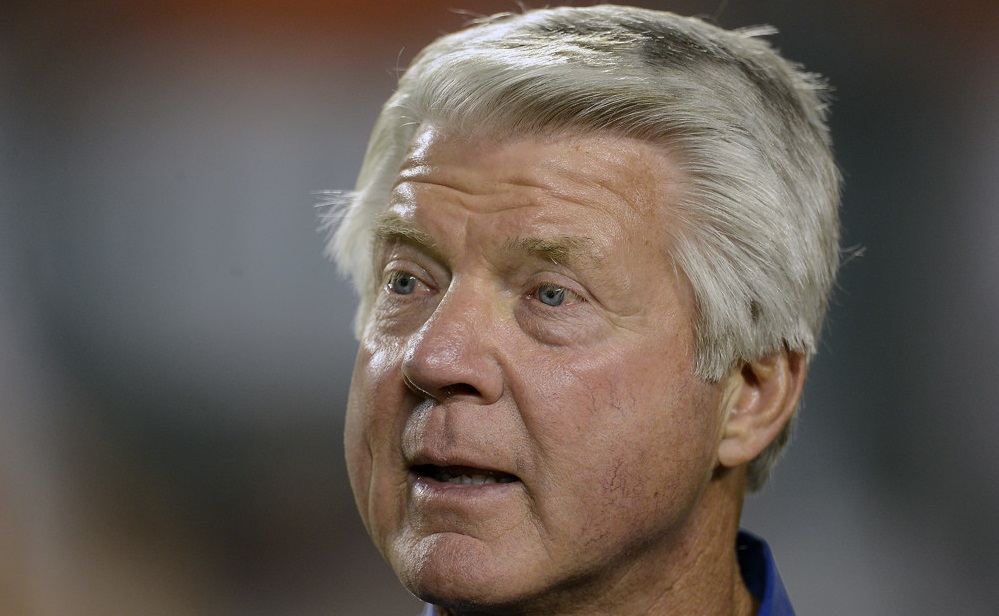
    About 30 years ago, Jimmy Johnson devised a “draft trade chart” for the Dallas Cowboys, in efforts for the team to immediately evaluate draft pick trade offers. This chart became wildly popular, is still referenced by many, and has inspired a handful of spin-off iterations. Since the chart was made, four teams joined the league, the rules have changed dramatically, coaches are much more creative, and the NFL Draft process has improved immensely. 

    Instead of looking at the perceived value of picks, what if trade value came from the value that NFL teams actually got from those selections?

    Total Points

    Sports Info Solutions developed Total Points to value every player’s contribution to the team’s score. This complex metric was developed in 2018 and retroactively applied back to 2016. You can read its intricacies here. Instead of just empty stats, this measures the effectiveness of each individual player, to look at their stats in a much more critical manner.

    Having a metric to define a player’s contributions to a team and matching that to where they were acquired in the draft, we can create a new version of the trade value chart.

    Building the Model

    Total Points begins in 2016, which will be our first evaluated class, and choosing to use the total points over a player’s first two years means 2021’s draft has to be ignored. Therefore, our dataset spans five drafts. 

    To determine the value at each pick, we have to consider that not all classes come with the same amount of talent, both overall and by position. With only five classes being considered, a wide net has to be cast in efforts to not allow individual players to affect the values too heavily. Thus, for each pick, we select the five years of Total Points earned from that selection, and the five adjacent picks in either direction, to get 55 Total Points numbers to gather information from.

    With 55 values, from there we can eliminate outliers, both positive and negative. This is because the metric is looking for a single expected value, not measuring a ceiling or floor. For example, Gardner Minshew’s Total Points success from the 6th round should not tell us a 6th round pick has a lot of value, just as Paxton Lynch’s disaster from pick 26 shouldn’t say that’s a bad pick to own. 

    To achieve this for each pick, we eliminate the values of players either below the 20th percentile and above the 80th percentile to eliminate those anomalies. For draft selections with 55 players, this roughly gives 33 values to calculate an average of. This average is our data point representing the expected Total Points that a selection will return.

    Expected Total Points returned from draft picks (based on 2016-20 drafts), shown point-by-point with a smoothing curve overlaying. The curve is approximately exponential with a sharp increase in value starting around pick 20.

    The model shown in black was developed using two separate models blended together. The first round being of such high importance, it couldn’t be represented based on influences from the 3rd round, so an exponential regression model was fit using early draft picks. The second model was a similar exponential regression model designed across the entirety of the data. 

    These are then smoothed together using a continuous gradual function to get a representative model. This gives us an Expected Total Points return based on the overall draft selection.

    Takeaways

    Likely one of the first observations made on the chart above is the “peaks” seen at the top of the first, second, and third round. These can be explained by players finding a much easier path to playing time in Years 1 and 2, as the teams selecting them theoretically have much less talent, and these players step right in as contributors. With more playing time, earning Total Points becomes much easier. 

    The trough at pick 26 can likely be explained by there being two QB selections, Paxton Lynch and Jordan Love, who returned negative and 0 Total Points respectively. The players doomed into minimal playing time will negatively impact the averages around that pick, even if on another team they would return a much better value.

    The peak around the 150th pick is partially due to the small sample size of drafts. There are relatively more players returning 20+ Total Points than many adjacent picks–George Kittle, Demontae Kazee, Desmond King, Matt Ioannidis, Andrew Van Ginkel, Jordan Howard, and Hunter Renfrow to name a few. With more years of data, these picks will regress to the mean. With a smooth, monotonically-decreasing function, this peak appears when looking at the individual picks, but does not strangely influence the model.

    Since 2016, 4 of the 5 drafts featured a QB going in spot number 1 (Jared Goff, Myles Garrett, Baker Mayfield, Kyler Murray, Joe Burrow). Naturally, quarterbacks accumulate the highest amount of Total Points, and immediate-impact QBs usually come from the top-end selections. However, there are plenty of picks in the top 10 of non-QBs to counteract this and give a real representation of expected Total Points.

    One aspect important to the model is that no successive pick can exceed the value of a previous one. Every player taken at spot 50 was available at spot 32, so we shouldn’t follow and prioritize the NFL’s drafting mistakes if earlier picks occasionally outperform later ones. All-Pro LB Darius Leonard would have been a higher selection than 36 had the league known his talent.

    The Improvement

    Back to the originally presented Jimmy Johnson model. Can it be compared to ours? If we look at all picks’ value in comparison to the No. 16 pick (midway through the 1st round), we can compare the two models in the chart below.

    Comparing the Total Points based draft value curve to the Jimmy Johnson one. The Johnson model stays flatter longer in the range of later picks, then increases very sharply and shows higher value for picks in the top 15. 

    Johnson’s model counts early first round picks as significantly better than later ones, where it is much more smooth in the Total Points chart. The perceived value difference between picks 5 and 20 is much steeper in Johnson’s. This trend continues throughout the draft. Johnson’s scale sees the draft classes as much more top-heavy, and that the middle rounds do not bring anywhere close to the value of first rounders. Total Points, which is graded independently of draft capital, argues that the difference is much smaller than what may be perceived.

    It should be noted, however, that Johnson’s chart is designed with pick value in mind. His chart could theoretically be accounting for a player’s potential upside, while the designed Total Points model is looking at expectation, in what a player likely returns. This could potentially explain the value difference of picks at the very top of the draft.

    In application, if I have a selection around the 10th pick I’m doing everything I can to secure later 1st, 2nd, and 3rd-round picks. My net gain from the draft class will likely be significantly higher than if I stay at the 10th pick. But would teams actually do this, trade all that to move up a few spots? Yes, they do!

    In the 2021 NFL Draft, the Minnesota Vikings came on the clock with the 14th pick. Instead of making a selection, they traded the pick to the New York Jets. The trade ended up being picks 14 and 143 in exchange for 23, 66, and 86. Mapping the expected Total Points return, the Vikings took 46.1 Total Points and exchanged it for 67.2 Total Points. This is a fantastic deal from the Vikings, and a massive waste of value from the Jets.

    In Conclusion

    The draft is much more of a gradual exponential function than what is normally perceived. Rounds 2 and 3 hold a ton of expected value in building championship teams, and those can be the best bang-for-your-buck selections in the entire weekend.

    In general, trading up for a future starting quarterback would be a positive Total Points value move. They are so important to a team’s success that moving up the board to secure yours is well worth the investment. Otherwise, it’s best to sit tight and let the draft come to you, and move back to maximize it.

    It wouldn’t be an analysis of draft pick trade values without sharing a chart for the 2022 Draft. What would you do with your team’s picks?

    Draft picks as of 4/4/2022. 5:00 PM EST