Author: Patrick Powers

  • How Illinois’ Simple Schematics Have Maximized Its Talent

    How Illinois’ Simple Schematics Have Maximized Its Talent

    Coaches don’t win games. Players do. Many coaches create intricate, elaborate playbooks with dozens of fronts, stunts, blitzes and coverages in the hopes of turning their defense into the next Steel Curtain. But few win by putting scheme ahead of personnel.

    Conversely, teams with better players usually win. Tactically-inept coaches have won with the talent advantage. But they never win as much as they should. Great coaches put their personnel first with a scheme that maximizes each player’s abilities. No defense does that better than Illinois.

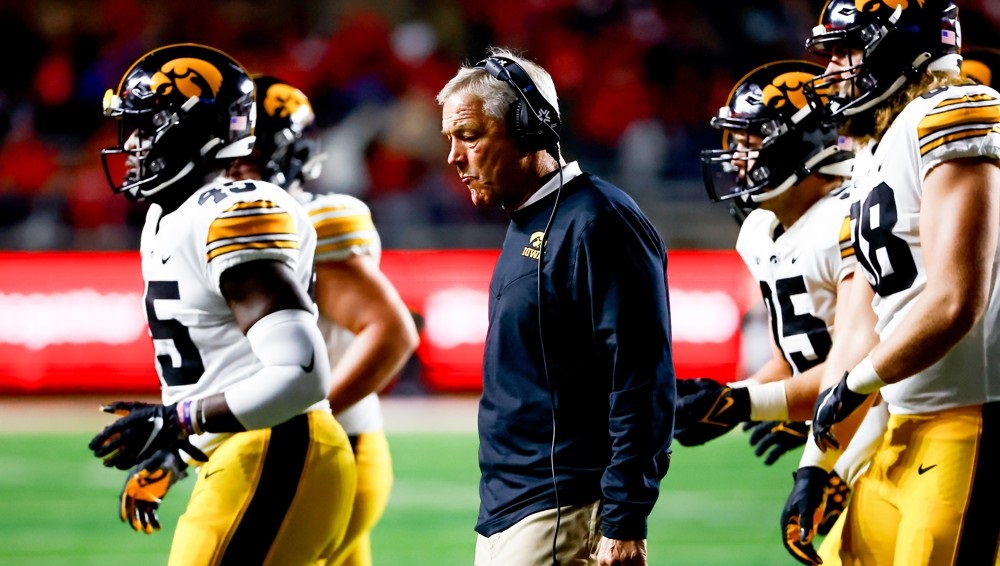
    With five games left in the season, Illinois has already surpassed all expectations. Predicted to finish 6th in the Big Ten West, Bret Bielema and his Fighting Illini currently lead the division. For the first time in 11 years, Illinois is ranked. In under two years at the helm, Bielema has the program rolling, largely thanks to its defense.

    Illinois’ defense, coordinated by Ryan Walters, leads the FBS in both points (8.9) and yards (221.1) allowed this season. But the advanced metrics treat Walters’ defense just as well. The run and pass defense rank 15th and 3rd in Points Saved Per Play (PS Per Play) and 3rd and 1st in Expected Points Added Per Play (EPA/Play), respectively for Power 5 teams. With a simple scheme that prioritizes its players’ abilities, Illinois appears to have turned a corner.

    The Illini most commonly-used look shares a resemblance to the 46 defense, also known as the Bear front. Illinois normally plays with three down linemen and 2 outside linebackers on the line of scrimmage, with a middle linebacker and five defensive backs.

    In passing situations, Illinois will occasionally go to a 4-2 or even a Psycho look:

    The Illini stunt and blitz often, which is not uncommon for teams with limited talent. This season they send five or more pass rushers 49% of the time, 3rd most in the FBS, and pressure the quarterback 49% of the time, which ranks 6th. Even when they send four or fewer, the Illini pressure the quarterback 39% of their pass rushes, best in the FBS.

    On the back end, the Illini typically have one deep safety sitting up to 25 yards from the line of scrimmage. The rest of the defensive backs align as if in man coverage.  The alignment is usually true to the assignment, as they play Cover 1 on 67% of non-screen passes. Cover 3 gets called the second most at 14%, with the occasional Cover 2 called as well, sometimes even from the 1-high shell. 

    Even with the blitzing, Illinois does not have a complex defense. Because of its simplicity, the Illini can adjust its personnel within the structure of the defense to best counter the offense. Facing 10 personnel, the Illini align in their base.

    Given 11 or 20, the Illini sub in a linebacker into the box to the tight end side, or move Sydney Brown (30) to that spot.

    Against 12 or 21, the Illini bring in Isaac Darkangelo (38) as the extra linebacker to match the muscle.

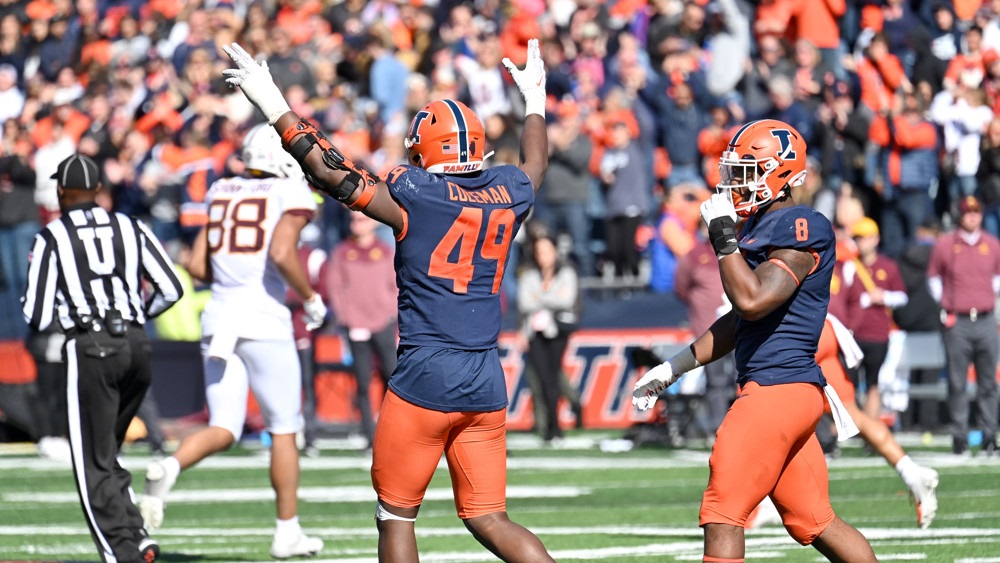
    The specialization does not stop there. For the front, the wide side of the field determines the formation strength and in turn where everyone aligns. Keith Randolph Jr. (88), their best interior lineman with .096 Points Saved Per Play against the run, lines up across the field-side tackle, while Jer’Zhan Newton (4) faces the boundary tackle. At outside linebacker, Calvin Hart Jr.(5) goes to the field, Seth Coleman (49) to the boundary. The linebackers take it even further than the defensive line. When Gabe Jacas (17) or Alec Bryant (90) come into the game, the starter still in the game plays to the field.

    In the defensive backfield, rather than using the wide side of the field to determine matchups, the Illini use individual skills, much like a basketball defense. Tahveon Nicholson (10) and Devon Witherspoon (31), both in the top 10 in Points Saved Per Play against the pass, cover the wideouts. If the two primary wideouts align on the same side opposite a nub, the corner follows the receiver:

    In some instances the corners follow specific receivers no matter where they align. Tahveon Nicholson followed Indiana’s DJ Matthews Jr. (7) in the closing minutes of their matchup, covering him in the slot despite normally playing wide.

    Jartavius Martin (21) covers the third receiver and Sydney Brown the fourth. Kendall Smith (7) plays the deep safety unless the offense goes heavy, in which case Darkangelo subs him out and Martin plays deep. Despite the reputation of the specialized skills of the free safety, the Illini perhaps treat this position the most interchangeably.

    In addition to beneficial personnel matchups, a few other factors have contributed to Illinois’ strong defensive performance. Ranking 2nd in time of possession this season, the Illini offense has kept the defense off the field, giving the opposition fewer chances to score against a well-rested defense. Additionally, the Illini have benefitted from soft scheduling.

    Illinois played five of its first seven games at home, and the rest of the division has disappointed this season. Wisconsin came out so poorly it fired its coach (with some credit due to Illinois), and Iowa may have the worst offense in the FBS. In spite of the opportunity, none of Illinois’ division foes has stepped up to take over for either.

    But given that the Illini allowed nearly 35 points per game in 2020 en route to a 2-win season, Bielema and Walters cannot get enough credit for the turnaround. With only three seniors in the defensive starting lineup, the defense could even improve in the coming years. Illinois’ simple scheme has its players confident in both their abilities and assignments. Combined with the best possible matchups at every position, the defense has found a way to lead the team into the driver’s seat of the Big Ten West.

  • How Georgia Southern’s Offensive Gameplan Delivered James Madison Its 1st Loss

    How Georgia Southern’s Offensive Gameplan Delivered James Madison Its 1st Loss

    Heading into Statesboro last Saturday, James Madison won its first five games as members of the FBS, allowing only 15 points per game this season. Using Expected Points Added per Attempt (EPA/A) the defense ranked 1st in stopping the run and 16th in stopping the pass. Facing a rebuilding Georgia Southern coming off a loss to rival Georgia State, the Dukes had reason to feel confident about beating the Eagles.

    But the defense allowed 45 points in Madison’s first loss of the season. The Dukes underperformed, but that sells Georgia Southern short. The Eagles clearly had a plan to utilize the offense’s strengths to exploit the defense’s weaknesses.

    James Madison bases out of a 4-2-5, playing with four down linemen and five defensive backs over 83% of the time going into this game. The overhang safeties excel at forcing the run inside, with the Dukes ranked 1st in EPA/A on outside runs (-.49). On the inside, Jalen Green and James Carpenter rank in the top 10 of Total Points Per Play among all defensive tackles with 5 or more tackles.

    In the secondary, Madison flips its personnel, positioning its cornerbacks and safeties to the field and boundary, rather than left and right or strong and weak. Against the pass, the Dukes play single-high coverage on over 74% of non-screen passes. They perform better in Cover 3 than Cover 1, scoring -.46 EPA/A in Cover 3 versus -.09 in Cover 1.

    As for Georgia Southern, it passes nearly 60% of the time, ranking 70th in the FBS at 0.13 Total Points Per Play. The run does worse, clocking in at 0.04 Total Points Per Play. Georgia Southern prefers to use a tight end, doing so on almost 65% of snaps, and unsurprisingly runs better with a tight end and passes better without one (0.06 vs 0.01 Total Points Per Play on Runs, 0.07 vs 0.16 Total Points Per Play on Passes).

    For this matchup, Georgia Southern adjusted both its packages and run/pass mix. 68% of its plays came from 10 personnel, and in total the Eagles passed 80% of the time. With an extra receiver on the field, the Eagles could focus on airing the ball out, avoiding the mismatch between their mediocre running attack and Madison’s elite run defense.

    While the Eagles did not refuse to run the ball, they mostly did so to keep the Dukes honest. To get the secondary out of position, Georgia Southern came out several times in trips to the field. In response, Madison would rotate its defensive backs to the field, to which the Eagles would run into the boundary. Twice the offense ran a sweep around a boundary tight end away from trips.

    Their other runs fared no better, as the Eagles ended the day with only 12 yards on 16 attempts.

    The run failed the offense, but the jet sweep did not, netting 44 yards for the Eagles. Not only did the quick pass confound the defense, but the constraint from the jet motion did as well. Georgia Southern ran its first jet sweep with 7:03 left in the third quarter, breaking outside for 33 yards. Under five minutes later, the Eagles used the same motion, to which the Dukes overpursued. Instead of pitching to the man in motion, the Eagles fake the jet and throw to Jalen White in the opposite flat, resulting in a 37-yard touchdown. In the fourth quarter, Georgia Southern goes back to the same motion against a wary defense and gains 11 yards off the sweep.

    The motioning did not stop here. Twice in the third quarter the Eagles gashed the Dukes deep on motion plays. The first forced James Madison to play one high safety against the crossing concept. The second expanded the secondary previously aligned to a tight set, exposing the seams.

    Three times Georgia Southern motioned a man into trips to the field, looking to hit him for a quick pass outside. The Dukes once brought the safety down to the motion man, giving away their coverage, and twice played it straight, leaving too few defenders to cover the flat. Despite breaking the coverage shell, the first solution forced an incompletion, while the second forfeited six yards on each attempt.

    Despite the motions and formations presented to the Madison defense, it hardly adjusted its coverage calls. The Dukes resorted more to their strengths than normal, playing 25% more Cover 3 this game than in its previous five games. Even when Georgia Southern went away from trips, the Dukes still went Cover 3 on 11 out of 19 pass snaps.

    Even facing Madison’s best coverage, the Eagles found ways to move the ball. Regardless of whether Madison rolled their Cover 3 toward or away from trips, Georgia Southern could break Madison’s coverage. When rolling to, Kyle Vantrease hit Amare Jones on his bender in front of the high safety for a 29-yard gain. When rolling away, Vantrease hit Jeremy Singleton on an out route for 19 yards. The Dukes’ reliance on Cover 3 did not pay off, as the defense allowed 5.6 EPA in this coverage.

    But Georgia Southern’s greatest advantage came from putting its receivers in positions to succeed against Madison’s weaker defenders. The Eagles targeted the boundary cornerback 11 times, completing 8 of those passes for 190 yards and two touchdowns. From motioning away, to running man-beater concepts, to isolating him by aligning trips to the field, Georgia Southern attained the mismatches it desired.

    Prior to Week 7, James Madison looked to have a top-10 defense. Georgia Southern, on the other hand, appeared to have a middling offense. But by exploiting the Dukes’ defensive flaws, both with scheme and personnel, the Eagles piled on the points and pulled off the upset.

  • How 1-Personnel Defenses Defend Diverse Offenses

    How 1-Personnel Defenses Defend Diverse Offenses

    Diverse offenses cause mismatches for defenses. With a variety of talents in different personnel packages, the offense has multiple ways to move the ball. Teams like USC, Kansas, and TCU, by adjusting the players on the field by the situations presented, find themselves among the top 10 FBS offenses in EPA/A this season.

    Defenses such as those at Illinois, UAB, and Boise State attempt to match the offense’s abilities by matching its substitutions. They meet more receivers with more defensive backs and more tight ends and running backs with more defensive linemen and linebackers. Other defenses leave the same 11 players on the field, trusting those already playing to adjust to whatever the offense throws their way.

    Intuitively, the second solution makes no sense. Defenses failing to counter the offense’s personnel gives the offense the mismatches it so desperately desires. But comparing the 20 teams that use the most and least diverse packages, the results look roughly the same. Using the standard deviation in percentage of each package used to determine the most and least diverse defenses, the table below shows the average rank of each group within the FBS:

    Metric/Diversity in Personnel Most Diverse Least Diverse
    PS/Play 63.5 58.2
    PAA/Play 63.3 55.7
    EPA/A 63.0 57.3

    Among the least diverse defenses lives Troy, Baylor, and New Mexico. All use one personnel group over 94% of the time, and offenses with multiple packages, such as Western Kentucky, BYU, and UTEP, have failed to take advantage of the mismatches. A look at each game reveals not only how each one succeeds in stopping such offenses, but how differently they do so.

    Troy vs Western Kentucky

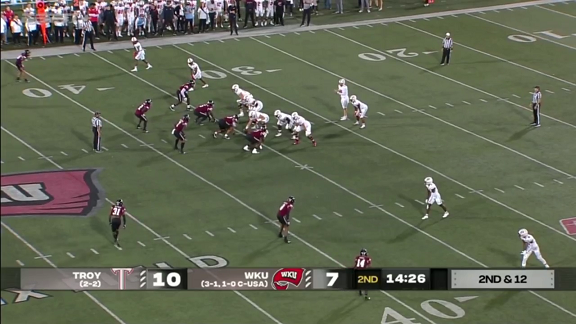
    With consistent personnel comes consistent alignment for the Troy defense. The two cornerbacks stay on their respective sides, two safeties play high while the third aligns to the wide side of the field close to the line of scrimmage. The linebackers play in the box, while the weak-side defensive end stands to the boundary. The remaining linemen play with their hands in the dirt, usually occupying the center and tackles. 

    To get Troy out of its base defense, Western Kentucky used 10 and 00 personnel 65% of the game (55 snaps out of 85), up from its usual 40%. To cover the extra receivers, Troy either moved a linebacker or the standup end out wide to cover a receiver. This left them shorthanded against the run:

    But by keeping the base in place, Troy could still disguise its myriad of blitzes and coverages from one look. Though the Trojans have rushed five or more defenders only 33 times this season, ranked 103rd in the FBS, they regularly change which four rush the passer. Troy typically rushes the four linemen, but at times will substitute the standup end for the strong safety or even the boundary cornerback.

    Troy aligns with two high safeties, but from this look Troy has played Cover 1, 2, 3, and 4 at least 25 times each this season. On this snap, what looks like Cover 2 shifts into Cover 3 Cloud, and the weak-side linebacker, catching the quarterback by surprise, jumps the pass for an interception.

    Varying the defense played from the base displayed, Troy held Western Kentucky to its lowest point total and yards per play average this season.

    Baylor vs BYU

    In Baylor’s 3-3-5, one linebacker functions as a standup defensive end, while the defensive line almost always plays with interior linemen in 3 and 2i techniques. The five defensive backs play in a two-high shell with the third safety shifted down near the line of scrimmage on the strong side of the formation.

    Within this one look, Baylor plays their base defense as often as possible. Not including screens, the Bears run Man and Zone Cover 2 48% of the time, 15% more than the 2nd highest team (Memphis). They have rushed five or more players only 15 times this season, almost always going with the front four.

    Baylor can play this way due to its defenders’ versatility. Among other skills, the secondary can close down on runners in space:

    While the linebackers can cover receivers man-to-man:

    With defenders able to carry out an assortment of assignments, the Bears can focus less on having many schemes and instead on perfecting one. 

    The hybrid nature of Baylor’s defense does not completely immunize it from all personnel and formation adjustments. Empty and unbalanced looks put the Bears in a bind throughout the game. BYU’s empty sets forced the Bears to apex a linebacker or end, resulting in 2.7 additional expected points for the Cougars.

    Off a trick play from an unbalanced set the Cougars scored their final touchdown in regulation.

    Even with BYU’s counters, the Bears’ reliance on execution rather than scheme kept them in this game, allowing only 20 points in regulation.

    New Mexico vs UTEP

    The advent of the spread offense has rapidly increased the popularity of the 3-3-5. But Rocky Long has run his own version since his first tenure at New Mexico, beginning in 1998. His style relies on chaos more than order, and he creates it with his fifth defensive back known as the “Lobo.”

    The Lobo has a variety of potential alignments and assignments, from starting close to the line of scrimmage as a defensive end, to playing 7 yards away as a linebacker, to lining up as a deep middle safety. 

    He can rush the passer, act as a seventh box defender against the run, or cover a deep zone, among other roles. With such a flexible player, New Mexico can not only adjust to other offenses, but force other offenses to adjust to it.

    UTEP runs the most diverse set of personnel packages in the FBS. The Miners use 10, 11, 12, 20, and 21 personnel at least 10% of their snaps. But only plays with 20 personnel increased UTEP’s expected points this game, doing so by a measly .96. The 11 personnel plays fared the worst, losing 23.5 expected points on 32 plays with three turnovers.

    Despite failing to counter UTEP’s offensive personnel, New Mexico presented a defense the Miners could not match en route to a 27-10 victory.

  • The Air Raid Fights On

    The Air Raid Fights On

    The Air Raid has left its fingerprints on modern college football like no other offense. From its passing concepts such as mesh to its jettison of the huddle, the Air Raid has found its way into nearly every offensive coordinator’s playbook in one way or another. 

    For as fast as its concepts spread, its coaching tree grew faster. The Air Raid began in the 1990s at Iowa Wesleyan with Hal Mumme and Mike Leach as a way for the talentless to compete. Thirty years later, blue bloods have fully embraced the system, notably USC under its last two head coaches.

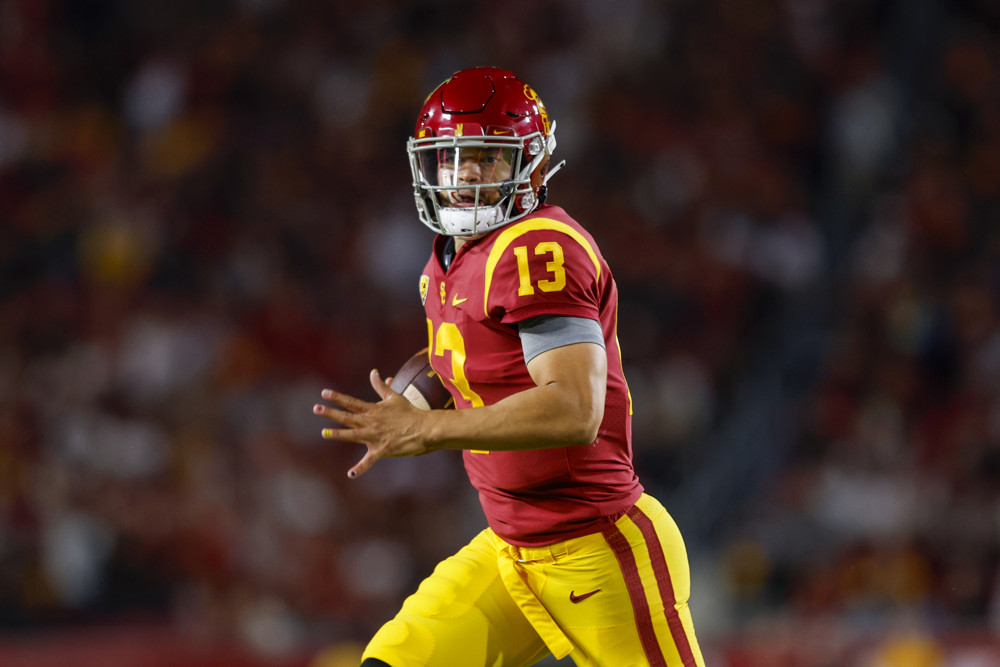
    Under Clay Helton, Mike Leach’s former quarterback Graham Harrell assumed offensive coordinator duties in 2019. Upon changing coaches in 2022 and with Harrell off to West Virginia, another former Leach player in Lincoln Riley took charge of the offense. Despite running the same system by name, Riley’s Trojan offense could hardly look more different than Harrell’s.

    Some of that comes with the change in personnel between regimes. Riley has made the most of the transfer portal, restocking the skill positions with elite talent across the board. He also has the benefit of four returning starters on the offensive line. Such talent explains much of the two-touchdown difference in points per game between the two offenses and allows Riley to implement a greater playbook, both in size and complexity.

    Even with the personnel changes, each coach approaches the game differently. Neither runs the true Air Raid, despite their backgrounds. In fact, no team runs the true Air Raid, minus Mike Leach’s Mississippi State Bulldogs. 

    Like any innovation, a few adopt the original while the majority wait for the product to either become mainstream or for its worthwhile functions to be incorporated into everyday products. Nobody carries a GPS, an mp3 player, and a palm pilot; the smartphone has all of those features in one device.

    Coaches behave the same way. In the Air Raid’s youth, earlier adopters such as Bob Stoops, who hired Mike Leach upon taking the Oklahoma job, reap the benefits while the rest of the industry carefully picks and chooses the features it likes.

    Now that the Air Raid has reached 30 years old, the inverse happens. Riley and Harrell began with the original Air Raid, an offense with few plays and fewer formations designed to attack all parts of the field. Graham Harrell focuses on the former, Lincoln Riley the latter.

    Graham Harrell departs most from his roots in his preferred personnel. The traditional Air Raid never uses a tight end. Harrell used at least one on 98% of USC’s snaps in 2021. With different personnel come different concepts, but Harrell keeps them to a minimum.

    Harrell ran zone on 79% of USC’s 2021 runs, the 15th highest percentage in the FBS. To stress the defense’s perimeter, USC called screens 72 times in 2021, 6th most in FBS. Screens also provided a convenient way to get Drake London the ball. He averaged the 5th-most PAA per route on wide receiver screens (0.011) among those targeted on screens at least 20 times. USC’s downfield game consisted mostly of flies, seams, and fades, as it ran those routes 433 times in 2021, 8th-most in the FBS. The Trojans had the most success however when attacking the middle of the field, averaging 0.037 PAA per play on posts and digs.

    Harrell keeps it simple, whereas Riley brings variety. He changes between 10, 11, and 20 personnel regularly, and runs zone only 39% of the time. Instead, he bases his running game off of gap schemes, such as the double pull he opened with against Oregon State.

    Like his predecessor, Riley screens early and often with 39 thrown already this season. But with the increased emphasis on the run and screen comes a reduction in the vertical game. Through five games the Trojans have targeted routes longer than 20 yards 21 times, ranked in the top half of the FBS but fewer than the 36 thrown in the first five games of 2021.

    While both Harrell and Riley differ considerably in their scheme, the mobility of each coach’s quarterbacks displays their differences in execution. Riley, from Baker Mayfield to Caleb Williams, has always had a mobile quarterback at his disposal. This opens up concepts in the run game, takes pressure off the offensive line, and turns broken plays into big gains with regularity. Under Graham Harrell, only Mason Fine has exceeded 100 yards rushing in a season as his quarterback, doing so in 2016. 

    Without a running quarterback, Harrell could only pair his runs with screens. Riley can not only match his base runs with the screen and quarterback keep, but can also go play action, threatening all parts of the field from one look.

    The contrast between Harrell and Riley shows the most in their up-tempo approaches. After a successful play, both coaches like to hurry the team to the line and run another play against the disoriented defense. Harrell will trot out a simple formation and play, trusting his players to execute their assignments.

    Riley opens up the playbook in such situations, having the personnel on the field fill almost any position. Receivers will play tight and running backs wide, as they do on the second and third plays of this series of downs, so long as he can call the perfect play. 

    Harrell uses a simple scheme to get his players into positions to succeed. Riley attacks all parts of the field by creating positionless chaos only his players can exploit. While both have similar backgrounds and share concepts to get to their respective ends, the results look as though each came from opposite poles of the coaching world.

  • Inside Iowa’s Offensive Woes

    Inside Iowa’s Offensive Woes

    Few coaches have won one game by scoring two safeties and another by allowing two safeties. But Kirk Ferentz has done just that. With that in mind, it should not be surprising that his team has a reputation for underwhelming offense.

    Based on its performance this season, that reputation seems well earned, as his Iowa Hawkeyes on average score only 17 points per game, 12.5 when discounting defensive scores. Is Iowa’s strategy, tactics, or player development to blame for its offensive futility? 

    With personnel packages designed for tight ends and fullbacks, the Hawkeyes’ offensive strategy differs from the standard 11 personnel commonly seen today. But running an older scheme does not doom an offense to failure, as teams running all sorts of schemes, from three-back to four-wide, have won championships.

    Basing out of 12 and 21 personnel can even create an advantage, as it forces defenses designed for smaller passing offenses to play against an unfamiliar style built around strength and brute force. 

    Despite their unusual personnel the Hawkeyes use conventional concepts. 75% of their designed runs use zone blocking, with power and counter called occasionally as changeups.

    Screens take pressure off the quarterback, as well as rollouts paired with Smash and Shakes concepts. The dropback game features the standard gamut of Slant, Flood and Dagger concepts run by nearly every other offense. 

    The Hawkeyes have made some poor tactical decisions, such as repeating a formation after a timeout twice this season. Overall, however, they do a reasonably good job of executing their strategy to create mismatches against their opponents.   

    Facing Rutgers’ 4-2-5 Quarters defense, with 13:12 left in the 2nd quarter, Iowa aligned with its tight end as the outside most receiver to the right. In response, Rutgers shifted its secondary to the other side of the formation, which had more receivers.

    This left one defensive back isolated with inside leverage on the tight end, against which Iowa dialed up a 10-yard out route to the tight end for an easy first down. The Hawkeyes went back to the well two more times in this game, catching first downs each time. 

    With 8:51 left in the 3rd quarter against South Dakota State’s 4-3, Iowa motioned the wing into the fullback spot hoping to get an extra man blocking the back side of the run. The Jackrabbits shift their outside linebacker into the box, gaining another inside defender and stopping the Hawkeyes for no gain. 

    Two drives later Iowa came back with the same motion. South Dakota State predictably responds as they did before. But this time Iowa ran the zone lead directly at the vacated alley, outside the now-packed box. The motion made the smaller safety, eight yards deep, the primary run defender instead of the bigger linebacker four yards deep, creating a mismatch that nets a gain of 5 yards for the Hawkeyes.  

    Where Iowa has succeeded in strategy and tactics, it has failed in player development. With an experienced quarterback, two tight ends over 6’4, and three backs who get regular carries, the Hawkeyes average only three yards per carry and complete barely over 50% of their passes. 

    Spencer Petras, as a 6’5 third year starter, fits the archetype of a successful college quarterback. But with under 63% of his balls on target, Petras does not consistently deliver the ball where it needs to go. 

    When Petras does hit his target, his receiver often misses. The Hawkeye receiving corps ranks 120th in the FBS in On-Target Catch % at only 83%, and drops nearly one in every 10 passes.  

    Iowa’s run game does no better. As a unit, Iowa’s running backs average only two yards after contact, a lowly 114th in the FBS. Of the Hawkeyes’ three rotation running backs, none improves the offense’s expected points on more than 38% of his carries, and only Kaleb Johnson has a positive Expected Points Added per Attempt, at 0.001.  

    Though each position group has had its struggles, none have hurt the rest of the team like the offensive line’s. The Hawkeye line blows 2.1% of its blocks, good for 15th most among FBS teams, and 2.8% of its pass blocks, placing 8th. Their Points Above Average per Play sits at -0.09, ranked 45th worst in the FBS. 

    Many of the line’s mistakes appear avoidable. Some come down to poor technique: 

    Others result from simple miscommunication: 

    Between the technical errors and the lack of communication, the Hawkeye offensive line has given the other struggling units even less of an opportunity to succeed. 

    With such a poor start to the season, Iowa’s offense should improve by regression alone. But the Hawkeyes do have other reasons to believe their offense will get better. Gavin Williams and Nico Raigani recently returned from injury, and Keagan Johnson should join them soon. All three had over 300 yards from scrimmage last season. Kaleb Johnson will continue to increase his carries weekly by running like this: 

    Of the offensive line’s starters, four are only sophomores. This same unit also showed great improvement last season as the season progressed. In their first versus last seven games of 2021, the Hawkeyes’ offensive line increased its Points Earned per play from .165 to .2 and blew .3% fewer of their pass blocks, even with the stiffer competition in the back half of its schedule. With more capable weapons and better protection, Petras’ performance should improve as well. 

    Even with improvement, the offense will not win many games for the Hawkeyes. The rest of the schedule does not make this any easier, especially with games against Michigan and Ohio State in Iowa’s first three conference showdowns. With a better program in place to both recruit and develop its players, Iowa could have avoided the issues present today. Instead, the Hawkeyes’ offense continues to struggle.

  • The Deliberate Deficiencies of Iowa State’s Run Defense

    The Deliberate Deficiencies of Iowa State’s Run Defense

    In his seven years in Ames, Matt Campbell has turned Iowa State from a cellar dweller into a consistent bowl contender. While the offense has improved by over 6 points per game in his tenure, the Cyclone defense, headed by Jon Heacock, has led the turnaround, improving by over 12 points per game from 2015-2021.

    Heacock’s 3-3-5 has flummoxed his opponents, stifling their ability to pass, even as Iowa State resides in the foremost passing conference in the country. The run defense does even better, ranking in the top five in Points Saved Per Play the past two seasons.

    Looking at the Cyclone defense, it comes as no surprise that it excels in the passing game. With three deep safeties and an extra linebacker helping out of the box, the Cyclones outnumber the receivers they cover and can mix in and disguise a variety of coverages from their base look.

    But the extra defenders in the passing game would appear to detract from the run game. To stop the run, most defenses either place a man in every gap, such as Gary Patterson’s 4-2-5:

    Or to have each box defender cover two gaps with overlapping responsibilities between each of them, such as Kalani Sitake’s 3-4:

    Even most 3-3-5’s, such as Tony Gibson’s, match the offense player-for-player:

    But not Jon Heacock’s. Since 2018 Iowa State has defended the run with only five in the box 814 times, over 350 more than second-place BYU. The Cyclones play with what looks like too few between the tackles against all sorts of offensive packages, be it 11 personnel:

    12 personnel:

    20 personnel:

    Or 21 personnel:

    This unorthodox approach clashes with 150 years of football philosophy and intuition.  Has Heacock proven the conventional wisdom wrong and found a superior scheme?

    That seems unlikely. Many schemes come along that take the world by storm only to be solved in due time. The Miami 4-3 stopped the Nebraska option in its tracks, spread offenses came along to mismatch fast skill players against slow linebackers, and defenses such as Heacock’s responded by matching the extra speed with an extra defensive back. Just as Heacock’s scheme has come, an offense will appear to have it figured out by exploiting weaknesses that were present all along.

    With three deep safeties leaving wide alleys of space unoccupied, intuitively the outside run could be the Cyclones weakness. But in 2021 Iowa State ranked 7th in both Points Saved per play and 13th in Points Above Average per play, registering .56 and .15 respectively. In fact, the Cyclones defend the outside run so well because of their three deep safeties.

    Each safety begins 9-11 yards away from the line of scrimmage, more than a typical overhang but less than a normal deep safety. Having three players at this depth allows them to attack the line of scrimmage more quickly than normal safeties. Each one can also attack the run more aggressively knowing there are two others behind him who can cover his mistakes. On this run the safety becomes another box defender by attacking the line of scrimmage on the snap, preventing the third down conversion:

    Against this trips look, the safeties close the space being only nine yards from the line of scrimmage and can snuff out the outside run before it breaks loose:

    As mentioned earlier, the Cyclones disguise many of their looks as well, and use such disguises to get more run defenders through blitzes:

    Or simply allowing other players such as the cornerback to play the run while the safety takes the cornerback’s half of the field:

    The Cyclones can overcome their box deficit against the outside run, but not against the inside run. On inside runs last season, excepting quarterback sneaks and kneels, the Cyclones ranked 52nd and 55th in Points Saved per play and Points Above Average per play, at .49 and .06 respectively. They allowed .01 EPA per inside run, 87th in the FBS.

    Split zone gutted the Iowa State front, averaging 5.3 yards per carry. West Virginia ran it 11 times for 64 yards in its upset victory over the Cyclones last October, such as by sliding through an inside gap:

    Or running off tackle as the offensive line walls off the defense:

    Other teams took notice too, as the Cyclones saw split zone 14 more times in their final six regular season games than their first six. Clemson ran it 8 times in their bowl game, and Iowa ran it 12 times in this year’s matchup despite not running it once in their 2021 game.

    Despite the failings of the Iowa State interior, few teams have exploited it, mostly due to their own schemes. Most of the Big 12 looks pass first, run second. They cannot switch their scheme for one game a year. Each team will make some adjustments, such as repping split zone more during the week and testing formations to get Iowa State’s defense out of position. But each team does better playing to its strengths than playing only to an opponent’s weaknesses.

    Matt Campbell and Jon Heacock know this. They also know that every defense will have flaws, no matter how talented or well coached. Campbell and Heacock chose a defense whose weaknesses could not be exploited by their opposition, while its strengths would match their opposition’s. By thinking in terms of tradeoffs instead of solutions, Campbell and Heacock have brought Iowa State to consistent relevance in the Big 12.

  • 6 Surprises: How FCS Schools Beat FBS Opponents

    6 Surprises: How FCS Schools Beat FBS Opponents

    This past Saturday, college football fans saw three Sun Belt teams take down Blue Bloods, two of them ranked in the Top 10. But at least the Sun Belt schools have the same number of scholarships as the elite programs.

    FCS schools have fewer scholarships and less revenue than their FBS counterparts, yet still typically play at least one game a year against them.

    Even with those disadvantages, six FCS teams have beaten FBS teams this season. How did they do it?

    Delaware over Navy

    Delaware did nothing crazy to win this game. Offensively the Blue Hens created little aside from 14 points from Navy’s first fumble and a blown coverage.

    On the other side of the ball the Blue Hens stuck to a three-down look against the Midshipmen, the most common way to defend the option.

    Last season, the Navy offense saw three down linemen for 612 plays, which ranked 12th in the FBS. Fellow option teams Army and Air Force ranked 4th and 14th as well. Convention worked for the Blue Hens, allowing only seven points, recovering three fumbles in the first 20 minutes, such as this one forced by Johnny Buchanan:

    And stopping the Midshipmen on fourth down three times, including this one to seal the victory:

    William & Mary over Charlotte

    Though Charlotte had a four-point lead heading into the final quarter, William & Mary dominated the line of scrimmage from the beginning. The 49ers gave the Tribe some help with alignment issues present from the first play:

    But William & Mary also took every inch it could with the offensive line imposing its will on both gap runs:

    And zone schemes:

    The dominance of the first three quarters finally came to a head with three touchdowns in five minutes, including this final touchdown run for by Malachi Imoh:

    Eastern Kentucky over Bowling Green

    In a game with long periods of ineptitude, Eastern Kentucky made fewer mistakes than Bowling Green and took what Bowling Green gave it. On one scoring drive in the third quarter, the Colonels threw a loosely guarded swing pass:

    Scrambled against the Falcons’ man coverage for an easy first down:

    And threw the post of the scissors concept against what was most likely match-quarters coverage but definitely a miscommunication:

    Eastern Kentucky even went back to the swing pass a few more times, most notably for the game-winning score:

    Bowling Green tried to bully Eastern Kentucky into submission, playing with two tight ends for 60 snaps. But the Colonels capitalized on enough errors, such as a bad snap into the end zone, to prevent the Falcon’s physicality from taking over the game.

    Playing the slightly cleaner game, Eastern Kentucky finally won in the seventh overtime.

    Incarnate Word over Nevada

    When Mike Leach first hit Division I with the Air Raid, his Texas Tech teams would often go down a few scores in the beginning, only to win by double digits. This game had that feel, and while Incarnate Word is no longer coached by Air Raid disciple Eric Morris, it put up 55 points against Nevada under new head coach G.J. Kinne.

    Despite going down two scores in the first quarter, the Cardinals used simple scheme to isolate favorable matchups to turn a 14-point deficit into a 21-point lead. These include a tunnel screen, an Air Raid favorite, with jet motion away and counter blocking:

    A slant to the backside of trips and RB motion, which draws away the middle linebacker and free safety:

    And a rollout away from trips that puts Nevada’s defensive backs in space trying to cover two switched stems:

    Though Nevada would get within a touchdown, Incarnate Word’s offense continued its onslaught to hold on to the victory.

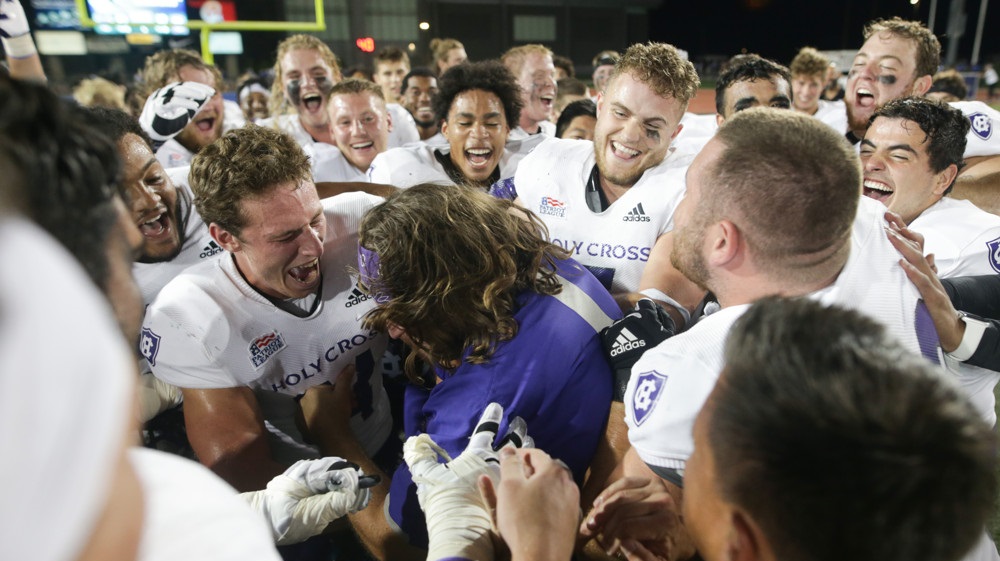
    Holy Cross over Buffalo

    The Holy Cross struggled defending Buffalo’s offense throughout the first half. Between allowing 5 yards per carry due to poor alignment:

    And mismatches in the middle of the field:

    The Crusaders found themselves down seven in the third quarter. But by diversifying their defensive look by mixing in a more traditional three down look:

    And by pushing one-on-one matchups to the outside:

    Holy Cross settled in to allow only three points in the final 22 minutes. Between the tightened defense and a Hail Mary, the Crusaders got their second straight win against an FBS opponent.

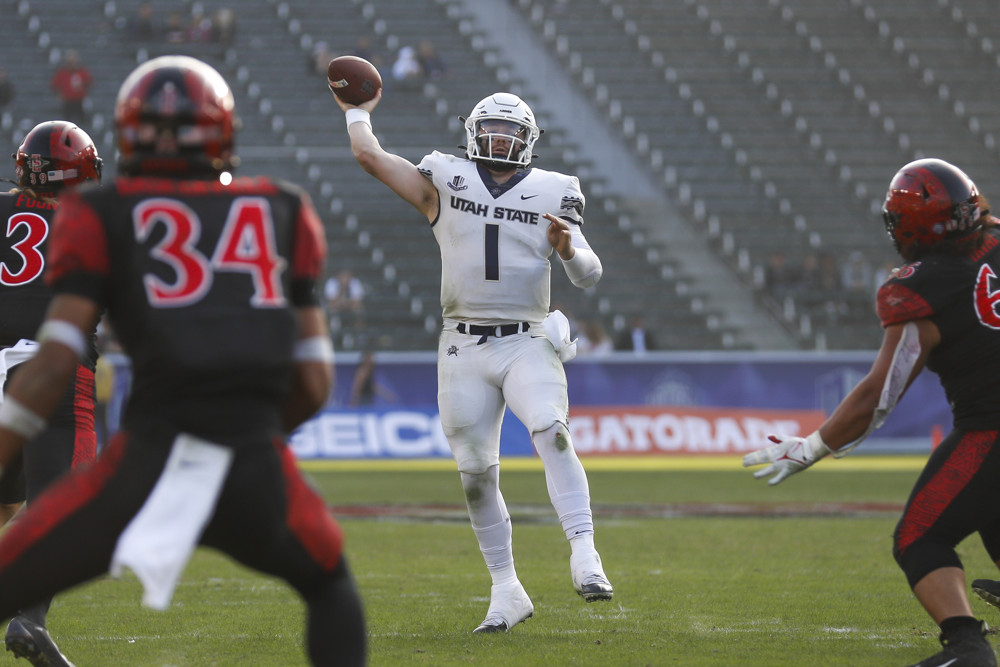
    Weber State over Utah State

    Without surrendering a kickoff return for a touchdown in the second quarter, Weber State would have pitched a shutout. The Wildcats stifled the Aggie offense by playing a variety of fronts backed almost exclusively by man coverage. At different junctures they blitzed three

    four:

    And five:

    with man coverage playing behind the line. In total, the Wildcats played 17 out of 22 pass attempts in man coverage before taking a three-score lead.

    Weber State also benefitted from two tipped passes turned interceptions, and when it did make a mistake the one high safety Desmond Williams jumped the uncovered route for an easy pick-six:

    With these turnovers Weber State turned a potentially tight game into a blowout for the sixth FCS defeat of an FBS opponent this season.

  • Why Stanford Switched to the 4-3

    Why Stanford Switched to the 4-3

    Though Stanford boasts such coaching legends as Fielding Yost, Walter Camp, Pop Warner and Bill Walsh, none orchestrated a turnaround in Palo Alto like Jim Harbaugh. Inheriting a team with 5 straight losing seasons, no ten-win seasons since 1992, and no Bowl wins since 1996, Harbaugh’s Cardinal achieved a winning season in his second year and 12 wins, an Orange Bowl victory and a No. 4 final ranking in his fourth.

    David Shaw had largely continued this success, with five ten-win seasons and six bowl wins in his first eight years. The past three seasons, however, Stanford had only 11 wins combined.

    Lance Anderson has coached at Stanford for all 15 years of the Harbaugh and Shaw eras, including the past eight as the defensive coordinator. The 3-4 defense in his time at Stanford has been the backbone of the Cardinal’s “Intellectual Brutality.”  But with the recent struggles on the Cardinal defense, Anderson saw fit to change his scheme from the familiar 3-4 to the alien 4-3.

    The 4-3 directly addresses the weaker defensive line. In 2018, the Cardinal’s last season with 9 or more wins, the defense saved .35 Total Points per play against the run and .20 Total Points per play when rushing the passer. In 2021 those numbers dropped to .26 and .13 respectively, largely due to its anemic line play. With only one player with significant reps returning from last season’s defensive line, the Cardinal need to rebuild an already lackluster unit.

    Stanford cannot solve this problem with recruiting and transfers alone. Its high academic standards make recruiting difficult already. With a smaller player pool from which to choose, a few misjudgments in high school talent can seriously affect the future of the program. While the transfer portal can offer schools a second chance to plug holes in the roster, Stanford’s selectivity in admitting transfers does not allow for such redemption.

    With the weaker development of the past and the anticipated recruiting difficulties of the future, the Cardinal saw fit to switch to the 4-3. While putting an extra player from a weak unit on the field does not make intuitive sense, the 4-3 typically helps defenses with smaller, less talented linemen.

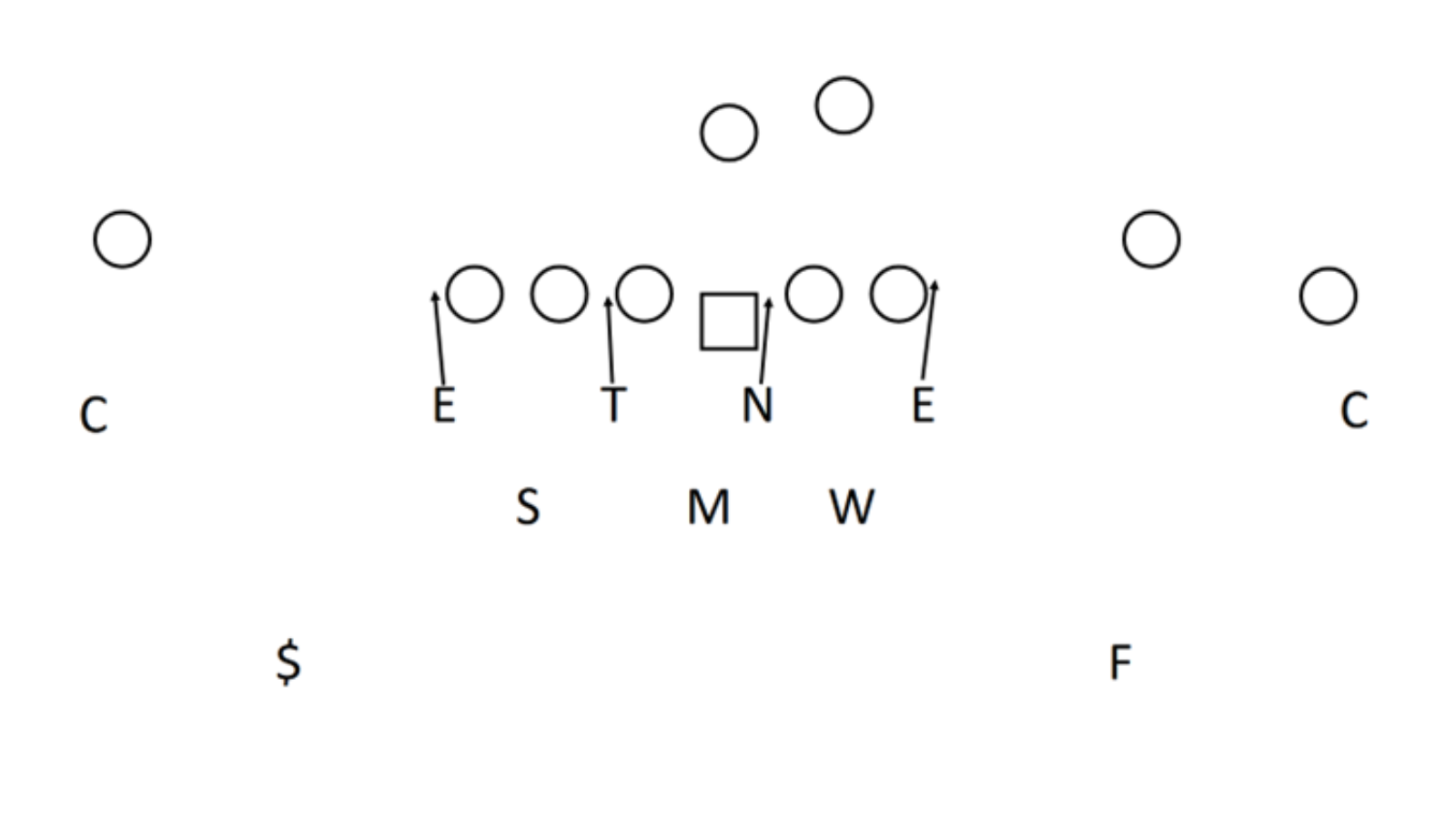
    All defenses must cover every gap in the run game and every receiver in the pass game. The 4-3 defense normally does this with four down linemen covering one gap apiece and the linebackers and perhaps a defensive back covering the rest, as displayed below:

    The 3-4 requires the defensive linemen to either cover two gaps each by controlling an offensive lineman or slant to a gap away from their alignment, both displayed below:

    Covering two gaps requires more size and strength, slanting to one gap requires more speed, and both require more skill than filling one gap. The additional lineman relieves the extra responsibilities of the other three.

    Though basing out of a 3-4 the past 15 years, the Cardinal are no strangers to the 4-3. In 2021, Stanford played 22% of its defensive snaps in a four-man front, 12th among the 77 teams that played the majority of their snaps with three down linemen.

    Adjusting to its failures in the 3-4 as the season progressed, Stanford played with four down linemen nearly twice as often in its final six games as in its first six. The Cardinal even based out of the 4-3 in their bout with Oregon State, playing 46 of their 76 downs with four linemen.

    Stanford’s results with the 4-3 last season do not inspire confidence in the switch for 2022. The Cardinal gave up nearly 6.7 yards per play with four down, placing 56th among the 64 FBS teams that played 100 snaps or more with four linemen. In the aforementioned Oregon State game, Stanford allowed 218 rushing yards, 257 passing yards, and 35 points in a loss reminiscent of the beatings Stanford laid on Oregon State just a few years ago.

    But with a year of experience and an offseason to implement the scheme, the 4-3 experiment is not doomed to fail. The Cardinal return four of their seven backfield defenders, all seniors. Chief among them is potential first round pick Kyu Blu Kelly at cornerback. With some help from the back end of the defense and additional scheming from Lance Anderson, the Cardinal could see some early returns on their long-term strategic change.

    The schematic change may offer Anderson more ways to stop the run. The 4-3 allowed the Cardinal to put enough bodies in the box to try to stifle the Oregon State rushing attack. A few times the defense got the stop:


    Other times the Beavers successfully ran away from the tight end:


    or passed outside the box against isolated coverage.

    With more time in the 4-3 and a few adjustments by the coaching staff, the Cardinal can find more ways to better align their players to defend the run without giving up an easy pass.

    In passing situations, Anderson will need to get creative with Stanford’s rush. The Cardinal sacked the quarterback a measly 9.9% of the time in 2021, good for 117th among FBS teams. In Stanford’s first game of the 2022 season, Anderson showed his defense will blitz with the linebacker:

    blitz with the safety:


    stunt:


    and both blitz and stunt:

    to put more pressure on the passer. The Cardinal got to Colgate quarterback Michael Brescia on each of these pass rushes, but will need they keep the quarterback in the pocket, as they failed to do here:

    This lack of discipline plagued the Cardinal last season, and the better quarterbacks in the Pac 12 will take advantage of these miscues.

    Stanford’s response to their current defensive problems makes sense. The Cardinal will always have trouble getting talent to Palo Alto, and those problems will not lessen any time soon. Given the proper implementation of the 4-3, Stanford may have found the best way to revive the “Intellectual Brutality” of the 2010s.

  • What Utah State Needs To Do To Hang With Alabama

    What Utah State Needs To Do To Hang With Alabama

    Coming off a Mountain West Championship and 11 wins, Utah State has positioned itself as a top Group-of-5 program. In spite of the Aggies’ efforts, they sit as a 41.5 point underdog against Alabama this week.

    The Crimson Tide have not lost to a G5 opponent since 2007. Alabama has easily disposed of quality programs such as Fresno State and Colorado State in 2017 and Arkansas State, coached by the current Aggies head coach Blake Anderson, in 2018.

    But what can Utah State do to, if not win, increase its odds of an upset or hang in and play a (relatively) close game?

    In general, underdogs can play a few ways to help their chances. When overmatched, the disadvantaged team should look to increase the variance of results as much as possible. Running fewer plays, often by running the ball and keeping the clock moving, can accomplish this.

    Executing an offense or defense the opponent rarely sees also helps, as the underdog shifts the game into a paradigm of his expertise and of the favorite’s ignorance. Army does both by running a flexbone offense, a run-heavy scheme that almost no one else uses. In the past five seasons, the Black Knights and their triple option offense have taken Oklahoma and Michigan to overtime and lost by 14 or fewer to Cincinnati, Wisconsin, and Wake Forest.

    Unfortunately for Utah State, its style of play does not match that of an upset candidate. The Aggies averaged 76 plays per game last season, good for 7th in the nation, and passed on 47% of those. Schematically, Utah State’s offense descends from Art Briles’ offense at Baylor, just like those of Alabama’s yearly opponents Tennessee, Ole Miss, and Arkansas. Tennessee and Ole Miss even joined Utah State in the top 10 in plays per game. Though the Aggies have some film to see how Alabama will defend their up-tempo, wide split offense, they will not catch the Tide by surprise.

    While the Aggies style of play does not lend itself to the upset, they can adjust what they normally do to avoid Alabama’s strengths and take advantage of Alabama’s weaknesses, as few as they may be. The Aggies should stick to the air whenever possible, as they were 43rd in PAA per play in 2021 when passing, but 114th when running. They also return Logan Bonner at quarterback, a player currently on the Maxwell Award Watch List.

    Within the passing game, Utah State can stick to short drops and rolling out the quarterback to neutralize Alabama’s pass rush, ranked third in PAA per play in 2021. Utah State’s base passing game already consists mostly of 1-step drops, making up 22 out of its 31 dropbacks against UConn last Saturday and 288 of its 505 dropbacks in 2021.

    Even with the second-most one-step drops in the FBS, the Aggies ranked 34th in the nation in PAA per play when dropping back one step, and 7th in Boom %. Utah State also returns Justin McGriff at wideout, who was 3rd in Boom %  and 12th in EPA per Target on 1-step drops (minimum 25 targets). The 6’6 receiver makes a great target for Bonner, such as on this Sluggo thrown for a 14-yard touchdown last Saturday.

    While Alabama has great players across its entire defensive line, Will Anderson Jr. stands out as the best. The Nagurski Award winner returns for another season, sending opposing coaches to the chalkboard to scheme around his presence. Rolling Logan Bonner away from Anderson may provide the quarterback more time to throw. The Aggies are no strangers to the rollout, doing so 38 times in 2021 and ranking 14th in yards per attempt and 10th in QB Rating when bootlegging.

    While the rollout eliminates half the field as an option to throw the ball, in a game where Utah State will have few personnel matchups it can win, rolling away from mismatches provides better opportunities than dropping back into pressure. Expect the Rollout Flood, as seen in the video below, to appear from time to time this Saturday, as well as the Rollout Smash.

    Defensively, the Aggies play man coverage much better than zone. In Cover 0, 1 and Man 2 in 2021 the Aggies averaged 0.40 Points Saved Per Play, while in Cover 2, 3, 4, and 6 they averaged just 0.05. They can also sit in Man 2 while rushing four, as they ranked 24th in Points Saved per play when only rushing four or fewer in 2021. Expect Utah State to line up with four down linemen, or a stand-up end at times, three linebackers, two corners, and two high safeties against the Crimson Tide offense.

    Alabama will attempt to unbalance the Utah State defense and break its two-high shell. The Crimson Tide aligning with trips or a tight end to one side forces the Aggies to make an uncomfortable decision. They can drop a safety to help in the run game vs a tight end or the short passing game vs trips and lose their best coverage in Man Cover 2 or they can keep their two-high shell and remain vulnerable to the run and short passing game.

    In the video below against the UConn Huskies, the Aggies choose the latter, bumping their cornerback into the box to play the run. UConn gets six yards by running at the cornerback, though they lost their quarterback Ta’Quan Roberson for the year on the run. Playing the two-high base should maximize Utah State’s abilities and minimize their faults, but no defense is perfect. Look for Alabama to exploit the defense’s weakness with its alignment.

    The Aggies ride into Tuscaloosa as heavy underdogs against the greatest program in college football. Nobody expects a close game, much less a win. Even if Utah State executes its gameplan, Alabama has enough talent to still win easily. But by sticking to his strengths and avoiding his weaknesses David can increase his odds of hanging with Goliath.

  • What Might a Mark Whipple Offense Look Like at Nebraska?

    What Might a Mark Whipple Offense Look Like at Nebraska?

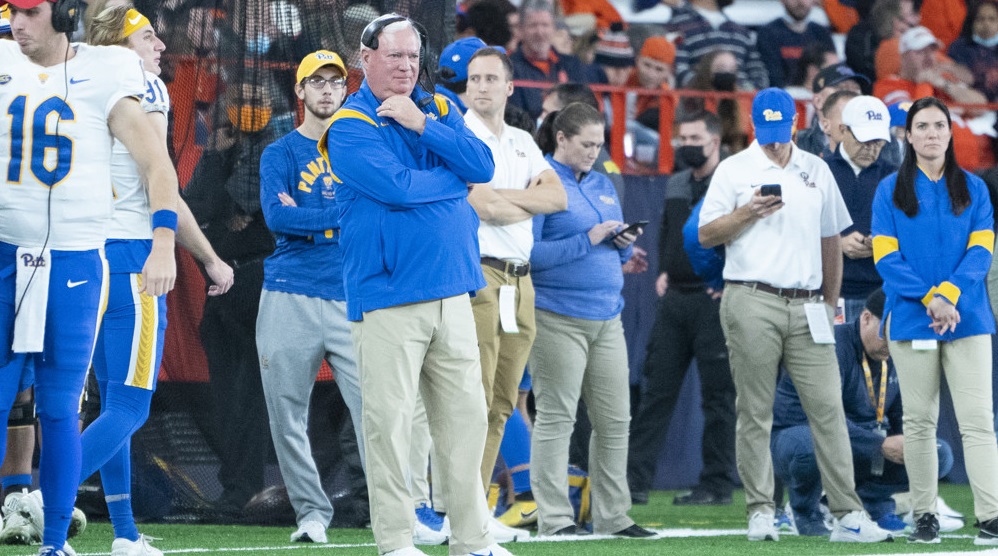
    After a 3-9 season, Nebraska head coach Scott Frost fired all but one offensive coach and hired Mark Whipple to take the reins. Last year with Pittsburgh, Whipple’s offense scored the 3rd-most points and gained the 7th-most yards per game among all FBS teams. With Frost relinquishing full control of the offense, Whipple will remake the unit in his image.

    But how much will Whipple need to change? Nebraska ranked 71st in points per game in the FBS this past season but ranked 5th in Points Earned per passing play, better than Pittsburgh. Despite ranking worse than Whipple’s former team in Points Earned per rushing play (45th), Nebraska hit its designed gap more often, got stuffed less often, and averaged more yards per attempt than Pitt.

    But the team returning to Lincoln does not resemble last year’s. Gone is senior quarterback Adrian Martinez, who is replaced by Casey Thompson. Nebraska loses its two leading receivers, including 6’9″ tight end Austin Allen. The offensive line returns three starters but loses its best in center Cam Jurgens.

    The talent still at Nebraska does not inspire much confidence. The offensive line performed horribly last season, blowing 4.2% of its pass blocks, the 3rd-highest rate in the FBS. Its blocking was 89th in Points Above Average per play, mostly due to its (lack of) pass protection.

    Thompson placed in the the top third for quarterbacks in Point Earned per play, On-Target percentage and IQR (minimum 100 pass attempts) but had an interception rate of 3.4%. His frequent mistakes and inadequate coverage identification led him to transfer away from competition for his job at Texas.

    Whipple will need to adjust his pass-heavy scheme to his current players’ abilities. Nebraska ran the ball over 40% more often than it passed in 2021, despite usually playing from behind. Whipple can continue to forego the huddle, as the Huskers have done so since Frost’s tenure began.

    As Nebraska’s offense ran mostly out of 11 personnel the past few seasons, Whipple would be shaking things up quite a bit if he decided to change packages as much as he did at Pitt.

    The Huskers based their run game on Inside Zone, complemented by Outside Zone and Counter. Expect Whipple to recycle the blocking from these plays in 2022 but pitch the option element. Despite Pickett’s deceptive speed, the Panthers rarely called a run where Pickett read a defender. The Counter and Triple options Nebraska showed in 2021 (video below) will not reappear.


    The Huskers, though based on Zone, also ran Power, Dart, Trap, Tug, G, among others. Whipple may add a gap-based outside run (video below) and call the occasional Jet Sweep to threaten the outside. Most likely he will only keep Power to simplify the offense and focus on the pass. With fewer plays to execute, the offensive line may make fewer mistakes than last year, such as opening the 2021 Oklahoma game with back-to-back false starts.

    With fewer runs should come a deeper passing game. The Huskers’ passing scheme reflected a reliance on the run, utilizing play action to fool the defense and simple concepts for the receivers. Hitches, flats and seams comprised much of the playbook, with a few other concepts (such as mesh) completing the offense. Whipple will expand the deep game, with concepts such as Mills (video below) to stress the safeties.

    Whipple will create the most opportunities through his use of formations. Come Week 0, notice the way he positions the Huskers’ players to rearrange the Northwestern defense. By forcing Northwestern to align certain ways, he can run his plays against inferior defensive positioning. Michigan State did so last season, exposing the Wildcats’ 4-3 alignment weaknesses and scoring 38 points in a game that was never in doubt.

    With 11:08 left in the first quarter the Spartans show one tight end and receiver to the boundary and twins to the field (video below). To cover the extra space and twin receivers, the Wildcats shift their linebackers to the field.

    With no man in the D gap and the safety playing eight yards off the ball, Michigan State has the opportunity to hit the gap with the run, as it does unsuccessfully, or attack through the air with a two-on-two matchup to the boundary. Despite the short gain, few defenses can hold strong with such holes in their alignment.

    When Michigan State aligns in Quads at the midway point in the third quarter (video below), the outside linebackers evacuate the box to focus on the pass, leaving five to defend the run. But the linebackers also can only help cover receivers in their path, as the Wildcats play match quarters coverage here.

    Playcaller Jay Johnson dials up Shakes, or Corner Strike (for the Madden players), leaving the corner and safety as the only relevant pass defenders. Jayden Reed runs the crack corner with outside leverage against the safety and catches a 23-yard toss from Payton Thorne.

    Whipple can formation his players like the Spartans did and base out of the 11 personnel familiar to Nebraska. To exploit the middle of the field left open by Northwestern’s quarters coverage he may call Mills, or attack the outside with Shakes or Smash, the boundary option in the Mills video. As the season progresses he will incorporate more packages and install more of his plays to gradually change the offense to his liking.

    Whipple will be limited in how much of this he can do. He will not have the talent or depth he had at Pitt, nor the three years of player experience with his playbook.

    With what he has, expect Whipple to vary up the personnel packages, limit the runs both in quantity and complexity, and air the ball out as much as he can. With a capable quarterback and a reversal in last year’s luck, the Cornhuskers may show enough life to save the coaching staff.