Category: Baseball

  • The changes that made Jacob deGrom and Blake Snell Cy Young worthy

    The changes that made Jacob deGrom and Blake Snell Cy Young worthy

    By MARK SIMON

    Pitchers are always making tweaks and adjustments to their deliveries and repertoires in an effort to stay a step ahead of the hitters. In the case of Mets pitcher Jacob deGrom and Rays pitcher Blake Snell, the tweaks made those pitchers Cy Young worthy.

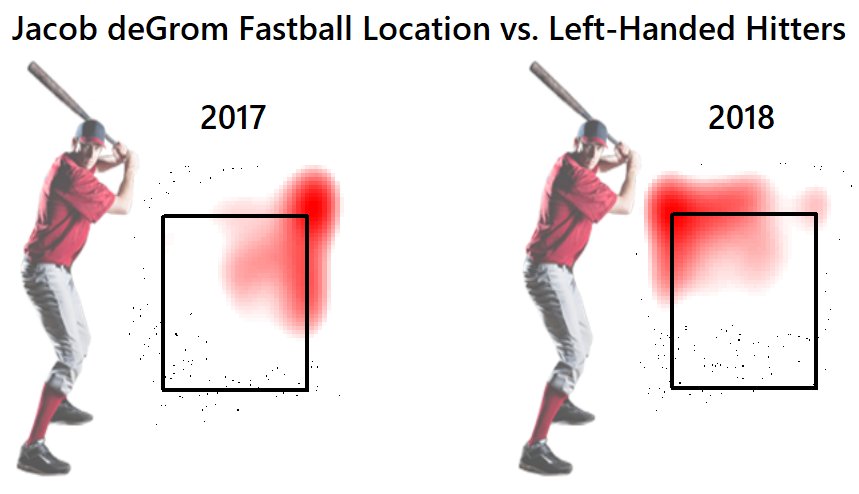
    DeGrom’s big adjustment came by suggestion from pitching coach Dave Eiland, who wanted the Mets pitchers to pitch inside more. For deGrom, this meant completely changing his approach to left-handed batters.

    As my colleague,  Andrew Kyne, noted  earlier this season,  in 2017, deGrom threw only 23 percent of his fastballs inside to left-handed hitters (we’re defining “inside” as on the inner-third of the plate or further inside). In 2018, he more than doubled that to 49 percent, the second-highest percentage in MLB (Kyle Gibson of the Twins was a smidge higher). Here’s what that looks like visually:

    Andrew Kyne/Sports Info Solutions

    DeGrom also upped how often he threw his fastball at the top of the strike zone (or above it) to them, bumping that from 58 percent of pitches to 67 percent. The inside fastballs backed hitters up off the plate. The high heat finished them off. Lefties hit .219/.267/.312 against him in 2018, his best numbers in a season against left-handed hitting. Combine that with even greater dominance against right-handed hitters and deGrom was at the top of his game for almost the entire season.

    DeGrom finished with the second-highest chase rate among pitchers with at least 100 innings pitched (38 percent). He ranked 10th in miss rate (29 percent).

    The pitcher who ranked first in miss rate was Rays pitcher Blake Snell (33 percent). Snell’s breakthrough season was a surprise. He posted ERAs of 3.54 and 4.04 in his first two seasons; you could not have seen his 1.89 ERA coming.

    What hitters apparently had trouble seeing was Snell’s curveball. He threw the pitch about 10 percent of the time in 2017, but netted misses on 51 percent of swings against it. In 2018, Snell’s strategy was to increase his curveball use, cutting back a little bit on his fastball and slider. He doubled his curveball usage to 20 percent of the time. Hitters continued to miss the pitch on more than half of their swings.

    Paired with a 1.5 mile per hour increase in average fastball velocity to nearly 96 MPH, the Rays suddenly had something special. When Snell started on five days rest, those pitches were perfect. In 15 such starts, he pitched to a 1.08 ERA with a 4-to-1 K to BB rate. Three of Snell’s pitches – his fastball, curveball and slider – experienced major jumps in value per FanGraphs’ pitch data. He became a completely different pitcher, one whose performance was suddenly Cy Young worthy.

    Now he and deGrom have trophies to honor the successful changes they made.

    Blake Snell – Curveball Ranks
    Opp BA .126 4th
    Miss Rate 52% 2nd
    Strikeouts 93 7th
    >> Minimum 300 thrown
  • Who were the top performing defensive rookies in 2018?

    Who were the top performing defensive rookies in 2018?

    By MARK SIMON

    Who were the top defensive rookies in 2018?

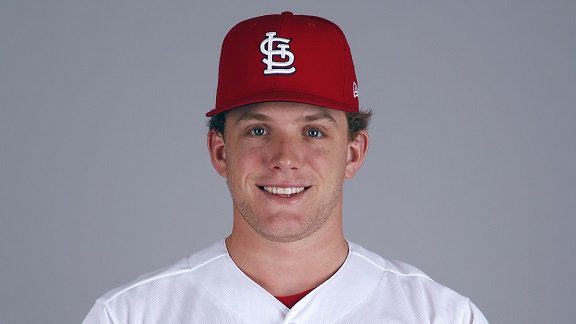
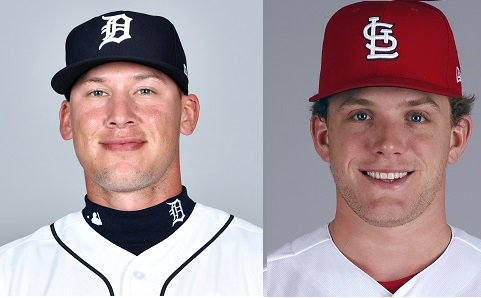
    No. 1 in the majors isn’t hard to figure out if you’ve been paying close attention this season. We’ve lauded Cardinals outfielder Harrison Bader for his performance throughout the year. He led all rookies with 19 Defensive Runs Saved, only two runs off the overall lead for outfielders.

    Bader didn’t win a Gold Glove, but finished runner-up to Javier Baez for the Multi-Position Fielding Bible Award. He excelled with his range and his hustle in both center and right field. The Cardinals positioned him deeper than others, likely because Bader’s strength is coming in on the ball, which the numbers bore out.

    The next four rookies ranked by Defensive Runs Saved are American Leaguers. In fact, the next two both play for the Kansas City Royals.

    Little went right for the Royals in 2018, but the defensive play of Brett Phillips and Rosell Herrera were bright spots. Phillips was obtained in the trade for Mike Moustakas in late July after playing 15 games (and saving two runs) for the Brewers. Phillips had saved eight runs in a little over 200 innings for the Brewers a year ago. He topped that in 2018, with 10 Defensive Runs Saved in 272 innings for the Royals.

    In all, Phillips has saved 20 runs in only 527 career innings. By comparison, Phillips’ former teammate, Lorenzo Cain, had 20 DRS in 1180 innings this season. Phillips’ strengths are in both his range and his arm. He can come flying in to make a diving catch or go back and rob a home run. He also had six unaided assists (without a cutoff man) as a center fielder the last two seasons, giving him five Runs Saved with his arm. If he can improve on his .187/.252/.306 slash line from 2018, he could be a player to watch and a sleeper candidate to win a Fielding Bible Award in 2019.

    The 26-year-old Herrera was another midseason pickup (off waivers from the Reds in June) whose glove far outvalues his bat. In his debut season, he saved 10 runs in more than 500 innings, with those runs split almost entirely between second base and right field. (He cost his team three runs in five games at third base.) He was well-positioned at second, allowing him to make a few plays in the first base-second base hole that others wouldn’t. His time in right field included robbing a home run from Alex Bregman, one of a few balls hit to the deepest part of the ballpark that were well-handled by Herrera.

    Another player in a similar mold is Angels infielder David Fletcher, who totaled eight DRS, primarily split between second base and third base. He had solid range ratings at both second and third base and was strong in turning the double play at second, converting 32 of 39 opportunities (82 percent – MLB average is 66 percent). Fletcher’s greatest strength at third base was in fielding balls hit down the line, ranking tied for fourth best at converting balls hit there into outs.

    Two other players warrant special mention. Rangers utility man Isiah Kiner-Falefa came to the majors with a well-polished defensive game. That was evident when he was at third base and second base, where he totaled nine DRS in a little more than 500 innings.

    But Kiner-Falefa doesn’t show up on the leaderboard because of his troubles playing catcher. In just over 300 innings, he cost the Rangers seven runs with framing and three runs with pitch blocking. If Kiner-Falefa mans the hot corner or second base regularly in 2019, you’ll probably see and hear more from him.

    Another is Joey Wendle, who finished with five Defensive Runs Saved, but was invaluable in the Rays’ frequent shifting, which isn’t a part of the basic Runs Saved calculation for players. As we documented at The Athletic earlier this season, Wendle’s skill at making throws from any angle made him a potent performer in the field, whether he was playing at second, shortstop, third or left field. He finished third in our Multi-Position voting for the Fielding Bible Awards. With Wendle at second and Kevin Kiermaier in center field, the Rays have a great up-the-middle defensive foundation moving forward.

    Among the Rookie of the Year candidates, Braves outfielderRonald Acuña Jr. finished with four DRS, though he finished at -2 in his primary position, left field. The issue with Acuna wasn’t range and positioning (he totaled six Runs Saved at that), but his arm, which cost his team three runs due to his poor rate of deterring baserunner advancement.

    Nationals outfielder Juan Soto saved two runs with his arm, but made many other mistakes throughout the season. He cost his team five runs in the field.

    In the AL, Yankees infielder Gleyber Torres had good early-season numbers, but ended up costing his team a run in non-shift situations (we note that because his performance was strong in shifts, which don’t count within Defensive Runs Saved). If Miguel Andujar wins Rookie of the Year, it will be in spite of his defense. His -25 DRS were the worst of any infielder. Angels P/DH Shohei Ohtani graded league-average in his 10 games as a pitcher, as did Dodgers starter Walker Buehler.

  • Open the Handbook and let the numbers tell the story

    Open the Handbook and let the numbers tell the story

    By MARK SIMON
    You can purchase the 2019 Bill James Baseball Handbook here

    The Bill James Handbook is 622 pages of baseball goodness. It’s easy for me to say that – I was one of many who worked on it at the end of the regular season and through the beginning of the postseason. But as a full-fledged baseball nerd, it’s a lot of fun to poke around on random pages looking for stories within the numbers.

    Here are a few that I liked:

    Page 78: Mariners didn’t make postseason, but surpassed expectations
    The Mariners won 89 games, but were expected to win only 77 by Pythagorean expectation. They exceeded their expectation by the largest amount, 12 wins. On the other side, the Dodgers were expected to win 103 games and won 92. They finished the most beneath their Pythagorean expectation (11 wins).

    Page 388: Billy Hamilton wins every footrace
    Billy Hamilton had the fastest average time on attempts to steal second base this season, 3.39 seconds on 27 timed attempts. That just edged out Adalberto Mondesi of the Royals (3.41), Mallex Smith of the Rays (3.42), Jarrod Dyson of the Diamondbacks (3.42) and Dee Gordon of the Mariners (3.43).

    Page 425: Palka king of avoiding flyouts, hitting homers
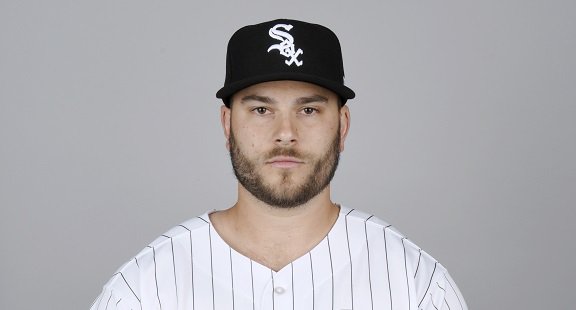
    White Sox outfielder Daniel Palka hit 22 long fly outs and 27 home runs. How do we define a long fly out? You’ll have to read the book! But we can tell you that Palka was the only player with at least 20 home runs who had more home runs than long fly outs (Shohei Ohtani and Aaron Judge came close).

    Page 443: ‘Shark’ bitten
    Oh how the decent pitchers have fallen. Giants pitcher Jeff Samardzija had more 1-0 counts (93) than 0-1 counts (89) in 2018. That’s a sharp drop for a pitcher who typically has strikeout-to-walk ratios in the 3s or higher. A check of Baseball-Reference shows that after 1-0 counts, opponents hit .310/.462/.535 against Samardzija last season. Yikes!

    Page 561: Royals rule replay
    The most successful team with instant replay was the Royals, who had 33 of 42 challenged calls overturned, a 79 percent success rate. The Royals were second-best in 2017, successful on 71 percent of challenges.

    The least successful challengers in 2018 were the Brewers, who were successful on 7-of-34 (21 percent).

    Pages 594-595: Milestone watch
    Per Bill James’ The Favorite Toy methodology, Edwin Encarnacion has a 54 percent chance to hit 500 home runs. Nick Markakis has a 41 percent chance to reach 3,000 hits and Nolan Arenado has a 15 percent chance at 2,000 RBI, within striking distance of Hank Aaron’s record 2,297. Those are three names I wouldn’t have expected to have those sorts of chances at those kinds of milestones.

  • 2019 Bill James Baseball Handbook: “Shift Update”

    2019 Bill James Baseball Handbook: “Shift Update”

    This is an excerpt from the 2019 Bill James Baseball Handbook. You can purchase it online here.

    By JOHN DEWAN
    Reports of the demise of The Shift are greatly exaggerated.

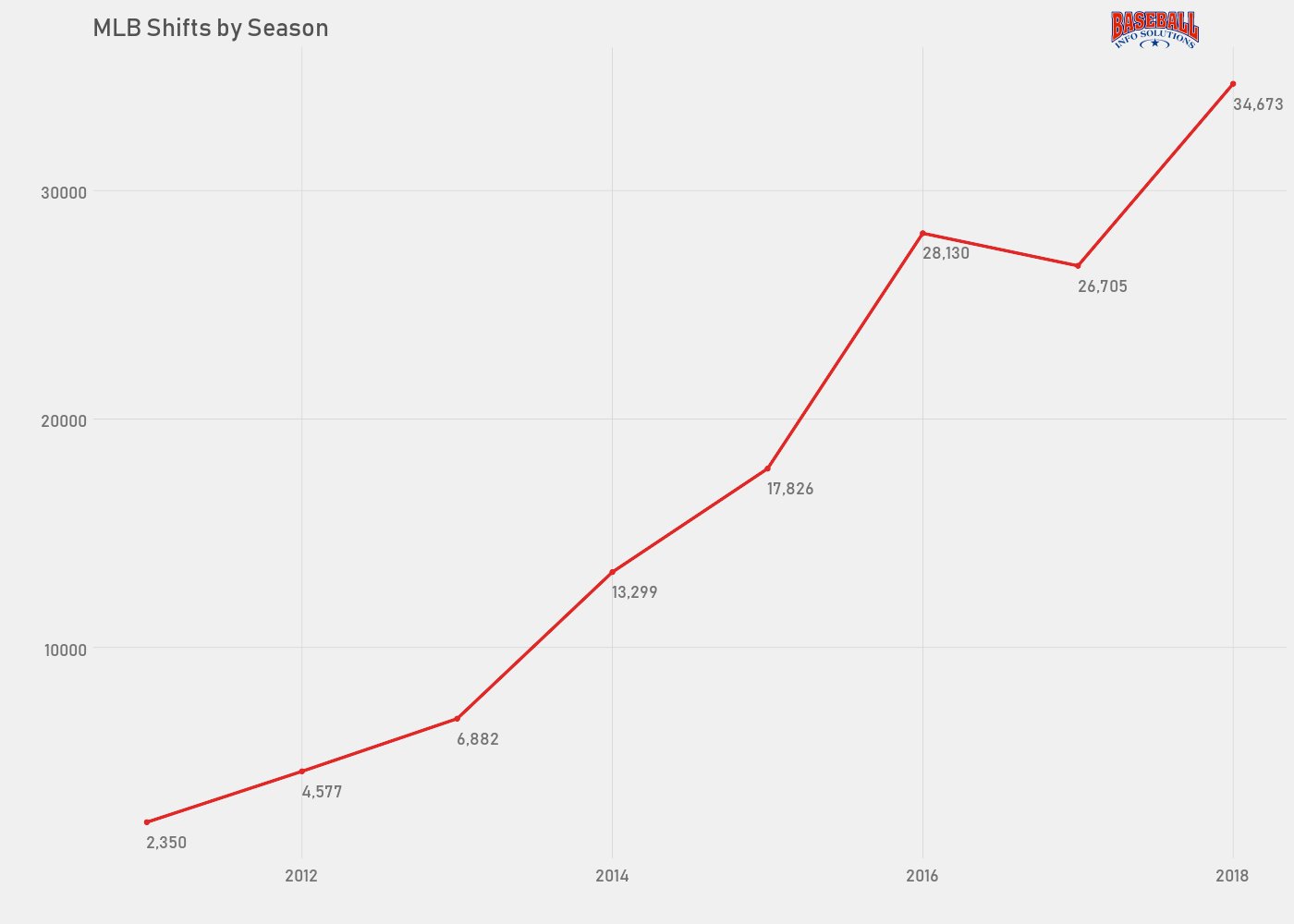
    Last year we reported on these pages that the number of shifts employed by Major League Baseball teams declined for the first time after five straight years of increases between the low of a 34% increase in 2015 and 93% increase in 2014.

    Not no more.

    Shift usage resumed its mercurial rise once again in 2018. Nearly 35,000* shifts were employed, an increase of 30% from 2017.

    Twenty-five of the 30 teams in baseball increased their shift usage. One of the five who decreased was the Brewers, and they still ranked fifth in overall shift usage.

    And more importantly, shift effectiveness exploded off the charts. Using the new technique developed by Baseball Info Solutions to evaluate shifts by comparing them to non-shift alignments, the number of runs saved per 100 shifts was at an all-time high in 2018 at 1.71 runs saved per 100 shifts:

    And yet, there is room for more! I expect to see 40,000 in 2019.

    As noted in the August 30th edition of Stat of the Week.

    While teams are shifting more than ever, there are still improvements that can be made. SIS’s BIS-D software provides a recommendation for every player in MLB as to whether that player is a shift candidate or not, and about one-third of shifts this season have been against players for whom the software recommends playing a standard defense. There have also been about 18,000 balls in play where the defense did not shift when the system suggested one.

    How has the shift impacted the performance of those who get shifted? On the whole, the shift lowered shift candidates’ batting average on grounders and short line drives (BAGSL) by 23 points, while it had the opposite effect against all other batters, raising their BAGSL by 4 points.

    *The averages are weighted such that players with extreme shift tendencies (high or low) are not overrepresented, thus separating the effect of the shift from batter quality.

    With shifts comprising a larger percentage of balls in play than ever before, it’s never been more important to make sure that the correct batters are being shifted.

    Some additional observations (compliments of Baseball Info Solutions’ Mark Simon):

    • The Royals, Phillies, Tigers, Mets, Cardinals doubled their shift usage from 2017 (the Cardinals still have a long way to go). Three of those five teams (Phillies, Tigers, Mets) had a new manager in 2018, while the Cardinals changed theirs mid-season.

    • The Twins’ usage almost doubled. They ended up third in MLB in usage.

    • The Diamondbacks led the majors in Shift Runs Saved (39). They ranked eighth in shift usage.

    • When the A’s shifted, it worked really well. They ranked 25th in shift usage but second in Shift Runs Saved.

    • The Tigers are a good example of how a shift can help an infield. Their infield combined for -14 runs saved in non-shift situations, but 31 in shift situations.

    • The Yankees are another good example—their infield combined for -40 runs saved in non-shifts and 20 runs saved in shifts

    • The Red Sox infield, too—it was at -60 runs saved, but they had 16 runs saved in shifts

    • Four of the top six teams in shift usage won at least 90 games this season (Rays, Astros, Brewers, Yankees)

    • Remember last season when the Rockies drastically reduced their shift usage? They raised it by 56% this season.

    • Mickey Callaway’s increased shift usage may have helped Jacob deGrom. The Mets converted 56 of 65 ground balls and bunt grounders into outs when shifting with deGrom pitching. That 86% out rate in the shift ranked second in MLB to Zack Greinke (also 86%).

    • Seven teams saved at least 20 runs with the shift this season. Only three did so in 2017.

    Finally, here is a team-by-team look at how often they are shifting, plus the list of the top 30 shifted batters and how they performed against the shift in 2018.

  • The many multi-position standouts of 2018

    The many multi-position standouts of 2018

    Tigers outfielder JaCoby Jones had the most Defensive Runs Saved of any outfielder in the majors this season.

    But he did not win a Fielding Bible Award, nor will he win a Gold Glove, as he was not among the finalists named at the position in which he was eligible, left field.

    Jones actually played more innings in center field this season (that’s where he was Fielding Bible eligible), but at the time of his team’s 138th game (Rawlings’ standard), he had played more games in left. Regardless, he didn’t win in either spot. He was the most notable of a few players who were multi-positional standouts and finished behind Javier Baez in the Fielding Bible Awards, but merit more than a passing mention for their 2018 contributions.

    Jones saved 21 runs—11 in 452 innings in left field and 10 in 558 innings in center field. He ranked fourth at the former position and seventh at the latter position. He’s one of five players to record at least 10 Defensive Runs Saved at two positions in the same season since Baseball Info Solutions began calculating the stat in 2003. The others are Alex Rios (2008 CF and RF), Ben Zobrist (2009 2B and RF), Nyjer Morgan (2009 CF and LF) and Ender Inciarte (2015 LF and RF).

    Jones’ 21 Defensive Runs Saved rank second for a season among Tigers outfielders in the DRS era, trailing only Austin Jackson’s 26 in 2011.

    What made Jones great depended on where he played. In left field, he fared better on balls hit to the shallowest part of the outfield. In center, he provided more value in tracking down balls hit to the deepest part of the ballpark.

    Jones was boosted by a pair of home run robberies (one shy of Adam Engel for the MLB lead). They were two of his 15 jumping catches, tied with Kevin Kiermaier for second among outfielders. Only Billy Hamilton of the Reds had more with 18.

    Harrison Bader of the Cardinals was in a similar position to Jones in that he split his time between two outfield spots – center field and right field – and excelled at each. But not playing enough at either one may have hurt him when it came to consideration.

    Bader saved 11 runs in 615 innings in center field and eight runs in 270 innings in right. He was very good at tracking down balls hit to both the shallowest and deepest parts of the ballpark at each spot. His 72 sprinting catches ranked second among outfielders behind Inciarte’s 77. (Per Statcast, Bader’s 29.9 feet per second sprint speed ranked eighth among those whose speed was measured at least 25 times.) His nine diving catches tied for fourth.

    Among infielders, Miguel Rojas’ season of 14 Runs Saved with the Marlins should not be forgotten. Rojas saved 10 runs in 657 innings at shortstop and four runs in 285 innings at third base. He also saved one run in 102 innings at first base, though lost one run in 68 innings at second base.

    What was most impressive about Rojas’ play at shortstop was his range (he had positive ratings on getting outs on balls hit up the middle and in the hole) and his avoidance of mistakes. He finished with 22 Good Fielding Plays and 13 Misplays & Errors there, as charted by BIS Video Scouts. (Good Plays are often Web Gem-caliber plays; Misplays are plays that have a negative consequence, such as costing the opportunity for an out.) Rojas’ ratio of 1.7 Good Plays to Misplays/Errors was the best among shortstops last season.

    Another infield standout was Joey Wendle of the Rays. Wendle played at least 60 innings at four positions last season. At second base, his primary spot, Wendle saved five runs, with much of that coming through making nice plays on balls hit in the first base-second base hole. He added more value there through his performance in the many Rays’ defensive shifts (which are not counted in the basic Runs Saved computation). He also chipped in a run in a little more than 150 innings at third base.

    Jones, Bader, Rojas and Wendle don’t have any hardware to commemorate their work. But they’re worthy of remembering when we think about the year in defensive excellence.

  • Which catchers are best at stealing strikes?

    Which catchers are best at stealing strikes?

    BY MARK SIMON
    With there being an off day in the World Series, let’s take a look at a leaderboard that stoked our interest this season –- which catchers did the best job of getting strikes on pitches that maybe he shouldn’t have gotten strikes on?

    Our definition for this was to look at the percentage of pitches that were called strikes, and were outside the strike zone, but within two inches of an edge of the strike zone (as designed by my colleague, Andrew Kyne). This was measured per charting from BIS video scouts. This is an inexact science based on many things (and publicly available pitch-location data assisted the process), but we’re comfortable with our methods and our video scouts.

    Here are the top 5.

    1. Jeff Mathis, Diamondbacks (22.1%) –- Mathis was the head of the Diamondbacks three-pronged catcher platoon. Each of the others made the top 10 too, but Mathis was the best of the best. He was of major assistance to Zack Greinke, having caught all of Greinke’s starts. Mathis’ long-worked skill of getting strike calls on low pitches also helped coax a career year from Patrick Corbin, who had a 1.83 ERA in 12 starts with Mathis as his backstop.

    2. Austin Barnes, Dodgers (21.4%) –- You might have thought Yasmani Grandal would be the top Dodger, but it’s actually Barnes, who doesn’t hit much, but brings great value to the pitching staff. His success rate jumped three percentage points, meaning he produced about 50 more stolen strikes than he would have at least season’s 18.3 percent rate.

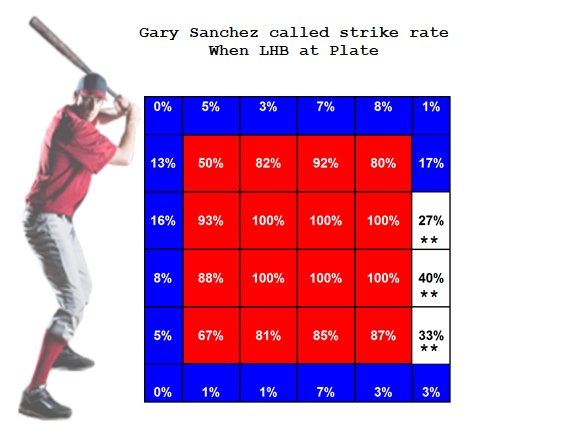
    3. Gary Sanchez, Yankees (19.8%) — Sanchez’s pitch-blocking skills are much maligned, but his pitch framing compensates successfully for that.

    Take a look at Sanchez’s called strike rates by location in this chart, paying specific attention to the areas with multiple asterisks. Sanchez was excellent at getting extra strikes in all three of those areas. From top to bottom (with the asterisks), he’s 7, 14 and 10 percentage points above the MLB average. And that’s just for left-handed hitters.

    4) Alex Avila, Diamondbacks (19.8%) — Avila has had his ups and downs with his framing success, but in 2018, he followed Mathis’ lead and was quite good, particularly with pitches that were just off the outside corner to right-handed batters and the inside corner to left-handed batters. It helped him finish with a career-high six Defensive Runs Saved.

    5. Max Stassi, Astros; Luke Maile, Blue Jays, Chris Iannetta, Rockies (19.7%) — There is not a huge difference between the fifth-best and 10th-best catchers on this list. These three just happened to be in the next three spots. Stassi put a lot of effort into improving his framing in the offseason and it paid off. Maile’s pitch-framing was good in the past. This year was more noteworthy for his bat catching up to his glove. Iannetta, like Avila, has had good seasons and bad seasons. This year, he was good at stealing strikes, but didn’t rate as well on pitches in the strike zone.

    Let’s note one more name since it’s pertinent to the World Series.

    11. Sandy Leon, Red Sox (18.9%) — Leon is a good strike-stealer (11th rates in the top 20% of catchers), but his forte is in making sure that strikes are strikes. He has the highest called strike rate among catchers on pitches in the strike zone, at nearly 94 percent.

    And let’s also note the catcher who rates at the bottom of the list.

    65. Isiah Kiner-Falefa (13.1%) — The Rangers put Kiner-Falefa in a challenging spot, asking him to catch a little more than 300 innings this season. The rookie utility man who is a standout defensive third baseman, he struggled both with framing and pitch-blocking, costing his team 10 runs in total in those two areas.

  • Stat of the Week: Fielding Bible Awards Preview Part II

    This is the second of a two-part series on the top candidates for The Fielding Bible Awards, which will be announced next week. Part I can be found here.

    The Fielding Bible Awards are voted on by a panel of 12 experts, who can vote based on visual observations and subjective judgement, as well as statistical analysis.

    Part II of our preview looks at outfielders, pitchers and multi-position players.

    (Defensive Runs Saved total in parentheses)
    Left Fielders
    Fielding Bible Favorites: Alex Gordon (18), Adam Duvall (17)
    NL Gold Glove Favorite: Adam Duvall
    AL Gold Glove Favorite: Alex Gordon
    Other top contenders: Corey Dickerson (16), Brett Gardner (8)

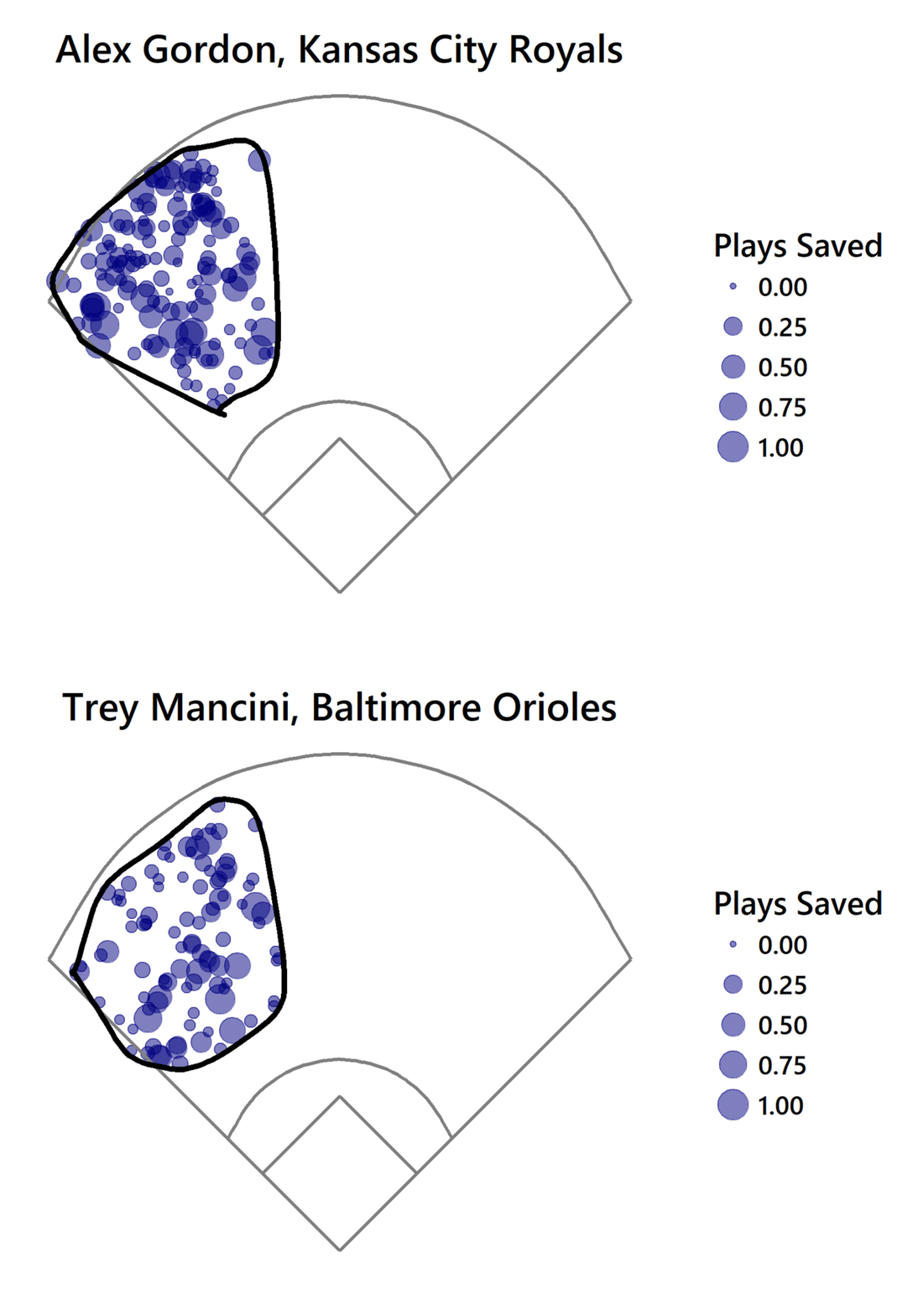
    Alex Gordon and Brett Gardner have each won this award three times, and it looks like Gordon has the edge this season. Gordon looked a lot like his old self this season, particularly in June when he was named Co-Defensive Player of the Month. The combination of being able to cover a lot of ground and deter baserunner advancement with his throws was what differentiated him this season.

    Duvall was again a standout, primarily with the Reds, as his playing time was minimal after being traded to the Braves. He’ll battle for the NL Gold Glove with one of the league’s most improved defenders, Corey Dickerson of the Pirates, who went from costing his team a run with his defense in 2017 to saving 16 runs in 2018.

    Center Fielders
    Fielding Bible Favorites: Lorenzo Cain (20), Ender Inciarte (17)
    NL Gold Glove Favorite: Lorenzo Cain
    AL Gold Glove Favorite: Mike Trout (8)
    Other top contenders: Kevin Kiermaier (14), Jake Marisnick (12), Delino DeShields (9)

    No center fielder has won back-to-back Fielding Bible Awards in its 13-year history. The 2018 winner will prolong that trend, as 2017 winner Byron Buxton played only 28 games with the Twins in 2018. Buxton’s loss is Lorenzo Cain’s gain, as he’s the favorite thanks to an 11-run improvement in limiting baserunner advancement from 2017 to 2018 (from costing his team six runs to saving them five). Ender Inciarte of the Braves, who saved the most runs with his positioning and range in center field, will be a formidable foe.

    Note that there is a differentiation in terms of playing time between Fielding Bible Awards rules and Gold Glove Awards rules . As a result, Kevin Kiermaier of the Rays is ineligible for a Gold Glove. Among those eligible, Mike Trout and his 14-run improvement in Defensive Runs Saved from 2017 to 2018 should have a good chance to win.

    Right Fielders
    Fielding Bible Favorites: Mookie Betts (20), Aaron Judge (14)
    NL Gold Glove Favorite: Yasiel Puig (6)
    AL Gold Glove Favorite: Mookie Betts
    Other top contenders: Mitch Haniger (9), Carlos Gomez (8)

    If the Red Sox take Mookie Betts out of right field during the World Series, they’ll be moving the Defensive Runs Saved leader at the position, one who has a chance to win his third straight Fielding Bible Award in right field. Betts’ combination of everything, including two home run robberies (one shy of the MLB lead), put him atop the pack. Aaron Judge might have had a better chance to dethrone Betts had injuries not limited him to 90 games at the position.

    The NL Gold Glove race will be interesting here. Yasiel Puig of the Dodgers has the best numbers of anyone eligible, though Jason Heyward of the Cubs (3 DRS) certainly merits consideration.

    Pitchers
    Fielding Bible Favorites: Zack Greinke (7), Julio Teheran (7), Masahiro Tanaka (7)
    NL Gold Glove Favorite: Zack Greinke
    AL Gold Glove Favorite: Luis Severino (4)
    Other top contenders: Patrick Corbin (6), Clayton Richard (5)

    Pitcher is always a challenging position to vote on due to limited sample size. This may be the year that four-time Fielding Bible Award winer Dallas Keuchel gets dethroned, as he finished with only 3 DRS. Zack Greinke of the Diamondbacks probably has a slight edge over Julio Teheran and Masahiro Tanaka here because of both his reputation (four Gold Glove Awards) and standout performance (for example, he allowed only two stolen bases in seven attempts). Diamondbacks pitchers were a model of fielding excellence, as Greinke’s teammate Patrick Corbin is also a legitimate contender.

    Note again that the AL Gold Glove choice of Yankees pitcher Luis Severino is due to innings requirements that denied Tanaka consideration.

    Multi-Position
    Fielding Bible Favorites: Javier Baez (10), Harrison Bader (19)
    Other top contenders: JaCoby Jones (21), Joey Wendle (5)

    Any time BIS writes about middle-infield defense on either Twitter or atThe Athletic, readers write to sing the praises of Cubs utility infielder Javier Baez, who may not have the most impressive DRS numbers, but who looks the part of the top defender. Baez led non-first basemen in Good Fielding Plays, whether they be showing off his range, tagging, or throwing skills.

    Baez does have good competition this year, particularly from outfielders Harrison Bader of the Cardinals and JaCoby Jones of the Tigers. Jones led all outfielders in DRS this season, splitting his time between center and left. Bader was another who looked the part of the great defender with solid play in center and right. He finished two runs off the outfield lead.

  • World Series Defensive Preview

    The Red Sox are a good offensive team. They scored 876 runs this season, 25 more than any other team. It’s not surprising—or at least not shocking, given their playoff opponents—that they managed to get to the World Series, as they had an offense that featured a potential MVP in addition to a near–Triple Crown winner.

    However, their defense leaves much to be desired. Of all the teams to make the World Series since 2003—when Sports Info Solutions started reporting Defensive Runs Saved (DRS)—the 2018 Red Sox team has the third-fewest DRS at minus-26 (tied with the 2004 Red Sox, coincidentally enough). The infield has been the primary force behind that total, as Red Sox infielders combined to cost the team 60 runs this season, worst in the majors.

    With the news that Mookie Betts may see time at second base to squeeze J.D. Martinez into the lineup in games at Dodger Stadium, an already-shaky defense could become even more concerning. Betts is the best fielder (at least compared to an average player at his position) on the Red Sox, saving 20 runs this season to lead right fielders.

    We can’t be sure exactly how the Betts situation will play out, but, being fairly confident about who will be manning the other positions, it’s worth taking a look at some of the more interesting defensive storylines between the two teams to find where one might have an edge over the other.

    Catcher

    Both teams were at or near the top of their respective leagues in terms of runs saved by their catchers. Sandy Leon saved 12 runs this season, which was tied for the second-highest total at the position. Christian Vazquez, though, was merely average, and has shared time relatively evenly with Leon.

    The Dodgers have two catchers who excelled on defense: Yasmani Grandal and Austin Barnes. Both saved at least nine runs this season, which ranked them top 10 at the position. Based on how much mixing and matching both teams have employed throughout the season, having two solid defensive catchers figures to pay off for the Dodgers.

    Shortstop

    Manny Machado’s transition back to shortstop was a rocky one, as he cost his teams a combined 13 runs at the position, third-worst in baseball (he saved the Dodgers three runs at third base in about 150 innings). He’s shown some improvement, though. Through July 14—or just about the first half of the season—Machado had cost the Orioles 20 runs at shortstop. Since then, he’s worked his way back up to his final total, saving seven runs over the last two and a half months of the season.

    Given that, you’d think that the Red Sox have the advantage defensively. But their shortstop, Xander Bogaerts, cost the most runs of any shortstop in baseball (19). They struggled in opposite areas (Bogaerts was 36 plays below average on plays in the third base–shortstop hole, while Machado was minus-13 on plays up the middle), but Machado has to be given the slight edge here, especially given his improvements as the season wore on.

    Center Field

    Many will say that Jackie Bradley Jr. is the best defensive center fielder in baseball, or if not the best, then at least in the conversation. DRS has largely agreed with that notion in the past, with Bradley finishing no worse than seventh among center fielders in his qualifying seasons between 2014 and 2017 and saving more runs (39) than all but five other center fielders during that timeframe.

    This year, though, Bradley has cost the Red Sox two runs, in large part due to balls that he’s allowed to fall behind him. Despite making three more plays than the average center fielder on balls hit shallow, he’s been five plays worse on balls hit deep, likely due to his playing nine feet shallower on average compared to last year. Those balls lead to extra-base hits, which in turn hurt Bradley Jr. more than balls in front of him help.

    Meanwhile, Cody Bellinger has displayed his athleticism for the Dodgers, saving six runs in center field in his first real season there. That’s not to say Bellinger is decidedly a better fielder than Bradley Jr., but the Red Sox may not have as clear of an advantage at the position as some may think.

    Right Field

    If Mookie Betts remains stationed in right field, the Red Sox have the clear advantage—not just over the Dodgers, but over anyone. Betts has won two straight Fielding Bible Awards, which recognize the best fielder in baseball at each position, and has saved 83 runs since taking over the full-time role in 2016, 22 more than the next-best outfielder (Kevin Kiermaier).

    Of course, if J.D. Martinez sees action there, it’s an entirely different story. For his career, Martinez has cost his teams 31 runs in right field. Admittedly, that’s largely affected by his 2016 season where he cost the Tigers 22 runs. Even ignoring that season, he’s still been average defensively at best.

    For the Dodgers, Yasiel Puig certainly holds his own in right field, at least tying for the ninth-most runs saved at the position each of the last three years. His recent contributions to the team have come from his bat, but he’s more than capable of making a defensive play when he’s called upon.

  • Stat of the Week: 2018 Fielding Bible Awards Preview

    For the next two weeks, this space will feature a multi-part series on the top candidates for The Fielding Bible Awards, which will be announced the week of October 29.

    The Fielding Bible Awards are voted on by a panel of 12 experts, who can vote based on visual observation and subjective judgement, as well statistical analysis.

    This week, Part I of our preview looks at catchers and infielders.

    (DRS totals in parentheses)

    Catcher
    Fielding Bible Favorites: Jeff Mathis (17), Mike Zunino (12)
    NL Gold Glove Favorite: Austin Hedges (12)
    AL Gold Glove Favorite: Salvador Perez (1)
    Other top contenders: Sandy Leon (12), Tony Wolters (12)

    What’s fascinating about the catcher leaderboard for Defensive Runs Saved this season is that it is mostly (though not entirely) composed of part-time players who excel at pitch-framing. At the top of that list is Diamondbacks catcher Jeff Mathis, who led the position by saving 17 runs in just over 500 innings, due not only to his pitch-framing, but also to his pitch-blocking. Mathis was part of a three-catcher unit, all of whom excelled on the defensive side.

    Others who fit the description of part-timers who can frame include Sandy Leon of the Red Sox and Tony Wolters of the Rockies. The AL Gold Glove Award could be a tight race between Mike Zunino of the Mariners, who had a strong year in both framing and thwarting basestealers, and Salvador Perez, whose penchant for basestealing deterrence has helped him win four Gold Gloves in the past.

    Last year’s Fielding Bible Award winner, Martin Maldonado, finished with 3 DRS, 14 back of the MLB lead.

    First Baseman
    Fielding Bible Favorites: Matt Olson (14), Brandon Belt (13)
    NL Gold Glove Favorite: Eric Hosmer (8)
    AL Gold Glove Favorite: Matt Olson
    Other top contenders: Freddie Freeman (12), Joey Votto (9)

    The Bay Area is the home of the two first basemen who led the majors in Defensive Runs Saved. Matt Olson of the Athletics finished with 14. Brandon Belt dealt with injuries for the Giants but still managed to save 13 runs, one fewer than Olson in 530 fewer innings. Belt may have the most range of any first baseman, but Olson is not far behind, and is among the best at scooping throws.

    Within reach of them are Freddie Freeman of the Braves and Joey Votto of the Reds. Olson, Belt and those two are the four first basemen who saved at least 10 runs with their range and positioning. Eric Hosmer also had some of the best numbers of his career at first base. He will be bidding for his fifth Gold Glove.

    Second Baseman 
    Fielding Bible Favorites: Kolten Wong (19), DJ LeMahieu (18)
    NL Gold Glove Favorite: Javier Baez (5)
    AL Gold Glove Favorite: Ian Kinsler (10)
    Other top contenders: Whit Merrifield (8), Ozzie Albies (8)

    If nothing else Cardinals second baseman Kolten Wong should win most improved defensive player. He jumped from costing his team a run with his defense in 2017 to saving it a major league-best at the position 19 in 2018. Wong isn’t as flashy as some other candidates, but he was solid and reliable in covering ground. Same for last year’s winner, DJ LeMahieu of the Rockies, who played virtually mistake-free all season in finishing with 18 DRS, one behind Wong.

    Javier Baez of the Cubs doesn’t have a comparable Runs Saved total, but is held in high regard by many for his ability to do the amazing. He led non-first basemen in Good Fielding Plays. Ian Kinsler, who split the season between the Angels and Red Sox, also had a solid season, though he’s a notch below Wong and LeMahieu in overall performance. He’ll be a top contender for an AL Gold Glove, which would be the second of his career.

    Shortstop Fielding Bible Favorites: Andrelton Simmons (21), Nick Ahmed (21)
    NL Gold Glove Favorite: Nick Ahmed
    AL Gold Glove Favorite: Andrelton Simmons
    Other top contenders: Francisco Lindor (14), Paul DeJong (14)

    Angels shortstop Andrelton Simmons entered this season having won five straight Fielding Bible Awards, and given that he tied for the MLB lead with 21 Defensive Runs Saved, it’s likely he’s headed to a sixth. Simmons was his usual excellent self, covering ground to both sides with aplomb and tying for the MLB lead in Double Play Runs Saved.

    Diamondbacks shortstop Nick Ahmed, the player with whom Simmons tied, may give him a run for his money. Ahmed may have the best arm for a shortstop in the majors, which allows him to get outs from deep in the shortstop-third base hole that others cannot get. He was considerably better than his NL counterparts and should be a favorite for the Gold Glove, too.

    Francisco Lindor of the Indians and Paul DeJong of the Cardinals had good seasons. They’re just not in the same class as the two players at the top.

    Third Baseman
    Fielding Bible Favorites: Matt Chapman (29), Nolan Arenado (5)
    NL Gold Glove Favorite Nolan Arenado 
    AL Gold Glove Favorite: Matt Chapman 
    Other top contenders: Adrian Beltre (10), Travis Shaw (9)

    Athletics third baseman Matt Chapman led the majors with 29 Defensive Runs Saved. No other third baseman finished with more than 10. So it seems like he’s in position to dethrone three-time reigning Fielding Bible Award winner Nolan Arenado. Like Ahmed at shortstop, Chapman’s arm allows him to make plays that other third basemen can’t make — in his case, on balls hit down the third base line.

    Arenado had a down year in Runs Saved, tallying only five. But he was still a regular highlight-reel playmaker. His 45 Good Fielding Plays led the position and make him a favorite to win an NL Gold Glove. Let’s also give a salute to Adrian Beltre, who saved 10 runs in an injury-shortened season. He’s the leader in DRS since it was first compiled in 2003.

  • Which pitchers topped the command rating leaderboard for 2018?

    By HARRIS YUDIN

    The term “command” is thrown around quite a bit in baseball circles, but for the average fan, it may be hard to quantify. Command differs from control — which relates more to pounding the zone with strikes and avoiding free passes — in that command is all about a pitcher delivering his pitches where the catcher calls for them and locating them so the hitter cannot square up the ball, either by painting the edges or getting hitters to chase out of the zone.

    In this piece, I will delve into which pitchers displayed the best command in 2018.

    In calculating command rating, BIS charts every pitch relative to how close it came to hitting the catcher’s glove, then divides them into four buckets — closest to the mitt, close to the mitt, far from the mitt, and farthest from the mitt. Pitchers who keep the ball down tend to fare well in this stat, since most catcher targets are lower in the strike zone.

    The list begins with two expected candidates — Dallas Keuchel of the Astros and Kyle Hendricks. The two sinkerballers, neither of whom have thrown a pitch faster than 93 miles per hour in their respective careers, have found success over the last few years as command artists.

    Hendricks makes his living on the outside corner, nicking the outer edge 1,022 times — only Zack Greinke painted away more often this year. Meanwhile, Keuchel’s bread and butter is the sinker down-and-in.

    He finished 2018 in the top five in pitches within two inches of the lower (385) and inner (618) edges. Keuchel tallied the most total pitches on the edge, but Hendricks paced all starters in the highest percentage of pitches within two inches of any edge of the plate at 57 percent (we’ll call that stat “edge percentage,” which is slightly different from command rating).

    Here are the top 10 pitchers in our command rating from 2018.

    Highest Command Rating
    Percentage of Pitches Rated “Closest” or “Close” to Hitting Catcher’s Target
    Dallas Keuchel Astros 65.0%
    Kyle Hendricks Cubs 64.4%
    Patrick Corbin Diamondbacks 64.2%
    Zack Greinke Diamondbacks 63.6%
    Kyle Gibson Twins 63.5%
    Eduardo Rodriguez Red Sox 62.8%
    Trevor Williams Pirates 60.8%
    Masahiro Tanaka Yankees 60.5%
    Trevor Richards Marlins 60.3%
    Jordan Zimmermann Tigers 60.0%

    Right behind Keuchel and Hendricks is Patrick Corbin. The 29-year-old lefty enjoyed a career year in 2018, cutting back on his fastball usage and relying more on his sharp, back-foot slider — which graded out as the best slider in baseball this season by Fangraphs’ pitch value stats. Corbin clipped the lower edge of the zone more than any other pitcher. He also mustered the second-highest swinging strike rate in the Majors, as hitters repeatedly went after those pitches, but couldn’t hit them.

    Another name that stands out towards the top is Mets starter Noah Syndergaard– a 6’6”, 240-pound power pitcher who has thrown roughly 75 percent of his pitches at least 90 miles per hour this year. He was 13th-best at hitting his spots, surrounded on the list by soft-tossers Jason Vargas, Sam Gaviglio and Mike Leake.

    Syndergaard dotted the edges better than most, managing baseball’s 11th-best edge percentage without relying too heavily on one part of the zone (some have said he should work the top part of the zone more to maximize success).

    Among Cy Young hopefuls, Justin Verlander, Jacob deGrom and Max Scherzer all dominated the upper edge of the zone, not surprising given how often they get hitters to chase high pitches for strikeouts. Corey Kluber, Blake Snell and Aaron Nola mostly utilized the outside edge to rack up strikes all season long. That’s also not surprising, given the reliance that each pitcher has in locating his curveball in the best possible fashion.