Category: College Football

  • Inside Iowa’s Offensive Woes

    Inside Iowa’s Offensive Woes

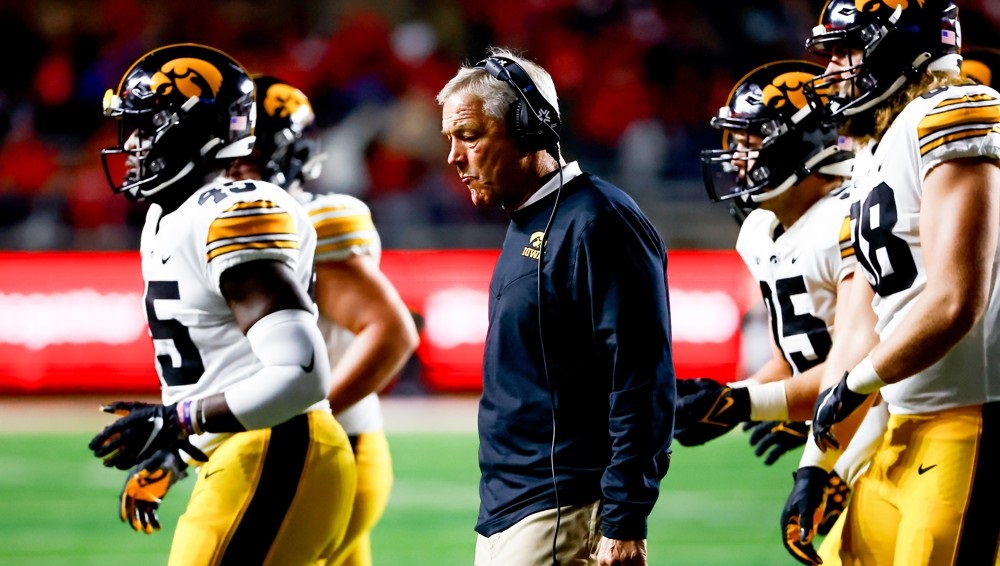
    Few coaches have won one game by scoring two safeties and another by allowing two safeties. But Kirk Ferentz has done just that. With that in mind, it should not be surprising that his team has a reputation for underwhelming offense.

    Based on its performance this season, that reputation seems well earned, as his Iowa Hawkeyes on average score only 17 points per game, 12.5 when discounting defensive scores. Is Iowa’s strategy, tactics, or player development to blame for its offensive futility? 

    With personnel packages designed for tight ends and fullbacks, the Hawkeyes’ offensive strategy differs from the standard 11 personnel commonly seen today. But running an older scheme does not doom an offense to failure, as teams running all sorts of schemes, from three-back to four-wide, have won championships.

    Basing out of 12 and 21 personnel can even create an advantage, as it forces defenses designed for smaller passing offenses to play against an unfamiliar style built around strength and brute force. 

    Despite their unusual personnel the Hawkeyes use conventional concepts. 75% of their designed runs use zone blocking, with power and counter called occasionally as changeups.

    Screens take pressure off the quarterback, as well as rollouts paired with Smash and Shakes concepts. The dropback game features the standard gamut of Slant, Flood and Dagger concepts run by nearly every other offense. 

    The Hawkeyes have made some poor tactical decisions, such as repeating a formation after a timeout twice this season. Overall, however, they do a reasonably good job of executing their strategy to create mismatches against their opponents.   

    Facing Rutgers’ 4-2-5 Quarters defense, with 13:12 left in the 2nd quarter, Iowa aligned with its tight end as the outside most receiver to the right. In response, Rutgers shifted its secondary to the other side of the formation, which had more receivers.

    This left one defensive back isolated with inside leverage on the tight end, against which Iowa dialed up a 10-yard out route to the tight end for an easy first down. The Hawkeyes went back to the well two more times in this game, catching first downs each time. 

    With 8:51 left in the 3rd quarter against South Dakota State’s 4-3, Iowa motioned the wing into the fullback spot hoping to get an extra man blocking the back side of the run. The Jackrabbits shift their outside linebacker into the box, gaining another inside defender and stopping the Hawkeyes for no gain. 

    Two drives later Iowa came back with the same motion. South Dakota State predictably responds as they did before. But this time Iowa ran the zone lead directly at the vacated alley, outside the now-packed box. The motion made the smaller safety, eight yards deep, the primary run defender instead of the bigger linebacker four yards deep, creating a mismatch that nets a gain of 5 yards for the Hawkeyes.  

    Where Iowa has succeeded in strategy and tactics, it has failed in player development. With an experienced quarterback, two tight ends over 6’4, and three backs who get regular carries, the Hawkeyes average only three yards per carry and complete barely over 50% of their passes. 

    Spencer Petras, as a 6’5 third year starter, fits the archetype of a successful college quarterback. But with under 63% of his balls on target, Petras does not consistently deliver the ball where it needs to go. 

    When Petras does hit his target, his receiver often misses. The Hawkeye receiving corps ranks 120th in the FBS in On-Target Catch % at only 83%, and drops nearly one in every 10 passes.  

    Iowa’s run game does no better. As a unit, Iowa’s running backs average only two yards after contact, a lowly 114th in the FBS. Of the Hawkeyes’ three rotation running backs, none improves the offense’s expected points on more than 38% of his carries, and only Kaleb Johnson has a positive Expected Points Added per Attempt, at 0.001.  

    Though each position group has had its struggles, none have hurt the rest of the team like the offensive line’s. The Hawkeye line blows 2.1% of its blocks, good for 15th most among FBS teams, and 2.8% of its pass blocks, placing 8th. Their Points Above Average per Play sits at -0.09, ranked 45th worst in the FBS. 

    Many of the line’s mistakes appear avoidable. Some come down to poor technique: 

    Others result from simple miscommunication: 

    Between the technical errors and the lack of communication, the Hawkeye offensive line has given the other struggling units even less of an opportunity to succeed. 

    With such a poor start to the season, Iowa’s offense should improve by regression alone. But the Hawkeyes do have other reasons to believe their offense will get better. Gavin Williams and Nico Raigani recently returned from injury, and Keagan Johnson should join them soon. All three had over 300 yards from scrimmage last season. Kaleb Johnson will continue to increase his carries weekly by running like this: 

    Of the offensive line’s starters, four are only sophomores. This same unit also showed great improvement last season as the season progressed. In their first versus last seven games of 2021, the Hawkeyes’ offensive line increased its Points Earned per play from .165 to .2 and blew .3% fewer of their pass blocks, even with the stiffer competition in the back half of its schedule. With more capable weapons and better protection, Petras’ performance should improve as well. 

    Even with improvement, the offense will not win many games for the Hawkeyes. The rest of the schedule does not make this any easier, especially with games against Michigan and Ohio State in Iowa’s first three conference showdowns. With a better program in place to both recruit and develop its players, Iowa could have avoided the issues present today. Instead, the Hawkeyes’ offense continues to struggle.

  • The Deliberate Deficiencies of Iowa State’s Run Defense

    The Deliberate Deficiencies of Iowa State’s Run Defense

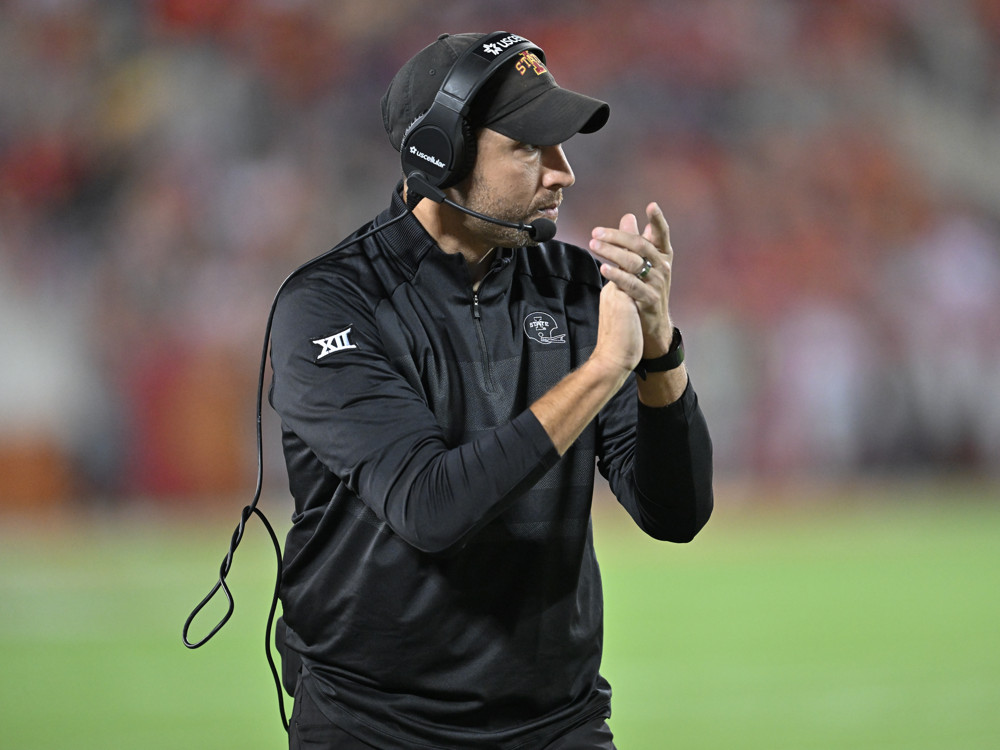
    In his seven years in Ames, Matt Campbell has turned Iowa State from a cellar dweller into a consistent bowl contender. While the offense has improved by over 6 points per game in his tenure, the Cyclone defense, headed by Jon Heacock, has led the turnaround, improving by over 12 points per game from 2015-2021.

    Heacock’s 3-3-5 has flummoxed his opponents, stifling their ability to pass, even as Iowa State resides in the foremost passing conference in the country. The run defense does even better, ranking in the top five in Points Saved Per Play the past two seasons.

    Looking at the Cyclone defense, it comes as no surprise that it excels in the passing game. With three deep safeties and an extra linebacker helping out of the box, the Cyclones outnumber the receivers they cover and can mix in and disguise a variety of coverages from their base look.

    But the extra defenders in the passing game would appear to detract from the run game. To stop the run, most defenses either place a man in every gap, such as Gary Patterson’s 4-2-5:

    Or to have each box defender cover two gaps with overlapping responsibilities between each of them, such as Kalani Sitake’s 3-4:

    Even most 3-3-5’s, such as Tony Gibson’s, match the offense player-for-player:

    But not Jon Heacock’s. Since 2018 Iowa State has defended the run with only five in the box 814 times, over 350 more than second-place BYU. The Cyclones play with what looks like too few between the tackles against all sorts of offensive packages, be it 11 personnel:

    12 personnel:

    20 personnel:

    Or 21 personnel:

    This unorthodox approach clashes with 150 years of football philosophy and intuition.  Has Heacock proven the conventional wisdom wrong and found a superior scheme?

    That seems unlikely. Many schemes come along that take the world by storm only to be solved in due time. The Miami 4-3 stopped the Nebraska option in its tracks, spread offenses came along to mismatch fast skill players against slow linebackers, and defenses such as Heacock’s responded by matching the extra speed with an extra defensive back. Just as Heacock’s scheme has come, an offense will appear to have it figured out by exploiting weaknesses that were present all along.

    With three deep safeties leaving wide alleys of space unoccupied, intuitively the outside run could be the Cyclones weakness. But in 2021 Iowa State ranked 7th in both Points Saved per play and 13th in Points Above Average per play, registering .56 and .15 respectively. In fact, the Cyclones defend the outside run so well because of their three deep safeties.

    Each safety begins 9-11 yards away from the line of scrimmage, more than a typical overhang but less than a normal deep safety. Having three players at this depth allows them to attack the line of scrimmage more quickly than normal safeties. Each one can also attack the run more aggressively knowing there are two others behind him who can cover his mistakes. On this run the safety becomes another box defender by attacking the line of scrimmage on the snap, preventing the third down conversion:

    Against this trips look, the safeties close the space being only nine yards from the line of scrimmage and can snuff out the outside run before it breaks loose:

    As mentioned earlier, the Cyclones disguise many of their looks as well, and use such disguises to get more run defenders through blitzes:

    Or simply allowing other players such as the cornerback to play the run while the safety takes the cornerback’s half of the field:

    The Cyclones can overcome their box deficit against the outside run, but not against the inside run. On inside runs last season, excepting quarterback sneaks and kneels, the Cyclones ranked 52nd and 55th in Points Saved per play and Points Above Average per play, at .49 and .06 respectively. They allowed .01 EPA per inside run, 87th in the FBS.

    Split zone gutted the Iowa State front, averaging 5.3 yards per carry. West Virginia ran it 11 times for 64 yards in its upset victory over the Cyclones last October, such as by sliding through an inside gap:

    Or running off tackle as the offensive line walls off the defense:

    Other teams took notice too, as the Cyclones saw split zone 14 more times in their final six regular season games than their first six. Clemson ran it 8 times in their bowl game, and Iowa ran it 12 times in this year’s matchup despite not running it once in their 2021 game.

    Despite the failings of the Iowa State interior, few teams have exploited it, mostly due to their own schemes. Most of the Big 12 looks pass first, run second. They cannot switch their scheme for one game a year. Each team will make some adjustments, such as repping split zone more during the week and testing formations to get Iowa State’s defense out of position. But each team does better playing to its strengths than playing only to an opponent’s weaknesses.

    Matt Campbell and Jon Heacock know this. They also know that every defense will have flaws, no matter how talented or well coached. Campbell and Heacock chose a defense whose weaknesses could not be exploited by their opposition, while its strengths would match their opposition’s. By thinking in terms of tradeoffs instead of solutions, Campbell and Heacock have brought Iowa State to consistent relevance in the Big 12.

  • 6 Surprises: How FCS Schools Beat FBS Opponents

    6 Surprises: How FCS Schools Beat FBS Opponents

    This past Saturday, college football fans saw three Sun Belt teams take down Blue Bloods, two of them ranked in the Top 10. But at least the Sun Belt schools have the same number of scholarships as the elite programs.

    FCS schools have fewer scholarships and less revenue than their FBS counterparts, yet still typically play at least one game a year against them.

    Even with those disadvantages, six FCS teams have beaten FBS teams this season. How did they do it?

    Delaware over Navy

    Delaware did nothing crazy to win this game. Offensively the Blue Hens created little aside from 14 points from Navy’s first fumble and a blown coverage.

    On the other side of the ball the Blue Hens stuck to a three-down look against the Midshipmen, the most common way to defend the option.

    Last season, the Navy offense saw three down linemen for 612 plays, which ranked 12th in the FBS. Fellow option teams Army and Air Force ranked 4th and 14th as well. Convention worked for the Blue Hens, allowing only seven points, recovering three fumbles in the first 20 minutes, such as this one forced by Johnny Buchanan:

    And stopping the Midshipmen on fourth down three times, including this one to seal the victory:

    William & Mary over Charlotte

    Though Charlotte had a four-point lead heading into the final quarter, William & Mary dominated the line of scrimmage from the beginning. The 49ers gave the Tribe some help with alignment issues present from the first play:

    But William & Mary also took every inch it could with the offensive line imposing its will on both gap runs:

    And zone schemes:

    The dominance of the first three quarters finally came to a head with three touchdowns in five minutes, including this final touchdown run for by Malachi Imoh:

    Eastern Kentucky over Bowling Green

    In a game with long periods of ineptitude, Eastern Kentucky made fewer mistakes than Bowling Green and took what Bowling Green gave it. On one scoring drive in the third quarter, the Colonels threw a loosely guarded swing pass:

    Scrambled against the Falcons’ man coverage for an easy first down:

    And threw the post of the scissors concept against what was most likely match-quarters coverage but definitely a miscommunication:

    Eastern Kentucky even went back to the swing pass a few more times, most notably for the game-winning score:

    Bowling Green tried to bully Eastern Kentucky into submission, playing with two tight ends for 60 snaps. But the Colonels capitalized on enough errors, such as a bad snap into the end zone, to prevent the Falcon’s physicality from taking over the game.

    Playing the slightly cleaner game, Eastern Kentucky finally won in the seventh overtime.

    Incarnate Word over Nevada

    When Mike Leach first hit Division I with the Air Raid, his Texas Tech teams would often go down a few scores in the beginning, only to win by double digits. This game had that feel, and while Incarnate Word is no longer coached by Air Raid disciple Eric Morris, it put up 55 points against Nevada under new head coach G.J. Kinne.

    Despite going down two scores in the first quarter, the Cardinals used simple scheme to isolate favorable matchups to turn a 14-point deficit into a 21-point lead. These include a tunnel screen, an Air Raid favorite, with jet motion away and counter blocking:

    A slant to the backside of trips and RB motion, which draws away the middle linebacker and free safety:

    And a rollout away from trips that puts Nevada’s defensive backs in space trying to cover two switched stems:

    Though Nevada would get within a touchdown, Incarnate Word’s offense continued its onslaught to hold on to the victory.

    Holy Cross over Buffalo

    The Holy Cross struggled defending Buffalo’s offense throughout the first half. Between allowing 5 yards per carry due to poor alignment:

    And mismatches in the middle of the field:

    The Crusaders found themselves down seven in the third quarter. But by diversifying their defensive look by mixing in a more traditional three down look:

    And by pushing one-on-one matchups to the outside:

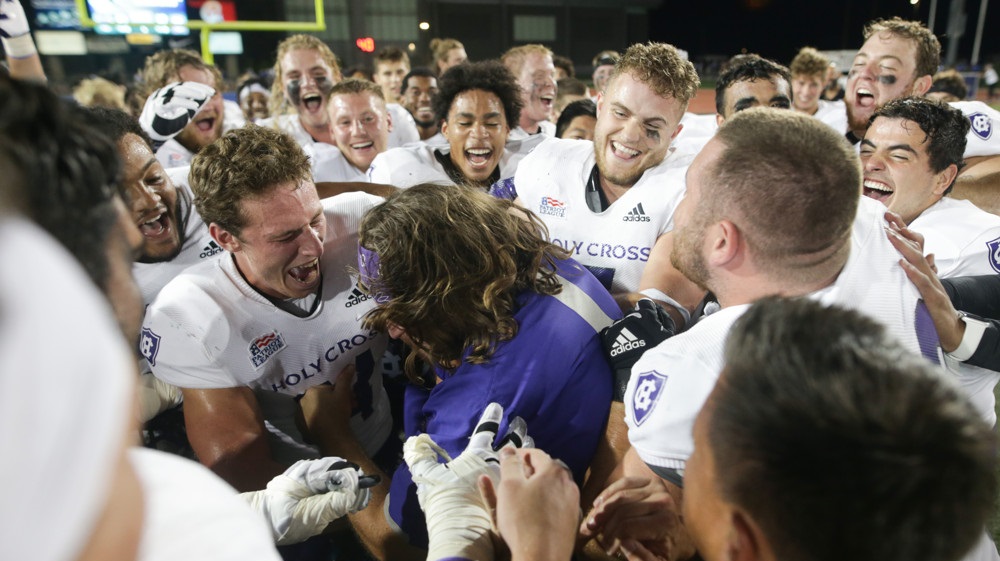
    Holy Cross settled in to allow only three points in the final 22 minutes. Between the tightened defense and a Hail Mary, the Crusaders got their second straight win against an FBS opponent.

    Weber State over Utah State

    Without surrendering a kickoff return for a touchdown in the second quarter, Weber State would have pitched a shutout. The Wildcats stifled the Aggie offense by playing a variety of fronts backed almost exclusively by man coverage. At different junctures they blitzed three

    four:

    And five:

    with man coverage playing behind the line. In total, the Wildcats played 17 out of 22 pass attempts in man coverage before taking a three-score lead.

    Weber State also benefitted from two tipped passes turned interceptions, and when it did make a mistake the one high safety Desmond Williams jumped the uncovered route for an easy pick-six:

    With these turnovers Weber State turned a potentially tight game into a blowout for the sixth FCS defeat of an FBS opponent this season.

  • Why Stanford Switched to the 4-3

    Why Stanford Switched to the 4-3

    Though Stanford boasts such coaching legends as Fielding Yost, Walter Camp, Pop Warner and Bill Walsh, none orchestrated a turnaround in Palo Alto like Jim Harbaugh. Inheriting a team with 5 straight losing seasons, no ten-win seasons since 1992, and no Bowl wins since 1996, Harbaugh’s Cardinal achieved a winning season in his second year and 12 wins, an Orange Bowl victory and a No. 4 final ranking in his fourth.

    David Shaw had largely continued this success, with five ten-win seasons and six bowl wins in his first eight years. The past three seasons, however, Stanford had only 11 wins combined.

    Lance Anderson has coached at Stanford for all 15 years of the Harbaugh and Shaw eras, including the past eight as the defensive coordinator. The 3-4 defense in his time at Stanford has been the backbone of the Cardinal’s “Intellectual Brutality.”  But with the recent struggles on the Cardinal defense, Anderson saw fit to change his scheme from the familiar 3-4 to the alien 4-3.

    The 4-3 directly addresses the weaker defensive line. In 2018, the Cardinal’s last season with 9 or more wins, the defense saved .35 Total Points per play against the run and .20 Total Points per play when rushing the passer. In 2021 those numbers dropped to .26 and .13 respectively, largely due to its anemic line play. With only one player with significant reps returning from last season’s defensive line, the Cardinal need to rebuild an already lackluster unit.

    Stanford cannot solve this problem with recruiting and transfers alone. Its high academic standards make recruiting difficult already. With a smaller player pool from which to choose, a few misjudgments in high school talent can seriously affect the future of the program. While the transfer portal can offer schools a second chance to plug holes in the roster, Stanford’s selectivity in admitting transfers does not allow for such redemption.

    With the weaker development of the past and the anticipated recruiting difficulties of the future, the Cardinal saw fit to switch to the 4-3. While putting an extra player from a weak unit on the field does not make intuitive sense, the 4-3 typically helps defenses with smaller, less talented linemen.

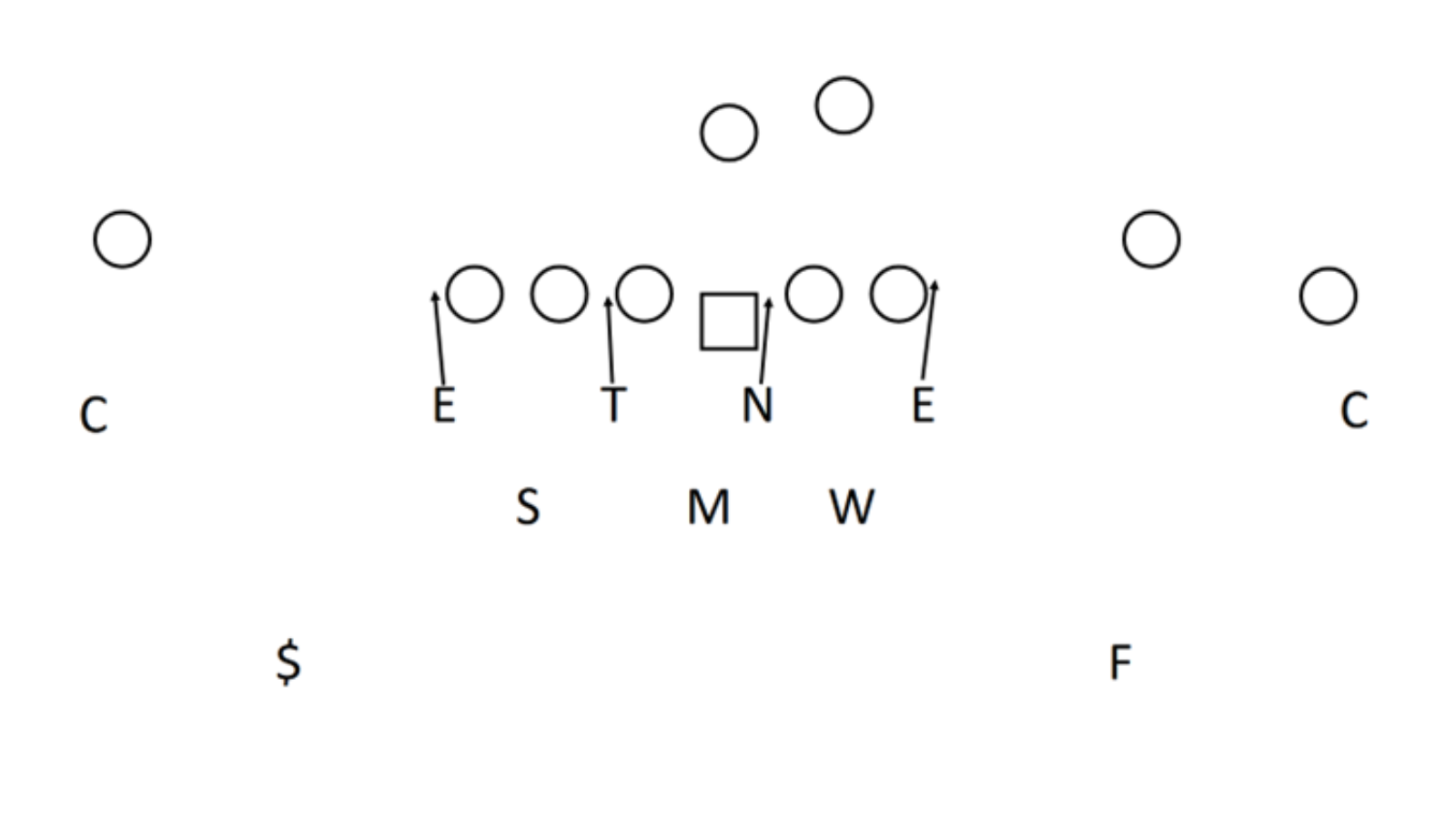
    All defenses must cover every gap in the run game and every receiver in the pass game. The 4-3 defense normally does this with four down linemen covering one gap apiece and the linebackers and perhaps a defensive back covering the rest, as displayed below:

    The 3-4 requires the defensive linemen to either cover two gaps each by controlling an offensive lineman or slant to a gap away from their alignment, both displayed below:

    Covering two gaps requires more size and strength, slanting to one gap requires more speed, and both require more skill than filling one gap. The additional lineman relieves the extra responsibilities of the other three.

    Though basing out of a 3-4 the past 15 years, the Cardinal are no strangers to the 4-3. In 2021, Stanford played 22% of its defensive snaps in a four-man front, 12th among the 77 teams that played the majority of their snaps with three down linemen.

    Adjusting to its failures in the 3-4 as the season progressed, Stanford played with four down linemen nearly twice as often in its final six games as in its first six. The Cardinal even based out of the 4-3 in their bout with Oregon State, playing 46 of their 76 downs with four linemen.

    Stanford’s results with the 4-3 last season do not inspire confidence in the switch for 2022. The Cardinal gave up nearly 6.7 yards per play with four down, placing 56th among the 64 FBS teams that played 100 snaps or more with four linemen. In the aforementioned Oregon State game, Stanford allowed 218 rushing yards, 257 passing yards, and 35 points in a loss reminiscent of the beatings Stanford laid on Oregon State just a few years ago.

    But with a year of experience and an offseason to implement the scheme, the 4-3 experiment is not doomed to fail. The Cardinal return four of their seven backfield defenders, all seniors. Chief among them is potential first round pick Kyu Blu Kelly at cornerback. With some help from the back end of the defense and additional scheming from Lance Anderson, the Cardinal could see some early returns on their long-term strategic change.

    The schematic change may offer Anderson more ways to stop the run. The 4-3 allowed the Cardinal to put enough bodies in the box to try to stifle the Oregon State rushing attack. A few times the defense got the stop:


    Other times the Beavers successfully ran away from the tight end:


    or passed outside the box against isolated coverage.

    With more time in the 4-3 and a few adjustments by the coaching staff, the Cardinal can find more ways to better align their players to defend the run without giving up an easy pass.

    In passing situations, Anderson will need to get creative with Stanford’s rush. The Cardinal sacked the quarterback a measly 9.9% of the time in 2021, good for 117th among FBS teams. In Stanford’s first game of the 2022 season, Anderson showed his defense will blitz with the linebacker:

    blitz with the safety:


    stunt:


    and both blitz and stunt:

    to put more pressure on the passer. The Cardinal got to Colgate quarterback Michael Brescia on each of these pass rushes, but will need they keep the quarterback in the pocket, as they failed to do here:

    This lack of discipline plagued the Cardinal last season, and the better quarterbacks in the Pac 12 will take advantage of these miscues.

    Stanford’s response to their current defensive problems makes sense. The Cardinal will always have trouble getting talent to Palo Alto, and those problems will not lessen any time soon. Given the proper implementation of the 4-3, Stanford may have found the best way to revive the “Intellectual Brutality” of the 2010s.

  • What Utah State Needs To Do To Hang With Alabama

    What Utah State Needs To Do To Hang With Alabama

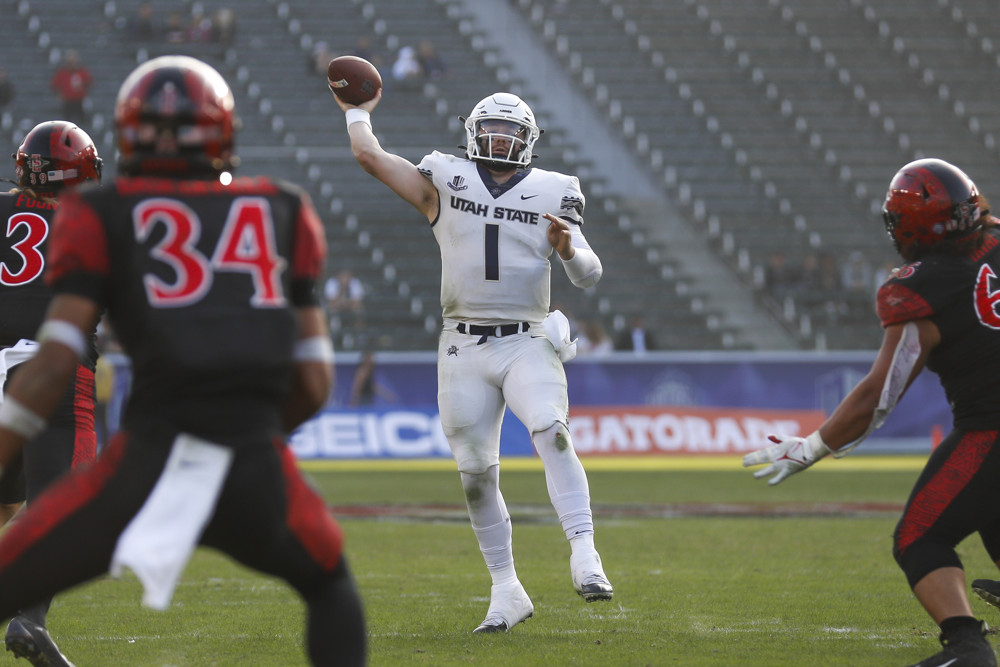
    Coming off a Mountain West Championship and 11 wins, Utah State has positioned itself as a top Group-of-5 program. In spite of the Aggies’ efforts, they sit as a 41.5 point underdog against Alabama this week.

    The Crimson Tide have not lost to a G5 opponent since 2007. Alabama has easily disposed of quality programs such as Fresno State and Colorado State in 2017 and Arkansas State, coached by the current Aggies head coach Blake Anderson, in 2018.

    But what can Utah State do to, if not win, increase its odds of an upset or hang in and play a (relatively) close game?

    In general, underdogs can play a few ways to help their chances. When overmatched, the disadvantaged team should look to increase the variance of results as much as possible. Running fewer plays, often by running the ball and keeping the clock moving, can accomplish this.

    Executing an offense or defense the opponent rarely sees also helps, as the underdog shifts the game into a paradigm of his expertise and of the favorite’s ignorance. Army does both by running a flexbone offense, a run-heavy scheme that almost no one else uses. In the past five seasons, the Black Knights and their triple option offense have taken Oklahoma and Michigan to overtime and lost by 14 or fewer to Cincinnati, Wisconsin, and Wake Forest.

    Unfortunately for Utah State, its style of play does not match that of an upset candidate. The Aggies averaged 76 plays per game last season, good for 7th in the nation, and passed on 47% of those. Schematically, Utah State’s offense descends from Art Briles’ offense at Baylor, just like those of Alabama’s yearly opponents Tennessee, Ole Miss, and Arkansas. Tennessee and Ole Miss even joined Utah State in the top 10 in plays per game. Though the Aggies have some film to see how Alabama will defend their up-tempo, wide split offense, they will not catch the Tide by surprise.

    While the Aggies style of play does not lend itself to the upset, they can adjust what they normally do to avoid Alabama’s strengths and take advantage of Alabama’s weaknesses, as few as they may be. The Aggies should stick to the air whenever possible, as they were 43rd in PAA per play in 2021 when passing, but 114th when running. They also return Logan Bonner at quarterback, a player currently on the Maxwell Award Watch List.

    Within the passing game, Utah State can stick to short drops and rolling out the quarterback to neutralize Alabama’s pass rush, ranked third in PAA per play in 2021. Utah State’s base passing game already consists mostly of 1-step drops, making up 22 out of its 31 dropbacks against UConn last Saturday and 288 of its 505 dropbacks in 2021.

    Even with the second-most one-step drops in the FBS, the Aggies ranked 34th in the nation in PAA per play when dropping back one step, and 7th in Boom %. Utah State also returns Justin McGriff at wideout, who was 3rd in Boom %  and 12th in EPA per Target on 1-step drops (minimum 25 targets). The 6’6 receiver makes a great target for Bonner, such as on this Sluggo thrown for a 14-yard touchdown last Saturday.

    While Alabama has great players across its entire defensive line, Will Anderson Jr. stands out as the best. The Nagurski Award winner returns for another season, sending opposing coaches to the chalkboard to scheme around his presence. Rolling Logan Bonner away from Anderson may provide the quarterback more time to throw. The Aggies are no strangers to the rollout, doing so 38 times in 2021 and ranking 14th in yards per attempt and 10th in QB Rating when bootlegging.

    While the rollout eliminates half the field as an option to throw the ball, in a game where Utah State will have few personnel matchups it can win, rolling away from mismatches provides better opportunities than dropping back into pressure. Expect the Rollout Flood, as seen in the video below, to appear from time to time this Saturday, as well as the Rollout Smash.

    Defensively, the Aggies play man coverage much better than zone. In Cover 0, 1 and Man 2 in 2021 the Aggies averaged 0.40 Points Saved Per Play, while in Cover 2, 3, 4, and 6 they averaged just 0.05. They can also sit in Man 2 while rushing four, as they ranked 24th in Points Saved per play when only rushing four or fewer in 2021. Expect Utah State to line up with four down linemen, or a stand-up end at times, three linebackers, two corners, and two high safeties against the Crimson Tide offense.

    Alabama will attempt to unbalance the Utah State defense and break its two-high shell. The Crimson Tide aligning with trips or a tight end to one side forces the Aggies to make an uncomfortable decision. They can drop a safety to help in the run game vs a tight end or the short passing game vs trips and lose their best coverage in Man Cover 2 or they can keep their two-high shell and remain vulnerable to the run and short passing game.

    In the video below against the UConn Huskies, the Aggies choose the latter, bumping their cornerback into the box to play the run. UConn gets six yards by running at the cornerback, though they lost their quarterback Ta’Quan Roberson for the year on the run. Playing the two-high base should maximize Utah State’s abilities and minimize their faults, but no defense is perfect. Look for Alabama to exploit the defense’s weakness with its alignment.

    The Aggies ride into Tuscaloosa as heavy underdogs against the greatest program in college football. Nobody expects a close game, much less a win. Even if Utah State executes its gameplan, Alabama has enough talent to still win easily. But by sticking to his strengths and avoiding his weaknesses David can increase his odds of hanging with Goliath.

  • What Might a Mark Whipple Offense Look Like at Nebraska?

    What Might a Mark Whipple Offense Look Like at Nebraska?

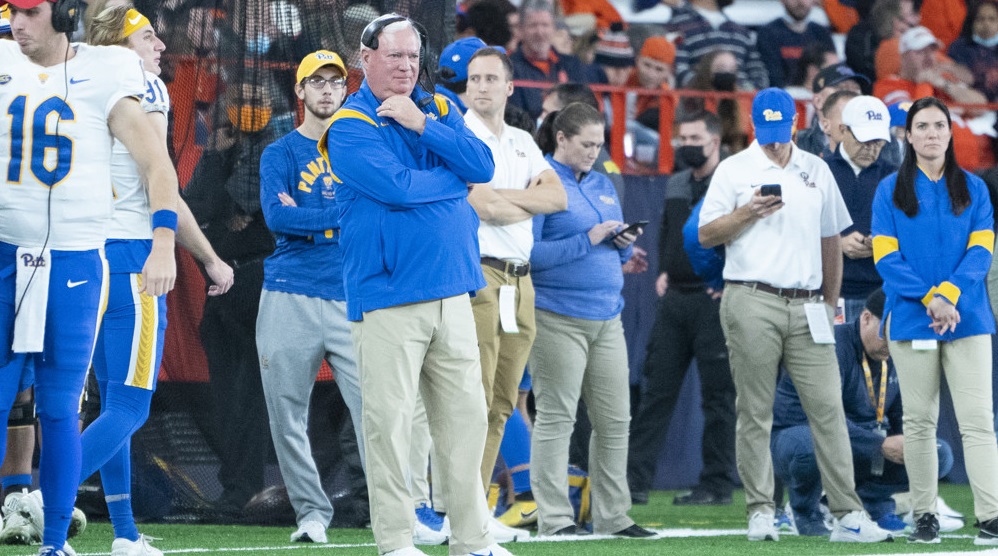
    After a 3-9 season, Nebraska head coach Scott Frost fired all but one offensive coach and hired Mark Whipple to take the reins. Last year with Pittsburgh, Whipple’s offense scored the 3rd-most points and gained the 7th-most yards per game among all FBS teams. With Frost relinquishing full control of the offense, Whipple will remake the unit in his image.

    But how much will Whipple need to change? Nebraska ranked 71st in points per game in the FBS this past season but ranked 5th in Points Earned per passing play, better than Pittsburgh. Despite ranking worse than Whipple’s former team in Points Earned per rushing play (45th), Nebraska hit its designed gap more often, got stuffed less often, and averaged more yards per attempt than Pitt.

    But the team returning to Lincoln does not resemble last year’s. Gone is senior quarterback Adrian Martinez, who is replaced by Casey Thompson. Nebraska loses its two leading receivers, including 6’9″ tight end Austin Allen. The offensive line returns three starters but loses its best in center Cam Jurgens.

    The talent still at Nebraska does not inspire much confidence. The offensive line performed horribly last season, blowing 4.2% of its pass blocks, the 3rd-highest rate in the FBS. Its blocking was 89th in Points Above Average per play, mostly due to its (lack of) pass protection.

    Thompson placed in the the top third for quarterbacks in Point Earned per play, On-Target percentage and IQR (minimum 100 pass attempts) but had an interception rate of 3.4%. His frequent mistakes and inadequate coverage identification led him to transfer away from competition for his job at Texas.

    Whipple will need to adjust his pass-heavy scheme to his current players’ abilities. Nebraska ran the ball over 40% more often than it passed in 2021, despite usually playing from behind. Whipple can continue to forego the huddle, as the Huskers have done so since Frost’s tenure began.

    As Nebraska’s offense ran mostly out of 11 personnel the past few seasons, Whipple would be shaking things up quite a bit if he decided to change packages as much as he did at Pitt.

    The Huskers based their run game on Inside Zone, complemented by Outside Zone and Counter. Expect Whipple to recycle the blocking from these plays in 2022 but pitch the option element. Despite Pickett’s deceptive speed, the Panthers rarely called a run where Pickett read a defender. The Counter and Triple options Nebraska showed in 2021 (video below) will not reappear.


    The Huskers, though based on Zone, also ran Power, Dart, Trap, Tug, G, among others. Whipple may add a gap-based outside run (video below) and call the occasional Jet Sweep to threaten the outside. Most likely he will only keep Power to simplify the offense and focus on the pass. With fewer plays to execute, the offensive line may make fewer mistakes than last year, such as opening the 2021 Oklahoma game with back-to-back false starts.

    With fewer runs should come a deeper passing game. The Huskers’ passing scheme reflected a reliance on the run, utilizing play action to fool the defense and simple concepts for the receivers. Hitches, flats and seams comprised much of the playbook, with a few other concepts (such as mesh) completing the offense. Whipple will expand the deep game, with concepts such as Mills (video below) to stress the safeties.

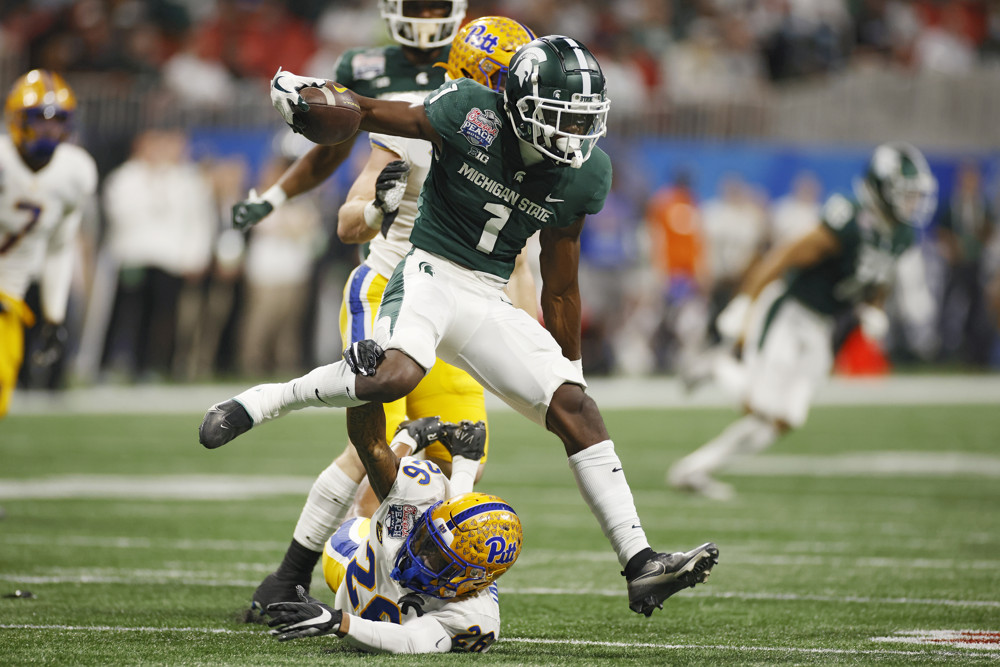
    Whipple will create the most opportunities through his use of formations. Come Week 0, notice the way he positions the Huskers’ players to rearrange the Northwestern defense. By forcing Northwestern to align certain ways, he can run his plays against inferior defensive positioning. Michigan State did so last season, exposing the Wildcats’ 4-3 alignment weaknesses and scoring 38 points in a game that was never in doubt.

    With 11:08 left in the first quarter the Spartans show one tight end and receiver to the boundary and twins to the field (video below). To cover the extra space and twin receivers, the Wildcats shift their linebackers to the field.

    With no man in the D gap and the safety playing eight yards off the ball, Michigan State has the opportunity to hit the gap with the run, as it does unsuccessfully, or attack through the air with a two-on-two matchup to the boundary. Despite the short gain, few defenses can hold strong with such holes in their alignment.

    When Michigan State aligns in Quads at the midway point in the third quarter (video below), the outside linebackers evacuate the box to focus on the pass, leaving five to defend the run. But the linebackers also can only help cover receivers in their path, as the Wildcats play match quarters coverage here.

    Playcaller Jay Johnson dials up Shakes, or Corner Strike (for the Madden players), leaving the corner and safety as the only relevant pass defenders. Jayden Reed runs the crack corner with outside leverage against the safety and catches a 23-yard toss from Payton Thorne.

    Whipple can formation his players like the Spartans did and base out of the 11 personnel familiar to Nebraska. To exploit the middle of the field left open by Northwestern’s quarters coverage he may call Mills, or attack the outside with Shakes or Smash, the boundary option in the Mills video. As the season progresses he will incorporate more packages and install more of his plays to gradually change the offense to his liking.

    Whipple will be limited in how much of this he can do. He will not have the talent or depth he had at Pitt, nor the three years of player experience with his playbook.

    With what he has, expect Whipple to vary up the personnel packages, limit the runs both in quantity and complexity, and air the ball out as much as he can. With a capable quarterback and a reversal in last year’s luck, the Cornhuskers may show enough life to save the coaching staff.

  • Preseason All-American Team: Special Teams

    Preseason All-American Team: Special Teams

    As we approach the start of the college football season we will be releasing our 2022 Preseason All-American team. A kicker, punter, and return man, and an honorable mention at each spot was selected and discussed.

    Check out our other selections in these links.

    Offense: QB RB WR TE OC OT OG

    Defense: DL Edge LB CB S

    Entire series

    The special teamers selected were…

    RET Jayden Reed – Michigan State

    The Spartans electric playmaker Jayden Reed is our pick for our All-American returner. The speedy and elusive Reed recorded an FBS high 2 punt return touchdowns, and was one of 5 players with at least 200 punt return yards and 300 kick return yards.

    K Harrison Mevis – Missouri

    Following the 2021 season, Harrison Mevis made the First Team on our inaugural All-SIS list. He tied for the lead among all players who are primarily field goal kickers with 26 Total Points. He finished 2021 going 23-of-25 on field goals, and 3-of-3 from over 50 yards, while also hitting all 41 of his extra point attempts. His 23 made field goals tied for 6th-most in FBS and was tops in the SEC.

    P Michael Turk – Oklahoma

    The son of 3-time Pro Bowl Punter Matt Turk, Michael Turk tied for the lead among all punters with a 51.2 punt average in 2021. The former Arizona State Sun Devil and Lafayette Leopard enjoyed his first season in Norman even though he wasn’t forced to punt often. He punted only 35 times all year, which ranked 116th in the FBS.

    However, when asked, he pinned nearly 50% of his punts inside the 20 and recorded only 4 touchbacks.

    Honorable Mentions

    RET Brian Battie – USF

    The returning 2021 consensus All-American return specialist Brian Battie from USF receives our honorable mention. With 3 kick return touchdowns and over 600 yards on returns, he was one of the most electric returners of the 2021 season. He stands to have the opportunity to make a significant impact on special teams. His long speed and acceleration allows him to burst through lanes and run away from defenders.

    K Jonah Dalmas – Boise State

    Jonah Dalmas led all FBS kickers with 26 made FG in 2021. While he didn’t connect on any kicks beyond 50 yards, he was 6-of-6 between 40 and 49. Overall he was 26-of-28 on field goals and 38-of-39 on extra points making for a great stat line to bring back in 2022 for the Broncos.

    P Adam Korsak – Rutgers

    Adam Korsak was very close to making the top team. His 22 Total Points from last season tops all returning punters in the FBS. While his 44.9 net average ranked only 17th last season, 53% of his 72 punts landed inside the 20, and he went the entire season without a touchback.

  • Preseason All-American Team: Safeties

    Preseason All-American Team: Safeties

    As we approach the start of the college football season we will be releasing our 2022 Preseason All-American team.  Our two safeties and two honorable mentions were selected and discussed.

    Check out our other selections in these links.

    Offense: QB RB WR TE OC OT OG

    Defense: DL Edge LB CB

    Entire series

    The safeties selected are…

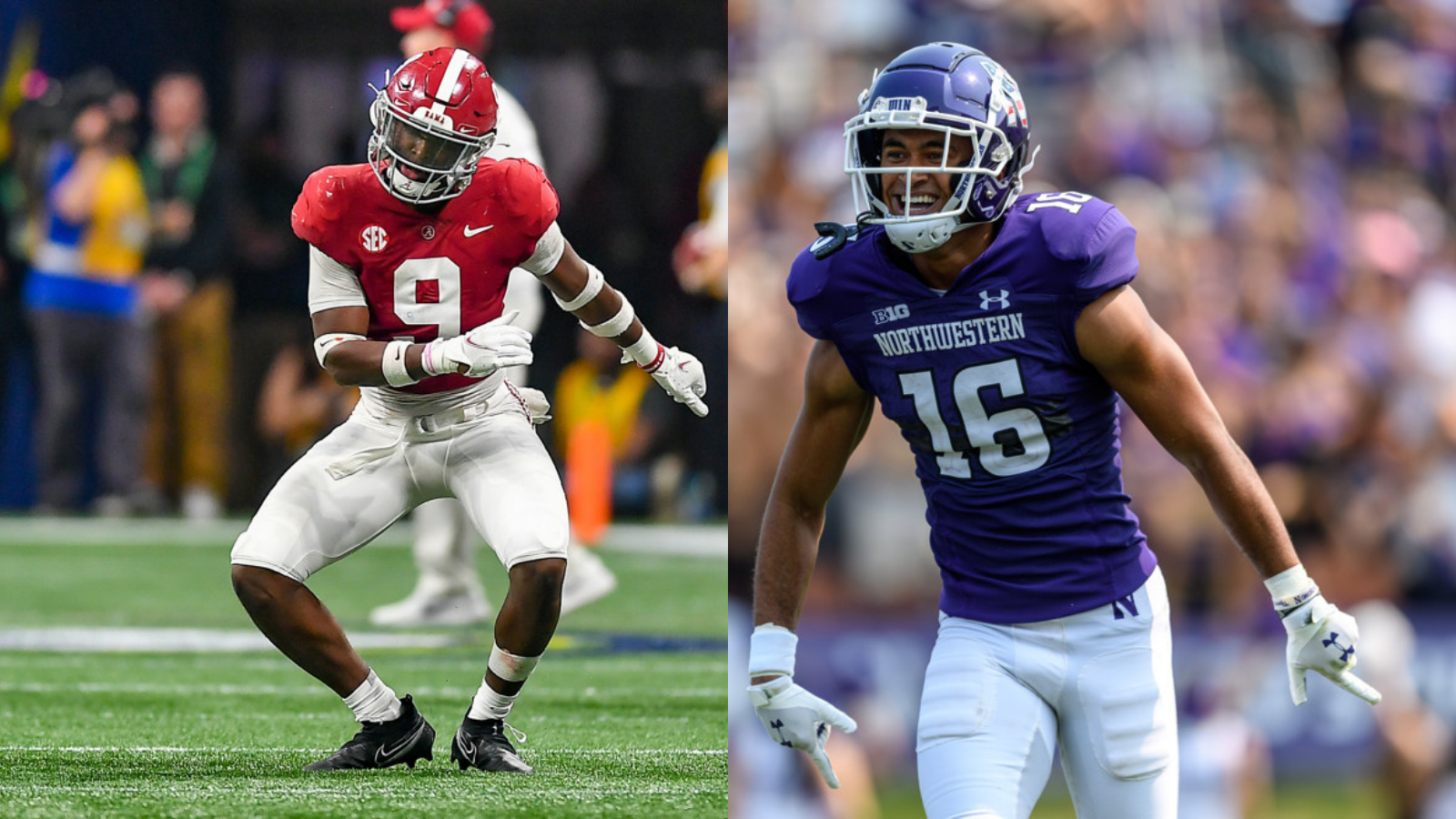
    S Jordan Battle – Alabama

    S Brandon Joseph – Notre Dame

    Battle, who could’ve left for the NFL after last season, is returning to Alabama for his senior season. He is coming off a year in which he was named All-SEC First Team by both the coaches and the AP. He had 3 interceptions, 4 pass deflections, 1 touchdown and 50 tackles.

    Battle is also near the top of the SEC and the entire country in several advanced stats.

    • 29.5 Passer Rating Against (3rd in FBS)
    • -20.8 EPA (2nd)
    • 0.1 Yards Per Coverage Snap (lowest)
    • 37.6 Coverage Total Points (1st for safeties)
    • 14.1 Total Points vs the run (Top 10 for safeties)

    Joseph transferred to Notre Dame after spending the previous three seasons at Northwestern. While at Northwestern, Joseph was named to the AP First Team, AP All-Big Ten First Team, and AP Newcomer of the Year in 2020. He was also named as an All-Big Ten honorable mention by coaches in 2021.

    Joseph has been a ballhawk in the secondary the past two years. In 2020, he had 6 interceptions despite only 17 targets. In 2021, Joseph was targeted only 23 times in 376 coverage snaps but still finished with 3 interceptions and 3 pass deflections.

    His 40.8 Coverage Total Points in 2020 led the FBS among safeties and his Points Above Average was 2nd best. In 2021, he finished second in the Big Ten with 36.2 Coverage Total Points.

    Honorable Mentions

    S Jalen Catalon – Arkansas

    S JL Skinner – Boise State

    Coming off an All-SEC First Team (AP) selection, Catalan played in only 6 games in 2021 before suffering a season-ending injury. In those 6 games, he had 2 interceptions and 4 pass deflections. His 20.7 Pass Coverage Total Points in those games was 4th in the entire country among safeties.

    Skinner is returning to Boise State after his All-Mountain West 2nd Team selection in 2021. He had 2 interceptions and 6 pass deflections, with 90 combined tackles which ranked 3rd among Mountain West safeties. His 27.2 Total Points against the run in 2021 was 5th in the country at the position.

  • Preseason All-American Team: Offensive Guards

    Preseason All-American Team: Offensive Guards

    As we approach the start of the college football season we will be releasing our 2022 Preseason All-American team.  Our two guards and two honorable mentions were selected and discussed.

    Check out our other selections in these links.

    Offense: QB RB WR TE OC OT

    Defense: DL Edge LB CB

    Entire series

    The guards selected are…

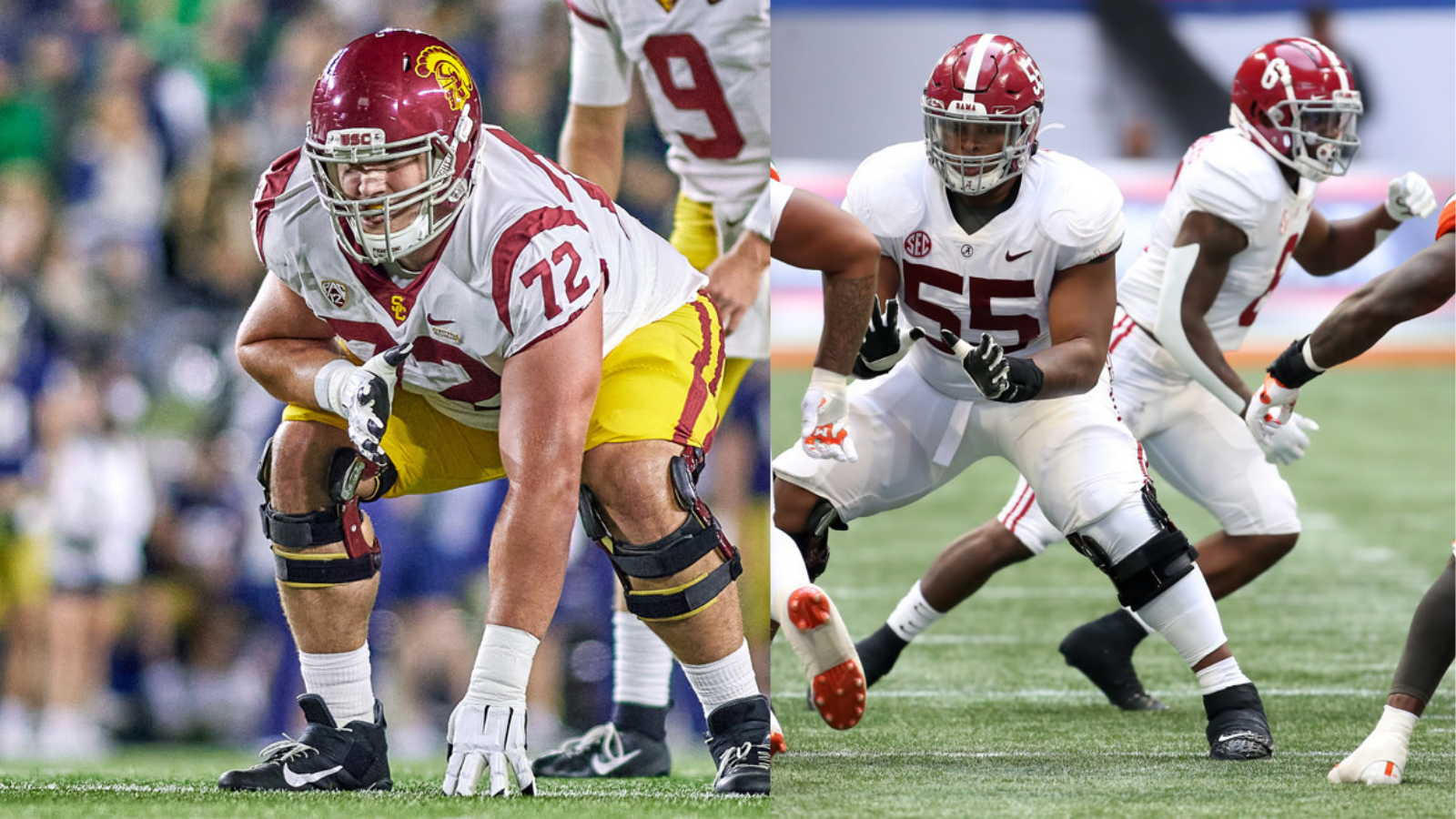
    OG Andrew Vorhees – USC

    OG Emil Ekiyor Jr. – Alabama

    Andrew Vorhees enters his 6th year at USC as their most experienced lineman. He has started at both guard positions and left tackle in his collegiate career. Injuries have hindered his career, but he has fought back each time and was named the the AP All-American 3rd team after last season.

    With Lincoln Riley and Caleb Williams coming over from Oklahoma, Jordan Addison coming from Pitt, and Travis Dye coming from Oregon, USC expects an offensive juggernaut. Vorhees will be the leader of the offensive line and may have a chance to do something that has alluded him in his career, make the CFP.

    Emil Ekiyor Jr. has 29 career starts entering the 2022 season and has been a part of a few high-powered offenses at Alabama. He will look to improve his NFL draft stock with another solid season and could finish the season as one of the top guard prospects in the country.

    Alabama has a long list of NFL offensive linemen and Ekiyor has improved leaps and bounds over his career. Combine his stellar play with national championship aspirations, and you get a prime candidate to become an All-American at the end of the season.

    Honorable Mentions

    OG O’Cyrus Torrence – Florida

    OG Caleb Chandler – Louisville

    OG Willie Lampkin – Coastal Carolina

    OG Nathan Monnin – Kent State

    Torrence followed Billy Napier from Louisiana to Florida this offseason and looks to take his talents to the SEC. He was an outstanding tackle at Louisiana and could continue at that position, but it’s looking more likely that he will kick inside to guard.

    His size, athleticism, and temperament should make the transition a success and he will look to continue the recent trend of Ragin’ Cajun offensive linemen who are drafted in the NFL.

    Chandler will look to lead Louisville’s offensive line in his 5th season. He has been a mainstay on the offensive line for the last several years and has a chance to earn national recognition with another strong campaign.

    Lampkin is an undersized guard, but he is a joy to watch. He is a fluid athlete with a wrestling background and he is a menace at the guard position. He was named 2nd Team All-Sun Belt last season and with Grayson McCall returning, the Coastal Carolina offense will continue to wreck havoc in the Sun Belt.

    Monnin dominated the SIS metrics last season and looked comfortable against top 10 opponents Texas A&M and Iowa last year. His name might not be well-known to casual fans, but NFL evaluators have their eye on him and he has a chance to show he belongs on NFL draft boards.

  • Preseason All-American Team: Centers

    Preseason All-American Team: Centers

    As we approach the start of the college football season we will be releasing our 2022 Preseason All-American team.  One center and two honorable mentions were selected and discussed.

    Check out our other selections in these links.

    Offense: QB RB WR TE OT

    Defense: DL Edge LB CB

    Entire series

    The center selected was…

    OC Jarrett Patterson – Notre Dame

    Patterson returns to South Bend for his 5th season in 2022 as a veteran presence along the offensive line. He accounted for 32 Total Points during the 2021 season along with only 6 blown blocks. He helped pave the way for an offense that racked up 426 yards and over 35 points per game last season.

    The lengthy list of Notre Dame offensive linemen that have gone on to the NFL should get a little longer after the upcoming draft.

    Honorable Mentions

    OC John Michael Schmitz – Minnesota

    OC Malik Sumter – Georgia State

    John Michael Schmitz is the lone returning starter for the Golden Gophers. He will look to steer the new starters towards the same success the previous linemen attained.

    Schmitz has produced at an elite level the last two seasons, posting a Blown Block% of 0.3% last season and 0.2% the season before. There are some NFL evaluators who wondered why he didn’t declare for the NFL draft after last season, but he has a chance to be one of the first couple of centers taken in the upcoming draft if he continues his high-level play.

    Sumter is the leading Total Points getter among all returning interior linemen. In addition to his 41 Total Points in 2021, he also managed to create over 2.7 yards before contact for his ballcarriers and had only 4 blown blocks all season. He was a consistent presence last season on a quality team and, despite being undersized, can make an impact in both the rushing and passing games.