Category: Football

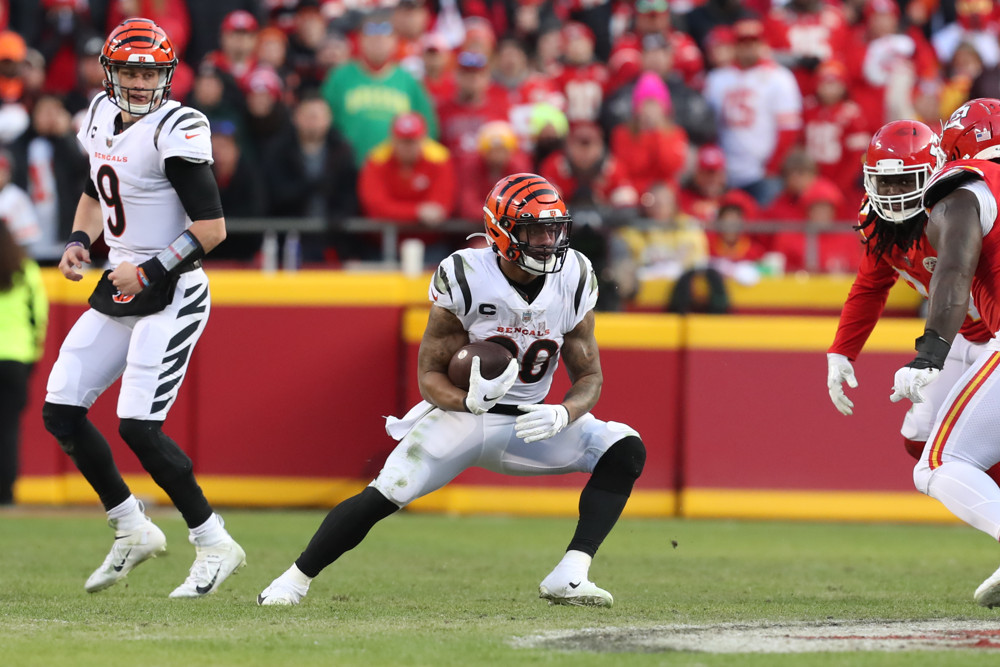
  • Matchup to Watch: Joe Burrow’s Deep Passes vs Rams Secondary

    Matchup to Watch: Joe Burrow’s Deep Passes vs Rams Secondary

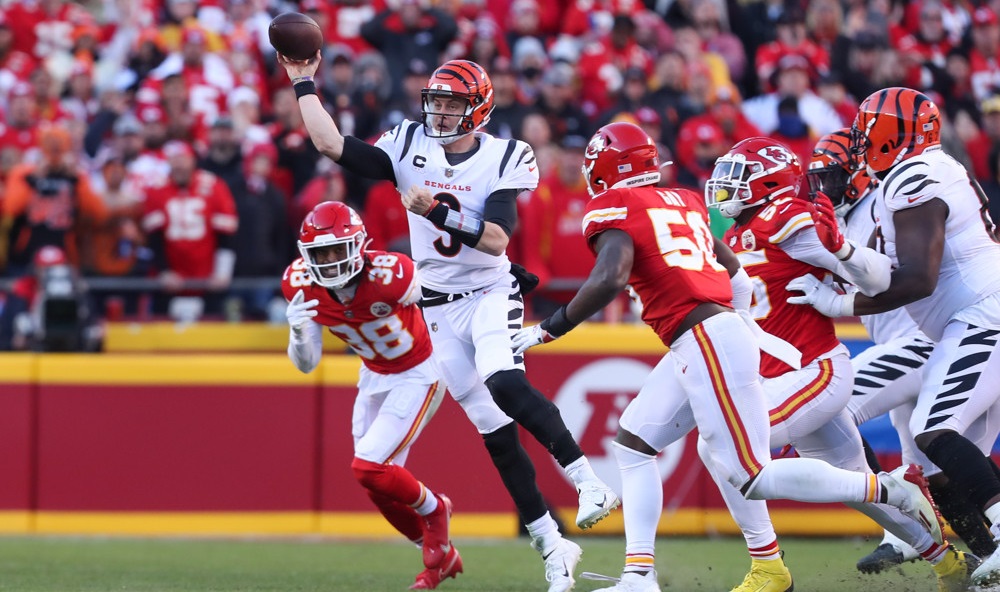
    The most effective deep passer in the NFL in the 2021 regular season was Bengals quarterback Joe Burrow.

    Burrow led all passers in Total Points on pass attempts at least 20 yards downfield with 39.4. Among the 30 quarterbacks with the most pass attempts, he ranked third in Catchable Pass Percentage (75%) and first in touchdown passes (11), touchdown percentage (18%), and average net yards per attempt (17.7).

    During the regular season, 12% of Burrow’s passes were deep throws (61 out of 520).

    But in the postseason, Burrow has gone with a different approach. Only 6 of his 109 pass attempts have been deep throws (5.5%).

    That may have to continue on Super Bowl Sunday given the formidable nature of the opposition.

    The Rams ranked 9th in the NFL in Points Saved Per Play against deep throws in the regular season. But they’ve been even better in the playoffs.

    Opposing quarterbacks are 2-for-11 when throwing a deep pass against the Rams in the postseason.

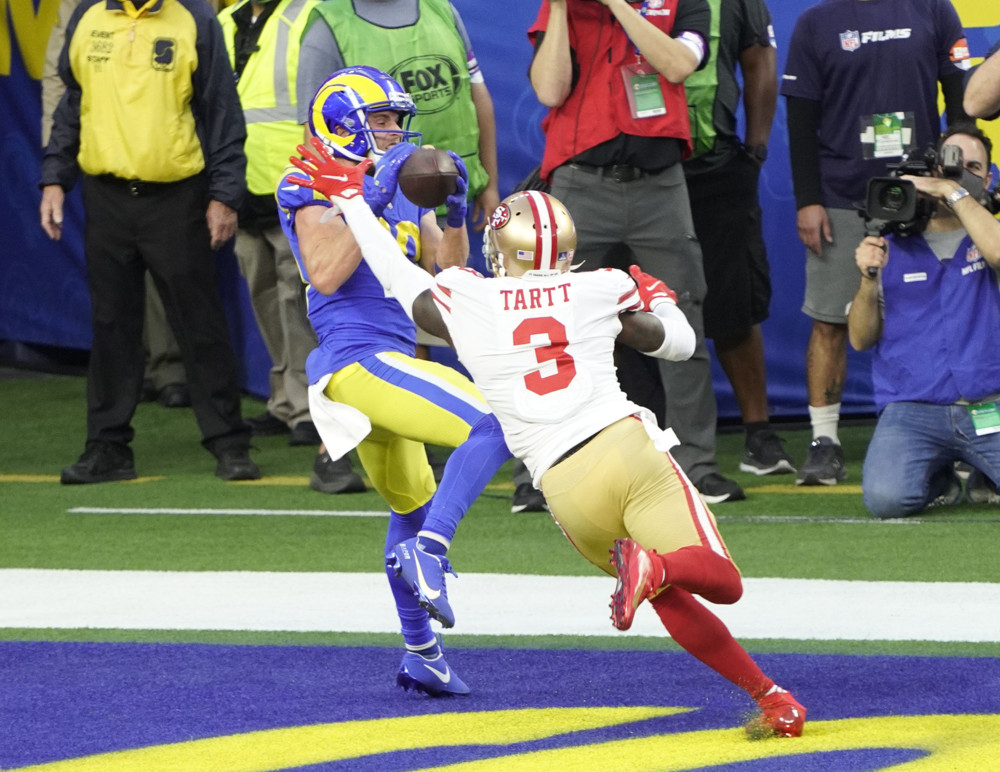
    The Rams’ top two cornerbacks, Jalen Ramsey (who led all cornerbacks in Total Points during the regular season) and Darious Williams, have combined to allow only 6 completions on 26 deep attempts combining the regular season and postseason.

    If Burrow completes anything deep against either of them, he’ll have definitely earned it.

  • How the SIS Football Win Probability Model Works

    How the SIS Football Win Probability Model Works

    SIS’s win probability model is primarily a neural network trained on the last four years of NFL games to predict the results of a game from any game state.

    For a given matchup, it uses a measure of opponent-adjusted team strength that relies on recent Expected Points Added performance.

    Each team’s last eight weeks both offensively and defensively are evaluated against their opponents’ performance in other games to get a more stable measure of the recent quality of each team.

    The difference between these overall team ratings is used to estimate a matchup-specific win probability.

    This is different than the full SIS pre-game expected score model, which is not available publicly and incorporates more specific factors, but this is a good representation of how we expect these teams to perform when matched up.

    For the AFC Championship Game, we have the Chiefs with a 71.7% chance to beat the Bengals.

    For the NFC, we have the Rams with a 54.9% chance to beat the 49ers.

  • What to Watch For on NFL Championship Sunday

    What to Watch For on NFL Championship Sunday

    SIS VP of Football (and former NFL scout) Matt Manocherian took the time to answer some matchup-specific and scheme-specific questions on the AFC and NFC Championship Games.

    We’ve given you two options — you can read some of Matt’s thoughts below, or you can listen to this week’s Off The Charts podcast linked above.

    If you choose to read, here’s his analysis:

    Bengals-Chiefs

    What from the first Bengals-Chiefs matchup will you be paying close attention to in this game?

    What the Chiefs do to match up defensively.

    In that meeting a few weeks ago was mostly short dropbacks out of 11 personnel. Out of 3-WR sets, they were 90% pass, and of those passes, they used 95% short dropbacks. This is what Joe Burrow likes to do, so we’ll see if Steve Spagnuolo comes with a different strategy to get them out of it.

    The Chiefs for their part were mixing up their pre-snap looks between 1- and 2-high, but they rolled mostly into MOFO (middle of the field open) coverages. However, it was mostly when they rolled to single-high that they got punished, so I expect more 3-man rushes dropping 8 guys into zone, a look that gave Cincinnati a bit more trouble that day.

    Burrow is a QB you can win a Super Bowl with. I don’t think he’s a QB you win the Super Bowl because of just yet.

    What about what Kansas City does with motion and with its use of shotgun (both usage rates rank No. 1 in the NFL) with such high effectiveness and how the Bengals match up with that?

    We saw this in Week 17, too. The Chiefs went 81% shotgun and 66% motion in that game, and they had a positive EPA on 66% of plays with Motion.

    The Bengals have struggled all year playing zone coverage when their opponents use motion.

    They play more zone than man across the board, but it’s really been the snaps where they stayed in their zone against offensive motion. It will be interesting to see if they check to a bit more man to counter those looks.

    I’ll add that Mahomes is playing as well as anyone who has ever played. He’s the reason why the Chiefs are the Super Bowl favorite this year, next year, and in the immediate future.

    Tyrann Mathieu is hopeful of coming back from a concussion to play. How impactful can he be in this game?

    I think he’s irreplaceable.

    The Chiefs made changes up front earlier in the season, bringing in Melvin Ingram. What they couldn’t do was replace people on the back end, because what Spagnuolo does is so complicated and requires such communication. There was evidence of it when the Bills scored their last TD (with Mathieu out) on Sunday when DeAndre Baker wasn’t aligned properly against Gabriel Davis.

    Mathieu is the guy that orchestrates everything on the back end for the Chiefs. His absence was part of why they fell apart last week and he’s their best chance for the defense to keep up with this high-powered offense.

    49ers-Rams

    The 49ers beat the Rams twice during the regular season. What can be gleaned from those two games that could come into play on Sunday? 

    Tons of things that go back way before this meeting.

    Kyle Shanahan and Sean McVay know each other well. I think that part of the reason why San Francisco was able to immunize Rodgers from the playoffs was because of Shanahan’s understanding of what LaFleur wants to do offensively, and I think it’s a big part of the reason why San Francisco has had the Rams’ number lately.

    That said, I think it’s more than familiarity, and it’s the matchup.  

    Okay, so let’s touch on the matchup. The 49ers use 21 personnel the most in the NFL and use motion a lot. High volume with both at a good quality of performance. How will this factor into the game?

    The Rams have shown an extreme preference in terms of both usage and efficiency in showing a light box and rolling into lots of different zone looks.

    They show mostly 2-high, but they will roll into Cover 3 variants a good chunk of the time.

    That actually feeds into what the 49ers are trying to do. Expect a lot of heavy personnel groups, motion, and zone running from the 49ers, trying to slow down and control the game. They want to make the Rams play left-handed.

    And what about the Rams offense against the 49ers D?
    The Rams use 11 personnel the most often, and they rank top 3 in usage of no-huddle, play actions, and zone runs.

    Again, I think the Rams are better offensively than the 49ers are defensively. But I think the 49ers cause a matchup problem that is difficult for the Rams to overcome.

    The 49ers give the Rams a lot of problems if they can control the game. Over the 2nd half of the season, they consistently stay in their 4-man front with a light box, rarely blitz, and dominate out of MOFO zone.

    Can the oft-maligned Cam Akers can get them out of that? I think … maybe…but Sean McVay certainly would’ve loved to have Robert Woods for this game. 

    Andrew Whitworth is coming back from injury. Trent Williams is dealing with one. How does their presence impact the game?

     By Expected Points Added, the Rams are a MUCH better passing team when Whitworth is on the field (the difference in the run game isn’t as great). The trustworthiness of knowing what he brings is key.

    With Williams, there’s a small sample of him being out, but he’s been hugely impactful. They’re much better with him on the field. When you turn on the film, he’s playing the best football of his career.

     The Chiefs, Bengals, and Rams are division winners. The 49ers were 10-7 and barely made the playoffs.

     How do we divvy up the credit for what they’ve done?

     You can credit Kyle Shanahan, (GM) John Lynch, all the people on the coaching, scouting, and analytics side who are doing the work behind the scenes.

    One thing of many that Bill Belichick has taught us is that you want to zig when others zag. There is an advantage in football to be doing things that other teams are not, because you’re prepared for what you’re doing every week. Your opponent is only preparing when they see you every now and then.

    Another advantage is that you can find players who fit your scheme because you’re not competing with everybody else for the same type of players that you need to fit into whatever the NFL scheme du jour is.

    This is a decision by the 49ers to be built this way. It’s informed a lot by Kyle’s dad, Mike Shanahan and the way he’d want to build a team – from the zone running game out. It’s been a very coherent strategy for them. They’ve taken the strategy of being a heavy personnel run team at a time when the NFL is trying to figure out how to spread things out.

    For more of Matt’s thoughts, check out this week’s Off The Charts podcast.


  • Stat of the Week: Who Was The Total Points Leader?

    Stat of the Week: Who Was The Total Points Leader?

    As we wait for baseball news (we’re looking forward to the Hall of Fame announcements next week), we’ll stick with a football theme for this week.

    There will be a lot of great players playing in this weekend’s Divisional Round of the NFL Playoffs.

    But the No. 1 ranked player in our value stat, Total Points, will not be among them.

    Chargers quarterback Justin Herbert finished the season as the league’s leader in that stat. He also led all quarterbacks in Total Points on a per-play basis, so he was the best in both quantity and quality. Herbert made the jump to the top spot after ranking 7th in Total Points in 2020, his rookie season.

    Total Points takes nearly everything that SIS measures about a play and uses it to evaluate each player on a scale that allows you to compare them more easily.

    In traditional stats, Herbert ranked second in passing yardage, third in touchdown passes, and fourth in sack percentage. He had 77 more pass attempts in 2021 than he did in 2020 but had one fewer sack.

    Herbert led in Total Points for a few reasons. For one, he had Aaron Rodgers beat by about 150 dropbacks. More dropbacks means more chances to do good things and Herbert was rewarded for that.

    Herbert was also playing behind an offensive line that rated near league average, while Tom Brady was playing behind a line that ranked near the top of the league. Factor that into each quarterback’s performance and Herbert’s performance becomes more impressive.

    Putting Herbert against Patrick Mahomes, Herbert has the edge in catchable pass percentage and touchdown percentage. And Mahomes had several more turnover-worthy plays than Herbert did (fumble, interception, dropped interception).

    Herbert faced pressure at a rate higher than all three of these quarterbacks, and he performed better than them when facing that circumstance. He ranked 6th in Passing Points Earned per play under pressure. Mahomes ranked 10th. Brady ranked 12th. Rodgers ranked 24th. Herbert ranked a smidge below the one other quarterback in the Top 5 in Passing Points Earned under Pressure, Josh Allen, but had a considerable edge over Allen in passing on unpressured dropbacks.

    It’s also worth noting another element to Herbert’s game. He ranked 5th among quarterbacks in Rushing Points Earned and 7th on a per-play basis and again that ranked better than the other top quarterbacks in the league.

    Herbert may not get a lot of voter support in the MVP race as his team didn’t reach the postseason and he doesn’t have the reputation of some of the elite quarterbacks in the NFL. But his numbers the last two seasons have shown he’s someone worthy of having his name known.

    Most Total Points – 2021 NFL Season

    Name Team Total Points
    1. Justin Herbert Chargers 186
    2. Tom Brady Buccaneers 161
    3. Josh Allen Bills 149
    4. Patrick Mahomes Chiefs 148
    5. Aaron Rodgers Packers 133

    For more on Total Points, you can read this primer by Alex Vigderman

  • Sports Info Solutions 2021 NFL All-Rookie Teams

    Sports Info Solutions 2021 NFL All-Rookie Teams

    It’s time for the second edition of the Sports Info Solutions All-Rookie Teams. 

    Using SIS’s Total Points metric as our guide, we have come up with the All-Rookie 1st- and 2nd- Teams. We’ve tweaked some of the position groups this year compared to last year in order to account for depth at certain position groups in this draft class.

    With that, this year’s teams consist of one quarterback, two running backs, two wide receivers, a tight end, and a full offensive line on offense, and four defensive linemen/edge rushers, two off-ball linebackers, a hybrid edge/linebacker, and four defensive backs on defense.

    While Total Points was used in most of the decision making, we also factored in playing time and a few other advanced stats to break any ties or close calls.

    Here are the 2021 Sports Info Solutions All-Rookie Teams.

    Rookies of the Year

    Offensive Rookie of the Year was as tough a choice as there was, so we ultimately chose Co-OROYs of Mac Jones and Ja’Marr Chase. When it comes to these types of awards, it’s hard to look away from the quarterback position with how important and valuable it is.

    So, Mac Jones gets a nod by leading all rookies with 82 Total Points and leading the Patriots back to the NFL Playoffs. When looking away from the quarterback position, Ja’Marr Chase accumulated 25 Total Points,  ranking 3rd among rookie receivers, but it’s hard to argue with his 1,455 receiving yards and 13 touchdowns.

    Micah Parsons was a no-brainer for our Defensive Rookie of the Year. He led all rookie defensive players with 68 Total Points.

    Finally, with 17 Total Points to lead all rookie special teamers, Bengals kicker Evan McPherson is crowned Special Teams Rookie of the Year.

    Sports Info Solutions All-Rookie 1st-Team Offense
    Position Player Team Total Points
    Quarterback Mac Jones Patriots 82
    Running Back Javonte Williams Broncos 26
    Running Back Najee Harris Steelers 23
    Wide Receiver Amon-Ra St. Brown Lions 31
    Wide Receiver Ja’Marr Chase Bengals 25
    Tight End Kyle Pitts Falcons 30
    Tackle Rashawn Slater Chargers 36
    Tackle Penei Sewell Lions 29
    Guard Trey Smith Chiefs 31
    Guard Landon Dickerson Eagles 29
    Center Creed Humphrey Chiefs 35
    Kicker Evan McPherson Bengals 17


    Quarterback: Mac Jones, Patriots

    Our 2021 rookie class leader in Total Points and pick for Offensive Rookie of the Year, Mac Jones continued his Total Points reign from his 2020 season at Alabama, where he led the country in the same category. 

    He started all 17 games for Bill Belichick’s Patriots going 10-7, finished 8th in the NFL in completion percentage, and set numerous franchise rookie QB records. While statistical decline for all rookies from their final years in college is to be expected, Jones’ accuracy and depth numbers experienced the shallowest decline in the class, making for an easy 1st-Team selection.

    Running Back: Javonte Williams, Broncos

    The Broncos could not have had a more evenly split backfield committee between Williams and veteran Melvin Gordon, each carrying the ball exactly 203 times for 903 and 918 yards respectively. 

    Similar to Mac Jones’ Total Points success, Williams led all of college football in broken tackles in 2020, and that physicality made an easy transition to the NFL, pacing the league in the same category with 35 this year. His 670 yards after contact were 6th in the NFL, his 43 receptions tied him for 13th among all running backs, and he entered the league as an excellent pass protector, which earned him the early trust and playing time. 

    With Gordon’s contract expiring, Williams may be poised for full-time work next season.

    Running Back: Najee Harris, Steelers

    It felt like the one player-team landing spot everyone predicted in the first round of the Draft seemed to be Harris to Pittsburgh. The need was there. The fit was there. The production was there. 

    And, it worked out. 

    Harris far and away led all rookie running backs in most categories. His 1,200 rushing yards ranked 4th in the entire league, while he also added 7 touchdowns. He also broke 31 tackles, good for 2nd most. He was the bell-cow back the team was looking for to give Big Ben a run game, and he should be that type of player for them for years to come, health permitting.

    Wide Receiver: Amon-Ra St. Brown, Lions

    With all the 1st Round receivers in the Draft: Chase, Waddle, Smith, Toney, and Bateman, it was a 4th-round pick who led all rookie receivers in Total Points with 31. St. Brown turned into a reliable and productive slot receiver for the Lions at a position that didn’t have much talent and had a lot of volatility throughout the season. 

    It took a few games for the new staff to get St. Brown consistently in the mix, but once they did, he flourished. From Week 4 on, his 84 receptions ranked tied for 9th and his 869 receiving yards were 15th. Additionally, among receivers with at least 50 targets in that span, his 97.5% on-target catch rate ranked 2nd in the NFL, while his completion rate and drop rate both were in the Top 5.

    Wide Receiver: Ja’Marr Chase, Bengals

    Along with a few other players on this list, Chase proved sitting out the 2020 COVID college season didn’t slow him down. Teaming up with his former LSU quarterback Joe Burrow didn’t hurt, either. 

    Chase’s 1,455 receiving yards ranked 4th in the entire league, as he set the single-game rookie record of 266 along the way in Week 17. He finished 3rd in the league in yards after catch and touchdowns, and 2nd to noted yards-after-contact specialist Deebo Samuel in that category, as well. The Bengals young core of skill players is special, and it is a huge reason for their 2021 division title.

    Tight End: Kyle Pitts, Falcons

    Pitts’ early returns have certainly justified his lofty draft status for his position. He became the first tight end in 60 years to surpass 1,000 receiving yards in his rookie season, trailing only Travis Kelce and Mark Andrews at the position this year. He led the Falcons in receptions and led all tight ends in pass interference penalties drawn, yet his overall dominance only resulted in one touchdown. His mismatch ability and profile as a red zone marvel in his time at Florida suggest positive scoring regression is on the way in future years.

    Tackle: Rashawn Slater, Chargers

    Let the pre-draft Slater vs Sewell debates continue, as both make our 1st team. 

    Slater settled in at left tackle for the Chargers from day one and had instant success. Among all NFL left tackles with over 1,000 snaps in 2021, Slater produced easily the fewest total blown blocks. He protected the blind side of this season’s NFL Total Points leader Justin Herbert, and his quality work led to the 6th most points earned among LTs.

    Tackle: Penei Sewell, Lions

    It looks like the Lions got a steal with the 7th pick in the Draft as Sewell fell to them. While projected as a left tackle, the Lions moved him to right tackle due to Taylor Decker already being on the roster. 

    After a learning curve and a few rough weeks, Sewell turned into one of the better right tackles in the league before ending the season with a near even split between left and right tackle. His 29 Total Points placed him 2nd among rookie tackles, behind only Slater, and his 2.6% blown block rate placed him in the top 20 of all tackles in the league with at least 500 snaps played. 

    Guard: Trey Smith, Chiefs

    Smith seemed like a sure-fire 1st-round pick a few years ago, but after battling injuries his last couple of college seasons, he fell to the 6th Round in 2021. And all he did was lead all rookie guards with 31 Total Points. He was a staple on a revamped and mostly young Chiefs offensive line, playing over 1,100 snaps, and teaming up with fellow All-Rookie selection Creed Humphrey.

    Guard: Landon Dickerson, Eagles

    A year after tearing his ACL again, Dickerson proved his long injury history wouldn’t impact his future. He was ready to step in as an injury replacement for Brandon Brooks in Week 2 and started every game at guard the rest of the way, other than when he missed time due to COVID. The Eagles led the NFL in rushing yards this year and Dickerson played a large role in that success – his 20.7 Points Earned as a run blocker were 2nd in the entire league among guards.

    Center: Creed Humphrey, Chiefs

    Our top-ranked center in the 2021 version of The SIS Football Rookie Handbook, Humphrey has come in and cemented himself as one of the best centers in all of football in his first season. 

    Humphrey’s 35 Total Points were by far the most among rookie centers, and it ranked top 5 among all centers in the entire league. Also, his 0.8% blown block rate ranked 2nd among all centers with at least 500 snaps. Humphrey and Smith satisfied anyone doubting their abilities quickly and helped lead Kansas City back to the playoffs once again.

    Kicker: Evan McPherson, Bengals

    The only kicker drafted in the 2021 Draft was McPherson out of Florida after he chose to forgo his senior season and enter the NFL Draft. Playing in 16 games, he made 28-of-33 field goals, going 9-of-11 on kicks 50+ yards. He also made 46 of his 48 extra point attempts on the season.

    Sports Info Solutions All-Rookie 1st-Team Defense
    Position Player Team Total Points
    Interior Defensive Lineman Osa Odighizuwa Cowboys 21
    Interior Defensive Lineman Christian Barmore Patriots 16
    Edge Greg Rousseau Bills 34
    Edge Odafe Oweh Ravens 29
    Edge/Linebacker Micah Parsons Cowboys 68
    Linebacker Ernest Jones Rams 30
    Linebacker Nick Bolton Chiefs 29
    Defensive Back Pat Surtain II Broncos 53
    Defensive Back Asante Samuel Jr. Chargers 33
    Defensive Back Eric Stokes Packers 30
    Defensive Back Jevon Holland Dolphins 24
    Punter Pressley Harvin III Steelers -2


    Interior Defensive Lineman: Osa Odighizuwa, Cowboys

    Odighizuwa proved to be a strong defender along the interior defensive line for Dallas, showing the ability to make plays against both the run and the pass. Against the pass, his 29 pressures ranked top 25 among all defensive tackles, and he also drew 3 holding penalties. In the run game, he finished with 35 tackles and 9 TFL with an average tackle depth of 2.1 yards.

    Interior Defensive Lineman: Christian Barmore, Patriots

    Like he was at Alabama, Barmore is still utilized more as a pass rusher than run defender, but he’s carved out a strong role for himself in the Patriots defense. He led the team in total pass rushes and finished 2nd in pressures, impacting the game beyond his mere 1.5 sack tally. 

    Among all NFL defensive tackles with at least 30 pressures, Barmore was a top-10 finisher in pressure percentage. And despite his role, he also drew the most holding penalties in the league among DTs on run plays. He has all the skills to develop into a complete interior defender.

    Edge: Greg Rousseau, Bills

    Opting out of the 2020 season, along with some of the other top players in the draft class, Rousseau’s calling cards were always athleticism and raw pass-rush ability. In his first year in the NFL, those two things were apparent when watching him on Buffalo’s defense. His 34 Total Points led all rookie edge rushers. He had 28 pressures and a 12% pressure rate in somewhat minimal pass rush snaps. He also compiled 4 sacks and a fumble forced.

    Edge: Odafe Oweh, Ravens

    Much was made about Oweh’s zero sack final season at Penn State in the pre-draft process, but his natural talent was never a question and it translated immediately to the NFL. He tallied 5 solo sacks, tied for the Ravens lead in pressures, and tied for 2nd on the team in tackles for loss in the run game. 

    The efficiency can still improve – he had too many tackles broken this season and his pressure percentage should be higher – but his combination of size and speed for a relatively inexperienced player are rare. His ceiling is very high, and this was a strong first year to build on.

    Edge/Linebacker: Micah Parsons, Cowboys

    A no-doubt first-team selection, runaway Defensive Rookie of the Year, and contender for Defensive Player of the Year, Parsons had a ridiculous inaugural season in the NFL as a true hybrid player. 

    On passing downs, he rushed just over 51% of the time and dropped into coverage 49% and was excellent at both, giving Dan Quinn as the Cowboys defensive coordinator the flexibility to leave offenses guessing. 

    Parsons set the Cowboys rookie record for sacks by five. He finished 10th in the NFL in total pressures, yet is the only player in the top 40 with fewer than 300 pass rushes on the season. In coverage, he was 1st in the NFL among linebackers with at least 25 targets in Passer Rating Against and total yards allowed. And he was also 3rd among all NFL defenders in tackles for loss on running plays, just behind TJ Watt and Aaron Donald. 

    No matter how you cut it, Parsons is in his own category in the 2021 rookie defensive class, and might already be among the NFL’s elite overall.

    Linebacker: Ernest Jones, Rams

    Jones finished second among rookie linebackers in Total Points. Among LBs with at least 10 targets in coverage, Jones ranked 7th in the league with a 53.9 Passer Rating Against. He allowed only 101 yards on 21 targets, and also grabbed 2 interceptions. Additionally, in the run game, he averaged 5.2 tackles per game with an average tackle depth of only 1.6 yards.

    Linebacker: Nick Bolton, Missouri

    The Chiefs selected Bolton in the late 2nd round to keep the local Missouri product home, and he rewarded them by easily leading the team in tackles and tackles for loss. 

    He started the majority of games this season filling in for Anthony Hitchens and Willie Gay for stints, and his progression throughout the year helped the Chiefs defense turn their season around after a dismal start. 

    Bolton had the 3rd-fewest broken tackles in the NFL among players with at least 100 tackles. And while he’s still improving in coverage, he limited big damage as the primary defender in the passing game, not allowing a touchdown.

    Defensive Back: Pat Surtain II, Broncos

    Our clear 2nd-ranked defender in Total Points in this class, Surtain II was the 10th-most targeted cornerback in the NFL this season and responded with a strong rookie year in multiple areas. 

    Among the NFL’s top 20 most targeted corners, Surtain’s Passer Rating Against ranked 4th and his Points Saved were 3rd. He was top 10 across the league in interceptions and passes defensed, and he finished 3rd on the Broncos in run game tackles.

    Defensive Back: Asante Samuel Jr., Chargers

    After the first 4-5 weeks of the season, it was looking like Asante Samuel Jr. was going to be your Defensive Rookie of the Year. He won the NFL’s Rookie of the Week Award in both Week 2 and 3. While he did come back down to earth as the season progressed, he still had a very solid season. 

    It’s known that rookie DBs get targeted quite often in coverage. In fact, 3 rookie corners, including Surtain and Stokes, were in the top 13 of most targets seen. However, Samuel ranked just 68th, which indicates that quarterbacks quickly realized not to target him. In all, he finished the season with two picks and a Passer Rating Against of 78.3.

    Defensive Back: Eric Stokes, Packers

    Georgia’s defense in the 2021 season was outstanding, but it had a lot of great players leave and enter the 2021 Draft. The first Georgia player off the board in the 2021 Draft was Stokes, at pick 29. 

    Stokes played the 2nd most snaps of any rookie corner in 2021 and held his own all year. Seeing the 2nd-most targets in all of the league, Stokes racked up the 7th-lowest completion % against, 7th-most passes defensed, and 17th=best Passer Rating Against (minimum 25 targets).

    Defensive Back: Jevon Holland, Dolphins

    Holland did a little of everything for the Dolphins defense in his rookie season. He tied for the league lead in passes defensed among players who lined up in a safety position pre-snap and allowed the fewest yards per coverage snap among the defensive backs on his team. He had the highest pressure percentage in the NFL among defenders with at least 15 pressures. And he tied for Miami’s second most solo tackles in run defense.

    Punter: Pressley Harvin III, Steelers

    Despite Harvin III accumulating negative Total Points in 2021, he was the only rookie punter to play this season. So, he gets the nod by default. While his overall average and net average were near the bottom of the league, he forced 19 fair catches, which ranked 8th, and his 24 punts inside the 20 tied for 10th.

    In all, eight offensive 1st Teamers and eight defensive 1st Teamers received a 6.7 final grade or higher from us in the 2021 edition of The SIS Football Rookie Handbook, suggesting those players will at least be high-end three-down starters beginning their second season. We’ll see if they begin 2022 the way they played this season to warrant those final grades, but we like their chances.

    Below, you can find our All-Rookie 2nd Teams which still included big names, such as top overall pick Trevor Lawrence, DeVonta Smith, and Kwity Paye.

    Sports Info Solutions All-Rookie 2nd-Team Offense
    Position Player Team Total Points
    Quarterback Trevor Lawrence Jaguars 44
    Running Back Michael Carter Jets 33
    Running Back Rhamondre Stevenson Patriots 20
    Wide Receiver DeVonta Smith Eagles 29
    Wide Receiver Elijah Moore Jets 12
    Tight End Pat Freiermuth Steelers 19
    Tackle Christian Darrisaw Vikings 23
    Tackle Dan Moore Jr. Steelers 20
    Guard Royce Newman Packers 29
    Guard Alijah Vera-Tucker Jets 27
    Center Kendrick Green Steelers 22
    Kicker Riley Patterson Lions 7


    Sports Info Solutions All-Rookie 2nd-Team Defense
    Position Player Team Total Points
    Interior Defensive Lineman Milton Williams Eagles 13
    Interior Defensive Lineman Alim McNeill Lions 11
    Edge Kwity Paye Colts 26
    Edge Azeez Ojulari Giants 25
    Edge/Linebacker Jaelan Phillips Dolphins 21
    Linebacker Jamin Davis Washington 27
    Linebacker Jeremiah Owusu-Koramoah Browns 25
    Defensive Back Paulson Adebo Saints 37
    Defensive Back Tyson Campbell Jaguars 32
    Defensive Back Marco Wilson Cardinals 30
    Defensive Back Tre Norwood Steelers 17
    Punter N/A N/A N/A


    We want to highlight some of the close calls and honorable mentions, but honestly, most of the picks were pretty straightforward this year. 

    St. Brown and Smith was one of the closer calls between who was 1st Team and 2nd Team.

    Some guys who didn’t make the cut who were in discussions were John Bates (2nd Team TE), Liam Eichenberg (2nd Team OT), and Nate Hobbs (2nd Team CB). 

    The biggest discussion we had in formulating these teams was the positional structure.

    As mentioned earlier, we changed some of the positions to account for the depth at certain positions specific to this draft class. Last year, there was more receiver and safety depth, while the reasoning behind switching to four defensive backs was to fit in the top 6 corners with only two safeties. 

    Additionally, last year there were two players who really fit the Linebacker/Defensive Back hybrid position in Jeremy Chinn and Isaiah Simmons. You can find last year’s article here

    This year, there weren’t many of those guys and it made more sense to flip the hybrid position to Edge/Linebacker. Again, the entire idea of these teams is to highlight the best players, and we feel we did that.

    The Steelers led the way with the most selections this season with six (two 1st Team & four 2nd Team). They had two more than the team with the next-most, the Lions.

    We thought the 2020 NFL Draft had a ton of talent, but so did the 2021 Draft. Last year, all but six teams were represented. This year, all but eight teams were represented. Once again, this signifies that plenty of talent is being dispersed throughout the league.

    The SIS Football Rookie Handbook is making its way into website form. Make sure to be on the lookout for updates leading up to the 2022 Draft to see it take shape.

  • World’s No. 1 QB Rankings: Justin Herbert’s now No. 2!

    World’s No. 1 QB Rankings: Justin Herbert’s now No. 2!

    The World’s No. 1 QB at the end of the 2021 regular season is Aaron Rodgers.

    Yawn.

    Justin Herbert ranks No. 2.

    Alright, now we’re talking!

    Herbert excelled in 2021 both qualitatively and quantitatively. He finished as the overall leader in Total Points and was the highest-value player on a per-play basis as well.

    A reminder that The World’s No. 1 Quarterback Ranking is based on a model devised by Bill James to evaluate The World’s No. 1 Starting Pitcher. Bill’s model was based on cumulative evaluation of individual starts over an extended time period using the metric Game Score.

    The World’s No. 1 Quarterback Ranking uses our player value stat Total Points to make a cumulative evaluation of game performance over a three-year period. The key to our calculation is Points Above Average (PAA), which is the statistical underpinning of Total Points that is centered at zero so that positive numbers are above average and negative numbers are below average.

    Success over time is key to maintaining a good ranking. Prolonged inactivity results in a ranking drop. The most recent performances carry the most weight.

    Herbert led in Total Points for a few reasons. For one, he had Aaron Rodgers beat by about 150 dropbacks. More dropbacks meant more chances to do good things and Herbert was rewarded for that.

    For another, Herbert was playing behind an offensive line that rated near league average, while someone like Tom Brady was playing behind a line that ranked near the top of the league. Factor that into each quarterback’s performance and Herbert comes out ahead.

    Putting Herbert against Mahomes, Herbert has the edge in catchable pass percentage and touchdown percentage. And Mahomes had several more turnover-worthy plays than Herbert did (fumble, interception, dropped interception).

    Herbert started the year ranked No. 10 and never dropped lower than that. After his huge game against the Eagles in Week 9, he vaulted from No. 8 to No. 3 and was No. 3 or No. 4 for nine straight weeks. A big game in a loss to the Raiders in the Chargers’ season finale moved him up one spot to his highest ranking yet. He ended the year with back-to-back games of more than 10 Points Above Average.

    Our rankings include postseason performance, so it’s possible Herbert could get dislodged from his current spot, but for now, he stands tall where he is. He was the only quarterback in the top eight to not make the playoffs.

    Here’s the Top 10.

    1. Aaron Rodgers
    2. Justin Herbert
    3. Tom Brady
    4. Patrick Mahomes
    5. Josh Allen
    6. Matthew Stafford
    7. Joe Burrow
    8. Kyler Murray
    9. Kirk Cousins
    10. Derek Carr

    The other 3 big movers in the Top 10

    A new team did Matthew Stafford the good that was expected. He started the season No. 14 and is now No. 6 entering the playoffs.

    Stafford pushed as high as No. 3 after starting the season with an eight-game tear in which he averaged 7.2 Points Above Average per game. He’s laid some pretty bad statistical eggs since then against the Titans, Packers, and Vikings, but he has done enough to offset that the last two weeks to put him in the No. 6 spot.

    Joe Burrow’s ascent was a sharp one. He ranked No. 21 through the end of Week 13, but he’s moved up 14 spots since then.

    Burrow’s Week 16 game against the Ravens produced 20.7 PAA, the highest total for any quarterback this season. In Week 17, he totaled 16.3 PAA, the season’s fourth-highest total. Burrow didn’t play in Week 18, so he actually dropped a spot from No. 6 to 7. But he’ll have the potential to continue that surge in the playoffs.

    One other note on Burrow: He finished the season as the NFL’s best deep passer. His 11 touchdowns on passes thrown at least 20 yards downfield led the NFL. That’s a good way to rack up points.

    Kyler Murray started the season ranked No. 15 and soared up the rankings with eight straight games of at least 3 PAA. He’s bounced around between No. 7 and No. 9 the last 11 weeks, including the four that he was injured and missed. He’s averaged 1.4 PAA in six games since returning, hindering his chance of continuing to move up the ranks.

    Here’s the full set of rankings entering the playoffs:

    Rank Player PAA Per 60 Plays Last Rank Start Of Season Rank
    1 Aaron Rodgers 6.4 1 1
    2 Justin Herbert 6.2 3 10
    3 Tom Brady 5.9 4 3
    4 Patrick Mahomes 5.9 2 2
    5 Josh Allen 4.5 5 6
    6 Matthew Stafford 3.5 7 14
    7 Joe Burrow 2.9 6 22
    8 Kyler Murray 2.8 8 15
    9 Kirk Cousins 2.3 10 9
    10 Derek Carr 2.2 9 7
    11 Russell Wilson 1.5 13 5
    12 Ryan Tannehill 1.4 15 8
    13 Dak Prescott 1.0 17 17
    14 Lamar Jackson 1.0 11 12
    15 Teddy Bridgewater 0.8 12 18
    16 Jalen Hurts 0.3 16 70
    17 Matt Ryan -0.1 14 11
    18 Mac Jones -0.3 18 N/A
    19 Carson Wentz -0.5 19 81
    20 Jimmy Garoppolo -0.7 20 25
    21 Taysom Hill -0.8 22 20
    22 Jameis Winston -1.0 21 55
    23 Jacoby Brissett -1.1 23 21
    24 Josh Johnson -1.3 24 49
    25 Tua Tagovailoa -1.5 25 50
    26 Ryan Fitzpatrick -1.9 27 16
    27 Trevor Siemian -1.9 26 N/A
    28 Gardner Minshew -2.0 29 32
    29 Colt McCoy -2.2 30 51
    30 Jared Goff -2.2 56 31
    31 Chad Henne -2.3 31 29
    32 Tyrod Taylor -2.3 32 56
    33 Kyle Allen -2.4 33 34
    34 John Wolford -2.4 34 24
    35 Case Keenum -2.5 38 60
    36 Marcus Mariota -2.5 35 27
    37 Geno Smith -2.5 36 N/A
    38 Mason Rudolph -2.5 37 26
    39 C.J. Beathard -2.6 39 30
    40 Blaine Gabbert -2.6 40 36
    41 Brett Hundley -2.6 41 35
    42 Chase Daniel -2.7 43 39
    43 Matt Barkley -2.7 44 48
    44 Nick Mullens -2.7 45 72
    45 Nate Sudfeld -2.7 46 52
    46 Josh Rosen -2.7 47 58
    47 Brian Hoyer -2.8 48 59
    48 David Blough -2.8 49 61
    49 Drew Lock -2.9 58 23
    50 Mike White -2.9 51 N/A
    51 Joe Flacco -2.9 52 63
    52 Will Grier -2.9 53 69
    53 Brett Rypien -2.9 54 65
    54 Jarrett Stidham -2.9 55 66
    55 Zach Wilson -2.9 42 N/A
    56 Alex Smith -3.0 57 74
    57 Tyler Huntley -3.0 28 57
    58 Jordan Love -3.0 50 N/A
    59 Sean Mannion -3.1 60 45
    60 Garrett Gilbert -3.1 61 54
    61 Cooper Rush -3.2 62 N/A
    62 Nick Foles -3.2 63 76
    63 Ian Book -3.2 64 N/A
    64 Daniel Jones -3.2 65 71
    65 Baker Mayfield -3.3 66 13
    66 Chris Streveler -3.3 67 62
    67 Dwayne Haskins -3.3 68 78
    68 Trevor Lawrence -3.4 78 N/A
    69 Jake Luton -3.5 69 79
    70 Trey Lance -3.5 70 N/A
    71 Mitchell Trubisky -3.6 72 80
    72 Phillip Walker -3.7 73 67
    73 Tim Boyle -3.7 74 N/A
    74 Justin Fields -3.8 76 N/A
    75 Cam Newton -3.8 77 19
    76 Brandon Allen -3.8 59 75
    77 Jake Fromm -4.0 71 N/A
    78 Andy Dalton -4.1 75 46
    79 Davis Mills -4.7 80 N/A
    80 Sam Darnold -5.3 79 82
    81 Taylor Heinicke -5.5 81 28
    82 Ben Roethlisberger -6.4 82 53
    83 Mike Glennon -6.7 83 73


  • Stat of the Week: Best Teams by Total Points

    Stat of the Week: Best Teams by Total Points

    We’ve been largely devoted to the baseball offseason, but with the NFL playoffs beginning on Saturday, a football cameo seemed in order for this week’s post.

    All season long we’ve been keeping track of our player value stat, Total Points, on a team level to create a power ranking of sorts.

    A brief primer on Total Points

    Total Points takes nearly everything that SIS measures about a play and uses it to evaluate each player on a scale that allows you to compare them more easily across positions.

    It’s always useful to be able to understand the different ways in which players can be valuable. Does he break a lot of tackles? Does he get a lot of yards after the catch? Does he make the best out of a poor offensive line?

    Total Points offers the opportunity to take all of those elements and get a quick picture of how well a player is performing overall. It gives you a perspective on team performance too.

    Click here for a more detailed description.

    Overall Ranks

    The No. 1 team in Total Points when evaluating teams on a per-play basis is the Buccaneers.

    Tampa Bay has the most complete team, with the No. 1 ranked offense and No. 4 ranked defense. On offense, the Buccaneers rank in the Top 3 in both passing and blocking. On defense, their strength is their pass coverage, which ranks No. 4 among teams.

    If our power rankings hold up, we’re looking at a potential Super Bowl rematch. The Chiefs are the No. 2 team in our rankings. They rank No. 3 in offense and No. 12 in defense. Patrick Mahomes ranked No. 3 among quarterbacks in Total Points behind Justin Herbert of the Chargers and Tom Brady of the Buccaneers.

    If you’re looking for potential Wild Card teams to ride, the Patriots rank No. 6 overall, but are Top 8 in both offense and defense. And the 49ers rank No. 8 overall and rank No. 8 in offense and No. 9 in defense.

    Neither of these teams has a Top 10 quarterback. They’ve found other ways to win. The 49ers rank No. 1 in receiving, run defense, and pass rush. The Patriots rank in the top half of the league in every offensive and defensive area we measure (passing, rushing, receiving, blocking, run defense, pass rush, and pass coverage).

    The heavyweight clash this weekend will be between the division rival Rams and Cardinals. They rank No. 3 and No. 5 overall, respectively. The Rams’ No. 4 offense will be tested by the Cardinals’ No. 3 defense.

    The biggest disparity between NFL playoff seeding and our power rankings is with the AFC No. 1 seed Titans. Tennessee ranks No. 18 overall in Total Points, even trailing five teams that didn’t make the playoffs (Broncos, Saints, Colts, Chargers and Seahawks).

    The Titans rank No. 20 on offense and No. 7 on defense. Ryan Tannehill ranked 16th among quarterbacks and star running back Derrick Henry was limited to eight games due to injury. The Titans can compensate for this with strong run defense and pass coverage units (each of which ranks in the Top 8) but their pass rush ranks No. 24. Nonetheless, they’ll have home-field advantage throughout the AFC playoffs.

    We’ll close by noting that it was a tough year to be a New York football fan. The Jets and Giants ranked No. 31 and No. 32 in Total Points in 2021.

    NFL Playoff Teams – As Ranked By Total Points
    In Order of Seed

    AFC

    Name Rank
    1. Titans 18th
    2. Chiefs 2nd
    3. Bengals 10th
    4. Bills 4th
    5. Patriots 6th
    6. Raiders 17th
    7. Steelers 24th

    NFC

    Name Rank
    1. Packers 7th
    2. Buccaneers 1st
    3. Cowboys 9th
    4. Rams 3rd
    5. Cardinals 5th
    6. 49ers 8th
    7. Eagles 16th


  • Prop Possibilities: Chargers vs Raiders

    Prop Possibilities: Chargers vs Raiders

    By Steve Schwarz

    1) Josh Palmer, over 1.5 receptions, -140. (SISBets -761).

    This should be considered the best bet on the board.  Palmer has become an integral part of the offense, seeing five or more targets in three of the last four games. In each of those games, he caught at least three balls.

    SIS data projects Palmer to see 5.3 targets and catch 3.7 for 39.6 yards. DraftKings has the bet set at -140, but based on our analysis it should be -761.

    2) Justin Jackson, over 23.5 yards, -115.

    Austin Ekeler has been great this season, but Jackson has become his primary backup over the past three games, seeing double-digit rushing attempts in each game. He’s also averaged 63.7 yards in those games. The Chargers may lean on Ekeler a little more in this “win-and-you’re-in” game, but our analysis still sees Jackson rushing 7.3 times for 34.3 yards, well above the 23.5-yard level.

    3) Derek Carr, under 25.5 completions, -140.

    The Raiders prefer a balanced offense to Carr passing on every down, particularly if Darren Waller is out of the lineup (he’s a game-time decision due to a knee injury). Over the last three games, Carr has completed 25-or-less passes and overall he’s been below that mark in nine of 16 games.

    Our data predicts he’ll go 23-for-34 for 265 yards. A fair market value should be -234, but the line is set at -140.

    *Odds courtesy of DraftKings

  • Assessing the relative strengths and weaknesses of NFL playoff contenders

    Assessing the relative strengths and weaknesses of NFL playoff contenders

    As we get to the end of the season, hot topics tend to run themselves into the ground. Particularly as we hone in on the teams and games that matter most and let the rest fall into the background.

    So let’s take a step back as we head into the postseason and look at what each playoff contender is doing well or poorly.

    Often when we refer to team performance we take things at a season level, or we take arbitrary slices of time (first half / second half, month-by-month, and so on). For this discussion wanted to measure how well teams have been playing recently but not entirely disregard early-season performance.

    To do that we took inspiration from our World’s No. 1 Quarterback Rankings. It uses Points Above Average, the statistical underpinning of Total Points that sets average performance at 0, and measures how good a quarterback currently is by combining multiple years of data but with recent performance weighted more heavily.

    So, in identifying which teams are doing well in which ways, we took recency-weighted Points Above Average across four dimensions:

      1) Passing game (including blocking and QB scrambles)
      2) Running game (including blocking and excluding scrambles)
      3) Pass Defense
      4) Run Defense


    Here’s where we stand with the biggest contenders heading into Week 18.

    AFC

    Recency-Weighted Points Above Average by Team (NFL ranks)

    Team Pass Run Pass Def Run Def Overall
    Chiefs 3 11 3 7 1
    Bills 9 2 10 22 4
    Patriots 6 4 16 16 5
    Bengals 1 23 20 25 9
    Chargers 5 15 12 31 12
    Colts 13 1 22 18 14
    Titans 20 19 9 10 16
    Raiders 12 17 29 12 19
    Steelers 26 14 6 27 21

    Chiefs

    We’ve talked about the Chiefs so much this year, and there’s not much new to say. The offense was never as bad as it appeared, and our numbers reflect that. They rank third in the NFL in passing effectiveness, and if you didn’t weight for recency they’d rank second.

    But the defense has improved a lot. Through the first half, they were bottom-five in EPA per play allowed in the passing game. They’re in the top 10 since. In the running game, Kansas City has gone from second-worst to middle of the pack. This is now a complete team that is every bit the threat we thought they’d be.

    Titans

    On the other side of things are the Titans. When was the last time we saw a shakier 1-seed? The 2006 Grossman-led Bears? If we take the sum of their recency-weighted Points Above Average, they’d rank 16th in the NFL. They’ve been dealing with injuries all year, and might get Derrick Henry back at exactly the right time. Especially so if they can get a bye.

    Whatever the situation, Tennessee’s offense is not the reason that it is in this position. The Titans rank in the bottom half of the league in both passing and rushing. But their defense has been consistently solid, and they rank in the top 10 in both pass and rush defense. If they can get a bye and find a groove with Henry back, maybe that’s enough.

    Patriots

    One team whose offense ranks better than you might think is the Patriots. Their passing game is ranked sixth despite Mac Jones’ Rookie of the Year campaign taking a hit in recent weeks. Starting with the Bills game where Jones barely threw the ball, the Pats are in the top ten in Passing EPA and Positive%. They have virtually the same boom/bust profile—the percentage of plays with +1 or -1 EPA—as the Chiefs.

    New England’s defense has been fine, but is slipping a bit. Both its pass and rush defense rank middle-of-the-pack. When people talk about complementary football, this is the sort of team you think of. The way that New England’s offense has held onto the ball, sustained drives, and shortened games has helped the defense play above their skis, particularly after divesting itself of Stephon Gilmore.

    Bills

    The Bills still lost to the Patriots in Week 13 when they barely threw the ball, but if it had been normal weather they might still have had some issues on the back end. Their recency-weighted pass defense rank is 10th, while their unweighted rank would have been 3rd. We know their secondary was excellent to start the year, and that Tre’Davious White got hurt in Week 12. But they have really only had one excellent game in terms of pass defense over the last couple months, and that started before White’s injury. Through Week 10, White, Jordan Poyer, Levi Wallace, and Taron Johnson were all in the top 25 DBs in Pass Coverage Points Saved. None of them can say that in the weeks since.

    The Bills have one of the more surprising results using this methodology. They rank second in the running game. While they don’t run a lot, they’ve been pretty effective with it. Excluding QB runs, they’re at the top of the list in Broken/Missed tackles per attempt over the second half of the season, and only a few teams have gotten stuffed less frequently.

    Bengals

    One of the big topics we might have been discussing in this space if I hadn’t already shown disdain for the notion is Joe Burrow’s MVP candidacy. The Bengals are unsurprisingly the top-ranked pass offense, 200 passing yards ahead of the next-best Chiefs over the last three games. But they rank in the 20’s in the other three dimensions, and that’s the big question for them. Can a team that’s gotten this hot sustain it, and can its one awesome dimension overcome average-surrounding context?

    If the Bengals do, it’ll likely be the result of a few key playmakers on defense. Trey Hendrickson and Sam Hubbard each rank in the top 15 in Pass Rush Points Saved, although it’s been more from splash plays than consistent pressure, which is harder to rely on. Chidobe Awuzie has been one of the more-targeted corners in the NFL, making opponents pay because he’s been better at limiting damage than basically everyone in the top 20.

    NFC

    Recency-Weighted Points Above Average by Team (NFL ranks)

    Team Pass Run Pass Def Run Def Overall
    Buccaneers 4 6 7 11 2
    Packers 2 8 5 32 3
    Cardinals 7 22 14 3 6
    Rams 11 10 15 4 7
    Cowboys 14 24 1 15 8
    49ers 8 16 24 1 10
    Eagles 10 3 19 20 11
    Saints 23 30 2 6 15

    Packers

    Despite not topping the list above, the Packers still sit quite pretty in the NFC hierarchy. They have had pretty consistent ranks throughout the year. This is a great example of what is important in the NFL, though, because they’ve been good all year while being pretty bad defending the run. They’ve had three above-average run defense games according to Total Points. Maybe it’s good news that they were all in the second half of the year? But it hasn’t mattered much.

    Buccaneers

    The Buccaneers are certainly not feeling like the second-best team in the NFL, as these numbers suggest. It remains to be seen what they will look like with the knowledge that Antonio Brown won’t be returning, but let’s not forget that this team had elite underlying metrics last year before they won it all, and they were doing it again this year before a bit of a swoon. But there is a swoon. All of their rankings above are worse than they would be if we didn’t weigh for recent performance.

    Cardinals

    Whether it’s a direct consequence or not, the Cardinals losing DeAndre Hopkins coincides with a drop-off in offensive effectiveness. Their pass offense looks 2 points worse per game when you weigh recent games more heavily.

    And it’s a similar story on the defensive side (probably without Hopkins as an explanation). Just using first half / second half splits, Arizona is allowing two-tenths of an expected point per play more than it was in the first eight weeks. So 8 points per game if you assume 40 plays per game. In the first half of the year, they were causing more “Bust” plays than “Boom” plays. Only the Bills could have claimed that. Not so much anymore.

    Rams

    The Rams haven’t been quite as explosive in the pass game of late. They had a 32% Boom Rate (plays with an EPA greater than 1) through the first half of the year, but just 20% since. More sacks, more picks, not the “more” you’re looking for. On the whole, with recency-weighting they now sit basically a point per game above average in each of passing, rushing, pass defense, and run defense. They are a bit of a counter to the teams that don’t mind too much being deficient in one dimension (think the Packers).

    Cowboys

    We expected more from the Cowboys pass offense, for sure. It’s not particularly hot right now. But the pass defense is where they’ve looked a lot better. Obviously Trevon Diggs had an exciting start to the year, but he was masking some pretty questionable results on the rest of his snaps. That’s even more extreme now, with four picks but 11 yards per target in the second half of the year. Anthony Brown and Jourdan Lewis have been a lot more productive overall, and Micah Parsons has started to show his ability to do it all, allowing 6 yards on 137 coverage snaps in the second half of the year.

    49ers

    In theory, the 49ers are a run-and-stop-the-run team. And they are a top run defense. But in practice, their passing game has actually been a bit better than their running game. They’ve obviously had a rotating cast of characters in the backfield, so we can give them a bit of a pass there. But the passing game has been much more explosive than you’d expect if you knew Jimmy G had started most of the year. They trail only the Rams in Boom% through the air.

    Eagles

    Another team whose passing rank might surprise you is the Eagles. In terms of Points Above Average per game, they are about the same passing and rushing. But the same amount of value in terms of points ranks you 10th in passing and 3rd in rushing. They are among the best ten teams in limiting points and yards, but more middle-of-the-road by EPA-based metrics. Remember their last five games have come against both New York teams and Washington. Darius Slay had a nice resurgent season going, but he’s produced literally zero Points Saved each of the last four weeks. With a relatively meaningless game against Dallas this week we still might not see them tested until next week.

  • Prop Possibilities: Browns at Steelers

    Prop Possibilities: Browns at Steelers

    Our final set of picks for the season are for tonight’s Browns-Steelers game, with the Steelers still alive in the AFC Wild Card hunt. As always, we use the SIS projections and SISBets to guide us along. There are three good options on the board based on those numbers.

    Thank you as always for reading.

    1) Ben Roethlisberger, over 22.5 completions, +100.

    Though he isn’t in his prime anymore and may retire after the season is over, Roethlisberger has still averaged 24 completions per game. He’s benefited from quality receivers, and two good rookies, one at tight end (Pat Freiermuth) and at running back (Najee Harris).

    The SIS analysis projects Ben to complete 25-of-39 passes for 257 yards, well above the 22.5 completions necessary for the over. Fair market value should be -245, but it’s set at +100 and is the best bet on the Monday Night docket.

    2) Najee Harris, over 24.5 receiving yards -110.

    Harris has not only been the workhorse running back in his first season, but he’s also been an integral part of the passing game. He’s averaged 5.8 targets per game and pulled down almost 4.5 balls a night.

    In this Week 17 matchup, we expect him for see 5 or 6 targets (the projection is 5.5) and catch 4 balls for 36 yards.

    3) Donovan Peoples-Jones, over 32.5 receiving yards -115.

    Peoples-Jones disappeared last week in Green Bay, but he’s been a big part of this offense since Odell Beckham Jr. was released after Week 9. In the five games since then, he’s seen 6.2 targets per game.

    SIS data projects he’ll have 3 receptions for 40 yards, more than 20% above the 32.5-yard level.

    * Season record: 16-24

    *Odds courtesy of DraftKings

    Sports Info Solutions has been an innovator in the collection and analysis of sports data for almost two decades. SIS specializes in baseball, football, and basketball data, using professional scouting practices to collect the most detailed and accurate information in both sports. Their data can be found in the majority of team front offices, and on websites such as Fangraphs and Football Outsiders.