Category: John Dewan’s Stat of the Week

  • Stat of the Week: Zack Greinke’s Defense

    Stat of the Week: Zack Greinke’s Defense

    Let’s hear it for pitcher defense!

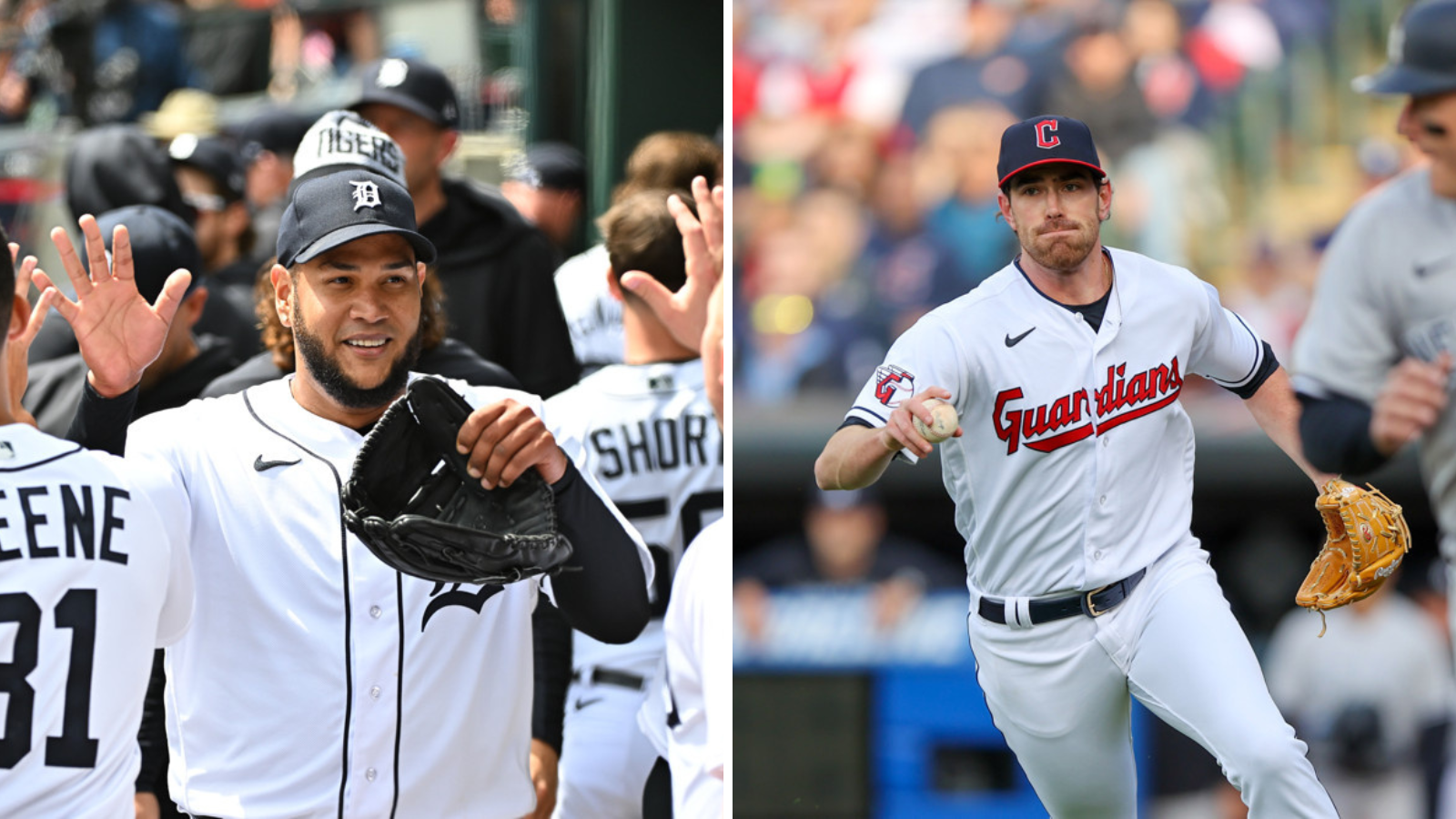
    This is a topic we don’t get to touch on much but it’s pertinent this week with Zack Greinke re-signing with the Royals.

    Why? Because this is the Defensive Runs Saved leaderboard for pitchers. SIS began tracking the stat in 2003.

    Pitcher Defensive Runs Saved
    Zack Greinke 87
    Mark Buehrle 87
    Jake Westbrook 63
    R.A. Dickey 60
    Dallas Keuchel 54

    Greinke is tied for the lead with Mark Buehrle, though there’s an asterisk there. Though Greinke’s career began in 2004 and is thus entirely encapsulated by Runs Saved, Buehrle’s career began in 2000 and thus is not entirely captured by our data.

    Nonetheless, we can agree that Greinke is very, very good. He’s still a terrific athlete even at age 39 even if he hasn’t quite kept pace with his early-career numbers. His 9 Runs Saved over the last three seasons rank tied for 6th among pitchers. Consistency is a differentiator both for Greinke and Buehrle. Each has nine seasons with at least 5 Runs Saved, most of any pitcher.

    Greinke has excellent reflexes

    He’s quick off the mound

    He can keep runners close or pick them off.

    And his throws to any base are right on target.

    There isn’t much bunting done these days but you probably don’t want to bunt on Greinke. His 14 Bunt Runs Saved rank 2nd among all players, trailing only Adrián Beltré’s 15.

    Here’s one good Greinke bunt play, as called by Vin Scully.

    Greinke generally plays the position mistake-free. He hasn’t been charged with an error since getting in Charlie Blackmon’s way and getting called for interference as Blackmon was rounding first base and trying to go to second base in a game in July 2019.

    Our Video Scouts have credited him with only one Defensive Misplay the last three seasons, picking up and then rushing a throw on a Shohei Ohtani roller that appeared to be heading foul in April 2021.

    By our accounting, the last instance we have of Greinke not cleanly fielding a ball that cost his team a potential out was in August 2019 on a play where bat and ball came at him at the same time, thus preventing a possible double play (they still got one out).

    There are no active pitchers even close to Greinke’s accrued Runs Saved. As you can see in the chart, Dallas Keuchel is 33 runs behind, but given that he had a 9.20 ERA last season, there’s no guarantee he’ll pitch again in the majors. The next-closest active pitchers are Clayton Kershaw (34), Johnny Cueto (33), and Justin Verlander (31).

    Someone asked me the other day if Greinke was a Hall of Famer. I think the answer is similar for him as it is for Scott Rolen. It’s a close call looking at his basic career stats. But there are some other things to consider, like standard-setting defense, that could help in pushing him over the top.

  • Stat of the Week: 2024 Baseball Hall of Fame Ballot

    Stat of the Week: 2024 Baseball Hall of Fame Ballot

    The neverending debate that is Baseball Hall of Fame worthiness can move ahead to 2024 after the elections of Scott Rolen and Fred McGriff to 2023’s Hall class.

    Next year’s BBWAA ballot includes not just prominent holdovers like Todd Helton, Billy Wagner, and Carlos Beltran, but also three newcomers who surpass the standard set by Bill James’ Hall of Fame Value (HOF-V) stat.

    HOF-V sums a player’s Win Shares and four times his Baseball-Reference WAR (For a more in-depth analysis of HOF-V, check out this article from The Bill James Handbook 2018). The target HOF-V to signify Hall of Fame worthiness is 500.

    The 2024 ballot is not fully set yet, but these will be the leading newcomers by HOF-V:

    Player HOF-V
    Adrián Beltré 747.0
    Joe Mauer 590.4
    Chase Utley 549.0
    David Wright 463.8
    Adrián González 460.0
    Matt Holliday 444.0

    Adrián Beltré is a clearcut Hall of Fame selection. He totaled 3,166 hits and 477 home runs in a 21-year career. He ranks in the top 20 in hits, doubles, total bases, and games played. His 1,781 Runs Created rank 44th all time and his 93.5 bWAR ranks 40th.

    Beltré’s 200 Defensive Runs Saved are tied with Andrelton Simmons for the most in the 20-year history of the stat. He won three Fielding Bible Awards and five Gold Glove Awards.

    Joe Mauer packed a lot into a 15-year MLB career with the Twins, playing catcher early in his career and first base in his latter seasons. He won the AL batting title three times, won the AL MVP in 2009, and finished in the top eight of the MVP voting three other times. He was a six-time All-Star who won five Silver Sluggers and three Gold Gloves.

    Mauer retired at age 35 and thus didn’t play long enough to record the cumulative totals of some other candidates, but his candidacy is viewed favorably by this system. His HOF-V is actually six points higher than Rolen’s and nearly 100 points higher than another contemporary, Buster Posey (490.7).

    Chase Utley’s HOF-V is a near match for McGriff’s 552.4. Utley totaled 64.5 bWAR (97th among position players) in a 16-year career as a second baseman for the Phillies and Dodgers. He was a six-time All-Star and four-time Silver Slugger. He was also an impactful postseason player, whose five home runs in 2009 are tied for the most in one World Series.

    Utley had a six-year peak from 2005 to 2010 in which he ranked second to Albert Pujols in Win Shares. Utley’s 123 career Runs Saved at second base rank second to Mark Ellis (130) in the 20-year history of the stat. He won a Fielding Bible Award in 2010.

    We expect fellow ballot newcomers David Wright, Adrián González, and Matt Holliday to get some degree of sentimental support (and probably Bartolo Colon too). But HOF-V does not consider such feelings. It stamps Beltré, Mauer, and Utley as Hall-of-Fame worthy and is a tool that can be used (perhaps alongside Jay Jaffe’s JAWS system) to support those candidacies. We look forward to the debate.

  • Stat of the Week: How Trea Turner Impacts The Phillies Defense

    Stat of the Week: How Trea Turner Impacts The Phillies Defense

    By MARK SIMON

    A couple of weeks ago, we wrote about the difference that Cody Bellinger should make for the Cubs, whose  center fielders ranked worst in MLB in Defensive Runs Saved last season.

    What Bellinger represents to the Cubs in center field is what Trea Turner represents to the Phillies at shortstop.

    Didi Gregorius, Bryson Stott, Johan Camargo, and three other players combined for -13 Runs Saved at shortstop for the Phillies in 2022. Only three teams played worse defense at the position than that – the Blue Jays (-15 Runs Saved), the Royals (-18), and the Nationals (-34).

    There are a lot of areas in which Turner excels. Defense isn’t necessarily one of them, but he’s still a huge upgrade at the position. Similar to Bellinger in center field, Turner has been exactly an average shortstop defensively the last two seasons (a little more than 250 games). He’s netted 0 Runs Saved in roughly 2,150 innings there. Zero is a significant upgrade from -13.

    The specific impact will most likely come on balls hit to Turner’s right, where again he was an average defender and the Phillies’ shortstops were less than stellar.

    Turner turned 62% of opportunities on balls hit to his right into outs, exactly the rate he was expected to get based on historical out probabilities.

    The Phillies turned only 51% of balls hit to the right of their shortstops into outs, against an expected out rate of 57%. They made 14 plays fewer than expected on those balls (think of that as similar to a -14 in Statcast’s Outs Above Average specific to that direction).

    Keep the following in mind with the new rules banning the use of full infield shifts: Turner has saved 5 runs with his play-making in non-shift situations the last two seasons. Gregorius, Stott, and Camargo combined for -9 Runs Saved in non-shifts in 2022.

    Turner’s acquisition also puts Stott at second base, where he saved 1 run in 47 games last season. Other Phillies’ second basemen combined for -2 Runs Saved in 2022. The Phillies also made moves related to their up-the-middle defense last season, trading with the Cardinals for infielder Edmundo Sosa and the Angels for outfielder Brandon Marsh. They also return a two-time Gold Glove catcher, J.T. Realmuto, and a Fielding Bible Award winner among a pretty good group of fielding pitchers in Ranger Suárez.

    Sosa can fill in at second base, shortstop, and third base and has shown particular aplomb at shortstop (13 career Runs Saved in 800 innings). The trade of Matt Vierling to the Tigers makes Marsh a full-time center fielder rather than a platoon player. Marsh rates better than Vierling defensively in center field but is still a little below average there for his career (-4 Runs Saved in approximately 1,000 innings).

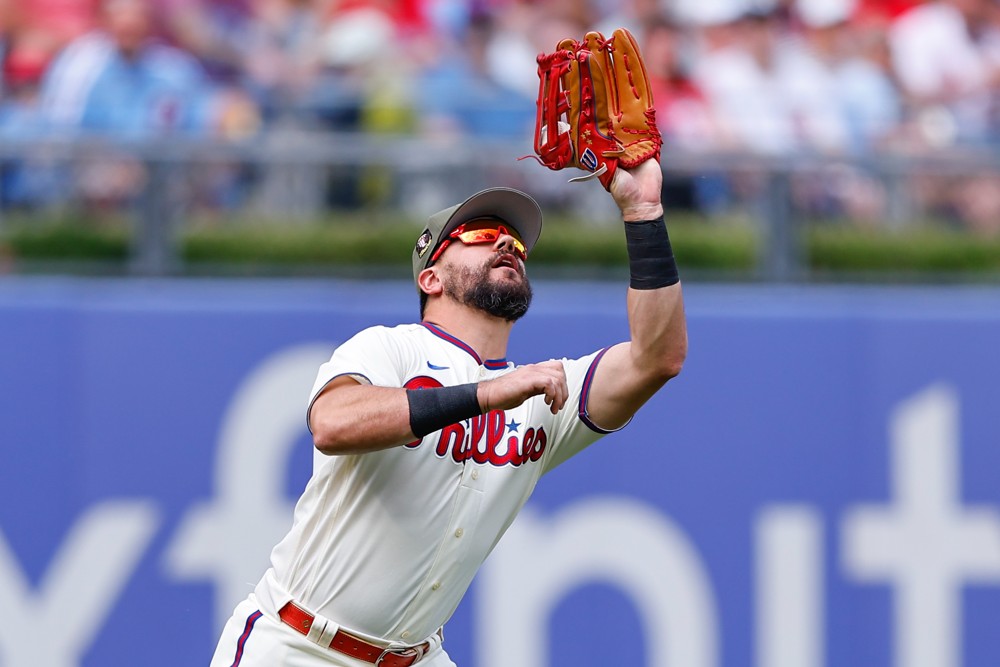
    The Phillies still have a fair number of trouble spots within their defense. At third base, Alec Bohm ranked last in MLB with -17 Runs Saved last season. In the outfield Kyle Schwarber ranked next-to-last (-14) among left fielders, and right field, where Nick Castellanos ranked tied for last (-8). Those are regular season numbers, of course, as you’ll remember Castellanos excelled defensively in the playoffs.

    But at the very least the Phillies should be better in the middle infield than they were in 2022. And that should improve their chances of hanging with the Braves and Mets in the NL East.

    For more on the Phillies, check out our interview with their general manager Sam Fuld on The Sports Info Solutions Baseball Podcast.

  • Stat of the Week: NFL’s Top Quarterbacks

    Stat of the Week: NFL’s Top Quarterbacks

    We’ll take a break from baseball for a week* to touch on one angle from the end of the NFL’s regular season – Who were the NFL’s best quarterbacks?

    We can use our all-encompassing player value stat, Total Points to answer that question.

    Here’s the leaderboard for quarterbacks for Total Points this season.

    Total Points is our answer to the question: “How many points on the scoreboard was this player worth, based on his play-to-play contributions?”

    It takes nearly everything that our Video Scouts measure about a play and uses it to evaluate each player on a scale that allows you to compare them more easily. You can learn more about it here.

    Player Team Total Points
    Patrick Mahomes Chiefs 195
    Josh Allen Bills 140
    Justin Herbert Chargers 131
    Jalen Hurts Eagles 128
    Jared Goff Lions 121
    Trevor Lawrence Jaguars 120
    Joe Burrow Bengals 116
    Kirk Cousins Vikings 104
    Tua Tagovailoa Dolphins 100
    Daniel Jones Giants 100

    What Aaron Judge was to MLB this season, Patrick Mahomes was to the NFL. Mahomes had a Superman level season. He was the runaway leader in Total Points. He led the NFL in passing yards (5,250) and touchdown passes (41) by wide margins.

    The separation between Mahomes and 2nd-place finisher Josh Allen this season was 55 points, three points more than the difference between Allen and Geno Smith, who ranked 11th.

    Mahomes’ 11.5 Total Points per game is the best for any quarterback since SIS began tracking the stat in 2016.

    If Mahomes was Judge, Allen was Shohei Ohtani. He was a dual threat, finishing 9th in Passing Total Points and 3rd among all players in Rushing Total Points, two of the components in the overall Total Points stat.

    Here are the leaders in Total Points among quarterbacks and where they ranked in the stat overall.

    Name Rushing Total Points Overall Rank
    Justin Fields 60.5 1st
    Josh Allen 40.1 3rd
    Jalen Hurts 21.9 8th
    Daniel Jones 19.4 11th
    Lamar Jackson 16.8 13th

    Chargers quarterback Justin Herbert led all quarterbacks in Total Points in 2021. He was good enough to finish 3rd in Total Points in 2022 despite a 53-point drop from last year’s total. Part of the key to his value this season was simply how many plays he was involved in. His 699 pass attempts ranked second in the NFL.

    Jalen Hurts, Jared Goff, and Trevor Lawrence each took big steps forward in 2022 and finished the season ranked No. 4, 5, and 6 in Total Points, respectively.

    Name Passing Total Points
    Patrick Mahomes 180.2
    Justin Herbert 137.6
    Trevor Lawrence 123.5
    Jared Goff 121.3
    Jalen Hurts 105.9

    Hurts, like Allen was a dual threat. He ranked 5th in Passing Total Points and 3rd among QBs (9th overall) in Rushing Total Points. Goff led all quarterbacks in Passing Total Points from Week 10 through the end of the season. Lawrence joined both of them in the Top 5 in Passing Total Points for the season.

    Joe Burrow, who finished 7th in Total Points, picked up where he left off from last year’s postseason. Notably, his sack percentage dropped from 9% to 6%.

    Kirk Cousins, who ranked 8th, finished three spots better than he did in 2021 and five spots better than 2020. The Vikings played an abundance of close games this year. Cousins accrued the 4th-most Passing Points Earned when the score was within eight points.

    We wish the best of health for Tua Tagovailoa, who was the NFL’s best deep passer in 2022. He finished tied with Daniel Jones for 9th. Tagovailoa led the NFL in Passing Points Earned on passes at least 20 yards downfield, completing an NFL best 53% of them. 

    Jones ranked 26th among quarterbacks in Total Points in 11 games in 2021 but thrived under new head coach Brian Daboll in 2022. Jones was another dual threat, throwing for 15 touchdowns against five interceptions (the lowest interception percentage in the league) and rushing for 708 yards and seven touchdowns. 

    Of the top 10 quarterbacks in Total Points only Goff didn’t make the postseason – and the Lions were still alive going into the final week. The other nine will get to continue trying to maintain the excellent level of play that carried them through 2022.

    * If you wish to read some baseball content, check out our piece on the Cubs making a major defensive upgrade with the signing of Cody Bellinger.

  • Stat of the Week: The Remaking of the Blue Jays Outfield

    Stat of the Week: The Remaking of the Blue Jays Outfield

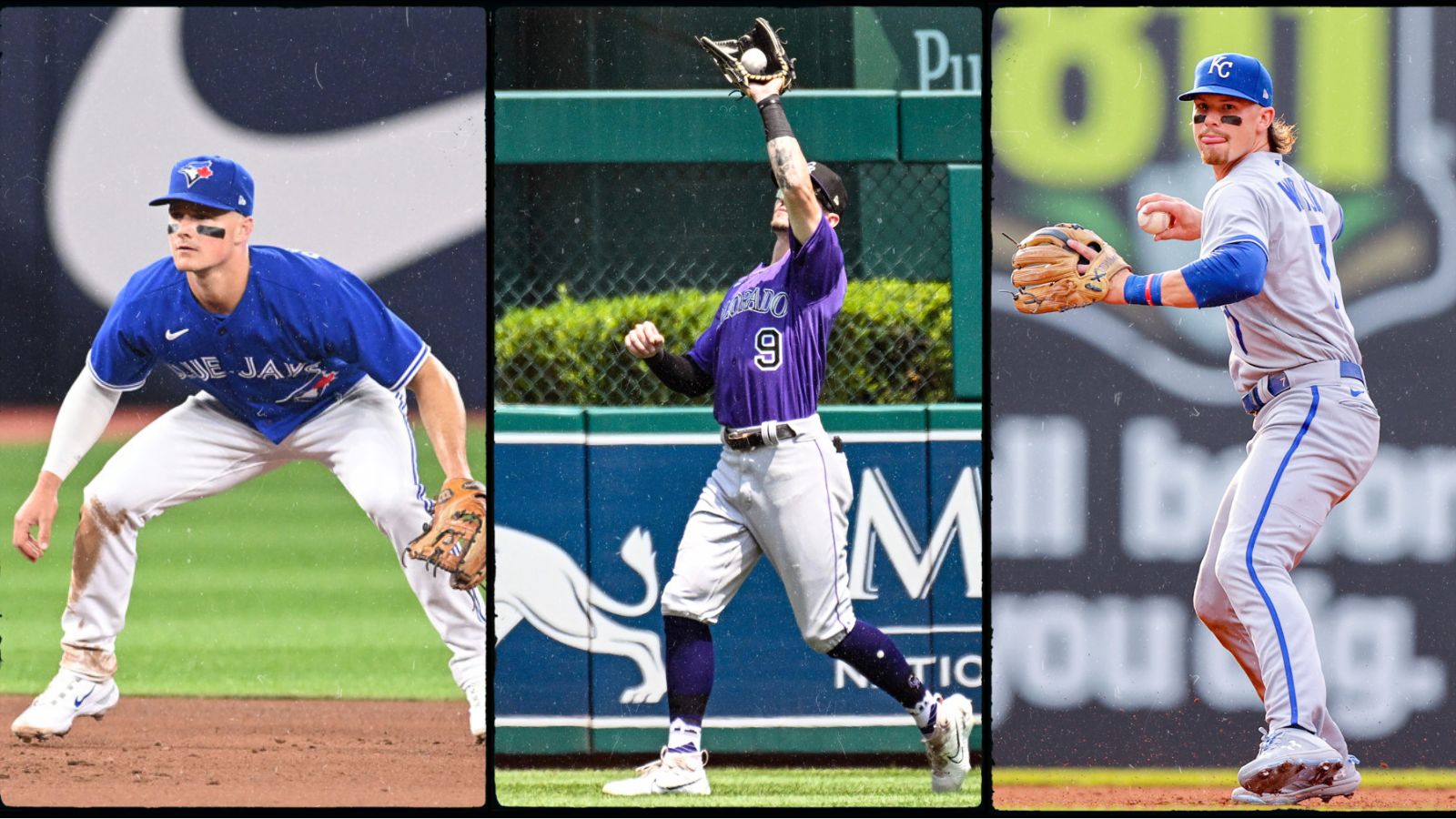
    The Blue Jays ranked eighth in MLB in Defensive Runs Saved last season with 44 and they’ve spent a good portion of their offseason trying to improve upon that. A closer look at the components of Defensive Runs Saved might explain why.

    In 2022, the Blue Jays ranked 3rd in Runs Saved from infield and outfield positioning, but 14th in the components related to defensive skill (range, throwing, defensing bunts, turning double plays, etc.).

    That was particularly evident in the outfield, where the Blue Jays led all teams in the positioning component of Runs Saved but ranked 21st in Runs Saved from the skills of their players.

    So the Blue Jays changed the look of their outfield with the trades of Teoscar Hernández and Lourdes Gurriel Jr., the non-tendering of Raimel Tapia, the free agent signing of Kevin Kiermaier, and the acquisition of Daulton Varsho in the deal that sent Gurriel to the Diamondbacks.

    Kiermaier has had at least 10 Runs Saved in center field in seven of the last eight years for the Rays, with 2022 being the exception (2 Runs Saved in 60 games). The Blue Jays are counting on his track record to provide needed value. He’s the career leader in Runs Saved for a center fielder since the stat was first tracked in 2003.

    Varsho, who played right field, center field, and was also a fill-in catcher for the Diamondbacks, shouldn’t have to worry about the latter anymore. He’ll likely slot in as their regular left fielder with Kiermaier playing center field and George Springer playing right field.

    Varsho excelled in right field in a small sample last year and also looked good in center, combining for 19 Runs Saved between the two spots (tied for 2nd among outfielders). At age 26, he’s also easily the youngest of their three primary outfielders, which at least allows for the possibility that he could slide to either spot if needed (Kiermaier turns 33 in April, the same age as Springer, who turns 34 in September).

    There’s a secondary component to these deals. By trading catching prospect Gabriel Moreno to the Diamondbacks, the Blue Jays also committed to continuing the catching tandem of Alejandro Kirk and Danny Jansen. They combined for 14 Runs Saved at the position last season. Blue Jays catchers ranked second to the Yankees in Defensive Runs Saved, with Jansen and Kirk ranking among MLB’s top pitch blockers.

    If …

    • Kiermaier and third baseman Matt Chapman play anywhere near how they did in their primes,
    • Springer responds well to the move back to right field,
    • Varsho and Gold Glove-winning first baseman Vladimir Guerrero Jr. pick up where they left off last season,
    • and second baseman Whit Merrifield and shortstop Bo Bichette return to 2021 form (16 combined Runs Saved at those spots compared to -21 in 2022), with utility man Santiago Espinal filling in as needed

    … then the Blue Jays could be an excellent defensive team in 2023. They might even be one of the best in MLB.

  • Stat of the Week: The 2023 Hall of Fame Ballot

    Stat of the Week: The 2023 Hall of Fame Ballot

    This is the time of year when we typically write about the Hall of Fame-worthiness of players on this year’s ballot.

    We’ve previously written about almost all of the prominent candidates and we can sum it up thusly:

    By the Bill James-created Hall of Fame Value stat (HOF-V)*, which sums a player’s Win Shares and four times his Baseball-Reference WAR, nine players on this year’s ballot have cleared the target score, which is a HOF-V of 500.

    They are Alex Rodriguez, Manny Ramírez, Gary Sheffield, Carlos Beltrán, Bobby Abreu, Scott Rolen, Todd Helton, Jeff Kent, and Andruw Jones.

    * For a more in-depth analysis of HOF-V, check out this article from The Bill James Handbook 2018.

    The first three on that list have PED-related issues that complicate their candidacies. Beltrán, in his first year on the ballot, has the Astros’ sign-stealing scandal on his ledger. All four would be clearcut Hall of Fame electees if not for their problematic pasts.

    From the other five, let’s again spotlight Abreu and Helton. Abreu has the highest HOF-V among the quintet. Helton seems to be gaining momentum based on Ryan Thibodaux’s compilation of votes thus far.

    Abreu hit .291 with an .870 OPS over an 18-year career in which he totaled 2,470 hits, 400 stolen bases, and 288 home runs. Despite lacking prodigious power, Abreu was a highly productive player. He ranks in the Top 25 all-time in both doubles and walks. He averaged nearly 6 WAR per season from 1998 to 2004.

    Abreu, with an HOF-V of 596.7, is exactly the kind of player that HOF-V is meant to showcase. But he’s far from the Hall of Fame. He’s held steady the last two years, receiving just under 9% of the vote, with 75% needed for election.

    Helton’s candidacy may have been boosted by the election of Larry Walker, his former Rockies teammate. Helton totaled 2,519 hits and 369 home runs in his 17 MLB seasons. Similar to Abreu, he ranks 20th all-time in doubles and 38th in walks. He also won three Gold Glove Awards. Of the top 10 players who Helton rates most similar to by Bill James’ Similarity Scores, seven are in the Hall of Fame, including newly-elected Fred McGriff.

    The knock on Helton is that he played half his games in Coors Field. But Helton was a highly-respectable player outside the altitude, with a career road slash line of .287/.386/.469.

    Helton netted 16.5% of the BBWAA vote on his first Hall of Fame ballot in 2019, but that total has steadily climbed to 52% in 2022. He still has some people to convince but the numbers bode well for him to eventually find his way to Cooperstown. As Jayson Stark of The Athletic noted, every position player to reach 50% of the vote within his first four Hall of Fame ballots has eventually been elected.

    One last note for those looking for an evaluation of Billy Wagner. Both WAR and Win Shares don’t typically scale in a way such that relief pitchers reach a 500 HOF-V. Even Mariano Rivera came up a little short (498.2). Wagner’s HOF-V of 292.8 is better than two of the eight relievers in the Hall of Fame – Rollie Fingers (290.4) and Bruce Sutter (264.0) – and comparable to Trevor Hoffman (299.6). If you wanted to say Wagner was deserving of election, you’d have a reasonable case.

    Highest Hall Of Fame Value (HOF-V)

    Candidates on 2023 Hall of Fame Ballot

    Player HOF-V
    Alex Rodriguez 961.1
    Manny Ramírez 685.2
    Gary Sheffield 672.2
    Carlos Beltrán 649.4
    Bobby Abreu 596.7
    Scott Rolen 584.4
    Todd Helton 565.0
    Jeff Kent 560.8
    Andruw Jones 526.8
    Jimmy Rollins 493.4
    Torii Hunter 479.6
    Andy Pettitte 464.9
    Omar Vizquel 464.3
    Mark Buehrle 456.2
  • Stat of the Week: 2022 MLB Year-End Awards

    Stat of the Week: 2022 MLB Year-End Awards

    Happy Holidays!

    Every year at this time we do some supplemental, statistically-driven MLB awards. These will salute some of the leaders in specific areas of our recordkeeping. Here are the 2022 winners:

    The Hard-Hitter Award

    Sports Info Solutions charts every batted ball as hard-, medium- or soft-hit, based on the ball’s location and velocity (note that this differs from how Statcast tracks hard-hit rate).

    The winner of the Hard-Hitter Award is the player who had the highest percentage of batted balls that were hard-hit among  batters with a minimum of 350 plate appearances in 2022.

    You already know who the winner of this is without even looking. The winner is new Yankees captain Aaron Judge, who recorded a hard-hit ball on 48.0% of his batted balls on the way to a 62-homer season. Judge beat out Yordan Alvarez (44.2%), Teoscar Hernández (43.8%), Byron Buxton (41.8%), and Willson Contreras (41.6%).

    The Braves led the majors in team hard-hit rate, snapping the Dodgers’ three-year run in the top spot. Their hard-hit rate of 34.4% edged out the Dodgers by two-tenths of a percentage point. The Blue Jays (34.0%), Twins (33.0%), and Brewers (32.9%) round out the top five.

    The Contact Minimizer Award

    The Contact Minimizer goes to the pitcher who most limited hard contact in 2022 (minimum 100 innings pitched).

    The winner is Blue Jays starter Alek Manoah, who allowed a hard-hit ball on 23.7% of the batted balls against him. Jake Odorizzi (24.2%) was the surprise runner-up, followed by Max Fried (24.5%), Shohei Ohtani (24.6%), Ranger Suárez (25.2%), and Chris Bassitt (25.2%).

    The team leader was the Phillies (27.3%), with the Yankees (27.7%), Braves (27.8%), and Giants (27.8%) all right behind.

    The Flat Bat Award

    The Flat Bat Award is given annually to the best bunter of the year. To determine the winner, we look at run value–run expectancy gained or lost–for both successful and unsuccessful sacrifice bunt and bunt-for-hit attempts for each player.

    This year’s winner is Victor Robles of the Nationals, who led MLB with 10 bunt hits (and only 3 failed attempts) and ranked third with 11 sacrifices (versus two failed attempts).

    The runner-up for Flat Bat for the second straight season was Daulton Varsho, who had 9 bunt hits and 2 sacrifices.

    Click here to read about the methodology behind the Flat Bat Award.

    The Vacuum Cleaner Award

    SIS Video Scouts also track what are known as “Good Fielding Plays,” which are often those that lead to the unlikely recording of an out. Those can be broken up into different subtypes, including one just for groundballs. The leader in Good Fielding Plays on groundballs is the winner of our Vacuum Cleaner Award.

    The winner for 2022 is Marlins shortstop Miguel Rojas, who had 20 Good Fielding Plays resulting in a groundball out. Javier Báez finished second with 18, followed by Nolan Arenado and Bobby Witt Jr. (17). Rojas and Arenado had great seasons in Defensive Runs Saved as well. Báez and Witt Jr. did not. The difference between the pairs was that Rojas and Arenado limited their Defensive Misplays & Errors (which we also track). Báez and Witt Jr. had them in abundance.

    The Fly Swatter Award

    This is a similar award to The Vacuum Cleaner, except it’s for Good Fielding Plays resulting in outs on fly balls and line drives.

    The MLB leader in this stat was our Fielding Bible Awards winner for center field, Myles Straw of the Guardians, who had 13 such plays. Robles and Ben Gamel tied for second with 11, followed by Alek Thomas, George Springer, Ian Happ, Alex Verdugo, and Mike Yastrzemski, each with 10.

    The Stolen Base Stopper

    The award for the Stolen Base Stopper goes to the catcher and pitcher who had the most Stolen Base Runs Saved in 2022.

    J.T. Realmuto of the Phillies was the runaway winner with 9 Stolen Base Runs Saved, followed by Christian Bethancourt and Keibert Ruiz with 4 apiece.

    Realmuto threw out 27 runners attempting to steal and had two pickoffs, against 38 stolen bases. His 42% caught stealing rate was one percentage point shy of his career-high set in 2019. That season, he totaled 10 Stolen Base Runs Saved.

    Eight pitchers tied for the lead at that position with 2 Stolen Base Runs Saved – Taijuan Walker, Max Fried, Aroldis Chapman, Kyle Gibson, David Peterson, José Berríos, Tarik Skubal, and Brady Singer. As an example of what nets 2 Runs Saved, Fried allowed 3 stolen bases in 7 attempts and had 1 pickoff in 185 1/3 innings pitched.

    The Hall of Framer

    The Hall of Framer award goes to the catcher who had the best pitch-framing numbers in 2022. In our world, that means the catcher who had the most called strikes above expectations (Strike Zone Plus-Minus).

    Fielding Bible Award winner Jose Trevino of the Yankees led the way with 104 more called strikes than expected and 1.5 extra strikes per 100 taken pitches. Impressive rookie Adley Rutschman ranked second with 80 and 1.3, respectively.

    You can hear Trevino talking about pitch framing in an appearance on The Sports Info Solutions Baseball Podcast.

    To learn more about our pitch-framing methodology, read the paper from our award-winning presentation at the Sloan Sports Analytics Conference.

    For more statistical leaders, check out The Bill James Handbook 2023, which makes a great holiday gift.

  • Stat of the Week: Carlos Correa, Misplay Minimizer

    Stat of the Week: Carlos Correa, Misplay Minimizer

    The most distinct thing about how Carlos Correa plays shortstop is that he does so in a way that minimizes the mistakes he makes.

    We can back up what we say here based on tracking done by our Video Scouts, who watch every play of every game.

    They credit and demerit players using approximately 30 categories of Good Fielding Plays (such as Web Gems and keeping the ball on the infield to prevent baserunners from taking an extra base) and about 60 categories of Defensive Misplays (among them are slipping and falling, and failing to complete a double play).

    Correa’s Defensive Runs Saved total has bounced around the last two seasons. In 2021, he totaled a career-high 20. In 2022, that dropped to a career-low 3.

    But if we look at his Defensive Misplays & Errors per 1,000 innings relative to other shortstops, he dropped only one spot from year-to-year, going from 4th-best in 2021 to 5th-best in 2022 (among the 35 shortstops with the most innings in each of those seasons).

    And over the last three seasons, he’s the No. 1 shortstop in terms of making the fewest Misplays & Errors per 1,000 innings. 

    Fewest Defensive Misplays and Errors Per 1,000 Innings

    Shortstops, Last 3 Seasons

    Player DM&E Per 1,000
    Carlos Correa 17.3
    Nicky Lopez 17.5
    Kyle Farmer 18.6
    Francisco Lindor 18.9
    Miguel Rojas 19.2

    How do some other prominent shortstops in this year’s free agent class fare?

    The top remaining free agent, Dansby Swanson, ranks 9th (21.4), Xander Bogaerts, now with the Padres, is 12th (23.1), and new Phillies shortstop Trea Turner is 19th (27.2).

    The player Correa will be replacing as Giants shortstop, four-time Gold Glove winner Brandon Crawford, ranks 22nd (29.7).

    At the bottom of the list are Tigers shortstop Javier Baez (41.6) and Gleyber Torres of the Yankees (46.3), whose number explains why he moved back to second base for 2022.

    One other note on Correa: He’s also No. 1 at the position if we look at the ratio of Good Fielding Plays to Defensive Misplays (in other words, who’s making the impressive play and avoiding the bad one).

    Only three shortstops have more Good Fielding Plays than Misplays – Correa, Nicky Lopez of the Royals and Miguel Rojas of the Marlins.

    Correa, with 63 Good Fielding Plays and 50 Misplays and Errors, has an MLB-best 1.3 ratio of Good Plays to Misplays & Errors. The 63 Good Fielding Plays rank second in that time to Swanson’s 70.

    Correa’s numbers stand out compared to others who make a lot of good plays (so do Miguel Rojas’).

    Most Good Fielding Plays

    Shortstops, Last 3 Seasons

    Player

    Good Fielding Plays Defensive Misplays & Errors
    Dansby Swanson 70 71
    Carlos Correa 63 50
    Miguel Rojas 58 48
    Brandon Crawford 51 76
    Javier Baez 50 101

    All that to say – Giants fans should really like watching Correa play defense, even if he doesn’t rack up the Runs Saved.

  • Stat of the Week: MLB’s Best Players Are Entrenched

    Stat of the Week: MLB’s Best Players Are Entrenched

    Trea Turner and Aaron Judge were among those richly rewarded with new contracts at this year’s winter meetings. We mention them specifically not just because of the size of their contracts, but because they’re currently adjacent to each other on a prominent statistical list.

    Here’s the MLB Total Runs leaderboard since the start of the 2020 season.

    Player Total Runs
    Shohei Ohtani 406
    Trea Turner 352
    Aaron Judge 333
    Freddie Freeman 332
    Marcus Semien 327
    Jose Ramirez 323

    Total Runs is the sum of a player’s Runs Created, Baserunning Runs, Pitching Runs Created, and Defensive Runs Saved, with an adjustment for position played.

    Among the many things that stand out on this list, let’s spotlight two of them.

    One is Turner being in the No. 2 spot, which shows his value, his completeness as a player, and his durability (Judge would almost surely be No. 2 if he didn’t miss time in 2020). Since 2020, Turner has hit .316 with an .877 OPS and averaged 27 home runs and 31 stolen bases per 162 games. He’s also played in nearly 96% of his team’s games.

    Turner’s 71 steals rank tied for second in MLB in that time. His .877 OPS ranks 11th among those with at least 1,000 plate appearances, 26 points and 10 spots better than the closest middle infielder (Xander Bogaerts, .851). Even with his OPS dropping 102 points from 2021 to 2022, Turner was still highly productive. He ranked tied for 7th in the NL in Runs Created last season.

    The second point is a more holistic view of the list from a contractual perspective.

    If we kept going through the leaderboard, we’d next bump into Paul Goldschmidt, who is signed for the next two seasons, but after that comes Dansby Swanson (free agent with long-term deal looming), Mookie Betts (signed through 2032), Manny Machado (signed through 2028 but does have an opt-out after 2023), and Xander Bogaerts (who agreed to a deal through 2033 while we were writing this piece).

    With Turner and Judge having agreed to deals, all but one player in that top six is signed with his current team for the (very) long term. The trend in baseball these days is to lock in the game’s most productive players, and hang on to them for as long as you possibly can.

    Oh, and Shohei Ohtani is headed for a very, very nice contract next offseason.

    Player Team Signed Through
    Shohei Ohtani Angels 2023
    Trea Turner Phillies 2033
    Aaron Judge Yankees 2031
    Freddie Freeman Dodgers 2027
    Marcus Semien Rangers 2028
    Jose Ramirez Guardians 2028
  • Stat of the Week: Contemporary Baseball Hall of Fame Candidates

    Stat of the Week: Contemporary Baseball Hall of Fame Candidates

    If only it were so simple such that we could judge Hall of Fame candidates just on their on-field performance.

    If we did, the Contemporary Baseball Era player ballot would look a lot different than the eight names who will be voted upon by a committee of 16 voters on Sunday.

    Barry Bonds, Roger Clemens, Curt Schilling, and Rafael Palmeiro wouldn’t be on that ballot. They would be in the Hall of Fame.

    Alas, the debate over PED usage and Schilling’s off-field comments and actions continues.

    That leaves four other players on this ballot to consider. We’ll use Bill James’ simple Hall of Fame Value system (HOF-V) to evaluate them. For those unfamiliar, HOF-V equals a player’s Win Shares + 4 times his Baseball-Reference Wins Above Replacement (WS+4xWAR).

    As James noted when he wrote about this in The Bill James Handbook 2019, “The Hall of Fame line breaks right around 500, actually closer to 510.”

    Here’s how these players fare.

    Fred McGriff

    McGriff is the one player of these four to clear James’ threshold of being Hall of Fame-worthy. He has an HOF-V of 552.4.

    McGriff finished his career with a slash line of .284/.377/.509, 2,490 hits, and 493 home runs. He finished in the top 10 in MVP voting six times. He also was great in the postseason, hitting .303/.385/.532 with 10 home runs and 37 RBI in 50 games.

    James also devised a metric known as Similarity Scores to illustrate how similar one player is to another. The two players rated as most similar to McGriff are Hall-of-Famers Willie McCovey and Willie Stargell.

    McGriff always seemed to be “the other guy” on the crowded Hall of Fame ballots of a few years ago. With former teammates Chipper Jones and Greg Maddux on the Hall’s voting committee, we wouldn’t be surprised to see him elected. He’d be a worthy choice.

    Dale Murphy

    Murphy comes so close to meeting the threshold, with a HOF-V of 483.7

    For those who grew up in the early 1980s (as this writer did), Murphy was an oft-televised superstar (via the cable network TBS).

    In the seven full seasons from 1980 to 1987 (omitting the strike season, 1981), Murphy averaged 36 home runs and 103 RBI, made the All-Star team every year, won five Gold Glove Awards, and was voted MVP in both 1982 and 1983. He also averaged 53 points of Hall of Fame Value in that time.

    The problem for Murphy is that the decline phase of his career was more of a cratering than a decline. With the struggles in his last six seasons, his career batting average dropped from .279 to .265 and his career OPS fell from .862 to .815. He went from surefire Hall of Famer to someone waiting through more than 20 years of balloting to be elected.

    Don Mattingly

    Mattingly is similar to Murphy in that his success is contained to a time period considered brief for a Hall of Fame candidate. His HOF-V is 432.6.

    From 1984 to 1989, Mattingly was a megastar, with a .902 OPS in that span and an average of 27 home runs, 114 RBI, and 51 points of HOF-V for the Yankees. But a back injury cost him skill and ended his career prematurely after 14 seasons. His last game came as a 34-year-old. Had he been healthy and able to keep playing into his late 30s, he’d almost surely have come close to or surpassed the 500-point threshold.

    Albert Belle

    Belle has his own off-field issues plus a corked bat suspension, so he’s already working at a disadvantage with potential voters. His stats leave him considerably short regardless. His HOF-V is 403.4.

    Belle posted incredible offensive numbers from 1991 to 1999, with a .300/.377/.582 slash line and 350 home runs. However, he was not a good defensive player and suffers statistically both for being a left fielder and for playing in the game’s richest offensive era.

    Like Mattingly, Belle had his career shortened, as a hip injury forced him into retirement at age 33. He’s likely on the outside looking in as far as Hall of Fame consideration goes.