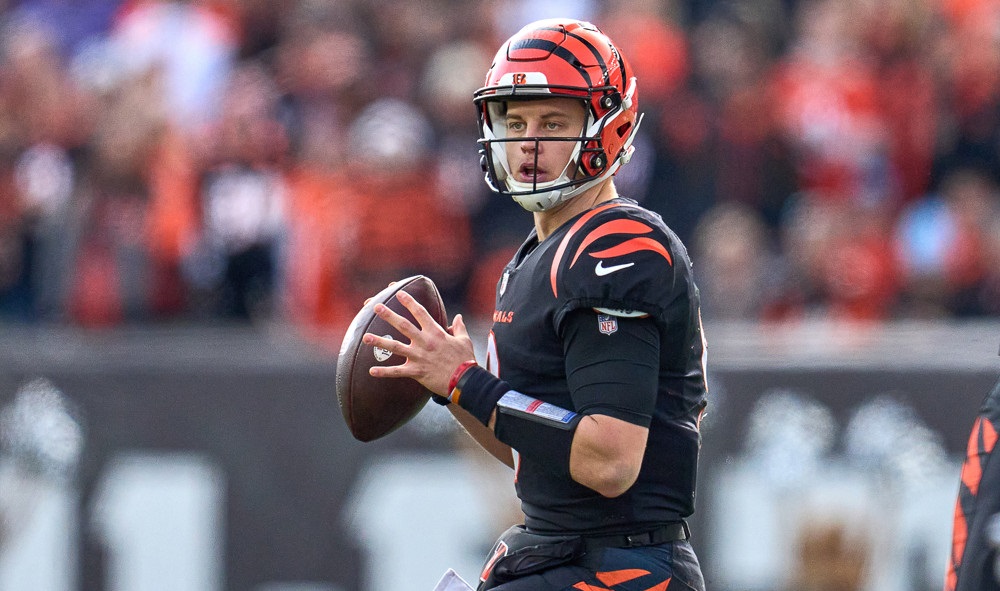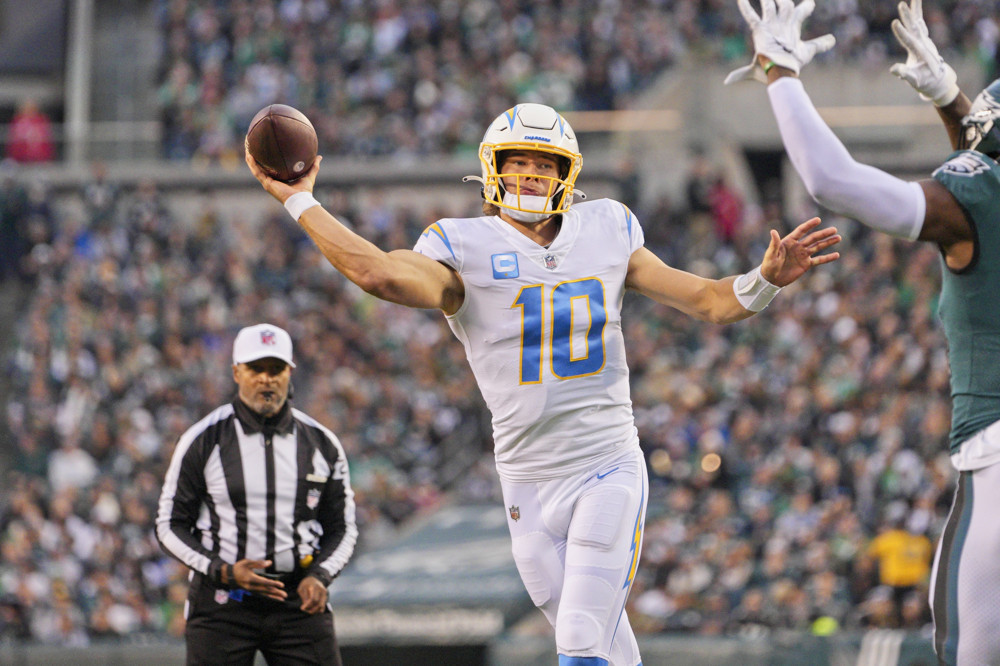
Tag: Joe Burrow

  • Dissecting The Returns of Lamar Jackson & Joe Burrow

    Dissecting The Returns of Lamar Jackson & Joe Burrow

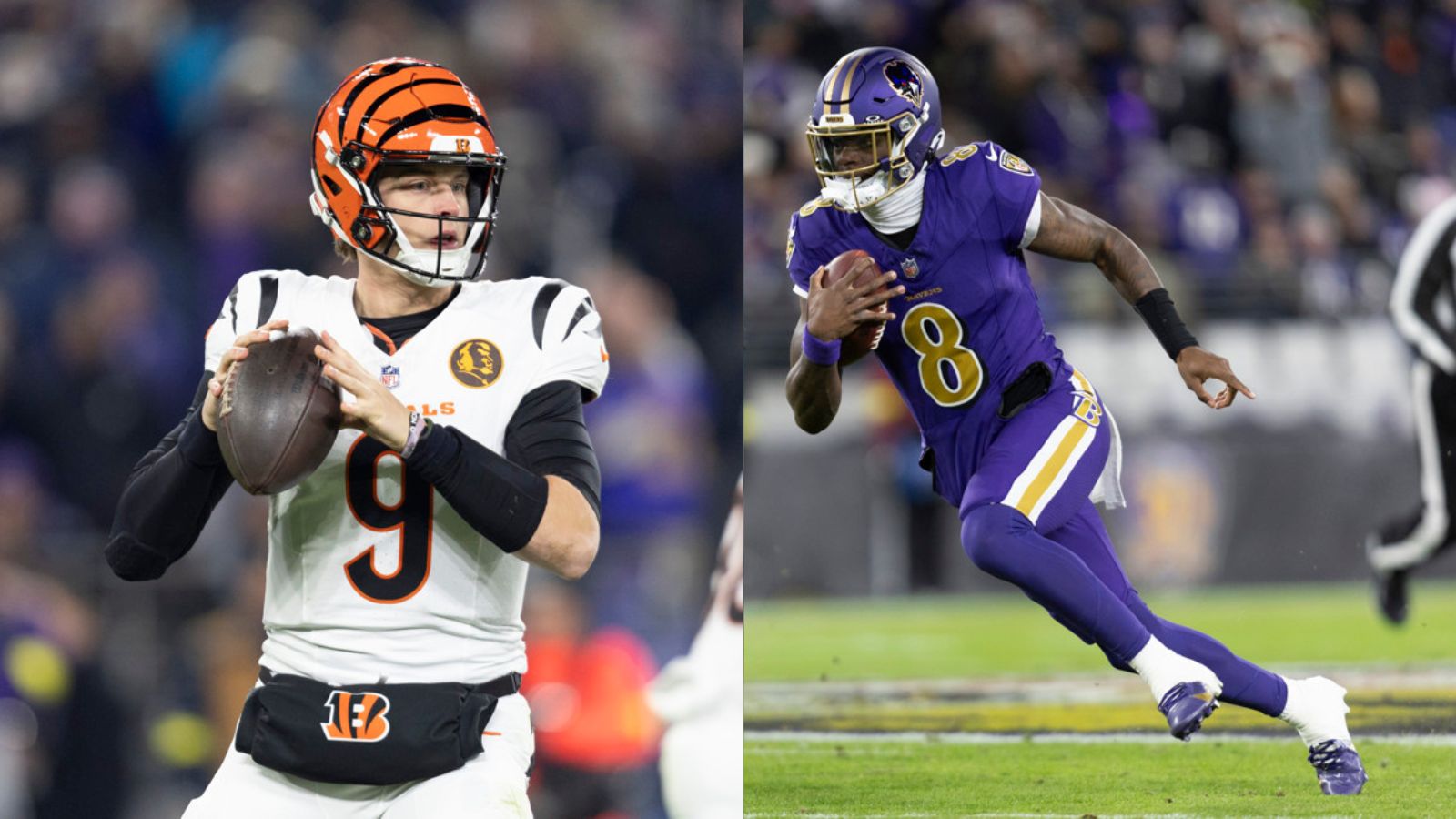
    The AFC North has been playing a game of musical chairs at quarterback this season outside of the Steelers who have maintained some stability. The Browns, Ravens, and Bengals have all started three different QBs due to injury and insufficient performance from their backups. This has set up a dramatic division race to end the season as Lamar Jackson and Joe Burrow have returned from early season injuries.

    The Bengals and Ravens met on Thanksgiving night, and the Ravens squandered a prime opportunity to solidify their position and knock the Bengals out of the division race. Fortunately for the Ravens, they will have the chance to avenge their loss in two weeks in Cincinnati.

    Let’s take a look at how these top signal callers have fared in their returns.

    Lamar Jackson

    Lamar suffered a right hamstring strain in Week 4 against the Chiefs that caused him to miss three games. Unfortunately, Jackson continues to pop up on the weekly injury report since his return with knee, ankle, and toe designations. He does not look fully healthy and his performance is suffering because of it. 

    Part of what makes Jackson such a dynamic QB is his rushing ability, and that has suffered since the lower body injuries piled up. The table below shows the rushing stats for Jackson on designed QB runs (run plays that aren’t QB sneaks, kneels, or scrambles):

    Lamar Jackson on Designated QB Runs

    Pre-Injury Post-Injury
    Att/G 3.0 1.8
    Yds/Att 6.3 3.5
    BT+MT/Att 0.25 0.11
    Total Points 2 -2

    The Ravens are calling designed QB runs at a slightly lower rate and understandably so. Jackson’s efficiency in the run game has been almost cut in half and his inability to make defenders miss seems to be a driving factor. His effectiveness on scrambles has also taken a hit:

    Pre-Injury Post-Injury
    Att/G 2.3 2.8
    Yds/Att 10.0 5.4
    BT+MT/Att 0.33 0.29
    Total Points 9 3

    Jackson has had to scramble a bit more since his return, but without the same impact when healthy. It’s definitely a good thing that he hasn’t avoided scrambling altogether as it shows he still has faith in his legs, despite all the injuries. The threat of him being able to extend plays and scramble opens up things in the passing game. 

    However, Jackson has been struggling throwing the ball, as well. Among 36 QBs with 50 or more pass attempts since Week 9, Jackson ranks 2nd-worst in On-Target% at 61%. The only QB worse than him? JJ McCarthy. 

    The Ravens will need Jackson to step up his play at the end of the season if they want to win the AFC North. Their defense has struggled against the pass this season, ranking in the bottom half of our Total Points player value stat. Their inability to sack the QB has been a big issue, as they rank in the bottom 5 in both pressure rate and sack rate. The Ravens have not been able to rely on their defense like they have in the past.

    Joe Burrow

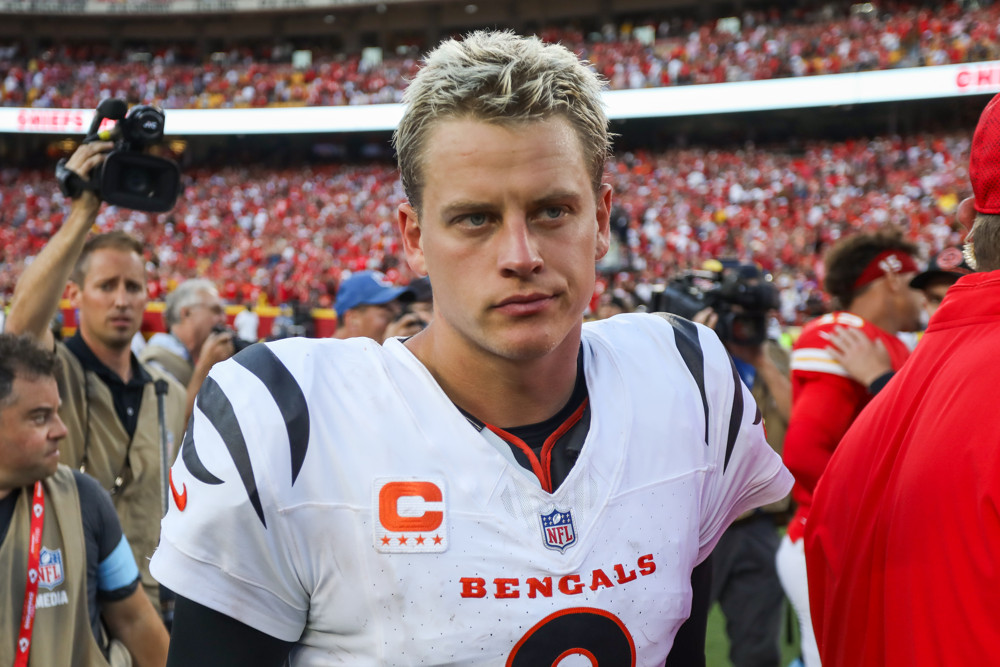
    Burrow made his return from a Grade 3 turf toe injury that required surgery and will look to build upon a huge Thanksgiving win to make an improbable comeback to win the division. Burrow wore a “hard plate” to protect his injured left toe, so it does seem like he is still battling the injury to some extent.

    Looking at the table below, we can compare Burrow’s Week 1 performance to his recent Thanksgiving performance: 

    Joe Burrow – 2025 Season

    Pre-Injury Post-Injury
    Dropbacks 28 48
    On-Target% 91% 79%
    Total Points/Play 0.19 0.17

    The Bengals didn’t limit Burrow at all in his return as he dropped back to pass 48 times in a game they won comfortably in the second half. His accuracy dropped a bit in his first game back, but his effectiveness only dropped marginally. He doesn’t appear to be having issues throwing to any one side of the field as the On-Target% remains similar to both directions. 

    Similar to the Ravens, the Bengals will need their star QB to carry the load as the Bengals defense against the pass has been putrid. They rank last in Total Points in pass coverage with 24. For comparison, the Commanders are the next worst with 45 Total Points. That’s a  concerning difference. They also have not been able to rush the passer at an effective rate, with pressure and sack rates right in line with the aforementioned Ravens. 

    It wasn’t a vintage Burrow performance by any means, but it was an encouraging first game back after missing a significant portion of the season. My colleague, Bryce Rossler, wrote an article last year about QB performance when returning from a significant injury. A key takeaway is that it takes about four games for a QB to return to his pre-injury form. Lamar Jackson doesn’t quite meet the threshold of missing at least four games that this article is based on, but I think it is still useful for what to expect for the rest of the season.

    AFC North Ramifications

    While talking about the AFC North division race, we’d be remiss not to mention the Pittsburgh Steelers. After a hot start to the season and a commanding lead in the division, they now sit tied with the Ravens at 6-6. Aaron Rodgers has gotten banged up recently dealing with a left wrist injury that caused him to miss a game before re-injuring it upon his return. They desperately need him to stay healthy to try and right the ship, which says something because he has been below-average on the whole this year. 

    This division race might come down to whichever QB can find their pre-injury form the fastest. Historical data says Jackson should have the advantage there, but lingering lower-body injuries may prevent us from seeing Jackson at his best the rest of this season. 

    Can Burrow, the two-time Comeback Player of the Year, lead the Bengals to an improbable division comeback? They will need Burrow to buck the four-game trend as they head to Buffalo this week before a rematch at home against Baltimore that may decide their fate.

  • Study: How Quickly Do QBs Return to Form Following Major Injury?

    Study: How Quickly Do QBs Return to Form Following Major Injury?

    Photo: Scott Winter/Icon Sportswire

    Jon Gruden once asked Tom Moore why Peyton Manning’s backups didn’t get more reps, to which Moore replied: ‘Fellas, if 18 goes down we’re f*****, and we don’t practice f*****.’

    According to both conventional wisdom and every modern metric, the quarterback is the most important player on a football field. If you’ve ever seen an Adam Schefter tweet about a quarterback’s contract extension, or looked at an expected points added (EPA) or wins above replacement (WAR) leaderboard, you already know this. And so you also understand why the quarterback is the most protected player on the field.

    There are all sorts of rules in place to protect these players. You cannot hit the quarterback late. You cannot hit him high. You cannot hit him low. You cannot land on him. And may God smite you if your hands get anywhere near his face.

    But bloodsport is bloodsport, and quarterbacks still can – and still do – get injured. And when quarterbacks go to IR, dreams go to die. This, too, is widely understood. Just last year, an Achilles rupture cost Aaron Rodgers and the Jets their season, and a torn ligament in Joe Burrow’s throwing wrist contributed to the Bengals falling short down the home stretch.

    Both of these teams are happy to have their respective signal-callers back in the saddle, but it’s obvious through two weeks of action that neither player is quite right just yet.

    63% of Burrow’s throws have traveled five yards downfield or less, and he ranks 19th among in accuracy rate on the (admittedly few) throws he has made further downfield. Meanwhile, Rodgers, who has made a career out of extending plays, currently ranks 30th in Total Points/play on off-platform throws (and he’s been excellent with his feet planted). Burrow is not ripping the ball, and Rodgers is not moving well, even for his age.

    So, these players have returned to play, but the question is when will they return to form? We at Sports Info Solutions feel we are well qualified to attempt to answer such a question given the fact that we collect and maintain the most comprehensive football injury database.

    In looking at quarterbacks who have missed at least four consecutive games since 2017 and then played meaningful snaps upon their return – i.e. quarterbacks who are not spot starters/backups – we can use Total Points to compare their post-injury performance to their pre-injury performance and determine when the two more or less equalize.

    We used an eight-game rolling average up to the game in which the player was injured to establish ‘pre-injury performance’ and then looked at their cumulative, per-play performance through n weeks back from injury. That is, what was their Total Points/play after their first game back, what was their Total Points/play through two games back, and so on.

    What we found was that it takes, on average, about four weeks for players to stabilize close to their pre-injury efficiency levels.

    A graph showing the percent change in performance for a quarterback in returning from injury. The line starts at 40% below their typical level and then rises to 0% in Week 4.

    ‘Stabilize’ is the operative term here. If a player’s pre-injury Total Points/play was 0.2, and he averaged 0.0 Total Points/play on 30 plays in Week 1, and then 0.2 Total Points/play on 30 plays in Week 2, his Week 2 performance will match how he was playing before injury, but it has not yet stabilized in the aggregate there because his Total Points/play over two weeks is still only 0.1.

    It is also important to make the distinction that this does not mean that quarterbacks are guaranteed to stabilize at their own pre-injury standards after four weeks. It should only be interpreted to mean that it is generally unrealistic to expect them to stabilize in the aggregate at their own standards until about four weeks. Therefore, there is not much that can be reliably and meaningfully said about these first few weeks of performance. It is, of course, possible that an injury permanently affects a player in some way. The key takeaway here is that the first month after a quarterback returns from a significant injury should not be seen as any sort of indictment against him.

    Injuries obviously vary from each other in terms of severity, region, and the ways in which they compromise player movement, but there is one common theme in terms of returning from them: the mental component. Sports Info Solutions’ head of injury operations John Verros, a trained kinesiologist, regards this as an inevitable obstacle for players:

    “There is a subconscious, uncontrollable feeling that players have – to protect the body part that was injured,” he said, “And that alters their decision-making.” 

    Note that Verros refers specifically to decision-making, which is arguably the most important trait for quarterbacks. 

    “If a player has a full offseason to recover, then it is more likely that they’ll be 100% physically and mentally, but there are no reps like game reps for the mental component,” Verros said.

    Burrow and Rodgers, as well as Kirk Cousins and Anthony Richardson, who we’ve yet to mention up to this point, are all getting back into the swing of things physically and mentally. Jordan Love is likely to find himself in the same boat in the not-too-distant future. It’s optimistic to expect them to hit the ground running, but, as they say, time heals all wounds.

  • Which Quarterback Does Total Points Prefer Among the 2020 NFL Draft Class?

    Which Quarterback Does Total Points Prefer Among the 2020 NFL Draft Class?

    SIS recently updated its Total Points calculation methodology. You can find a complete explanation of what Total Points is and how it works here.

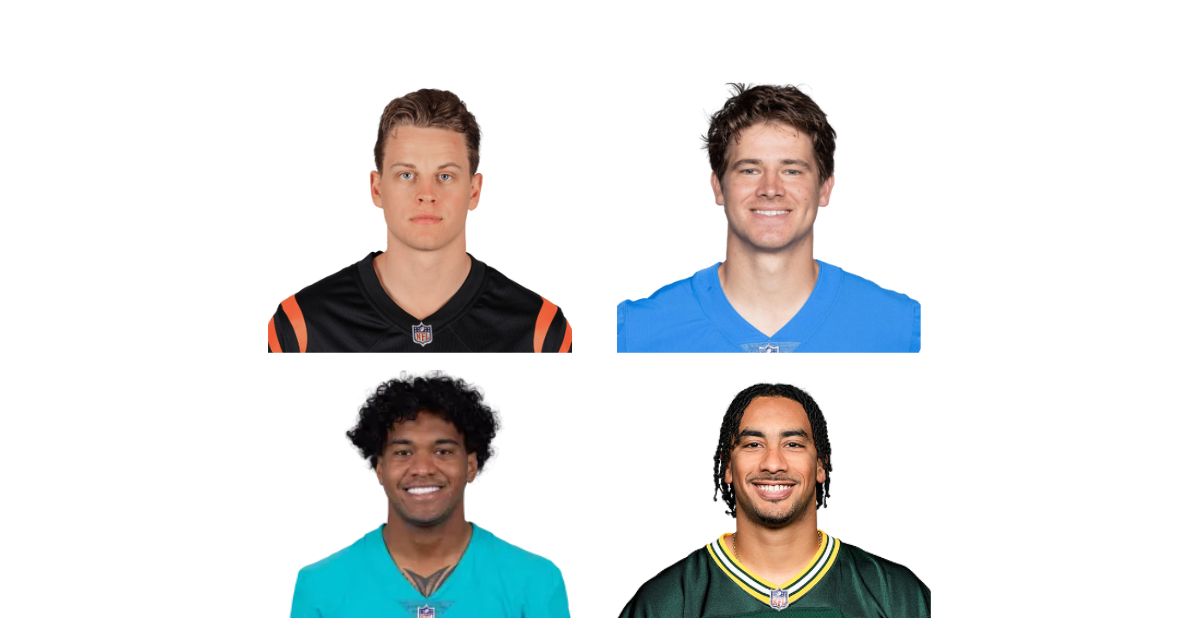
    The top group of quarterbacks taken in the NFL Draft doesn’t always give us a 100% hit rate. But Joe Burrow, Tua Tagovailoa, Justin Herbert, and Jordan Love have each been given championship-caliber-quarterback money over the last year, solidifying the 2020 group as one of the better classes of recent vintage.

    That said, this collection of first rounders haven’t necessarily hit the ceiling that you’d want from a rookie contract. Only Burrow made the conference championship on his rookie contract—with two injury-shortened seasons surrounding those two campaigns. But a lot of fanbases would be happy to have any of these guys, even if the price tag seems shocking on its face.

    With all of their contracts quite similar at this point, which would you take heading into 2024? 

    Total Points has a pretty strong opinion on the subject with the recent enhancements to the passing game calculation. If we take the last few years and weigh the seasons 3/2/1 to lean on recent production, Justin Herbert easily leads. Jordan Love enters the conversation based on his 2023 season, but he didn’t have a starting opportunity before that and we can only be so confident in his partial season of excellence.

    2020 NFL Draft First Round Quarterback Total Points

    Three-year recency-weighted average and 2023 results (including playoffs)

    Total Points (3yr) TP/G (3yr) TP (2023) TP/G (2023)
    Herbert 125 8.2 106 8.2
    Burrow 105 7.2 74 7.4
    Tagovailoa 70 4.6 77 4.3
    Love 69 4.2 134 7.1

    Given that the Chargers haven’t been a very good team with Herbert at the helm, he could be pegged as one of those guys who hasn’t put it together despite his arm talent and athleticism. But his on-field productivity as measured by Total Points outpaces each of his draft class peers in both volume and output, and he’s done so consistently over the last few years.

    What makes Herbert stand out

    Even with all the loud tools that he can wow scouts with, Herbert’s 2023 was most notable for accuracy. He finished third in Expected On-Target Rate +/-, our measure of accuracy relative to an expectation based on throw depth, route, and some other elements. 

    Total Points accounts for accuracy by combining the expected on-target rate from above with an expected value of the throw with and without pinpoint accuracy. Those couple percentage points of accuracy per throw that Herbert offered added up to a roughly 10-point advantage over the other three in 2023. He wasn’t quite so excellent in previous years, but still above average.

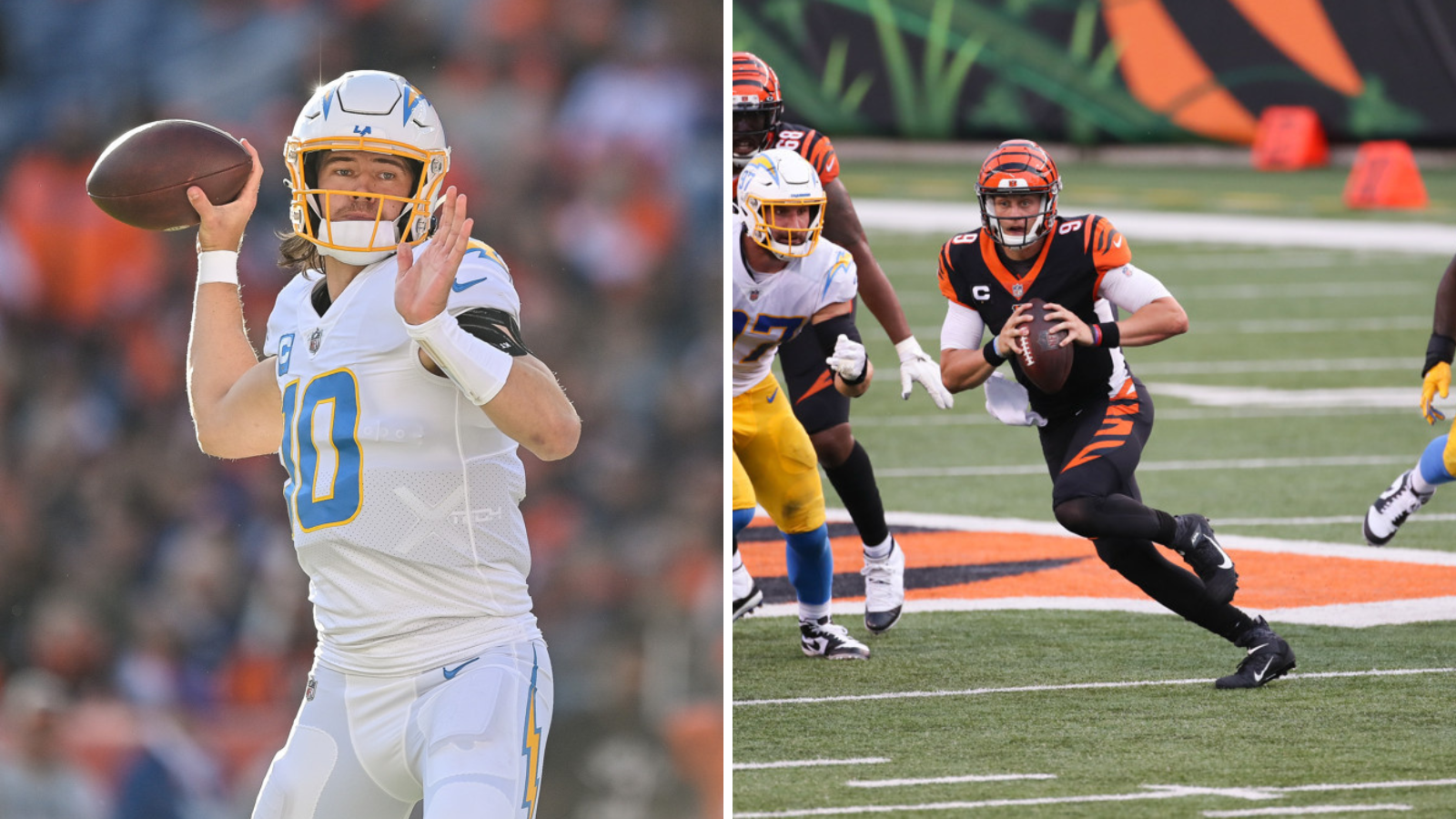
    Burrow deserves kudos here, because over the last three years he has the best accuracy numbers in the league. Even with a little bit of missed time, his accuracy has been worth 15 to 20 points per season compared to the average quarterback. His issue has been a combination of availability and a tendency to get himself into trouble with sacks, fumbles, and the like.

    We mentioned Herbert’s athleticism, and at least among this group he separates quite easily. He isn’t a threat as a designed runner, but he scrambles more than any of these guys, and in 2023 those carries were worth 12 EPA more than the other three quarterbacks combined.

    Why is Tagovailoa lagging behind?

    Obviously the end of the 2023 Dolphins’ season put a sour taste in people’s mouths, but there’s no doubt that Tagovailoa helmed a dangerous offense. 

    It’s surprising to see a player who led the league in passing and finished fifth in passer rating sit in the middle of the pack in Total Points. At the same time, to anyone who has watched the Dolphins the last couple years it isn’t surprising that he’s brought down to earth by factors like blocking, turnover-worthy throws, and yards after catch. 

    The combination of good-enough line play and quick-hitter play design meant that Miami’s line blew 20 fewer blocks in the passing game than any other team in 2023. Total Points takes that information and docks Tagovailoa to the tune of about a half a point per game for the clean pockets he was afforded. Even with that, he had the same sack rate as Jordan Love; beyond the blocking itself, Love out-earned him by almost a point per game in sack avoidance.

    After being afforded those clean pockets, Tua introduced quite a bit of risk once the ball left his hands. The combination of 14 actual picks and 7 near-interceptions puts him in good company, I suppose, given that some of the best quarterbacks in the league had high interception totals last year. But he did that on throws that had much lower expected value than those guys. Patrick Mahomes threw passes over a yard shorter on average, but Total Points valued Mahomes’ specific choices of route, depth, and openness 30 points better than Tagovailoa’s in 2023.

    One of the bigger changes we made to Total Points this offseason was to remove the quarterback’s ownership of yards after catch performance—at least, performance above or below the expected amount based on the route, accuracy, and openness. The quarterback still gets credit for the expected YAC when evaluating the throw, accuracy, and catch, but on a Dolphins team that finished second in average YAC before contact per reception in 2023, that’s a lot of quality production that the receivers are claiming from Tagovailoa with the new calculation.

    What to expect in 2024

    In short, a lot of uncertainty in the following … 

    – Burrow’s health. 

    – Tagovailoa’s offensive line. 

    – Herbert’s skill players, San Diego’s coaching change, and a preseason injury.  

    – Love’s limited exposure to the NFL and young skill group. 

    These all present question marks for these well-compensated signal callers. If we assume a full season for everyone, I’d expect Burrow or Love to have the best surface stats, given that their team context feels more bankable. If healthy, I still assume Justin Herbert will deliver the best package in terms of what a quarterback can control, based on his body of work over multiple years.

  • Scouts vs. Stats: Top 10 NFL Quarterbacks

    Scouts vs. Stats: Top 10 NFL Quarterbacks

    Photo: Ian Johnson and Dustin Bradford/Icon Sportswire

    Over the spring/summer, the SIS R&D staff is convening on the Off the Charts Podcast to talk about their top ten players at a position. To do this, we pit two methodologies against each other: 

    • The “Scouts,” which comes down to the film-based opinions of Matt Manocherian and Bryce Rossler, each of whom has a lot of experience breaking down film and scouting players (Matt having been a scout for NFL teams).
    • The “Stats,” which involves James Weaver and Alex Vigderman devising a ranking based on a suite of metrics, and having that ranking speak for itself.

    Officially, Sports Info Solutions does not condone the dichotomy between scouting and statistical analysis. Each of them provides data in their own way and should inform our evaluation of a player. 

    When we originally produced the Football Rookie Handbook before transitioning that content to our NFL Draft site, we put the scouting reports and stats side-by-side with the idea that the reader would bounce back and forth between them and leverage both to come to a conclusion about a prospect.

    This week, we flipped sides, with Alex and James providing their scouting insights while Bryce and Matt assumed the mantle of the nerds. With quarterbacks, it was easy for everyone to agree on the No. 1 guy, but there were some differences of opinion along the way.

    Scouts’ Opinion Statistical Analysis
    1. Patrick Mahomes 1. Patrick Mahomes
    2. Joe Burrow 2. Justin Herbert
    3. Josh Allen 3. Josh Allen
    4. Jalen Hurts 4. Aaron Rodgers
    5. Justin Herbert 5. Jalen Hurts
    6. Trevor Lawrence 6. Joe Burrow
    7. Aaron Rodgers 7. Tua Tagovailoa
    8. Lamar Jackson 8. Dak Prescott
    9. Dak Prescott 9. Kirk Cousins
    10. Russell Wilson 10. Derek Carr

    The Stats List Methodology

    The stats-based ranking includes a three-year recency-weighted average of a player’s per-snap performance in Total Points, with their most recent season having a weight of 3, the second-most recent having a weight of 2, and their third-most recent having a weight of 1.

    Total Points arguably evaluates quarterback performance better than any other position, if only because there is an abundance of data points related to quarterback play that factor into it.

    Matt and Bryce initially thought to blend it with a second weighted EPA model that incorporated variables like Expected On-Target +/- (xOnTgt+/-) and throw depth, but concerns about historical sample with respect to xOnTgt+/- ultimately led them to decide that keeping it simple was best.

    It should also be noted that this methodology was not limited to Passing Total Points; Rushing Total Points is equally factored in, and that is reflected in the placement of players like Josh Allen and Jalen Hurts, both of whom have been extremely productive on the ground.

    What the Stats Showed

    As Matt noted, it would have been difficult to tweak the model in a way to dethrone Patrick Mahomes.

    “In terms of Z-scores, the difference between Patrick Mahomes and the second-ranked player, Justin Herbert, was bigger than the difference between Herbert and Derek Carr [the 10th-ranked player],” Matt said, “Mahomes was two standard deviations above average; the next-highest Z-score was Herbert, who was a little over one standard deviation above average.” 

    After a clear tier break, Herbert and Allen rounded out the top three, being the two of the remaining three players on the list to have ranked in the top 10 in Passing Total Points/play each of the last two years. (Herbert ranked 6th and 1st in 2022 and 2021, respectively; with Allen ranking 10th and 8th.)

    Allen’s rushing also proved to be a windfall for him, with Bryce pointing out that, in 2022, the Bills generated 11 EPA on running plays, with Allen himself accounting for 33 rushing EPA.

    Dak Prescott also ranked in the Top 10 in Passing Points/snap each of the past two years, but missed most of 2020 with an injury. Another player whose 2020 hurt them a bit in the stats ranking was Joe Burrow, whose ill-fated rookie season dampened his placement, despite performing well each of the past two years. 

    Following Burrow was Tua Tagovailoa, whose extremely efficient Year 3 with Mike McDaniel and Tyreek Hill was enough to propel him into the Top 10, despite not ranking in the Top 20 in Passing Total Points in either of his first two seasons in the league.

    What the Scouts Thought

    The scouts’ list likewise featured Patrick Mahomes at No. 1 and Josh Allen at No. 3, but Alex and James opted to place Burrow second rather than Herbert.

    Their reasoning?

    Burrow just has that ‘It’ factor and has produced more results at this point than Herbert,” James said, “He went into Kansas City and beat Patrick Mahomes, which is something Herbert hasn’t done yet, and there’s something to be said for that.”

    After that, there was a tier break with Jalen Hurts and the aforementioned Herbert placed at No. 4 and No. 5, respectively. The scouts expressed a bit of apprehension about Hurts simply because the Philadelphia offense was an extremely good fit for him last year, but still asserted that his leadership, his running ability, and his deep ball are reasons to be optimistic about him moving forward.

    The scouts also included Trevor Lawrence (No. 6), Lamar Jackson (No. 8), and Russell Wilson (No. 10) in their list, despite all of them having bad statistical years at some point within the last three seasons. James was bullish on Lawrence’s prospects moving forward, citing his arm talent, his mobility, and his command of the offense in Year 2 as very positive signs. Jackson was given the benefit of the doubt with respect to his injuries and the supporting cast around him the last few seasons, and Wilson likewise got a pass for a dysfunctional first year in Denver, but the scouts did note that he’s likely past his prime.

    Want to hear more discussion and debate? Check out this episode of the podcast:

  • What’s Wrong With Joe Burrow And The Bengals Offense?

    What’s Wrong With Joe Burrow And The Bengals Offense?

    As improbable as the Bengals’ Super Bowl run was last year, I don’t think anybody expected them to be this bad in 2022. A cadre of analysts had been trumpeting their impending regression, but consecutive losses to Mitchell Trubisky and Cooper Rush to begin the season have everyone wondering – what the hell is going on in Cincinnati?

    Last year’s Cinderella has quickly turned into a pumpkin, and much of the blame is to be placed on an offense that has been highly dysfunctional through two games.

    One of the company lines for the Bengals this offseason was that they could both run on two-high structures and pass against single-high coverage. Survey says that was a lie. 

    The Bengals have seen the most two-high snaps (101) of any team this season, and they have failed to punish defenses on the ground and force them out of those looks. Part of that has been for lack of trying – they run the ball into two-high just 23% of the time, the second-lowest rate in the league – but they also simply haven’t done it well. They average -0.19 EPA/carry into light boxes and a meager 1.0 YBC on those plays, second-worst in the NFL. 

    Perhaps leveraging RPOs more frequently would help; they’ve dialed up an RPO on only 3% of their offensive snaps, which is well below the league average of 8%.

    It should be unsurprising then that the Bengals haven’t generated big plays through the air like they did last year. Coverage dictates where the ball is thrown, and two-high structures generally force underneath throws. As a result, Cincinnati’s average depth of target (ADOT) is down to 6.5 yards from 8.0 last year, and their boom rate – big plays that generate >1 EPA for the offense – has also dropped from 24.3% to 20.6% year-over-year. 

    Practically speaking, that’s about two big throws a game they’re missing out on. This is a huge deal for an offense that generated negative EPA in 2021 despite ranking 1st in EPA (435) on such plays. Every other team in the Top 10 produced positive EPA on the year. For better or worse, they were something of a glass cannon last year, and we’re currently noticing the extent to which they’ve been reliant on explosives.

    Offenses don’t have to chuck it deep to pick up big yards throwing, though. That helps, of course, but teams with YAC threats are often able to rip off chunks in spite of a low ADOT. Unfortunately for Cincinnati, its receivers haven’t been as dynamic with the ball in their hands as they were last year. In 2021, the Bengals pass catchers ranked 5th in the league in broken and missed tackles/reception; this year, they rank just 26th through two games.

    This is not to place the blame entirely on the receiving corps. Pass protection woes have certainly compounded Cincy’s issues in the passing game, but they have also been somewhat unlucky in terms of the impact it’s had on them. Although nobody is arguing the Bengals offensive line is one of the best in the game, their league-worst 13 sacks belies some less-atrocious advanced metrics:

    Bengals Offensive Line Advanced Stats

    First 2 Weeks of 2022

    Metric Stat Rank
    Pressure Rate 30% 14th
    Blown Block Rate (Passes) 2.3% 16th
    Avg time to pressure 2.61s* 25th

    * League average is 2.76

    So, while this unit has been less-than-good, they’re not as bad as the pummeling of Joe Burrow would lead you to believe. The problem here is largely that their mistakes have seldom gone unpunished. In 2021, pressures turned into sacks 19% across all 32 teams. So far, the Bengals opponents’ have converted a whopping 45% of their pressures into sacks. Only the Saints have been worse in this regard. Sacks typically kill about 80% of drives historically. Cincinnati has failed to convert another set of downs after 10 of its sacks so far.

    Offensive playcalling hasn’t helped, either. The Bengals have shown some pretty stark run-pass tells that opposing defenses are starting to key on. The passing rate disparity between their shotgun and under center splits was 59 percentage points in 2021, second to only the 2019 Jaguars (61 percentage points) over the past four seasons. (Please take a moment to note that Jacksonville offense was led by John DeFilippo, who had three one-year stints as an NFL offensive coordinator, and is now out of work.) 

    That’s not great company Zac Taylor is keeping, but it’s gotten worse. That figure has ballooned to 69 percentage points this year. That is – if Cincinnati is in shotgun, they pass 87% of the time; if they’re under center, they pass 18% of the time.

    It’s admittedly somewhat myopic to view offensive playcalling binarily. It’s also naive to think it’s abnormal for offenses’ modus operandi to change based on whether they are in the gun or under center. However, these splits are pretty staunch and there is some correlation between a playcaller’s tendencies and his offense’s performances within these splits. The defense still has to get into the right call – defending a stick concept is a lot different from defending four verts – but splits this big are not nothing.

    In the past, two losses to start the season has been a death knell for a team’s playoff hopes, though one might expect those odds to be a bit better under the new 17-game season. Still, Cincinnati’s season hangs in the balance this weekend, and a loss might bring the team’s honeymoon period to an abrupt end. At 1-2, they’d still be behind the 8-ball, but each win buys them more time to fix some of their systemic issues and right the ship.

    Unless you’re Tom Brady, NFL championship windows close awfully quickly, and Burrow – despite his strengths and all the cosmetic surgeries he’s undergone – is no Tom Brady. It’s still early and the Bengals have the talent to turn things around, but they’d better do so quickly, lest their window closes. Maybe it already has.

  • Answering The Key Super Bowl Questions

    Answering The Key Super Bowl Questions

    Let’s get right to it – trying to answer the most pressing questions to help enhance the viewing experience for Super Bowl Sunday – with our VP of Football Matt Manocherian, our Lead Football Analyst, Alex Vigderman, and Off the Charts producer, Justin Stine (who tracked every play of every Rams game this season).

    You can listen to our podcast at the link above or read their thoughts below.

    What’s the most important thing to be watching going into this game?

    Alex: How do the Rams defend Cincinnati’s weapons in the passing game?
    We know that the Bengals want to get the ball out quickly, because the biggest mismatch is the Bengals’ O-line against the Rams’ front.

    The Rams will have to account for the fact that the Bengals are much more evenly distributed talent-wise at receiver than they are in the defensive backfield (read Stephen Polacheck’s look at the Bengals’ receivers here).

    If we look at Points Above Average, which is the part of the guts of Total Points that evaluates each player relative to average performance, Jalen Ramsey is +24 points and the rest of the secondary is –30.

    The question is whether or not the non-Jalen-Ramsey players on the back end for the Rams can hold up in those first few seconds.

    Matt: How both teams deploy their safeties. Both of these teams want to play light boxes. Each of these teams are going to try to get the other out of this alignment so that they can throw the ball over the top to their superstar receivers.

    When you play two safeties deep, that allows you to almost double-team Ja’Marr Chase. Because you have the help over the top, the underneath defenders don’t have to account for as much space whether they’re playing man or zone.

    What I’m trying to get at is that you can alter the shape of the defense with the run game and when you do that, that can create different opportunities for you.

    What advantages can the Bengals exploit?

    Matt: Both are heavy outside zone teams. If game script allows, Joe Mixon and the Bengals running game is a potential advantage over the Rams. If they really want to get Ja’Marr Chase going, I think Mixon is a potential avenue for success.

     Alex: To that point, the Bengals ran stretch zone (outside the tackles) as much as anyone this year, and while they weren’t super-successful with it, they will be running away from the teeth of the Rams’ defense. The Rams are in the top 5 in EPA per attempt and top 10 in Positive% defending inside runs, and more middle-of-the-pack on runs outside the tackles.

     How might the Rams defense all of this?

    Justin: Don’t expect the gameplan to look the same as it did against the San Francisco 49ers in the NFC Championship game.

    The Rams have primarily played a two-high safety shell scheme throughout the season, but Defensive Coordinator Raheem Morris made an adjustment against the 49ers and switched to a single-high look to try to contain the San Francisco running game.

    The team primarily used Nick Scott as the deep man in this scheme, while Eric Weddle was utilized more in the slot and in the box. The Rams don’t often load the box in their normal scheme, but Weddle and even nickel cornerback David Long spent more time near the line of scrimmage against the 49ers than any other game this season.

    Don’t expect the Rams to repeat that strategy against the Bengals, as they will likely move back to their two-high, softer-zone scheme and look to exploit of what appears to be an advantage with their defensive line vs. the Cincinnati offensive line.

    If they aren’t able to get the Rams out of that look, it could be a long day for Burrow and his offensive line, given that they’re dealing with a pass-rush that features the likes of Aaron Donald, Von Miller, and Leonard Floyd.

    How can the Rams overpower the Bengals?

    Matt: Overpower them with star power.

    Alex: The Rams have seven players who rank in the Top 5 at their respective positions in Total Points (Aaron Donald, Cooper Kupp, Jalen Ramsey, Andrew Whitworth, David Edwards, Leonard Floyd, and Matt Gay). The Bengals have one.

     Matt: And the Bengals interior offensive line is no match for Aaron Donald. They’ve even been rotating some players in there. He is better at his position than any player is at their position in the NFL, and he is a problem in both phases.

    Is there anything about the Rams that would concern you going into this game?

    Alex: We love questioning coaching decisions around fourth downs, and the Rams present an interesting opportunity for that. They’ve been more field-goal-heavy than we’d recommend when in close, and they’ve forgone punts for conversion attempts more than the typical team when they’re outside the 30. So they’re walking a fine line between making the nerds or jocks angry.

    Matt: I like living in a place where I make both the nerds and jocks angry frequently.

    For me, it’s the health question. Everybody from Whitworth to Ramsey seems dinged up for the Rams. Not to mention Robert Woods, who is really important to their pass and run games. Though on the other hand, Darrel Henderson could be an x-factor for them if he can play.

    Let’s talk up one unsung star on each team who could be vital on Sunday. With the Bengals, how about cornerback Chidobe Awuzie, who on a per-play basis ranks comparably in value to Jalen Ramsey?

    Alex: Awuzie didn’t make a lot of noise this year but he was solid. He wasn’t exclusively an outside corner but he did much better out there. He allowed just under a quarter of his targets to go for positive EPA when lined up outside.

    He was definitely getting beat a bit, but he was able to catch up and limit the damage. Put another way, he had the sixth-most intended air yards in his direction this season, but he yielded the 59th-most yards.

    One way he could impact the game in a negative way is getting beat over the top when they’re in zone. He was targeted more than any other player on throws 20+ yards downfield in zone coverage in the regular season, and he’s allowed 137 yards and a touchdown on five such targets in the playoffs.

    And from the Rams, that would be linebacker Leonard Floyd?

    Alex: Floyd is a perfect example of the interactive nature of pass rush. If you look at what we might call “cleanup sacks,” where one player hurries the quarterback and the other gets the sack, Floyd trails only TJ Watt the last two years with 10 of them.

    Having multiple threats up front makes a huge difference.

    Another example of this is that he had four sacks this year when he went unblocked. Having pass rush threats both inside and outside makes things hard for the offense, and sometimes that’s what comes of it. Adding Von Miller makes it even more difficult because you can hit from both sides, and Floyd’s really taken advantage. 

    Matt, let’s end on this – You’ve said Joe Burrow is a QB you can win a Super Bowl with, but not yet one you can win a Super Bowl ‘because of.’ What’s the missing piece there?

     His accuracy is awesome, and the numbers really illuminate that. And I don’t fault him for the sacks. I actually think he does a great job of avoiding them and playing with limited protection.

    But look at the off-platform throws.

    There were a couple of dropped interceptions in the AFC championship game that would really change the narrative on him right now, and I do think that every once in a while you see his inconsistent arm talent show up.

    So, for me, to be ‘win because of’ without an elite arm would require Drew Brees-like precision, which he is trending towards but I’m not quite ready to crown him with quite yet.

     Enjoy the game!

  • From Heinicke to Brady: Joe Burrow’s Climb Up the QB Rankings

    From Heinicke to Brady: Joe Burrow’s Climb Up the QB Rankings

    In a Week 2 loss to the Bears, Joe Burrow threw three interceptions and was sacked five times.

    That dropped him nine spots in our World’s No. 1 QB Rankings. After that game, Burrow ranked 33rd. For perspective, at that moment he was eight spots behind Washington QB Taylor Heinicke. Heinicke and Burrow basically changed places in Week 2. Burrow went from 24 to 33. Heinicke went from 34 to 25 after beating the Giants.

    Flash forward five months and Burrow now ranks No. 7.

    And for what it’s worth, Heinicke ranks third-to-last, ahead of only Ben Roethlisberger and Mike Glennon.

    But we’re here to focus on the Super Bowl QB.

    A reminder that The World’s No. 1 Quarterback Ranking is based on a model devised by Bill James to evaluate The World’s No. 1 Starting Pitcher. Bill’s model was based on cumulative evaluation of individual starts over an extended time using the metric Game Score.

    The World’s No. 1 Quarterback Ranking uses our player value stat Total Points to make a cumulative evaluation of game performance over a three-year period. The key to our calculation is Points Above Average (PAA), which is the statistical underpinning of Total Points that is centered at zero so that positive numbers are above average and negative numbers are below average.

    Success over time is key to maintaining a good ranking. Prolonged inactivity results in a ranking drop. The most recent performances carry the most weight.

    That last sentence is Burrow’s season story. He ranked as low as No. 33 as we noted. After a six-sack, two-pick game against the Chargers in Week 13, he ranked No. 21, two spots behind Jimmy Garoppolo and 15 places behind Kirk Cousins, of whom he now sits one spot ahead.


    Here’s the current Top 10.

    1. Patrick Mahomes
    2. Justin Herbert
    3. Aaron Rodgers
    4. Josh Allen
    5. Tom Brady
    6. Matthew Stafford
    7. Joe Burrow
    8. Kirk Cousins
    9. Derek Carr
    10. Kyler Murray

    Since Week 14, which was actually a loss to the 49ers, Burrow has played at a different level, with 15 touchdown passes, 2 interceptions, and ranks top-two in completion percentage, catchable pass percentage, and on-target percentage (including the postseason).

    But maybe we could have seen this coming. Even in Weeks 1-13, when Burrow had 23 TD passes and 14 interceptions, Burrow led the NFL in catchable pass percentage (89%) and was 2nd in on-target percentage (83%).

    Burrow’s on-target percentage was actually one percentage point better in Weeks 1-13 than it has been from Week 14 to now.

    Where Burrow’s growth has come that has led to his jump up the rankings is in his play when pressured. Yes, he’s still taking his fair share of sacks (remember the nine times he went down against the Titans), but when he’s able to get the ball out, he’s done much more damage relative to what he was doing earlier in the season. He’s looked to shorter passes for greater success.

    Case in point against the Chiefs, where he was 9-of-14 for 120 yards and a touchdown, including two key first-down completions to Tee Higgins on the drive at the end of the first half that cut KC’s lead to 21-10

    Burrow When Pressured in 2021

    Weeks 1-13 Since Week 14
    Catchable Pass % 78% 90%
    TD-INT 4-6 4-0
    Sack % 27% 25%
    ADOT 12.1 yds 7.5 yds

    The Rams’ pressure will be a different kind of pressure than any Burrow has seen this season.

    Los Angeles ranks first in the NFL in Pass Coverage Points Saved Per Play.  Including the postseason, they have allowed only 3 touchdown passes and recorded 11 interceptions when pressuring opposing quarterbacks (the rest of the NFL has allowed 236 TD and recorded 168 interceptions when pressuring a QB).

    But hey, if you want to win a Super Bowl and keep climbing the World’s No. 1 QB Rankings, you’re going to have to get past the biggest obstacle in your way at some point.

    Here’s the full set of rankings.

    Rk Player PAA Per 60 Plays LastRk StartOfSeasonRank
    1 Patrick Mahomes 6.2 1 2
    2 Justin Herbert 6.2 2 10
    3 Aaron Rodgers 6.1 3 1
    4 Josh Allen 5.8 4 6
    5 Tom Brady 5.3 5 3
    6 Matthew Stafford 3.7 6 14
    7 Joe Burrow 3.1 7 22
    8 Kirk Cousins 2.4 8 9
    9 Derek Carr 2.0 9 7
    10 Kyler Murray 1.7 10 15
    11 Russell Wilson 1.5 11 5
    12 Lamar Jackson 0.9 12 12
    13 Teddy Bridgewater 0.8 13 18
    14 Ryan Tannehill 0.8 14 8
    15 Dak Prescott 0.7 15 17
    16 Mac Jones 0.6 16 N/A
    17 Matt Ryan -0.1 17 11
    18 Carson Wentz -0.5 19 81
    19 Taysom Hill -0.7 20 20
    20 Jimmy Garoppolo -0.7 18 25
    21 Jameis Winston -0.9 21 55
    22 Jacoby Brissett -1.1 22 21
    23 Josh Johnson -1.3 23 49
    24 Jalen Hurts -1.4 24 70
    25 Tua Tagovailoa -1.4 25 50
    26 Ryan Fitzpatrick -1.9 26 16
    27 Trevor Siemian -1.9 27 N/A
    28 Gardner Minshew -2.0 28 32
    29 Colt McCoy -2.2 29 51
    30 Jared Goff -2.2 30 31
    31 Tyrod Taylor -2.3 31 56
    32 Kyle Allen -2.3 33 34
    33 Chad Henne -2.3 32 29
    34 John Wolford -2.4 34 24
    35 Case Keenum -2.5 35 60
    36 Marcus Mariota -2.5 36 27
    37 Mason Rudolph -2.5 37 26
    38 Geno Smith -2.5 38 N/A
    39 C.J. Beathard -2.6 39 30
    40 Blaine Gabbert -2.6 40 36
    41 Brett Hundley -2.7 41 35
    42 Matt Barkley -2.7 42 48
    43 Chase Daniel -2.7 43 39
    44 Nick Mullens -2.7 44 72
    45 Nate Sudfeld -2.7 45 52
    46 Josh Rosen -2.7 46 58
    47 Brian Hoyer -2.7 47 59
    48 David Blough -2.8 48 61
    49 Joe Flacco -2.9 51 63
    50 Zach Wilson -2.9 50 N/A
    51 Drew Lock -2.9 49 23
    52 Will Grier -2.9 52 69
    53 Mike White -2.9 53 N/A
    54 Brett Rypien -2.9 54 65
    55 Jarrett Stidham -2.9 55 66
    56 Jordan Love -3.0 56 N/A
    57 Tyler Huntley -3.1 57 57
    58 Sean Mannion -3.1 58 45
    59 Garrett Gilbert -3.1 59 54
    60 Nick Foles -3.1 60 76
    61 Cooper Rush -3.2 61 N/A
    62 Ian Book -3.2 62 N/A
    63 Daniel Jones -3.2 63 71
    64 Baker Mayfield -3.3 64 13
    65 Dwayne Haskins -3.3 65 78
    66 Chris Streveler -3.3 66 62
    67 Trevor Lawrence -3.4 67 N/A
    68 Trey Lance -3.4 69 N/A
    69 Jake Luton -3.4 68 79
    70 Mitchell Trubisky -3.5 70 80
    71 Brandon Allen -3.7 72 75
    72 Phillip Walker -3.7 71 67
    73 Tim Boyle -3.7 73 N/A
    74 Justin Fields -3.8 74 N/A
    75 Cam Newton -3.8 75 19
    76 Jake Fromm -4.0 76 N/A
    77 Andy Dalton -4.1 77 46
    78 Davis Mills -4.8 78 N/A
    79 Sam Darnold -5.2 79 82
    80 Taylor Heinicke -5.5 80 28
    81 Ben Roethlisberger -6.5 81 53
    82 Mike Glennon -6.8 82 73
  • How do the Bengals match up with the Rams?

    How do the Bengals match up with the Rams?

    Our VP of Football and Research, Matt Manocherian, talked Bengals earlier this week with Mo Egger of ESPN Radio Cincinnati.

    You can listen to the full interview here. Here are a few of Matt’s thoughts.

    How are the Bengals going to block the Rams?

    I would actually push back on the notion that the Bengals are going to have to do that. The Bengals lead the league in short dropbacks.

    Maybe the Bengals are going to keep going with their whole strategy of ‘We don’t need to protect Joe Burrow.’ We just need to let our guys get into routes and let Burrow do his thing. They’ve ridden it this far without blocking anybody all that well.

    The Rams want to figure out ways to keep Joe Burrow holding onto the football. It was one of the things the Bengals did so well against the Chiefs, making Mahomes hang onto the football. Eventually he got impatient.

    You can bet the Rams are going to try some different window dressing with two weeks to prepare to confuse Burrow, to get him to hang onto the ball so that Aaron Donald and his friends on the defensive line can get to him and get home.

    How do the Bengals match up with Cooper Kupp and the other Rams receivers?

    Cooper Kupp is as precise a route runner as there is in the NFL. The Bengals are going to try to come out with what they do well, play a lot of man coverage and hope they can play better guy-on-guy than the Rams can.

    It could be a long day when it comes to Cooper Kupp. But I think what the Rams will lament is not having Robert Woods. Woods did a lot of what allowed them to tie their run game and their pass game so well together with play action.

    Without him in the lineup, I think you’ll see the Bengals dropping 8 guys back with a lot of man coverage and two-high safeties over the top, trying to do everything they can to make things look different. It’s a lot easier to guard Cooper Kupp if you don’t have to be worrying about guarding him deep. And they’ll be daring the Rams to run the ball.

    The Rams are going to be looking to get 5 or 6 yards on their outside zone plays and force the Bengals to drop somebody down so that they don’t have that extra player to defend Kupp over the top.

     Is there an area where the Bengals can expose the Rams?

    I think these are comparable teams at passing and catching the ball. And I think the Rams block better. But I think that in the running game, the Bengals have an edge. If Cincinnati can do just enough on the ground to complement things, so that it opens things up for their wide receivers, that would be the path to victory.

    If the Rams are going to play light boxes and dare you to run the ball, the thing the Bengals can do is punish you for playing that way.

    The Bengals ranked 15th in the regular season in Rushing Points Earned Per Play. The Rams ranked 28th.

  • Matchup to Watch: Joe Burrow’s Deep Passes vs Rams Secondary

    Matchup to Watch: Joe Burrow’s Deep Passes vs Rams Secondary

    The most effective deep passer in the NFL in the 2021 regular season was Bengals quarterback Joe Burrow.

    Burrow led all passers in Total Points on pass attempts at least 20 yards downfield with 39.4. Among the 30 quarterbacks with the most pass attempts, he ranked third in Catchable Pass Percentage (75%) and first in touchdown passes (11), touchdown percentage (18%), and average net yards per attempt (17.7).

    During the regular season, 12% of Burrow’s passes were deep throws (61 out of 520).

    But in the postseason, Burrow has gone with a different approach. Only 6 of his 109 pass attempts have been deep throws (5.5%).

    That may have to continue on Super Bowl Sunday given the formidable nature of the opposition.

    The Rams ranked 9th in the NFL in Points Saved Per Play against deep throws in the regular season. But they’ve been even better in the playoffs.

    Opposing quarterbacks are 2-for-11 when throwing a deep pass against the Rams in the postseason.

    The Rams’ top two cornerbacks, Jalen Ramsey (who led all cornerbacks in Total Points during the regular season) and Darious Williams, have combined to allow only 6 completions on 26 deep attempts combining the regular season and postseason.

    If Burrow completes anything deep against either of them, he’ll have definitely earned it.

  • World’s No. 1 QB Rankings: Justin Herbert’s now No. 2!

    World’s No. 1 QB Rankings: Justin Herbert’s now No. 2!

    The World’s No. 1 QB at the end of the 2021 regular season is Aaron Rodgers.

    Yawn.

    Justin Herbert ranks No. 2.

    Alright, now we’re talking!

    Herbert excelled in 2021 both qualitatively and quantitatively. He finished as the overall leader in Total Points and was the highest-value player on a per-play basis as well.

    A reminder that The World’s No. 1 Quarterback Ranking is based on a model devised by Bill James to evaluate The World’s No. 1 Starting Pitcher. Bill’s model was based on cumulative evaluation of individual starts over an extended time period using the metric Game Score.

    The World’s No. 1 Quarterback Ranking uses our player value stat Total Points to make a cumulative evaluation of game performance over a three-year period. The key to our calculation is Points Above Average (PAA), which is the statistical underpinning of Total Points that is centered at zero so that positive numbers are above average and negative numbers are below average.

    Success over time is key to maintaining a good ranking. Prolonged inactivity results in a ranking drop. The most recent performances carry the most weight.

    Herbert led in Total Points for a few reasons. For one, he had Aaron Rodgers beat by about 150 dropbacks. More dropbacks meant more chances to do good things and Herbert was rewarded for that.

    For another, Herbert was playing behind an offensive line that rated near league average, while someone like Tom Brady was playing behind a line that ranked near the top of the league. Factor that into each quarterback’s performance and Herbert comes out ahead.

    Putting Herbert against Mahomes, Herbert has the edge in catchable pass percentage and touchdown percentage. And Mahomes had several more turnover-worthy plays than Herbert did (fumble, interception, dropped interception).

    Herbert started the year ranked No. 10 and never dropped lower than that. After his huge game against the Eagles in Week 9, he vaulted from No. 8 to No. 3 and was No. 3 or No. 4 for nine straight weeks. A big game in a loss to the Raiders in the Chargers’ season finale moved him up one spot to his highest ranking yet. He ended the year with back-to-back games of more than 10 Points Above Average.

    Our rankings include postseason performance, so it’s possible Herbert could get dislodged from his current spot, but for now, he stands tall where he is. He was the only quarterback in the top eight to not make the playoffs.

    Here’s the Top 10.

    1. Aaron Rodgers
    2. Justin Herbert
    3. Tom Brady
    4. Patrick Mahomes
    5. Josh Allen
    6. Matthew Stafford
    7. Joe Burrow
    8. Kyler Murray
    9. Kirk Cousins
    10. Derek Carr

    The other 3 big movers in the Top 10

    A new team did Matthew Stafford the good that was expected. He started the season No. 14 and is now No. 6 entering the playoffs.

    Stafford pushed as high as No. 3 after starting the season with an eight-game tear in which he averaged 7.2 Points Above Average per game. He’s laid some pretty bad statistical eggs since then against the Titans, Packers, and Vikings, but he has done enough to offset that the last two weeks to put him in the No. 6 spot.

    Joe Burrow’s ascent was a sharp one. He ranked No. 21 through the end of Week 13, but he’s moved up 14 spots since then.

    Burrow’s Week 16 game against the Ravens produced 20.7 PAA, the highest total for any quarterback this season. In Week 17, he totaled 16.3 PAA, the season’s fourth-highest total. Burrow didn’t play in Week 18, so he actually dropped a spot from No. 6 to 7. But he’ll have the potential to continue that surge in the playoffs.

    One other note on Burrow: He finished the season as the NFL’s best deep passer. His 11 touchdowns on passes thrown at least 20 yards downfield led the NFL. That’s a good way to rack up points.

    Kyler Murray started the season ranked No. 15 and soared up the rankings with eight straight games of at least 3 PAA. He’s bounced around between No. 7 and No. 9 the last 11 weeks, including the four that he was injured and missed. He’s averaged 1.4 PAA in six games since returning, hindering his chance of continuing to move up the ranks.

    Here’s the full set of rankings entering the playoffs:

    Rank Player PAA Per 60 Plays Last Rank Start Of Season Rank
    1 Aaron Rodgers 6.4 1 1
    2 Justin Herbert 6.2 3 10
    3 Tom Brady 5.9 4 3
    4 Patrick Mahomes 5.9 2 2
    5 Josh Allen 4.5 5 6
    6 Matthew Stafford 3.5 7 14
    7 Joe Burrow 2.9 6 22
    8 Kyler Murray 2.8 8 15
    9 Kirk Cousins 2.3 10 9
    10 Derek Carr 2.2 9 7
    11 Russell Wilson 1.5 13 5
    12 Ryan Tannehill 1.4 15 8
    13 Dak Prescott 1.0 17 17
    14 Lamar Jackson 1.0 11 12
    15 Teddy Bridgewater 0.8 12 18
    16 Jalen Hurts 0.3 16 70
    17 Matt Ryan -0.1 14 11
    18 Mac Jones -0.3 18 N/A
    19 Carson Wentz -0.5 19 81
    20 Jimmy Garoppolo -0.7 20 25
    21 Taysom Hill -0.8 22 20
    22 Jameis Winston -1.0 21 55
    23 Jacoby Brissett -1.1 23 21
    24 Josh Johnson -1.3 24 49
    25 Tua Tagovailoa -1.5 25 50
    26 Ryan Fitzpatrick -1.9 27 16
    27 Trevor Siemian -1.9 26 N/A
    28 Gardner Minshew -2.0 29 32
    29 Colt McCoy -2.2 30 51
    30 Jared Goff -2.2 56 31
    31 Chad Henne -2.3 31 29
    32 Tyrod Taylor -2.3 32 56
    33 Kyle Allen -2.4 33 34
    34 John Wolford -2.4 34 24
    35 Case Keenum -2.5 38 60
    36 Marcus Mariota -2.5 35 27
    37 Geno Smith -2.5 36 N/A
    38 Mason Rudolph -2.5 37 26
    39 C.J. Beathard -2.6 39 30
    40 Blaine Gabbert -2.6 40 36
    41 Brett Hundley -2.6 41 35
    42 Chase Daniel -2.7 43 39
    43 Matt Barkley -2.7 44 48
    44 Nick Mullens -2.7 45 72
    45 Nate Sudfeld -2.7 46 52
    46 Josh Rosen -2.7 47 58
    47 Brian Hoyer -2.8 48 59
    48 David Blough -2.8 49 61
    49 Drew Lock -2.9 58 23
    50 Mike White -2.9 51 N/A
    51 Joe Flacco -2.9 52 63
    52 Will Grier -2.9 53 69
    53 Brett Rypien -2.9 54 65
    54 Jarrett Stidham -2.9 55 66
    55 Zach Wilson -2.9 42 N/A
    56 Alex Smith -3.0 57 74
    57 Tyler Huntley -3.0 28 57
    58 Jordan Love -3.0 50 N/A
    59 Sean Mannion -3.1 60 45
    60 Garrett Gilbert -3.1 61 54
    61 Cooper Rush -3.2 62 N/A
    62 Nick Foles -3.2 63 76
    63 Ian Book -3.2 64 N/A
    64 Daniel Jones -3.2 65 71
    65 Baker Mayfield -3.3 66 13
    66 Chris Streveler -3.3 67 62
    67 Dwayne Haskins -3.3 68 78
    68 Trevor Lawrence -3.4 78 N/A
    69 Jake Luton -3.5 69 79
    70 Trey Lance -3.5 70 N/A
    71 Mitchell Trubisky -3.6 72 80
    72 Phillip Walker -3.7 73 67
    73 Tim Boyle -3.7 74 N/A
    74 Justin Fields -3.8 76 N/A
    75 Cam Newton -3.8 77 19
    76 Brandon Allen -3.8 59 75
    77 Jake Fromm -4.0 71 N/A
    78 Andy Dalton -4.1 75 46
    79 Davis Mills -4.7 80 N/A
    80 Sam Darnold -5.3 79 82
    81 Taylor Heinicke -5.5 81 28
    82 Ben Roethlisberger -6.4 82 53
    83 Mike Glennon -6.7 83 73