Tag: St. Louis Cardinals

  • An Oral History of Scott Rolen’s Defensive Excellence

    An Oral History of Scott Rolen’s Defensive Excellence

    As a hitter, Hall of Fame inductee Scott Rolen’s numbers are outstanding, but perhaps not distinct, comparable as they are to those posted by very good third basemen like Ken Boyer, Ron Cey, and David Wright. None of them is in or appears on his way to the Hall.

    What Rolen had that the others didn’t was defensive excellence, represented by eight Gold Glove Awards. Had Defensive Runs Saved been tracked for the first seven seasons of his career (DRS debuted in 2003, meaning Rolen played only 10 seasons with the metric in place), he’d likely be neck-and-neck for category leadership with Adrián Beltré (whose defense was DRS-measured across 16 of 21 active seasons).

    Both Runs Saved and its predecessor on Baseball-Reference, Total Zone Runs, elevate Rolen’s credentials. Rolen ranks tied for 17th in the offensive component of Wins Above Replacement for third basemen; his Defensive WAR ranks 6th. And it’s his defense in tandem with his offense (and his highly-praised baserunning) that made him a Hall of Famer.

    To better understand how Rolen played defense—dating all the way back to its beginnings—I reached out to those who experienced it first-hand and from close range to ask one overarching question:

    What was it like to watch Rolen save runs?

    (Teammate seasons with Rolen are listed in parentheses).

    Rolen’s defensive origin story began in Jasper, Indiana, a town of about 10,000 people. It’s where Rolen grew up and where he and his friends played baseball (and variations thereof) every day. Rolen and one friend kept track of the games in a notebook. He was the Dodgers of Steve Garvey and Pedro Guerrero. His friend Cory was the Cardinals of Jack Clark and Ozzie Smith.

    Cory Luebbehusen (Little League and Jasper High teammate, 1985-1992): “We always took a tennis racket and hit tennis balls over electric wires. We would hit pop flies to each other, whoever caught the most won. If I was down one or he was down one, we made it pretty darn hard for [the other person] to catch it. He was good at that game. Everything he touched, he was pretty good at.”

     At age 10, Rolen was playing with the 11- and 12-year olds. He pitched and Luebbehusen caught, and then they’d switch and Rolen would also play shortstop, which honed his arm.

    Andy Noblitt (Jasper High, 1991-1993): “We had a track meet where we had to throw a softball and he had the ability to throw it from our high school softball field all the way to the Little League field, which is probably 150, 160 yards, as a seventh-grader.”

    A growth spurt was a few years away. High school teammate Noblitt watched Scott rise from 5-9, 155 pounds as a sophomore to 6-3, 190 as a junior and transition from shortstop to third base.

    Noblitt: “I remember him making diving plays in the 5/6 hole that no one else would make. A lot of the guys would call him ‘Web’ because it felt like he had a Spider-Man web on him that could catch anything.”

    Luebbehusen: “You had coaches that would hit ground balls on a high school gym floor as hard as you could. That ball got on you quick. So if you weren’t ready to play defense, you were gonna take one in the chops.”

    Noblitt: “We were 32-2 and a majority of our team played a college sport, but he was just so much more skilled than our college-bound players.”

    Rolen was drafted in the second round by the Phillies, 46th overall in 1993. His first minor league roommate was another third baseman, Bryan Wiegandt, an undrafted infielder out of Bellarmine University (Kentucky) who was four years older than Rolen. Wiegandt says he was Rolen’s Crash Davis, the grizzled veteran who taught the kid how to pay rent and do laundry. They roomed together in the low minors and Rolen then roomed with Bryan’s older brother (another Scott) when he reached Triple-A.

    Bryan Wiegandt (Minor League IF, 1993-1994): “There were times we didn’t even need a shortstop. He was like a gazelle. One-hundred percent. Just smooth every step of the way. He ran first to third or second to home as quick as anybody. That carried over to his defense. If the batter hits one down the line, I’m thinking double off the bat and the next thing I know, the ball’s in my chest and I’m turning a double play. Or if the ball’s to his left, all of a sudden he’s playing shortstop and he’s flipping the ball to me within 1.2 seconds off the bat. He’s playing third and he’s on top of me, like, ‘Here’s the ball, are you going to throw it to first?’”

    Bronson Heflin and Scott Rolen got called up to the major leagues together and then both debuted on the same day, August 1, 1996. Rolen’s career spanned 17 seasons and more than 2,000 games, with his performance in his first full season earning him 1997 National League Rookie of the Year honors. Heflin allowed seven runs in three games in a seven-day period and was sent back to the minors; he pitched four more years in the minors but never another major league game.

    Bronson Heflin (Phillies org. P, 1994-1996): “The biggest play he ever made when I was pitching that I can remember was against the Braves’ Triple-A team. There was a swinging bunt, and I was crossed up. I was trying to get untangled to get back to pick the ball up and all I remember was this monster coming out of nowhere, throwing it while still running towards the catcher and throwing the guy out at first base.

    “It was just one of those plays where I was just like, ‘Wow, did that really happen?’”

    Todd Zeile was Scott Rolen’s first major league first baseman and an experienced third baseman in his own right. The 1996 Phillies were the third of Zeile’s 11 MLB teams. He had a lot of teammates, but few compared to Rolen defensively.

    Todd Zeile (Phillies 1B, 1996): “There’s a timing mechanism that good third basemen have [so] that they know how much time they have to deliver the ball to get the runner by a step. Scott, for as athletic as he was at third base, had that built-in clock. I had really struggled with that and made a lot of unforced errors. He would dive and sprawl and roll and come up and throw it from weird angles but he always seemed to have that clock that would give him just enough time to get his balance, make accurate throws, and not make unforced errors.”

    Mike Lieberthal (Phillies C, 1996-2002): “He was also amazing on the fly ball hit over his head, going down the left field line. He was very light on his feet for his size.”

    Desi Relaford (Phillies SS, 1996-2000): “He did this slide thing where he could slide on his knee or ass, a slide-scoop, know what I’m saying? Backhand. And he would either throw it from his knees or he’d pop up if he had time and show off the cannon. I saw that one a lot.”

    Zeile: “He was very good at throwing on the run, especially moving away from first base. He had arm strength when he needed it.”

    The impressions Rolen made early were echoed by impressions he’d continue to make as his career unfolded.

    David Eckstein (Cardinals SS, 2006-2007, Blue Jays, 2008): “The first movement to the ball was catlike. You know how you see a cat that’s sitting there, they see something and they explode to it?”

    Nelson Figueroa (Phillies P, 2001): “The thing about Rolen is he was so big but so agile. His reads were instantaneous, and he could cover so much ground. He had the range of a shortstop with the stopping power of a brick wall.”

    Paul Janish (Reds SS, 2009-2011): “You’re talking about a 6-4 or 6-5 guy that was probably pushing 240, like a really big individual, and he just made it look easy.”

    Jim Edmonds (Cardinals CF, 2002-2007): “Scott was like this solid wall of defense.”

    Lieberthal, twice a National League All-Star as a Phillie, said one of the first things he noticed about Rolen was that Rolen’s legs looked like they were three times the size of his average-sized legs. He was impressed by Rolen’s ability to get to balls so easily despite that size. So Lieberthal let Rolen know about one type of play that Scott could have to himself.

    Lieberthal: “I hated popups. So I would tell him, especially in [windy] San Francisco, and any place that had a large area behind home plate, ‘Scotty, you can have all the popups. I’m not dealing with it.’”

    Relaford: “When you have someone on your team who was as good as he was and being able to watch him every day, not only does he make your team better, but you can learn from that, and implement. Whether it’s the tenacity or getting good jumps. You can’t teach me 6-5, 230 pounds, but just being able to take it all in and see what he brings to the park from a mindset standpoint.”

    “He played the game like it was supposed to be played. He played hard. He ran hard. He threw hard.”

    Rolen moved to St. Louis when he was traded to the perennial contender Cardinals in 2002. It proved to be the definitive step in his career. In 2004 he had an MVP-caliber season, totaling 34 home runs, a 1.007 OPS, and 30 Defensive Runs Saved, the latter the most by a third baseman in the 20-year history of the stat, all en route to hitting the deciding home run against Astros pitcher Roger Clemens in Game 7 of the NLCS.

    Jeff Suppan was the winning pitcher in that Game 7. Suppan didn’t throw hard and relied on trickery and outsmarting hitters. Like Figueroa in Philadelphia, he relied on his third baseman.

    Jeff Suppan (Cardinals P, 2004-2006): “When I throw a changeup to a right-handed hitter, I’m trying to get him to hook it. But if he keeps it fair, it’s going to be a rocket. Or if I pitch inside to open up pitches away, if they make contact, they’re rockets to third base. So any time I pitched inside, I let him know. His backhand ability was off the charts. And I can’t remember, unless a ball was right down the line or way in the hole, a ball ever getting by him.”

    Figueroa: “When I was in hitters’ counts I used offspeed pitches a lot to take advantage of their aggressiveness. And if it was hit to my right on the ground, I knew it was an out. As sure as the hands were, his arm was just as reliable. He made the ordinary plays look ordinary, but the extraordinary plays look routine.”

    Suppan’s earned run average with the Cardinals was 3.95, markedly better than his 4.70 career ERA. Rolen and the Cardinals infield was integral to that.

    Still, even an eight-time Gold Glover isn’t impervious to imperfection. In Game 7 of the 2006 NLCS, a Rolen throwing error set up an inning in which the Mets loaded the bases with one out in a tie game. Suppan escaped and the Cardinals won the pennant on Yadier Molina’s home run in the 9th inning.

    Suppan: “He thanked me after the game. He didn’t have to thank me. He had picked me up so many times.”

    Another player Rolen often picked up was shortstop David Eckstein, MVP of the 2006 World Series, in which Rolen batted .421 and claimed his only world championship.

    Eckstein: “When I signed with the Cardinals in 2006, Tony La Russa said to me that we don’t need you to play phenomenal defense. You just have to be able to get the ball hit to you, because you have a guy that’s going to be playing to your right that will make every play, and he’ll make you look like a better shortstop because of his range to his left. As everyone knows, my range on the backhand was subpar at best, but that’s what Scotty did. It took the pressure off of worrying about the balls that were difficult for me.”

    Janish: “He was a very talented individual, but he was just really good at doing the same thing over and over again.”

    Eckstein: “I always say he ‘ate’ the ball. And all of a sudden the ball was in his massive hands and he worked the ball through to first base. He had that first step where he was in front of you before you even knew it.”

    Abraham Núñez (Cardinals 2B/SS/3B, 2005): “It was amazing to see his preparation, his dedication. He showed up early to the field and every ground ball mattered. Every day, he took a round of live batting practice at third base, reading balls off the bat. He was gifted by his preparation in every aspect. It was something I never saw before from a superstar like that.”

    Edmonds: “He was just so far above as far as positioning and being ready and thinking everything through… knowing that so-and-so is going to throw a forkball in a situation or a slider, and that he needs to adjust his feet or move into a different spot. There were very few people you would hear talk about that stuff. He was one of them.”

    Edmonds won eight Gold Gloves, the same number Rolen did. So he knows defensive excellence quite well.

    Edmonds: “If you watched him take ground balls at 3 o’clock in the afternoon, he’d take ground balls in the same rhythm. He would get it into his glove, he would take a little jog step and then he would throw it. His rhythm was so perfect.”

    When Rolen was with the Cardinals, sometimes first baseman Eduardo Perez was warned of something Rolen liked to do to maintain the rhythm Edmonds cites.

    Eduardo Perez (Cardinals 1B/OF, 2002-2003): “I remember Tino Martinez telling me, ‘On a ground ball to third, don’t take your eye off the ball.’ I said, ‘What do you mean?’ Tino played far from first base. So did I. Rolen would sometimes throw the ball to first base without the first baseman being anywhere near there. So every time there was a ground ball to third, it was a sprint to get to first. I’m like, ‘Are you kidding me?’ And [Rolen] is cracking up.”

    Eckstein: “That was Scotty. He’s like, ‘I’m not changing who I am. I’m gonna field the ball and throw it straight to the base.’ The accuracy of the arm was very impressive.”

    Perez: “His throws looked like a true four-seamer from third to first. It continued to have carry and gravity wouldn’t defy his throws.”

    Edmonds, now a Cardinals broadcaster, said what separated Rolen from other third basemen was how relaxed he was and how in tune he was with his pitchers.

    Edmonds: “It’s weird when you watch the really good player, how uncanny it was to watch their calmness. That was the best thing about Scott. He never looked like there were any nerves.”

    If Rolen was instrumental in bringing down his own pitcher’s ERA, it would figure his defense would take a toll on more than a few opponents’ offensive stats.

    Moises Alou, whose career spanned 1990 to 2008, recorded more than 2,100 hits and a .303 career batting average. But he hit more balls that Rolen turned into outs than any other hitter (50, per the Elias Sports Bureau).

    Moises Alou: “He got me out on a lot of hard shots. I could’ve hit .305 instead of .303 [Alou laughs]. I was a dead pull hitter. Some balls that I hit could have been hits if it was another third baseman.”

    An elite hitter might find himself frustrated by Rolen, but if you were on the field in another role, such as umpire, you couldn’t help but be impressed.

    Dale Scott (MLB Umpire, 1986-2017) “If I was working second and didn’t have a decision to make, you could just watch the talent and the athleticism and sometimes the amazement of how he was able to get to the baseball and also get off a throw that was true, right to where he wanted it to go.”

    In January of 2008, Rolen, who’d missed significant time due to injuries two of his three previous seasons in St. Louis, was traded to Toronto, for whom he played a year-and-a-half. Travis Snider was a 20- and 21-year-old rookie on those Blue Jays teams, playing the corner outfield spots. Before Snider made his MLB debut, Rolen, who was hitting one spot in front of him, told him, “You only get one debut. So no matter whether you go 3-for-3 or strike out three times, enjoy every minute of it because you only get one.” Snider appreciated all the advice he got.

    Travis Snider (Blue Jays OF, 2008-2009): “I remember I made an error in left field one time. I was being pretty aggressive because we preached taking aggressive angles to make plays. Scott came over and said, ‘Hey, as long as you make mistakes aggressively, you’ll never have a problem with me.’ From hearing that, I was able to play with a little more freedom. It was great to hear it from a guy like Scott Rolen.”

    Snider surely enjoyed the clear view he had of third base from left field.

    Snider: “One of the unsung beauties of playing the outfield is getting to watch really good infielders make plays in front of you. Scott’s body had hit the ground probably thousands of times before I got a chance to play with him and you would never know it by the way he played, getting in the dirt, getting after it.”

    The Reds traded for Rolen in the middle of the 2009 season and he played the next three-and-a-half years for them before retiring. When Rolen was healthy, his defensive stats continued to reflect his reputation within the game. Janish, who regularly stood to Rolen’s left from 2009 to 2011, doesn’t want to use the term vanilla, but…

    Janish: “It was very much like [being] in a good position to field, like it wasn’t flashy. Could he make the barehanded play? Sure. But did he do it when he didn’t have to? No. He didn’t dress up a whole lot of it, He made as many plays easy as you could, if that makes sense. He didn’t make plays harder than they had to be.

    “He was more concerned with getting the guy out, which, that’s kind of who he is, right? It’s about the result, not about what it looks like.”

    To completely appreciate what Rolen brought to third base, you have to talk about the position with somebody who not only played it, but was compelled by circumstances to do so as Rolen’s teammate and replacement.

    Entering 2005, new Cardinals utility infielder Abraham Núñez had played 445 games in the field; only eight of them were at the hot corner. Núñez expected to fill in at the other infield spots, because after all, Rolen played every day. But then Rolen injured his shoulder in a collision in May, and Núñez filled in for five weeks. Rolen came back and played third base for a month, only to opt for season-ending shoulder surgery in July.

    The position became Núñez’s for the rest of the season. Fortunately for the career backup, he had once asked Rolen for some tips on playing third base… just in case he was ever needed there.

    Núñez: “At shortstop, it took me a little longer to get set up on defense because I had more time. So I asked him how you set up at third base. He says to me, ‘You don’t have time to make a big move. You’ve gotta be short and compact with a quick first step. I don’t want to be flatfooted. I want to be more on the balls of my feet when the ball is crossing the plate. I’m in sync with the pitcher so I can be on time for every ball.’

    “It made sense. It was hard for me. But it was easy for him.”

    Flash forward a couple of months to Núñez playing every day and holding the position down reasonably well and Rolen doing his rehab exercises to try to get back to health.

    Núñez: “I remember this like it happened today. He said, ‘Dude, you’re doing an outstanding job. I wanted to tell you face-to-face how good of a job you’re doing.’ That meant a lot coming from him. That’s a big memory.”

    Núñez has since worked in the Royals minor league system. He has used video of Rolen’s pre-pitch setup for instructional purposes, an indicator—along with the comments from his teammates—that Rolen’s Hall of Fame defensive legacy will be long-lasting.

  • Stat of the Week: Most Valuable Pair

    Stat of the Week: Most Valuable Pair

    This article is an abridged version of one on NL MVP candidates Paul Goldschmidt and Nolan Arenado that appears in The Bill James Handbook, available now from ACTA Sports.

    If we’re going to talk about the best infield corner combos in major league history, we can begin by producing a list of instances in which a team’s usual first and third basemen each posted 5 WAR (per Baseball-Reference) in a season.

    Doing so nets us 43 sets of combos in baseball’s modern era (since 1900). If we raise the bar to each recording a 6-WAR season, the list thins to only seven pairs, each of whom made it once. Bump it to 7 WAR and we’re in rare pair air.

    There are only three such corner combos, and our Bill James Handbook cover subjects Nolan Arenado and Paul Goldschmidt make up one of them. The others are first baseman Frank Chance and third baseman Harry Steinfeldt of the 1906 Cubs and the standard-setter, Albert Pujols and Scott Rolen for the 2004 Cardinals.

    The amazing thing about Goldschmidt and Arenado is how closely aligned in overall value they are.

    What made them so special in 2022?

    For both Goldschmidt and Arenado, 2022 was the greatest offensive season of their careers when considering how they did relative to the rest of MLB.

    In 2022 MLB hitters had a .706 OPS, down 22 points from 2021 (despite the DH becoming permanent in the NL) and 52 points from 2019.

    Goldschmidt’s OPS jumped by 102 points from 2021 to 2022. Heck, Goldschmidt’s OPS with two strikes was .785, 79 points better than the MLB overall OPS.

    If you’ve ever regularly watched Goldschmidt during a full season (I did in 2018), you’d know that he goes through periods of time in which the baseball looks like a beach ball.

    In 2022, that covered 51 games from May 7 to July 2, in which he hit .383 with a .455 on-base percentage and a .755 slugging percentage, with 17 home runs and 54 RBI.

    Arenado’s OPS increased by 84 points from 2021 to 2022. He also cut his strikeout rate to 11.6%, the lowest for any full season in his 10-year career.

    Arenado finished with 30 home runs and 72 strikeouts. There were 23 players with 30 home runs in 2022. The only other one with fewer than 100 strikeouts was Kyle Tucker with 95.

    Peak Arenado showed up twice. In the first 20 games of the season, he hit .368 with a 1.133 OPS.

    Then, over the nearly two-and-a-half months from June 17 to August 29, he hit .345 with a 1.065 OPS and 16 home runs in 58 games.

    Left unsaid to this point are the aesthetics. Goldschmidt does everything well. He’s not just a hitter. Did you know he’s got a streak going of 23 consecutive successful stolen base attempts?

    Goldschmidt may not have played Fielding Bible Award–worthy defense this season, but the Cardinals did lead MLB in how often they turned groundballs and bunts into outs, so he deserves some credit for that. He turned 35 in September but he doesn’t play like a 35-year-old. At least not yet.

    Arenado similarly just plays the game well. He’ll turn 32 not long after Opening Day in 2023. But he still plays defense like he’s in his prime. He won his 5th Fielding Bible Award in 2022.

    The joint value that the two of them provided this season was virtually unprecedented and is something that likely won’t be seen again for quite some time.

    Unless they do it again next season, of course.

  • June’s MLB Defensive Player of the Month

    June’s MLB Defensive Player of the Month

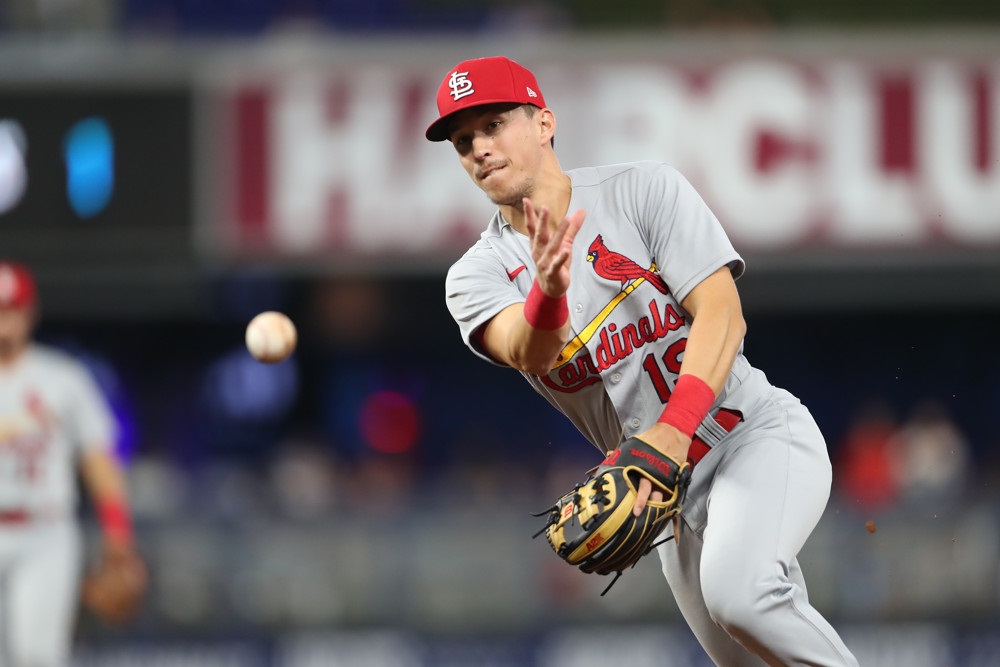
    It doesn’t matter where you put Cardinals infielder Tommy Edman in the field. Wherever he goes, he’s going to make the play.

    Edman is the MLB leader in Defensive Runs Saved this season with 16. He’s also the Sports Info Solutions Defensive Player of the Month for June.

    Edman finished the month with 9 Defensive Runs Saved, the most of any player. He had 5 Runs Saved at shortstop and 4 Runs Saved at second base.

    He joins our previous Defensive Player of the Month winners: Rays outfielder Brett Phillips in April and Orioles shortstop Jorge Mateo in May. Edman was the runner-up to Phillips in voting by Sports Info Solutions staff that month and got the most votes this month.

    What’s most impressive about Edman’s defense this season is not just in how he makes plays but in how he limits mistakes. Our Video Scouts track nearly 60 types of Defensive Misplays & Errors. Edman has only 2 Misplays & Errors in 380 innings as a second baseman this season.

    By comparison, Brewers second baseman Kolten Wong, who has won three of the last four Fielding Bible Awards, has 23. Last year’s winner Whit Merrifield has 9.

    Three other second basemen often lauded for their defense – Trevor Story, Marcus Semien, and Ozzie Albies – have all been charged with Misplays & Errors at a rate at least four times higher than Edman has.

    Similarly at shortstop, Edman has 4 Misplays & Errors in 265 innings. His per-inning Misplay & Error rate ranks 1st.

    Our runner-ups for the honor this month were Rockies second baseman Brendan Rodgers and Yankees catcher Jose Trevino.

    Rodgers had 7 Defensive Runs Saved in June, the most by a second baseman. His 8 Good Fielding Plays, which are awarded for more than 30 types of plays a player can make, were the most of any second baseman.

    Rodgers has engineered quite the defensive turnaround this season, improving from -5 Runs Saved at second base in 2021. The notable differences in his game are in fielding balls hit to his right and in converting double play opportunities.

    Trevino has been the perfect pickup for the Yankees, who obtained him from the Rangers just before the season started. He easily led catchers in Defensive Runs Saved in June and is the runaway leader this season with 12. He ranks No. 1 in our pitch-framing stat, Strike Zone Runs Saved.

    To listen to an interview we did with Tommy Edman on The Sports Info Solutions Baseball Podcast last season, click here

  • Stat of the Week: MLB’s Best Baserunners

    Stat of the Week: MLB’s Best Baserunners

    By MARK SIMON

    Cardinals infielder Tommy Edman can cover 90 feet in 3.87 seconds, a time that ranks right around the top 50 players in MLB. Byron Buxton is the current standard-setter at 3.74 seconds.

    But when it comes to actual baserunning skill, Edman is – to this point – unmatched.

    SIS tracks baserunning not just in stolen bases and attempts, but also in how often a runner goes first to third or second to home on a single, or first to home on a double, as well as how often he garners bases on things such as wild pitches or passed balls. There are penalties for getting thrown out on the bases and for grounding into double plays often. The baseline is MLB average.

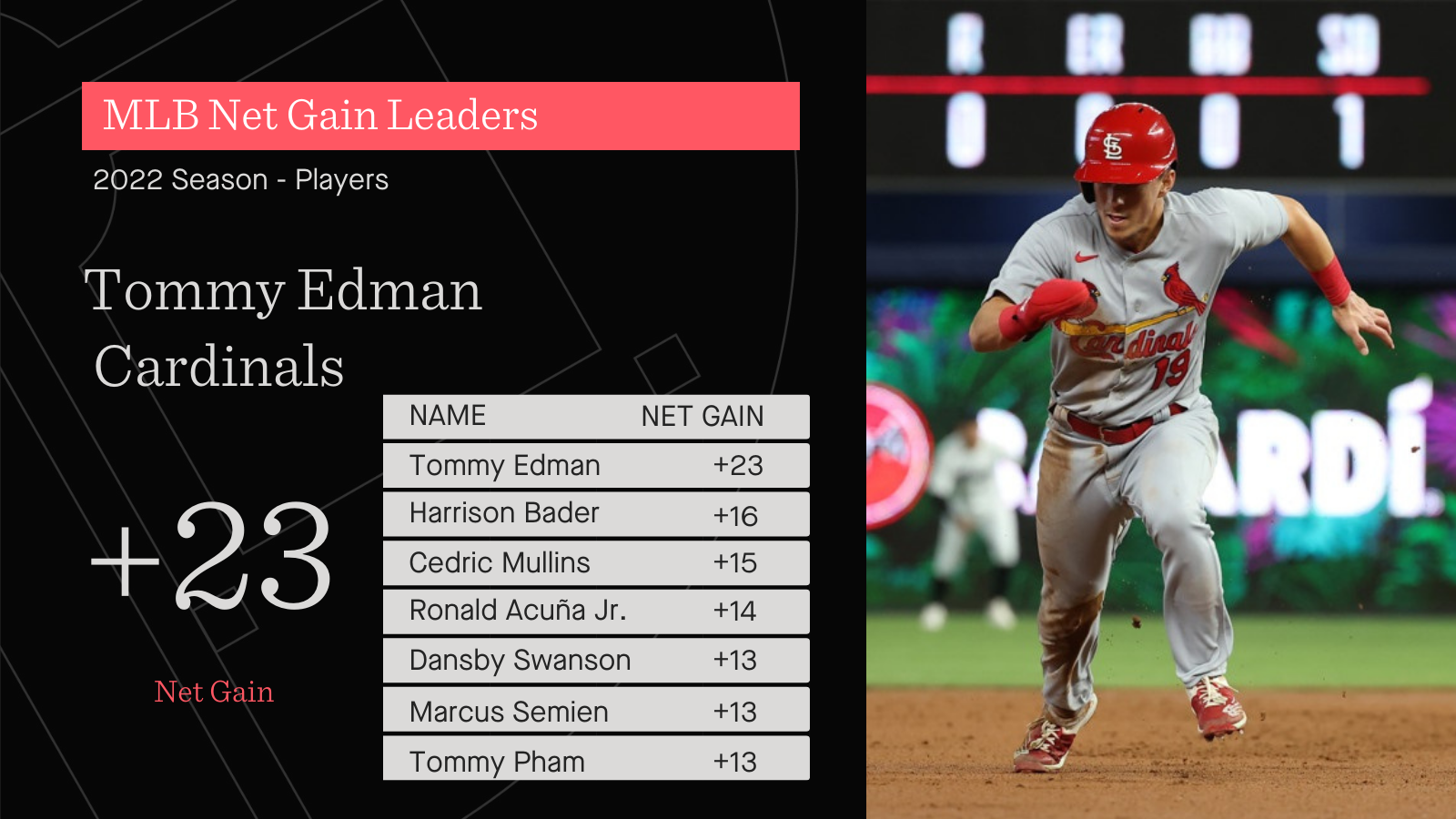
    By our measures, Edman entered Wednesday leading MLB with a Net Gain of +23 bases. The split on those is +8 bases from stolen bases (Edman has 10 steals in 11 attempts) and an MLB-best +15 bases from baserunning (including 9 instances of gaining a base on a wild pitch, passed ball, defensive indifference, balk, or fly ball). Edman’s teammate, Harrison Bader, ranks second overall with 16 bases gained.

    This isn’t a new thing for Edman. Last season, he finished 4th with a Net Gain of +40 bases, 10 behind the MLB leader, Starling Marte.

    If you guessed that the Cardinals lead MLB teams in Net Gain since they have the No. 1 and No. 2 baserunner, you would actually be wrong. They’re bettered by one team, the Rangers, whose Net Gain is +41 bases. The Cardinals are at +35, just ahead of the Giants, who are at +34.

    The Rangers have three players in the Top 10 in Net Gain: Marcus Semien (T-5th, +13), Corey Seager (T-10th, +11), and Eli White (T-10th, +11).

    Semien and Seager rank No. 2 and No. 3 overall, respectively, behind Edman in Baserunning Gain at +12 and +11. Seager’s 11 advances on wild pitches, passed balls, defensive indifferences, balks, and fly outs is tied with Tommy Pham for the MLB lead.

    The Rangers also get a nice boost from not grounding into double plays. Their 19 are four fewer than any other team.

    The Rangers have been a good team once they’ve gotten on the bases. The problem is the getting on the bases. Texas’ .286 on-base percentage is the 3rd-lowest in the majors.

    The Cardinals don’t have such issues. Their .324 OBP ranks fifth-best and combining that with their baserunning, it’s not surprising they are 4th in MLB in runs per game.

    Corey Seager scores on the play. The Rangers' baserunning has been very good this season.

  • McMahon + Fuentes > Arenado on D — By A Lot

    McMahon + Fuentes > Arenado on D — By A Lot

    By MARK SIMON

    A few days ago, a couple of our Twitter followers were surprised when they noticed the difference between the Defensive Runs Saved totals for the Rockies third basemen and the Cardinals third basemen.

    Ryan McMahon and Joshua Fuentes have played Nolan Arenado-like defense at third base. But Arenado hasn’t been Arenado-like this season, at least not by our measures. Fuentes and McMahon are ranked 2nd and 3rd in Defensive Runs Saved at the position. Arenado is only slightly above average.

    At SIS, we have the ability to break this down and look at how an infielder is doing on balls hit to their left, right at them, and to their right. We can look at plays on which the chance to record an out is greater than zero (we’ll call that “opportunities”) and see how often the player recorded at least one out on the play.

    And in doing that, that can help to explain why the gap between McMahon, Fuentes, and Arenado is large this season, specifically as relates to one area – balls hit to their left.

    Comparing them on balls hit to their left

    The thing that most drove Nolan Arenado’s Defensive Runs Saved numbers throughout his Rockies career was how he fared on balls hit to this left.

    You got used to seeing plays like this

    From 2013 to 2020, he averaged being 14 plays above average on balls hit to this area In other words, if there were 200 balls hit to his left, and the average fielder got an out on 100 of them, Arenado was 14 better than that … in other words, 114.

    But in his first season with the Cardinals, he’s only 2 plays above average on balls hit to his left.

    In simplest terms, there has been a little more of this:

    and less of this

    But what McMahon and Fuentes have done is replicate Arenado’s past performance on balls hit to their left.


    McMahon & Fuentes vs Arenado – On Balls Hit To Their Left- 2021 Season

    Player Outs Made/Opp Plays Above Avg
    McMahon/Fuentes 126/218 (58%) +19
    Arenado 84/180 (47%) +2

    (All stats entering Wednesday)


    They’re not just better than Arenado this season. They’re a lot better.

    Here’s two nifty plays by Fuentes (now in the minors) going in that direction


    and here’s one from McMahon, who ranks second in Defensive Runs Saved at the position and first in Defensive Runs Saved overall because he’s been just as good at second base.

    There are other anecdotal numbers that illustrate the stark difference this season.

    – McMahon and Fuentes have combined for 25 Good Fielding Plays at third base this season (think “Web Gems”). Arenado, who typically leads third basemen in the stat, has 16.

    – Arenado also has 21 Defensive Misplays & Errors, meaning this could be the first time in his career that he’s had more Misplays & Errors than Good Plays (the Rockies duo has 24 Misplays & Errors).

    – Additionally, Arenado has converted 8-of-28 double play opportunities (29%). His conversion rate is usually 60% or higher. McMahon and Fuentes have converted 21-of-29 (72%).

    – Lastly, when Arenado plays in a defensive shift, he’s had considerably more difficulty getting outs than he usually does. He’s at -5 Runs Saved on shifts. He saved 22 runs on shifts from 2018 to 2020.

    McMahon and Fuentes have saved 7 runs combined on shifts at third base this season.


    It would be wholly unfair to write off Arenado though, so let’s point out a couple things. He’s having his best year saving runs as relates to bunt defense (3 Runs Saved). He’s also fared better than McMahon and Fuentes on “straight-on” balls. There’s a long track record of success that makes us think that Arenado is still a great glove.

    But the gaps created in all the other areas make it pretty clear that the Rockies have not missed a beat defensively at third base and their pair has outperformed Arenado in that regard this season.


  • Adam Wainwright owes a big thank you to his defense

    Adam Wainwright owes a big thank you to his defense

    By MARK SIMON
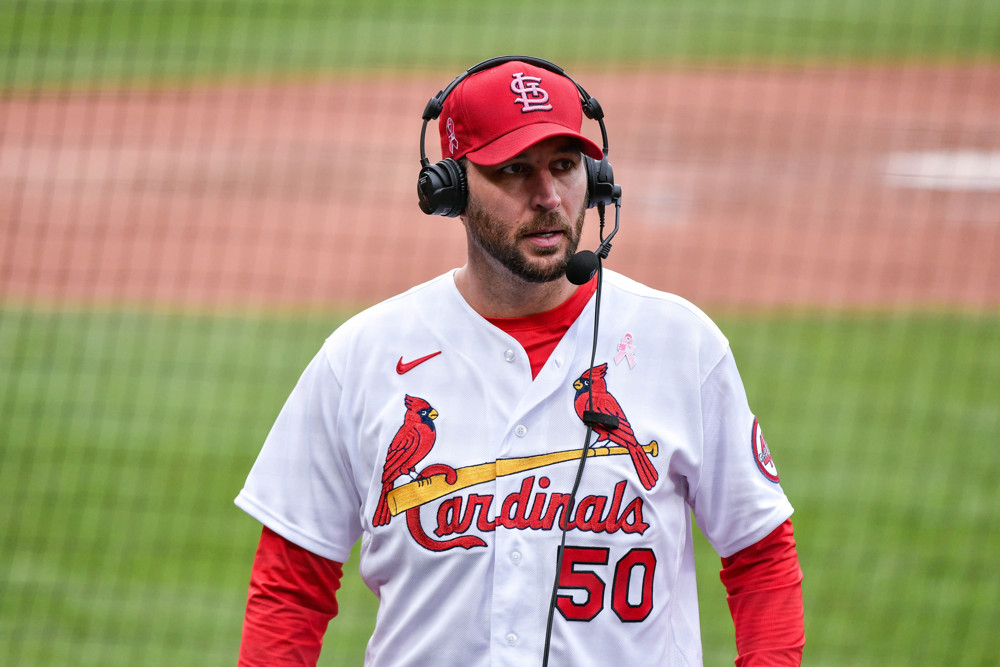
    Adam Wainwright has done great work for his Cardinals teammates for much of his 16-year major league career. He’s a three-time All-Star who was on the mound to close out an NLCS and a World Series and who has pitched to a 3.39 ERA over 2,300-plus innings.

    Now, they’re the ones doing great work for him.

    Sports Info Solutions Video Scouts track what we call Good Fielding Plays. These are the kinds of plays that make YouTube highlight videos or are referred to as Web Gems on ESPN, as well as things like cutting a ball off in the gap or keeping a ball on the infield to prevent a runner from taking an extra base.

    No one has been the recipient of more Good Fielding Plays this season than Adam Wainwright. The Cardinals have made 26 for him.

    Most Good Fielding Plays For Pitcher By Defense


    Pitcher Team Good Plays
    Adam Wainwright Cardinals 26
    Kyle Hendricks Cubs 24
    Luis Castillo Reds 23
    Patrick Corbin Nationals 22
    Chris Bassitt Athletics 21
    Kyle Gibson Rangers-Phillies 21
    Garrett Richards Red Sox 21
    Merrill Kelly Diamondbacks 21


    We’ll take up the subject of which team has played the best defense behind a pitcher this season at another time. That isn’t quite what we’re doing here. We’re looking at which pitchers have been helped by great defense.

    And we focus on the great defensive plays that the Cardinals have made for Wainwright.

    Perhaps the most important of those is one that came in his second start of the season on April 8 against the Brewers.

    Wainwright got drubbed for six runs in 2 2/3 in his season debut against the Reds. And in the first inning against the Brewers, he loaded the bases on a walk, single, and hit by pitch.

    That brought up Lorenzo Cain, who hit this deep fly ball on which Dylan Carlson did his best Cain impersonation.

    Instead of a three-run double, the Brewers didn’t score. Wainwright allowed only one run, rather than four or more, in five innings.

    A somewhat similar instance took place against the Cubs on July 21. Willson Contreras thought he hads a two-run home run in the first inning. Harrison Bader had other ideas.

    This was another instance of a first-inning play getting Wainwright on the right track. He allowed only one run (instead of three) in seven innings and the Cardinals won 3-2 in 10 innings.

    Though much of the defensive goodness for Wainwright came in the outfield, his infielders helped too. Like on this double play started by Nolan Arenado

    Remember too, that it’s not just about the catch, but also about the throw. Like this relay peg home by Tommy Edman to get Tyler Stephenson out at the plate.

    There’s another component to this. We track Defensive Misplays & Errors too. In addition to the 26 Good Fielding Plays made behind Wainwright, there have also been 10 Misplays & Errors.

    The defense has helped him far more than it has hurt him. The 2.6-to-1 Good Play-to-Misplay & Error ratio is the highest among the top 100 pitchers in balls in play allowed.

    Wainwright’s ERA entering his Saturday start is 3.53. If not for the work of the eight guys on the field with him, it would almost surely be considerably worse.

  • Cardinals have lived up to defensive expectations – maybe not how you’d expect

    By MARK SIMON

    Coming into the season, the Cardinals were expected to be one of the best defensive teams in baseball.

    Despite a season interrupted by a Covid-19 outbreak, the Cardinals have lived up to those expectations.

    The Cardinals are tied for third in the majors in Defensive Runs Saved with 19. That’s despite having played only 32 games, while most of the other teams have reached or are approaching 40.

     Defensive Runs SavedGames Played
    Dodgers3142
    White Sox2041
    Cardinals1932
    Twins1942
    Indians1440

    The Cardinals rank first in the majors in turning ground balls and bunts into outs with a 79% conversion rate. They also rank first in the majors in turning balls hit in the air that didn’t leave the ballpark into outs (73%, with an MLB-best 67% rate on balls hit to the outfield).

    The Cardinals have done this without having a player near the top of the Runs Saved leaderboard. Your five guesses at the team leaders would probably be Kolten Wong, Harrison Bader, Yadier Molina, Paul Goldschmidt, and Paul DeJong. They would all be wrong. Outfielders Dylan Carlson and Tyler O’Neill lead the team with 5 and 4 Runs Saved, respectively. Carlson has at least one Run Saved at each of the three outfield spots. O’Neill has done his work in left field.

    Wong, who won the Fielding Bible Award at second base the last two seasons has a respectable 3 Runs Saved. Seven players have more.  DeJong, who tied for the MLB lead with 26 Runs Saved at shortstop last season, sits at an MLB average 0 in 2020, the same total as Molina at catcher. Bader has 1 Run Saved in 2020. Goldschmidt has 2. They’ve all been alright to good. None has been great.

    What sticks out about the Cardinals regarding why their Runs Saved total is so high is that they don’t have a bad defensive player. They have three players who are a smidge below average so far – Brad Miller (-1 Run Saved), Matt Wieters (-1), and Dexter Fowler (-2), with Fowler currently on the IL with a stomach ailment.

    There are 72 players who entered Monday at -3 Runs Saved or worse this season. They’re on the other 29 teams. The Cardinals have none of them. They’ve maximized the talents of their players through the first half of their season.

    The Cardinals Way this season seems to be to go about their defensive business with workmanlike consistency, not allowing bad performance to take root. Seems like a good way to approach things in the field.

  • Are Matt Olson and Chapman the best corner duo in the “Runs Saved era?”

    By Mark Simon

    Talking with Matt Olson on the latest Sports Info Solutions Baseball Podcast got me thinking about great corner infield combos. And I figured there was a good chance that the A’s got more defensive value out of first and third base in 2019 (50 Defensive Runs Saved) than any team previously had from those two positions in the 17-year history of the stat.

    It turned out that a couple of teams had them beat.

    2003 Rangers (60 Runs Saved From 1B and 3B)

    What a luxury the Rangers had at first base in 2003. They had a rookie, Mark Teixeira, who went on to win five Gold Gloves and a three-time Gold Glove winner at DH in Rafael Palmeiro.

    Teixeira saved 19 runs in his debut season, living up to his status as one of the game’s top prospects with both the bat and the glove. Palmeiro gets knocked for winning a Gold Glove in a season in which he barely played (1999), but he was legit when he did take the field. He saved 11 runs in 55 games as Teixeira’s alternate. Add in a run saved each for Mike Lamb and Todd Greene and the Rangers got 32 Runs Saved from first base.

    On top of that, they got 28 more out of second-year man Hank Blalock at third base. Blalock didn’t win a Gold Glove that year, but he probably should have. Between the two-headed monster at first base and Blalock’s work at third, the Rangers got 60 Runs Saved. Olson and Chapman couldn’t quite beat that.

    2007 Cardinals (51 Runs Saved)

    I can’t knock this one. This is a season in which Albert Pujols played the best first base that anyone has played in the DRS era (I wrote about it for The Athletic). Pujols saved 31 runs by playing well off the bag, and he was still able to recover to get back to catch throws without issue. On the opposite side of the diamond, perennial defensive star Scott Rolen saved 12 runs in 112 games and five backups showed they were in sync with “The Cardinal Way,” combining to save nine more runs.

    In all, the Cardinals corner infielders combined for 51 Runs Saved, just edging out the A’s.

    So about Olson and Chapman …

    All right, so the A’s don’t come out on top here. Though Olson saved 18 runs, his backups cost the Athletics five runs. Combining their 13 with Chapman and company’s 37 gives the Athletics 50 runs, good for third best on this list. Oakland’s corner infielders also combined for 43 Runs Saved in 2018, which ranks tied for fourth with the 2005 Phillies (of Ryan Howard and Scott Rolen fame).

    However, if we just look at combos and take the backups out of the mix, Olson and Chapman combined for 52 Runs Saved last season. No other third-first combination beats them out. They’re the best of the DRS era.

  • Q&A: Hall-of-Famer Ozzie Smith on Defensive Excellence

    Hall of Famer Ozzie Smith is arguably the greatest defensive shortstop of all-time. Known as ‘The Wizard’ for his ability to make impossible plays, Smith played 19 seasons with the Padres and Cardinals, winning a record 13 Gold Gloves, and a World Series with the Cardinals in 1982. He was elected to the Hall of Fame in 2002. He talked to Mark Simon last November.

    This essay is excerpted from The Fielding Bible-Volume V, available now from ACTASports.com and Amazon.com

    Simon: “What does the idea of defensive excellence mean to someone like you?”

    Smith: “Defensive excellence, as it is with everything, is trying to be as consistent as you can possibly be. When people talk to me about playing shortstop, the thing that comes to mind is great plays. But I think great plays are the result of keeping yourself in a position to make the routine play.

    So much of what I did, or any shortstop for that matter, was instinctive. It’s an instinctive position. A shortstop or middle infielder is somebody who should be able to cover ground and don’t have to play to a scouting report. The scouting report is still very important, but you still have to be able to make plays if a ball is in a certain area. For me, it’s freelancing and improvisation. It’s all those things melded into one that hopefully make you into a consistent player. Making the routine play every day. Great plays will take care of themselves.”

    Simon: “With that in mind, when you go into a series with a team like the 1985 Mets, what was the defensive preparation like for you and the manager, Whitey Herzog?”

    Smith: “I don’t think there’s any way to do it. You can have the best scouting report in the world. I can remember in 1982, the first game of the World Series against the Brewers. We went strictly by the scouting report. It seemed like we were out of position on every play. After that first game, we realized we just needed to do what it is we do. Everything is played off straight-up. We may shade one way or the other. There were very few guys that were strictly pull hitters. Guys like Dave Kingman, you could shade him a little bit more to pull than Tony Gwynn, who sprayed the ball all over. We still have to figure a way to get anybody out. That comes from being able to be improvisational, making plays that are not right in your vicinity.”

    Simon: “What do you think of the things that have come into play in the last 10 years with defensive positioning?”

    Smith: “Everything has its place as long as you don’t overcook it. The bottom line for me is being consistent in the things you do. As a team, it’s never going to change. If you want to be a good team, you need to be strong up the middle. You have to have a good center fielder, hopefully a good pitcher, catcher, shortstop, second baseman. If those things are solid, it gives you a good foundation to work from. But if you’re weak at those positions, and at being able to make that routine play every day, you’re going to struggle as a team.”

    Simon: “If you were going to tell someone watching the game what they should be looking for from a shortstop, what should they be looking for?”

    Smith: “It’s movement. A good shortstop, good infielder is gonna have good lateral movement left and right. Someone who always seems to be in the vicinity of where the ball is. A lot of that has to do with a pitcher pitching to his scouting report. If a pitcher can’t pitch to a scouting report and throws balls to where they’re not supposed to be thrown. I had a lot of fun with my pitchers because I’d tell them I was out there to catch their mistakes.

    That in reality is what it’s all about, to cover the mistakes your pitcher may make on any given day. I prided myself on being able to make and complete a play without being in the scouted position.”

    Simon: “The advanced defensive metrics surprise us sometimes and tell us something we didn’t know. In 2019, they liked Paul DeJong a lot and I was curious for your take on him as a shortstop.”

    Smith: “You know why? Because Paul DeJong was very consistent at making the routine play. That’s what a team depends on—when you go to the mound for a meeting, saying ‘Get a ground ball to this guy.’ That’s the guy you want to be. Paul DeJong is one of those players who’s not flashy, like Brandon Crawford of the Giants, but very consistent at what he does.

    I’ve had the chance to spend some time with Paul. He’s a bright, eager-to-learn young man who is just getting better and more consistent each year. That’s what we talked about.”

    Simon: “Do you feel the same about Kolten Wong?”

    Smith: “Kolten came into his own this year, won his first Gold Glove. I think you’ll see Paul do that as well. His consistency is something that can’t be ignored.”

    Simon: “Who do you see that reminds you of you?”

    Smith: “The position has changed so much from a defensive standpoint. From a prototypical shortstop standpoint, myself and Omar Vizquel probably paralleled each other more than anybody else because we were able to cover a lot of ground and not be dependent on positioning to make a play. I always looked at that as very, very important, to be able to cover mistakes, a bad hop or whatever. The ones who are able to do that are the ones who get a look at making the Hall of Fame.”

    Simon: “You played with a lot of players who young players would do well to emulate on defense. Can I get your take on a few, starting with Keith Hernandez?”

    Smith: “Best first baseman I ever played with. He made it easy for middle infielders because you didn’t have to be perfect with your throws. He had the improvisational ability at first base to know when to come off, when to stay on the bag. To me, a Hall of Famer.”

    Hernandez won 11 Gold Gloves, most of any first baseman

    Simon: “Willie McGee?”

    Smith: “Again, a guy who could cover mistakes. He covered a lot of ground in the outfield. Someone who was very consistent. You knew what you would get every day. That makes teams great.”

    McGee won three Gold Gloves in center field

    Simon: “Tony Pena?”

    Smith: “Great arm. A good defensive player. Fun to watch. One of those guys who came up at a time when catchers had the ability to throw a lot of runners out.”

    Pena won four Gold Gloves

    Simon: “Terry Pendleton?”

    Smith: “I’d rate him right there with Mike Schmidt at covering ground. He was one of the best at going back on the ball with his back to the infield. Surprising when you look at his size, you don’t see someone with great range or a great throwing arm. But he was very, very consistent.”

    Pendleton won three Gold Gloves

    Simon: “Is there someone from your era who doesn’t get his due defensively?”

    Smith: “I had a chance to play with Ken Oberkfell, who was also a great third baseman. They make the shortstop’s job a lot easier. It allows the shortstop to play more up the middle. It was easy playing over there because you knew that the ground to your right was covered. It allowed everybody else to move an extra step to their strength. When I look at the best teams I played with. The 1982 team and 1985 team were teams that moved in unison. If I moved a step, you moved a step. Ground was covered.

    That’s not taken into consideration, but when you look back, we operated as a unit. If I moved on the field, I had to let my second baseman, third baseman, first baseman know I moved. It makes everybody else’s job easier.”

    Simon: “When I was little, I watched The Baseball Bunch and I remember Ozzie Smith teaching me that ‘Wall Ball’ (throwing a ball against a wall and catching it) was a great way to practice. What tips would you give to a player who moved beyond ‘Wall Ball’ regarding learning the intricacies of shortstop?”

    Smith: “There’s no substitute for blood, sweat, and tears. As blessed as I was from a defensive standpoint with my hand-eye coordination, one of the favorite parts of my day was going out and taking ground balls. It put me in a certain place of peace. It was a release for me to do that. If there was a bad spot on the field, then it was important for me to know so I could anticipate a ball taking a hop in a certain place.

    Even when I played on AstroTurf, people say it’s easier because you got a true bounce. But you had to play around seams in the turf. In some places we played, the seams could be right in front of you. So you had to anticipate what the ball is going to do in a certain spot. That’s one of the reasons I took ground balls every day. One thing I try to tell kids today is that in life, you only get out what you put in. If you don’t put anything in, you shouldn’t be getting anything in return.”


  • Why Paul DeJong Belongs Among MLBs Elite Shortstops

    The following is an article that appears in The Fielding BibleVolume V. You can purchase the book at ACTASports, Amazon, or wherever books are sold.

    By Mark Simon

    Paul DeJong of the Cardinals tied for the MLB lead among shortstops with 26 Defensive Runs Saved last season.

    That is a stat that should surprise you. Javier Baez dazzles regularly on highlight reels. Nick Ahmed has won two straight NL Gold Gloves. Trevor Story is one of a few heralded as the game’s standouts.

    Most Defensive Runs Saved—Shortstops (2019)
    Player DRS
    Paul DeJong 26
    Javier Baez 26
    Nick Ahmed 17
    Trevor Story 14

    DeJong on the other hand is rather ordinary. He finished 10th among shortstops in our Scouts Defensive Rating system, which essentially serves as a proxy for the eye test. He ranked last among shortstops in Good Fielding Plays per 1,000 innings (in other words, he didn’t have a lot of Web Gems). There is nothing in watching DeJong that would make you think he was the DRS leader at shortstop in 2019.

    But what DeJong did was play and he played well. He started 156 games at shortstop. He led all shortstops in putouts, was one shy of the lead in assists, and turned 29 more double plays than anyone else at the position (the widest gap between the leader and No. 2 since 1982).

    DeJong was a product of both opportunity and of being good. In particular, DeJong rated highly on balls hit to his left (in other words, usually up the middle). He had a knack for the play in which he quickly shuffled left and fielded the ball behind second base, occasionally diving, but usually just having good anticipatory instincts and a quick first step.

    Those balls didn’t get past Cardinals infielders. They converted 62% of groundballs hit past the mound and within 10 feet to the left or right of second base into outs, the second-highest rate in the majors.

    DeJong converted 173 of 265 balls hit to his left in which he had a greater than 0% chance of making a play, a 65% out rate. Baez had a 67% rate. However, there are two things to keep in mind.

    1) The expected out rate on DeJong’s balls was 57%. The expected out rate for Baez was 65%. In other words, the balls up the middle against DeJong had a higher degree of difficulty.

    2) DeJong had 72 more opportunities on those balls, thus giving him more opportunities to be above average at making plays.

    And DeJong’s 65% out rate on balls hit to his left was much better than Story (60%) and Ahmed (53%).

    Plays Made Above Expectations
    Player To His Right Straight On To His Left
    DeJong 11 2 22
    Baez 12 6 8
    Story 5 3 7
    Ahmed 18 5 -3

    DeJong did this without sacrificing balls hit either to his right or those hit within his immediate vicinity. DeJong was 13 plays above average on those balls, which was better than Story. It wasn’t as good as Baez or Ahmed, but the gap between them wasn’t as large as the gap between the DeJong and everyone else on balls hit up the middle.

    Want to look at this another way? Here’s a look at how often the top shortstops get an out on balls with a 25 to 75% out probability. This encompasses a wide swath of types of plays: from the challenging, but not impossible, to the routine, but not easy.

     Individual Out Rate on Batted Balls – With Out Probability Between 25% and 75%
    Player Actual

    Out Rate

    Expected

    Out Rate

    DeJong 66% 51%
    Baez 66% 53%
    Story 62% 52%
    Ahmed 56% 50%

    DeJong excelled because he fulfilled the bottom line. He got outs when he was supposed to get outs and got outs when he wasn’t supposed to get outs. The damage done on balls hit near him was minimal, more so than anyone at the position, similar to his teammate, two-time Fielding Bible Award-winning second baseman Kolten Wong.

    Did this make DeJong one of the best defensive shortstops in baseball in 2019? That’s a question without a right answer. It’s a matter of opinion. There is a good case to be made for many. But if we stick to the facts, we can tell you that DeJong (and Baez) saved more runs than any other shortstop in the majors last season. It may be surprising, but it’s what the data shows.