Category: Football

  • Off The Charts: Week 3 Preview – Bullish on the Rams, Skittish on Young QBs

    Off The Charts: Week 3 Preview – Bullish on the Rams, Skittish on Young QBs

    On this week’s edition of Off the Charts, Matt Manocherian (@mattmano) & John Todd (@therealjohntodd) look back at the most notable themes from Week 2 – the struggles of young quarterbacks, the abundance of notable injuries, and which teams and players have looked better than they’ve shown (), then dive into the most prominent games of Week 3.

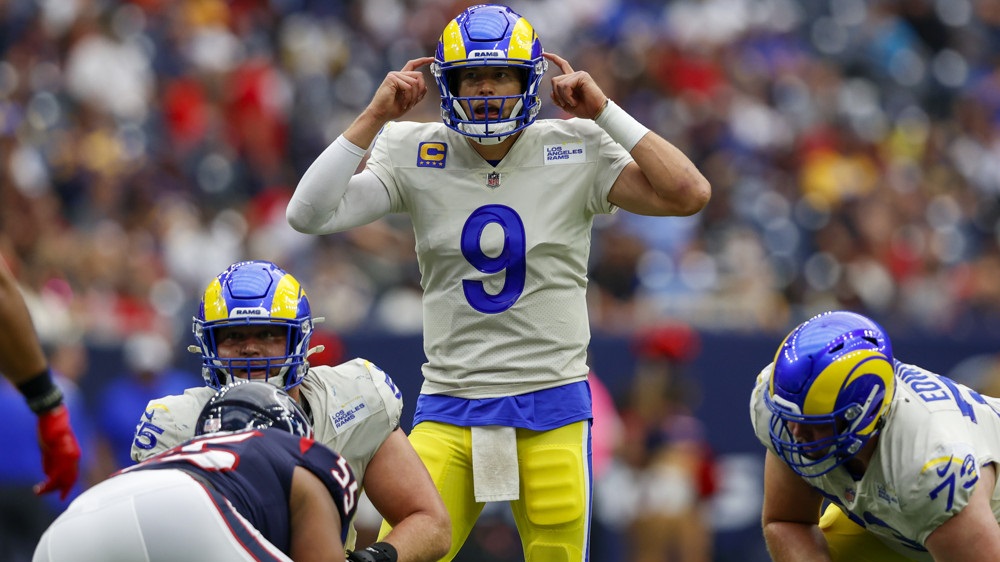
    First on the docket is Rams-Buccaneers, and both Matt and John are highly bullish on the Rams ().

    Next up is the Sunday night game between the Packers and 49ers. There’s some difference of opinion on how good Aaron Rodgers was in Week 2. Matt and John discuss ().

    Third is the Monday Night Football game between the Cowboys and Eagles (), with a bonus discussion on the Washington Football Team’s chances to win the NFC East ().

    The two of them close the show by talking about the chances of all four NFC West teams making the playoffs (a longshot) and which players and games they’re most excited to watch in Week 3 (). Thank you for listening as always.

    Please rate and review us if you can. You can send show feedback to mark@ww2.sportsinfosolutions.com. Stay safe and stay well.

  • When looking at Curtis Samuel’s Situation, Think of Julio Jones

    When looking at Curtis Samuel’s Situation, Think of Julio Jones

    BY JAMES RODRIGUEZ

    As we continue our series of articles on football injuries, I want to focus on two athletes that have different injury histories, production, and playing style. I will use one athlete’s injury-riddled campaign to guide a thought process for a current athlete battling a comparable injury.

    We must begin with an anatomy lesson, and I promise I will keep this brief: 

    The most common muscle groups injured are the groin, hamstring, quads, and calves. These lower-body muscles are susceptible to injury because they are long muscles that span the length of 2 joints. 

    These muscles generate a tremendous amount of force to accelerate, run, jump, and cut. With all that power, these muscles can easily become tight, which makes them susceptible to strain under stresses that lengthen them. That is about as basic as I can sum it up for the purposes of this article.  

    Keep in mind that these posts are written to be transferred and applied to other players not specifically highlighted. They are to be a guide on how to approach a situation. 

    Exhibit A: Julio Jones. 

    Photo by David John Griffin/Icon Sportswire

    He is one of the best wide receivers to ever grace a football field. In addition to his accolades, he has played in at least 13 games in 8 of his 10 seasons. The exceptions are his third season when he broke his foot and last year when he tried to manage a hamstring injury. 

    My most recent article went into depth on hamstring injuries and this situation will buffer that research-based take. Jones initially injured his hamstring during Week 2, 2020.

    This is a breakdown of his 2020 campaign: 

    Week 3– Out

    Week 4- Reaggravates and limited to 21% of the snaps

    Week 5– Out

    Week 6-9- Very productive and effective

    Week 10- Bye

    Week 11- Reaggravates and limited to 36% of the snaps

    Week 12- Out

    Week 13– Effective return but subsequently shut down for the remainder of the season

    Jones did prove that he could play with the muscle strain, but it was the management of it and the unpredictability of his performances that was so frustrating to fans. As previously discussed in our last article, the biggest risk factor for a hamstring strain is a history of a hamstring strain. 

    That can be extrapolated to other muscles as well.

    Which leads us into Exhibit B: Curtis Samuel.


    (Photo by William Purnell/Icon Sportswire)

    If Jones was the apples in my metaphor, allow me to introduce Samuel as the oranges. And yes, I understand that these are two different injuries. Samuels’ being the groin and Jones’ being the hamstring, but they are both muscles and they follow the same tissue regeneration principles. We will use one athlete’s recovery to help explain our determination of how to handle the other. 

    Samuel initially suffered his groin strain mid-June and slowly worked his way back to a full  practice by September 6 with the anticipation that he would be ready to play by Week 1. Two days later, he reaggravated his groin and was placed on IR. That is 12 weeks that the training staff was preparing Samuel for his eventual return only to have their plans foiled. 

    Research states that a reaggravation of the initial injury can make the subsequent rehab duration longer by up to 30%. If that is the case, this recovery could take 12 to 16 weeks which would completely neutralize any value this season.

    I don’t expect his recovery to take that long, but I also don’t anticipate him returning after the completion of his IR stint in Week 4.

    Fantasy Ramifications

    As he continues to progress through his rehab, reports will be glowing about his readiness to play. I caution you during this time as I will refer you to the story of Jones last season. 

    If you had Jones on your team last year, you remember the frustrations of handling this situation. You likely played him on the weeks where he couldn’t finish the game because, well, he’s JULIO JONES. And you probably benefited from a mere 4 of his 6 productive games last season because he burned you in the others. 

    You may grab Curtis to roster him, but the chances of you playing him his first week back are unfortunately lower than the chances of him reaggravating his injury.

    If you have the roster flexibility at the time reports of Samuel’s return postulate, he can be your midseason flyer. If you are in a situation, where you need your roster spots to manage the bye weeks or you need a win to make the playoffs, he doesn’t need to be on your roster.

    Best of luck to those athlete’s recoveries and to our fantasy teams as we negotiate the everchanging landscape.


  • Top Prop Bets for Thursday’s Week 3 – Panthers at Texans

    Top Prop Bets for Thursday’s Week 3 – Panthers at Texans

    BY STEVE SCHWARZ

    If not for prop bets and fantasy football, would we actually watch this game?

    Just kidding: It’s not that bad.

    The Panthers have won two straight to start the season including a demolition of the Saints and the Texans beat up on a bad Jacksonville team before losing last week to a good Browns team. We don’t see any props we like among the quarterbacks but have a few other ones that we like.

    Full disclosure: Our picks are 2-7 to start the season after an 0-3 week last week.

    Here are Thursday’s selections using odds provided by DraftKings in an effort to turn that around.

    You can use SISBets.com to get your own projections – registered users can try 10 free queries.

    1) Anthony Miller, 2.5 receptions, under -150

    Miller hasn’t played yet this season, being a healthy scratch after missing most of the preseason due to a dislocated shoulder. Even if he’s active, he likely hasn’t practiced with the new starting quarterback Davis Mills.

    While he’s been absent, Brandin Cooks established himself as the No. 1 option with 21 targets with Danny Amendola, Pharaoh Brown and RB David Johnson getting six targets each.

    Given his “rust” and playing for a new team after three season with the Bears, we can’t see him getting three receptions.

    In fact, the SIS calculations show that the under should be a -312 favorite and DraftKings shows it at only -150.

    2) Terrace Marshall Jr., 2.5 receptions, over -135

    Marshall is just a rookie (LSU) and the No. 3 receiver behind Robby Anderson and DJ Moore, but he’s been solidly involved in the Panthers passing game. He’s caught three balls in each game and got six targets in their only competitive game, the Week 1 19-14 win over the Jets.

    He’s getting plenty of playing time, getting 52% of their 140 snaps over the two games. Based on the SIS data, Marshall should be a -194 favorite, but DraftKings is setting the number at -135.

    3) Jordan Akins, 1.5 receptions, under +115

    Akins has been a solid contributor in the past with 36-418-2 in 2019 and 37-403-1 in 2020, but this season he’s gotten just four targets, with one reception in two games, and isn’t starting.

    Admittedly he’s gotten plenty of snaps (85-of-139). But given that he’s not been a priority target, the SIS data has him as -196 for the under and you are being offered +115. That’s one to take.

    SIS has been an innovator in the collection and analysis of sports data for almost two decades. SIS specializes in baseball, football, and basketball data, using professional scouting practices to collect the most detailed and accurate information in both sports. Its data can be found in the majority of team front offices, and on websites such as Fangraphs and Football Outsiders.


    Quarterback Passing Yards

    ————————————

    Sam Darnold, over 265.5, -115/under -115

    Davis Mills, over 211.5 -115/under -115


    Quarterback Passing TDs

    ———————————–

    Sam Darnold, over 1.5, TDs, -160/under +120

    Davis Mills, over 1.5 TDs, +180/under -250


    Quarterback Interceptions

    ———————————-

    Sam Darnold, over 0.5, INTs, +110/under -150

    Davis Mills, over 0.5 INTs, -205/under +155


    Quarterback Completions

    ———————————-

    Sam Darnold, over 23.5, completions, +100/under -130

    Davis Mills, over 18.5 completions, -120/under -110


    Touchdown Scorers

    ————————–

    Carolina –

    Christian McCaffrey, -250

    DJ Moore, +110

    Robby Anderson, +175

    Terrace Marshall Jr., +275

    Sam Darnold, +310

    Chuba Hubbard, +400

    Dan Arnold, +400

    Brandon Zylstra, +550

    Ian Thomas, +800

    Royce Freeman, +900


    Houston –

    Brandin Cooks, +200

    Mark Ingram, +225

    Phillip Lindsay, +250

    Chris Conley, +300

    David Johnson, +300

    Anthony Miller, +400

    Andre Roberts, +450

    Jordan Akins, +500

    Pharaoh Brown, +500

    Davis Mills, +650


    Rushing Yards

    ——————-

    Carolina –

    Christian McCaffrey, 82.5, over -115/under -115

    Sam Darnold, 6.5, over -115/under -115


    Houston –

    David Johnson, 67.5, over -115/under -115

    Mark Ingram, 36.5, over -115/under -115

    Phillip Lindsay, 21.5, over -115/under -115


    Receiving Yards

    ———————

    Carolina –

    Christian McCaffrey, 49.5, over -115/under -115

    DJ Moore, 67.5, over -115/under -115

    Robby Anderson, 43.5, over -115/under -115

    Terrace Marshall Jr., 28.5, over -115/under -115

    Dan Arnold, 23.5, over -115/under -115


    Houston –

    Brandin Cooks, 68.5, over -115/under -115

    Mark Ingram, 3.5, over -110/under -120

    Phillip Lindsay, 2.5, over -110/under -120

    Chris Conley, 26.5, over -115/under -115

    David Johnson, 17.5, over -110/under -120

    Anthony Miller, 25.5, over -115/under -115

    Jordan Akins, 16.5, over -115/under -115

    Pharaoh Brown, 18.5, over -110/under -120


    Receptions

    ————–

    Carolina –

    Christian McCaffrey, 5.5, over +105/under -140

    DJ Moore, 5.5, over +110/under -145

    Robby Anderson, 3.5, over -150/under +115

    Terrace Marshall Jr., 2.5, over -135/under +100

    Dan Arnold, 2.5, over +140/under -190


    Houston –

    Brandin Cooks, 5.5, over -115/under -115

    Chris Conley, 2.5, over +100/under -135

    David Johnson, 2.5, over +105/under -140

    Anthony Miller, 2.5, over +110/under -150

    Jordan Akins, 1.5, over -150/under +115

    Pharaoh Brown, 1.5, over -180/under +135


  • Hamstrung by hamstrings: What should fantasy players do?

    Hamstrung by hamstrings: What should fantasy players do?

    By JAMES RODRIGUEZ

    So, your top fantasy player experienced a hamstring strain, and his team is being coy about the details of his injury. In addition to their discretion, they refuse to give a timetable of his return and insist on keeping him questionable week after week impacting your ability to make a sound decision.

    Do you play your star player and watch him be pulled after a series or do you sit him on your bench to watch him have a monster game? Wouldn’t it be easier if the team used one of their injured reserve spots to make your decision for you? If you’ve played fantasy football before, this is a predicament that we all know too well.

    Don’t fret, for SIS is here to provide you with information to give you confidence about your injury decisions.

    Let me get this disclaimer out of the way. As a Physical Therapist, I trust that the team and medical staff have the player’s best interest in mind when it comes to the rehab process and a safe return to play. Re-injury is a legitimate concern that teams must be cautious and aware of. They don’t need to concern themselves with our fantasy teams when releasing practice reports.

    That’s where this article come into play. Thinks of this as your coach’s tendency sheet to make the right play call. I will share some research with you and give my opinion about the matter.

    Hamstrings

    The focus of today is hamstring strains.

    According to research, 1/3 of all injuries are muscle related and the most common muscle involved are hamstrings. SIS has been tracking the data since 2018 and estimates that 15.5% of injuries involve lower-body muscles. Of that, the highest percentage involve the hamstrings at 7.8% which is supported by clinical data.

    ACL tears, ankle dislocations, and Achilles tears are detrimental injuries, but we know how to handle these situations. It’s the nagging muscle strains that keep players out of the lineup without much clarity for weeks at a time.

    Although each injury is unique, that doesn’t mean we cannot use observations and reported information to help us navigate the situation.

    It is important that a short period of immobilization occurs to limit the overall damage. This means that it is important to be aware of any player that attempts to return to play after a “pull.” That immediate return could increase the damage which would lengthen the overall timeframe.

    It may be frustrating to see a team be so cautious about a player’s return and make minimal progress throughout the rehab process but that is because, much like movie sequels, re-injuries are often worse than the original.

    On average, a re-injury can take 30% longer to recover than the initial injury. In addition to that, the highest risk factor for a hamstring strain is a previous history of a hamstring strain.

    As an example, a player that could have returned in three weeks but reaggravates their injury during Week 2, will take an additional four weeks to return. That puts them at six weeks total, doubling the original timeframe.

    So, be patient with the teams that are being patient with their players, because I’d rather have my player back in my lineup with more confidence that they are in fact “ready.”

    Let’s say you hear that your player underwent an MRI to assess the extent of the injury. You may be thinking, “that can’t be good.” Initial instincts suggest that but there is good evidence out there to get imaging performed as soon as possible to assess the extent of the damage.

    And if the team uses MRIs throughout the rehab process, they are monitoring the athlete’s response to training so you can feel more confident in the eventual return to play.

    To wrap this all up, as a Physical Therapist, I would plan on keeping that injured player on my bench until he completes a full game of action without any reports or visual signs of reaggravation.

    To wrap this all up, as a Physical Therapist, I would plan on keeping that injured player on my bench until he completes a full game of action without any reports or visual signs of reaggravation.

    If I hear a cautionary report stating that the athlete experienced a hiccup during the rehab, I will look to trade him away because I anticipate that this is going to be an ongoing issue.

    Unfortunately, more injuries will occur and with that, more questions will arise. We’ll try to answer some of them here.


  • World’s No. 1 QB Rankings: Bridgewater, Taylor climb; Rodgers falls

    World’s No. 1 QB Rankings: Bridgewater, Taylor climb; Rodgers falls

    By MARK SIMON & ALEX VIGDERMAN

    Aaron Rodgers’ rough game last Sunday was a costly one in the World’s No. 1 Quarterback Rankings.

    Rodgers, who had the slimmest of leads on Patrick Mahomes, fell two spots, not just behind Mahomes, but behind Tom Brady as well. His -9.5 Points Above Average in Week 1 were 17 fewer than Mahomes, so the Chiefs quarterback now has a sizable edge on his Buccaneers and Packers counterparts.

    A reminder that The World’s No. 1 Quarterback Ranking is based on a model devised by Bill James to evaluate The World’s No. 1 Starting Pitcher. Bill’s model was based on cumulative evaluation of individual starts over an extended time period using the metric Game Score.

    The World’s No. 1 Quarterback Ranking uses our player value stat Total Points to make a cumulative evaluation of game performance over a three-year period. The key to our calculation is PAA, which as we previously noted is the statistical underpinning of Total Points that is centered at zero so that positive numbers are above average and negative numbers are below average.

    Success over time is key to maintaining a good ranking. Prolonged inactivity results in a ranking drop. The most recent performances carry the most weight.

    The current Top 8 are

    1. Patrick Mahomes (up by 1)
    2. Tom Brady (up by 1)
    3. Aaron Rodgers (down by 2)
    4. Deshaun Watson
    5. Russell Wilson
    6. Josh Allen
    7. Derek Carr
    8. Kirk Cousins (up by 1)

    The top PAA performers in Week 1 are not in that group. They were a couple of unexpected names, Teddy Bridgewater and Tyrod Taylor. Bridgewater’s 9.1 PAA bumped him up five spots, from No. 20 to No. 15.

    Taylor’s climb was a bigger one, from No. 58 to No. 22 after a huge game against the Jaguars. Others with similar jumps included Jameis Winston (from No. 57 to No. 26 after outplaying Aaron Rodgers) and Jalen Hurts (No. 72 to No. 32 after beating the Falcons).

    Bridgewater’s Week 1 win against the Giants came in a game in which he completed 28-of-36 passes for 264 yards and two touchdowns. Bridgewater totaled two touchdown passes in his last five starts in 2020.

    As was discussed on the Off the Charts podcast, Bridgewater succeeded largely by being a game manager, but picking his spots when he needed. He was the top PAA quarterback for the week in passes 11 to 15 yards downfield, completing 5-of-5 for 87 yards.

    Taylor, in for Deshaun Watson, overshadowed Jaguars rookie Trevor Lawrence, who was making his NFL debut. Taylor looked like an experienced vet, completing 21-of-33 passes for nearly 300 yards and two scores. His season debut went a lot better than his 2020 debut for the Chargers, in which he went 16-for-30, broke two ribs, and didn’t throw another pass the rest of the season. Meanwhile, Lawrence finished with -4.4 PAA.

    Winston threw for only 148 yards but had five touchdowns in a surprisingly dominant showing against the Packers. He finished drives effectively with short passes, going 5-for-5 with four touchdown passes on plays inside the 10, avoiding the interception issues that previously cost him.

    Rodgers, Ben Roethlisberger, and Jets rookie Zach Wilson all had -9.5 PAA. But two quarterbacks were worse: Ryan Tannehill and Andy Dalton.

    Tannehill’s -17.2 PAA cost him considerably. He fell 9 spots in the rankings, from No. 8 to No. 17 after being sacked six times in a loss to the Cardinals. He now faces the Seahawks in Week 2. Dalton dropped 26 spots, from No. 49 to No. 75, after posting -10.7 PAA in his Bears debut. Dalton’s showing was actually worse than his 2020 season-ender against the Giants, when he totaled -8.0 PAA.

    Here are the rankings through Week 1.

    Rank Player PAA per 60 StartOfSeasonRk
    1 Patrick Mahomes 7.3 2
    2 Tom Brady 6.1 3
    3 Aaron Rodgers 5.4 1
    4 Deshaun Watson 5.2 4
    5 Russell Wilson 3.8 5
    6 Josh Allen 3.3 6
    7 Derek Carr 2.9 7
    8 Kirk Cousins 2.8 9
    9 Justin Herbert 2.4 10
    10 Lamar Jackson 1.6 13
    11 Baker Mayfield 1.5 14
    12 Matthew Stafford 1.5 15
    13 Matt Ryan 1.1 11
    14 Kyler Murray 0.7 16
    15 Teddy Bridgewater 0.6 20
    16 Dak Prescott 0.5 19
    17 Ryan Tannehill 0.2 8
    18 Ryan Fitzpatrick -0.3 18
    19 Cam Newton -1.0 21
    20 Jimmy Garoppolo -1.1 27
    21 Taysom Hill -1.2 22
    22 Tyrod Taylor -1.4 58
    23 Jacoby Brissett -1.4 23
    24 Joe Burrow -1.6 24
    25 Mac Jones -1.7 N/A
    26 Jameis Winston -1.7 57
    27 Drew Lock -1.9 25
    28 John Wolford -2.0 26
    29 Mason Rudolph -2.2 28
    30 Marcus Mariota -2.3 29
    31 Tua Tagovailoa -2.3 52
    32 Jalen Hurts -2.3 72
    33 Chad Henne -2.3 31
    34 C.J. Beathard -2.4 32
    35 Jeff Driskel -2.4 34
    36 Taylor Heinicke -2.4 30
    37 Gardner Minshew -2.5 35
    38 Kyle Allen -2.6 37
    39 Blaine Gabbert -2.6 39
    40 Brett Hundley -2.6 38
    41 Matt Schaub -2.6 40
    42 Josh McCown -2.6 41
    43 Jared Goff -2.6 33
    44 Chase Daniel -2.7 42
    45 DeShone Kizer -2.7 43
    46 Joe Webb -2.7 44
    47 Joshua Dobbs -2.7 45
    48 Nathan Peterman -2.7 46
    49 Blake Bortles -2.7 47
    50 Sean Mannion -2.7 48
    51 AJ McCarron -2.7 50
    52 Matt Barkley -2.7 51
    53 Colt McCoy -2.8 53
    54 Nate Sudfeld -2.8 54
    55 Garrett Gilbert -2.9 56
    56 Tyler Huntley -2.9 59
    57 Josh Rosen -3.0 60
    58 Brian Hoyer -3.0 61
    59 Case Keenum -3.0 62
    60 Trevor Lawrence -3.0 N/A
    61 David Blough -3.1 63
    62 Chris Streveler -3.1 64
    63 Joe Flacco -3.1 65
    64 Robert Griffin III -3.2 66
    65 Brett Rypien -3.3 67
    66 Jarrett Stidham -3.4 68
    67 Phillip Walker -3.4 69
    68 Ben DiNucci -3.4 70
    69 Will Grier -3.4 71
    70 Nick Mullens -3.6 74
    71 Mike Glennon -3.7 75
    72 Alex Smith -3.7 76
    73 Ben Roethlisberger -3.8 55
    74 Brandon Allen -3.8 77
    75 Andy Dalton -3.9 49
    76 Daniel Jones -3.9 73
    77 Zach Wilson -4.0 N/A
    78 Nick Foles -4.0 78
    79 Ryan Finley -4.1 79
    80 Dwayne Haskins -4.4 80
    81 Jake Luton -4.7 81
    82 Mitchell Trubisky -5.1 82
    83 Sam Darnold -5.5 84
    84 Carson Wentz -5.7 83
  • Introducing Pressures Above Expectation

    Introducing Pressures Above Expectation

    By BRYCE ROSSLER

    After Aaron Donald won his third Defensive Player of the Year award in four seasons, another three-time DPOY took to Twitter to plead his case for another player: his younger brother.

    Most Steelers fans cited T.J. Watt’s slight edge in sacks, but sacks don’t tell the whole story. And that’s probably why his big brother included pressures in his statistical appeal. Although the younger Watt had only a 1.5 sack lead over Donald, the former’s unsourced pressure numbers dwarfed the latter’s. This might be compelling when you consider that pressures are more predictive of sacks than sacks themselves, but we mustn’t forget that Watt and Donald play different positions.

    Setting arguments about positional value aside, it seems intuitive that Aaron Donald is a better interior defender than T.J. Watt is an edge. And now we can measure that in a straightforward way with our Pressures Above Expectation (PAE) stat.


    2020 Leaders, Pressures Above Expectation 

    (minimum 200 plays, regular season)

    Player Pressures* xP PAE Plays
    Aaron Donald 57 34.7 22.3 460
    Chris Jones 47 27.3 19.7 343
    T.J. Watt 59 42.4 16.6 397
    DeForest Buckner 43 28.1 14.9 396
    Shaquil Barrett 52 39.7 12.3 361
    John Franklin-Myers 36 23.8 12.2 296
    Leonard Williams 43 32.6 10.4 405
    Cameron Heyward 41 30.7 10.3 415
    Stephon Tuitt 39 29.1 9.9 409
    DeMarcus Lawrence 40 30.4 9.6 295

    *Screens, RPOs, and plays with a QB hit but no hurry or knockdown are excluded 


    Those of you who are statistically-inclined are probably familiar with the basic concept of expectation-based metrics like Completion Percentage Over Expectation (CPOE). For the uninitiated, these metrics are just a way to contextualize performance based on what actually happened on the play. 

    There are no black boxes here; everything is based on common football sense. We know that it’s harder to complete a pass 40 yards downfield than it is to flick the ball to a running back wide-open in the flat. And just as CPOE accounts for play-level factors like these, PAE operates similarly for pass rushers.

    Completions are not created equally, and neither are pressures. It’s harder for a nose tackle to record a pressure on a first down play action than it is for an edge defender to record a pressure on 3rd & Long when they suspect a pass is coming. You already know that. We’re quantifying it.

    PAE considers the quarterback’s drop type, the down and distance, the score, the use of play action, and each defender’s alignment to determine their likelihood of recording a pressure, which we call Expected Pressures (xP).

    We then measure the outcome of the play against that xP. That means if a pass rusher had a 20% chance to pressure the quarterback and did so, they’re rewarded with 0.8 PAE for that play because a pressure represents 100% (100%-20%=80%, so .8). The math and methodology here are very simple.

    PAE and xP combined are more predictive of pressures than pressures themselves. Put more simply, efficiency and opportunity allow us to predict future performance better than past performance can.

    This is not to say that pressures are now obsolete. Just as sacks weren’t discarded when we collectively learned that pressures were more predictive, we shouldn’t discard pressures because of the findings we’ve outlined. We can, however, leverage these new statistics to continue pushing forward our quantitative understanding of pass rush.


  • Top Prop Bets for Giants at Washington

    Top Prop Bets for Giants at Washington

    By Steve Schwarz

    These NFC East battles are typically hard-fought, low-scoring affairs and last season the two games between the Giants and the Washington Football Team averaged just 41 combined points. Add in a backup quarterback in Taylor Heinicke for injured Ryan Fitzpatrick and we might see even less wide open football which is why most of the best prop bets involve ‘unders’ this week.

    All odds are from Parx Casino

    1) Taylor Heinicke, under 22.5 completions, +104

    Forget the playoff game against Tampa Bay in which Heinicke threw for 306 yards, because this isn’t a playoff game and the WFT isn’t forced to throw or lose big after being down big to Tom Brady in the second half.

    This will be a low-scoring contest with a conservative offensive strategy featuring Antonio Gibson. Look at last week when Washington was in a close game with the Chargers; combined between Ryan Fitzpatrick and Heinicke they threw the ball just 21 times.

    Heinicke played in 39-of-55 offensive plays (71%) and threw the ball 15 times. You are getting plus odds when the SIS data suggests the under should be a -166 favorite.

    2) Devontae Booker, score TD, +375

    The Giants are being very protective of running back Saquon Barkley, which should give an opportunity for Booker to shine. Barkley had only 10 rushing attempts last week and we are predicting just over 11 this time around, while Booker should accumulate more than seven touches with a 26% chance to score.

    That translates to about +286. Here, we are getting +375.

    3) Terry McLaurin, under 5.5 receptions, +103. SB -237

    With fewer opportunities comes fewer chances for McLaurin to accumulate six receptions for the over. In fact, we are predicting just 6.6 targets and 4.5 receptions for 56 yards.

    SIS makes him a -237 for under 5.5 receptions and the casino is offering +103. Take it.

    SIS has been an innovator in the collection and analysis of sports data for almost two decades. SIS specializes in baseball and football data, using professional scouting practices to collect the most detailed and accurate information in both sports. Their data can be found in the majority of team front offices, and on websites such as Fangraphs and Football Outsiders.


    Quarterback Passing Yards

    ———————————–

    Daniel Jones, over 230.5 -114/under -114

    Taylor Heinicke, over 244.5, -115/under -113


    Quarterback Passing TDs

    ———————————–

    Daniel Jones, over 1.5 +145/under -195

    Taylor Heinicke, over 1.5, +110/under -145


    Quarterback Completions

    ———————————-

    Daniel Jones, over 20.5 completions -113/under -113

    Taylor Heinicke, over 22.5 completions, -136/under +104


    Quarterback Interceptions

    ———————————-

    Daniel Jones, over 0.5 completions -165/under +125

    Taylor Heinicke, over 0.5 completions, -140/under +105


    Touchdown Scorers

    ————————–

    New York –

    Saquon Barkley, +155

    Kenny Golladay, +245

    Sterling Shepard, +265

    Devontae Booker, +375

    Kyle Rudolph, +390

    Daniel Jones, +430

    Darius Slayton, +420

    Kadarius Toney, +750

    Kaden Smith, +900


    Washington –

    Antonio Gibson, -110

    Terry McLaurin, +148

    Logan Thomas, +170

    Dyami Brown, +335

    Taylor Heinicke, +390

    Adam Humphries, +410

    JD McKissic, +425

    Cam Sims, +820

    Jaret Patterson, +1300


    Rushing Yards

    ——————-

    Daniel Jones, 19.5, over -120/under -109

    Antonio Gibson, 67.5, over -114/under -114


    Receiving Yards

    ———————

    New York –

    Kenny Golladay, 54.5, over -112/under -117

    Sterling Shepard, 56.5, over -112/under -117

    Darius Slayton, 37.5, over -114/under -114


    Washington –

    Antonio Gibson, 17.5, over -117/under -112

    Terry McLaurin, 72.5, over -114/under -115

    Logan Thomas, 49.5, over -115/under -114

    Dyami Brown, 31.5, over -117/under -112

    Adam Humphries, 26.5, over -117/under -113


    Receptions

    ————–

    New York –

    Kenny Golladay, 3.5, over -182/under +140

    Sterling Shepard, 4.5, over -167/under +128

    Darius Slayton, 2.5, over -150/under +115


    Washington –

    Antonio Gibson, 2.5, over -167/under +128

    Terry McLaurin, 5.5, over -134/under +103

    Logan Thomas, 4.5, over -118/under -110

    Dyami Brown, 2.5, over -162/under +124

    Adam Humphries, 2.5, over -118/under -110

  • SIS’ Top Prop Options For Buccaneers-Cowboys

    SIS’ Top Prop Options For Buccaneers-Cowboys

    By Steve Schwarz

    All odds via Parx Casino. 

    All SIS projections via SISBets.com

     The first game, and the first week of the season, can frequently provide good opportunities to beat the odds because, with limited preseason work, most sites are just taking educated guesses. Thursday’s Buccaneers-Cowboys game should be a relatively high-scoring affair with a 51.5 point over/under and is expected to be the third-highest scoring game of the weekend.

    Thursday’s season opener –

    1) Tom Brady, under 300.5 passing yards, -112

    Sure Tom Brady is the “goat” but that doesn’t mean you can’t bet against him when the numbers dictate. In this case the over is too high as the SIS data says he’ll complete 23.5 passes for 273 yards and 2 touchdowns. Also, with Tampa Bay an 8.5-point favorite, the fourth quarter might be a case where the Bucs feature the running attack to shorten the game.


    2) Ronald Jones II, score TD, +125

    3) Ronald Jones II, over 48.5 rushing yards, -113

    Gaming sites are underestimating Ronald Jones but we aren’t. He is the starter and gets the first chance to control the workload. Our data shows he has a 59.5% chance of scoring which should make him a -147 favorite, not a +125 underdog. Our tools predict 68 rushing yards which makes him a huge favorite to cover the over on the small 48.5-yard number. We expect just 47 yards from Leonard Fournette and no rushing yards from the pass-catching specialist Giovani Bernard.


    4) Blake Jarwin, over 1.5 receptions, -112

    5) Blake Jarwin, over 21.5 receiving yards, -112

    Jarwin was on a short list of breakout tight ends heading into last year before a knee injury cost him the season. He’s another player being overlooked and in Week 1 even a modest effort could cover both the receptions and yardage numbers. There’s a reason the team signed him to a four-year, $22 million deal and he will find a niche even with all the wide receiver talent on this Cowboys team. Our analysis is predicting 3 receptions for 36 yards, easily covering both totals.


    6) Michael Gallup, over 3.5 receptions, -110.

    When people talk about the Cowboys’ receiving corps they always talk about Amari Cooper and CeeDee Lamb, but seemingly forget the third man Gallup. Gallup has seen more than 100 targets in each of the last two seasons and averaged a solid 975 yards a season. He has also averaged over four catches per game over that span.

    In Week 1 of 2021 we actually have Gallup slightly ahead of his two compatriots in receptions: Gallup 4.8, Cooper 4.8 and Lamb 4.7.


    Those are our suggestions. Good luck with your choices tonight!

    Sports Info Solutions has been an innovator in the collection and analysis of sports data for almost two decades. SIS specializes in baseball and football data, using professional scouting practices to collect the most detailed and accurate information in both sports. Its is used in team front offices, and on websites such as Fangraphs and Football Outsiders.


    Full list of props considered

    Quarterback Touchdown Passes

    ——————————————

    Dak Prescott, 1.5, over -135/under +110

    Tom Brady, 2.5, over +145/under -182


    Quarterback Passing Yards

    ———————————–

    Dak Prescott, over 280.5 -112/under -110

    Tom Brady, over 300.5, -112/under -112


    Quarterback Completions

    ———————————-

    Dak Prescott, 25.5 completions, over -134/under +103

    Tom Brady, 25.5 completions, over +103/under -134


    Touchdown Scorers

    ————————–

    Dallas –

    Ezekiel Elliott, -125

    Amari Cooper, +175

    CeeDee Lamb, +165

    Michael Gallup, +270

    Jarwin Blake, +500

    Dak Prescott, +340

    Tony Pollard, +450

    Dalton Schultz, +475


    Tampa Bay –

    Mike Evans, -103

    Ron Jones, +125

    Chris Godwin, +143

    Leonard Fournette, +170

    Antonio Brown, +175

    Rob Gronkowski, +275

    OJ Howard, +430

    Gio Bernard, +480

    Tom Brady, +500

    Scotty Miller, +525


    Rushing Yards

    ——————-

    Ezekiel Elliott, 55.5, over -112/under -112

    Ron Jones, 48.5, over -113/under -110


    Receiving Yards

    ———————

    Dallas –

    Amari Cooper, 60.5, over -113/under -110

    CeeDee Lamb, 59.5, over -113/under -110

    Michael Gallup, 48.5, over -110/under -113

    Ezekiel Elliott, 21.5, over -113/under -110

    Blake Jarwin, 21.5, over -112/under -112


    Tampa Bay –

    Mike Evans, 62.5, over -114/under -109

    Antonio Brown, 60.5, over -110/under -113

    Chris Godwin, 56.5, over -112/under -112

    Rob Gronkowski, 31.5, over -113/under -110

    Ron Jones, 5.5, over -109/under -114


    Receptions

    ————–

    Dallas –

    Amari Cooper, 5.5, over +110/under -143

    CeeDee Lamb, 5.5, over +118/under -155

    Michael Gallup, 3.5, over -134/under +103

    Ezekiel Elliott, 3.5, over +107/under -139

    Blake Jarwin, 1.5, over -190/under +144


    Tampa Bay –

    Mike Evans, 3.5, over -182/under +138

    Antonio Brown, 4.5, over -155/under +118

    Chris Godwin, 4.5, over -143/under +110

    Rob Gronkowski, 2.5, over -159/under +122


  • World’s No. 1 QB Ranking – Rodgers, Mahomes can’t be any closer

    World’s No. 1 QB Ranking – Rodgers, Mahomes can’t be any closer

    By ALEX VIGDERMAN & MARK SIMON

    In judging who The World’s No. 1 Quarterback is entering 2021, we turn to our trusted Points Above Average, the key to our Total Points player valuation stat.

    And it tells us that at this moment, the answer is Aaron Rodgers.

    But that comes with a caveat. On a per-60 snaps basis (approximately one game’s worth), the difference between Rodgers and Patrick Mahomes is 12-thousandths of a point.

    Yes, it’s that close.

    Amazing.

    A reminder that The World’s No. 1 Quarterback Ranking is based on a model devised by Bill James to evaluate The World’s No. 1 Starting Pitcher. Bill’s model was based on cumulative evaluation of individual starts over an extended time period using the metric Game Score.

    The World’s No. 1 Quarterback Ranking uses our player value stat Total Points to make a cumulative evaluation of game performance over a three-year period. The key to our calculation is PAA, which as we previously noted is the statistical underpinning of Total Points that is centered at zero so that positive numbers are above average and negative numbers are below average.

    Success over time is key to maintaining a good ranking. Prolonged inactivity results in a ranking drop. The most recent performances carry the most weight.


    The current Top 8 are

    1. Aaron Rodgers
    2. Patrick Mahomes
    3. Tom Brady
    4. Deshaun Watson
    5. Russell Wilson
    6. Josh Allen
    7. Derek Carr
    8. Ryan Tannehill.


    There is a more sizable gap between Mahomes and Tom Brady, who checks in with the No. 3 ranking. Brady is about 1 PAA per 60 plays behind both.

    Deshaun Watson ranks No. 4 after leading all quarterbacks in Total Points in 2020 (largely because Mahomes only played 15 games). He’ll drop given that he isn’t likely to be playing any time soon with the looming lawsuits against him.

    Russell Wilson is at No. 5 and thus the de facto No. 4 given Watson’s absence, and here’s where there’s a significant line of separation. Wilson is a little more than 2 PAA per 60 behind Brady. He’s not close to catching any of the top three but he’s susceptible to getting caught.

    Josh Allen holds the No. 6 spot in the rankings, an 18-place jump from where he ranked at the start of last season. Similar to Watson, Allen’s success running, combined with his passing improvements, lifted him up the rankings. Allen is within reach of Wilson but would need a considerable amount of consistency and excellence to get within reach of Brady.

    The quarterback whose presence most often puzzles those who follow this stat, Derek Carr, ranks No. 7. For whatever you might think about Carr, he’s done right by our stats. He had the 5th-most Total Points for a quarterback in 2019 and the 10th-most in 2020.

    One thing that Carr’s rank is a product of is third-down performance, which are especially valuable for stats based on Expected Points Added. He had the fourth-most Passing Points Earned among quarterbacks on third down in 2020 after leading the NFL in that stat in 2019.

    Ryan Tannehill ranks No. 8 after an excellent 2020. Like Allen, he vaulted the rankings, jumping 15 spots from where he stood at the start of 2020. The Titans are hoping for such production in 2021.


    Who to watch

    The obvious QB to watch outside the Top 8 is Lamar Jackson, who ranks No. 13. Jackson slipped to from No. 6 at the start of the season to No. 18 through Week 9 after a rocky start. But seven straight games with a positive PAA moved him as high as No. 8 before he slipped a bit in his playoff starts.

    No. 19 Dak Prescott is another obvious one. He started 2020 at No. 7 and was No. 9 at the time of his injury. If fully recovered, he may be able to make a run back into the Top 10.

    Second-year man Justin Herbert stood at No. 20 after getting drubbed by the Patriots in Week 13, but consecutive strong showings against the Falcons, Raiders, Broncos, and Chiefs (8 TD, 1 Int) led him to the No. 10 ranking, ahead of seasoned vets like Matt Ryan (No. 11) and Matthew Stafford (No. 15), not to mention fellow 2020 rookies Joe Burrow (No. 24) and Tua Tagovailoa (No. 52).

    No. 14, Baker Mayfield, now with three seasons under his belt, may be poised to ascend into the upper echelon. Mayfield was ranked No. 27 through Week 11 but then ran off seven games with a positive PAA in his last eight games of the season. That included three straight big games against the Titans, Ravens, and Giants in Weeks 13-15 (8 TD, 1 Int).

    As for quarterbacks trending in the other direction, No. 33 Jared Goff is one to keep an eye on. Goff ranked as high as No. 8 last season after a good game against Washington. He sunk five spots the next week in a loss to the 49ers. After a career-worst -29 PAA against the Dolphins, Goff stood at No. 23 and kept dipping as the season continued.

    Goff will get a fresh start with the Lions, as will Stafford with the Rams. We’ll be keeping an eye on how their season’s progress.

    The full rankings are below:

    Rk Player PAA/60
    1 Aaron Rodgers 7.0
    2 Patrick Mahomes 7.0
    3 Tom Brady 6.0
    4 Deshaun Watson 5.8
    5 Russell Wilson 3.8
    6 Josh Allen 3.7
    7 Derek Carr 3.4
    8 Ryan Tannehill 2.9
    9 Kirk Cousins 2.4
    10 Justin Herbert 2.4
    11 Matt Ryan 2.2
    12 Philip Rivers 2.0
    13 Lamar Jackson 2.0
    14 Baker Mayfield 1.4
    15 Matthew Stafford 1.1
    16 Kyler Murray 0.8
    17 Drew Brees 0.3
    18 Ryan Fitzpatrick 0.0
    19 Dak Prescott -0.5
    20 Teddy Bridgewater -0.6
    21 Cam Newton -0.9
    22 Taysom Hill -1.1
    23 Jacoby Brissett -1.3
    24 Joe Burrow -1.5
    25 Drew Lock -1.8
    26 John Wolford -1.9
    27 Jimmy Garoppolo -1.9
    28 Mason Rudolph -2.2
    29 Marcus Mariota -2.2
    30 Taylor Heinicke -2.3
    31 Chad Henne -2.3
    32 C.J. Beathard -2.3
    33 Jared Goff -2.4
    34 Jeff Driskel -2.4
    35 Gardner Minshew -2.4
    36 Matt Moore -2.5
    37 Kyle Allen -2.6
    38 Brett Hundley -2.6
    39 Blaine Gabbert -2.6
    40 Matt Schaub -2.6
    41 Josh McCown -2.6
    42 Chase Daniel -2.7
    43 DeShone Kizer -2.7
    44 Joe Webb -2.7
    45 Joshua Dobbs -2.7
    46 Nathan Peterman -2.7
    47 Blake Bortles -2.7
    48 Sean Mannion -2.7
    49 Andy Dalton -2.7
    50 AJ McCarron -2.7
    51 Matt Barkley -2.8
    52 Tua Tagovailoa -2.8
    53 Colt McCoy -2.8
    54 Nate Sudfeld -2.9
    55 Ben Roethlisberger -2.9
    56 Garrett Gilbert -2.9
    57 Jameis Winston -2.9
    58 Tyrod Taylor -2.9
    59 Tyler Huntley -2.9
    60 Josh Rosen -3.0
    61 Brian Hoyer -3.0
    62 Case Keenum -3.0
    63 David Blough -3.1
    64 Chris Streveler -3.1
    65 Joe Flacco -3.2
    66 Robert Griffin III -3.3
    67 Brett Rypien -3.4
    68 Jarrett Stidham -3.4
    69 Phillip Walker -3.4
    70 Ben DiNucci -3.5
    71 Will Grier -3.5
    72 Jalen Hurts -3.5
    73 Daniel Jones -3.6
    74 Nick Mullens -3.6
    75 Mike Glennon -3.8
    76 Alex Smith -3.9
    77 Brandon Allen -3.9
    78 Nick Foles -4.1
    79 Ryan Finley -4.3
    80 Dwayne Haskins -4.6
    81 Jake Luton -4.9
    82 Mitchell Trubisky -5.3
    83 Carson Wentz -5.9
    84 Sam Darnold -6.1


  • Off The Charts Podcast: 10 Questions, 3 Mics, Equal Time To Scouts & Stats

    Off The Charts Podcast: 10 Questions, 3 Mics, Equal Time To Scouts & Stats

    On this edition of Off The Charts, Mark Simon is joined by VP of Football and Research & Development, Matt Manocherian, Football Research Lead Alex Vigderman, and 2021 Football Rookie Handbook co-editor Nathan Cooper to preview the 2021 season.

    The crew answers 10 questions about the upcoming season, with the statistical and scouting perspectives given equal time (to the second).

    Questions include:

    – Who will win the Super Bowl – a chalk pick and a sleeper? ()

    – Who is the breakout QB and pass rusher for this season? ()

    – Which team has the greatest variance in performance? ()

    – Who will win Offensive & Defensive Rookie of the Year? ()

    – Which player will be drafted No. 1 next year and by whom? ()


    Thank you for listening. Please rate and review if you can. Stay safe and stay well.