Author: Brandon Tew

  • MLB Draft Scouting Report: Miami 3B Yohandy Morales

    MLB Draft Scouting Report: Miami 3B Yohandy Morales

    To read all our scouting reports, click here.

    Yohandy Morales, 3B – Drafted No. 40 overall by Nationals

    College University of Miami (FL)
    Bio R/R 6-4, 225 lbs.
    Date of Birth 10/09/2001
    Hit 45
    Power 60
    Run 45
    Arm 60
    Field 50
    Future Value 50


    Written by Brandon Tew

    Analysis:

    Yohandy Morales is one of the most intriguing college bats from the 2023 MLB Draft. He was a consistent performer for three seasons at Miami (FL) starting 174 games at third base for the Hurricanes.

    Morales has big-time power from his extra-large frame, but there are concerns over his swing-and-miss. Although, he produces some eye-popping numbers in terms of exit velos with a 94.2 mph average EV and a 108.9 mph, 90th percentile mark, according to Baseball America.

    College Career:

    Morales’ slash line improved gradually every season as he grew into his role as a run producer in the middle of Miami’s lineup.

    As a freshman, Morales slashed .284/.343/.531 and backed that up with a .329/.411/.650 in his sophomore campaign. His HR and RBI totals also jumped with 11 and 18 HR and 45 and 59 RBI, respectively.

    Morales established himself as one of the best 3B prospects heading into 2023 and lived up to that as a junior, slashing .408/.475/.713 with 13 2B, 20 HR, 55 strikeouts and 30 walks.

    Batting Stance:

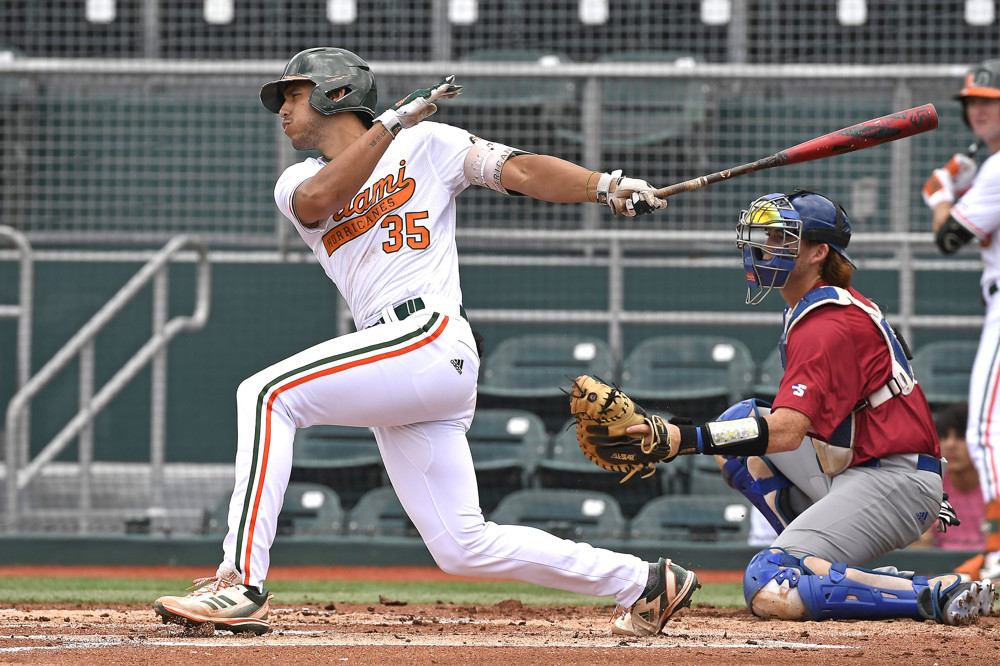
    Morales starts his stance with his feet shoulder-width apart and has a tiny sink into his legs, almost as a timing mechanism as the pitcher begins his delivery. He has minimal movement in his lower half, with some bend into his back hips as he stacks his back side.

    The barrel of his bat is squarely behind his head as he moves his hands back to create separation creating tension in his front shoulder and arm. The bat then turns upwards right before he starts coming forward.

    Morales keeps his hands back as he drifts forward, creating a good position of power as he rotates and unleashes a powerful punch to the baseball with his front leg straightening out at contact.

    His lower half is quiet, but some moving parts in his upper half can make it challenging to drop the barrel to the ball if he’s off time. His hands are so quick though he can still control the barrel and generate bat speed even when he’s out in front of pitches, especially non-fastballs.

    His power and quick bat make him a dangerous threat at any moment in the game, and he hit some towering home runs last season.

    Approach:

    Morales has an aggressive approach by hunting fastballs and trying to produce damage on these types of pitches.

    He’s susceptible to breaking ball spin, and good breaking balls can cause him to swing and miss. He has trouble identifying spin at points, but it’s more his swing-happy approach that can get him into trouble.

    Morales struck out in 20% of his plate appearances and walked in 11% of them. His whiff rate was 20% on fastballs, 37% on breaking balls, also per Baseball America. You would hope that seeing better breaking balls would get him thinking about being a more cautious swinger.

    Morales tends to be on his front foot on breaking balls while looking for fastballs to crush. Fastballs on the inner part of the plate can also tie him up.

    He does his most damage on pitches at the very top of the zone, though he does chase high fastballs a little too much. His fastball-first approach also causes him to freeze on slower pitches, especially curves and sliders.

    It’s a fine line because if he’s sitting fastball either down in the zone or up, he can unload on pitches and turns his raw power into home runs. Morales knows his strength, and that’s punishing fastballs.

    Two at-bats against James Tallon of Duke highlight Morales’ ability to hit the high fastball. He strikes out in the first at-bat, but in the second, he was sitting on a fastball and hit an opposite-field rocket out to tie the game.

    When Morales gets behind in the count, he uses his quick hands to let the ball travel in the zone and shoot it the other way.

    His barrel control also allows him to adjust and still square up the ball in an impressive manner during some at-bats. Morales has difficulty lifting pitches consistently at times.

    On breaking balls or even sinkers and changeups, he swings down on the ball. His hard contact still manages results as grounders sneak through the infield regularly.

    At higher levels of baseball, Morales will want to lift the ball just a tad more, but it’s fixable if his swing decisions improve.

    Defense:

    Morales is a sufficient defender at 3rd base and has good range for his size but inconsistency in making all the plays. Also, if he were to add more weight to his frame, he could be pushed off 3B to 1B or LF. With solid hands to go with athleticism and a strong arm, he should be able to provide serviceable defense wherever he plays in MLB.

     Projection:

    Morales is a big right-handed power hitter with plus power. His physicality and quick hands should produce plenty of pop from line to line. His inability to recognize good breaking ball spin may hinder him, but better swing decisions should help him cut down on swing-and-miss.

    MLB Comp: Yandy Diaz

  • MLB Draft Scouting Report: Florida Pitcher Hurston Waldrep

    MLB Draft Scouting Report: Florida Pitcher Hurston Waldrep

    School University of Florida
    Bio R/R 6-2, 225 lbs.
    Date of Birth 03/01/2002
    Fastball 55
    Slider 60
    Curveball 60
    Splitter 70
    Control 45
    Future Value 55

    >> All grades on 20-80 scouting scale

    Written by Brandon Tew

    Draft Expectation: 1st Round

    Analysis:

    Hurston Waldrep possesses the best pure stuff of any pitcher in the 2023 MLB Draft including Paul Skenes.

    Waldrep’s four-pitch mix is undeniably electric and the presence and confidence he exhibits has scouts and teams dreaming about if he can reach his extremely-high upside.

    College Career:

    Waldrep transferred from Southern Miss after his sophomore season when he compiled 90 innings over 17 starts, finishing with a 3.20 ERA and 140 strikeouts.

    His junior season at Florida was up-and-down at times. He finished with a 4.16 ERA over 101 2/3 innings and 156 strikeouts, which was good for 3rd in Division I baseball.

    One major knock on Waldrep this past season was his 12.7 BB%, as his 57 walks were the eighth most in Division I and led to some of his struggles.

    Pitch Delivery:

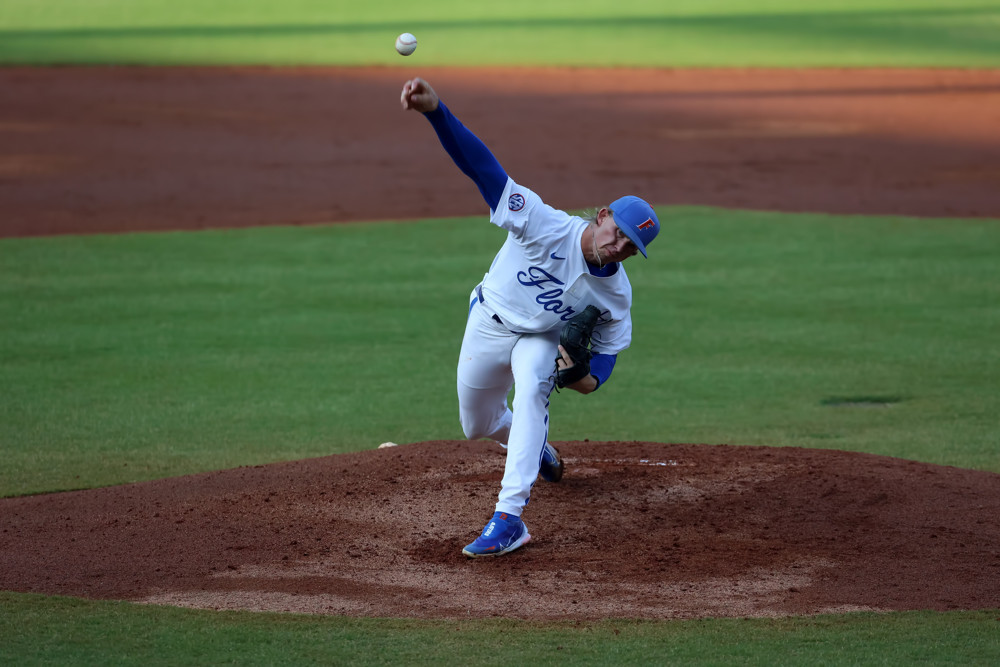
    Waldrep is a well-built, athletic mover on the mound. From the windup, he keeps it simple using tiny steps for rhythm and timing to put himself in the same position he is in the stretch.

    Creating momentum as he drifts slightly forward with a big leg kick, he gathers himself at the top up to his letters before dropping deep into his back leg.

    Right after peak leg lift, he turns his lead foot inwards towards second base to build tension as he rotates and uncoils his hip landing in a powerful position at stride foot contact.

    His arm gets to an almost 90-degree angle with his arm in a good position at stride foot contact, and he does a good job of blocking his lead leg out. However, the delivery is up-tempo and his long arm swing can lead to inconsistency in the timing of the delivery.

    The significant tilt in his shoulders produces a high over-the-top arm slot and he struggles with command and control at times, with a violent movement of his head off to the side and some closed-off recoil in his finish. The side-head lean causes him to miss high and arm side when he’s out of sync and late.

    Waldrep’s athleticism allows him to succeed with these movements, but a team could opt to clean up his arm action with a shorter path. There’s a lot to like about his delivery but some concerns exist around repeatability and control.

    Pitch Profiles

    Fastball:

    The fastball is a make-or-break pitch and the key to Waldrep’s success. Waldrep sits 95-96 mph most games but has touched 99 this season and the ball jumps off his hand.

    At times, the pitch is inconsistent in shape and he can struggle with location but the cut-ride action of the pitch is compelling. Waldrep’s success will come if he’s able to throw the pitch glove side with regularity.

    The cutting action of the pitch makes it very hard to square up on the bat especially up in the zone.

    Waldrep, as a supinator, with low spin efficiency could opt for more of a true cutter in the same mold as Corbin Burnes.

    The pitch is very successful up in the zone but also misses bats down and away from righties especially. Waldrep’s ability to cut the ball in on the hands of lefties could make the fastball a devastating pitch for opposite-handed hitters as well.

    With his higher arm slot, Waldrep struggles with consistently getting the pitch to the top of the zone. He lives too much in the middle third of the zone vertically around the belt and thighs with his fastball.

    Slider:

    Waldrep’s slider is a gyro pitch with gaudy spin rates that generates depth at its absolute best in the upper 80s. Waldrep threw the pitch with less frequency early in the season, relying more on his curveball and splitter.

    The slider though is a pitch that Waldrep can backfoot to left-handed hitters but also dart it away from righties.

    With Waldrep’s propensity to supinate and spin the baseball, teams could help him develop a slider shape with more sweep or even a sweeper to pair with his gyro offering for right-handed hitters. He might have to lower his arm slot to accomplish this as well but the high arm slot makes Waldrep’s slider play well down in the zone.

    This is huge because he has a true out pitch for lefties in his split and a curve that can also neutralize lefties.

    There are a lot of options on the table but as with most of Waldrep’s pitches it comes down to the command of the pitch and getting it down in the zone. The slider could be a true weapon in MLB paired with his splitter as a tunneling option down in the zone.

    Curveball:

    The curve for Waldep is a banger with a downer shape and a tight spin in the low to mid-80s. Early in the season, he used the pitch a lot and especially ahead in counts.

    The shape of the pitch is great but he threw the pitch too much. He needs to start to sprinkle in the pitch as a strike stealer early in counts instead of as a chase pitch. He can throw the pitch for a chase below the zone but possesses better offerings in terms of chase pitches.

    These back-to-back at-bats highlight how good Waldrep’s curve can be but also what happens when he commands his fastball and curve allowing them to play off each other.

    Splitter:

    Waldrep’s splitter is demonic and dives into the depths of hell to get swings and misses with a 65% whiff rate on the pitch according to 6-4-3 charts. The pitch is one of the absolute best in the country.

    The grip allows Waldrep to kill spin and both cut and fade the pitch. Watching him pitch on a good camera angle behind the mound is an absolute treat because the splitter’s movement is absurd when thrown well. This is Waldrep’s actual putaway pitch. Even when hitters know it’s coming, especially in two-strike counts, they still swing over the top of it.

    Waldrep also can drop the pitch into the zone to keep hitters honest. The splitter will be a major factor in how successful he is as a pro. The pitch is a true double plus and can expose even the best of hitters.

    Pitch Usage:

    Pitch usage has been more of a detriment than anything this past season for Waldrep, though he seemed to figure some things out later in the season.

    Dropping his curveball usage and upping his slider usage led to great success for Waldrep in his first three NCAA tournament starts.

    Over 21 innings he struck out 37 batters, surrendering two runs while walking seven. This tweet explains Waldrep’s pitch usage and how he fixed some predictability during the season.

    Pitch usage can easily be fixed by Waldrep even though he struggled through 2 1/3 innings against LSU in the CWS finals. The tweaks in pitch usage before that are promising signs that Waldrep can be dominant with his explosive pitch arsenal.

    Summary:

    With 3 plus or double-plus secondary pitches, he also has a fastball that can be more plus if he fixes its inconsistency. In its current form, it still projects as an average to above-average big-league pitch.

    Waldrep can be a truly dominant starter if he harnesses his pitches, as this will determine his MLB role and his astronomically high ceiling.

    Projection: 

    An athletic righty with an electric pitch mix. His success as a starter will be determined by his control and the ability to throw consistent strikes.

     MLB Comp: Logan Gilbert

  • Masahiro Tanaka Is Not What He Used To Be

    Masahiro Tanaka Is Not What He Used To Be

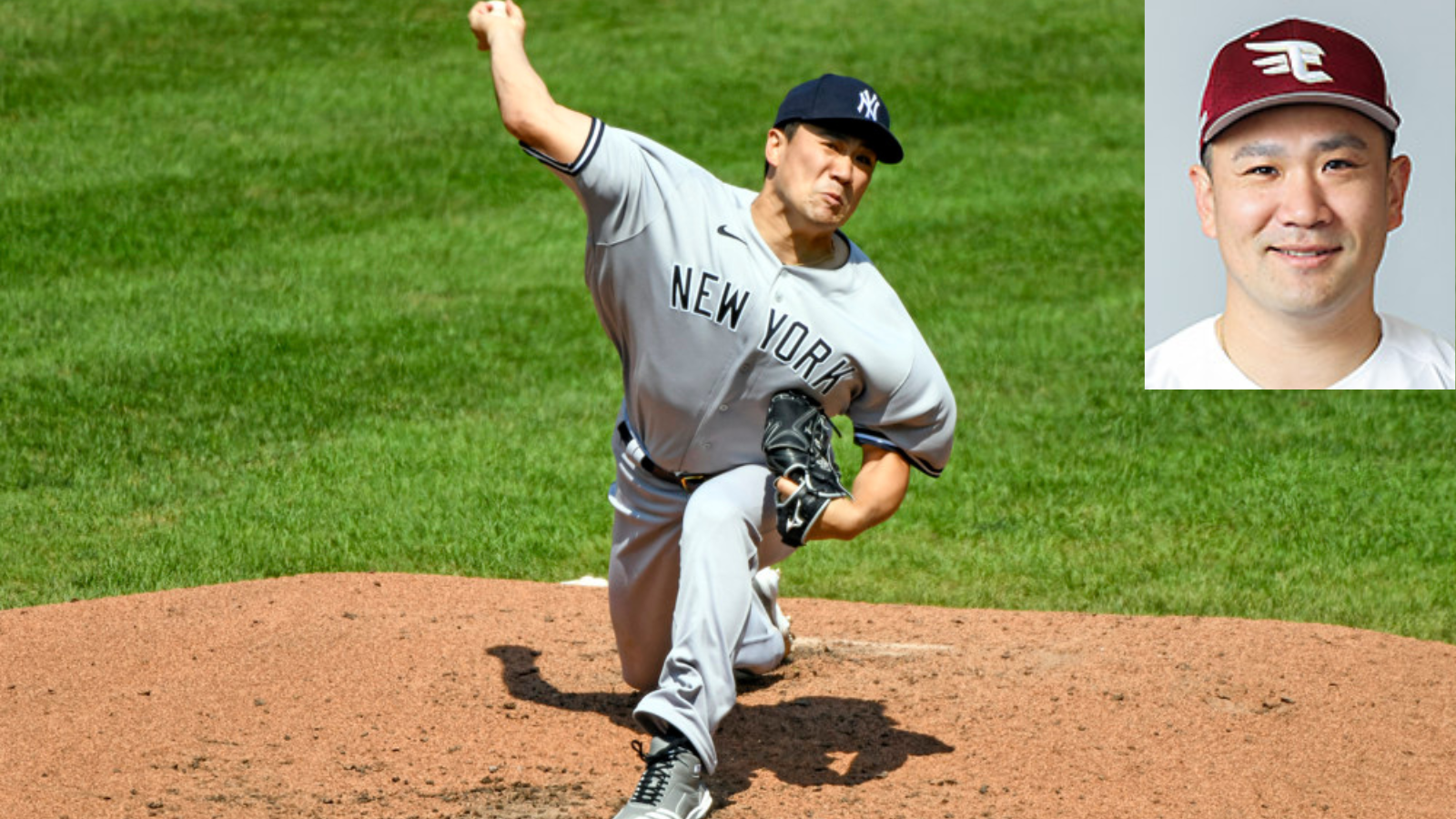
    Masahiro Tanaka is arguably one of the greatest NPB pitchers in league history and is credited with one of the most successful pitching seasons in NPB.

    He finished his 2013 season with a perfect 24-0 record in 28 appearances and 27 starts amassing a 1.27 ERA in 212 innings with 183 strikeouts and just 32 walks. The man was a machine who mowed through NPB lineups. 

    Now in his return as an older player after his MLB career with the Yankees, Tanaka has had mild success with extreme highs and lows. He has been so disappointed in his performance that he took a pay cut last off-season.

    His whiff rate was down to 10% on his fastball the last two seasons and a lowly 9% this season. In comparison, his fastball had a whiff rate of 17% in 2019 for the Yankees. 

    This is obviously context-dependent too as NPB hitters are less prone to striking out than MLB hitters as they fight off fastballs. The drop in whiff rate for his fastball isn’t surprising but 8.8% is a concerning number.

    His fastball has lost a touch of velocity averaging 91.3 mph last season and 90 mph this season. Tanaka does “gas pedal” his fastball at times, throwing at different speeds throughout the game, although last time out he was using more two-seams than four-seams to get some slight movement on the pitch.

    His below-average velocity right now on his fastball means he has to have spot-on command of the pitch, and right now that fluctuates. At his very best it’s a pitch he can still dot on both sides of the plate.

    The pitch has always played up due to Tanaka’s stride length and lower release point. He gets 6’10” in stride length according to a Sports Science breakdown of Tanaka from almost nine years ago. 

    The mechanics of Tanaka are almost the same throughout his career. Everything is still smooth and the stride length and extension are still there.

    Tanaka uses his fastball 41% of the time the past two seasons, 43% of the time on the first pitch. With the dip in velocity and shape, Tanaka should continue to use his two-seamer more and lessen the usage of his four-seamer.

    Tanaka also looks to have ditched his cutter so far this season after throwing the pitch 7% of the time in 2022 he has scrapped it. Isolated, the cutter is not a good pitch but, when he threw it, he used it to start at-bats 35% of the time with a 71% strike rate in 2022. He also used it a lot to RHBs down and away in 2019, targeting that part of the zone on 41 of 44 cutters in 2019 and it was much of the same in 2022.

    The pitch had an OPS against of 0.865 in 2022, almost identical to his changeup at 0.864. Those were by far his two worst-performing pitches.

    The Cutter

    CUT Grip 2022 – 7%   2023 – 0 pitches so far.

    He’s used the cutter in a more traditional sense against LHBs, up and in on the hands. I think the use of the pitch to both RHBs and LHBs could still be effective. Though the pitch has been inconsistent in movement, even just giving hitters something else to think about could help his fastball out. However, it’s no longer a necessity in his arsenal and the 0.865 OPS on the pitch underscores why he might have dropped it altogether.

    The non-fastballs with grips.

    SL Grip   2022 – 24%    2023 – 34%

    Splitter Grip  2022 – 20%    2023 -20%

    CH Grip   2022 – 4%   2023 – 3%

    CB Grip 2022 – 3%   2023 – 3%

    The slider is Tanaka’s go-to pitch generating a 41% whiff rate over the span of the last two seasons though it is his second favorite two-strike pitch behind his fastball. His fastball velocity and life are down but he continues to throw the pitch the most in two-strike counts.

    There’s some factoring in comfort and batter but maybe going away from leaning on the fastball will help him. I’m a big advocate for throwing your best pitches in the most high-leverage situations and generating swings and misses. 

    If Tanaka started to lessen the number of fastballs in two-strike counts and rely more on his two different slider shapes and his splitter, he could see more strikeouts as a result. A 6 K/9 this season is the lowest total of his career and a full strikeout less than 2022. 

    He lands all his pitches for above a 60 percent strike rate which is the threshold for having decent control of a pitch. His slider and splitter actually are higher at 69 and 70%. His fastball is at a second-worst rate of 63%. He doesn’t need to throw the fastball to get a strike. 

    The NPB is still geared toward establishing the fastball which serves a purpose but leaning heavily on it in two-strike counts seems detrimental at times for him. 

    Although fastball command is more important than anything with his diminished velocity, more sliders and splitters could give him an edge and he can still throw his fastball if he mixes better early in counts. He also has to pitch from ahead so he needs to land strike one no matter what pitch he is throwing.

    Tanaka has to command his pitches better though. There are numerous examples of his fastball and the rest of his arsenal being left in the middle of the plate. When he’s on, he has the ability to locate all his pitches well to any quadrant. His lone run allowed the last time out was a slider hung over the middle of the plate that got crushed for a homer.

    Tanaka loves to pound hitters inside with his two-seamer to both LHBs and RHBs but he started to throw the pitch more glove side his last start.

    There are countless examples of Tanaka using his two-seam to lock up batters, especially on glove side to LHBs. His conviction in throwing this pitch is key for him because, with a low whiff rate, he can still generate called strikeouts on hitters.

    via GIPHY

    via GIPHY

    via GIPHY

    The Defense

    Tanaka’s defense has let him down at times this season, especially as a ground ball pitcher whose strikeouts are declining, he needs the help of solid defense behind him.

    Rakuten DRS ranks by position among the six Pacific League teams (through Sunday’s games):  

    1B – 5th  

    2B – 5th  

    SS – T-4th  

    3B – T-5th

    Conclusion

    Going back to one of my points, pitching backward could also help by landing more curves and sliders early in counts to keep hitters off of his fastball. There are ways around his inconsistent fastball production and diminished velocity. He still flashes brilliance with his propensity to keep the ball on the ground but hard-hit balls still lead to varied results.

    With good control, an argument could be made that he’s throwing too many strikes rather than creating more whiffs with his slider and splitter.

    Tanaka is one of my favorite pitchers to watch when he’s at his best, aggressively attacking the zone with a deep pitch mix. He still has moments of great success but to find more consistent outings he will need to command his pitches better and rely less on his fastball to generate more swings and misses.

  • World Baseball Classic Preview: Japan Hitters & Fielders To Watch

    World Baseball Classic Preview: Japan Hitters & Fielders To Watch

    Team Japan Position Players to Watch

    Samurai Japan has been the most successful team in WBC history, winning the tournament back-to-back in 2006 and 2009, followed by third-place finishes in 2013 and 2017. The wait for the next WBC is almost over and Japan fields arguably its best team ever. You will know the names of Japanese stars who have made the jump to MLB in terms of position players, as Shohei Ohtani leads this team and others like Lars Nootbaar are there too (Nootbar is expected to start in CF for Japan). But you might have yet to learn some of the stars in NPB who will become key contributors to this team and lineup.

    The power bats

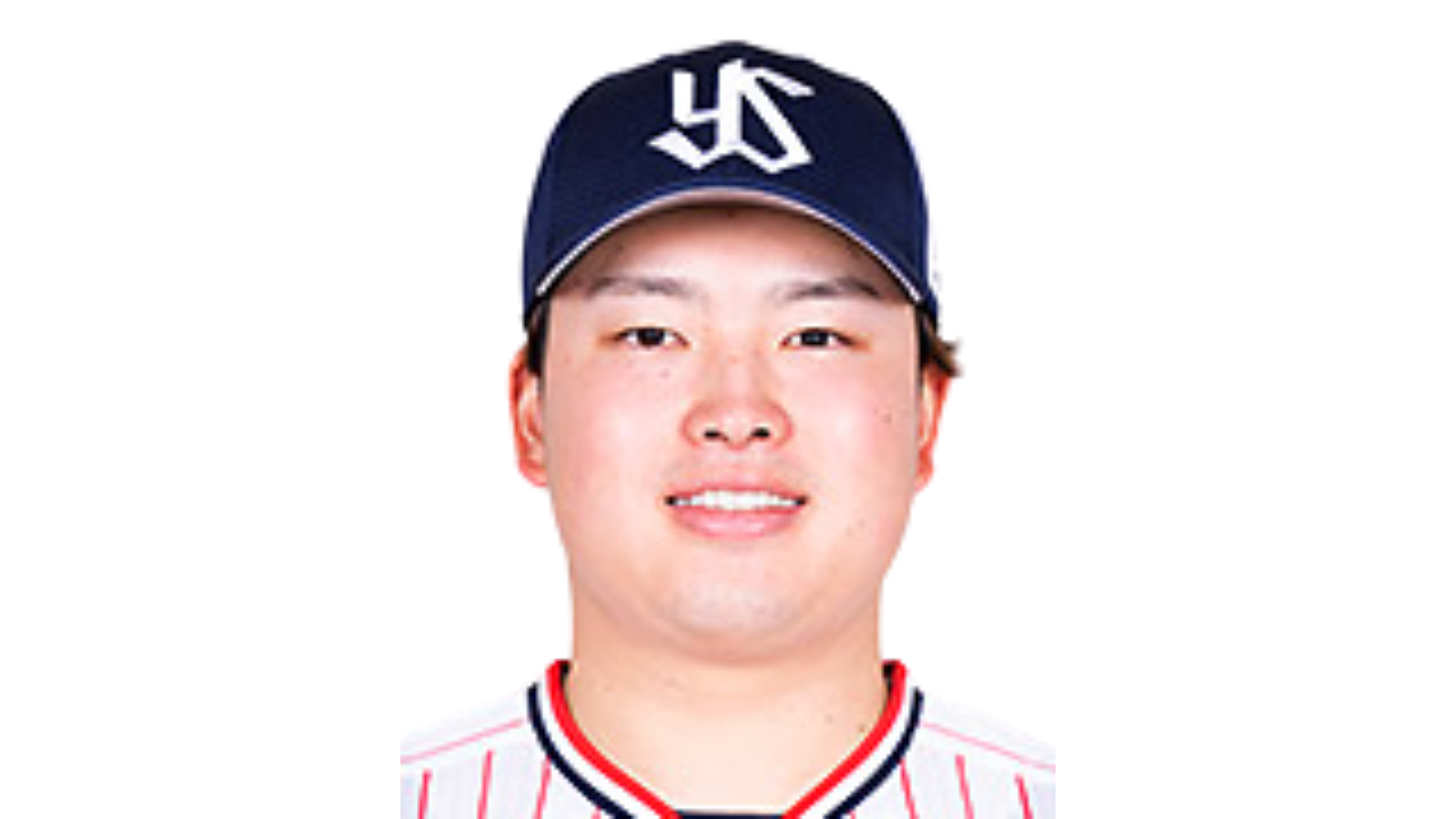
    I have made my thoughts well known that I believe the best power bat not playing in MLB resides in NPB and his name is Munetaka Murakami (just read this article!). The third baseman for the Yakult Swallows has become one of the most feared power bats in Japan and had a season that rivaled Aaron Judge’s stateside. Murakami slashed .318/.458/.711 leading to a 1.168 OPS as he racked up 56 HR and 134 RBIs in 141 games. He surpassed Sadaharu Oh’s 55 HR breaking the record for most HRs by a Japanese-born player in a single NPB season. 

    Murakami is an elite hitter with patience and power that makes him dangerous in every at-bat. As a left-handed hitter, Murakami has a similar setup and swing to Matt Olson. As a young hitter in NPB Murakami’s biggest struggle, like most young hitters, was his propensity for striking out but Murakami has cut his K% and increased his BB% in the last three seasons.

    Season K% BB%
    2020 22.3% 16.9%
    2021 21.6% 17.2%
    2022 20.9% 19.2%

    His understanding of the strike zone and willingness to look for pitches down he can do damage on has led to Murakami’s meteoric rise as one of the best power hitters in the world. He has the barrel control and strength to hit balls hard in different parts of the zone. 

    His exit velocities compare to that of the impressive numbers put up by some of the elites in MLB. Murakami’s WBC debut will just be a showcase of what’s to come in upcoming NPB seasons and an eventual MLB move. Here’s an opposite-field HR for the lefty off of Kodai Senga last season.

    via GIPHY


    Speaking of exit velocities and hard-hit balls Hotaka Yamakawa is the only hitter in NPB who comes close to producing the hard-hit rates Murakami does (they rank 1-2 in hard-hit rate at 45% and 44%, respectively). Yamakawa is a hefty right-handed power hitter who swings with bad intentions as the DH of the Seibu Lions. The dichotomy of Yamakawa’s approach and swing can be seen in these back-to-back pitches against former New York Yankee Masahiro Tanaka. 

    via GIPHY

    via GIPHY

    via GIPHY


    Yamakawa uses a lot of rhythm and timing with a big leg kick that he straightens out before coming out of a powerful backside. His unique swing and sell-out for power make him fun to watch. In 8 NPB seasons, he slashed .270 /.381 / .557 with 284 HRs. 

    He was 2nd in NPB last season behind Murakami with 41 HRs in 129 games he was also 2nd in WAR with 6.5 behind Murakami’s gaudy 10.2. Yamakawa might get a real chance to show off his power in this tournament, as he’s slated to play 1st Base for Team Japan with Ohtani in the DH spot when he isn’t pitching.

    The NPB Mainstays

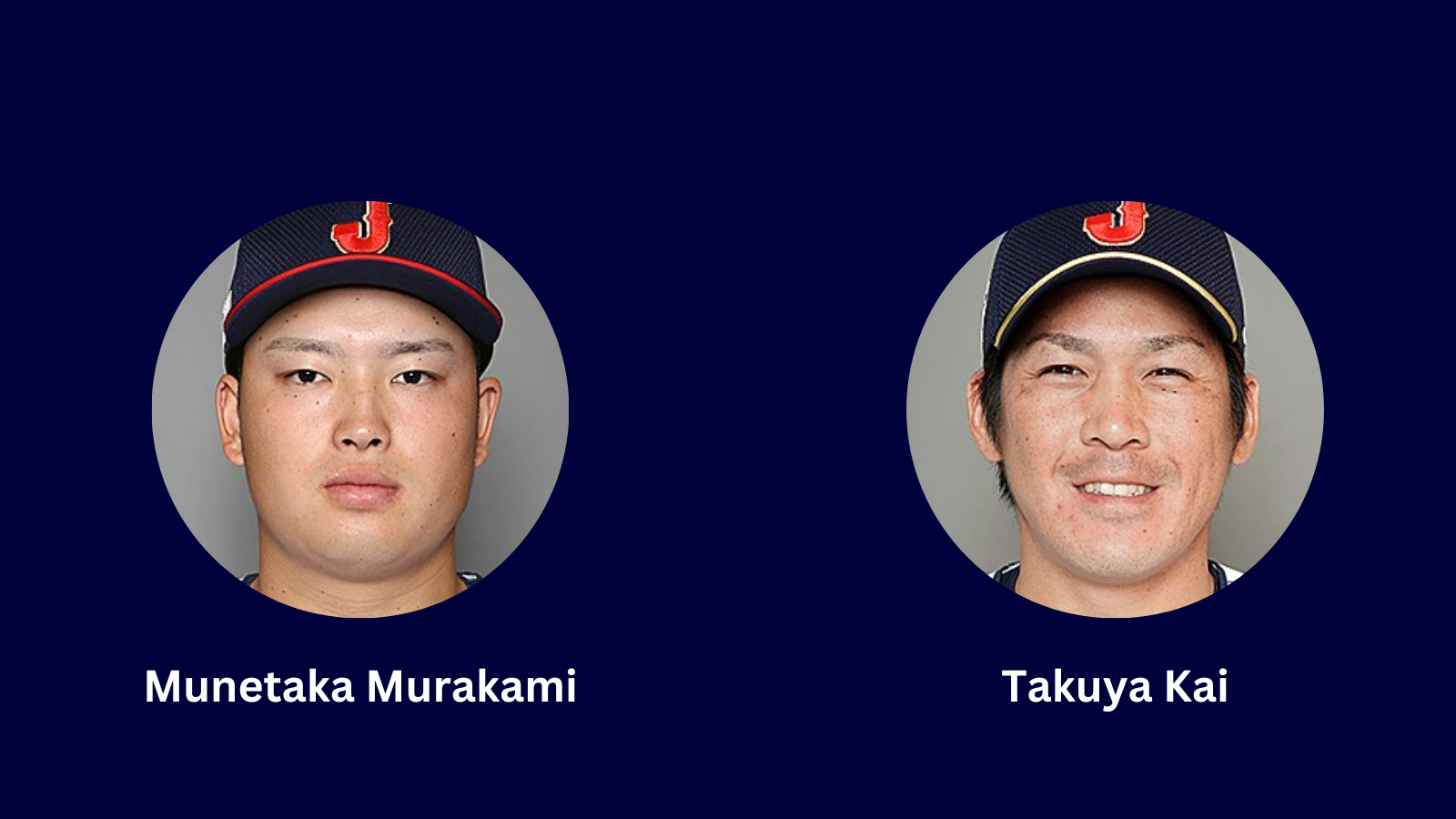
    Team Japan features some players who can play defense at an elite level and some you most certainly haven’t had the chance to see play. Takuya Kai was a draft mate of Kodai Senga’s in 2010 during the NPB Draft. Kai would go on to make a name for himself as a defensive catcher. He’s a career .221 hitter with an OPS of .652 in nine NPB seasons. Last year he batted .180 in 130 games for Softbank. 

    The reason he’s the likely starting catcher for Team Japan is because of his defense alone. He’s won six consecutive Mitsui Golden Gloves and has been the catcher for Softbank’s dynasty run where they won 6 of 7 Japan Series titles from 2014 – 2020. Kai is a decent strike-stealer and really shines calling a game behind the plate. Kai also controls the running game and has a rocket arm with reported pop times in the mid-1.8s and lower.  

    Here at SIS we actually track pop times for NPB games and some of the most impressive pop times from Kai came when he threw out 10 consecutive base stealers. Kai had pop times of 1.79 and 1.83 to 2nd base in the same game in late March 2019. These times would exceed and or match JT Realmuto’s times in MLB from last season. It’s safe to say he might have lost a little juice but he’s still in his prime and has one of the best pop times in the world. 

    Here’s an article from 2018 showing Kai with six caught stealings to win the 2018 Japan Series MVP. At some point, you have to stop running against this man but he shut down a very active Hiroshima team in that Japan Series.

    This level of defensive excellence helped Kai take home the first NPB Fielding Bible Award in 2020 he can work the strike zone but needs consistency. Here’s one example: Nippon-Ham was not pleased with this strike call on a low pitch to end the game.


    via GIPHY

    Tetsuto Yamada is one of the best infielders in Japan and won a 2015 Central League MVP slashing .329/.416/.610 with 38 HRs and 34 SBs. He produced 3 more 30-30 seasons and was a three-time Central League stolen base leader though his speed has diminished more recently with only 22 combined bags swiped in the last three seasons.

    Yamada has cemented his status as a top-of-the-order table setter for Yakult and especially his teammate, Murakami. While his offensive production last season might not have been MVP levels, he was the MVP of the Tokyo Olympics and helped Japan win a Gold Medal in 2021, primarily as the DH. He also has WBC experience with a .296/.412/.593 slash line in the 2017 competition. 

    Yamada is as consistent as it gets at second base and his consistency as a defender also stands out. He’s not an elite defender but he makes solid plays and his athleticism allows him to get to groundballs that other 2B might have trouble with. He won the NPB Fielding Bible Award in 2021 at 2B because of this consistency and his athleticism.

    The grounder below shows Yamada ranging to his right on a dive and is a great example of his athleticism on display.

    via GIPHY

    Yamada will be a solid bat and glove for this Japan team and his level of consistency will be something Japan will appreciate having at second base.

    Team Japan has the best baseball player in the world in Ohtani but there are some position players playing domestically that are worth the attention as well, even outside of these four. Team Japan might have its best WBC team ever and will look to succeed on the international stage again this March.  

  • World Baseball Classic Preview: Yoshinobu Yamamoto & Roki Sasaki

    World Baseball Classic Preview: Yoshinobu Yamamoto & Roki Sasaki

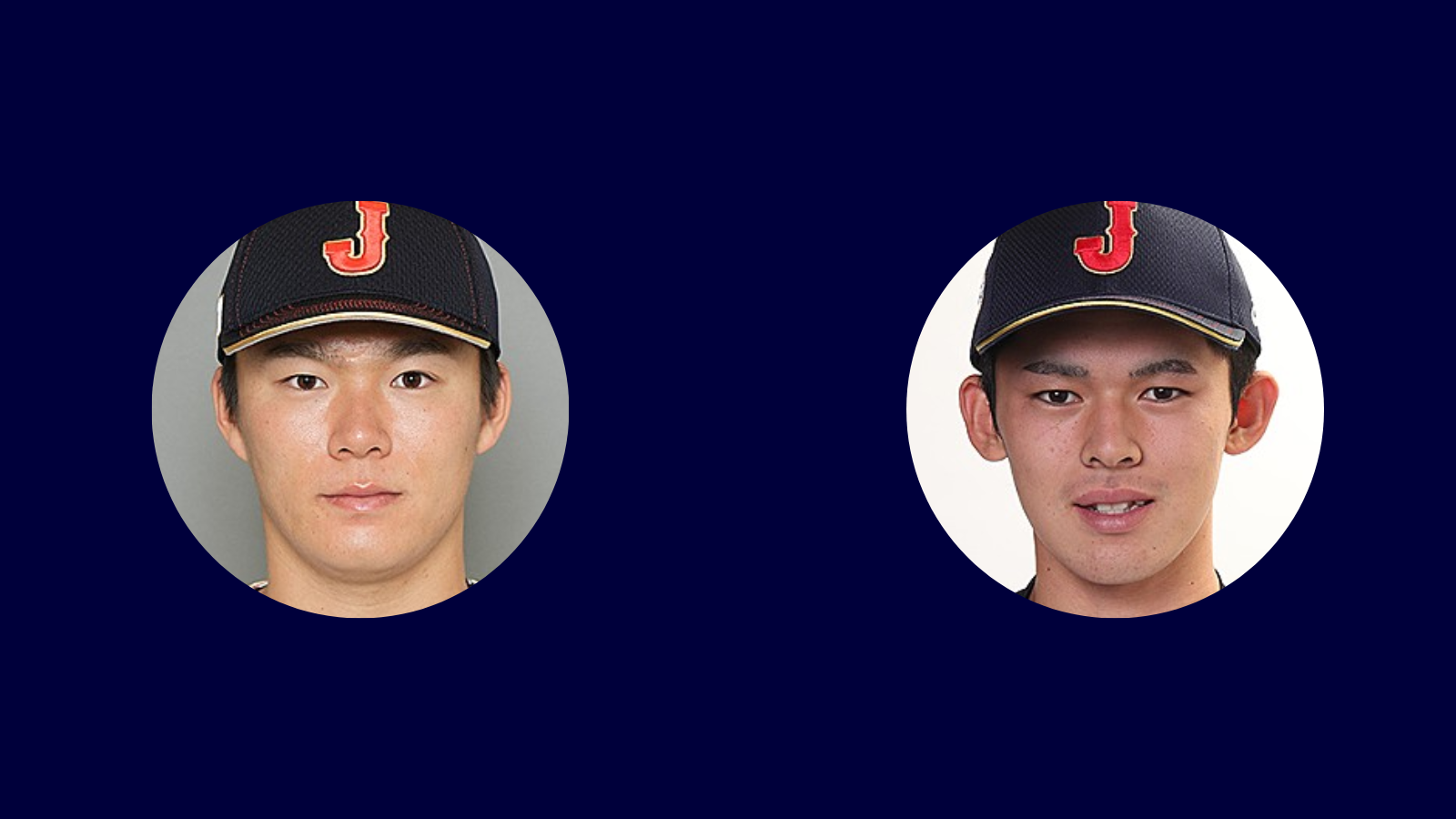
    Samurai Japan has one of the best pitching staffs in the WBC this year. The names Shohei Ohtani and Yu Darvish will be known by MLB fans but a couple of young pitchers across the Pacific Ocean have been making waves in NPB. 

    The young aces

    Two of the best young pitchers in baseball reside in NPB and will be critical factors in Team Japan’s success in this upcoming WBC. Starting with the best pitcher in NPB the last few seasons, Yoshinobu Yamamoto. Yamamoto has dazzled as the Ace of the Orix Buffaloes and was a major factor in why they won the 2022 Japan Series title over the Yakult Swallows. 

    Yamamoto is coming into the WBC off of back-to-back stellar seasons in NPB. In 2021 he had an ERA of 1.39 in 193 2/3 IP with 206 Ks to 40 BBs. He finished with a FIP- of 55. Yamamoto was truly dominant in 2021 and backed that up with more dominance in 2022.

    Last season Yamamoto continued his success with a 1.68 ERA in 193 IP and 205 Ks to 42 BBs almost identical numbers to 2021. His FIP- of 60 led the pack among qualified pitchers. 

    Yamamoto has one of the prettiest curveballs in the world. With excellent command of the pitch as a get-me-over pitch for a strike or a swing-and-miss pitch in the dirt.

    Here are some different ways Yamamoto uses his curveball:

    via GIPHY

    via GIPHY

    Yamamoto has an interesting way of throwing his curveball and it makes the pitch even more effective than most curves. The Ginoza Grip, which I pointed out in my deep dive piece a few months ago, is worth revisiting. Yamamoto shows the back of his hand and flicks the ball or pushes it with his thumb, creating topspin on the ball at a higher efficiency and causing sharp movement. 

    via GIPHY

    Yamamoto’s curveball averaged 79.6 mph which is a high velocity for this type of curveball. Last season. He got 54 Ks with the pitch and it had the lowest slugging percentage of any pitch in his arsenal at .165. 

    There’s a deadly combo between Yamamoto’s fastball and curve. His fastball is electric. He can throw 97 mph with ease and he routinely sat around 94 mph last year.

    Although fastball command is a true separator for Yamamoto as there are countless examples of him painting the edges of the plate, like an artist. Going back to his no-hitter against Seibu he was pinpoint most of the game, spotting the fastball where he wanted it.

    Just look at some of these fastballs knife through the edges of the zone:

    via GIPHY

    via GIPHY

    He’s able to spot his fastball in all four quadrants of the strike zone at any point in the at-bat so hitters have to respect it.

    What I had originally called his splitter or even a sinker-type splitter is more of a sinker than a splitter or forkball. Yamamoto creates a little bit of sidespin and backspin on the ball, almost throwing a hybrid between the two pitches. This is what most Japanese pitchers refer to as the shuuto, which more or less is a sinker.

    Yamamoto’s ability to throw this pitch both for a strike at the bottom of the zone and diving away starting at the knees makes it a true strikeout weapon for him. He recorded 76 strikeouts with the pitch last season and routinely used it with two strikes. He had a 40.3 % whiff rate on the pitch last season.

    via GIPHY

    Yamamoto, who also throws a slider and a cutter, has one of the best pitch repertoires in NPB and he’s about to showcase it on the world stage again.

    Roki Sasaki is probably the best pitching prospect not in MLB. I broke down his perfect game last season when he struck out 19 Orix Buffaloes on April 10th. He backed that performance up with another 8 innings of perfect baseball before being pulled at 102 pitches. 

    The young ace of the Chiba Lotte Marines has started only 31 games in his NPB career going back to 2021 but he’s been a phenom so far.

    In those 31 starts he has a 1.95 ERA and has struck out 241 batters in 192 2/3 IP with an 11.3 K/9 and a 1.8 BB/9. Like Yamamoto, Sasaki controls the strike zone and pumps in strikes. He might not throw with as much command as Yamamoto to this point but he locates to both the arm and glove side with his fastball which sets up his nasty splitter. 

    He is also one of the hardest throwers in the world, routinely touching triple digits with his four-seam fastball. He averaged 98.3 mph last year and struck out 58 batters with his heater. He’s also able to throw with smoothness and ease. Add in long limbs and a powerful move down the mound as he gets great extension toward the plate, making his fastball even better.

    via GIPHY

    via GIPHY


    via GIPHY

    The fastball has life and carry through the zone and it explodes out of his hand. Above you can see even a little tailing action back to the plate. The fastball control – in the zone and down at the knees – sets up his splitter.

    Sasaki’s splitter is a roller coaster ride of a pitch that waits until the last split-second to drop out of the sky as it darts toward the dirt. His splitter is one of the best strikeout pitches in the world. He got 106 strikeouts with it last season 95 of them swinging. Nearly half the swings against it resulted in misses.

    Batters have to commit to the pitch because of his fastball and the late action on the pitch causes batters to routinely swing over the top of it. He’s also able to create different movements either cutting or fading the pitch depending on what he wants. 

    via GIPHY

    via GIPHY


    via GIPHY

    The slider and curveball are works in progress as Sasaki is mainly a two-pitch pitcher for now but the slider does have promise as he can create depth with just a little bit of cut away from the batter to keep them off of his splitter. It produces a 48% whiff rate which is actually better than his splitter.

    He throws the splitter sparingly though, same as his curveball and slider, which he threw 90 times each last season. He throws the slider more in two-strike situations and his curve as a strike stealer early in counts.

    via GIPHY

    Sasaki and Yamamoto at ages 21 and 24 respectively are some of the best young pitchers on the planet. Japan is expected to advance to the knockout stages of the tournament and Team USA might be on a collision course to face one or both of these young pitchers in the semifinals.

  • Bill James Handbook Excerpt: A Closer Look at Pitcher Repertoires

    Bill James Handbook Excerpt: A Closer Look at Pitcher Repertoires

    This essay appears in The Bill James Handbook 2023, which can be ordered online at ACTASports.com or wherever you get your books.

    In 2022, baseball has embraced the shift in how pitchers attack hitters. With so much data and numbers, pitchers can gameplan against lineups each and every game.

    This year the league embraced breaking balls and offspeed pitches. In the most pivotal moments in a game, pitchers threw non-fastballs to get hitters out. Pitchers such as Corbin Burnes and Emannuel Clase throw hard pitches with cutting action that are almost impossible to hit.

    Sandy Alcantara is the ultimate pitch-mix wizard. With arguably the best pitching season this year, he has become a balanced force of power and movement coupled with excellent command and three pitches he can throw in any count. Sandy’s pitch mix is masterful. He threw 28% changeup, 25% two-seam FB, 25% four-seam FB, and 22% slider. He sprinkled in seven curveballs and scrapped that pitch because why not throw your three most dominant pitches as much as you can?

    Note: Alcantara’s pitch-mix wizard status isn’t fully reflected in the chart at the bottom of the story, as it groups four-seam and two-seam fastballs together.

    The two-seam moves violently at 100 mph. Pair this with the movement and deception of his changeup that baffles hitters at around 92 mph as it dives to the plate. A hitter can’t sit on just one pitch, and it’s what makes him so special!

    Next, look at the pitch that is returning as the go-to pitch for many pitchers, the slider. With the advances in technology and analytics, players can fine-tune their arsenals and look at pitch grips with high-speed cameras and tinker with specific grips or arm actions to create a certain type of movement profile.

    A perfect example of this is Dylan Cease, who started throwing a slider with sharp vertical action this year. He threw the pitch 43% of the time, while only throwing his fastball 41% of the time. Cease identified a breaking pitch that worked for him and began to tunnel it off of his fastball as much as he could. The slider plays in and out of the zone as Cease racks up swings and misses.

    Cease ranked 10th in putaway rate, throwing 472 sliders with two-strike counts and striking out 131 hitters for a 27.8% strikeout rate. The pitch has become a nightmare for hitters. Even when they know it’s coming, it’s very difficult to pick up. Only Cease and Robbie Ray threw at least 400 sliders in two-strike counts this year.

    Now, what happens when you throw your best pitches to one specific spot in the zone? Well, you get Edwin Díaz’s usage of slider and fastball. Not only does he have one of the best if not the best closer entrance in baseball—cue the trumpets—he also features a devastating two-pitch arsenal that he relentlessly throws glove side to hitters. Diaz led the league in putaway rate among pitchers who threw at least 150 sliders (38.4%). With his menacing slider that breaks glove-side with incredible late movement, batters rarely put good at-bats together against the Mets shutdown man.

    Sure, at times he would miss and spray the ball, but his goal was to throw glove side as much as possible. When you throw triple digits and have a slider in the low 90s you can torment hitters, even when they know what pitch is coming and where it’s being located.

    The harder slider is not the only pitch that became more popular this year. The league saw a shift towards more sweepers being thrown than ever before. The movement profile of this pitch type is hard to pin down sometimes and can’t just be classified into one pitch, although it is mostly thought of as a slider with more horizontal break because of the spin profile. The rise in slider usage can be attributed to the growing amount of sweepers being thrown throughout the league.

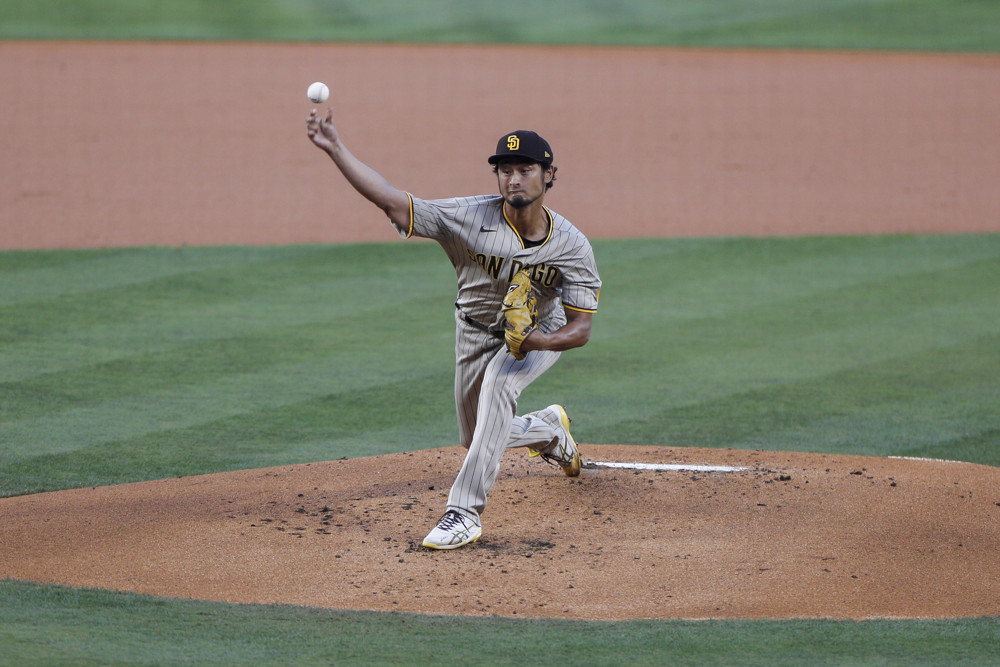
    Then there are two players such as Shohei Ohtani and Yu Darvish who could teach a master class on how to vary arm angles and pitch location along with an advanced pitch repertoire. The two Japanese pitchers dazzle and amaze with how they are able to manipulate and spin the baseball.

    Ohtani added a couple of new pitches down the stretch this season with a ridiculous two-seamer that reached 100 mph at times and new variations on his slider that move with depth or sweep depending on how he throws it. Dropping his arm angle at times, he also mixes pitches based on feel for that particular day in terms of his cutter, splitter, and curveball.

    What about Darvish? Well, he throws 11 different pitches and has many different types of one particular pitch, some of which are hard to classify and chart. There’s his slow cutter which he uses to set up the rest of his repertoire tunneling-wise. There’s also the harder cutter he throws up in the zone. With two types of sliders, including a spiked slider grip that he can modify, Darvish keeps hitters off of his cutters.

    Darvish also has two distinct curveballs to mix in with a sharper harder one in the 80s, and a slow cartoonish looping one that he throws in the low 70s. He even threw a curve at 64 mph this year and will routinely try to freeze hitters or have them out in front on these rainbow curves. His four-seam and two-seam fastballs are thrown more to right-handed batters than left.

    Both still get plenty of game action, but in the end, he wants to spin the baseball. Add in a splitter and rare changeup that he pulls out every once and a while to left-handed hitters and you have an array of pitches to choose from. I didn’t even mention a couple of other pitches he throws that are truly hard to classify. Darvish has fully embraced his outstanding ability to spin the baseball and throw more breaking pitches.

    Pitchers’ repertoires can be unique and yet similar, like Ohtani and Darvish. If you love pitching as much as I do, you might find some interesting quirks and even some trends in this vast collection of data.

    For the purposes of this online article, pitchers are listed in order by their Pitch Mix Index (PMI), which indicates diversity of repertoire. The higher the number, the more diverse the repertoire is.

    Player PMI Tommy John FB Velo Fastball Slider Change Cutter Curve Splitter
    Arihara, Kohei 5.11 90.8 28% 14% 19% 26% <1% 13%
    Darvish, Yu 4.84 Mar `15 95 34% 16% <1% 35% 7% 6%
    McCullers Jr., Lance 4.79 Nov `18 93.1 25% 26% 17% 7% 25%
    Musgrove, Joe 4.74 92.9 31% 24% 6% 19% 19%
    Eovaldi, Nathan 4.72 Aug `16 May `07 95.8 38% 12% 10% 19% 21%
    Greinke, Zack 4.66 89.2 41% 12% 16% 10% 20%
    Buehler, Walker 4.63 Aug `22 Aug `15 95.2 39% 11% 8% 25% 17%
    Yajure, Miguel 4.63 Nov `16 93 37% 10% 19% 7% 26%
    Gibson, Kyle 4.58 Sept `11 91.8 40% 21% 11% 21% 7%
    Rucker, Michael 4.58 94.7 44% 18% 9% 11% 18%
    Anderson, Chase 4.55 92.1 38% 8% 28% 18% 8%
    Smeltzer, Devin 4.54 89.5 40% 7% 25% 10% 18%
    Taillon, Jameson 4.52 Aug `19 Apr `14 94.2 47% 19% 8% 11% 15%
    Ohtani, Shohei 4.51 Oct `18 97.3 31% 39% 9% 9% 12%
    Scherzer, Max 4.51 94.1 45% 23% 13% 9% 9%
    Bassitt, Chris 4.48 May `16 92.9 47% 15% 6% 18% 14%
    Garcia, Luis 4.47 94 42% 9% 9% 29% 10%
    Bieber, Shane 4.45 91.3 35% 28% 2% 17% 18%
    Crawford, Kutter 4.45 Oct `19 94.6 39% 6% 7% 31% 17%
    Walker, Taijuan 4.45 Apr `18 93.5 41% 18% 5% 9% 27%
    Blackburn, Paul 4.44 91.7 46% 5% 12% 20% 18%
    Watkins, Spenser 4.44 91.4 40% 18% 4% 28% 10%
    Wells, Tyler 4.43 May `19 93.6 42% 7% 18% 27% 7%
    Lauer, Eric 4.42 93.4 43% 18% 3% 19% 16%
    Gallen, Zac 4.4 94.2 48% 6% 14% 9% 22%
    Leiter Jr., Mark 4.39 Mar `19 91 46% 5% 9% 17% 23%
    Ryu, Hyun-Jin 4.39 June `22 Jan `04 89.3 42% 4% 24% 10% 21%
    Sanchez, Anibal 4.37 Jan `03 89.5 34% 5% 26% 31% 5%
    Law, Derek 4.33 June `14 95.2 22% 12% 5% 49% 13%
    Flexen, Chris 4.32 July `14 91.7 40% 8% 16% 32% 4%
    Urquidy, Jose 4.31 Jan `17 93.6 53% 14% 15% 5% 14%
    VerHagen, Drew 4.29 June `08 94.8 47% 22% 16% 3% 13%
    Lorenzen, Michael 4.27 94.3 44% 20% 22% 11% 2%
    Cole, Gerrit 4.26 97.8 52% 23% 8% 6% 11%
    Stroman, Marcus 4.24 92.1 48% 26% 12% 11% 3%
    Burnes, Corbin 4.23 96.3 7% 9% 10% 55% 19%
    Hill, Rich 4.23 June `11 88.3 38% 11% 13% 36% 2%
    Trivino, Lou 4.22 95.7 48% 24% 11% 16% 2%
    Civale, Aaron 4.21 91.2 31% 4% 34% 28% 4%
    Cueto, Johnny 4.21 Aug `18 91.4 43% 16% 20% 20% 1%
    Nogosek, Stephen 4.2 95.1 41% 16% 9% 31% 2%
    Odorizzi, Jake 4.2 92.1 51% 8% 17% 21% 4%
    Clevinger, Mike 4.19 Nov `20 Aug `12 93.5 52% 21% 9% 15% 3%
    Lyles, Jordan 4.19 91.5 49% 24% 11% 3% 13%
    Miley, Wade 4.17 89 17% 7% 31% 43% 3%
    Garza, Ralph 4.15 88.7 49% 23% 18% 8% 2%
    Sands, Cole 4.11 91.7 50% 7% 2% 23% 17%
    Thompson, Keegan 4.1 June `15 93.5 52% 4% 5% 21% 17%
    Assad, Javier 4.08 92.6 52% 9% 7% 27% 4%
    Eflin, Zach 4.06 92.8 56% 4% 6% 14% 20%
    Suarez, Ranger 4.02 92.8 58% 4% 21% 9% 8%
    Stammen, Craig 4.01 91.5 55% 13% 2% 22% 7%
    Mayers, Mike 3.97 93.6 47% 35% 8% 8% 2%
    Yarbrough, Ryan 3.97 86.8 19% 27% 24% 30%
    Kelly, Merrill 3.95 92.7 46% <1% 21% 19% 13%
    Leclerc, Jose 3.93 Mar `21 96.5 37% 7% 22% <1% 34%
    Irvin, Cole 3.92 Feb `14 90.6 59% 11% 18% 2% 10%
    McClanahan, Shane 3.92 Oct `15 96.8 36% 15% 24% 25%
    Wheeler, Zack 3.92 Mar `15 95.8 60% 14% 13% 12% 2%
    Young, Alex 3.92 90.9 27% 33% 26% 15%
    Cabrera, Edward 3.91 96 32% 15% 32% 21%
    Perez, Martin 3.91 May `14 92.7 43% 1% 28% 24% 3%
    Raley, Brooks 3.91 90.7 23% 38% 20% 19%
    Voth, Austin 3.9 93.5 41% 5% <1% 22% 31%
    Gomber, Austin 3.87 91 41% 25% 18% 17%
    Gray, Sonny 3.87 92.1 54% 10% 1% 9% 25%
    Underwood Jr., Duane 3.87 95.5 37% 22% 28% 13%
    Ashby, Aaron 3.86 95.7 37% 29% 21% 13%
    Gonzales, Marco 3.86 Apr `16 88.5 37% 30% 19% 13%
    Martinez, Nick 3.86 93.4 41% 26% 18% 16%
    Gonsolin, Tony 3.83 93.2 39% 21% 12% 28%
    Kluber, Corey 3.83 88.9 28% 10% 35% 27%
    Zimmermann, Bruce 3.83 90.6 39% 19% 29% 13%
    Castano, Daniel 3.82 91.1 18% 28% 13% 41%
    Dunning, Dane 3.82 Mar `19 89.5 40% 28% 20% 12%
    Suarez, Jose 3.82 92.5 43% 20% 24% 13%
    Bumgarner, Madison 3.81 91.2 33% 36% 11% 19%
    Oller, Adam 3.81 93.4 43% 20% 12% 25%
    Sandoval, Patrick 3.8 93.2 37% 29% 25% 10%
    Freeland, Kyle 3.79 90 45% 23% 14% 18%
    Fried, Max 3.79 Aug `14 93.9 46% 18% 14% 22%
    Minor, Mike 3.79 90.4 42% 25% 23% 10%
    Banuelos, Manny 3.78 Oct `12 93.6 41% 26% 10% 23%
    Castellanos, Humberto 3.78 Aug `22 90.2 43% 21% 10% 26%
    Dunn, Justin 3.78 92.2 49% 24% 5% <1% 21%
    Gibaut, Ian 3.78 95.9 44% 22% 11% 22%
    Plesac, Zach 3.78 Apr `16 92 43% 24% 22% 10%
    Alexander, Tyler 3.77 90.1 43% 11% 18% 28%
    Kremer, Dean 3.77 93.2 41% 15% 31% 12%
    Stripling, Ross 3.77 Apr `14 91.6 41% 22% 27% 10%
    Varland, Louie 3.77 93.9 48% 19% 15% 18%
    Wittgren, Nick 3.77 91.3 44% 11% 23% 22%
    Detmers, Reid 3.76 93.2 45% 26% 11% 18%
    Jefferies, Daulton 3.76 Sept `22 Apr `17 92.5 48% 14% 20% 19%
    Sulser, Beau 3.76 92.9 37% 32% 23% 8%
    Thompson, Zach 3.75 92.3 37% 9% 33% 21%
    Winder, Josh 3.75 94.1 40% 33% 14% 12%
    Foster, Matt 3.74 93.8 52% 30% 10% <1% 7%
    Herget, Jimmy 3.74 90.6 31% 34% 7% 27%
    Bundy, Dylan 3.73 June `13 89.2 47% 24% 19% 11%
    Overton, Connor 3.73 Mar `17 90.9 49% 20% 19% 13%
    Syndergaard, Noah 3.73 Mar `20 93.8 47% 22% 19% 11%
    Beede, Tyler 3.72 Mar `20 95.7 47% 15% 26% 11%
    Heasley, Jon 3.72 93.4 49% 13% 21% 17%
    Logue, Zach 3.72 90.2 50% 16% 14% 21%
    Medina, Adonis 3.72 93.4 47% 24% 17% 11%
    Gilbert, Tyler 3.71 89.6 41% 35% 11% 13%
    Gutierrez, Vladimir 3.71 July `22 92.9 50% 22% 15% 13%
    Koenig, Jared 3.71 89.3 50% 15% 13% 22%
    Phelps, David 3.71 Mar `18 93.2 42% 7% 25% 26%
    Danish, Tyler 3.7 91 44% 41% 8% <1% 7%
    Ober, Bailey 3.7 Mar `15 91.6 49% 23% 16% 12%
    Paddack, Chris 3.7 May `22 Aug `16 93 51% 4% 26% <1% 18%
    Elder, Bryce 3.69 90.8 48% 27% 12% 13%
    Wainwright, Adam 3.68 Feb `11 88.5 37% 6% 25% 32%
    Hernandez, Carlos 3.67 96.8 50% 17% 23% 10%
    Cortes, Nestor 3.66 91.8 47% 19% 4% 30% <1%
    Peters, Dillon 3.66 July `14 92.7 50% 11% 24% 14%
    Severino, Luis 3.66 Feb `20 96.3 49% 20% 22% 9%
    Baz, Shane 3.65 Sept `22 96 40% 37% 8% 14%
    Stratton, Chris 3.65 92.9 45% 19% 7% 29%
    Wacha, Michael 3.64 93 46% 30% 17% 7%
    Lambert, Jimmy 3.63 June `19 94.4 45% 33% 14% 8%
    Mahle, Tyler 3.63 93.3 52% 12% 12% 24%
    Morris, Cody 3.63 June `15 94.7 45% 17% 31% 7%
    Martin, Davis 3.62 94.1 46% 32% 11% 11%
    Wright, Kyle 3.62 94.7 43% 7% 15% 34%
    Chacin, Jhoulys 3.61 92.9 45% 25% 2% 28% <1%
    Davies, Zach 3.61 89.6 54% 1% 33% 6% 6%
    Martin, Corbin 3.61 July `19 94.1 55% 11% 17% 17%
    Pruitt, Austin 3.61 91.5 34% 5% 41% 19%
    Strahm, Matt 3.61 July `13 94.2 53% 21% 9% 17%
    Velasquez, Vince 3.61 Sept `10 93 52% 22% 9% 17%
    Carrasco, Carlos 3.6 Sept `11 92.9 47% 23% 24% 6%
    Fleming, Josh 3.6 91.3 55% 19% 15% 11%
    Peralta, Freddy 3.6 92.7 55% 18% 10% 16%
    Shaw, Bryan 3.6 93.2 6% 6% 3% 77% 8% <1%
    Banks, Tanner 3.59 92.9 45% 30% 20% 5%
    Bradish, Kyle 3.59 94.7 49% 30% 9% 13%
    Keuchel, Dallas 3.59 87.3 51% 8% 26% 15%
    King, John 3.59 Jan `17 92.4 52% 14% 25% 9%
    Lopez, Jorge 3.59 97.7 55% 10% 16% 19%
    Ragans, Cole 3.59 May `19 Mar `18 92.1 44% 33% 16% 6%
    Rasmussen, Drew 3.59 Aug `17 Mar `16 95.5 39% 24% 33% 4%
    Rodriguez, Elvin 3.59 93.1 54% 22% 13% 11%
    Garrett, Braxton 3.58 June `17 91.2 48% 32% 10% 10%
    Otto, Glenn 3.58 92.2 50% 28% 7% 15%
    Silseth, Chase 3.58 95.3 46% 21% 5% 27%
    Wilson, Bryse 3.58 92.4 57% 16% 15% 13%
    Schmidt, Clarke 3.57 May `17 94.9 39% 38% 5% 18%
    Suarez, Robert 3.57 Apr `17 97.7 65% 2% 21% 8% 4%
    Wesneski, Hayden 3.57 92.7 48% 32% 8% 12%
    Blach, Ty 3.56 July `20 91.1 55% 17% 20% 8%
    Henry, Tommy 3.56 91.6 56% 20% 10% 15%
    Kaprielian, James 3.56 Apr `17 94.1 54% 23% 10% 13%
    Krehbiel, Joey 3.56 94.5 34% 29% 33% 3%
    Liberatore, Matthew 3.56 93.4 55% 11% 11% 23%
    McCarty, Kirk 3.56 92.6 39% 8% 42% 11%
    Skubal, Tarik 3.56 Apr `16 94.4 48% 31% 15% 6%
    Lynch, Daniel 3.55 94 46% 30% 18% 5%
    Megill, Tylor 3.55 95.8 57% 19% 18% <1% 5%
    Mikolas, Miles 3.55 93.3 50% 25% 4% 21%
    Pressly, Ryan 3.55 94.5 33% 37% 4% 27%
    Winckowski, Josh 3.55 94 52% 28% 9% 10%
    Espino, Paolo 3.54 88.6 48% 21% 5% 26%
    Fedde, Erick 3.54 June `14 92.6 40% 29% 4% 27%
    Wentz, Joey 3.54 Mar `20 92.4 56% 14% 21% 9%
    Bleier, Richard 3.53 89.9 54% 16% 7% 23%
    Lopez, Pablo 3.53 Nov `13 93.6 47% 35% 10% 8%
    May, Dustin 3.53 May `21 97.7 52% 6% 21% 21%
    Morton, Charlie 3.53 June `12 94.9 44% 9% 9% 38%
    Quintana, Jose 3.53 91.3 52% 6% 19% 22%
    Wantz, Andrew 3.53 93.8 49% 29% 6% 16%
    Archer, Chris 3.52 93.1 36% 44% 15% 5%
    Crowe, Wil 3.52 Apr `15 94.7 38% 31% 28% 3%
    Kuhl, Chad 3.52 Sept `18 92.8 45% 37% 7% 12%
    Nelson, Nick 3.52 96.3 43% 24% 29% 4%
    Nola, Aaron 3.52 92.6 52% 15% 7% 27%
    Valdez, Framber 3.52 94 53% 9% 11% 28%
    Baumann, Mike 3.51 95.8 48% 28% 4% 19%
    Brubaker, JT 3.51 93.1 48% 31% 5% 16%
    Kikuchi, Yusei 3.51 95 51% 30% 6% 14%
    Waldichuk, Ken 3.51 94.1 56% 21% 15% 8%
    Gilbert, Logan 3.5 96.2 55% 24% 8% 13%
    Peterson, David 3.5 93.6 50% 29% 16% 5%
    Keller, Mitch 3.49 95.1 56% 23% 7% 15%
    Woodruff, Brandon 3.49 96.2 60% 11% 16% 13%
    Gray, Josiah 3.48 94.5 43% 29% 3% 25%
    Hill, Garrett 3.48 Jan `16 91.9 59% 19% 12% 11%
    Kirby, George 3.48 95.2 58% 21% 8% 13%
    Martin, Chris 3.47 95.2 51% 8% 32% 9%
    Melancon, Mark 3.47 Oct `06 91.2 7% 2% 2% 59% 30%
    Smith, Caleb 3.47 92 46% 29% 22% 3%
    Stout, Eric 3.47 92.1 35% 47% 12% 6%
    Garcia, Yimi 3.46 Oct `16 94.7 59% 17% 7% 17%
    Giolito, Lucas 3.46 Aug `12 92.6 48% 24% 25% 3%
    Poteet, Cody 3.46 Aug `22 94.7 37% 22% 38% 3%
    Montgomery, Jordan 3.45 June `18 93.1 52% 22% 4% 22%
    Oviedo, Johan 3.45 96.1 43% 40% 6% 11%
    Richards, Garrett 3.45 July `18 94.4 25% 38% 35% 2%
    Wick, Rowan 3.45 94.9 60% 5% 13% 22% <1%
    Seabold, Connor 3.44 92.2 53% 22% 21% 4%
    Thornburg, Tyler 3.44 Sept `20 93.6 58% 7% 14% 22%
    Brieske, Beau 3.43 94.3 53% 21% 22% 4%
    Jax, Griffin 3.43 95.5 34% 48% 14% 4%
    Snell, Blake 3.43 95.9 56% 24% 5% 15%
    White, Mitch 3.43 Nov `13 93.8 52% 27% 4% 17%
    Duran, Jhoan 3.4 100.9 49% 3% 31% 16%
    Manning, Matt 3.4 93.2 59% 23% 7% 11%
    Ryan, Joe 3.4 92.1 60% 21% 12% 7%
    Tepera, Ryan 3.4 92.7 48% 6% 37% 9%
    Feltner, Ryan 3.39 94.2 55% 29% 6% 10%
    Matz, Steven 3.39 May `10 94.6 49% 3% 29% 20%
    Quantrill, Cal 3.39 Mar `15 93.6 48% 36% 12% 4%
    Rodriguez, Eduardo 3.39 91.8 56% 4% 16% 24%
    Cotton, Jharel 3.38 Mar `18 92.8 45% 11% 40% 4%
    Gore, MacKenzie 3.37 94.7 61% 15% 6% 18%
    Hudson, Dakota 3.37 Sept `20 91.8 55% 27% 4% 14%
    Martinez, Seth 3.37 91.6 53% 30% 12% 4%
    Graveman, Kendall 3.36 July `18 96.5 55% 27% 14% 4%
    Norris, Daniel 3.36 91.2 42% 29% 28% 1%
    Pagan, Emilio 3.36 95.7 52% 21% 2% 25%
    Thompson, Zack 3.36 94.8 54% 8% 6% 31%
    Verlander, Justin 3.36 Sept `20 95.1 50% 28% 2% 19%
    Contreras, Roansy 3.35 95.6 49% 34% 3% 14%
    Marquez, German 3.35 95.4 54% 20% 3% 23%
    Merryweather, Julian 3.35 Mar `18 97.3 52% 34% 10% 5%
    deGrom, Jacob 3.34 Oct `10 98.9 47% 39% 8% 5%
    Pivetta, Nick 3.34 93.5 51% 20% 2% 27%
    Houser, Adrian 3.33 July `16 94 65% 13% 9% 12%
    Cease, Dylan 3.32 July `14 96.8 41% 43% 2% 14%
    Davidson, Tucker 3.32 93.2 43% 44% 4% 8%
    Gonzalez, Chi Chi 3.31 July `17 92.5 51% 32% 15% 2%
    Gray, Jon 3.31 96 51% 36% 9% 4%
    Loup, Aaron 3.31 91.2 49% 3% 13% 36%
    Ottavino, Adam 3.31 May `15 94.4 45% 43% 5% 7%
    Howard, Spencer 3.3 94.4 50% 36% 3% 11%
    Anderson, Tyler 3.29 90.5 45% 32% 22% 1%
    Senzatela, Antonio 3.29 94.2 59% 27% 7% 6%
    Lopez, Reynaldo 3.27 97.1 55% 32% 5% 8%
    Pilkington, Konnor 3.27 92.2 64% 8% 21% 7%
    Smith, Drew 3.27 Mar `19 95.8 53% 36% 6% 6%
    De Jong, Chase 3.26 92.9 47% 29% 1% 23%
    Williams, Trevor 3.26 90.9 65% 16% 13% 5%
    Falter, Bailey 3.25 91.2 64% 4% 15% 17%
    Thielbar, Caleb 3.25 92.9 49% 25% 1% 25%
    Weaver, Luke 3.25 94.9 60% 26% 4% 9%
    Stephens, Jackson 3.23 94.2 58% 3% 10% 29%
    Lynn, Lance 3.22 Nov `15 92.7 59% 4% 28% 9%
    Bird, Jake 3.21 95.1 58% 2% 25% 15%
    Brash, Matt 3.21 96.9 36% 45% <1% 19%
    Javier, Cristian 3.21 93.9 60% 28% 4% 8%
    Lugo, Seth 3.21 94.5 51% 13% 2% 34%
    Jameson, Drey 3.19 95.3 62% 25% 8% 4%
    Ramirez, Erasmo 3.19 93.3 44% 7% 3% 46%
    Woodford, Jake 3.19 92.1 60% 28% 4% 8%
    Cabrera, Genesis 3.18 96.1 52% <1% 18% 30%
    Chavez, Jesse 3.17 91.1 30% 13% 56% 2%
    Ashcraft, Graham 3.16 97.2 21% 27% <1% 51%
    Gausman, Kevin 3.14 95 49% 14% <1% 36%
    Hearn, Taylor 3.14 94.6 63% 25% 9% 3%
    Morgan, Eli 3.14 92.2 55% 16% 28% 1%
    Price, David 3.14 92.3 68% 11% 18% 4%
    Kershaw, Clayton 3.13 90.8 40% 43% <1% 16%
    Tetreault, Jackson 3.13 94.6 58% 32% 3% 8%
    Morejon, Adrian 3.12 Apr `21 96.9 69% 14% 13% 4%
    Flaherty, Jack 3.11 93.1 54% 29% <1% 16%
    Sulser, Cole 3.11 Jan `15 Apr `11 91.9 50% 10% 39% 1%
    Weems, Jordan 3.11 96.9 64% 24% 3% 9%
    Crismatt, Nabil 3.1 90.4 29% <1% 50% 20%
    Kelley, Trevor 3.1 90 64% 25% 6% 4%
    Smyly, Drew 3.09 July `17 92.6 36% <1% 20% 43%
    Wendelken, J.B. 3.08 Oct `16 94.9 60% 23% 16% 1%
    Akin, Keegan 3.07 93.6 52% 29% 18% <1%
    Bello, Brayan 3.07 96.6 54% 22% 24% <1%
    Alcantara, Sandy 3.06 97.9 50% 22% 28% <1%
    Abreu, Bryan 3.04 97.2 45% 37% <1% 18%
    Gott, Trevor 3.03 95.1 55% <1% 33% 10%
    Kopech, Michael 3.03 Sept `18 94.9 62% 26% 1% 11%
    Newcomb, Sean 3.03 94.3 56% 33% <1% 11%
    Smith, Will 3.02 Mar `17 92.2 42% 48% <1% 9%
    Adam, Jason 3 94.8 32% 36% 32%
    Misiewicz, Anthony 3 93.3 31% 35% 34%
    Webb, Logan 3 June `16 91.9 36% 33% 31%
    Leone, Dominic 2.99 95.6 37% 36% 27%
    Ramirez, Noe 2.99 89.8 37% 31% 31%
    Thornton, Trent 2.99 93.8 46% 39% <1% 15%
    Sanmartin, Reiver 2.98 90.7 41% 27% 32%
    Brazoban, Huascar 2.97 97.2 33% 42% 25%
    Cano, Yennier 2.97 95.4 43% 27% 30%
    Garcia, Jarlin 2.97 93.9 43% 28% 29%
    Helsley, Ryan 2.97 99.7 57% <1% 32% 10%
    Springs, Jeffrey 2.97 91.5 41% 25% 35%
    Brogdon, Connor 2.96 95.2 32% 43% 25%
    Detwiler, Ross 2.96 92.2 50% 44% 3% 3%
    Frias, Luis 2.96 97 62% 3% 5% 30%
    Fulmer, Michael 2.96 Mar `19 94.4 28% 63% 6% 2%
    German, Domingo 2.96 Mar `15 92.7 40% 23% 37%
    Long, Sammy 2.96 94.7 44% 29% 27%
    Mantiply, Joe 2.96 Mar `18 90.5 44% 30% 26%
    Phillips, Evan 2.96 96.1 28% 44% 28%
    Rodon, Carlos 2.96 May `19 95.6 61% 31% 2% 6%
    Tinoco, Jesus 2.96 96.1 48% 44% <1% 7%
    Acevedo, Domingo 2.95 93 43% 35% 22%
    Barlow, Scott 2.95 June `12 93.7 24% 44% 31%
    Farmer, Buck 2.95 94.7 44% 24% 32%
    Clarke, Taylor 2.94 Jan `13 95.7 42% 36% 21%
    Stephan, Trevor 2.94 96.6 47% 25% 28%
    Hernandez, Jonathan 2.93 Apr `21 98 43% 36% 21%
    Holderman, Colin 2.93 Apr `18 96.2 50% 43% 1% 6%
    Luzardo, Jesus 2.93 Mar `16 96.1 47% 30% 23%
    Ruiz, Jose 2.93 96.9 48% 23% 29%
    Cessa, Luis 2.92 93.5 42% 39% 19%
    Milner, Hoby 2.92 89 47% 33% 20%
    Toussaint, Touki 2.92 92.1 47% 33% 20%
    Castro, Miguel 2.91 97.9 36% 45% 19%
    Iglesias, Raisel 2.91 95 50% 26% 24%
    Martinez, Adrian 2.91 Feb `16 93.9 50% 22% 28%
    Montas, Frankie 2.91 95.9 51% 24% 25%
    Nance, Tommy 2.91 Jan `13 94.1 42% 18% 39%
    Peralta, Wily 2.91 Jan `07 95.5 49% 30% 21%
    Richards, Trevor 2.91 93.5 44% 18% 38%
    Shreve, Chasen 2.91 90.6 45% 18% 37%
    Wood, Alex 2.91 Jan `09 92.4 46% 36% 19%
    Abbott, Cory 2.9 91.4 51% 27% 22%
    Anderson, Ian 2.9 94 48% 33% 19%
    Bubic, Kris 2.9 91.9 51% 28% 22%
    Castillo, Max 2.9 93 48% 19% 33%
    Lange, Alex 2.9 96.2 32% 20% 49%
    Marinaccio, Ron 2.9 94.7 44% 18% 38%
    Martin, Brett 2.9 93.6 45% 18% 37%
    Robertson, David 2.9 Aug `19 93.1 23% 51% 27%
    Ruiz, Norge 2.9 93.1 44% 38% 17%
    Sborz, Josh 2.9 97 52% 25% 24%
    Tate, Dillon 2.9 94 52% 25% 24%
    Grove, Michael 2.89 May `17 94.4 51% 20% 29%
    Hoffman, Jeff 2.89 May `14 94.3 52% 24% 24%
    Maton, Phil 2.89 90.9 50% 19% 31%
    Moore, Matt 2.89 Apr `14 94 45% 17% 38%
    Steele, Justin 2.89 Aug `17 92.1 64% 29% 2% 5%
    Givens, Mychal 2.88 93.5 51% 30% 19%
    May, Trevor 2.88 Mar `17 96.1 52% 26% 21%
    Minter, A.J. 2.88 Mar `15 96.7 50% 32% 18%
    Urias, Julio 2.88 93.1 49% 17% 33%
    Cobb, Alex 2.87 May `15 94.8 42% 42% 15%
    Davis, Austin 2.87 94.1 46% 38% 16%
    Naughton, Packy 2.87 Jan `13 92.8 54% 21% 25%
    Peralta, Wandy 2.87 95.5 42% 16% 42%
    Vespi, Nick 2.87 88.6 47% 37% 16%
    Boxberger, Brad 2.86 92.8 55% 22% 23%
    Graterol, Brusdar 2.86 Aug `15 99.7 53% 18% 29%
    Kennedy, Ian 2.86 93.4 81% <1% 2% 6% 10%
    Robles, Hansel 2.86 96 50% 33% 17%
    Rogers, Trevor 2.86 94.6 53% 18% 29%
    Bummer, Aaron 2.85 Aug `15 94.5 64% 27% <1% 8%
    Bush, Matt 2.85 July `19 Aug `07 97.3 49% 15% 35%
    Effross, Scott 2.85 90.5 45% 40% 15%
    Junis, Jakob 2.85 91.9 33% 51% 16%
    Moreta, Dauri 2.85 96 55% 24% 21%
    Swanson, Erik 2.85 93.7 55% 20% 25%
    Bednar, David 2.84 96.5 54% 29% 17%
    Faucher, Calvin 2.84 95.4 41% 45% 14%
    McKenzie, Triston 2.84 92.5 56% 22% 22%
    Baker, Bryan 2.83 96.3 56% 26% 17%
    Barnes, Matt 2.83 95 46% <1% 7% 47%
    Barria, Jaime 2.83 91.9 39% 47% 14%
    Berrios, Jose 2.83 94 54% 15% 31%
    Castillo, Luis 2.83 97.1 57% 21% 22%
    Goudeau, Ashton 2.83 92.4 55% 17% 28%
    Pepiot, Ryan 2.83 94 56% 18% 26%
    Santana, Dennis 2.83 96.9 46% 40% 13%
    Sawamura, Hirokazu 2.83 96 49% 14% 37%
    Hernandez, Elieser 2.82 91.7 50% 36% 14%
    Kuhnel, Joel 2.82 96.1 55% 30% 15%
    Payamps, Joel 2.82 94.7 50% 36% 14%
    Sears, JP 2.82 93.2 57% 26% 18%
    Faedo, Alex 2.8 Dec `20 92.8 52% 35% 13%
    Luetge, Lucas 2.8 June `17 87.6 31% 55% 14%
    Pallante, Andre 2.8 95.2 64% 20% <1% 17%
    Pineda, Michael 2.8 July `17 89.9 59% 21% 19%
    Stanek, Ryne 2.8 98.4 58% 18% 23%
    Strzelecki, Peter 2.8 Sept `15 93.5 53% 33% 14%
    Littell, Zack 2.79 94.5 51% 37% 12%
    Megill, Trevor 2.79 May `13 98.1 55% 14% 31%
    Garcia, Luis 2.78 98.7 55% 32% 13%
    Lodolo, Nick 2.78 94.2 59% 31% 11% <1%
    Urena, Jose 2.78 95.7 59% 25% 16%
    Borucki, Ryan 2.77 Mar `13 95.1 50% 11% 39%
    Sanchez, Cristopher 2.77 93 61% 19% 20%
    Patino, Luis 2.76 94.5 57% 30% 13%
    Alexander, Jason 2.75 92.5 61% 23% 16%
    Chapman, Aroldis 2.75 97.7 61% 25% 15%
    McHugh, Collin 2.75 89 <1% 48% 48% 3%
    Whitlock, Garrett 2.75 July `19 95.3 62% 18% 20%
    Barnes, Jacob 2.74 95.3 48% 10% 42%
    Hendricks, Kyle 2.74 86.7 57% 31% 12%
    Hutchison, Drew 2.74 Aug `12 92.5 53% 37% 10%
    Manaea, Sean 2.74 91.2 62% 15% 24%
    Adon, Joan 2.73 95 69% <1% 7% 23%
    Banda, Anthony 2.73 June `18 94.4 53% 37% 10%
    Hentges, Sam 2.73 July `16 95.8 63% 16% 21%
    McFarland, T.J. 2.73 88.8 63% 15% 22%
    Norwood, James 2.73 96.6 50% 9% 41%
    Vest, Will 2.73 Jan `16 95.2 56% 33% 11%
    Floro, Dylan 2.72 92.6 63% 15% 22%
    Moronta, Reyes 2.72 Jan `13 95.3 53% 37% 10%
    Bautista, Felix 2.71 99.2 61% 12% 26%
    Rogers, Josh 2.71 July `19 Apr `13 90.3 55% 35% 10%
    De Los Santos, Enyel 2.7 95.3 60% 28% 11%
    Garcia, Rony 2.7 92.8 58% 32% 10%
    Loaisiga, Jonathan 2.7 May `16 98.1 65% 20% 15%
    Machado, Andres 2.7 Jan `15 95.4 64% 20% 16%
    Hendriks, Liam 2.69 97.6 61% 29% 10%
    Jansen, Kenley 2.69 93.7 23% 13% 64%
    Kelly, Joe 2.69 97.9 40% 9% 52%
    Abreu, Albert 2.68 98.4 61% 29% 10%
    King, Michael 2.68 95.9 60% 10% 31%
    Manoah, Alek 2.68 93.6 62% 27% 11%
    Sampson, Adrian 2.67 July `09 92.2 65% 21% 14%
    Sanchez, Aaron 2.67 92.2 62% 10% 28%
    Sandlin, Nick 2.67 93.6 48% 45% 8%
    Barlow, Joe 2.66 94.6 31% 60% 9%
    Singer, Brady 2.66 93.8 54% 38% 8%
    Bellatti, Andrew 2.65 Feb `18 94.4 40% 52% 7%
    Schreiber, John 2.65 94 55% 38% 7%
    Uelmen, Erich 2.65 93.6 62% 29% 9%
    Almonte, Yency 2.64 95.8 45% 48% 7%
    Burke, Brock 2.64 95 67% 20% 13%
    Espinoza, Anderson 2.63 Apr `19 July `17 93.9 77% 18% 2% 4%
    Lee, Dylan 2.63 92.2 45% 48% 6%
    Snead, Kirby 2.63 93.4 56% 37% 7%
    Tapia, Domingo 2.63 May `15 97.6 68% 15% 16%
    Beeks, Jalen 2.62 Sept `20 95.1 48% 49% 1% 1%
    Corbin, Patrick 2.62 Mar `14 92.7 62% 29% 8%
    Hjelle, Sean 2.62 93.8 55% 38% 7%
    Montero, Rafael 2.61 Mar `18 96.3 69% 12% 19%
    Houck, Tanner 2.6 94.9 53% 41% 6%
    Ort, Kaleb 2.6 96.3 60% 33% 7%
    Edwards Jr., Carl 2.59 94.7 68% 10% 23%
    Rodriguez, Joely 2.59 92.8 55% 6% 39%
    Wilson, Steven 2.59 Jan `17 95.1 52% 42% 6%
    Estevez, Carlos 2.58 97.6 71% 15% 15%
    Familia, Jeurys 2.58 95.3 71% 15% 15%
    Ray, Robbie 2.58 93.4 60% 37% <1% 2%
    Greene, Hunter 2.57 Apr `19 99 54% 41% 5%
    Neris, Hector 2.57 94.4 63% 7% 31%
    Gallegos, Giovanny 2.56 Jan `11 94.4 48% 47% 5%
    Keller, Brad 2.56 94.1 58% 36% 5%
    Armstrong, Shawn 2.55 95.5 64% 29% 7%
    Nardi, Andrew 2.55 94.5 62% 32% 6%
    Duffey, Tyler 2.54 92.4 51% 4% 44%
    Harvey, Hunter 2.54 July `16 98.3 78% <1% 7% 15%
    Head, Louis 2.53 93.7 40% 55% 5%
    Jimenez, Joe 2.52 95.8 64% 31% 5%
    Heaney, Andrew 2.51 July `16 93 63% 32% 5%
    Bass, Anthony 2.5 95.3 40% 56% 4%
    Cisnero, Jose 2.5 May `14 95.4 68% 26% 6%
    Foley, Jason 2.5 July `17 96.3 70% 24% 7%
    Stephenson, Robert 2.5 96.9 48% 51% <1% 1%
    Thompson, Ryan 2.5 Jan `18 90.3 59% 39% 1% <1%
    Williams, Devin 2.5 Mar `17 94 38% 58% 4%
    Moran, Jovani 2.49 93.4 51% 4% 45%
    Vesia, Alex 2.48 94.2 63% 32% 5%
    Hudson, Daniel 2.47 June `13 July `12 97 55% 42% 3%
    Strickland, Hunter 2.47 May `13 95 57% 39% 4%
    Strider, Spencer 2.46 Feb `19 98.2 67% 28% 5%
    Hembree, Heath 2.45 94.2 52% 45% 3%
    Dominguez, Seranthony 2.43 July `20 98 70% 26% 5%
    Poppen, Sean 2.43 94.6 62% 34% 3%
    Suter, Brent 2.41 July `18 86.6 70% 5% 25%
    Bard, Daniel 2.4 98 55% 43% 2%
    Snider, Collin 2.37 96 49% 49% 2%
    Finnegan, Kyle 2.36 97.1 79% 12% 9%
    Hicks, Jordan 2.36 June `19 99.4 66% 32% 3%
    Knebel, Corey 2.34 Apr `19 95.7 70% 3% 27%
    Swarmer, Matt 2.34 90.6 39% 59% 2%
    Brasier, Ryan 2.3 June `14 96 56% 43% 1%
    Cuas, Jose 2.3 93.1 62% 37% 2%
    Alvarado, Jose 2.29 99.6 56% 43% 1%
    Hader, Josh 2.29 97.5 69% 28% 2%
    Hughes, Brandon 2.28 93.2 53% 46% 1%
    Jackson, Zach 2.27 94.5 54% 45% 1%
    Diekman, Jake 2.25 95.6 64% 35% 1%
    Gilbreath, Lucas 2.23 93.9 73% 25% 2%
    Kinley, Tyler 2.2 95.4 47% 53% <1%
    Fairbanks, Pete 2.18 Aug `17 Jan `11 99 61% 38% <1%
    Rainey, Tanner 2.17 Aug `22 97 70% 29% <1%
    Thompson, Mason 2.16 Mar `15 95.9 75% 24% 1%
    Cishek, Steve 2.15 89.6 62% 37% <1%
    Hill, Tim 2.15 90.2 85% 9% 6%
    Jimenez, Dany 2.14 94 38% <1% 61%
    Perez, Cionel 2.14 96.9 61% 39% <1%
    Quijada, Jose 2.12 94.6 85% 4% 11%
    Ginkel, Kevin 2.1 96.4 62% 38% <1%
    Chafin, Andrew 2.09 June `09 91.6 68% 32% <1%
    Puk, A.J. 2.09 Apr `18 96.6 62% 38% <1%
    Soto, Gregory 2.09 98.4 77% 22% <1%
    Nelson, Kyle 2.08 91.9 36% 64% <1%
    Matzek, Tyler 2.01 94.1 77% 23% <1%
    Arano, Victor 2 94.1 53% 47%
    Brebbia, John 2 June `20 94.4 46% 54%
    Hand, Brad 2 92.6 48% 52%
    Lamet, Dinelson 2 Apr `18 95.4 46% 54%
    Murfee, Penn 2 89 49% 51%
    O’Day, Darren 2 86 52% 48%
    Rogers, Tyler 2 83.3 54% 46%
    Romano, Jordan 2 Mar `15 96.9 48% 52%
    Santillan, Tony 2 96.2 50% 50%
    Sewald, Paul 2 92.6 51% 49%
    Brigham, Jeff 1.99 July `12 94.5 42% 58%
    Coleman, Dylan 1.99 97.6 58% 42%
    Diaz, Edwin 1.99 99.1 42% 58%
    Doval, Camilo 1.99 99 56% 44%
    Festa, Matthew 1.99 Mar `20 92.6 43% 57%
    Garrett, Amir 1.99 94.2 44% 56%
    Lawrence, Justin 1.99 95.2 55% 45%
    Moll, Sam 1.99 93.4 45% 55%
    Rogers, Taylor 1.99 94.3 43% 57%
    Sousa, Bennett 1.99 94.1 43% 57%
    Warren, Art 1.99 Jan `14 93.5 42% 58%
    De Los Santos, Yerry 1.98 Jan `15 95.3 60% 40%
    Karinchak, James 1.98 95.2 60% 40%
    Ortega, Oliver 1.98 95.9 61% 39%
    Clase, Emmanuel 1.97 99.6 62% 38%
    Marte, Yunior 1.97 97.3 62% 38%
    Mills, Wyatt 1.97 91.7 62% 38%
    Scott, Tanner 1.97 96.9 38% 62%
    Castillo, Diego 1.96 95.3 37% 63%
    Cimber, Adam 1.96 86.5 65% 35%
    Diaz, Alexis 1.96 May `16 95.7 65% 35%
    Gustave, Jandel 1.96 June `17 96 64% 36%
    Munoz, Andres 1.96 Mar `20 100.2 35% 65%
    Pop, Zach 1.96 May `19 96.5 77% 23% <1%
    Gose, Anthony 1.95 Sept `22 97 65% 35%
    Staumont, Josh 1.95 96.4 65% 35%
    Ferguson, Caleb 1.94 Sept `20 May `14 94.9 67% 33%
    Bickford, Phil 1.93 94.2 68% 32%
    Kimbrel, Craig 1.93 95.8 69% 31%
    Okert, Steven 1.93 93.7 32% 68%
    Ramirez, Yohan 1.93 95.4 68% 32%
    Smith, Joe 1.89 84.7 73% 27%
    Poche, Colin 1.83 July `20 June `14 93.3 78% 22%
    Holmes, Clay 1.8 Mar `14 97.1 80% 20%
    Mayza, Tim 1.76 Sept `19 93.7 83% 17%
    McGee, Jake 1.75 July `08 94.4 83% 17%
    Colome, Alex 1.73 94.5 16% 84%
    Wisler, Matt 1.56 89.8 9% 91%
  • Dominance Deep Dive: Munetaka Murakami’s Power

    Dominance Deep Dive: Munetaka Murakami’s Power

    For our series on dominance in NPB this season, we’ve taken a deep dive into some of the best pitching performances in the league.

    Now, we turn our attention to the batter’s box and the NPB’s best hitter. Munetaka Murakami, the 22 year-old third baseman for the Yakult Swallows, must be considered one of the best power hitters in all of baseball with his stellar 2022 campaign. 

    Murakami won a Central League MVP in 2021 and he’s backing that up in 2022 with video game numbers during a historic season. With a .341/.477/ .760 slash line and a 1.237 OPS entering the week, he leads the entire league in the traditional Triple Crown with 51 HRs, 125 RBIs, He’s also going for the slash line Triple Crown, which he currently leads as well.

    Murakami debuted in 2018, but his first full season came in 2019 when he slugged 36 homers and slashed a respectable .231/.332/.481 with an .814 OPS. That season, his major flaw was 184 strikeouts, the most strikeouts in an NPB season by a Japanese-born player.

    Sporting a K% of 31.0% and a 12.5 BB% in 2019, Murakami caused damage but swung and missed a lot.  He’d get a lot better when it came to avoiding the latter.

    Season K% BB%
    2020 22.3% 16.9%
    2021 21.6% 17.2%
    2022 19.4% 19.6%

    Since that first full season he’s cut down on his chases and done more damage on pitches in the strike zone.

     His 47% hard-hit rate is the best in NPB. Only one other player is closer than 10 percentage points (Hotaka Yamakawa, who has 37 home runs, is at 44%)


    MONTH Hard-Hit Rate Avg Launch Angle
    APRIL 42% 11.4
    MAY 41% 12.7
    JUNE 56% 8.8
    JULY 51% 21.6
    AUGUST 46% 15.6
    SEPTEMBER 44% 3.9 (9 Balls in Play)


    Murakami has been hitting the ball hard all season, especially since the start of June. That month he had a 56% hard-hit rate and an astronomical .559 BABIP.

     In July he was still very productive but, as noted in the table above, his launch angles were off.

    Here’s an at-bat from July where the pitcher starts Murakami with a slow curve that he takes on the outer edge. Pitchers will usually start him with a slow curve or splitter to mess with his timing, then attack inside with fastballs, and righty pitchers will use cutters trying to get the ball up under his hands.


    via GIPHY


    This particular at-bat ended in a flyout to right field. The frustration on Murakami’s face was visible, as that cutter got in on him towards the handle of the bat, limiting his ability to extend his hands. 

    via GIPHY


    This is where hitters have to succeed with not only high exit velocities but also optimal launch angles. Murakami produces the most damage on down-and-in pitches and creates loft from that part of the zone. Understanding this and coaxing flyouts on pitches up in the zone against him is key.

    While he does face high velocity in the upper part of the zone regularly. He takes these pitches with ease, rocking back on his heels and maintaining great balance. He doesn’t bail or turn away and stays in against these hard pitches. 

    Teams have decided the only spot they can really attack is up near his hands. Murakami has adjusted to the league and is more selective in this area of the zone. You have to get the ball up though because he punishes mistakes that are down.

    Murakami picked up steam again in July, hitting home runs in 5 consecutive plate appearances, an NPB record.

    Murakami’s batting stance and swing remind me of Matt Olson. With slightly more bent knees to start, his bat position and stance are almost identical to Olson’s. 

    Olson and Murakami both use their hands out in front of their bodies as a timing mechanism, but also as a way to create tension and energy in the body.

    Murakami relies on a medium-high leg kick to get energy stored into his back leg and hip. Olson’s load is a toe-tap, but both of them load into the back hip and create a solid back side and foundation for stored energy. The bat is in nearly the same spot and angle in the middle of the load.

    The biggest difference is when both batters load. For Olson, his hands end up a bit higher and farther back because of a slight turn in the front shoulder. Olson has great bat speed, which he uses to great success.

    The short and compact swing by Murakami allows him to let the ball travel deeper into the zone. Murakami stays inside the ball better and pulls the ball less than Olson.

    At the point of contact, both rotate around their front half as they uncoil their stored energy through the zone. The leverage created from their attack angle downward to the ball is what helps them both hit towering home runs. Both have exceptional bat speed but also smoothness and looseness that is created by excellent rhythm at the beginning of their swings. 

    Here’s a side view of Murakami’s swing. The flow of his swing mechanics is beautiful to watch as his head also stays still through the entire process.

    via GIPHY


    Timing can be an issue, with a slight susceptibility to the splitter. Murakami will swing and miss when out on his front side, whiffing over the top of these types of offspeed pitches.

    via GIPHY


    He also flicks off-speed pitches into the gap by delaying rotation and placing the barrel on the ball. Even though he is out of sync and into his front side on this pitch, Murakami uses the strength in his arms and hands to lift the baseball into the outfield.

    via GIPHY


    Another example of his power is this mishit on this decent fastball down and in. The power to bully this ball over the wall opposite-field is impressive. The reaction of the pitcher Kodai Senga says it all. 

    via GIPHY


    Murakami is an elite hitter. What separates him from most is how often he hits the ball hard, and his knack for being able to hit well even when his timing is off. Couple this with bat speed and strength and he’s a dominating power hitter.

    The scary part is he’s only 22 years old and there are no signs of him slowing down. The confidence, patience, and talent Murakami exhibits are all culminating in one of the best seasons ever.

  • 2022 MLB Draft Scouting Report: Chase DeLauter

    2022 MLB Draft Scouting Report: Chase DeLauter

    Part of a series of scouting reports on intriguing players in the 2022 MLB Draft. To read all the reports (including reports from past years), click here.

    Chase DeLauter, OF

    College James Madison University (RS SO. 2022)
    Bio L/L 6-5, 235 lbs.
    Date of Birth 10/08/2001
    Hit 45(55)
    Power 50(60)
    Run 55(55)
    Arm 50(50)
    Field 45(50)
    Future Value 55

    Draft Expectation: 1st Round

    Written by Brandon Tew

    Analysis:

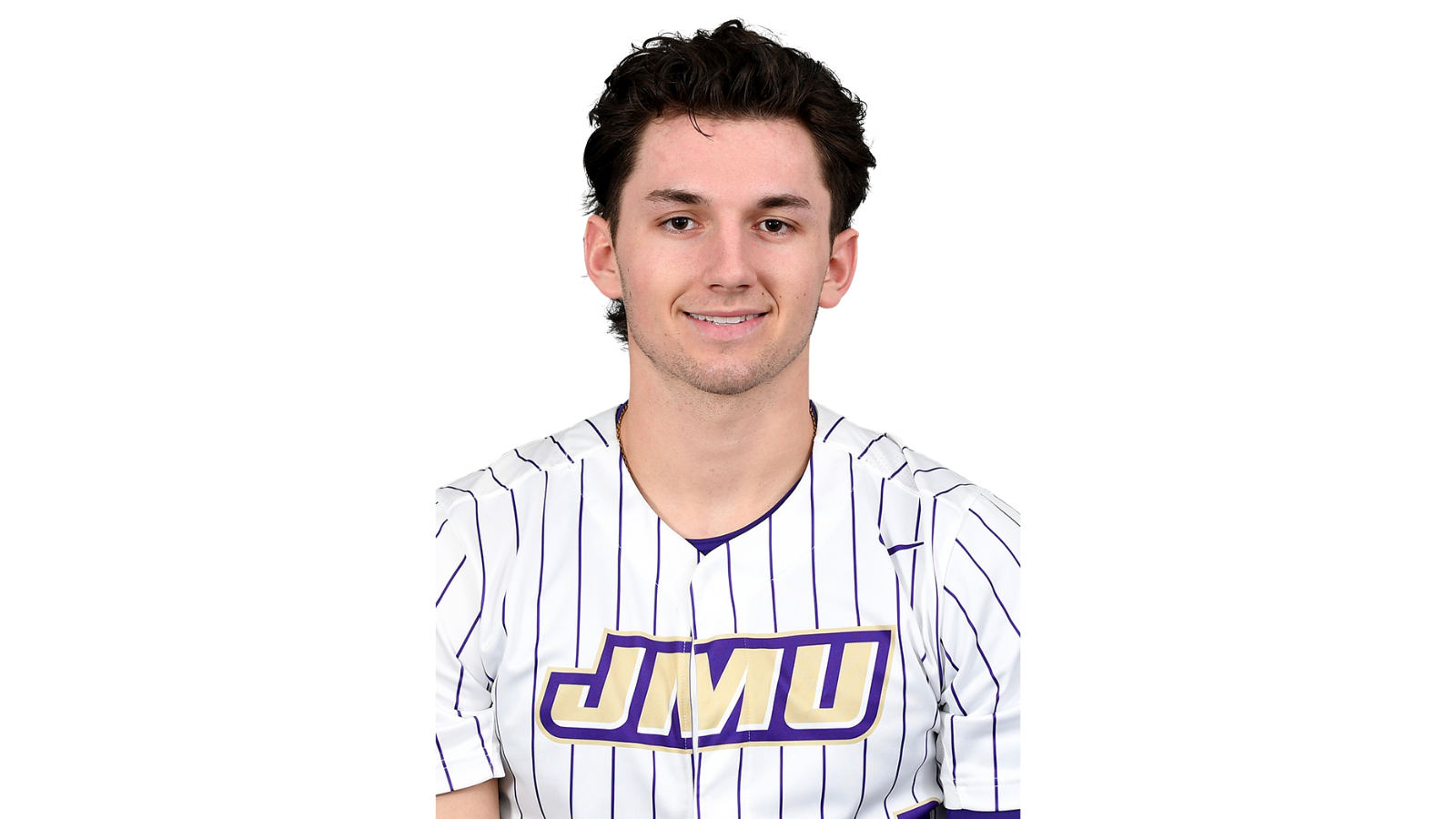
    DeLauter burst onto the scene after a dominant Cape Cod League performance in the summer of 2021. He produced one of the best stat lines on the Cape when he hit .298/.397/.589 with 9 home runs, and 21 walks to 18 strikeouts with Orleans. The big left-handed hitter mashed the baseball with big exit velocities, with the wooden bat rocketing him up draft boards before this spring.

    College Career:

    After two very good college seasons with James Madison and his breakout performance on the Cape, DeLauter was putting together the best stretch of his career. In 2022, he hit .437/.576/.828 in 24 games before breaking his foot, while sliding into second base for a double, ending his Dukes career.

    DeLauter committed to James Madison as a pitcher before a growth spurt in his junior year of high school pushed him to 6-foot-5. The lefty would end up trying his hand as a two-way player but excelled as a hitter who has all the physical tools and potential.

    Batting Stance:

    DeLauter has a unique batting stance and finish to his swing, but his setup is smooth and balanced. Starting shoulder width apart, he gets great separation from his hands that don’t trigger until his right heel touches down. His head drops slightly during extension but he’s quiet throughout his swing.

    He’s able to be creative with his barrel and swing path at times, even when fooled by pitches. The manipulation of his hands and backside help him stay on pitches longer.

     On the pitch below he gets a 3-2 changeup and is able to stay back and rope the pitch for a single. 

    via GIPHY

    DeLauter has had his struggle with high fastballs at times. Early in 2022, especially in the first series of the year against FSU, he was beaten by high velocity by both of Florida State’s left-handed starters.

    via GIPHY

    He did not look as comfortable timing-wise, but on the Cape when his timing was brilliant he showed no issues. The consistency in plate performance against high velocities will be key for him.

    His scissor kick finish and all the movement at the end of his swing means  Delauter’s timing needs to be synced up with his top and bottom half. When he does this he can hit the ball hard from foul pole to foul pole. 

    via GIPHY

    There’s a lot of movement, but he optimizes the power he can inflict on the baseball by having his entire body moving forward up the box with momentum. He uses the entirety of the batter’s box to attack the baseball and hit hard line drives.

    Approach:

    DeLauter has described his approach as trying to hit the ball to center for a home run every single swing. The thought process of producing damage on every swing is there, and whenever he gets into a hitter’s count, he’s trying to hit the ball as hard as he can.

    His power is noticeable with a big physical frame, and he is a presence in the batter’s box with the ability to hit for average and hit the ball hard as well. DeLauter’s ceiling as a pro will ultimately be determined by his returns as a hitter.

    via GIPHY

    With more walks than strikeouts (62 to 45) during his 66-game college career DeLauter has the plate discipline to work himself into hitter’s counts. While Delauter is susceptible to the breaking ball away due to his swing path, he’s still able to lay off pitches away from him forcing the pitcher over the plate.

    Defense: 

    DeLauter played an average-to-abov-average center field at JMU and as a bigger CF was able to cover the ground needed with long strides. He projects more as a corner outfielder in pro ball and has an accurate and strong enough arm to play right field. 

    He gets decent jumps on balls going back towards the wall but, like most, is more comfortable coming in than going back, which should help him if he moves to a corner. With his high athleticism, he runs well and a team might let him play CF as long as he can before making the transition.

    via GIPHY

    Projection:

    A big strong left-handed power hitter with plus power as a tall physical outfielder. Has the ability to hit for average while producing a lot of damage in the middle of an MLB lineup.

    Ceiling: Christian Yelich

    Floor: Gregory Polanco


  • 2022 MLB Draft Scouting Report: Blade Tidwell

    2022 MLB Draft Scouting Report: Blade Tidwell

    Part of a series of scouting reports on intriguing players in the 2022 MLB Draft. To read all the reports (including reports from past years), click here.

    Blade Tidwell, RHP

    College University of Tennessee (RS SO. 2022)
    Bio R/R 6-4, 207 lbs.
    Date of Birth 06/08/2001
    Fastball 55(60)
    Slider 50(60)
    Curveball 40(45)
    Changeup 40(50)
    Control 45(50)
    Future Value 50

    Draft Expectation: 1st round or Compensatory round

    Written by Brandon Tew

    Analysis:

    Blade Tidwell had an abbreviated 2022 season coming back from shoulder soreness. Tennessee, with the best pitching staff in the country, worked him back slowly. 

    However, Tidwell started to peak towards the end of the season and showed his potential as a promising right-hander with a potential plus fastball-and-slider combo.

    College Career:

    Tidwell began his career in Knoxville as the Sunday starter in 2021 and posted a 3.74 ERA with 90 strikeouts in 98 ⅔ innings pitched in 18 starts. He reached double-digit wins with a 10-3 record, the second most wins by a Freshman in Vols history behind R.A. Dickey

    Pitching well in an abbreviated 2022 season, Tidwell finished with a 3.00 ERA in 9 starts and 13 appearances, striking out 51 in 39 innings pitched. With two really good college seasons, Tidwell has set himself up as a potential 1st rounder in this year’s draft.

    Pitch Delivery

    Tidwell has a simple windup and repeats the delivery well. With a tiny step to his left, he pivots on his back leg and brings his knee up past his belt tucking his foot behind his back leg. He then glides forward after a small gather as he straightens his front leg out for landing.

    Releasing the ball from a high ¾ arm slot, he comes from over the top with minimal effort. This creates a downhill plane with his pitches, especially his fastball low in the zone.

    Pitch Profiles

    The fastball jumps off of Tidwell’s hand as he lights up the radar gun constantly. He sits about 93-95 but can work at 97-98 often and has touched 99 mph at times. 

    via GIPHY


    His fastball is electric at the top of the zone and he’s able to create backspin and ride towards the plate, making it a menace to hit. In the winter of 2021, after a stint with the Collegiate National Team, Tidwell worked to improve his fastball’s vertical break to get more whiffs on the pitch.

    Tidwell has a blow-it-by-them mentality with his fastball and when the shape is on and the fastball has good backspin, it explodes by hitters. The confidence in the pitch is really high and he goes full-throttle at hitters all game with his fastball and slider.

    The command of his fastball is iffy at times as he sometimes misses with the pitch high and arm side.

    While his fastball is plus, his best pitch is the slider. At its best, the slider can bend underneath barrels or sweep out of the zone. Tidwell has a really good feel for the pitch and manipulates it for a strike or as a chase pitch.

    Here’s a look at the two variations of the slider:

    via GIPHY

    via GIPHY

    The first slider possesses more tilt and sweep to it and zooms out of the zone away from right-handed batters. The second breaks less and is tighter starting in the same tunnel as his high fastball before dipping under the swing.

    The two different shapes lead to a pitch that can be dominant when paired with his fastball. Tidwell could provide more value as a two-pitch reliever. He flashed potential as a closer or high-leverage setup man in MLB.

    Whether Tidwell develops his curveball and changeup will be important in his growth as a potential starter candidate. He will get a chance to start with two plus pitches and a potential 50-grade changeup and curve.

    The changeup sinks and has enough separation in velocity to get swings and misses. He does have a tendency to leave the pitch up but can induce weak contact choppers and grounders as batters try to cheat to his fastball.

    via GIPHY

    Getting hitters out on the front foot helps the effectiveness of his changeup. Tidwell will need to improve his arm speed on the pitch and match it to his fastball he will also need consistency with its location down in the zone.

    His curve is a work in progress and much like the changeup, he leaves it up in the zone too much. Tidwell uses it as a change-of-speed pitch and a strike stealer early in the count. He does get some swings and misses on it.

    via GIPHY

    Tidwell cut his curveball usage drastically in favor of more sliders and the formula worked his sophomore season. In pro ball, just giving hitters the thought that he might drop in a curve with a nice break will go a long way. He does have a higher upside than most college pitchers in this draft class and that’s because of the potential of his changeup and curve.

    Projection:

    Tidwell has all the makings of a big, athletic righty in the majors. He could be a starter, but may see himself turned into a high-leverage setup man or closer with his plus slider and fastball. How MLB teams use him will depend on the improvements in command and his changeup or curveball will determine 

    Ceiling: Mike Foltynewicz

    Floor: Dinelson Lamet

    Draft Expectation: 1st Round – Compenatory Round

  • 2022 MLB Draft Scouting Report: LHP Parker Messick

    2022 MLB Draft Scouting Report: LHP Parker Messick

    Part of a series of scouting reports on intriguing players in the 2022 MLB Draft. To read all the reports (and reports from past years), click here.

    PARKER MESSICK, LHP

    College Florida State University (RS SO. 2022)
    Bio L/L 6-0, 225 lbs.
    Date of Birth 10/26/2000
    Fastball 40(45)
    Slider 40(50)
    Curveball 40(45)
    Changeup 55(60)
    Control 50(55)
    Future Value 45

    >> Number in parentheses represents Future Value projection

    Scouting Report Written by Brandon Tew

    Draft Expectation: 2nd – 3rd Round

    Analysis:

    Why are we writing about a guy who may not go in the first round?

    Because Parker Messick is one of the most intriguing arms in the 2022 MLB Draft. He possesses a fastball with a touch below average velocity, but a true plus weapon in his changeup. Messick attacks hitters with extreme competitiveness and has succeeded at every level in his career. 

    College Career:

    Messick was one of the best freshman pitchers in college baseball but then he raised his game in 2021. He was named ACC Pitcher of the Year with 126 strikeouts in 90 innings pitched and a 3.10 ERA. 

    Messick backed up his 2021 performance with a very good 2022 season. His numbers dipped slightly to a 3.38 ERA in 98⅔ innings pitched with 144 strikeouts this spring (5th in Division I).

    Pitch Delivery

    Messick is a sturdily-built 6-foot left-handed pitcher who goes right after hitters, pounding the zone with fastballs.

    Messick works at a high tempo and with a funky delivery. The windup is simple yet deceptive as he gets his arm back behind him in a unique position and hides the ball well until he comes toward the plate. 

    The drop and drive Messick creates off the rubber helps him release the ball with good extension as he whirls his back leg around his front half. This allows Messick’s fastball to play up. He has pretty good carry through the zone too and will sneak high fastballs by hitters when thrown at the very top of the zone.

    Pitch Profiles

    The fastball, as with any pitcher, is a key for Messick. There was an increase in his velo up one to two mph from the 2021 season. In 2022 Messick sat more 90-93 MPH, touching 94, whereas in 2021 he was more 88-91. 

    At times Messick’s command will flash plus and really stand out. When at his best, Messick can control both sides of the plate with not only his fastball, but also his changeup. Messick also has a great understanding of working up and down in the zone throwing to all quadrants.

    After giving up only six dingers in 2021 Messick surrendered 15 home runs in 2022 mostly due to poor fastball location. The execution of his fastball is what has made him such a productive pitcher but he needs even more consistent command of the pitch at the next level. 

    Messick has never had an issue throwing strikes, with a 66.5% strike rate in his college career and a 6.7 K/BB ratio. It has always been command of his fastball that has hurt him at times.

    His changeup is one of the best in college baseball, as batters are left looking foolish in its wake. His 14-strikeout performance against Duke on March 25 showed just how lethal the fastball and changeup combo can be.

    The changeup is a plus pitch, one that just dies, hitting a wall in front of the plate. Messick’s ability to kill spin and create incredible depth with the pitch is what makes swings look awful against it.

    But what makes it really effective is the arm speed he generates on the pitch. The combination of that arm speed and movement masks the velocity difference between his fastball and changeup really well. 

    Messick has a great feel for the pitch and can throw it below the zone with good fade, or down at the knees to steal a strike. He can also cut it if he wants a different action on the pitch, which shows an advanced feel.

    Messick separates himself from most other pitchers with his confidence to throw a changeup to both sides of the plate to any batter. 

    Pitchers will usually work down and away from hitters with changeups. But Messick has no fear with it as it routinely dives underneath barrels as a true swing-and-miss pitch for him.

    Messick’s breaking pitches are vital for continued success. He has improved the shape of his slider and added sharpness to it. The pitch keeps hitters off of his changeup. 

    His curveball has a tendency to become more of a slurve-type pitch from his arm slot and blends at times with his slider. He could scrap the pitch altogether. 

    The shape of his slider, when thrown well, is effective and should continue to improve for him. It has become a pitch he’s more and more comfortable with. The tunneling of the fastball and changeup down is already very good, so a breaking pitch that he can pair with his fastball, both high and low, will be important.

    Makeup

    Messick wants the ball, oozes confidence, and commands the mound every time he pitches. That level of competitiveness and mentality is what will carry him long term. Messick turns into an electric factory when he’s on the mound, complete with celebratory air punches.

    Messick’s strikeout reactions are passionate and that’s how he approaches pitching, with a fierce mentality that he is better than the batter in the box. There’s no denying that he has the competitiveness and attitude of a pro.

    Summary:

    Messick is a left-handed strike-thrower with extreme competitiveness. The improvement of his breaking pitches will determine his future, but his changeup is one of the best in the draft.

    Projection:

    A left-handed pitcher with a plus changeup and starter or swing-man potential depending on the development of his breaking pitches.

    Ceiling: Matthew Boyd

    Floor:  Jalen Beeks