Category: Baseball

  • 2022 NPB & KBO Fielding Bible Awards

    2022 NPB & KBO Fielding Bible Awards

    For the third straight year, Sports Info Solutions is rewarding defensive excellence on a global level. Today, we announce the winners of the NPB and KBO Fielding Bible Awards.

    The awards were voted on by a panel of experts and members of SIS’ operations staff, who spent the entire season tracking NPB and KBO games. Among our voters were Jeeho Yoo (Yonhap News Agency, South Korea), John Gibson (Japanese Baseball Weekly Podcast), and Jason Coskrey (Japan Times).

    Each voter ranked their top three players at each position in the league they covered, as well as a multi-position (utility) player, with 5 points awarded for a first-place vote, 3 for second and 1 for third. Eligibility for voting was based on playing-time requirements.

    (note that in accordance with Japanese and Korean customs, we are listing the players with their family name first)

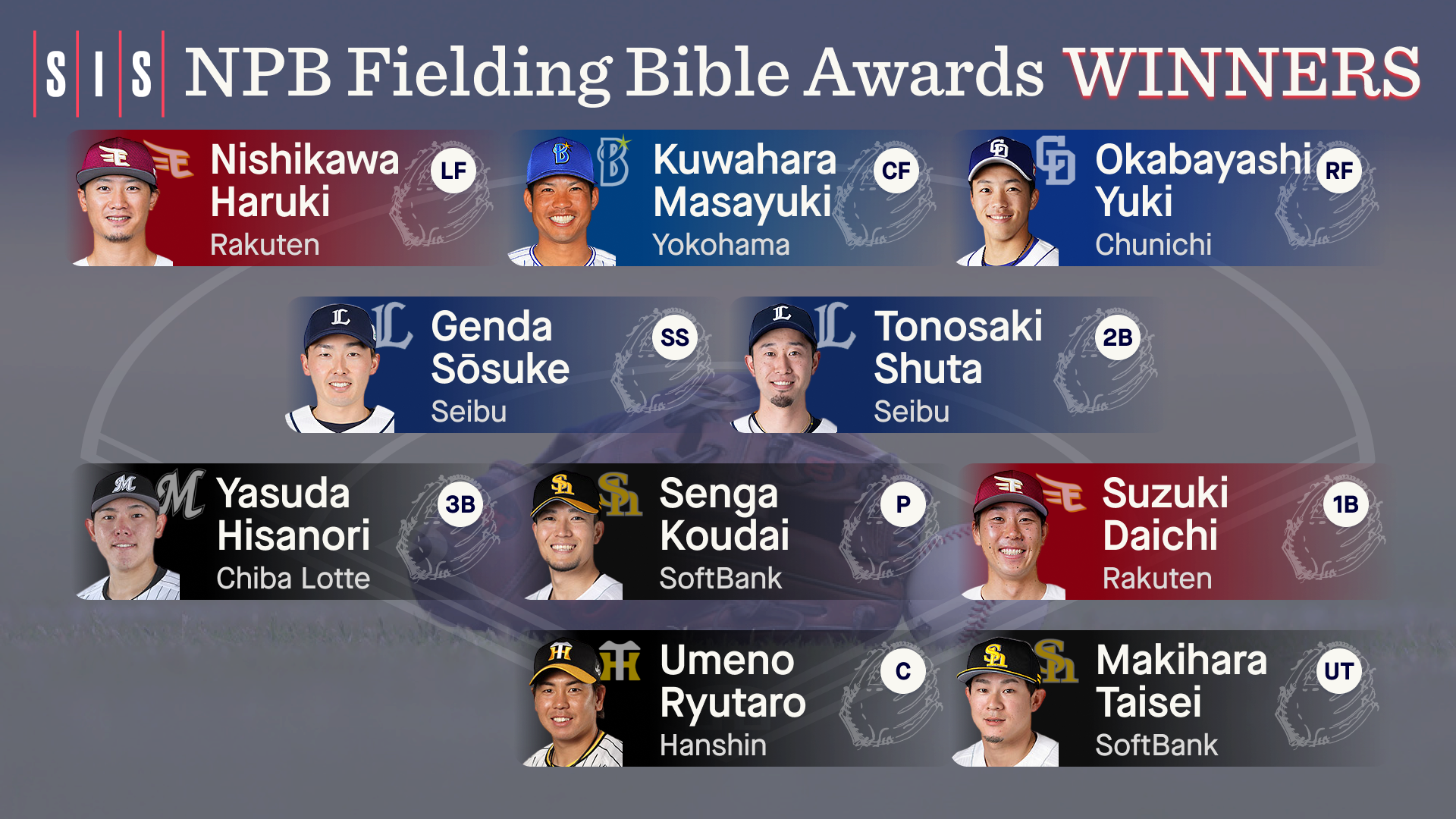
    Seibu Lions shortstop Genda Sōsuke became the first NPB player to win a Fielding Bible Award at the same position twice in the award’s three-year history. Genda, who previously won the award in 2021, saved 20 runs with his defense this season, easily the most among NPB shortstops

    Genda’s Seibu teammate, second baseman Tonosaki Shuta, also won the Fielding Bible Award at his position. Tonosaki led NPB second basemen with 26 Runs Saved. Genda and Tonosaki had more Runs Saved at their positions than any MLB player.

    Two other pairs of teammates won, first baseman Suzuki Daichi and left fielder Nishikawa Haruki of the Rakuten Golden Eagles and pitcher Senga Koudai and multi-position player Makihara Taisei of the Fukuoka SoftBank Hawks. Senga is one of the top free agent pitchers and is available to MLB teams this offseason. Makihara goes by the nickname “King Joker” because of his utility role.

     Nishikawa, Genda, Tonosaki, Okabayashi Yuki (right field), and Umeno Ryutaro (catcher) were the winners who recorded at least 10 Runs Saved at their respective positions. Umeno had arguably the most dominating season in the league, finishing with 23 Runs Saved. The next-closest catcher among eligible candidates had only 12.
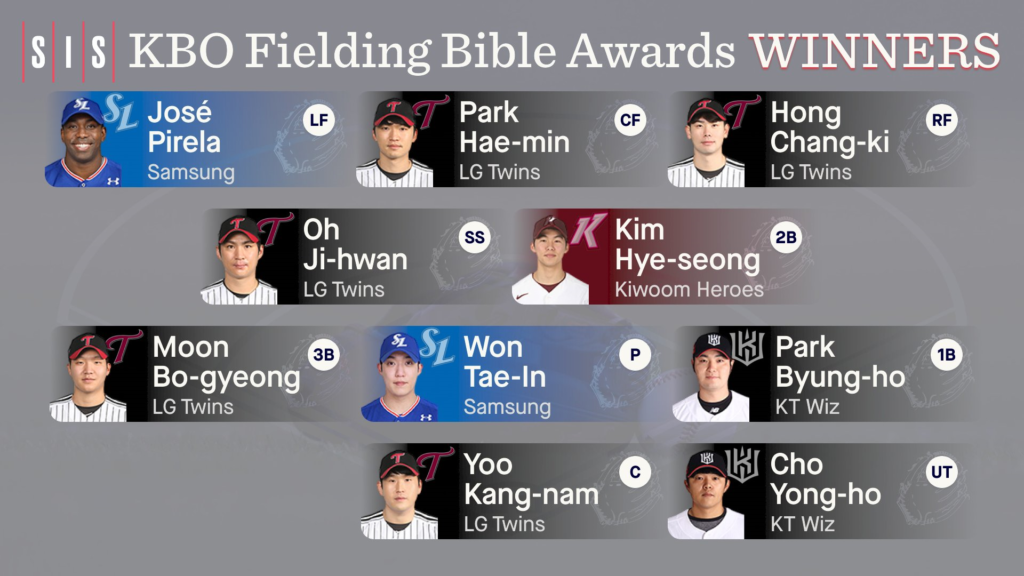
    The LG Twins led KBO in Defensive Runs Saved in 2022 and their players earned the rewards of that. Five of them won a Fielding Bible Award at their respective position.

    Catcher Yoo Kang-nam, shortstop Oh Ji-hwan, third baseman Moon Bo-gyeong, center fielder Park Hae-min, and right fielder Hong Chang-ki all were winners for LG. Oh, Kim, and Park each won at their positions for the second time, the only three players who have won twice at their positions in the three-year history of the award

    Yoo, Moon, and Hong were the three winners to finish with at least 5 Runs Saved at their respective positions. Defensive Runs Saved are calculated using an MLB basis and KBO Runs Saved totals are generally considerably lower than their MLB counterparts.

    Two former major leaguers won a Fielding Bible Award. First baseman Park Byung-ho, who played for the Twins in 2016, won in his first season with the KT Wiz, for whom he also hit 35 home runs. And left fielder José Pirela, who also had a great offensive season, was one of two winners on the Samsung Lions along with pitcher Won Tae-in. Pirela formerly played in the majors from 2014 to 2019 for the Yankees, Padres, and Phillies.
  • NPB Free Agent Scouting Report: Masataka Yoshida

    NPB Free Agent Scouting Report: Masataka Yoshida

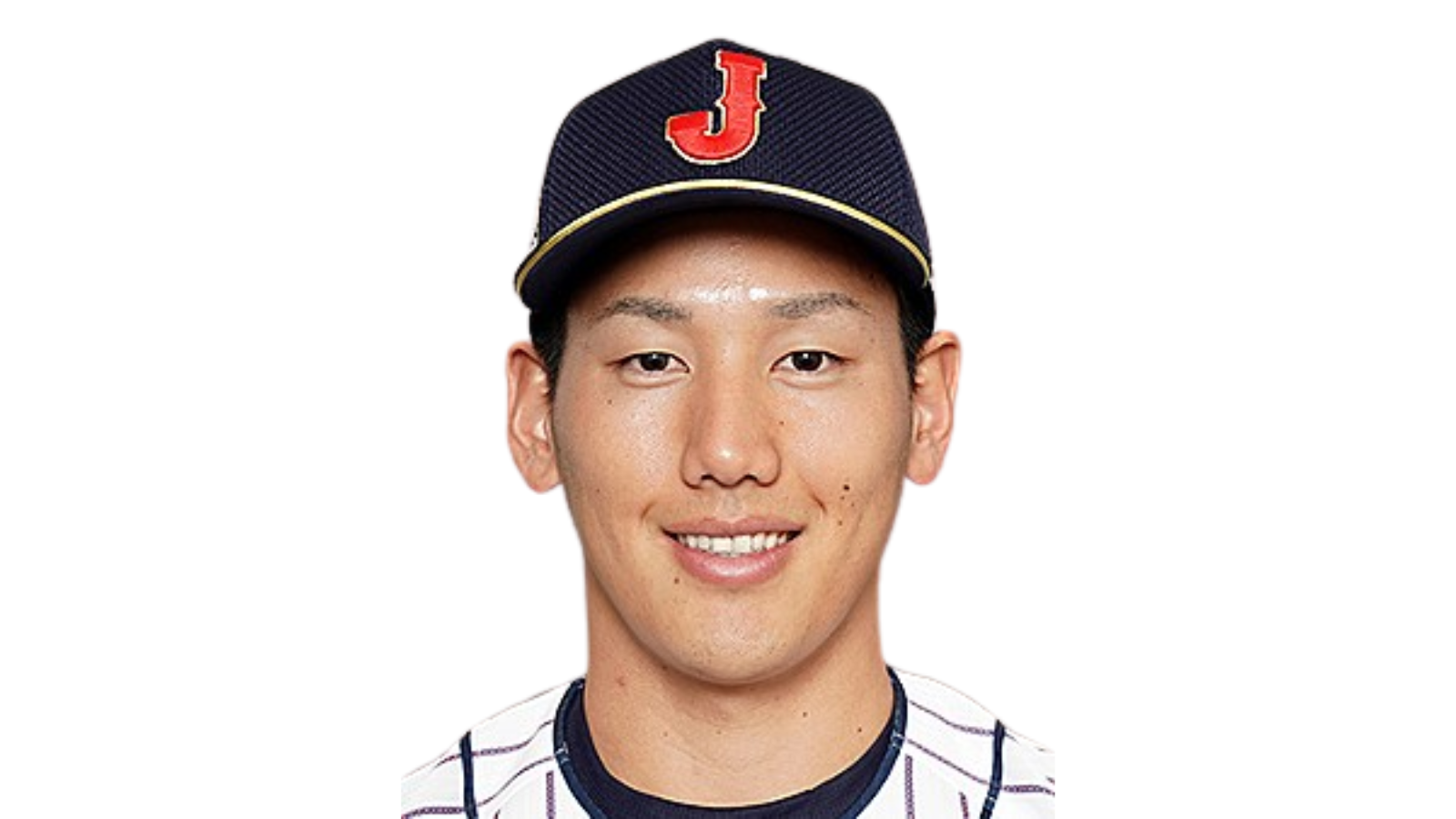
    Masataka Yoshida is expected to be posted by the NPB Champion Orix Buffaloes. This is a bit of a surprising move, as there had not been much buzz around Yoshida being posted until after the playoffs concluded.

    That does not mean that Yoshida is not deserving of a look. He has been one of the most consistent hitters in the Pacific League over the last half-decade, posting a batting average of at least .300, an on-base percentage of at least .400, and a slugging percentage of at least .500 in each of the last six seasons.

    Yoshida does have a reputation as a slugger, though that is a little misleading. He has never reached 30 home runs in a season (he hit a career high 29 in 2019), and has hit 21 home runs in each of the last two seasons.

    Below is a great side view of Yoshida hitting a walk-off home run in Game 5 of the Japan Series:

    https://twitter.com/baseballcosmo/status/1585631003753971716

    And here is the normal broadcast view:


    Yoshida has a bit of an uppercut in his swing, which allows him to maximize his power output from his smaller frame. Listed at 5’8” and 176 lbs, his frame is reminiscent of Dustin Pedoria’s and, like Pedroia, Yoshida has to put everything he has into his swings.

    Despite the effort exerted on them, Yoshida demonstrates elite plate discipline skills. He struck out only 41 times this season (an 8% rate) while walking 80 times (16%), though the walk rate was boosted by 18 intentional walks. If we remove the intentional walks he still maintained a healthy 13% walk rate.

    Yoshida isn’t just piling up stats against weaker arms either. The Pacific League is home to many of Japan’s best young pitchers. While he does not have to face teammate Yoshinobu Yamamoto, he has hit well against fellow MLB hopeful Koudai Senga, NPB wonderkid Roki Sasaki, and veteran Masahiro Tanaka. He’s a combined 19-for-53 (.358) with 10 walks against them. He’s also 10-for-24 (.417) in the last three seasons against the Pacific League’s top lefty relievers, Yuki Matsui and Livan Moinelo.

    While Yoshida’s offensive stats look very good, there is another wrinkle to consider with him. NPB teams do not shift much in general, but Yoshida was an exception as he faced the shift regularly. With MLB teams unable to put three fielders on the right side, or put an infielder in short right field, Yoshida might find more holes in MLB infields to get hits through.

    While Yoshida has proven everything he can with the bat in NPB, the rest of his game has some questions. Defensively he is likely limited to only left field. Yoshida’s size makes him too small for first base, where longer reach is desired to catch errant throws from infielders.

    His arm can also be a liability in right field, where he has played just over 600 innings since 2018, when we began tracking NPB data. In that time Yoshida has allowed runners to take an extra base (for example, go first to third on a single) on 64% of their opportunities in right field. Yoshida played only 23 innings in right field in 2021, and did not play there at all in 2022.

    As a left fielder, teams could look for a way to maximize his abilities defensively. Over the last five years, Yoshida has totaled -15 DRS in 3,103 innings in left, averaging -3 DRS in around 600 innings per year (we judge NPB players using MLB out probabilities).

    In the range and positioning component of DRS he has rated above-average on “shallow” plays in each year, while scoring negatively on “deep” plays in each year. If a team wants to use him in the outfield, they could dig deeper to determine how to optimally position him in left field in hopes of masking his deficiencies.

    How much he can play in the field is also a concern. From 2018-2020 Yoshida played in every game for Orix, though he only played more than 100 games in the outfield in 2018. In the last two seasons he has missed some time and also seen more time at DH.

    In 2022, played left field in only 39 of his 119 games, slotting in as the DH in his other 80 games. A positive COVID test and a hamstring injury limited his ability to stay on the field. He did start at left field in 9 of Orix’s 11 playoff games, while playing DH in the other two.

    Similar to his defense, Yoshida’s speed is a bit of a question mark, and maybe more of a liability following his hamstring injury. He is slower than the typical small-framed outfielder, though his speed is much closer to below-average than basepath-clogging.

    He was 4-for-4 stealing bases this season (with no attempts in 2021), suggesting he was opportunistic with his opportunities. Given his .447 OBP he was on base frequently, but ran sparingly. He also rarely finds an extra gear on liners in the gap, totaling exactly 1 triple in each of the past three seasons, and 7 total over his seven-year career.

    Yoshida has been the best hitter that Orix has had since Ichiro, and will likely find a MLB home this off-season. While there are some questions regarding his defense, his elite offensive production will likely overshadow those other concerns.

  • Stat of the Week: Most Valuable Pair

    Stat of the Week: Most Valuable Pair

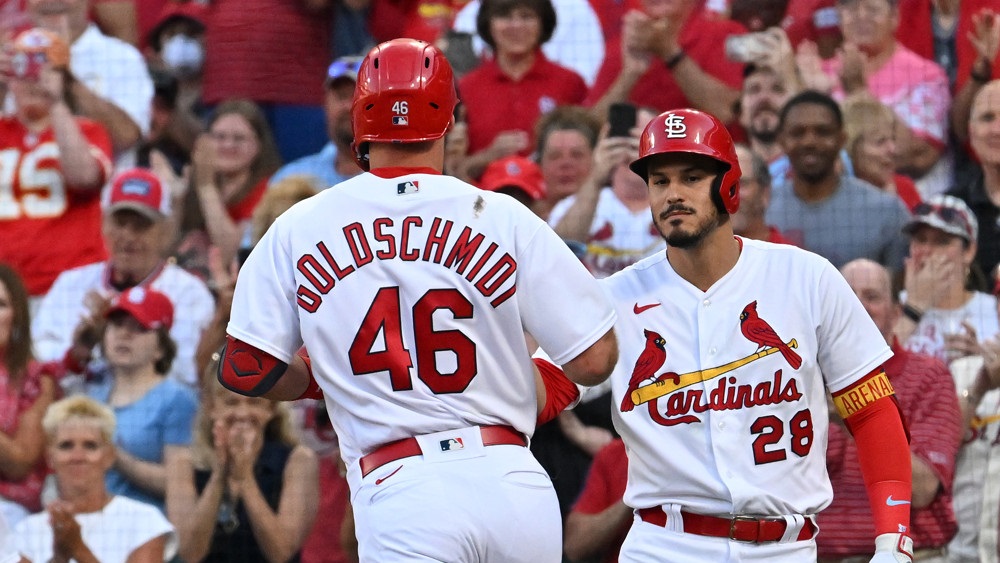
    This article is an abridged version of one on NL MVP candidates Paul Goldschmidt and Nolan Arenado that appears in The Bill James Handbook, available now from ACTA Sports.

    If we’re going to talk about the best infield corner combos in major league history, we can begin by producing a list of instances in which a team’s usual first and third basemen each posted 5 WAR (per Baseball-Reference) in a season.

    Doing so nets us 43 sets of combos in baseball’s modern era (since 1900). If we raise the bar to each recording a 6-WAR season, the list thins to only seven pairs, each of whom made it once. Bump it to 7 WAR and we’re in rare pair air.

    There are only three such corner combos, and our Bill James Handbook cover subjects Nolan Arenado and Paul Goldschmidt make up one of them. The others are first baseman Frank Chance and third baseman Harry Steinfeldt of the 1906 Cubs and the standard-setter, Albert Pujols and Scott Rolen for the 2004 Cardinals.

    The amazing thing about Goldschmidt and Arenado is how closely aligned in overall value they are.

    What made them so special in 2022?

    For both Goldschmidt and Arenado, 2022 was the greatest offensive season of their careers when considering how they did relative to the rest of MLB.

    In 2022 MLB hitters had a .706 OPS, down 22 points from 2021 (despite the DH becoming permanent in the NL) and 52 points from 2019.

    Goldschmidt’s OPS jumped by 102 points from 2021 to 2022. Heck, Goldschmidt’s OPS with two strikes was .785, 79 points better than the MLB overall OPS.

    If you’ve ever regularly watched Goldschmidt during a full season (I did in 2018), you’d know that he goes through periods of time in which the baseball looks like a beach ball.

    In 2022, that covered 51 games from May 7 to July 2, in which he hit .383 with a .455 on-base percentage and a .755 slugging percentage, with 17 home runs and 54 RBI.

    Arenado’s OPS increased by 84 points from 2021 to 2022. He also cut his strikeout rate to 11.6%, the lowest for any full season in his 10-year career.

    Arenado finished with 30 home runs and 72 strikeouts. There were 23 players with 30 home runs in 2022. The only other one with fewer than 100 strikeouts was Kyle Tucker with 95.

    Peak Arenado showed up twice. In the first 20 games of the season, he hit .368 with a 1.133 OPS.

    Then, over the nearly two-and-a-half months from June 17 to August 29, he hit .345 with a 1.065 OPS and 16 home runs in 58 games.

    Left unsaid to this point are the aesthetics. Goldschmidt does everything well. He’s not just a hitter. Did you know he’s got a streak going of 23 consecutive successful stolen base attempts?

    Goldschmidt may not have played Fielding Bible Award–worthy defense this season, but the Cardinals did lead MLB in how often they turned groundballs and bunts into outs, so he deserves some credit for that. He turned 35 in September but he doesn’t play like a 35-year-old. At least not yet.

    Arenado similarly just plays the game well. He’ll turn 32 not long after Opening Day in 2023. But he still plays defense like he’s in his prime. He won his 5th Fielding Bible Award in 2022.

    The joint value that the two of them provided this season was virtually unprecedented and is something that likely won’t be seen again for quite some time.

    Unless they do it again next season, of course.

  • Why Michael Harris Impresses Me (Bill James Handbook Excerpt)

    Why Michael Harris Impresses Me (Bill James Handbook Excerpt)

    The following essay is an excerpt from The Bill James Handbook 2023, available now at ACTASports.com and wherever you get your books.

    In today’s baseball we often see rookies come up and have immediate impacts, but rarely do we see a rookie have sustainable impact on a good major league club. The overwhelming majority of players come up, have some modicum of success, then go through an adjustment period.

    Depending on just how difficult that struggle may be will often determine just how long that player stays on the major league roster. There is NO shame in that!!

    Playing in the major leagues is hard…really hard, and now with the amount of information available at a moment’s notice, the ceremonial lap around the league that rookies and young players used to enjoy before they got exposed is no more. The opposition will have information about the player’s tendencies before the name gets stitched on the back of his jersey.

    The biggest jump that any ballplayer will make is the one from Triple-A to the big leagues. The Atlanta Braves’ Michael Harris II made an even more remarkable leap to the major leagues from Double-A Mississippi in late May and now should be the National League Rookie of the Year.

    There are a few plays that will serve as an illustration as to why this young man had the impact he had on the Atlanta Braves and what led a really intelligent front office group to sign him to an eight-year pact worth up to $72 million.

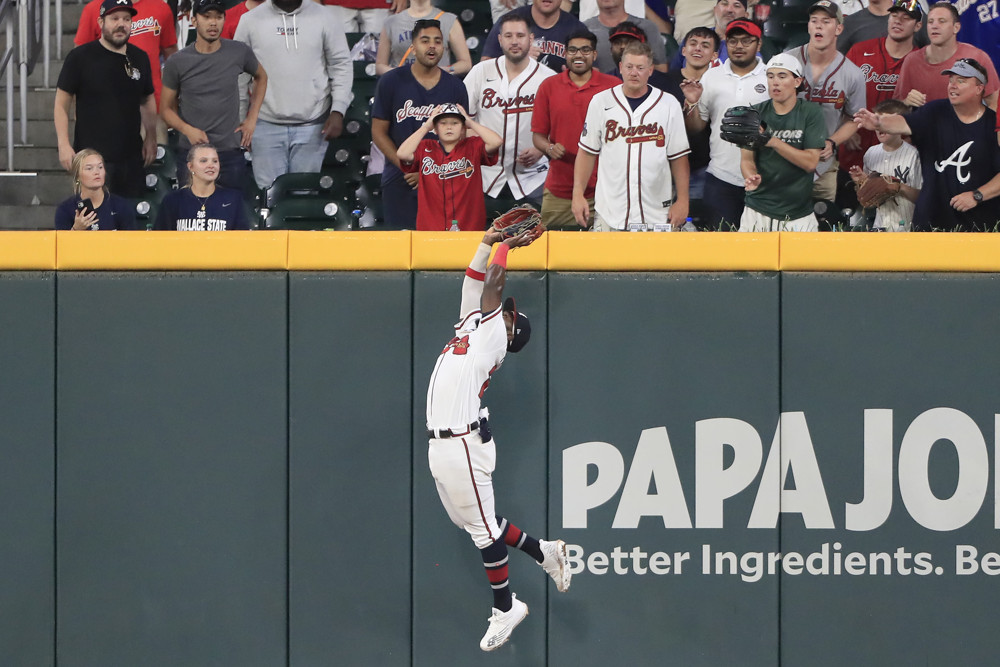
    Harris II made some absolute highlight reel catches in his first year in the major leagues. While spectacular, those don’t move the needle for me. I spoke with a veteran National League evaluator and asked him what sticks out about Harris II. “This young man has intelligence, elite athleticism and an ability to make difficult things look very easy”.

    Padres (then Nationals) slugger Josh Bell has an unorthodox approach that yields the ability to impact the baseball from line to line from both sides of the plate. Atlanta’s information has Harris shading oppo. On the play in question, the ball was hit at 101 mph/28-degree launch angle in the right-center field gap.

    We had it as a 55% catch probability; other sources had it higher, but Harris II covered 100 feet at 30 ft/sec to catch the baseball like it was a routine can of corn. On the surface it doesn’t look like a difficult play; Michael Harris II made a difficult play look easy, running this ball down with room to spare.

    Of course there is a ‘how’ attached to everything, and when you look at how Michael achieves this, it’s evident how he makes the difficult look routine. His jumps are elite, both by the eye test and by Baseball Savant (click here to see where he ranks). More often than not he’s on the correct route, decisive and, as we alluded to, has tremendous “burst” right out of the gate. The scary part for the rest of the league is he’s still learning how to be a major league center fielder.

    On our podcast last year, he talked about how he learned to play the outfield from Marquis Grissom. Who better to learn from than a fellow Atlantan who won a World Series as a Brave.

    By the way, he also went 4-for-4 with a home run in the same game. That brings us to his offensive impact on this club. Harris II performed in most every way and all year long. .297/19 HR/64 RBI, yep you’re getting a dose of cough medicine to start. He finished with a 135 OPS+, he hit right-handed pitching (.943 OPS) and held his own against left-handed pitching (.649 OPS).

    The fact that he was better on the road (.965 OPS away) wasn’t entirely surprising given Atlanta is his hometown (.721 OPS at home) and certainly there is probably some level of pressure involved playing in front of friends and family every night. More intriguing was the lack of power production in a very hitter friendly Truist Park. Fifteen of his 19 home runs were hit on the road.

    Late in the year, the hits kept coming… August (.990 OPS) and September (.838 OPS). Finally, my personal favorite stat on the planet, how he did with runners in scoring position with two outs…(.845 OPS compared to the MLB average, .712).

    He was above average in Hard Hit Percentage at 41%, above average in Barrels at 10%, and his K% was a tick below average at 24.3%. Some will point to his BABIP of .361 and say he was extremely lucky. Good hitters create their own luck by barreling the baseball more than most and using the entire field.

    Harris does a really nice job of staying in the middle of the field with his approach and was above average at 43.5% of balls in play going up the middle. He has shown the propensity to chase pitches, especially offspeed. I would anticipate him improving his pitch recognition as well as his walk percentage from 4.8% as he grows in experience as well.

    The one thing that Harris II didn’t do this year was go 20/20. He just missed. He finished with 19 homers and was 20-for-22 in stolen base attempts this year.

    Harris II is more than a flash in the pan—he’s a young player that passes the eyeball test but also gives key indicators of success on both sides of the ball that he is here to stay.  He’s with a franchise that has done an unbelievable job of identifying the right young men, developing them quickly and then putting them in positions to succeed at the major league level. He certainly exceeded expectations and will find himself in the middle, literally, of another great run in Atlanta.

    SIS VP, Baseball Bobby Scales played 14 seasons of pro baseball (2 with the Cubs) and worked in the Pirates’ and Angels’ front offices.

    This essay is an excerpt from The Bill James Handbook 2023, available now at ACTASports.com and wherever you get your books.

  • NPB Free Agent Profile: Shintaro Fujinami

    NPB Free Agent Profile: Shintaro Fujinami

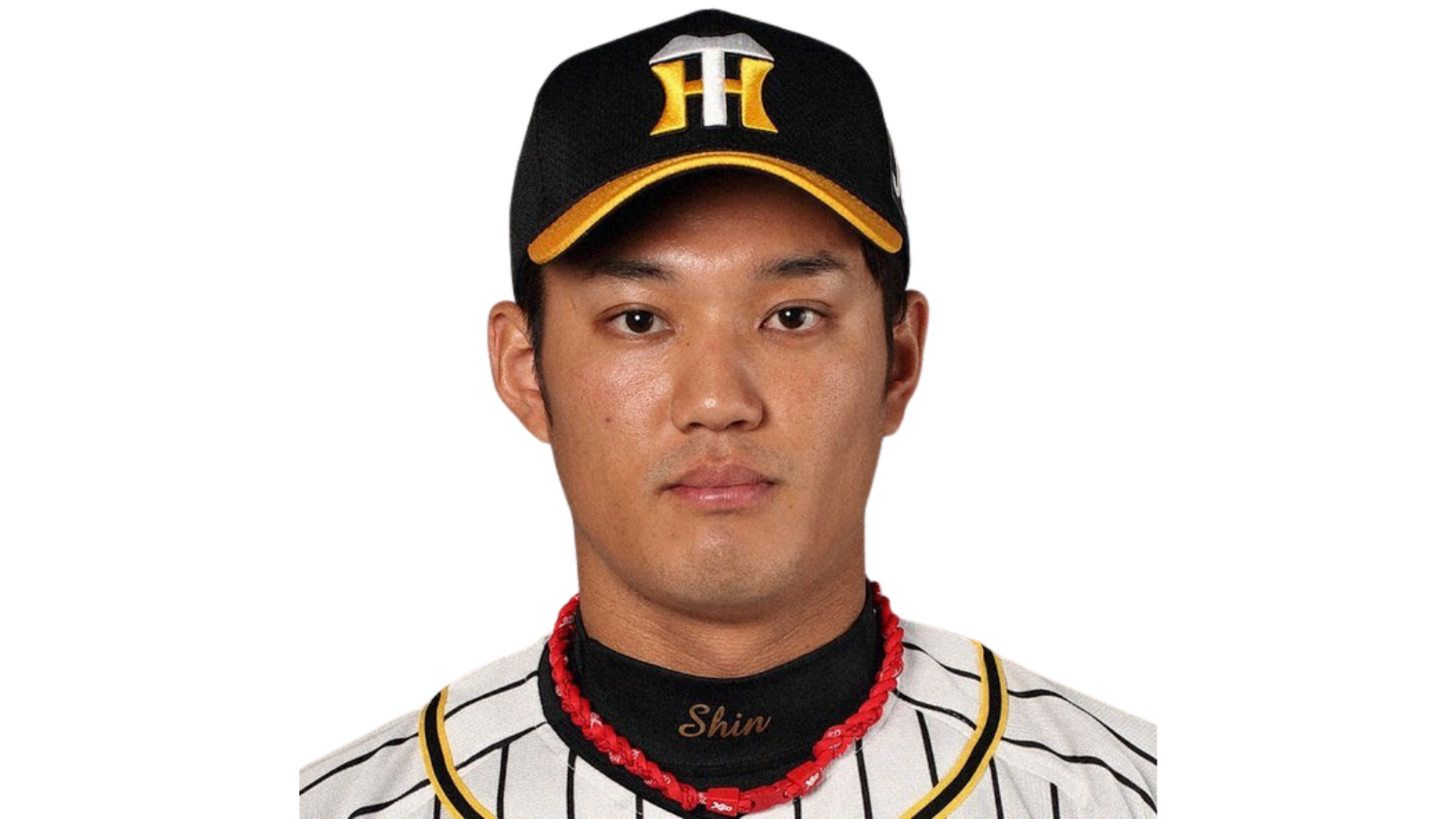
    Shintaro Fujinami has been a tantalizing talent in NPB for a decade, and now he could very well be coming to North America. The Hanshin Tigers will be posting him when MLB free agency gets underway.

    Fujinami’s career has been a roller coaster ride. He held his own in NPB at first, debuting just before his 19th birthday. From 2013-2016 he made between 24 and 28 appearances each year, with almost all of them being starts. His best season was 2015, in which he went 14-7 with a 2.40 ERA and 221 strikeouts in 199 innings.

    After 2016 the control issues came, and they hit him hard. He walked at least 6 batters per 9 innings in each of the next three NPB seasons, and made more minor league appearances than NPB appearances over that span. The 2019 season was the low point for Fujinami, as he made one start that lasted 4 ⅓ innings, walking 6 batters and hitting another 2.

    Over the past three seasons, a bizarre trend has emerged regarding Fujinami’s usage. In each of the last three seasons he has opened the year as a starter and struggled, transitioned to relief work and performed well, which earned him a promotion back into the rotation at the end of the year.

    If we split his 2022 season into those three stages, he yielded the following results:

    Role (Dates) Games Innings ERA K% BB%
    Starter (3/25-4/8) 3 15 6.00 15% 14%
    Relief (5/31-6/10) 5 6 0.00 19% 5%
    Starter (8/6-9/18) 7 43.2 3.09 27% 5%

    *This leaves out a 2-inning shutout relief appearance just to get some work in before the playoffs (2 strikeouts, 1 walk), and a rough 3-inning playoff start that was played in monsoon-like conditions (2 runs, 4 strikeouts, 3 walks).

    There are many reasons for MLB teams to be interested in Fujinami, the first being his stuff. Overall Fujinami averaged 96 MPH with his fastball, and it played up a bit when pitching in relief, averaging 97 MPH.

    While his fastball is good, his splitter is better. It’s a harder pitch than most MLB splitters, averaging 91 MPH (92 MPH as a reliever) and topping out at 94 MPH. Despite throwing it so hard, he still manages to get good downward action on the pitch, and he locates it better than the fastball or slider, keeping it down and out of danger.

    The splitter was his best strikeout pitch, and his most-used pitch with two strikes, narrowly edging out his fastball in both two-strike usage and strikeouts. In addition to having a solid 34% whiff rate, batters also struggled to do anything with the splitter when it was put in play. His splitters turned into grounders 66% of the time, and batters only managed a 9% hard hit rate versus the pitch.

    While the fastball and splitter are great weapons for Fujinami, his slider is more of a liability. The slider usually features good horizontal break and sweeping action, and had the best whiff rate of all his pitches at 37%, but he struggled to control it and limit damage. He would routinely leave sliders hanging in the zone, and batters hit .310/.383/.548 on the pitch.

    Some of his early season struggles can be attributed to slider usage. Overall he threw 21% sliders on the season, but in his first three starts he threw sliders 30% of the time, compared to just 16% splitters.

    While slider usage was definitely a factor in his early season struggles, it was not the only reason. In those first three starts he could not find the zone consistently with any of his pitches.

    The only pitch that was able to manage a strike rate of 60% was his rarely-used curveball (of which he threw 3 of 5 for strikes). For comparison, if you take out the first three starts 69% of his fastballs were strikes, as were 68% of his splitters.

    Fujinami’s market will be fascinating to follow this off-season, as there are a wide variety of possible outcomes. Some teams will be scared off by him only having two reliable pitches and a history of control problems.

    On the other hand, some teams might see a power bullpen arm ready to go with a fastball-splitter combination. A team may think they can rework his breaking ball or see his two pitch mix working like it does for Kevin Gausman.

    What Fujinami wants will matter too. Will he be willing to take a bullpen role, or will he want the opportunity to start? Will he want a clause that prohibits him from being sent to the minors in his contract? Is he willing to sign for a price that MLB teams are willing to pay, keeping in mind that they will owe Hanshin a posting fee on top of his salary?

    Recent years have seen some players with “fringier” skill sets go through the posting process only to end up re-signing back with their old team. Defensive specialist second baseman Ryosuke Kikuchi and speedy outfielder Haruki Nishikawa have recently had failed postings. Starting pitcher Tomoyuki Sugano was widely considered a MLB-caliber arm, but could not find a team that would meet his price and re-signed on a large contract with the Yomiuri Giants.

    It is impossible to tell how Fujinami’s future will play out. However, as when he is on the mound, the unpredictability is part of what makes him so intriguing.

  • Turning a Negative Into a Positive: 5 Improved Infielders

    Turning a Negative Into a Positive: 5 Improved Infielders

    One thing I’ve garnered from talking to players the last few seasons is that they put a lot of work into infield defense. You might not see players take infield practice before a game anymore, but a considerable amount of time is still spent doing drills each day to keep their techniques sound.

    I’ve tossed around the term “most improved defensive player” and its variants a few times on this website and on our Twitter feed but wanted to look more closely at players who could fit that description. I started with infielders.

    In talking about improvement, I didn’t necessarily want to look at the player who went from being good to great, but rather players who went from below-average to above-average.

    Using arbitrary endpoints, I found four infielders who went from -5 Runs Saved or worse at a position to 5 Runs Saved or better at that position, and added in one player who did something similar, albeit playing one position one year and another position the next.

    Here’s what I uncovered about those players and where the improvement came from.

    Brendan Rodgers

    By our measures, Rodgers has a solid claim for most improved defensive player in MLB. He went from -5 Runs Saved at second base in 2021 to 22 Runs Saved, a Fielding Bible Award and a Gold Glove in 2022.

    We covered where Rodgers’ improved previously in a conversation we had with him late in the season. From early June to the end of the season he made great play after great play and avoided mistakes. He led all second basemen with 19 diving plays.

    Dansby Swanson

    Swanson is one of two free agent shortstops who flipped the script on his defensive numbers from 2021 to 2022.

    Swanson’s defensive history is a mix of good years and bad years and they seem to alternate.

    The Braves’ championship season actually wasn’t a good one for Swanson’s defense. Swanson totaled -7 Runs Saved in 2021. But in 2022, he accrued 9 Runs Saved, matching the career high he set in 2018 and the shortened 2020 season.

    One thing apparent to the eye – Swanson cut back on mistakes. He had 36 Defensive Misplays and Errors in 2021 and that number dropped to 22 in a comparable number of innings in 2022.

    He also had a much better success at converting more outs than expected on balls hit to his right than he had the past three seasons, as shown in this chart.

    Dansby Swanson on Balls Hit To His Right

    Season Plays Made/Opportunities Success Rate Plays Above Expectation
    2019-2021 245/441 55.6% -17
    2022 151/238 63.4% +3

    * Opportunities = Plays with a >0% out probability

    Xander Bogaerts

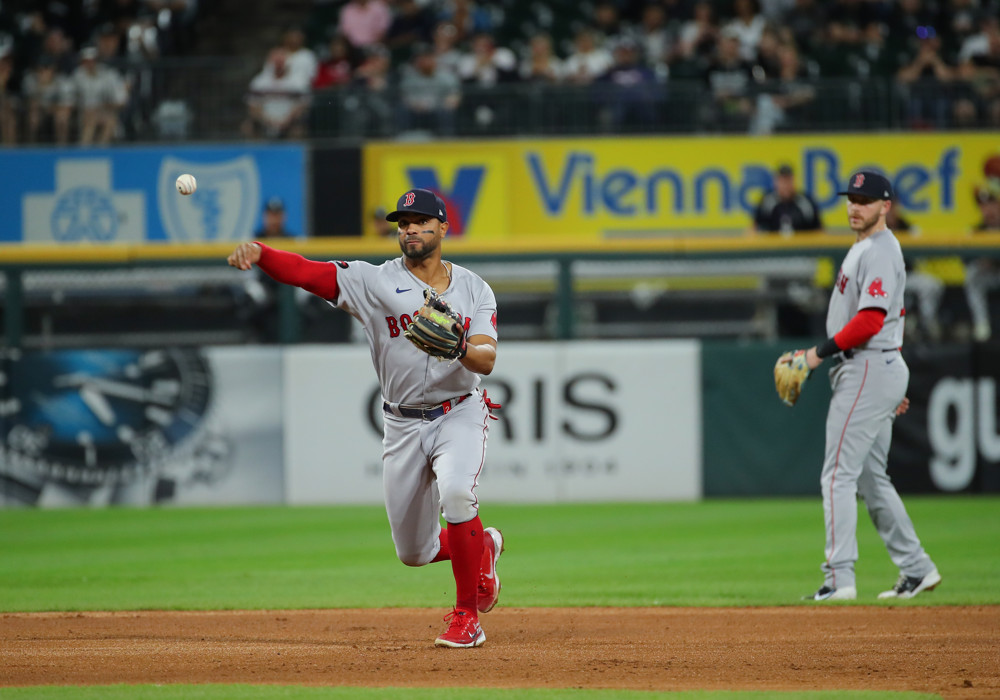
    Bogaerts is the other free agent shortstop whose defensive numbers improved and, unlike Swanson, there was not a previous track record of success to draw upon. Bogaerts went from costing the Red Sox 5 runs with his defense in 2021 to saving them 5 in 2022, the first time in his career he had a positive Runs Saved at the position.

    Bogaerts numbers going to his left and on his forehand were both much better in 2022 than 2021 (which makes sense, since those should go hand in hand).

    Of the 35 shortstops who got to the most balls on their forehand, Bogaerts had the second-highest rate of turning those into outs (94.9%), trailing only another free agent shortstop (a very good defender), Carlos Correa (95.5%).

    Xander Bogaerts vs Ground Balls Played On His Forehand

    Season Plays Made/Opportunities Success Rate
    2021 266/289 92.0%
    2022 318/335 94.9%

    Amed Rosario

    Rosario and Bogaerts were on similar tracks. Neither had finished a season with a positive Runs Saved at shortstop before 2022 and each got there by improving their play on balls hit to their left.

    Rosario improved by 15 Runs Saved from 2021 to 2022, going from -9 to 6. Again, this was a case of cutting back on self-inflected miscues.

    Rosario totaled 29 Defensive Misplays and Errors in 2022, down from 34 in 2021, 48 in 2019 and 43 in 2018. He was better on a per-inning basis in 2022 than any of those seasons.

    Also of note: The Guardians shifted less often than any other team, but when they did, Rosario fared quite well, netting 7 Runs Saved.

    Gleyber Torres

    Torres benefited from a position change, going from shortstop, where he’d cost the Yankees 9 and 10 runs the previous two seasons, back to second base, where he had success in 2018 before a drop-off the following season.

    Torres, similar to Brendan Rodgers, got it done on balls hit up the middle, making 86 of 156 plays on balls hit to his right. Out probabilities suggested he’d make only 75 of them. Though he didn’t make an abundance of flashy plays, he was instrumental in the Yankees finishing with the second-highest out rate on ground balls and bunts in MLB in 2022.

  • Bill James Handbook Excerpt: A Closer Look at Pitcher Repertoires

    Bill James Handbook Excerpt: A Closer Look at Pitcher Repertoires

    This essay appears in The Bill James Handbook 2023, which can be ordered online at ACTASports.com or wherever you get your books.

    In 2022, baseball has embraced the shift in how pitchers attack hitters. With so much data and numbers, pitchers can gameplan against lineups each and every game.

    This year the league embraced breaking balls and offspeed pitches. In the most pivotal moments in a game, pitchers threw non-fastballs to get hitters out. Pitchers such as Corbin Burnes and Emannuel Clase throw hard pitches with cutting action that are almost impossible to hit.

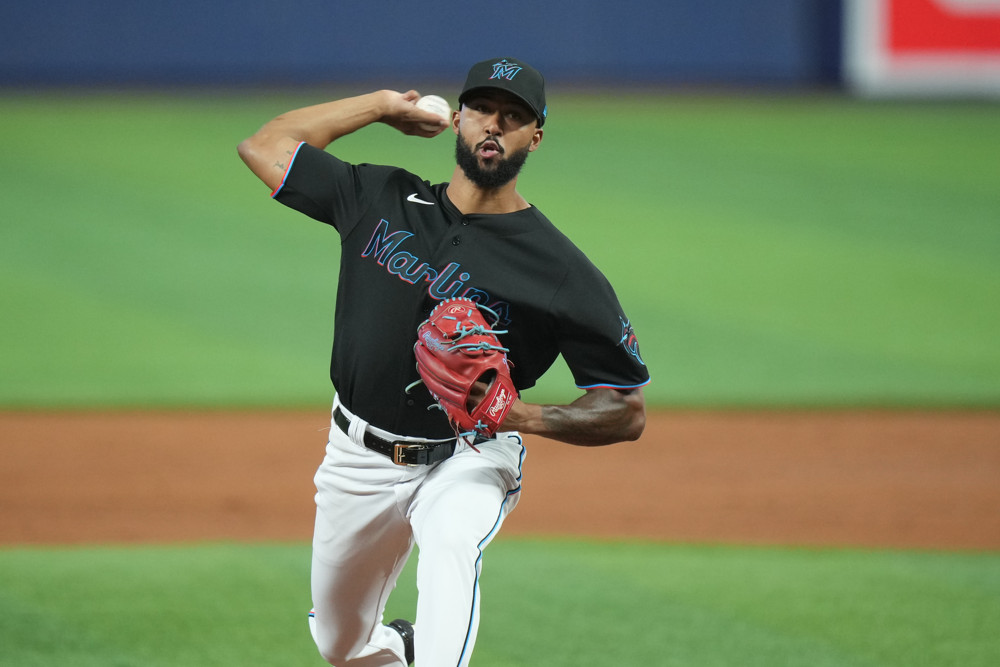
    Sandy Alcantara is the ultimate pitch-mix wizard. With arguably the best pitching season this year, he has become a balanced force of power and movement coupled with excellent command and three pitches he can throw in any count. Sandy’s pitch mix is masterful. He threw 28% changeup, 25% two-seam FB, 25% four-seam FB, and 22% slider. He sprinkled in seven curveballs and scrapped that pitch because why not throw your three most dominant pitches as much as you can?

    Note: Alcantara’s pitch-mix wizard status isn’t fully reflected in the chart at the bottom of the story, as it groups four-seam and two-seam fastballs together.

    The two-seam moves violently at 100 mph. Pair this with the movement and deception of his changeup that baffles hitters at around 92 mph as it dives to the plate. A hitter can’t sit on just one pitch, and it’s what makes him so special!

    Next, look at the pitch that is returning as the go-to pitch for many pitchers, the slider. With the advances in technology and analytics, players can fine-tune their arsenals and look at pitch grips with high-speed cameras and tinker with specific grips or arm actions to create a certain type of movement profile.

    A perfect example of this is Dylan Cease, who started throwing a slider with sharp vertical action this year. He threw the pitch 43% of the time, while only throwing his fastball 41% of the time. Cease identified a breaking pitch that worked for him and began to tunnel it off of his fastball as much as he could. The slider plays in and out of the zone as Cease racks up swings and misses.

    Cease ranked 10th in putaway rate, throwing 472 sliders with two-strike counts and striking out 131 hitters for a 27.8% strikeout rate. The pitch has become a nightmare for hitters. Even when they know it’s coming, it’s very difficult to pick up. Only Cease and Robbie Ray threw at least 400 sliders in two-strike counts this year.

    Now, what happens when you throw your best pitches to one specific spot in the zone? Well, you get Edwin Díaz’s usage of slider and fastball. Not only does he have one of the best if not the best closer entrance in baseball—cue the trumpets—he also features a devastating two-pitch arsenal that he relentlessly throws glove side to hitters. Diaz led the league in putaway rate among pitchers who threw at least 150 sliders (38.4%). With his menacing slider that breaks glove-side with incredible late movement, batters rarely put good at-bats together against the Mets shutdown man.

    Sure, at times he would miss and spray the ball, but his goal was to throw glove side as much as possible. When you throw triple digits and have a slider in the low 90s you can torment hitters, even when they know what pitch is coming and where it’s being located.

    The harder slider is not the only pitch that became more popular this year. The league saw a shift towards more sweepers being thrown than ever before. The movement profile of this pitch type is hard to pin down sometimes and can’t just be classified into one pitch, although it is mostly thought of as a slider with more horizontal break because of the spin profile. The rise in slider usage can be attributed to the growing amount of sweepers being thrown throughout the league.

    Then there are two players such as Shohei Ohtani and Yu Darvish who could teach a master class on how to vary arm angles and pitch location along with an advanced pitch repertoire. The two Japanese pitchers dazzle and amaze with how they are able to manipulate and spin the baseball.

    Ohtani added a couple of new pitches down the stretch this season with a ridiculous two-seamer that reached 100 mph at times and new variations on his slider that move with depth or sweep depending on how he throws it. Dropping his arm angle at times, he also mixes pitches based on feel for that particular day in terms of his cutter, splitter, and curveball.

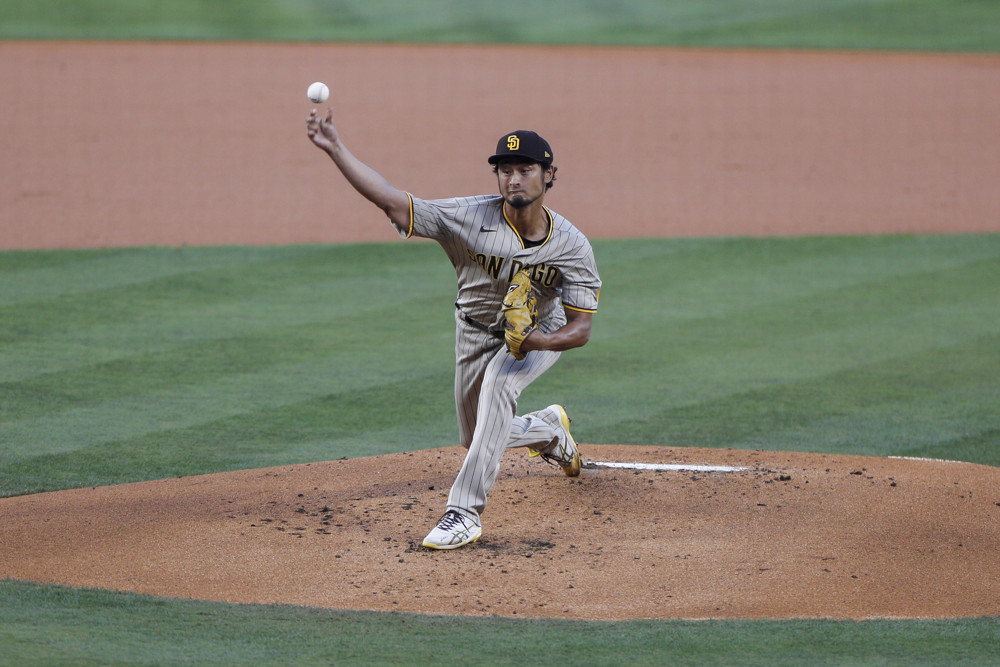
    What about Darvish? Well, he throws 11 different pitches and has many different types of one particular pitch, some of which are hard to classify and chart. There’s his slow cutter which he uses to set up the rest of his repertoire tunneling-wise. There’s also the harder cutter he throws up in the zone. With two types of sliders, including a spiked slider grip that he can modify, Darvish keeps hitters off of his cutters.

    Darvish also has two distinct curveballs to mix in with a sharper harder one in the 80s, and a slow cartoonish looping one that he throws in the low 70s. He even threw a curve at 64 mph this year and will routinely try to freeze hitters or have them out in front on these rainbow curves. His four-seam and two-seam fastballs are thrown more to right-handed batters than left.

    Both still get plenty of game action, but in the end, he wants to spin the baseball. Add in a splitter and rare changeup that he pulls out every once and a while to left-handed hitters and you have an array of pitches to choose from. I didn’t even mention a couple of other pitches he throws that are truly hard to classify. Darvish has fully embraced his outstanding ability to spin the baseball and throw more breaking pitches.

    Pitchers’ repertoires can be unique and yet similar, like Ohtani and Darvish. If you love pitching as much as I do, you might find some interesting quirks and even some trends in this vast collection of data.

    For the purposes of this online article, pitchers are listed in order by their Pitch Mix Index (PMI), which indicates diversity of repertoire. The higher the number, the more diverse the repertoire is.

    Player PMI Tommy John FB Velo Fastball Slider Change Cutter Curve Splitter
    Arihara, Kohei 5.11 90.8 28% 14% 19% 26% <1% 13%
    Darvish, Yu 4.84 Mar `15 95 34% 16% <1% 35% 7% 6%
    McCullers Jr., Lance 4.79 Nov `18 93.1 25% 26% 17% 7% 25%
    Musgrove, Joe 4.74 92.9 31% 24% 6% 19% 19%
    Eovaldi, Nathan 4.72 Aug `16 May `07 95.8 38% 12% 10% 19% 21%
    Greinke, Zack 4.66 89.2 41% 12% 16% 10% 20%
    Buehler, Walker 4.63 Aug `22 Aug `15 95.2 39% 11% 8% 25% 17%
    Yajure, Miguel 4.63 Nov `16 93 37% 10% 19% 7% 26%
    Gibson, Kyle 4.58 Sept `11 91.8 40% 21% 11% 21% 7%
    Rucker, Michael 4.58 94.7 44% 18% 9% 11% 18%
    Anderson, Chase 4.55 92.1 38% 8% 28% 18% 8%
    Smeltzer, Devin 4.54 89.5 40% 7% 25% 10% 18%
    Taillon, Jameson 4.52 Aug `19 Apr `14 94.2 47% 19% 8% 11% 15%
    Ohtani, Shohei 4.51 Oct `18 97.3 31% 39% 9% 9% 12%
    Scherzer, Max 4.51 94.1 45% 23% 13% 9% 9%
    Bassitt, Chris 4.48 May `16 92.9 47% 15% 6% 18% 14%
    Garcia, Luis 4.47 94 42% 9% 9% 29% 10%
    Bieber, Shane 4.45 91.3 35% 28% 2% 17% 18%
    Crawford, Kutter 4.45 Oct `19 94.6 39% 6% 7% 31% 17%
    Walker, Taijuan 4.45 Apr `18 93.5 41% 18% 5% 9% 27%
    Blackburn, Paul 4.44 91.7 46% 5% 12% 20% 18%
    Watkins, Spenser 4.44 91.4 40% 18% 4% 28% 10%
    Wells, Tyler 4.43 May `19 93.6 42% 7% 18% 27% 7%
    Lauer, Eric 4.42 93.4 43% 18% 3% 19% 16%
    Gallen, Zac 4.4 94.2 48% 6% 14% 9% 22%
    Leiter Jr., Mark 4.39 Mar `19 91 46% 5% 9% 17% 23%
    Ryu, Hyun-Jin 4.39 June `22 Jan `04 89.3 42% 4% 24% 10% 21%
    Sanchez, Anibal 4.37 Jan `03 89.5 34% 5% 26% 31% 5%
    Law, Derek 4.33 June `14 95.2 22% 12% 5% 49% 13%
    Flexen, Chris 4.32 July `14 91.7 40% 8% 16% 32% 4%
    Urquidy, Jose 4.31 Jan `17 93.6 53% 14% 15% 5% 14%
    VerHagen, Drew 4.29 June `08 94.8 47% 22% 16% 3% 13%
    Lorenzen, Michael 4.27 94.3 44% 20% 22% 11% 2%
    Cole, Gerrit 4.26 97.8 52% 23% 8% 6% 11%
    Stroman, Marcus 4.24 92.1 48% 26% 12% 11% 3%
    Burnes, Corbin 4.23 96.3 7% 9% 10% 55% 19%
    Hill, Rich 4.23 June `11 88.3 38% 11% 13% 36% 2%
    Trivino, Lou 4.22 95.7 48% 24% 11% 16% 2%
    Civale, Aaron 4.21 91.2 31% 4% 34% 28% 4%
    Cueto, Johnny 4.21 Aug `18 91.4 43% 16% 20% 20% 1%
    Nogosek, Stephen 4.2 95.1 41% 16% 9% 31% 2%
    Odorizzi, Jake 4.2 92.1 51% 8% 17% 21% 4%
    Clevinger, Mike 4.19 Nov `20 Aug `12 93.5 52% 21% 9% 15% 3%
    Lyles, Jordan 4.19 91.5 49% 24% 11% 3% 13%
    Miley, Wade 4.17 89 17% 7% 31% 43% 3%
    Garza, Ralph 4.15 88.7 49% 23% 18% 8% 2%
    Sands, Cole 4.11 91.7 50% 7% 2% 23% 17%
    Thompson, Keegan 4.1 June `15 93.5 52% 4% 5% 21% 17%
    Assad, Javier 4.08 92.6 52% 9% 7% 27% 4%
    Eflin, Zach 4.06 92.8 56% 4% 6% 14% 20%
    Suarez, Ranger 4.02 92.8 58% 4% 21% 9% 8%
    Stammen, Craig 4.01 91.5 55% 13% 2% 22% 7%
    Mayers, Mike 3.97 93.6 47% 35% 8% 8% 2%
    Yarbrough, Ryan 3.97 86.8 19% 27% 24% 30%
    Kelly, Merrill 3.95 92.7 46% <1% 21% 19% 13%
    Leclerc, Jose 3.93 Mar `21 96.5 37% 7% 22% <1% 34%
    Irvin, Cole 3.92 Feb `14 90.6 59% 11% 18% 2% 10%
    McClanahan, Shane 3.92 Oct `15 96.8 36% 15% 24% 25%
    Wheeler, Zack 3.92 Mar `15 95.8 60% 14% 13% 12% 2%
    Young, Alex 3.92 90.9 27% 33% 26% 15%
    Cabrera, Edward 3.91 96 32% 15% 32% 21%
    Perez, Martin 3.91 May `14 92.7 43% 1% 28% 24% 3%
    Raley, Brooks 3.91 90.7 23% 38% 20% 19%
    Voth, Austin 3.9 93.5 41% 5% <1% 22% 31%
    Gomber, Austin 3.87 91 41% 25% 18% 17%
    Gray, Sonny 3.87 92.1 54% 10% 1% 9% 25%
    Underwood Jr., Duane 3.87 95.5 37% 22% 28% 13%
    Ashby, Aaron 3.86 95.7 37% 29% 21% 13%
    Gonzales, Marco 3.86 Apr `16 88.5 37% 30% 19% 13%
    Martinez, Nick 3.86 93.4 41% 26% 18% 16%
    Gonsolin, Tony 3.83 93.2 39% 21% 12% 28%
    Kluber, Corey 3.83 88.9 28% 10% 35% 27%
    Zimmermann, Bruce 3.83 90.6 39% 19% 29% 13%
    Castano, Daniel 3.82 91.1 18% 28% 13% 41%
    Dunning, Dane 3.82 Mar `19 89.5 40% 28% 20% 12%
    Suarez, Jose 3.82 92.5 43% 20% 24% 13%
    Bumgarner, Madison 3.81 91.2 33% 36% 11% 19%
    Oller, Adam 3.81 93.4 43% 20% 12% 25%
    Sandoval, Patrick 3.8 93.2 37% 29% 25% 10%
    Freeland, Kyle 3.79 90 45% 23% 14% 18%
    Fried, Max 3.79 Aug `14 93.9 46% 18% 14% 22%
    Minor, Mike 3.79 90.4 42% 25% 23% 10%
    Banuelos, Manny 3.78 Oct `12 93.6 41% 26% 10% 23%
    Castellanos, Humberto 3.78 Aug `22 90.2 43% 21% 10% 26%
    Dunn, Justin 3.78 92.2 49% 24% 5% <1% 21%
    Gibaut, Ian 3.78 95.9 44% 22% 11% 22%
    Plesac, Zach 3.78 Apr `16 92 43% 24% 22% 10%
    Alexander, Tyler 3.77 90.1 43% 11% 18% 28%
    Kremer, Dean 3.77 93.2 41% 15% 31% 12%
    Stripling, Ross 3.77 Apr `14 91.6 41% 22% 27% 10%
    Varland, Louie 3.77 93.9 48% 19% 15% 18%
    Wittgren, Nick 3.77 91.3 44% 11% 23% 22%
    Detmers, Reid 3.76 93.2 45% 26% 11% 18%
    Jefferies, Daulton 3.76 Sept `22 Apr `17 92.5 48% 14% 20% 19%
    Sulser, Beau 3.76 92.9 37% 32% 23% 8%
    Thompson, Zach 3.75 92.3 37% 9% 33% 21%
    Winder, Josh 3.75 94.1 40% 33% 14% 12%
    Foster, Matt 3.74 93.8 52% 30% 10% <1% 7%
    Herget, Jimmy 3.74 90.6 31% 34% 7% 27%
    Bundy, Dylan 3.73 June `13 89.2 47% 24% 19% 11%
    Overton, Connor 3.73 Mar `17 90.9 49% 20% 19% 13%
    Syndergaard, Noah 3.73 Mar `20 93.8 47% 22% 19% 11%
    Beede, Tyler 3.72 Mar `20 95.7 47% 15% 26% 11%
    Heasley, Jon 3.72 93.4 49% 13% 21% 17%
    Logue, Zach 3.72 90.2 50% 16% 14% 21%
    Medina, Adonis 3.72 93.4 47% 24% 17% 11%
    Gilbert, Tyler 3.71 89.6 41% 35% 11% 13%
    Gutierrez, Vladimir 3.71 July `22 92.9 50% 22% 15% 13%
    Koenig, Jared 3.71 89.3 50% 15% 13% 22%
    Phelps, David 3.71 Mar `18 93.2 42% 7% 25% 26%
    Danish, Tyler 3.7 91 44% 41% 8% <1% 7%
    Ober, Bailey 3.7 Mar `15 91.6 49% 23% 16% 12%
    Paddack, Chris 3.7 May `22 Aug `16 93 51% 4% 26% <1% 18%
    Elder, Bryce 3.69 90.8 48% 27% 12% 13%
    Wainwright, Adam 3.68 Feb `11 88.5 37% 6% 25% 32%
    Hernandez, Carlos 3.67 96.8 50% 17% 23% 10%
    Cortes, Nestor 3.66 91.8 47% 19% 4% 30% <1%
    Peters, Dillon 3.66 July `14 92.7 50% 11% 24% 14%
    Severino, Luis 3.66 Feb `20 96.3 49% 20% 22% 9%
    Baz, Shane 3.65 Sept `22 96 40% 37% 8% 14%
    Stratton, Chris 3.65 92.9 45% 19% 7% 29%
    Wacha, Michael 3.64 93 46% 30% 17% 7%
    Lambert, Jimmy 3.63 June `19 94.4 45% 33% 14% 8%
    Mahle, Tyler 3.63 93.3 52% 12% 12% 24%
    Morris, Cody 3.63 June `15 94.7 45% 17% 31% 7%
    Martin, Davis 3.62 94.1 46% 32% 11% 11%
    Wright, Kyle 3.62 94.7 43% 7% 15% 34%
    Chacin, Jhoulys 3.61 92.9 45% 25% 2% 28% <1%
    Davies, Zach 3.61 89.6 54% 1% 33% 6% 6%
    Martin, Corbin 3.61 July `19 94.1 55% 11% 17% 17%
    Pruitt, Austin 3.61 91.5 34% 5% 41% 19%
    Strahm, Matt 3.61 July `13 94.2 53% 21% 9% 17%
    Velasquez, Vince 3.61 Sept `10 93 52% 22% 9% 17%
    Carrasco, Carlos 3.6 Sept `11 92.9 47% 23% 24% 6%
    Fleming, Josh 3.6 91.3 55% 19% 15% 11%
    Peralta, Freddy 3.6 92.7 55% 18% 10% 16%
    Shaw, Bryan 3.6 93.2 6% 6% 3% 77% 8% <1%
    Banks, Tanner 3.59 92.9 45% 30% 20% 5%
    Bradish, Kyle 3.59 94.7 49% 30% 9% 13%
    Keuchel, Dallas 3.59 87.3 51% 8% 26% 15%
    King, John 3.59 Jan `17 92.4 52% 14% 25% 9%
    Lopez, Jorge 3.59 97.7 55% 10% 16% 19%
    Ragans, Cole 3.59 May `19 Mar `18 92.1 44% 33% 16% 6%
    Rasmussen, Drew 3.59 Aug `17 Mar `16 95.5 39% 24% 33% 4%
    Rodriguez, Elvin 3.59 93.1 54% 22% 13% 11%
    Garrett, Braxton 3.58 June `17 91.2 48% 32% 10% 10%
    Otto, Glenn 3.58 92.2 50% 28% 7% 15%
    Silseth, Chase 3.58 95.3 46% 21% 5% 27%
    Wilson, Bryse 3.58 92.4 57% 16% 15% 13%
    Schmidt, Clarke 3.57 May `17 94.9 39% 38% 5% 18%
    Suarez, Robert 3.57 Apr `17 97.7 65% 2% 21% 8% 4%
    Wesneski, Hayden 3.57 92.7 48% 32% 8% 12%
    Blach, Ty 3.56 July `20 91.1 55% 17% 20% 8%
    Henry, Tommy 3.56 91.6 56% 20% 10% 15%
    Kaprielian, James 3.56 Apr `17 94.1 54% 23% 10% 13%
    Krehbiel, Joey 3.56 94.5 34% 29% 33% 3%
    Liberatore, Matthew 3.56 93.4 55% 11% 11% 23%
    McCarty, Kirk 3.56 92.6 39% 8% 42% 11%
    Skubal, Tarik 3.56 Apr `16 94.4 48% 31% 15% 6%
    Lynch, Daniel 3.55 94 46% 30% 18% 5%
    Megill, Tylor 3.55 95.8 57% 19% 18% <1% 5%
    Mikolas, Miles 3.55 93.3 50% 25% 4% 21%
    Pressly, Ryan 3.55 94.5 33% 37% 4% 27%
    Winckowski, Josh 3.55 94 52% 28% 9% 10%
    Espino, Paolo 3.54 88.6 48% 21% 5% 26%
    Fedde, Erick 3.54 June `14 92.6 40% 29% 4% 27%
    Wentz, Joey 3.54 Mar `20 92.4 56% 14% 21% 9%
    Bleier, Richard 3.53 89.9 54% 16% 7% 23%
    Lopez, Pablo 3.53 Nov `13 93.6 47% 35% 10% 8%
    May, Dustin 3.53 May `21 97.7 52% 6% 21% 21%
    Morton, Charlie 3.53 June `12 94.9 44% 9% 9% 38%
    Quintana, Jose 3.53 91.3 52% 6% 19% 22%
    Wantz, Andrew 3.53 93.8 49% 29% 6% 16%
    Archer, Chris 3.52 93.1 36% 44% 15% 5%
    Crowe, Wil 3.52 Apr `15 94.7 38% 31% 28% 3%
    Kuhl, Chad 3.52 Sept `18 92.8 45% 37% 7% 12%
    Nelson, Nick 3.52 96.3 43% 24% 29% 4%
    Nola, Aaron 3.52 92.6 52% 15% 7% 27%
    Valdez, Framber 3.52 94 53% 9% 11% 28%
    Baumann, Mike 3.51 95.8 48% 28% 4% 19%
    Brubaker, JT 3.51 93.1 48% 31% 5% 16%
    Kikuchi, Yusei 3.51 95 51% 30% 6% 14%
    Waldichuk, Ken 3.51 94.1 56% 21% 15% 8%
    Gilbert, Logan 3.5 96.2 55% 24% 8% 13%
    Peterson, David 3.5 93.6 50% 29% 16% 5%
    Keller, Mitch 3.49 95.1 56% 23% 7% 15%
    Woodruff, Brandon 3.49 96.2 60% 11% 16% 13%
    Gray, Josiah 3.48 94.5 43% 29% 3% 25%
    Hill, Garrett 3.48 Jan `16 91.9 59% 19% 12% 11%
    Kirby, George 3.48 95.2 58% 21% 8% 13%
    Martin, Chris 3.47 95.2 51% 8% 32% 9%
    Melancon, Mark 3.47 Oct `06 91.2 7% 2% 2% 59% 30%
    Smith, Caleb 3.47 92 46% 29% 22% 3%
    Stout, Eric 3.47 92.1 35% 47% 12% 6%
    Garcia, Yimi 3.46 Oct `16 94.7 59% 17% 7% 17%
    Giolito, Lucas 3.46 Aug `12 92.6 48% 24% 25% 3%
    Poteet, Cody 3.46 Aug `22 94.7 37% 22% 38% 3%
    Montgomery, Jordan 3.45 June `18 93.1 52% 22% 4% 22%
    Oviedo, Johan 3.45 96.1 43% 40% 6% 11%
    Richards, Garrett 3.45 July `18 94.4 25% 38% 35% 2%
    Wick, Rowan 3.45 94.9 60% 5% 13% 22% <1%
    Seabold, Connor 3.44 92.2 53% 22% 21% 4%
    Thornburg, Tyler 3.44 Sept `20 93.6 58% 7% 14% 22%
    Brieske, Beau 3.43 94.3 53% 21% 22% 4%
    Jax, Griffin 3.43 95.5 34% 48% 14% 4%
    Snell, Blake 3.43 95.9 56% 24% 5% 15%
    White, Mitch 3.43 Nov `13 93.8 52% 27% 4% 17%
    Duran, Jhoan 3.4 100.9 49% 3% 31% 16%
    Manning, Matt 3.4 93.2 59% 23% 7% 11%
    Ryan, Joe 3.4 92.1 60% 21% 12% 7%
    Tepera, Ryan 3.4 92.7 48% 6% 37% 9%
    Feltner, Ryan 3.39 94.2 55% 29% 6% 10%
    Matz, Steven 3.39 May `10 94.6 49% 3% 29% 20%
    Quantrill, Cal 3.39 Mar `15 93.6 48% 36% 12% 4%
    Rodriguez, Eduardo 3.39 91.8 56% 4% 16% 24%
    Cotton, Jharel 3.38 Mar `18 92.8 45% 11% 40% 4%
    Gore, MacKenzie 3.37 94.7 61% 15% 6% 18%
    Hudson, Dakota 3.37 Sept `20 91.8 55% 27% 4% 14%
    Martinez, Seth 3.37 91.6 53% 30% 12% 4%
    Graveman, Kendall 3.36 July `18 96.5 55% 27% 14% 4%
    Norris, Daniel 3.36 91.2 42% 29% 28% 1%
    Pagan, Emilio 3.36 95.7 52% 21% 2% 25%
    Thompson, Zack 3.36 94.8 54% 8% 6% 31%
    Verlander, Justin 3.36 Sept `20 95.1 50% 28% 2% 19%
    Contreras, Roansy 3.35 95.6 49% 34% 3% 14%
    Marquez, German 3.35 95.4 54% 20% 3% 23%
    Merryweather, Julian 3.35 Mar `18 97.3 52% 34% 10% 5%
    deGrom, Jacob 3.34 Oct `10 98.9 47% 39% 8% 5%
    Pivetta, Nick 3.34 93.5 51% 20% 2% 27%
    Houser, Adrian 3.33 July `16 94 65% 13% 9% 12%
    Cease, Dylan 3.32 July `14 96.8 41% 43% 2% 14%
    Davidson, Tucker 3.32 93.2 43% 44% 4% 8%
    Gonzalez, Chi Chi 3.31 July `17 92.5 51% 32% 15% 2%
    Gray, Jon 3.31 96 51% 36% 9% 4%
    Loup, Aaron 3.31 91.2 49% 3% 13% 36%
    Ottavino, Adam 3.31 May `15 94.4 45% 43% 5% 7%
    Howard, Spencer 3.3 94.4 50% 36% 3% 11%
    Anderson, Tyler 3.29 90.5 45% 32% 22% 1%
    Senzatela, Antonio 3.29 94.2 59% 27% 7% 6%
    Lopez, Reynaldo 3.27 97.1 55% 32% 5% 8%
    Pilkington, Konnor 3.27 92.2 64% 8% 21% 7%
    Smith, Drew 3.27 Mar `19 95.8 53% 36% 6% 6%
    De Jong, Chase 3.26 92.9 47% 29% 1% 23%
    Williams, Trevor 3.26 90.9 65% 16% 13% 5%
    Falter, Bailey 3.25 91.2 64% 4% 15% 17%
    Thielbar, Caleb 3.25 92.9 49% 25% 1% 25%
    Weaver, Luke 3.25 94.9 60% 26% 4% 9%
    Stephens, Jackson 3.23 94.2 58% 3% 10% 29%
    Lynn, Lance 3.22 Nov `15 92.7 59% 4% 28% 9%
    Bird, Jake 3.21 95.1 58% 2% 25% 15%
    Brash, Matt 3.21 96.9 36% 45% <1% 19%
    Javier, Cristian 3.21 93.9 60% 28% 4% 8%
    Lugo, Seth 3.21 94.5 51% 13% 2% 34%
    Jameson, Drey 3.19 95.3 62% 25% 8% 4%
    Ramirez, Erasmo 3.19 93.3 44% 7% 3% 46%
    Woodford, Jake 3.19 92.1 60% 28% 4% 8%
    Cabrera, Genesis 3.18 96.1 52% <1% 18% 30%
    Chavez, Jesse 3.17 91.1 30% 13% 56% 2%
    Ashcraft, Graham 3.16 97.2 21% 27% <1% 51%
    Gausman, Kevin 3.14 95 49% 14% <1% 36%
    Hearn, Taylor 3.14 94.6 63% 25% 9% 3%
    Morgan, Eli 3.14 92.2 55% 16% 28% 1%
    Price, David 3.14 92.3 68% 11% 18% 4%
    Kershaw, Clayton 3.13 90.8 40% 43% <1% 16%
    Tetreault, Jackson 3.13 94.6 58% 32% 3% 8%
    Morejon, Adrian 3.12 Apr `21 96.9 69% 14% 13% 4%
    Flaherty, Jack 3.11 93.1 54% 29% <1% 16%
    Sulser, Cole 3.11 Jan `15 Apr `11 91.9 50% 10% 39% 1%
    Weems, Jordan 3.11 96.9 64% 24% 3% 9%
    Crismatt, Nabil 3.1 90.4 29% <1% 50% 20%
    Kelley, Trevor 3.1 90 64% 25% 6% 4%
    Smyly, Drew 3.09 July `17 92.6 36% <1% 20% 43%
    Wendelken, J.B. 3.08 Oct `16 94.9 60% 23% 16% 1%
    Akin, Keegan 3.07 93.6 52% 29% 18% <1%
    Bello, Brayan 3.07 96.6 54% 22% 24% <1%
    Alcantara, Sandy 3.06 97.9 50% 22% 28% <1%
    Abreu, Bryan 3.04 97.2 45% 37% <1% 18%
    Gott, Trevor 3.03 95.1 55% <1% 33% 10%
    Kopech, Michael 3.03 Sept `18 94.9 62% 26% 1% 11%
    Newcomb, Sean 3.03 94.3 56% 33% <1% 11%
    Smith, Will 3.02 Mar `17 92.2 42% 48% <1% 9%
    Adam, Jason 3 94.8 32% 36% 32%
    Misiewicz, Anthony 3 93.3 31% 35% 34%
    Webb, Logan 3 June `16 91.9 36% 33% 31%
    Leone, Dominic 2.99 95.6 37% 36% 27%
    Ramirez, Noe 2.99 89.8 37% 31% 31%
    Thornton, Trent 2.99 93.8 46% 39% <1% 15%
    Sanmartin, Reiver 2.98 90.7 41% 27% 32%
    Brazoban, Huascar 2.97 97.2 33% 42% 25%
    Cano, Yennier 2.97 95.4 43% 27% 30%
    Garcia, Jarlin 2.97 93.9 43% 28% 29%
    Helsley, Ryan 2.97 99.7 57% <1% 32% 10%
    Springs, Jeffrey 2.97 91.5 41% 25% 35%
    Brogdon, Connor 2.96 95.2 32% 43% 25%
    Detwiler, Ross 2.96 92.2 50% 44% 3% 3%
    Frias, Luis 2.96 97 62% 3% 5% 30%
    Fulmer, Michael 2.96 Mar `19 94.4 28% 63% 6% 2%
    German, Domingo 2.96 Mar `15 92.7 40% 23% 37%
    Long, Sammy 2.96 94.7 44% 29% 27%
    Mantiply, Joe 2.96 Mar `18 90.5 44% 30% 26%
    Phillips, Evan 2.96 96.1 28% 44% 28%
    Rodon, Carlos 2.96 May `19 95.6 61% 31% 2% 6%
    Tinoco, Jesus 2.96 96.1 48% 44% <1% 7%
    Acevedo, Domingo 2.95 93 43% 35% 22%
    Barlow, Scott 2.95 June `12 93.7 24% 44% 31%
    Farmer, Buck 2.95 94.7 44% 24% 32%
    Clarke, Taylor 2.94 Jan `13 95.7 42% 36% 21%
    Stephan, Trevor 2.94 96.6 47% 25% 28%
    Hernandez, Jonathan 2.93 Apr `21 98 43% 36% 21%
    Holderman, Colin 2.93 Apr `18 96.2 50% 43% 1% 6%
    Luzardo, Jesus 2.93 Mar `16 96.1 47% 30% 23%
    Ruiz, Jose 2.93 96.9 48% 23% 29%
    Cessa, Luis 2.92 93.5 42% 39% 19%
    Milner, Hoby 2.92 89 47% 33% 20%
    Toussaint, Touki 2.92 92.1 47% 33% 20%
    Castro, Miguel 2.91 97.9 36% 45% 19%
    Iglesias, Raisel 2.91 95 50% 26% 24%
    Martinez, Adrian 2.91 Feb `16 93.9 50% 22% 28%
    Montas, Frankie 2.91 95.9 51% 24% 25%
    Nance, Tommy 2.91 Jan `13 94.1 42% 18% 39%
    Peralta, Wily 2.91 Jan `07 95.5 49% 30% 21%
    Richards, Trevor 2.91 93.5 44% 18% 38%
    Shreve, Chasen 2.91 90.6 45% 18% 37%
    Wood, Alex 2.91 Jan `09 92.4 46% 36% 19%
    Abbott, Cory 2.9 91.4 51% 27% 22%
    Anderson, Ian 2.9 94 48% 33% 19%
    Bubic, Kris 2.9 91.9 51% 28% 22%
    Castillo, Max 2.9 93 48% 19% 33%
    Lange, Alex 2.9 96.2 32% 20% 49%
    Marinaccio, Ron 2.9 94.7 44% 18% 38%
    Martin, Brett 2.9 93.6 45% 18% 37%
    Robertson, David 2.9 Aug `19 93.1 23% 51% 27%
    Ruiz, Norge 2.9 93.1 44% 38% 17%
    Sborz, Josh 2.9 97 52% 25% 24%
    Tate, Dillon 2.9 94 52% 25% 24%
    Grove, Michael 2.89 May `17 94.4 51% 20% 29%
    Hoffman, Jeff 2.89 May `14 94.3 52% 24% 24%
    Maton, Phil 2.89 90.9 50% 19% 31%
    Moore, Matt 2.89 Apr `14 94 45% 17% 38%
    Steele, Justin 2.89 Aug `17 92.1 64% 29% 2% 5%
    Givens, Mychal 2.88 93.5 51% 30% 19%
    May, Trevor 2.88 Mar `17 96.1 52% 26% 21%
    Minter, A.J. 2.88 Mar `15 96.7 50% 32% 18%
    Urias, Julio 2.88 93.1 49% 17% 33%
    Cobb, Alex 2.87 May `15 94.8 42% 42% 15%
    Davis, Austin 2.87 94.1 46% 38% 16%
    Naughton, Packy 2.87 Jan `13 92.8 54% 21% 25%
    Peralta, Wandy 2.87 95.5 42% 16% 42%
    Vespi, Nick 2.87 88.6 47% 37% 16%
    Boxberger, Brad 2.86 92.8 55% 22% 23%
    Graterol, Brusdar 2.86 Aug `15 99.7 53% 18% 29%
    Kennedy, Ian 2.86 93.4 81% <1% 2% 6% 10%
    Robles, Hansel 2.86 96 50% 33% 17%
    Rogers, Trevor 2.86 94.6 53% 18% 29%
    Bummer, Aaron 2.85 Aug `15 94.5 64% 27% <1% 8%
    Bush, Matt 2.85 July `19 Aug `07 97.3 49% 15% 35%
    Effross, Scott 2.85 90.5 45% 40% 15%
    Junis, Jakob 2.85 91.9 33% 51% 16%
    Moreta, Dauri 2.85 96 55% 24% 21%
    Swanson, Erik 2.85 93.7 55% 20% 25%
    Bednar, David 2.84 96.5 54% 29% 17%
    Faucher, Calvin 2.84 95.4 41% 45% 14%
    McKenzie, Triston 2.84 92.5 56% 22% 22%
    Baker, Bryan 2.83 96.3 56% 26% 17%
    Barnes, Matt 2.83 95 46% <1% 7% 47%
    Barria, Jaime 2.83 91.9 39% 47% 14%
    Berrios, Jose 2.83 94 54% 15% 31%
    Castillo, Luis 2.83 97.1 57% 21% 22%
    Goudeau, Ashton 2.83 92.4 55% 17% 28%
    Pepiot, Ryan 2.83 94 56% 18% 26%
    Santana, Dennis 2.83 96.9 46% 40% 13%
    Sawamura, Hirokazu 2.83 96 49% 14% 37%
    Hernandez, Elieser 2.82 91.7 50% 36% 14%
    Kuhnel, Joel 2.82 96.1 55% 30% 15%
    Payamps, Joel 2.82 94.7 50% 36% 14%
    Sears, JP 2.82 93.2 57% 26% 18%
    Faedo, Alex 2.8 Dec `20 92.8 52% 35% 13%
    Luetge, Lucas 2.8 June `17 87.6 31% 55% 14%
    Pallante, Andre 2.8 95.2 64% 20% <1% 17%
    Pineda, Michael 2.8 July `17 89.9 59% 21% 19%
    Stanek, Ryne 2.8 98.4 58% 18% 23%
    Strzelecki, Peter 2.8 Sept `15 93.5 53% 33% 14%
    Littell, Zack 2.79 94.5 51% 37% 12%
    Megill, Trevor 2.79 May `13 98.1 55% 14% 31%
    Garcia, Luis 2.78 98.7 55% 32% 13%
    Lodolo, Nick 2.78 94.2 59% 31% 11% <1%
    Urena, Jose 2.78 95.7 59% 25% 16%
    Borucki, Ryan 2.77 Mar `13 95.1 50% 11% 39%
    Sanchez, Cristopher 2.77 93 61% 19% 20%
    Patino, Luis 2.76 94.5 57% 30% 13%
    Alexander, Jason 2.75 92.5 61% 23% 16%
    Chapman, Aroldis 2.75 97.7 61% 25% 15%
    McHugh, Collin 2.75 89 <1% 48% 48% 3%
    Whitlock, Garrett 2.75 July `19 95.3 62% 18% 20%
    Barnes, Jacob 2.74 95.3 48% 10% 42%
    Hendricks, Kyle 2.74 86.7 57% 31% 12%
    Hutchison, Drew 2.74 Aug `12 92.5 53% 37% 10%
    Manaea, Sean 2.74 91.2 62% 15% 24%
    Adon, Joan 2.73 95 69% <1% 7% 23%
    Banda, Anthony 2.73 June `18 94.4 53% 37% 10%
    Hentges, Sam 2.73 July `16 95.8 63% 16% 21%
    McFarland, T.J. 2.73 88.8 63% 15% 22%
    Norwood, James 2.73 96.6 50% 9% 41%
    Vest, Will 2.73 Jan `16 95.2 56% 33% 11%
    Floro, Dylan 2.72 92.6 63% 15% 22%
    Moronta, Reyes 2.72 Jan `13 95.3 53% 37% 10%
    Bautista, Felix 2.71 99.2 61% 12% 26%
    Rogers, Josh 2.71 July `19 Apr `13 90.3 55% 35% 10%
    De Los Santos, Enyel 2.7 95.3 60% 28% 11%
    Garcia, Rony 2.7 92.8 58% 32% 10%
    Loaisiga, Jonathan 2.7 May `16 98.1 65% 20% 15%
    Machado, Andres 2.7 Jan `15 95.4 64% 20% 16%
    Hendriks, Liam 2.69 97.6 61% 29% 10%
    Jansen, Kenley 2.69 93.7 23% 13% 64%
    Kelly, Joe 2.69 97.9 40% 9% 52%
    Abreu, Albert 2.68 98.4 61% 29% 10%
    King, Michael 2.68 95.9 60% 10% 31%
    Manoah, Alek 2.68 93.6 62% 27% 11%
    Sampson, Adrian 2.67 July `09 92.2 65% 21% 14%
    Sanchez, Aaron 2.67 92.2 62% 10% 28%
    Sandlin, Nick 2.67 93.6 48% 45% 8%
    Barlow, Joe 2.66 94.6 31% 60% 9%
    Singer, Brady 2.66 93.8 54% 38% 8%
    Bellatti, Andrew 2.65 Feb `18 94.4 40% 52% 7%
    Schreiber, John 2.65 94 55% 38% 7%
    Uelmen, Erich 2.65 93.6 62% 29% 9%
    Almonte, Yency 2.64 95.8 45% 48% 7%
    Burke, Brock 2.64 95 67% 20% 13%
    Espinoza, Anderson 2.63 Apr `19 July `17 93.9 77% 18% 2% 4%
    Lee, Dylan 2.63 92.2 45% 48% 6%
    Snead, Kirby 2.63 93.4 56% 37% 7%
    Tapia, Domingo 2.63 May `15 97.6 68% 15% 16%
    Beeks, Jalen 2.62 Sept `20 95.1 48% 49% 1% 1%
    Corbin, Patrick 2.62 Mar `14 92.7 62% 29% 8%
    Hjelle, Sean 2.62 93.8 55% 38% 7%
    Montero, Rafael 2.61 Mar `18 96.3 69% 12% 19%
    Houck, Tanner 2.6 94.9 53% 41% 6%
    Ort, Kaleb 2.6 96.3 60% 33% 7%
    Edwards Jr., Carl 2.59 94.7 68% 10% 23%
    Rodriguez, Joely 2.59 92.8 55% 6% 39%
    Wilson, Steven 2.59 Jan `17 95.1 52% 42% 6%
    Estevez, Carlos 2.58 97.6 71% 15% 15%
    Familia, Jeurys 2.58 95.3 71% 15% 15%
    Ray, Robbie 2.58 93.4 60% 37% <1% 2%
    Greene, Hunter 2.57 Apr `19 99 54% 41% 5%
    Neris, Hector 2.57 94.4 63% 7% 31%
    Gallegos, Giovanny 2.56 Jan `11 94.4 48% 47% 5%
    Keller, Brad 2.56 94.1 58% 36% 5%
    Armstrong, Shawn 2.55 95.5 64% 29% 7%
    Nardi, Andrew 2.55 94.5 62% 32% 6%
    Duffey, Tyler 2.54 92.4 51% 4% 44%
    Harvey, Hunter 2.54 July `16 98.3 78% <1% 7% 15%
    Head, Louis 2.53 93.7 40% 55% 5%
    Jimenez, Joe 2.52 95.8 64% 31% 5%
    Heaney, Andrew 2.51 July `16 93 63% 32% 5%
    Bass, Anthony 2.5 95.3 40% 56% 4%
    Cisnero, Jose 2.5 May `14 95.4 68% 26% 6%
    Foley, Jason 2.5 July `17 96.3 70% 24% 7%
    Stephenson, Robert 2.5 96.9 48% 51% <1% 1%
    Thompson, Ryan 2.5 Jan `18 90.3 59% 39% 1% <1%
    Williams, Devin 2.5 Mar `17 94 38% 58% 4%
    Moran, Jovani 2.49 93.4 51% 4% 45%
    Vesia, Alex 2.48 94.2 63% 32% 5%
    Hudson, Daniel 2.47 June `13 July `12 97 55% 42% 3%
    Strickland, Hunter 2.47 May `13 95 57% 39% 4%
    Strider, Spencer 2.46 Feb `19 98.2 67% 28% 5%
    Hembree, Heath 2.45 94.2 52% 45% 3%
    Dominguez, Seranthony 2.43 July `20 98 70% 26% 5%
    Poppen, Sean 2.43 94.6 62% 34% 3%
    Suter, Brent 2.41 July `18 86.6 70% 5% 25%
    Bard, Daniel 2.4 98 55% 43% 2%
    Snider, Collin 2.37 96 49% 49% 2%
    Finnegan, Kyle 2.36 97.1 79% 12% 9%
    Hicks, Jordan 2.36 June `19 99.4 66% 32% 3%
    Knebel, Corey 2.34 Apr `19 95.7 70% 3% 27%
    Swarmer, Matt 2.34 90.6 39% 59% 2%
    Brasier, Ryan 2.3 June `14 96 56% 43% 1%
    Cuas, Jose 2.3 93.1 62% 37% 2%
    Alvarado, Jose 2.29 99.6 56% 43% 1%
    Hader, Josh 2.29 97.5 69% 28% 2%
    Hughes, Brandon 2.28 93.2 53% 46% 1%
    Jackson, Zach 2.27 94.5 54% 45% 1%
    Diekman, Jake 2.25 95.6 64% 35% 1%
    Gilbreath, Lucas 2.23 93.9 73% 25% 2%
    Kinley, Tyler 2.2 95.4 47% 53% <1%
    Fairbanks, Pete 2.18 Aug `17 Jan `11 99 61% 38% <1%
    Rainey, Tanner 2.17 Aug `22 97 70% 29% <1%
    Thompson, Mason 2.16 Mar `15 95.9 75% 24% 1%
    Cishek, Steve 2.15 89.6 62% 37% <1%
    Hill, Tim 2.15 90.2 85% 9% 6%
    Jimenez, Dany 2.14 94 38% <1% 61%
    Perez, Cionel 2.14 96.9 61% 39% <1%
    Quijada, Jose 2.12 94.6 85% 4% 11%
    Ginkel, Kevin 2.1 96.4 62% 38% <1%
    Chafin, Andrew 2.09 June `09 91.6 68% 32% <1%
    Puk, A.J. 2.09 Apr `18 96.6 62% 38% <1%
    Soto, Gregory 2.09 98.4 77% 22% <1%
    Nelson, Kyle 2.08 91.9 36% 64% <1%
    Matzek, Tyler 2.01 94.1 77% 23% <1%
    Arano, Victor 2 94.1 53% 47%
    Brebbia, John 2 June `20 94.4 46% 54%
    Hand, Brad 2 92.6 48% 52%
    Lamet, Dinelson 2 Apr `18 95.4 46% 54%
    Murfee, Penn 2 89 49% 51%
    O’Day, Darren 2 86 52% 48%
    Rogers, Tyler 2 83.3 54% 46%
    Romano, Jordan 2 Mar `15 96.9 48% 52%
    Santillan, Tony 2 96.2 50% 50%
    Sewald, Paul 2 92.6 51% 49%
    Brigham, Jeff 1.99 July `12 94.5 42% 58%
    Coleman, Dylan 1.99 97.6 58% 42%
    Diaz, Edwin 1.99 99.1 42% 58%
    Doval, Camilo 1.99 99 56% 44%
    Festa, Matthew 1.99 Mar `20 92.6 43% 57%
    Garrett, Amir 1.99 94.2 44% 56%
    Lawrence, Justin 1.99 95.2 55% 45%
    Moll, Sam 1.99 93.4 45% 55%
    Rogers, Taylor 1.99 94.3 43% 57%
    Sousa, Bennett 1.99 94.1 43% 57%
    Warren, Art 1.99 Jan `14 93.5 42% 58%
    De Los Santos, Yerry 1.98 Jan `15 95.3 60% 40%
    Karinchak, James 1.98 95.2 60% 40%
    Ortega, Oliver 1.98 95.9 61% 39%
    Clase, Emmanuel 1.97 99.6 62% 38%
    Marte, Yunior 1.97 97.3 62% 38%
    Mills, Wyatt 1.97 91.7 62% 38%
    Scott, Tanner 1.97 96.9 38% 62%
    Castillo, Diego 1.96 95.3 37% 63%
    Cimber, Adam 1.96 86.5 65% 35%
    Diaz, Alexis 1.96 May `16 95.7 65% 35%
    Gustave, Jandel 1.96 June `17 96 64% 36%
    Munoz, Andres 1.96 Mar `20 100.2 35% 65%
    Pop, Zach 1.96 May `19 96.5 77% 23% <1%
    Gose, Anthony 1.95 Sept `22 97 65% 35%
    Staumont, Josh 1.95 96.4 65% 35%
    Ferguson, Caleb 1.94 Sept `20 May `14 94.9 67% 33%
    Bickford, Phil 1.93 94.2 68% 32%
    Kimbrel, Craig 1.93 95.8 69% 31%
    Okert, Steven 1.93 93.7 32% 68%
    Ramirez, Yohan 1.93 95.4 68% 32%
    Smith, Joe 1.89 84.7 73% 27%
    Poche, Colin 1.83 July `20 June `14 93.3 78% 22%
    Holmes, Clay 1.8 Mar `14 97.1 80% 20%
    Mayza, Tim 1.76 Sept `19 93.7 83% 17%
    McGee, Jake 1.75 July `08 94.4 83% 17%
    Colome, Alex 1.73 94.5 16% 84%
    Wisler, Matt 1.56 89.8 9% 91%
  • Stat of the Week: Astros Made The Plays When They Were Most Needed

    Stat of the Week: Astros Made The Plays When They Were Most Needed

    By MARK SIMON

    Chas McCormick played 52 of the 220 games he played college baseball at Division II Millersville (Pa.) University in center field. In the minors, he played 270 games in the outfield and only 56 in center field.

    But in the majors, the Astros have needed him to be adept at the position, particularly after trading away Myles Straw in 2021 and Jose Siri this season.

    In 93 career regular season games in center field, McCormick has 2 Defensive Runs Saved. Within that small sample, he’s been a little above average.

    But a slightly deeper dive on the 60 regular season games he played in center showed something that foreshadowed one of the biggest moments of the World Series. Of the 49 opportunities on fly balls that our system classified as “deep” McCormick caught 43 (an opportunity is a ball on which he has a >0% chance to record an out). But, based on the sum our generated out probabilities, he was only expected to catch 35.

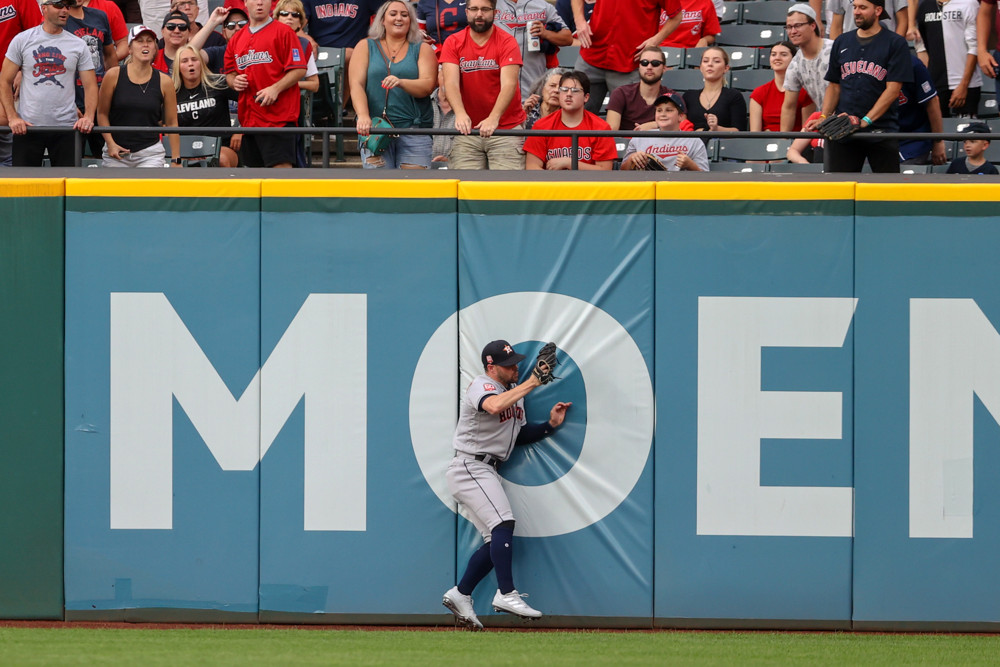
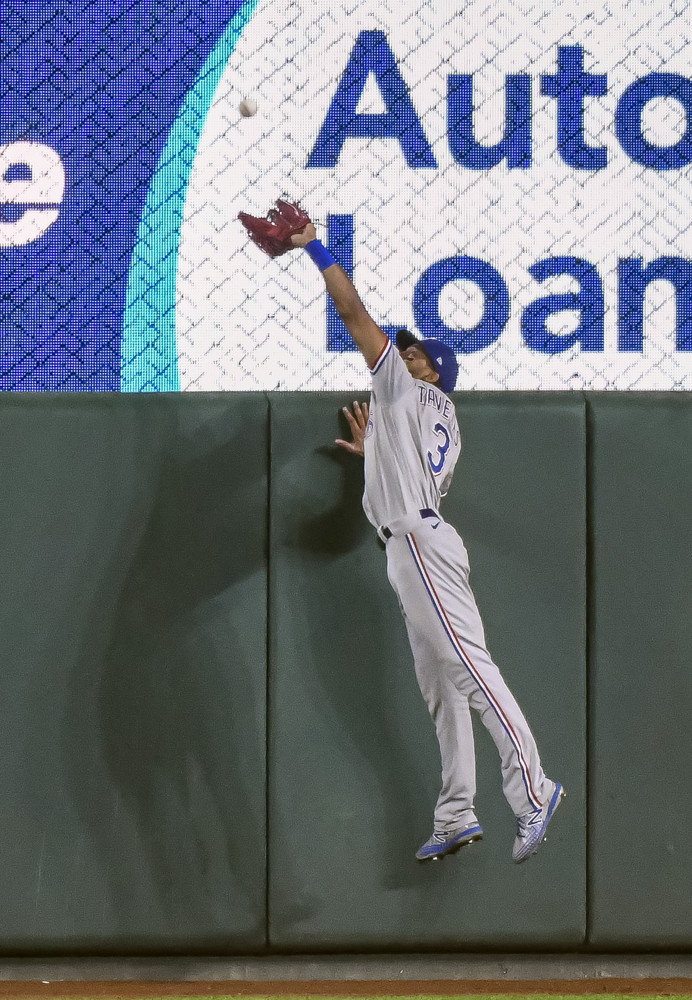
    In particular, McCormick showed a penchant for making the play and withstanding contact with the outfield wall, whether it was a light bump, like this catch against Riley Greene

    or harder thuds, like these plays against Corey SeagerShohei Ohtani, and Mike Trout.

    None of those catches compared in terms of impact to the one McCormick made on J.T. Realmuto in Game 5 of the World Series. With the Astros holding a one-run lead, McCormick leapt into the Citizens Bank Park right center field scoreboard to take away a potential extra-base hit, particularly important with Bryce Harper up next for the Phillies.

    The Astros won the game 3-2 and then won Game 6 to win the series. McCormick’s catch was the second big defensive play in two innings for the Astros in Game 5. First baseman Trey Mancini, filling in for injured Yuli Gurriel, made a lead-preserving, inning-ending snag of a groundball to keep the game tied in the eighth inning. Like McCormick, Mancini isn’t a star at the position he was playing. In 2,100 career innings at first base, he has 1 career Run Saved.

    But the Astros made the defensive plays all season, and that rubbed off on the right players at the right times. In particular, their outfielders led the majors in Defensive Runs Saved. The team finished tied for fourth in Defensive Runs Saved overall.

    The Astros also ranked fourth in the majors in home runs hit. So perhaps it’s appropriate that their season was punctuated by Yordan Alvarez hitting a ball that couldn’t be fielded (his go-ahead home run in Game 6) and McCormick’s and Mancini’s amazing plays on balls that could.

  • Bill James Handbook Excerpt: Home Run Robbery Leaders

    Bill James Handbook Excerpt: Home Run Robbery Leaders

    The Bill James Handbook 2023 is now available for purchase at ACTA Sports. We’ll be sharing excerpts from it throughout the winter. Our first is about home run robberies and the 2022 season. Enjoy!

    Fortunately for batters (and somewhat unfortunately for us fans), home run robberies were down this year, with 49 marking the lowest total since the 2016 season. However, we still have plenty of things to explore here.

    Let’s start with Mr. Home Run Robbery himself, Kyle Tucker, who twice took advantage of the short right field wall at Minute Maid Park and nabbed another over the even shorter one at Fenway.

    While right field in Houston and Boston have been popular places for robberies over the past few years, left field at Detroit’s Comerica Park topped MLB this season with five, including three from Tigers defenders. Interestingly, all three were by different players, as Akil Baddoo, Austin Meadows, and Victor Reyes each snagged one during their time in left.

    Speaking of the Tigers, their September series with the White Sox was an up-and-down affair for Chicago’s Andrew Vaughn. Vaughn started the series by bringing one back off the bat of Javier Báez. Then, two days later, Detroit’s Riley Greene returned the favor, robbing what would have been a two-run shot for Vaughn.

    Not to be topped by that, the Braves and Marlins recorded robberies in back-to-back innings in their October 5 meeting, with Peyton Burdick and Robbie Grossman trading thefts in the 4th and 5th.

    As for which one was best, I’m going with Mets center fielder Brandon Nimmo’s against Justin Turner of the Dodgers. Nimmo’s robbery in their August 31st meeting was the only one all season that preserved a lead in the 7th inning or later. That lead was especially important to the Mets, as their once double-digit lead in the NL East had been shrinking by the day.

    There’s no denying that play meant something. And even though the Mets didn’t pull things out in the East (or the playoffs), you could tell that catch served as a spark for a team that desperately needed one.

    Most Home Run Robberies – 2022 Season


    Player Team HR Robberies
    Kyle Tucker Astros 3
    Alek Thomas Diamondbacks 2
    Nick Gordon Twins 2
    Adam Engel White Sox 2
    Sam Hilliard Rockies 2
  • Bill James Handbook Excerpt: World’s No. 1 Starting Pitcher

    Bill James Handbook Excerpt: World’s No. 1 Starting Pitcher

    This is one of many articles appearing in The Bill James Handbook, 2023. The Handbook contains original research, essays from Bill James, Rob Neyer, Joe Posnanski, and Bobby Scales, our hitter and pitcher projections for 2023, and much more. The 34th annual edition of the Handbook is available now at ACTA Sports or wherever you get your books.

    Thank <insert deity of your choosing> for Sandy Alcantara.

    The Marlins ace finished the season with three straight starts of eight or more innings and one earned run allowed, claiming the crown of World’s No. 1 Starting Pitcher from Max Scherzer.

    If you’re curious how the rankings work, read this article from Bill James. In brief, World’s No. 1 Starting Pitcher uses a pitcher’s collective game-by-game Game Score as its basis. Most recent performance is most important.

    First off, I’m glad to see some new blood at the top of these rankings. Since the start of 2019, one of Gerrit Cole or Scherzer has held that spot more than 80 percent of the time.

    But more importantly, Alcantara is a counterweight to the general decline of the workhorse in a world that’s changing how it views starting pitching.

    Back in 2010, Félix Hernández won the AL Cy Young Award with a league-leading 2.27 ERA and 249.2 innings pitched. That result reflected a change in the way we view pitching excellence, because his 13-12 record paled in comparison to his closest competitors.

    (He finished that regular season as the World’s No. 1 Starting Pitcher but lost the crown to Roy Halladay in the playoffs. Halladay no-hit the Reds in his first playoff outing, a game which I was fortunate enough to attend.)

    Last year, Corbin Burnes’ selection as the NL Cy Young winner might be indicative of another shift in the mindset of award voters. Almost all modern Cy Young winners have thrown 200 innings, but Burnes took home the hardware with just 167 innings. If he had missed one more start—he made 28—he wouldn’t have qualified for the ERA title.

    Burnes wasn’t the World’s No. 1 Starting Pitcher at any point in that season, because he was not elite prior and didn’t pile up enough elite innings to make a quick ascent. He did claim the title for a stretch this summer when he didn’t allow more than three earned runs for a month.

    Alcantara blends the old world and the new world. He throws as fast a fastball as anyone, and he also doubled the next-most complete games by a starter this year. (You can find both of those facts in the Leaderboards section of our book!)

    All right, enough about the top guy; let’s find a transition to other topics.

    Speaking of new things and fastballs…the highest-ranked player who is new to the list is Atlanta’s Spencer Strider, who didn’t even start a game until May 30th. Last year’s best debut was Alek Manoah, whose All-Star campaign in 2022 got him into the top ten by the end of the year.

    In terms of quality pitching staffs, it’s no surprise that playoff teams dominate this list. The Astros, Dodgers, Braves, and Cardinals each have at least four pitchers in the top 60, and the Brewers just barely missed the postseason with the same qualification.

    On the flip side, six teams didn’t have any starters in the top 60. The odd team out in that group is the Orioles, who had a winning record and won 17 more games than any of the others without a top-60 starter. The Nationals didn’t have a starter in the top 100 (if only barely), with Josiah Gray ranking 101st.

    World’s No. 1 Starting Pitcher Leaderboard

    Through end of  2022 regular season

    Rank Player Opening Day Rank May 1 Rank June 1 Rank July 1 Rank Aug. 1 Rank Sept. 1 Rank Oct. 5 Rank
    1 Alcantara, Sandy 15 14 4 2 3 2 493
    2 Scherzer, Max 1 1 1 5 1 1 492.1
    3 Urias, Julio 13 10 13 10 9 4 483
    4 Cole, Gerrit 3 4 3 3 4 3 482.4
    5 Burnes, Corbin 7 2 2 1 2 6 482.2
    6 Fried, Max 8 6 6 4 5 5 480.9
    7 Cease, Dylan 35 29 25 21 8 7 480.8
    8 Gallen, Zac 50 42 34 38 30 12 480.2
    9 Ohtani, Shohei 31 28 23 15 13 15 479.3
    10 Manoah, Alek 44 25 20 17 16 20 477.1
    11 Darvish, Yu 22 26 26 20 14 16 476.7
    12 Nola, Aaron 25 21 14 7 7 13 476
    13 Woodruff, Brandon 9 11 18 27 18 24 475.3
    14 Rodon, Carlos 29 17 24 13 11 14 472.6
    15 Wheeler, Zack 4 8 5 6 6 9 467.8
    16 Bieber, Shane 33 24 31 26 27 18 466
    17 Verlander, Justin 108 70 45 31 22 19 464.6
    18 McKenzie, Triston 72 61 49 55 31 28 460.1
    19 Kershaw, Clayton 23 18 22 33 26 33 453.6
    20 Valdez, Framber 40 43 28 25 21 17 452.8
    21 Ray, Robbie 6 7 10 8 17 8 451.8
    22 Gausman, Kevin 11 5 7 14 23 23 450.4
    23 Morton, Charlie 2 9 17 12 12 11 449.2
    24 Musgrove, Joe 26 16 11 9 15 25 449.1
    25 Webb, Logan 18 23 19 16 19 27 448.8
    26 McClanahan, Shane 56 31 21 11 10 10 448.7
    27 Cortes, Nestor 84 69 43 46 38 36 446.7
    28 Castillo, Luis 19 47 47 35 24 26 445.6
    29 Anderson, Tyler 80 82 57 52 36 32 443.4
    30 Kelly, Merrill 73 45 61 45 25 22 441.2
    31 Javier, Cristian 108 165 111 66 72 49 441
    32 Bassitt, Chris 27 22 27 30 32 29 438.6
    33 Garcia, Luis 41 32 35 32 35 46 429.3
    34 Gonsolin, Tony 108 99 58 29 37 30 427.1
    35 Strider, Spencer 186 114 77 39 426.4
    36 Stroman, Marcus 39 40 42 74 61 66 426.2
    37 Mikolas, Miles 108 72 71 48 42 54 425.5
    38 Perez, Martin 108 103 46 49 41 41 425.1
    39 Quantrill, Cal 55 56 53 54 67 37 424.4
    40 Wright, Kyle 108 68 55 51 46 34 423.9
    41 Montgomery, Jordan 61 55 48 41 50 35 423.8
    42 Gilbert, Logan 82 54 44 39 39 60 423.5
    43 Snell, Blake 38 87 128 120 98 73 422.4
    44 Quintana, Jose 108 115 80 81 73 74 422.2
    45 Marquez, German 32 36 59 57 52 42 421.6
    46 Lauer, Eric 60 41 41 59 53 48 420.9
    47 Singer, Brady 103 184 116 115 76 59 420.5
    48 Wainwright, Adam 10 19 12 19 20 21 420.3
    49 Giolito, Lucas 12 13 15 37 47 61 419.8
    50 Gray, Sonny 43 51 37 36 54 38 419.5
    51 Taillon, Jameson 63 65 50 53 56 57 419.1
    52 Peralta, Freddy 24 27 29 44 65 47 418.9
    53 Mahle, Tyler 28 38 38 28 29 31 418.2
    54 Rasmussen, Drew 105 107 84 110 91 56 416.1
    55 Lopez, Pablo 71 44 36 42 48 55 415.1
    56 Urquidy, Jose 74 92 100 82 58 43 414.6
    57 Pivetta, Nick 47 60 33 22 44 40 414.6
    58 Ryan, Joe 108 67 70 79 90 78 412.1
    59 Eovaldi, Nathan 17 12 16 24 40 52 411.3
    60 Walker, Taijuan 76 89 87 63 51 69 411
    61 Springs, Jeffrey 167 106 93 108 87 411
    62 Sandoval, Patrick 108 93 85 80 95 67 410.2
    63 Stripling, Ross 108 119 159 102 87 75 408.7
    64 Montas, Frankie 20 20 9 18 28 44 408.7
    65 Greene, Hunter 140 107 86 70 96 408.2
    66 Suarez, Ranger 70 78 82 77 66 62 405.5
    67 Buehler, Walker 5 3 8 23 33 45 405.4
    68 Gray, Jon 66 80 65 47 45 65 404.8
    69 Berrios, Jose 14 15 32 40 34 51 404.4
    70 Lodolo, Nick 137 197 220 142 116 403.9
    71 Freeland, Kyle 69 63 73 61 62 83 403.6
    72 Steele, Justin 108 147 110 92 82 53 401.2
    73 Cobb, Alex 97 163 134 124 94 80 400.2
    74 Keller, Mitch 108 124 154 136 93 104 399.6
    75 Wacha, Michael 94 74 69 65 86 68 398.9
    76 Hill, Rich 52 59 67 62 81 86 398.5
    77 Lynn, Lance 16 35 140 157 154 98 397.4
    78 Cueto, Johnny 108 184 144 98 74 63 397.3
    79 Gonzales, Marco 37 46 52 43 68 76 395.2
    80 Detmers, Reid 108 121 92 105 71 71 395.1
    81 Skubal, Tarik 65 64 30 50 43 64 394.6
    82 Severino, Luis 108 83 58 75 100 393.7
    83 Luzardo, Jesus 108 95 121 150 162 120 393.6
    84 Lyles, Jordan 75 91 88 109 88 89 393.5
    85 Kirby, George 133 123 104 81 393.5
    86 deGrom, Jacob 42 94 214 220 227 102 393.2
    87 Kremer, Dean 108 184 214 125 137 103 392.3
    88 Irvin, Cole 87 79 91 90 57 58 392
    89 Manaea, Sean 51 34 40 34 55 84 391.7
    90 Kopech, Michael 108 88 66 64 64 70 391.3
    91 Greinke, Zack 36 33 63 69 79 88 391.1
    92 Smyly, Drew 108 109 102 135 138 90 389
    93 Sampson, Adrian 108 184 214 194 144 142 387.8
    94 Gibson, Kyle 54 37 51 60 63 50 387.6
    95 Kluber, Corey 108 111 104 89 83 85 387
    96 Wood, Alex 49 49 60 67 49 72 386.5
    97 Carrasco, Carlos 108 118 90 117 80 94 385.8
    98 Davies, Zach 108 123 122 78 111 91 385.7
    99 Kaprielian, James 96 184 151 132 103 121 384.1
    100 Suarez, Jose 99 143 199 154 148 110 384
    101 Gray, Josiah 108 84 103 73 78 82 383.8
    102 Otto, Glenn 108 139 127 163 141 107 383.5
    103 Anderson, Ian 30 30 39 56 60 77 382.8
    104 Syndergaard, Noah 108 105 108 95 96 99 382.7
    105 Dunning, Dane 108 102 99 84 102 92 380.9
    106 Flexen, Chris 57 53 62 71 59 79 380.8
    107 Bradish, Kyle 176 188 220 188 126 379
    108 Rodriguez, Eduardo 46 52 56 87 115 123 378.4
    109 Clevinger, Mike 108 184 164 130 92 101 377.7
    110 Cabrera, Edward 108 184 153 166 199 129 377.1
    111 Voth, Austin 108 184 214 171 140 109 376.5
    112 Brubaker, JT 108 134 94 94 100 97 374.2
    113 Civale, Aaron 89 178 173 181 151 134 374
    114 Bumgarner, Madison 68 50 54 68 69 114 373.9
    115 Plesac, Zach 81 85 101 70 84 93 373.8
    116 Garrett, Braxton 108 184 214 188 120 115 372.8
    117 German, Domingo 108 184 214 220 193 131 371.9
    118 Rogers, Trevor 53 58 75 88 106 118 371.9
    119 Peterson, David 108 110 135 108 97 95 371.6
    120 Contreras, Roansy 108 184 163 147 147 136 370.9
    121 Sanchez, Anibal 108 184 214 220 202 149 370.8
    122 Heaney, Andrew 108 113 172 177 166 140 369.8
    123 Falter, Bailey 108 184 210 200 170 146 368.8
    124 Bundy, Dylan 108 96 136 121 122 105 368.3
    125 Wells, Tyler 144 98 75 85 108 368