Category: Baseball

  • Andrew Benintendi Has Beaten The Shift At Its Own Game

    Andrew Benintendi Has Beaten The Shift At Its Own Game

    Last week, we wrote about which hitters were thankful for baseball enacting a ban on full shifts (3 infielders on the pull side). These were essentially the hitters that defensive shifts had vexed the most this season.

    Now, let’s look at it from another angle:

    Which hitters have been faring the best at beating the shift at its own game in 2022?

    Let’s focus on one in particular.

    Andrew Benintendi

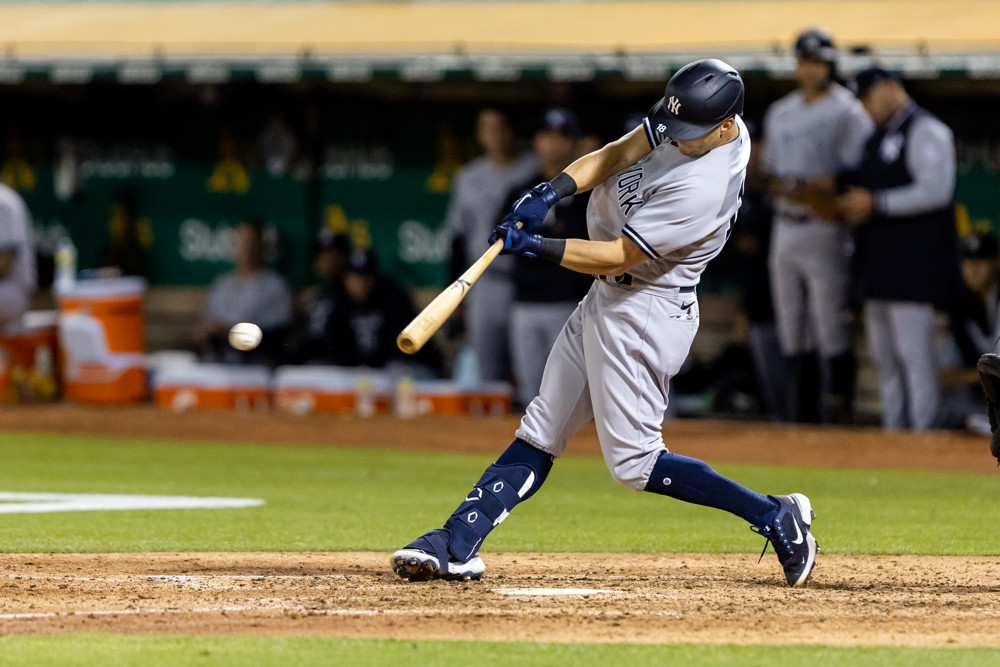
    The Yankees left fielder is currently out with a broken wrist. But when healthy, Benintendi was hitting a career-high .304 with a career-low .399 slugging percentage.

    Benintendi seems to have made a power/average & on-base percentage tradeoff.

    He hit a combined 66 home runs in 2017, 2019, 2020, and 2021. But he hit only 5 in 2022. His isolated power is below .100 for the first time in a full season in his career.

    Instead, his season has been about more contact (a career-low strikeout rate) and finding ways to get on base.

    Benintendi is near the top of an interesting leaderboard – Most net hits gained by hitting grounders and line drives versus defensive shifts.

    What that means

    Benintendi experienced a notable increase in full shift usage against him beginning in 2019.

    In 2018, 20% of his balls in play came against defensive shifts. The next season, that jumped to 30%, then 51% in 2021.

    In 2018 and 2019, Benintendi hit .217 when hitting a ground ball or short line drive* against a defense that played three infielders on the pull side (he was 24-for-106).

    *Short line drives as opposed to line drives hit well into the outfield that would not be reachable by a shifted infielder.

    In 2021, he upped that to .287, with 25 hits on 87 grounders and line drives. He was still pulling the ball a lot though. Only 11 of the 73 balls not handled by the pitcher or catcher were hit to the left of second base.

    But 2022 has been different for Benintendi. He’s hit the ball the other way more vs shifts. He’s hit .348 on the 69 grounders/liners against a fully-shifted defense. And he’s hit 24 of those balls to the left of second base, more than double his number from last season.

    Here are a few examples


    Most of these balls would have almost certainly been outs had the infield been playing either in a partial shift alignment or in a straight-up manner.

    By our calculations, Benintendi has a net gain of 10 hits against defensive shifts this season.

    How did we get that number?

    For each grounder/short liner hit for an out against a shift, we calculate how often it would have been a hit against another alignment. So if a batter hits a groundball up the middle for an out, but the hit probability for that ball was 75% against an unshifted/partial-shifted defense, the batter gets credit for losing 0.75 hits.

    We then do the reverse for grounders/short liners on which a hit was recorded. If the out probability was 75% against an unshifted/partial-shifted defense, the batter gets credited with gaining 0.75 hits.

    Then we sum the hits and outs gained and come up with a net differential. In sum, Benintendi lost 9 hits to full shifts and gained 19 hits against them. The net total is a gain of 10 hits. He would have had 10 fewer hits on the same balls had the defense not been playing a full shift.

    The only player with a bigger net gain than Benintendi this season is Rangers second baseman Marcus Semien, who gained 11 hits, but had nearly twice as many grounders/liners into full shifts as Benintendi did.

    We’re not here to say Benintendi’s approach to this season was better or worse than any previous one. On one hand, he’s in his prime and there’s an expectation for power that he didn’t reach, perhaps because he sacrificed some shots at home runs by being selective or focusing on base hits.

    On the other hand, he took what the defense gave him (when he wasn’t fully shifted, he hit very well, and went 14-for-25 on his grounders and short liners). His wRC+ this season is 123, matching the best of his career. There are lots of ways to skin a cat and a lot of ways to hit a baseball.

    Benintendi acknowledged as much in an article by Eno Sarris and Zach Buchanan in The Athletic, noting that he wanted to use the whole field because he knew he couldn’t hit 35 home runs in Kauffman Stadium. It will be interesting to see how this plays out in his free agency this offseason and in 2023 wherever he signs.

    At the bottom of this article is a list of the players who have had the biggest net gain in hits against full shifts this season.

    You won’t see many who have benefited greatly, largely because if a player is hitting against them like Randal Grichuk (14-for-23 when fully shifted), teams won’t use that alignment often versus him.

    Most Net Hits vs Full Defensive Shifts

    2022 Season (Stats through Tuesday’s games)

    Player BA Vs. Full Shifts Net Gain vs Full Shifts (hits)
    Marcus Semien .265 +11
    Andrew Benintendi .348 +10
    Brad Miller .356 +6
    Randal Grichuk .609 +6
    Brandon Nimmo .298 +5
    Eric Haase .444 +5
    Ronald Acuña Jr. .311 +5


  • MLB’s Most Prolific Diving Defender: Brendan Rodgers

    MLB’s Most Prolific Diving Defender: Brendan Rodgers

    Rockies second baseman Brendan Rodgers had shoulder surgery in July 2019 and he’s been warned about being careful in the field. There’s a proper way to dive and a reckless way to dive and Rodgers is well versed in each.

    “Like if you’re falling off a bike, you don’t wanna just throw your hands down, because that’s a good way to break your wrists,” Rodgers said in a conversation last weekend. “I’ve been working on it, knowing to take better angles and not jumping on top of balls, landing hard and hurting my hips. I’m trying to be as smooth as I can with my dives.”

    Rodgers has been the most prolific player at making the diving play this season, having made 18.

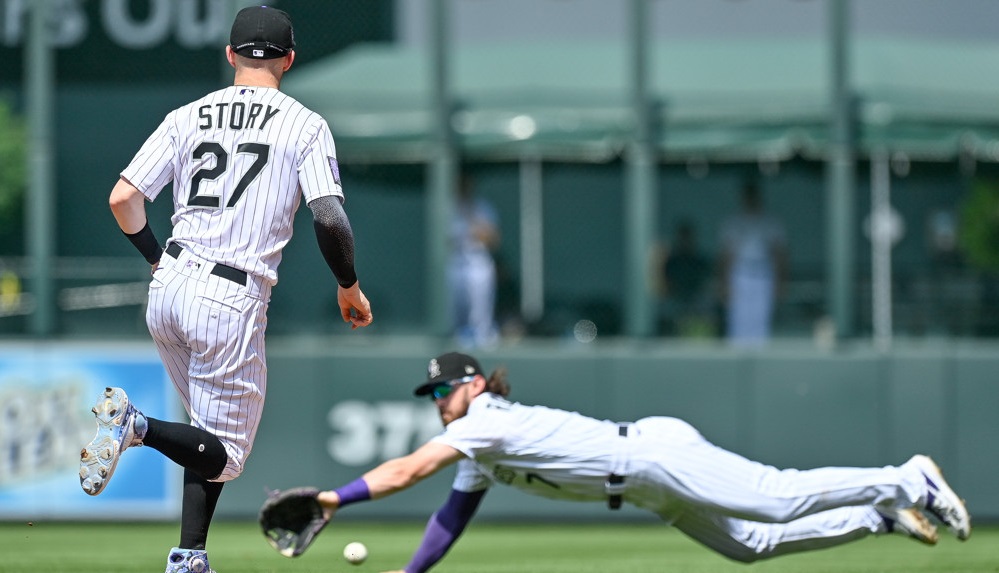
    The average dive for a middle infielder has about a 25% chance of resulting in an out. Rodgers’ percentage is more than twice that. He’s gotten an out on 18 of his 34 diving attempts. That’s twice as many diving plays made in 2021 (yes, the pic that goes with this article is from last season … Rodgers dives are hard to capture AP and our photo supplier didn’t have any!)

    Most Diving Plays Resulting in Out(s)

    2022 Season

    Name Team Diving Plays(Attempts)
    Brendan Rodgers Rockies 18 (34)
    Ryan Mountcastle Orioles 16 (26)
    Tony Kemp Athletics 14 (23)
    Andrew Velazquez Angels 13 (41)
    Pete Alonso Mets 12 (36)
    Michael Chavis Pirates 12 (29)
    Carlos Correa Twins 11 (23)
    Trevor Story Red Sox 11 (20)
    Ben Gamel Pirates 11 (21)
    Brendan Donovan Cardinals 11 (22)

    Here’s some of Rodgers’ highlight reel.

    Those dives are partly why Rodgers leads second basemen in Defensive Runs Saved with 19. They extend his range, allowing him to make an abundance of plays on hard-hit balls with low out probabilities.

    Rodgers made the conversion to second base because the Rockies had a shortstop in Trevor Story. And given his shoulder surgery, the team decided that even after Story signed with Boston that Rodgers would stay at second base.

    So Rodgers, who totaled -5 Runs Saved at second base in 2021, went to work in the offseason on the skills needed to handle the position. He put time in trying to improve his backhand-and-throw-on the-run and his double play turns. The latter has paid off, as his rate of turning potential DPs has jumped from 56% in 2021 to 69% in 2022 – MLB average is usually around 63%.

    Rodgers went through a very up and down (or more down than up) start to the season at the plate, hitting .078 in 51 April at-bats. That required putting most of his attention towards his hitting. The payoff came as he hit .359 with a .983 OPS in his next 26 games, including a three-homer game capped by a walk-off home run.

    But at the same time, his defense went into a funk. From May 5 to June 2, he tallied -2 Runs Saved.

    Our Video Scouts track Good Fielding Plays (think Web Gems, plus smart baseball plays like knocking a ball down to keep it on the infield) and Defensive Misplays & Errors (think: errors … and plays that could have been called errors like slipping and falling or a miscue on a DP attempt)

    In that nearly month-long period, Rodgers had 0 Good Fielding Plays and 13 Misplays & Errors.

    “For about two weeks, it felt like I had brick hands,” Rodgers said. “It didn’t feel soft. I didn’t feel smooth. And I saw on Twitter, the Giants had a little red machine that shoots these little foam balls out. And I realized we have that machine too.”

    Rodgers set a pre-game routine with the machine (known as the Heater Jr.) which can simulate both pitches and groundball types. He set it to its fastest setting and planted himself 25 feet away, taking balls thrown from it. It allowed him to “wake the hands up.”

    “It enforced soft hands, like being ready for the tough hop,” Rodgers said. “Those balls are soft. You can’t attack them or they’ll pop out of your glove. You have to be soft with your hands. I give it a lot of credit. It’s helped.”

    Rodgers’ has almost his entire season total of Runs Saved, 18, since June 3. And while he’s made 13 Misplays & Errors the last three-plus months, he also has an MLB-best 26 Good Fielding Plays. Most of those have been going to his right, where his defensive numbers have been best this season.

    Plays Made/Opportunities Plays Made Above Expected
    Going To Right 140/239 +18
    At-Em Balls 91/105 +4
    Going To Left 140/245 +1

    >> Opportunity = any batted ball on which the out probability was > 0

    But he’s also made a few nifty plays going left, including his favorite one this season against Manny Machado.

    “He kind of inside-outed it and it was kind of deep in the grass,” Rodgers said “And I took a pretty deep angle to it and, and honestly had no idea that I caught it.”

    In the end, whichever direction Rodgers is going and whatever Rodgers is doing with these dives… it’s pretty simple.

    “I just try to create a better angle and just give my body up,” he said. “And we see how it plays out.”

    Most Defensive Runs Saved – Second Base

    Name Team Runs Saved
    Brendan Rodgers Rockies 19
    Tommy Edman Cardinals 14
    Andrés Giménez Guardians 11
    Marcus Semien Rangers 9
  • Corey Seager And Others Who Should Benefit From The Shift Ban

    Corey Seager And Others Who Should Benefit From The Shift Ban

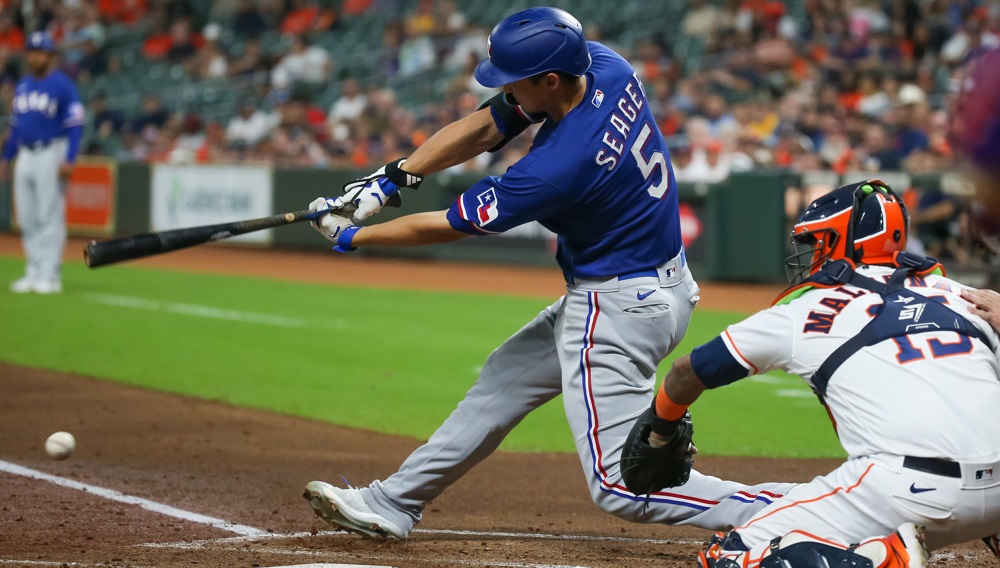
    Rangers shortstop Corey Seager may have been the happiest player in baseball last Thursday when MLB announced rule changes that included the banning of full defensive shifts (shifts in which 3 infielders played on the pull side).

    Seager enters the week hitting .248 with a .779 OPS. Those are good numbers but they’re a little disappointing given Seager’s 2020 and 2021, in which he hit a combined .306 with a .926 OPS for the Dodgers.

    Seager parlayed those seasons into a huge contract with the Rangers, where he hasn’t quite replicated those stats.

    The culprit: Repeatedly hitting the ball into full-fledged defensive shifts.

    Seager has hit 175 groundballs and what we categorize as short line drives into full shifts this season. On those balls, he’s hitting .158.

    By our accounting for this season, Seager has a net loss of 25 hits from full shifts when comparing that to how he would have fared if a team used any other defensive alignment against him.

    Below is Seager’s spray chart of ground balls and what we call short line drives that he hit last season. On those 52 balls in the area indicated by the black circle, Seager went a combined 5-for-52, as he often hit them with two defenders in the immediate area.

    Next season, with teams playing under rules forbidding three infielders on the pull side, Seager should have more room to work with when he hits a groundball (though the possibility exists for teams to do something radical, but we don’t know at this point) .

    So how did we get that 25 for Seager?

    Calculation

    For the purposes of evaluating shift performance, we track teams using two other defensive alignments, traditional straight-up defenses and partial shifts.

    Partial shifts are those in which two infielders are on each side of second base, but at least two move considerably from traditional positioning. An example would be an alignment in which the shortstop played adjacent to second base but did not come across it, while the third baseman moved to the traditional shortstop spot.

    Partial shifts will still be permitted under 2023 rules and it’s worth noting that a partial shift is only slightly more effective than a straight-up defense at turning a ground ball & bunt into an out.

    Out Rate on Grounders & Bunts – 2022 Season

    Alignment Grounder/Bunt Out Rate
    Straight-Up 72.4%
    Partial Shift 74.0%
    Full Shift 77.1%

    As for how we get Seager’s number:

    For each grounder/short liner hit for an out against a shift, we calculate the change in the probability of it becoming a hit against the combination of the other two defensive alignments. So if a batter hits a groundball up the middle for an out, but the hit probability for that ball was 75% against an unshifted/partial-shifted defense. The batter gets credit for losing 0.75 hits.

    We then do the reverse for grounders/short liners on which a hit was recorded. If the out probability was 75% against an unshifted/partial-shifted defense, the batter gets credited with gaining 0.75 hits.

    Then we sum the hits and outs gained and come up with a net differential. In sum, Seager has lost 39 hits to full shifts and gained 14 hits against them. The net total is a deficit of 25 hits.

    If Seager had 25 more hits this season, he’d have similar numbers to those of 2020 and 2021. He’d be hitting close to .300.

    Seager isn’t the only one who should benefit, though at least for this season, he’d have been its greatest beneficiary. You can see the list of hitters who have lost the most hits to full shifts this season below.

    Most Net Hits Lost to Full Shifts in 2022

    Compared To if Straight-Up/Partial Shift Used

    Player Team Net Hits Lost
    Corey Seager Rangers 25
    Yordan Alvarez Astros 15
    Kyle Schwarber Phillies 15
    Rowdy Tellez Brewers 15
    Carlos Santana Royals/Mariners 14
    Charlie Blackmon Rockies 14
    Kyle Tucker Astros 13
    Ketel Marte Diamondbacks 12
    Mike Yastrzemski Giants 12
    Josh Naylor Guardians 10
    Jorge Soler Marlins 10
    Alex Bregman Astros 10
    Ian Happ Cubs 9
    Tyrone Taylor Brewers 9
    Jeimer Candelario Tigers 9
    MJ Melendez Royals 9
    Jesus Sanchez Marlins 9
    Dylan Carlson Cardinals 9


  • Stat of the Week: The Yankees and 100 Defensive Runs Saved

    Stat of the Week: The Yankees and 100 Defensive Runs Saved

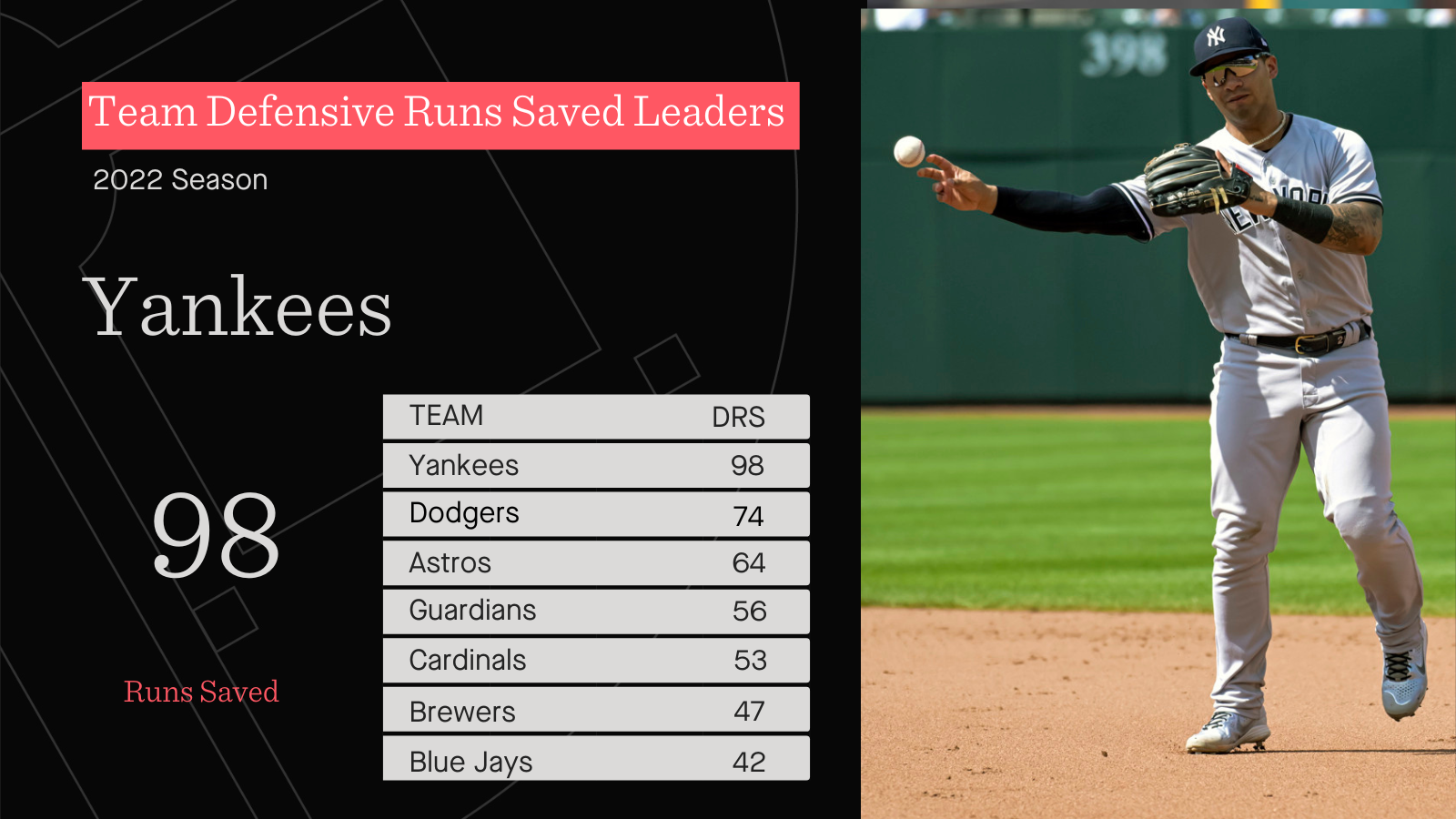
    The Yankees hit a milestone earlier this week when they reached 100 Defensive Runs Saved for the season.

    Now understand that Defensive Runs Saved aren’t like wins or home runs. Your defensive performance can fluctuate and the Yankees did in fact dip below 100 to their current total, 98. They’ll likely finish at or above 100 so long as they keep playing such good defense.

    Four teams have previously reached 100 Runs Saved in a season, most recently the two teams that rank 1-2 in that stat since we began tracking it in 2003 – the 2018 Diamondbacks (125) and the 2018 Brewers (123).

    And while 100 Runs Saved has now proven reachable recently, it’s particularly notable that the Yankees did it.

    The Yankees are currently taking shots from their fan base because of the team’s lackluster play the last two months. But knocking them means ignoring that, on the whole, their defense has been excellent.

    The Yankees ranked 29th in Runs Saved last season with -41. The 139-run improvement year over year is not (yet) the largest in the 20 seasons of Defensive Runs Saved. But it’s close. The Phillies have the mark for the largest single-season improvement, going from -82 Runs Saved in 2018 to 68 in 2019, a jump of 150 Runs Saved.

    Also, the Yankees have obliterated their previous single-season mark for Runs Saved. Their past best was 28 in 2017, which ranked 9th in MLB.

    The Yankees have fielded some rough defensive teams, particularly early in the DRS era. The -41 Runs Saved in 2021 looks pretty good compared to the -120 Runs Saved of the 2005 team. In fact, the Yankees rank 26th in Runs Saved from 2003 to 2021.

    In fairness, the Yankees under Brian Cashman began to prioritize defense a little more in the 2010s, finishing with a positive Runs Saved seven times in a nine-year stretch before a three-year stretch from 2019 to 2021 in which their best result was 1 Run Saved in 2020.

    The remade infield has been a huge key to their success, with the acquisitions of third baseman Josh Donaldson and shortstop Isiah Kiner-Falefa playing a major role along with the resurgence of Gleyber Torres and the continued success of DJ LeMahieu at third base.

    Those four have combined for 35 Runs Saved this season (Anthony Rizzo is at -3 Runs Saved, though he’s been lauded by fans for his throw-handling). The Yankees rank 1st in how often they turn a ground ball or bunt into an out in 2022, 77.4% of the time (a smidge ahead of the Cardinals).

    The Yankees also have one of the best defensive catchers in baseball in Jose Trevino (MLB-best 17 Runs Saved) and a pitching staff whose 14 Runs Saved lead MLB.

    Rookie Oswaldo Cabrera has been an instant defensive sensation even as he’s struggled at the plate. He’s recorded 9 Runs Saved in only 20 games thanks to 5 assists from right field.

    And though the Yankees aren’t running away with the AL East as they once were, they are running away with the Defensive Runs Saved lead.

    The Yankees entered August with 65 Runs Saved, one run better than the Dodgers. But they’ve pulled away since then, with 33 Runs Saved. The Dodgers, with 74 Runs Saved, are now 24 behind the Yankees.

    That puts the Yankees close to another milestone as well. The largest margin between the top two teams in Runs Saved in a season is 30 runs, with the 2016 Cubs besting the Astros, 107-77.

    That Cubs team is remembered for something much bigger than that. That’s the Cubs team that won the World Series for the first time since 1908. Those Cubs and the 2008 Phillies are the two teams to lead the majors in Runs Saved and win the World Series.

  • Dominance Deep Dive: Munetaka Murakami’s Power

    Dominance Deep Dive: Munetaka Murakami’s Power

    For our series on dominance in NPB this season, we’ve taken a deep dive into some of the best pitching performances in the league.

    Now, we turn our attention to the batter’s box and the NPB’s best hitter. Munetaka Murakami, the 22 year-old third baseman for the Yakult Swallows, must be considered one of the best power hitters in all of baseball with his stellar 2022 campaign. 

    Murakami won a Central League MVP in 2021 and he’s backing that up in 2022 with video game numbers during a historic season. With a .341/.477/ .760 slash line and a 1.237 OPS entering the week, he leads the entire league in the traditional Triple Crown with 51 HRs, 125 RBIs, He’s also going for the slash line Triple Crown, which he currently leads as well.

    Murakami debuted in 2018, but his first full season came in 2019 when he slugged 36 homers and slashed a respectable .231/.332/.481 with an .814 OPS. That season, his major flaw was 184 strikeouts, the most strikeouts in an NPB season by a Japanese-born player.

    Sporting a K% of 31.0% and a 12.5 BB% in 2019, Murakami caused damage but swung and missed a lot.  He’d get a lot better when it came to avoiding the latter.

    Season K% BB%
    2020 22.3% 16.9%
    2021 21.6% 17.2%
    2022 19.4% 19.6%

    Since that first full season he’s cut down on his chases and done more damage on pitches in the strike zone.

     His 47% hard-hit rate is the best in NPB. Only one other player is closer than 10 percentage points (Hotaka Yamakawa, who has 37 home runs, is at 44%)


    MONTH Hard-Hit Rate Avg Launch Angle
    APRIL 42% 11.4
    MAY 41% 12.7
    JUNE 56% 8.8
    JULY 51% 21.6
    AUGUST 46% 15.6
    SEPTEMBER 44% 3.9 (9 Balls in Play)


    Murakami has been hitting the ball hard all season, especially since the start of June. That month he had a 56% hard-hit rate and an astronomical .559 BABIP.

     In July he was still very productive but, as noted in the table above, his launch angles were off.

    Here’s an at-bat from July where the pitcher starts Murakami with a slow curve that he takes on the outer edge. Pitchers will usually start him with a slow curve or splitter to mess with his timing, then attack inside with fastballs, and righty pitchers will use cutters trying to get the ball up under his hands.


    via GIPHY


    This particular at-bat ended in a flyout to right field. The frustration on Murakami’s face was visible, as that cutter got in on him towards the handle of the bat, limiting his ability to extend his hands. 

    via GIPHY


    This is where hitters have to succeed with not only high exit velocities but also optimal launch angles. Murakami produces the most damage on down-and-in pitches and creates loft from that part of the zone. Understanding this and coaxing flyouts on pitches up in the zone against him is key.

    While he does face high velocity in the upper part of the zone regularly. He takes these pitches with ease, rocking back on his heels and maintaining great balance. He doesn’t bail or turn away and stays in against these hard pitches. 

    Teams have decided the only spot they can really attack is up near his hands. Murakami has adjusted to the league and is more selective in this area of the zone. You have to get the ball up though because he punishes mistakes that are down.

    Murakami picked up steam again in July, hitting home runs in 5 consecutive plate appearances, an NPB record.

    Murakami’s batting stance and swing remind me of Matt Olson. With slightly more bent knees to start, his bat position and stance are almost identical to Olson’s. 

    Olson and Murakami both use their hands out in front of their bodies as a timing mechanism, but also as a way to create tension and energy in the body.

    Murakami relies on a medium-high leg kick to get energy stored into his back leg and hip. Olson’s load is a toe-tap, but both of them load into the back hip and create a solid back side and foundation for stored energy. The bat is in nearly the same spot and angle in the middle of the load.

    The biggest difference is when both batters load. For Olson, his hands end up a bit higher and farther back because of a slight turn in the front shoulder. Olson has great bat speed, which he uses to great success.

    The short and compact swing by Murakami allows him to let the ball travel deeper into the zone. Murakami stays inside the ball better and pulls the ball less than Olson.

    At the point of contact, both rotate around their front half as they uncoil their stored energy through the zone. The leverage created from their attack angle downward to the ball is what helps them both hit towering home runs. Both have exceptional bat speed but also smoothness and looseness that is created by excellent rhythm at the beginning of their swings. 

    Here’s a side view of Murakami’s swing. The flow of his swing mechanics is beautiful to watch as his head also stays still through the entire process.

    via GIPHY


    Timing can be an issue, with a slight susceptibility to the splitter. Murakami will swing and miss when out on his front side, whiffing over the top of these types of offspeed pitches.

    via GIPHY


    He also flicks off-speed pitches into the gap by delaying rotation and placing the barrel on the ball. Even though he is out of sync and into his front side on this pitch, Murakami uses the strength in his arms and hands to lift the baseball into the outfield.

    via GIPHY


    Another example of his power is this mishit on this decent fastball down and in. The power to bully this ball over the wall opposite-field is impressive. The reaction of the pitcher Kodai Senga says it all. 

    via GIPHY


    Murakami is an elite hitter. What separates him from most is how often he hits the ball hard, and his knack for being able to hit well even when his timing is off. Couple this with bat speed and strength and he’s a dominating power hitter.

    The scary part is he’s only 22 years old and there are no signs of him slowing down. The confidence, patience, and talent Murakami exhibits are all culminating in one of the best seasons ever.

  • Stat of the Week: August’s Defensive Player of the Month

    Stat of the Week: August’s Defensive Player of the Month


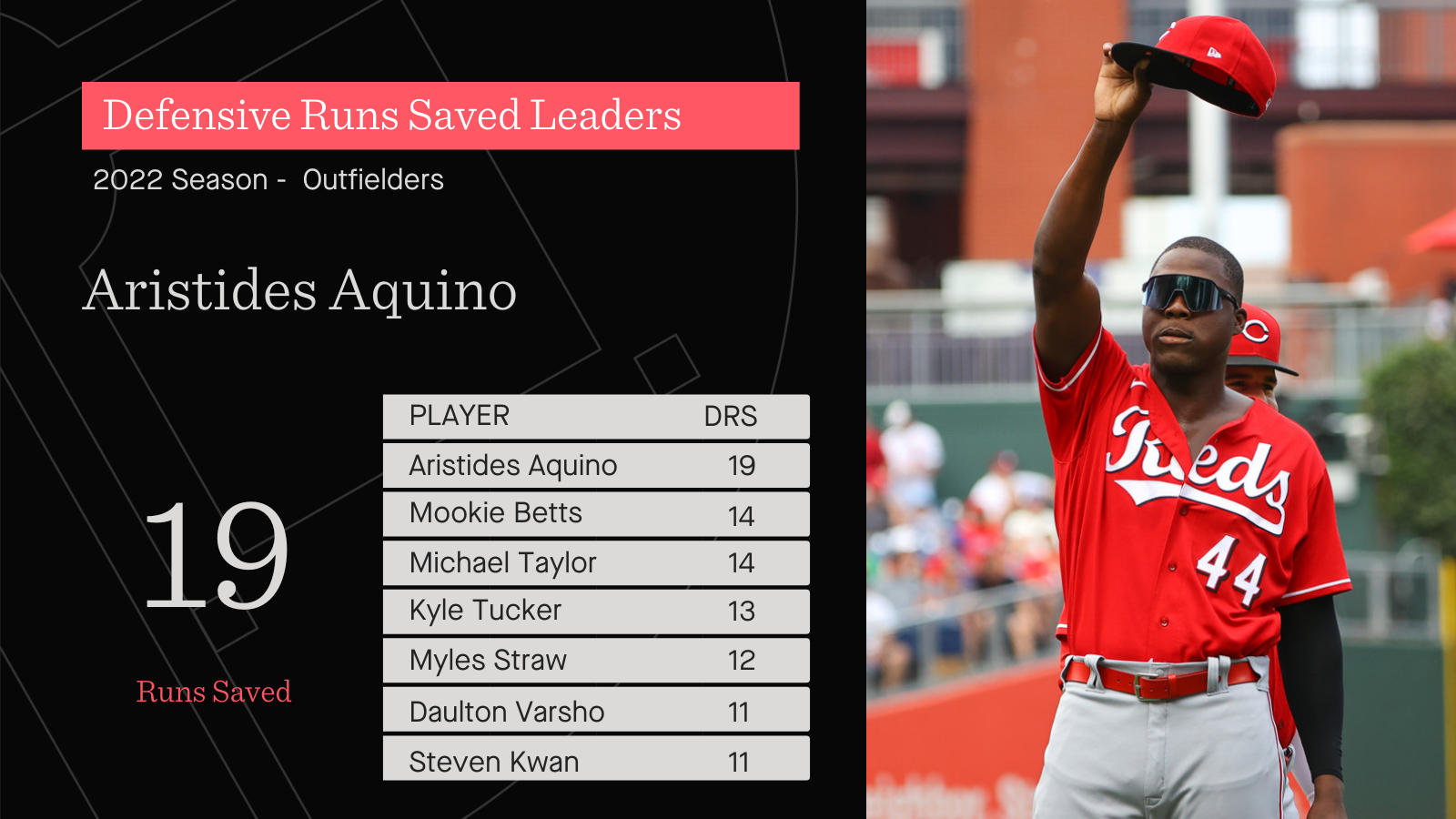
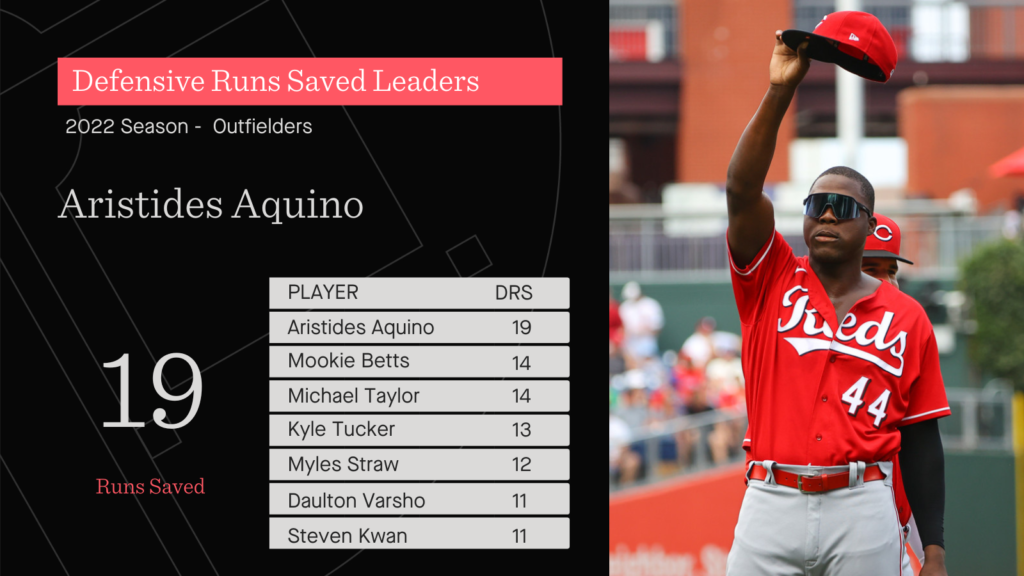
    This is not a misprint. Reds outfielder Aristides Aquino has 19 Defensive Runs Saved in 389 innings this season.

    Aquino tied for the MLB lead with 9 Runs Saved in August and won our voting for MLB Defensive Player of the Month for August.

    What differentiates Aquino, and helps him record so many Runs Saved in such a short period of time, is his throwing arm. People keep testing it. He has 10 outfield assists this season, all without the help of a cutoff man. Five of them have been on plays at the plate, including one against the Giants on May 28 that ended a one-run win.

    Aquino had 5 assists in August, including this one, which prompted an “oh wow!” from Phillies broadcaster John Kruk. Kruk had good reason for his exclamation. Statcast clocked the throw at 99 MPH.

    Aquino’s 8 Outfield Arm Runs Saved (a stat that considers both throw-outs and baserunners held) are the most in MLB this season.

    Aquino didn’t have any particularly dazzling catches this month, but the value of those he did make adds up. Among his better ones were this one against the Brewers and this one against the Phillies, which of course had an assist tacked on to it.

    Aquino’s 19 Runs Saved are tied for the most of any player at any position this season. He’s tied with Taylor Walls of the Rays, who has played more than 900 innings this season, and Tommy Edman of the Cardinals, who has played more than 1,000.

    Among those Aquino beat out for Player of the Month were shortstops Walls and Isiah Kiner-Falefa of the Yankees, and catchers Adley Rutschman of the Orioles and Cal Raleigh of the Mariners.

    Walls led all shortstops with 9 Defensive Runs Saved (we wrote about him in another recent article). Kiner-Falefa totaled 7 Runs Saved in his best month of the season (albeit one that ended with an error that drew the ire of Yankees fans on Wednesday night).

    Rutschman led catchers with 7 Runs Saved in August. He’s tied for third in our pitch-framing metric (Strike Zone Runs Saved), fourth in catcher block rate (preventing wild pitches and passed balls) and his 12 Runs Saved this season trail only Jose Trevino’s 15 among catchers. This is made all the more impressive given that Rutschman didn’t make his MLB debut until May 21.

    Raleigh, in his second year, had 6 Runs Saved in August and has matched Rutschman’s 12 Runs Saved this season. He’s second in Strike Zone Runs Saved and tied for third in Stolen Bases Runs Saved.

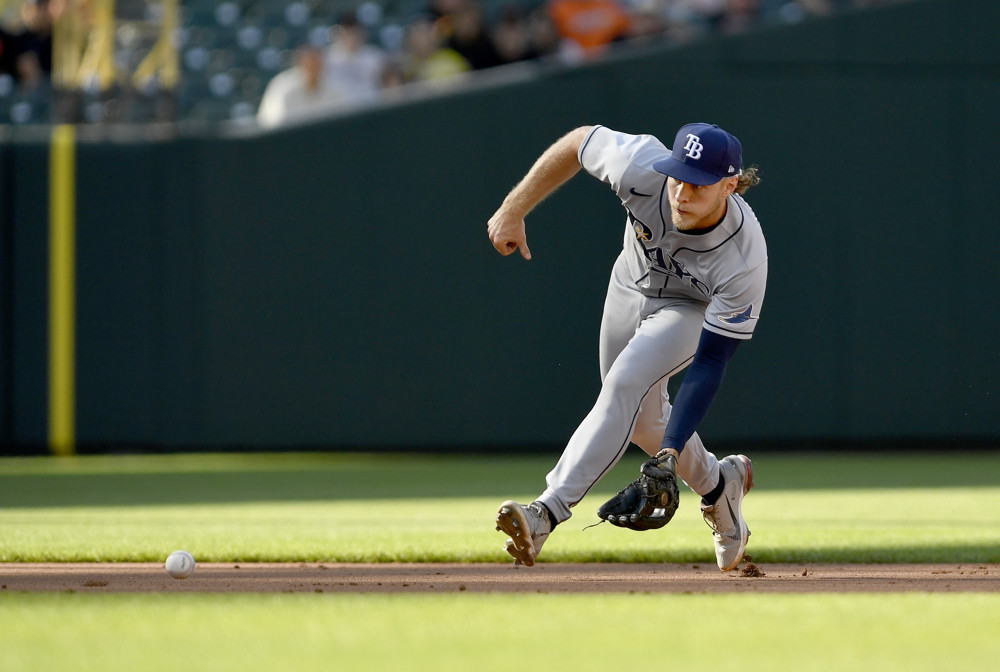
  • Taylor Made: Walls Is Among Best Defensive SS in MLB

    Taylor Made: Walls Is Among Best Defensive SS in MLB

    The news that Wander Franco had his rehab halted due to hand soreness was certainly a bummer for the Rays. Franco brings a different dimension to the lineup with his skills and all-around play.

    But Franco’s absence means more time at shortstop for Taylor Walls. And though Walls’ offensive numbers more closely resemble Andrew Velazquez than Franco, his defensive presence merits considerable attention.

    Walls has 16 Defensive Runs Saved this season, as he’s been the AL version of Cardinals infielder Tommy Edman, who leads the majors with 21 Runs Saved.

    Early in 2022, Walls split time at multiple positions, accumulating 2 Runs Saved at 2nd base and 5 more at 3rd base. But since early July, he’s played exclusively at shortstop and excelled there, with 9 Runs Saved. We saw some of this last season too.

    In fact, since the start of 2021, Walls ranks tied for third with 19 Defensive Runs Saved at shortstop despite ranking 30th in innings played there.

    When describing what Walls’ playmaking ledger looks like, the words “by any means necessary” come to mind. He plays all out, using his speed and his athleticism to his advantage. He’s been a standout defender both going to his left and to his right.

    Walls has 15 Good Fielding Plays* at shortstop this season. On a per-inning basis, he ranks 3rd behind Nicky Lopez and Miguel Rojas. He’s also not someone who makes an inordinate number of mistakes. He ranks 6th in Defensive Misplays & Errors on a per-inning basis*

    *Good Fielding Plays and Defensive Misplays & Errors are tracked by our Video Scouts. We have approximately 30 categories of Good Fielding Plays and 60 categories of Misplays & Errors.

    In terms of outs recorded above expectations, Walls is sharp going in either direction, just as he was in 2021. In 2022, he ranks 4th when going to his left to make a play and 8th when going to his right.

    The Rays are 25-18 since Franco played his last game. Walls may be a replacement-level hitter but he’s led shortstops with 7 Defensive Runs Saved since July 10. He’s more than done his part to keep the Rays in playoff position in the absence of one of their biggest stars.

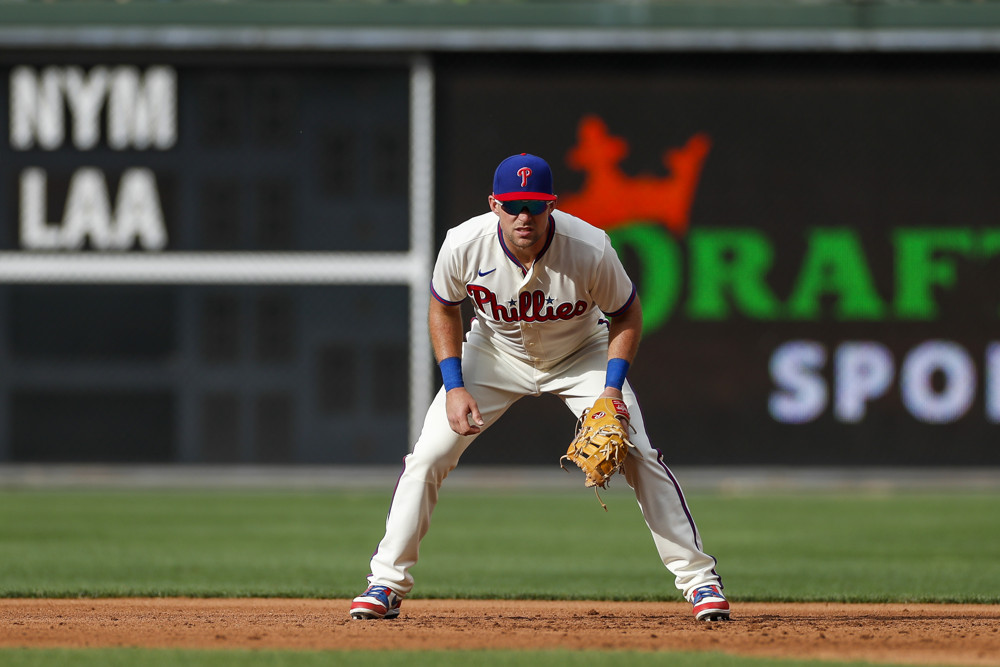
  • Rhys Hoskins Has Stepped Up His Defensive Game

    Rhys Hoskins Has Stepped Up His Defensive Game

    In late May, Alex Coffey, who covers the Phillies for the Philadelphia Inquirer, reached out to us for a piece she was writing about Rhys Hoskins and his improved defense at first base.

    I’ll be honest. I had questions at the time whether his early-season success was a fluke. Hoskins finished last in Defensive Runs Saved among first basemen in 2021 and rated similarly in 2020, offsetting an alright 2019 when he totaled 3 Runs Saved.

    But I have to give credit where it is due. Hoskins has been good enough at first base such that he ranks tied for second in Defensive Runs Saved this season (Christian Walker is the runaway leader).

    DRS Rank
    2019-21 -9 4th-worst
    2022 6 T-2nd

    Hoskins’ success is largely based on improvements in his range around first base. The data shows he’s been better on balls hit to his right, on balls hit that we’d call “at-em’s,” and also a little bit on balls hit to his left He’s making the kinds of plays he needs to be successful, like this one on Friday night.

    We can illustrate Hoskins’ success further with data and show some more video examples.

    Hoskins’ top 10 plays made in 2021 were worth 5.4 Runs Saved. His top 10 plays in 2022 have been worth 5.0 Runs Saved.

    But the 2022 version of Hoskins makes up for that as we go further through his defensive ledger. His 30th-most valued play in 2022 is better than his 20th-most valued play in 2021.

    Hoskins has made 18 plays this season in which the run value ranged from 0.3 to 0.44 Runs Saved.

    He totaled only 6 of those in 2021.

    A play whose value ranges from 0.3 to 0.44 Runs is often a nice play, usually with an out probability from 40 to 60%. This is an example of a play at the higher end (0.44), one which had a 43% out probability based on where the ball was hit, how hard it was hit, and how fast the batter was.


    One thing that Hoskins has done this season comes through in this clip. He’s diving for balls less and sliding for balls more. He’s found a more efficient (and probably less taxing) way to make plays.

    2021 2022
    Diving Plays Made/Attempts 6-for-26 4-for-13
    Sliding Plays Made/Attempts 3-for-5 8-for-11

    And this is an example of a play at the lower end (0.3), one which is still a nice-looking play. It has a 60% out probability based on those same criteria.

    Now this isn’t to say that Hoskins doesn’t miss balls or make mistakes. He’s done plenty of that too. But just because he has 9 errors* doesn’t mean he’s defended poorly.

    * Hoskins has 26 Defensive Misplays and Errors. Our Video Scouts track approximately 60 categories of Misplays based on video review. Hoskins’ frequency of Misplays & Errors ranks 7th-highest among the 35 first basemen with the most innings played.

    Take a look at this chart, which shows how many plays Hoskins has made with a run value of 0.3 runs or better compared to how many plays he’s failed to make on which he got dinged at least 0.3 runs.

    Season Plays Made >=0.3 Runs Plays Missed <= -0.3 Runs
    2021 15 27
    2022 27 20

    Hoskins almost certainly isn’t going to win a Fielding Bible or Gold Glove Award this season, but he does deserve some credit for the improvements he’s made. He’s among the most improved defenders in baseball this season.

  • Stat of the Week: Albert Pujols Finishing With A Flourish

    Stat of the Week: Albert Pujols Finishing With A Flourish

    As of July 9, the Albert Pujols farewell tour had been a dud. He was hitting .198 with a .624 OPS.

    But over the last six weeks, the Cardinals designated hitter and occasional first baseman has looked much more like he did in his prime.

    Since July 10, he’s hitting .393 with 10 home runs and 20 RBI in 84 at-bats entering Thursday’s game with the Cubs. Pujols has been particularly destructive against left-handed pitching. He’s 14-for-23 (.609) with 7 home runs against lefties since August 10.

    What Pujols has done over the last six weeks is reminiscent of what David Ortiz did in his final MLB season in 2016 (1.021 OPS, 127 RBI). Ortiz and Ted Williams in 1960 (1.096 OPS, 29 home runs) are the standard setters for farewell seasons.

    Pujols’ 10 home runs came in a 25-game span. Since 1901 (as far back as public play-by-play data allows us to search), Pujols and Barry Bonds are the only two players to hit that many home runs in that number of games after turning 42.

    As Pujols’ career enters its final weeks, here’s where he stands on baseball’s all-time lists.

    • 693 home runs (5th)
    •  2,188 RBI (2nd)
    • 3,359 hits (9th)
    • 6,153 total bases (2nd)

    The only question left among his statistical accomplishments is whether he has enough time to reach 700 home runs. He could catch Alex Rodriguez, whose 696 home runs stand 4th all-time. Pujols is also the rare player who can say his top comparable in Similarity Scores is … Willie Mays.

    As far as accolades go: Pujols has won 3 MVP awards and two World Series titles. He’s also won MLB awards named for Hank Aaron (best hitter), Roberto Clemente (sportsmanship and community involvement), and Lou Gehrig (representing Gehrig’s character and integrity).

    And as we look ahead to Pujols’ final games, we can look back too. We should remember that one reason that Pujols was able to accumulate such numbers was because of a hamstring injury that Bobby Bonilla suffered prior to the start of the 2001 season, which put him on the injured list. That allowed Pujols to make the Opening Day roster. He never played in the minor leagues again.

    Bonilla often gets celebrated in baseball circles because of the contractual agreement he had with the Mets that has him paid annually long after he retired. Perhaps he should be heralded for his role in Pujols’ career too.

    Lastly, you know how much we love defensive excellence here, so we do have to tip our cap to how Pujols played first base. Pujols has 137 Defensive Runs Saved at the position since we started tracking the stat in 2003. Mark Teixeira ranks 2nd with 92. Anthony Rizzo is the nearest active player there with 68.

    As has often been the case with Pujols, there’s nobody close to doing what he could do.

  • The Meatball: Analyzing Middle-Middle Pitches

    The Meatball: Analyzing Middle-Middle Pitches

    In the sabermetric world, analysts like to differentiate between a pitcher’s command and control. Command denotes a hurler’s ability to hit their targets precisely, their corner-nibbling prowess, while control indicates their walk-limiting capabilities.

    Most major league pitchers can throw a strike when they need to prevent a free pass. What separates the good from the great is the ability to ensure said strike is not a meatball.  

    Here at SIS, we track not only ultimate pitch location, but also where the catcher sets up prior to release. Since we don’t have data that allows us to see into the minds of pitcher-catcher batteries, this data helps us approximate their intended pitch locations.  

    And there are some clear examples of when it comes in handy. Take this 3-0 Brady Singer offering from last month that drifted over the plate, despite a target on the lower outside corner, and enabled Franmil Reyes to crush an opposite-field homer: 

    Because of the catcher’s setup, analysts can blame the miscue on Singer’s lapse in command. On the flip side, sometimes veteran pitchers like Sonny Gray have the confidence and ability to spot a fastball on the lower inside corner in 3-0 counts for swinging strikes: 


    The catcher’s glove hardly has to move an inch. For his career, Gray has a pedestrian 8.5% walk rate (league average this year is 8.2%), but perhaps he is just willing to give up the occasional walk by aiming for corner strikes—where he might not always get the call, even if he hits the target—in hitter’s counts.  

     What I’m getting at here is that while metrics like walks per nine innings and walk percentage can tell us about a pitcher’s control, catcher set-up locations can provide information about command. This way, we don’t have to assume that pitchers are trying to avoid meatball throws; we can know for sure.  

    Yet, pitchers aren’t always trying to avoid pumping a fastball down the middle. The typical example is in fact when the count is 3-0, a situation in which pitchers are known for their “get-me-over” tosses.  

    But what about other counts?  

    When do pitchers really shy away from meatballs, even if they can’t always avoid them in practice?  

    Consider the table below, which looks at pitches in the pitcher-friendliest (0-2, 1-2, 2-2), hitter friendliest (2-0, 3-0, 3-1), and relatively even counts (all others).  

    The second column describes the proportion of pitches in the specified counts for which the catcher set up down the middle. The third column indicates the proportion of pitches that the pitcher actually ended up tossing into the heart of the zone. Numbers across all combinations of rows differ by a statistically significant amount. 


    Count  Middle-Middle Set Up Rate  Middle-Middle Rate 
    Pitcher Friendliest  0.8%  4.1% 
    Relatively Even  1.2%  6.0% 
    Hitter Friendliest  1.8%  7.4% 

    If we are to take set up locations as a proxy for intended locations, it is clear that in general, the battery tries to avoid meatballs, with the catcher only setting up for one 1.1% of the time across all counts.  

    In practice, meatballs happen over five times as often as intended, but still only comprise 5.7% of all pitches. For pitcher-friendly counts, these numbers shrink to 0.8% and 4.1%, respectively.  

    The second column below details, for all pitches that actually ended up down the middle (i.e., pitches counted in the second column above), the proportion that missed the catcher’s target by more than the median miss. The third column below looks at the proportion of all pitches (not just those down the middle) that missed the target for the specified counts. 

    Count  Middle-Middle  

    Miss Target Rate 

    Overall Miss Target Rate 
    Pitcher Friendliest  58.7%  45.9% 
    Relatively Even  55.8%  50.9% 
    Hitter Friendliest  52.3%  55.4% 

    When a meatball is thrown, it seems to be a mistake more often than not, with an average of 56.1% missing the target across all counts. Non-meatballs only fell in the missed-target category 49.6% of the time, a statistically significant difference.  

    For meatballs, the only count with a missed-target rate lower than 49.6% was 3-0 (48.6%). This characterizes a general trend, as middle-middle pitches were misses significantly more often when they came in pitcher-friendly counts, compared to those in even and hitter-friendly counts.  

    This result is in spite of pitches missing significantly less often in pitcher-friendly counts overall.  

    Back to the idea of command vs. control: One of the benefits of adding “command” to the baseball analyst lexicon was that it could be pointed to as a vague explanation for why a pitcher with desirable strikeout and walk rates was failing to limit hard contact. When they missed, they missed badly, and hitters punished them. An especially bad miss in my eyes is an unintentional meatball. 

    To test this theory, I began with a model of middle-middle-miss rate as predicted by a suite of batted-ball metrics. After removing predictors that didn’t improve the model, I was left with xERA, infield-flyball rate, and Barrell%.  

    Yet, the only one that was statistically significant was xERA (in other words, the other predictors may have just been improving the model through overfitting).  

    Specifically on average, among pitchers who threw at least 500 pitches in 2021, every time unintentional-meatball rate increased by 1%, xERA increased by .08.

    This is crucial because xERA is the ERA estimator that takes quality of contact statistics most into account. 

    Interestingly, middle-middle percentage (regardless of whether they were mistakes or not) in pitcher-friendly counts was not a significant predictor of any quality-of-contact statistics, even after removing those that didn’t improve the model.  

    This serves as an important reminder that, while a majority of meatballs are unintentional, sometimes a pitcher opts to “challenge” their foe with an offering in a hittable location, a sort of catch-me-if-you-can.  

    Here, Ohtani hits the glove with 98 right down the pipe, and breakout Mariner Cal Raleigh fails to make contact: 


    If used correctly, middle-middle tosses can be yet another weapon in a pitcher’s arsenal.  

    It’s also possible that wildness can lead to middle-middle throws that surprise a hitter.  

    While not a significant predictor for either model, Barrel% did stick around for both after eliminating other predictors. Higher middle-middle rates in pitcher-friendly counts, as well as higher middle-middle-miss rates, were correlated with lower Barrel rates.  

    Thus, the answer might depend on the pitcher. Our next step as analysts should be to find the threshold of wildness under which it is worth it to nibble at the corners.