Category: Football

  • NFL Draft Pick AnalySIS: Pittsburgh Steelers

    NFL Draft Pick AnalySIS:
    Pittsburgh Steelers

    The State of the Steelers:

    The Steelers are at an interesting point for their franchise. They were able to take advantage of the expanded playoff last season by sneaking into the 7 seed in the AFC, before promptly getting sent back to Pittsburgh by the Kansas City Chiefs in the Wildcard round. 

    The retirement of long-time starter Ben Roethlisberger means the Steelers suddenly look more like a team that is entering a rebuild rather than the competitive team we have seen for the past number of years. The Steelers have three picks in the Top 100 and will be looking to inject their roster with some much needed talent and productivity. 

    #20 Overall

    Matt Corral – QB – Ole Miss

    Corral is a mobile quarterback with great pocket awareness and athletic ability, but he must refine his spot-on accuracy to all levels and decision-making skills in order to become a reason you win games in the NFL.

    While the Steelers signed Mitchell Trubisky to a short-term deal and may be a candidate to trade up for a different quarterback, Corral offers a good scheme fit for Matt Canada’s offense that featured the second-highest usage of RPOs in the NFL last season. 

    Trevor Penning – OT – Northern Illinois 

    Penning is a physically dominant and imposing run blocker with an ideal frame for an NFL tackle, but he needs to keep developing his hand use and improve his pad level to round out his overall profile taking the big step up in competition.

    Penning is a massive and mean mauler on the left side who would provide an upgrade over last year’s rookie starter Dan Moore and pair with right tackle Chukwuma Okorafor to help reestablish a strong offensive line. 

    Jahan Dotson – WR – Penn State

    Dotson’s size and toughness limit him in certain situations, but his explosiveness and body control allow him to make spectacular plays at all levels of the field.

    The Steelers face a lack of depth behind their top two starters, Dotson would bring explosiveness and inside/outside versatility to a wide receiver room that is in need of a reload.

    #52 Overall

    Travis Jones – NT – UConn

    Jones is a physical and technical defensive tackle who has the strength and hand use that transition to the NFL, though he needs to get more agile and improve as a pass rusher in order to see time on all three downs.

    Jones is a powerful nose tackle who could step in and help establish a defensive identity as the new anchor in the Steelers’ 3-4 defense that ranked dead last in the NFL in total rushing yards and yards per carry allowed. 

    Roger McCreary – CB – Auburn

    McCreary projects best as a 3rd corner with good height, speed, and athleticism to play in the slot or out wide, and despite his short arms, he is at his best in press coverage.

    Although the team recently added in free agency, a versatile player like McCreary would immediately beef up their cornerback depth while also possibly providing an upgrade over their current starters. 

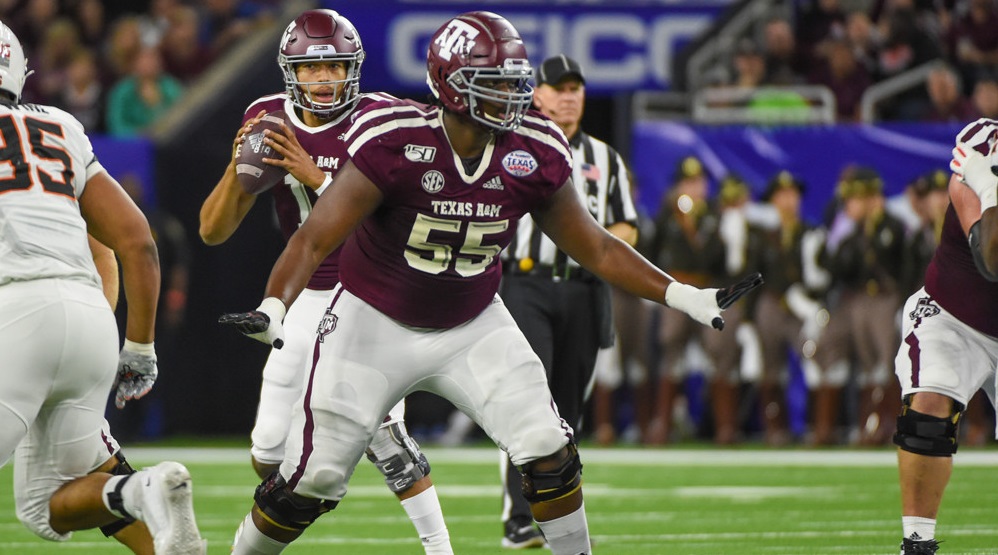
    DeMarvin Leal – DT – Texas A&M

    Leal is an athletic and agile defensive lineman at his size, who offers great versatility as a pass rusher but needs to work on his interior run defense to keep that flexibility on all three downs.

    Leal may be relegated to only passing down work at first but would be a great long-term piece to develop behind the current veteran starters. 

    #84 Overall

    Justyn Ross – WR – Clemson

    Ross has the combination of size, athleticism, and quick-twitch to contribute in a variety of ways in a receiving room at the next level, but must overcome injury and production concerns to do so.

    Ross is a good player and was very productive at the beginning of his career but finds himself sliding in draft boards due to recent injury history and subpar QB play.

    Bryan Cook – S – Cincinnati 

    Cook is a strong, physical safety who has the tackling ability and zone awareness to be the first safety off the bench, but he needs to improve in man coverage and with his pursuit angles to get the bump to a starting role.

    Cook would provide some much needed talent to the Steelers’ strong safety spot. He fits well as a player that can be moved around the field on defense next to star free safety Minkah Fitzpatrick. 

    DeAngelo Malone – Edge – Western Kentucky 

    Malone is a freaky athlete with the quickness and pursuit ability to be an effective pass rusher at the next level, though he’ll need to get stronger, become a more consistent tackler, and refine his skills in order to maximize his overall skill set.

    The Steelers have little edge depth behind Alex Highsmith and reigning DPOY T.J. Watt. Malone brings depth in the form of a growable and twitchy pass rusher.

    To learn more about the Steelers and their needs, visit their team page on our NFL Draft website here.

  • SIS NFL Draft AnalySIS:Baltimore Ravens

    SIS NFL Draft AnalySIS:
    Baltimore Ravens

    The State of the Ravens:

    The Ravens were the #1 seed in the AFC until an injury to Lamar Jackson derailed the season, on top of the horrendous injury luck that occurred in the preseason. The team comes into the 2022 draft with their area of needs being pass defense and offensive line. 

    Finishing in the bottom 10 in EPA per play while in both man and zone coverage, as well as being 28th in Nickel personnel, the Ravens need to stop the pass via the rush and in coverage. Picking higher than expected (14th), the Ravens will have a lot of options.

    #14 Overall

    Devin Lloyd – LB – Utah

    Lloyd has the speed, aggressive mindset, pass rushing ability, and defensive playmaking ability teams crave in a Will linebacker, and if he continues to hone his craft within the box, he has a very high ceiling.

    Excellent in coverage and can run sideline-to-sideline to make tackles. A perfect fit for the Ravens.

    Jermaine Johnson II – Edge – Florida State

    With his pass rush ability, strength, and power, Johnson should make an instant impact at the next level, though he needs to become more consistent across all areas of the game to hit his full potential.

    Joining a rush of Odafe Oweh and Tyus Bowser, Johnson brings depth and immediate impact.

    Trent McDuffie – CB – Washington

    McDuffie is a fluid athlete who has the speed, quickness, and transition ability to be a solid shutdown corner at the next level, though his size for the outside and limited on-ball production could be what holds him back.

    The Ravens still have Marcus Peters and Marlon Humphrey, but injuries proved a lack of depth. McDuffie’s traits make him a future starter and immediate 3rd corner.

    #45 Overall

    Jaquan Brisker – S – Penn State

    Brisker is a polished, ready-made, versatile DB with a well-rounded set of physical, mental, and emotional tools that add up to a high-floor safety in the NFL.

    A do-it-all, experienced, immediate starter that can be on the field for all 3 downs.

    Roger McCreary – CB – Auburn

    McCreary projects best as a 3rd corner with good height, speed, and athleticism to play in the slot or out wide, and despite his short arms, he is at his best in press coverage.

    Versatility to play in the slot and in press makes him a perfect 3rd corner as he develops to eventually be a starter.

    Nicholas Petit-Frere – OT – Ohio State

    Petit-Frere’s lateral mobility, innate athleticism, hand use, and pedigree are strong traits to bank on at the next level, but he’ll need to improve in pass protection and overall consistency to see time as a starter.

    A bit of a bet-on-the-tools pick, Petit-Frere can play both tackle positions well.

    #76 Overall

    Cole Strange – OG – Chattanooga

    Strange has the reactive athleticism to mirror defenders, consistent leg drive to move them, and the nastiness to finish through the whistle, but he’ll need to improve his balance, footwork, and awareness to maximize his potential.

    Strange’s experience being a 6-year player is something no other guards possess in this class.

    Kingsley Enagbare – Edge – South Carolina

    Enagbare has the hand usage, pass-rush technique, and motor to be an effective pass rusher early on, but must get stronger in his lower half and get a little more athletic to be an impact player against the run.

    Enagbare’s pass rush comes at a discount due to his lacking run game, which the Ravens can capitalize on to fill their need to stop the pass.

    Channing Tindall – LB – Georgia

    While Tindall never started a game at Georgia, he has the athleticism, man coverage skills, and tackling prowess to be a starter in the NFL and he just needs to improve his power and intelligence to hit his ceiling.

    Well-rounded linebacker with coverage skills, another perfect fit!

    #100 Overall

    Myjai Sanders – Edge – Cincinnati

    Sanders has a relentless mindset with the length, repertoire, and hand use to be an effective three-down player, but he’ll need to keep his pad level down and focus on mixing up his pass rush moves in order to hit his ceiling.

    A highly effective rotational rusher upon his arrival to the league, an area Baltimore needs.

    Coby Bryant – CB – Cincinnati

    Bryant doesn’t have elite speed and needs to become a better tackler, but is an intelligent and athletic corner who has the field awareness and ball skills to be a long-time starter at the next level.

    For similar reasons as I’ve mentioned before, an immediate depth corner that can eventually be a dependable starter.

    Thayer Munford – OG – Ohio State

    Munford is a long, experienced and versatile lineman with good pass protection skills that project better as a reserve guard with his limited flexibility and struggles with finesse.

    Experience against top competition makes him a valuable 3rd guard/spot starter.

    To learn more about the Ravens and their needs, visit their team page on our NFL Draft website here.

  • NFL Draft Pick AnalySIS:Tampa Bay Buccaneers

    NFL Draft Pick AnalySIS:
    Tampa Bay Buccaneers

    The State of the Buccaneers:

    It’s been a rollercoaster offseason for the Tampa Bay Buccaneers so far the last few months. Since losing to the eventual Super Bowl Champion Los Angeles Rams in the playoffs, the Bucs have seen Tom Brady retire, only to announce that he would be returning for his 23rd season 40 days later. Then, Bruce Arians shockingly retired and the Bucs promoted their defensive coordinator, Todd Bowles, to be their next head coach. 

    The Bucs front office has brought back some core veterans on their roster to keep contending for a Super Bowl, but they still have some holes to fill with the likes of Ndamukong Suh, Rob Gronkowski, and others’ futures with the team still up in the air. 

    Even with the changes in the coaching staff the Bucs philosophy and play style should still remain the same, so let’s take a look at some prospects they could target in the first few rounds of the 2022 NFL Draft.  

    #27 Overall

    Zion Johnson – OG – Boston College 

    Johnson is a plug-and-play left guard at the next level with the anchor and hand usage to pass protect at a high level and the scheme versatility to excel in the run game.

    With Ali Marpet retiring and Alex Cappa departing in free agency, the Bucs were tasked with replacing both guards this offseason. Zion Johnson can immediately be a Day 1 starter for the Bucs. 

    Devonte Wyatt – DT – Georgia 

    Wyatt is an athletic interior lineman who will be a solid three-down contributor in the NFL with a quick get-off, active hands, and a high motor, but he needs to improve his overall power to take his game to the next level.

    Wyatt can fill a major hole along the interior of the defensive front for the Bucs. He is a high-energy player who can rush the passer and defend the run at a high level. 

    #60 Overall

    DeMarvin Leal – DT – Texas A&M 

    Leal is an athletic and agile defensive lineman at his size, who offers great versatility as a pass rusher but needs to work on his interior run defense to keep that flexibility on all three downs.

    Leal has the pass rush upside and athleticism to be a valuable interior defensive lineman, and he can fill a need for the Bucs as a 5-tech with positional versatility. 

    Logan Hall – DT – Houston 

    Hall is a long, quick 3-technique who wins at the snap with a devastating swim move and plus strength, though he needs refinement as a pass rusher in order to be a three-down player.

    The Bucs love long and powerful interior defenders like William Golston and Ndamukong Suh. Hall’s physical and athletic makeup fit the profile that Tampa desires making this an ideal fit.

    Jeremy Ruckert – TE – Ohio State

    Ruckert isn’t a dynamic weapon, but he has a well-balanced game in all phases with the blocking temperament and receiving upside to become a solid tight end.

    With the departure of O.J. Howard in free agency, and the future of Rob Gronkowski still in question, the Bucs have a big need to fill in their tight end room. Ruckert projects as a Y-TE which fits perfectly in the Bucs offensive scheme.

    #91 Overall

    Cade Otton – TE – Washington 

    Otton is more steady than flashy and won’t draw much attention from defenses, but he offers reliable hands and tough, competitive blocking as a traditional, in-line tight end.

    Otton has been flying under the radar throughout the draft process recovering from a foot injury. His skill set as an effective blocker and reliable catching skills make him a potential fit as a late Day 2 prospect.

    Cameron Thomas – Edge – San Diego State

    Thomas is a heat-seeking edge with the power and techniques to be a starter at the next level, but needs some development in play recognition and working leverages to hit his higher ceiling.

    Thomas’ physical and athletic profile fits in the Bucs defensive front. He also has the versatility to rush from the interior on passing downs as well. 

    Cade Mays – OG – Tennessee

    Mays is a tough, powerful run blocker with good awareness and hands in pass pro who has the potential to be a solid starter in the NFL if he can improve his footwork and become a better blocker in space.

    Mays is an experienced player who has played multiple positions in college, but projects best as an interior lineman. He also fits into the Bucs power run game, and can be a Day 2 target if they can’t fill this need earlier in the draft. 

    To learn more about the Buccaneers and their needs, visit their team page on our NFL Draft website here.

  • NFL Draft Pick AnalySIS:Cincinnati Bengals

    NFL Draft Pick AnalySIS:
    Cincinnati Bengals

    The State of the Bengals:

    In 2021 the Cincinnati Bengals turned the corner from a bottom 5 team in the league to a Super Bowl contestant. Riding the backs of Joe Burrow and rookie standout Ja’Marr Chase, the Bengals have put together what seems to be an elite foundation of core players on the offensive side of the ball. 

    Looking to repeat their success in 2022 and beyond, the Bengals still have their fair share of holes in order to make another title run. Cincinnati’s needs on defense revolve around the secondary, where they could use help at corner and a running mate at safety alongside Jessie Bates. 

    On offense, another tight end could be in the mix, as well as help on the interior offensive line. Cincinnati has spent its last five first-round picks on the offensive side of the ball, but that may change this year with #31 as well as two others in the top 100.

    #31 Overall


    Andrew Booth – CB – Clemson

    Booth is a twitchy, athletic corner with the man coverage tools and ball skills to develop into a strong starter at the next level, but his tackling woes and lack of hip fluidity could hold him back early in his career. 

    With his physicality and athletic traits, Booth has the chance to develop into a true No. 1 corner, something the Bengals secondary has been missing.

    Daxton Hill – S – Michigan

    Hill is a versatile and competitive defensive back who can be impactful at all levels of the field with his man coverage ability, despite his slight frame.

    Hill gives the Bengals a massive defensive chess piece who can play multiple roles in coverage as well as play in the box vs the run.

    Tyler Linderbaum – C – Iowa

    Linderbaum’s lack of power and natural lower-body strength won’t be a fit for every offense, but his exceptional athleticism, intelligence, and effort make for a uniquely stylistic center.

    Even with the signing of Ted Karras, Linderbaum could provide stability and longevity to grow alongside Joe Burrow for the foreseeable future, whenever he takes over the starting role.  

    #63 Overall

    Cole Strange – OG – Chattanooga

    Strange has the reactive athleticism to mirror defenders, consistent leg drive to move them, and the nastiness to finish through the whistle, but he’ll need to improve his balance, footwork, and awareness to maximize his potential.

    Strange has the ability to play all three interior positions, but is most comfortable at left guard. He gives the Bengals someone to compete with Jackson Carman as well as depth/starting ability at other positions.

    Coby Bryant – CB – Cincinnati

    Bryant doesn’t have elite speed and needs to become a better tackler, but is an intelligent and athletic corner who has the field awareness and ball skills to be a long-time starter at the next level.

    If Cincinnati goes elsewhere in Round 1, keeping Bryant home is plausible in Round 2. He neither flashes on tape nor has elite traits, but has the instincts and all around skill set to immediately help out any secondary.

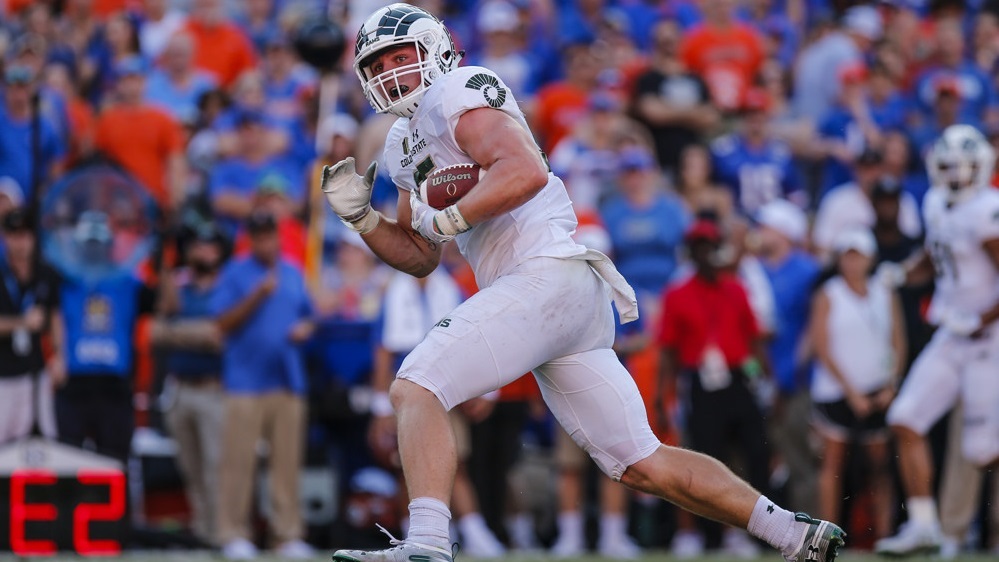
    Trey McBride – TE – Colorado State

    McBride has the hands, catch radius and body control as a receiver with the willingness and competitiveness as a blocker to start at the next level, but inconsistent separation skills and run block effectiveness could hold him back.

    After losing C.J. Uzomah in free agency, adding a second tight end next to Hayden Hurst is important. McBride has the catching skills and natural receiving ability to develop into a strong starter. He would also have the chance to be eased into the NFL with the presence of Hurst.

    #95 Overall


    Cam Jurgens – C – Nebraska

    Jurgens needs to improve his strength and pass pro efficiency, but he has high potential moving forward as a zone-scheme center with his impressive technique and movement skills.

    Jurgens has the potential to become a mainstay at the center position. Picking Jurgens here gives him time to refine his skills and learn the speed of the NFL before eventually taking over the full time role.

    Matthew Butler – DT – Tennessee

    Butler has the first-step explosion, heavy hand punch, and nonstop motor to be disruptive, but his lack of strength and agility likely keep him from being a three-down starter at the next level.

    The interior defensive line needs some more beef up front and Butler provides that along with being a scheme fit. Butler can one-gap penetrate and get into the backfield on first and second downs.

    David Bell – WR – Purdue

    Bell needs to improve his route running separation skills, but his deep ball tracking and slippery ballcarrying abilities should make for a multi-level threat and a reliable, alignment-versatile third option.

    A wide receiver might not be the biggest need, but Bell gives the Bengals immediate insurance as the No. 4 guy and will have a chance to grow into a starting role. As for the Bengals, you can never have too many weapons for a young quarterback.  

    To learn more about the Bengals and their needs, visit their team page on our NFL Draft website here.

  • NFL Draft Pick AnalySIS:Dallas Cowboys

    NFL Draft Pick AnalySIS:
    Dallas Cowboys

    The State of the Cowboys:

    After a first round exit of the 2021 playoffs, the Cowboys have also lost several starters at multiple positions from the season, including Amari Cooper, La’el Collins, and Randy Gregory. With this being a deep draft at those positions, the Cowboys will look to fill some of the holes left by the departures.

    Dallas has made its offensive line a staple of their offense over several seasons, and it should look to retool the line if it wants to get back to their dominant running style that proved successful. Their 67% zone run scheme ranked 21st in efficiency. Here are a few players Dallas may be considering for their first 3 picks. 

    #24 Overall

    Zion Johnson – G – Boston College

    Johnson is a plug-and-play left guard at the next level with the anchor and hand usage to pass protect at a high level and the scheme versatility to excel in the run game.

    One of the top guards in the draft, Johnson could be a starter on Day 1 to help reload the left side of the offensive line. His scheme versatility would help the Cowboys rejuvenate their run offense.

    Kenyon Green – G – Texas A&M

    Green can have inconsistent hand placement and needs more refined technique against finesse rushers, but he is a physical and athletic guard with the footwork, sheer strength, and awareness to be a difference maker on the inside.

    Green has shown to be amongst the top guards in the draft with his physicality and strength. He would again be a Day 1 starter on the left side of the line.

    Chris Olave – WR – Ohio State 

    Olave has the catch radius, catch skills, and tracking ability to be a threat at all levels of the field, but needs to become a cleaner route runner and get quicker out of breaks to take advantage of his full potential.

    Needing to help replace the gap left by Amari Cooper, Olave has the hands and vertical threat ability to be a solid receiver in the Cowboys offense if he is available here. 

    #56 Overall

    DeMarvin Leal – DL – Texas A&M 

    Leal is an athletic and agile defensive lineman at his size, who offers great versatility as a pass rusher but needs to work on his interior run defense to keep that flexibility on all three downs.

    Leal has the high pass rush ability to be a versatile piece along the line in Dan Quinn’s defense. He shows the ability to play out on the edge as well as reduce down inside on sub packages.

    Kingsley Enagbare – EDGE – South Carolina 

    Enagbare has the hand usage, pass-rush technique, and motor to be an effective pass rusher early on, but must get stronger in his lower half and get a little more athletic to be an impact player against the run.

    As a high-motor edge rusher against the pass, Enegbare could be a sparkplug off the edge to get after opposing quarterbacks.

    Christian Harris – LB – Alabama 

    Harris is a fast, smart, and versatile linebacker who has many of the requisite physical traits of a quality starter, but he needs to improve his downhill playmaking and zone instincts to reach his full potential.

    Harris adds immediate versatility and depth into a relatively shallow LB room and could be useful in rotation with Micah Parsons, Leighton Vander Esch, and Jabril Cox. 

    #88 Overall


    Khalil Shakir – WR – Boise State

    Shakir has the route running, short-area quickness, and versatility to become a slot receiver at the next level, but he will need to work on his hands and his ability to attack the ball to maximize his playing time.

    Shakir’s quickness and precise route running could find space and work underneath and through the middle to provide a nice compliment to Ceedee Lamb and Michael Gallup. 

    Greg Dulcich – TE – UCLA

    Dulcich isn’t the shiftiest route runner or most technically refined run blocker, but he’s a converted wide receiver with good competitive toughness and the strong all-around skill set of a potential starter.

    With the loss of Blake Jarwin, Dulcich provides a solid all-around skill set to fill the void and provide a solid target for Dak. 

    Max Mitchell – OT – Louisiana 

    Mitchell has the frame and athleticism to become a valuable swing tackle and potentially more if he can continue to work on the technical aspects of his game.

    With Tyron Smith in the later years of his career and some questionmarks at right tackle, Mitchell has the tools needed to play on either side of the line as a developmental tackle.

    To learn more about the Cowboys and their needs, visit their team page on our NFL Draft website here.

  • How Receiver Productivity in College Relates to NFL Outcomes

    How Receiver Productivity in College Relates to NFL Outcomes

    The 2019-2021 NFL drafts have, among other things, put a spotlight on the wide receiver position heading into this draft.

    Ahead of those drafts, that added attention has at least in part been a consequence of top prospects coming out of big-time programs like Alabama (DeVonta Smith, Jerry Jeudy, Henry Ruggs, Jaylen Waddle) and LSU (Justin Jefferson, Ja’Marr Chase). But the production generated from the position has also been outstanding.

    This isn’t a true evaluation of talent, but one way of looking at the excellence of the current crop of young receivers is this: 12 of the 23 wide receivers in the first four tiers of FantasyPros’ rankings for 2022 were drafted in the first three rounds of the 2019-21 NFL drafts.

    According to SIS scouts, this year’s group doesn’t have the same elite top-end that the previous two years did, but the starter-quality depth is there. Eight players have been given starting grades, which means you’ll likely see 10 or more go off the board before the end of the second round (as was the case the last two years).

    Which members of the receiver class have production we’d want to bet on?

    The SIS NFL Draft site has dozens of advanced statistics to evaluate receiver prospects, and a lot of them are specific to certain skills like hands, route running, and yards after catch. But if we want to identify which players we expect to succeed generally, it’s still best to rely on overall measures of production. We’ll start with that, and then take overall production within a particularly relevant split (against press coverage).

    Setting the Scene with Production as a Whole

    It shouldn’t shock anyone that production at the college level corresponds to production at the NFL level, but having some numbers behind that claim is useful.

    Let’s take a look at recent prospects’ college production across their last few college seasons. We’ll use Expected Points Added (EPA) on targets per season at the college level, because that allows us to use multiple college seasons even for 2019 draftees. Ideally we would use our catch-all value metric Total Points—most notably because it does a better job of isolating what a receiver is accountable for—but that only exists going back to 2018.

    Below is a breakdown of how EPA at the college level has projected to EPA at the NFL level. The players being considered are those whom SIS evaluated, which includes basically any player likely to be drafted.

    Per-Season College and NFL EPA, 2019-21 Receiver Classes

    College EPA per Season NFL EPA per Season
    0 – 10 2.1
    10 – 20 0.9
    20 – 30 5.0
    30 or more 14.6

    And if you want a look at the individual results, here they are as well.

    Receiver EPA per season in college vs. NFL. Solid NFL producers almost exclusively produced 20+ EPA per season in college.

    Getting above the 20 EPA per season mark in college suggests improved results at the NFL level—but getting above 30 is the real indicator.


    Because players like Justin Jefferson skew the average, we might also consider just asking how many productive NFL players come out of each group. 

    Say we set that bar at an average of at least 20 EPA per season in the NFL—somewhere in the 800-yard, 6-TD range if you want to think of it that way. All but one of the 2019-21 draftees who have produced 20 EPA per season at the NFL level produced at least 20 EPA per season at the college level. DK Metcalf stands out as an exception, but he stood out as an exception during the draft process because of his crazy measurables.

    These results should also be taken in tandem with scouting evaluations. Metcalf, for example, was still graded as a starter-quality prospect despite his lackluster production.

    Several players have had outstanding production but less-outstanding traits on film, and in those cases the scouting report tells a valuable story. Eight players fell into that 30+ EPA group but were not graded as solid starters by SIS scouts. Only Diontae Johnson has worked out of that group.

    Of the eight starter-quality prospects on the SIS draft board this year, two did not meet that EPA threshold: Justyn Ross of Clemson and George Pickens of Georgia. While this measure is taking into account their whole careers, recent injuries play a part in both cases. Pickens missed the majority of this season recovering from ACL surgery, while Ross was somewhat hampered play-to-play by a foot injury that eventually ended his season.

    Beating Press Coverage

    Yes, being productive in college is good. But as mentioned before, not all production is created equal. Like with quarterbacks and “NFL throws”, we want to be able to find the spots where a player is asked to do something more NFL-like than average.

    Press coverage is one of those “NFL” things. Particularly in college, teams typically use it more if they have the personnel to get away with it. As a consequence, that also means that press coverage is a good bit less common than it is at the NFL level, which means it’s a situation that we want to focus on to better evaluate a prospect heading into the NFL.

    If you can beat press coverage as a college receiver it likely means two things: you’re able to get off the line without being diverted from your route, and the defenders you’re facing are higher-quality on average than we’d assume just based on the overall team quality.

    SIS has measured press coverage usage for the last three college seasons. We identify the alignment pre-snap but also the immediate action of the defender, so we can focus on plays where the defender stayed in press after the snap.

    Take a look at the leaderboard below. Looking at only college prospects, we’ll take the players with at least 50 routes run when lined up outside against true press coverage over the last three college seasons. For this we’ll use Yards per Route Run as the measure of success. Press coverage is supposed to blanket the receiver and deter them from getting the ball, so we need a measure that captures non-targeted routes.

    Yards per Route Run Against Press on the Outside, 2019-21 CFB

    Player Draft Year Y/RR
    DeVonta Smith 2021 4.6
    Ja’Marr Chase 2021 4.2
    Cornell Powell 2021 4.0
    Kyle Pitts 2021 3.9
    Drake London 2022 3.9
    Damonte Coxie 2021 3.8
    Frank Darby 2021 3.5
    Tee Higgins 2020 3.5
    Dax Milne 2021 3.3
    Quintez Cephus 2020 3.1


    Remembering that this leaderboard is subject to all the limitations of using college stats as a projection, this is a pretty encouraging record of success for players coming into the NFL, with Smith, Chase, Pitts, and Higgins primed to be top producers at their position.

    For what it’s worth, the bottom 10 players in this stat have combined for under 1,000 career receiving yards (including first-round pick Jalen Reagor and 2021 preseason fantasy sleeper Terrace Marshall Jr.).

    Let’s take this out of the anecdotal and into a more holistic measure. Here the group of prospects is split in half twice: once by their yards per route run against true press, and once by their yards per route run against everything else. And we’ll look at their overall Total Points per season in the NFL.

    NFL Total Points per Season by CFB Performance vs. Press, 2019-21 prospects

    Bad vs. No Press Good vs. No Press
    Bad vs. Press 1.0 3.0
    Good vs. Press 5.3 7.7


    Being good against press is more relevant to NFL success than being good otherwise. You can tell because the differences between the rows in the table above are both larger than the differences between the columns.

    Keep in mind that defensive backs aren’t pressing most of the time; we’re seeing college performance on a minority of snaps be a meaningful predictor of NFL performance overall.

    If we turn our eyes to the top end of this year’s crop of prospects, that suggests good things for USC’s Drake London (SIS’s No. 6 WR) and some cause for concern for Alabama’s Jameson Williams (No. 2). Arkansas’ Treylon Burks barely faced press in college, which we might want to trust more than the insane production he generated against it.

    Yards per Route Run Against Press, Top 2022 WR Prospects

    Player School SIS Grade Routes Y/RR
    Treylon Burks Arkansas 6.9 22 9.7
    Jameson Williams Alabama 6.9 119 0.9
    Garrett Wilson Ohio State 6.8 147 1.9
    George Pickens Georgia 6.8 163 2.3
    Jahan Dotson Penn State 6.8 233 1.3
    Drake London USC 6.8 73 3.9
    Chris Olave Ohio State 6.7 152 2.4
    Justyn Ross Clemson 6.7 99 1.6

    Of the names just beyond this list, David Bell (No. 14) did very well against press, while Christian Watson (No. 10) was much better when he wasn’t bumped at the line. (It’s worth noting that we don’t have all of Watson’s stats because he went to an FCS school.)

    If you want to dig deeper and find players with backup grades who might have some upside, Calvin Austin III (No. 19) and Jack Sorenson (No. 47) are among the top performers against press. Sorenson is a fun test case for the interplay of scouting and statistics, because his lowest-graded skill in his scouting report is his release off the line. If he makes it to the NFL, it’s likely because he outperforms that grade.

  • NFL Draft Pick AnalySIS: New York Jets

    NFL Draft Pick AnalySIS:
    New York Jets

    The State of the Jets:

    The Jets re-invented themselves in 2021, hiring a new head coach in Robert Saleh and using the #2 selection on quarterback Zach Wilson. 

    The team is full of NFL-level players, but there are no difference-makers, players the opposing coaches really need to plan for. Simply put, the Jets don’t have the “needs” at any specific positions, but they have room to improve in all of them. 

    While the team operated below average in almost all offensive and defensive stats, a sophomore step forward from Zach Wilson with two first and second round picks can quickly improve those numbers.

    #4 Overall

    Ikem Ekwonu – OT – NC State

    Ekwonu isn’t clean in all technical areas, and his ability to blind-side pass protect against elite finesse rushers could be a concern, but his combination of size, power, athleticism, and finishing tenacity are rare, regardless of position.

    With a 2023 free agent LT George Fant, and a lost 2021 season from RT Mekhi Becton, another dominant tackle offers OL security.

    Kyle Hamilton – S – Notre Dame

    Hamilton is a versatile safety who impacts all three levels of the field and is a rangy playmaker with the cover skills, speed, and athleticism to be an elite-level defender against both the run and pass.

    The Jamal Adams trade netted an extra top 10 pick this year, so the Jets could use one to draft a more versatile and younger safety.

    Derek Stingley Jr. – CB – LSU

    Stingley has the man coverage, athleticism, and ball skills to be an NFL defense’s No. 1 cornerback, but his injury history and dip in on-field production since his freshman year are concerns that need to be vetted.

    Bryce Hall had a great 2021. This gives him a shutdown opposite who has shown top-end athleticism and dominance as a freshman.

    #10 Overall

    Garrett Wilson – WR – Ohio State

    Wilson has the speed, route running, and ballcarrying traits that excite teams, and if he can work on attacking the ball when it’s in the air and improving his ability along the sideline, he will be a strong starter very early in his NFL career.

    The Jets need a top-end outside receiver, and Wilson’s well-rounded skill set and success against top-end defenders is a perfect solution.

    Treylon Burks – WR – Arkansas

    Burks will have to improve as a sharp route separator as his tree expands moving forward, but his body control, catching skills, and competitive speed make him an impact player at all levels of the field.

    If the Jets prefer a more “Alpha” style receiver with great YAC ability, Burks fits the mold as a player requiring defensive attention.

    Jermaine Johnson II – Edge – Florida State

    With his pass rush ability, strength, and power, Johnson should make an instant impact at the next level, though he needs to become more consistent across all areas of the game to hit his full potential.

    The Jets don’t have a star edge rusher, Johnson comes with elite 2021 production even while facing constant double-teams and chips.

    #35 Overall

    David Ojabo – Edge – Michigan

    Ojabo is an excellent athlete with the speed, range, bend, and flexibility to be a force as a pass-rush specialist, but he needs to get stronger and just see more reps in order to develop into an all-around player at the next level.

    The Jets likely aren’t looking to compete for a playoff run this season, Ojabo’s Achilles can get a full year to heal while the Jets plethora of other picks help immediately.

    Tyler Smith – OT – Tulsa

    Smith consistently puts defenders on the ground while using heavy hands and generating tons of movement in the run game, and while he should be tabbed as a starter, he needs to clean up the holding penalties and become a better space player.

    Smith is a good tackle prospect that could use the reps vs NFL defenders before becoming a full-time franchise LT.

    #38 Overall

    Breece Hall – RB – Iowa State

    Hall has the patience, vision, burst, and make-you-miss style of running to be a productive starter at the next level, but his still-improving pass game impact may hold him back from consistently playing on all three downs.

    Michael Carter was very good in 2021, and his pass-game impact paired with Hall’s rushing ability would make for a dominant and deep backfield.

    George Pickens – WR – Georgia

    Pickens is a big-bodied, big-play threat whose hands, tracking ability and competitiveness will make him a consistent contributor, especially once he learns an NFL route tree and if he becomes more dynamic after the catch.

    Pickens is a perfect complementary WR to Elijah Moore, Corey Davis, and Braxton Berrios, he can open up Zach Wilson’s deep range.

    #69 Overall

    Nik Bonitto – Edge – Oklahoma

    Bonitto is an athletic, rangy, bendy pass rusher who should excel at getting to the passer with his lack of strength and run game stoutness limiting him to just third downs early in his career at the next level.

    Another edge defender that the Jets can use their selection on to bet on the tools.

    Jalyn Armour-Davis – CB – Alabama

    Armour-Davis’ one year of playing time on Alabama’s defense showed technical inconsistencies but also quality physical tools to develop into a potential low-end starter on the outside moving forward.

    Lacking reps, Armour-Davis shows great physical traits and good production against top-end talents.

    Jalen Tolbert – WR – South Alabama

    Tolbert has the size, speed, and athletic body control to take the top off a defense at the next level, but he’ll need to improve on the finer points of receiver play to become a more versatile offensive contributor.

    A big-bodied deep threat that can take the top off a defense to allow Moore and Berrios to operate underneath.

    To learn more about the Jets and their needs, visit their team page on our NFL Draft website here.

  • NFL Draft Pick AnalySIS:New York Giants

    NFL Draft Pick AnalySIS:
    New York Giants

    The State of the Giants:

    The New York Giants have revamped. Bringing in a pair of leaders from the other blue New York team (Bills), new GM Joe Schoen and Head Coach Brian Daboll have an arsenal of picks to mold this roster into their liking. 

    All reports suggest the team giving Daniel Jones another shot, and a weak QB class doesn’t present a lot of alternatives. 

    The team as a whole needs more blue-chip talent, but two top 7 picks will surely help address that. The offense was league worst in most efficiency metrics, even with talented playmakers such as Saquon Barkley, Kenny Golladay, and Kadarius Toney. 

    The offensive line remains to be a massive weakness, as the team has continued to sputter with limited protection, is likely to be a huge focus of this draft. 

    The defense also needs work, so “best player available” is likely the primary draft strategy for the new-look Giants.

    #5 Overall

    Ikem Ekwonu – OT – NC State

    Ekwonu isn’t clean in all technical areas, and his ability to blind-side pass protect against elite finesse rushers could be a concern, but his combination of size, power, athleticism, and finishing tenacity are rare, regardless of position.

    Ekwonu’s tenacity and play speed are something the Giants do not have up front.

    Kayvon Thibodeaux – Edge – Oregon

    Thibodeaux is a game-changing pass rusher and strong run defender who plays with heavy hands and good leverage, though he needs to improve his flexibility and run a hotter motor to become a more complete player.

    If Thibodeaux is somehow available at No. 5, the Giants would be foolish to pass on the upside and freakish athleticism that he brings.

    Charles Cross – OT – Mississippi State

    Cross’ transition to a more diverse offense will be an adjustment, but he’s a true pass protecting left tackle displaying outstanding athleticism and body control, whose improvements already at a young age suggest a very high ceiling.

    Cross being a high ceiling LT, this would necessitate a move of Andrew Thomas elsewhere on the line. Cross’ ability to hold the blindside of a fumble-prone QB would do wonders to improve the offense.


    #7 Overall

    With only one (likely quarterback) pick between 5 and 7, the Giants could see an almost back-to-back selection scenario.

    Travon Walker – Edge – Georgia

    Walker has the physical and athletic traits that are highly coveted as a versatile defensive lineman, and if he can reach his potential as a pass rusher at the next level, he can be a special pass rushing talent.

    Looking for blue chip talent? Bet on the highly athletic traits that Walker brings if the other Edge prospects are gone.

    Ahmad Gardner – CB – Cincinnati

    Gardner is a press-man corner with length, athleticism, and natural cover talent to become a top lockdown cover man in the NFL, though he just needs to get stronger and refine his off-coverage skills to take his game to the next level.

    Trustworthy man-coverage corners are almost a necessity in the modern NFL. “Sauce” Gardner would give the Giants a huge boost, even if their corner play last year was one of their few positives.

    #36 Overall

    Tyler Smith – OT – Tulsa

    Smith consistently puts defenders on the ground while using heavy hands and generating tons of movement in the run game, and while he should be tabbed as a starter, he needs to clean up the holding penalties and become a better space player.

    Saquon can’t show off the unbelievable abilities in space if he constantly gets hit behind the line. Smith is a huge run blocker to help fix that.

    Lewis Cine – S – Georgia

    Cine has very good tracking and ball skills with the speed and smarts to play on the back end, but his inconsistencies in run support and as a tackler may hold him back from reaching his full potential.

    After losing Logan Ryan and Jabrill Peppers to free agency, the Giants need a safety counterpart to Xavier McKinney.

    Bernhard Raimann – OT – Central Michigan

    Raimann is a raw athlete with good size and the strength to hold up early at the next level, though refining his hands and overall skill set as a lineman could allow him to develop into a solid starter one day.

    A former TE, Raimann is an immediate athletic upgrade, and his consistent improvement with reps is encouraging.

    #67 Overall

    Jalen Pitre – S – Baylor

    Pitre is a super twitched-up athlete with very good instincts for when to attack and a skill set that will have him making plays all over the field, but limited deep cover skills likely limit him to exclusively playing near the LOS.

    Pitre is how the Giants replicate Jabrill Peppers’ box presence without sacrificing significant capital.

    Cameron Thomas – Edge – San Diego State

    Thomas is a heat-seeking edge with the power and techniques to be a starter at the next level, but needs some development in play recognition and working leverages to hit his higher ceiling.

    Speedy and powerful edge that brings needed athletic upside to the defensive front.

    Darian Kinnard – OG – Kentucky

    Kinnard is a big, strong blocker with a mauling mentality in the run game, but needs to refine his footwork, hand accuracy, and overall technique in the pass game to be an effective starter at the next level.

    A physically imposing guard to help support a run game to improve the offense and give Daniel Jones some breathing room.

    #81 Overall

    Dylan Parham – C – Memphis

    Parham is a smart player with the athleticism and quickness to be a versatile lineman, but will need to get stronger and more physical to maximize his potential at the next level.

    Experienced and smart, while dominant upside may not be there, should be a valuable starter for this team.

    Josh Paschal – Edge – Kentucky

    Paschal is a strong run defender and brings power as a pass rusher, but needs to get much more consistent and detailed with his pass rush plan in order to really be a three-down player at the next level.

    A bottom 5 team at defending runs last year, the Giants could use help in run defense with Paschal as an upside pick.

  • NFL Draft Pick AnalySIS: Los Angeles Rams

    NFL Draft Pick AnalySIS:
    Los Angeles Rams

    The State of the Rams:

    The LA Rams’ talent acquisition methodology of stars, titled *ahem* Forget Them Picks, has started to gain traction across the league, as other organizations have begun to prioritize known NFL commodities over the unknowns of the collegiate draft process. 

    Still, the Rams would not be the Super Bowl team they are without identifying the bulk of their roster through shrewd draft selections and development.

    This strategy has left them without any Top-100 picks this year, but 8 picks in later rounds. Hitting on these dart throws will be key to sustaining their success. They have needs on the offensive line, cornerback, and depth in multiple areas.

    #104 Overall

    Dylan Parham – OG – Memphis

    Parham is a smart player with the athleticism and quickness to be a versatile lineman, but will need to get stronger and more physical to maximize his potential at the next level.

    The Rams have reshuffled a few spots across their offensive line. Parham is a great athlete with ideal position flexibility to provide great depth or contend for a starting role at multiple spots.

    Sam Williams – Edge – Ole Miss

    Williams is a fantastic athlete who will bring good length, strength and upside to a team’s pass rush attack, but he needs to refine his technique and play with more mental consistency to become a reliable three-down player.

    With the departures of Obo Okoronkwo and Von Miller, the Rams have a bit of a void opposite Leonard Floyd. Adding Williams, an exceptional athlete with great upside, would give the Rams another rotational option.

    Cam Taylor-Britt – CB – Nebraska

    Taylor-Britt has some technical aspects to refine, but he has the athleticism, mental processing, and physicality to develop into a quality slot corner or safety.

    Taylor-Britt could certainly be off the board by this point, but if available, he offers the physicality and secondary versatility the Rams require to play off of Jalen Ramsey’s frequent alignment shifts in the back end.

    Bryan Cook – S – Cincinnati

    Cook is a strong, physical safety who has the tackling ability and zone awareness to be the first safety off the bench, but he needs to improve in man coverage and with his pursuit angles to get the bump to a starting role.

    With expiring contracts, injury questions, and inexperience within their safety room, the Rams could look to the future with Cook, who has the interchangeable flexibility and toughness to contribute.

    To learn more about the Rams and their needs, visit their team page on our NFL Draft website here.

  • NFL Draft Pick AnalySIS:Los Angeles Chargers

    NFL Draft Pick AnalySIS:
    Los Angeles Chargers

    The State of the Chargers:

    After a disappointing 2021 season resulted in the Chargers missing the playoffs for the third straight year and for the seventh time in the past eight years, the Chargers enter 2022 as one of the most exciting teams in the NFL. 

    Led by a budding superstar quarterback in Justin Herbert, the Chargers have a very solid corps of offensive talent with arguably the best secondary in the league on defense. While they are a talented team, the Chargers find themselves amid an arms race in the NFL’s toughest division, which saw their in-division rival Broncos and Raiders making moves to acquire Russell Wilson and Davante Adams respectively. 

    The Chargers have only two picks in the Top 100, and should look to fill in some holes in order to compete in a stacked AFC West. 

    #17 Overall

    Jordan Davis – NT – Georgia

    Davis is a powerful and physically imposing nose tackle with the ability to become a true game wrecker up the middle of the field as long as he improves his effort level and stamina.

    Davis is a mammoth nose tackle that should be able to contribute from Day 1 on a Chargers defense that ranked among the worst in the NFL in rushing yards allowed and yards per carry.

    Chris Olave – WR- Ohio State

    Olave has the catch radius, catch skills, and tracking ability to be a threat at all levels of the field, but needs to become a cleaner route runner and get quicker out of breaks to take advantage of his full potential.

    Olave would be an immediate weapon for the Chargers who can operate both on the outside and in the slot and help the Chargers add to their offensive firepower while also serving as a potential long-term replacement for Keenan Allen. 

    Nakobe Dean – LB – Georgia

    Dean is a smart, rangy linebacker who excels against the run and pass at all three levels of the field, but a lack of length, and inconsistencies as a tackler and disengaging blockers may prove difficult for him from time to time.

    Dean is an instinctive linebacker with great range and high football intelligence, bringing much needed leadership and talent to a Los Angeles linebacker corps.

    #79 Overall

    Trey McBride – TE – Colorado State

    McBride has the hands, catch radius and body control as a receiver with the willingness and competitiveness as a blocker to start at the next level, but inconsistent separation skills and run block effectiveness could hold him back.

    McBride could offer the Chargers depth at the tight end position and another receiving threat while allowing the team flexibility next offseason as they have a potential out on Gerald Everett’s contract after the 2022 season. 

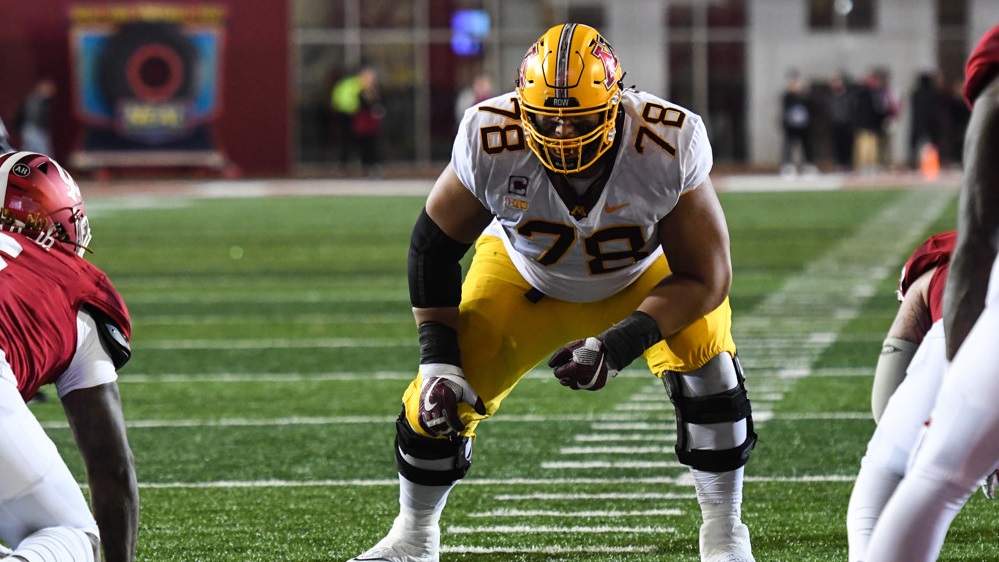
    Daniel Faalele – OT – Minnesota 

    Faalele has the gargantuan size and surprising athleticism teams salivate over in a potential tackle, but he will need to continue to improve his body composition and his foot quickness to reach his high potential.

    While he is raw and most likely will not be a starter for most of his rookie season, Faalele could provide much needed depth and competition behind incumbent starter Storm Norton while slating in as the team’s potential right tackle of the future.. 

    Darian Kinnard – OG – Kentucky

    Kinnard is a big, strong blocker with a mauling mentality in the run game, but needs to refine his footwork, hand accuracy, and overall technique in the pass game to be an effective starter at the next level.

    Kinnard would be an immediate boost to their right guard spot and would add a ton of nasty to an offensive line that is tasked with keeping Justin Herbert upright and healthy. He could also provide much needed depth at right tackle, as that is the position he played the most at Kentucky.

    To learn more about the Chargers and their needs, visit their team page on our NFL Draft website here.