By NATHAN COOPER
Rewind
In our previous article, we referenced the NHL’s most recent Expansion Draft for the Seattle Kraken and wondered, what if the NFL had an Expansion Draft and what would it look like? We set guidelines for each team to create a list of protected players that the new expansion team couldn’t select and devised protection lists for each team.
Then, we gave you the opportunity to create your own expansion roster based on the remaining players.
Draft Rules
Every player who wasn’t a 2021 rookie, already injured for the entire 2021 season, or was part of the 12-player protection lists was available to be selected. However, there were rules the team needed to adhere by in order to be compliant.
The guidelines are as follows:
- A total of 64 players will be selected, 2 from each NFL team
- There are minimum requirements for each position
- The team must also be salary cap compliant, meaning the entire team cannot exceed the current NFL Salary Cap of $182.5 million (all cap numbers were provided by spotrac.com)
These are the rules for the players. Here are the coaches.
Coaching Staff
Head Coach: Eric Bieniemy (Chiefs Offensive Coordinator)
Bieniemy has been one of the most popular head coach candidates over the past few years, getting to the Super Bowl the last two seasons, winning once. The characteristics of his Chiefs teams were 11 personnel with plenty of motion and play action. This team will do likewise.
Offensive Coordinator: Mike Kafka (Chiefs QB Coach/Passing Game Coordinator)
Kafka, a former NFL QB, has been with the Chiefs since 2017. He coordinated a passing game that led the NFL in passing yards in 2020.
Defensive Coordinator: Teryl Austin (Steelers Sr. Defensive Assistant/Secondary Coach)
Austin is a former NFL Defensive Coordinator who spent four seasons in Detroit from 2014-17 and then part of a season in Cincinnati. In 2020, the Steelers defense allowed the third-fewest passing yards and intercepted the second-most passes.
While the Steelers run a 3-4, Austin deployed a Base 4-3 while a DC in Detroit and Cincinnati, and that’s what he’ll bring to this team along with a lot of man coverage on the outsides.
Before we get into our team, let’s reference the reader submissions.
Roster Submissions
We received 21 roster submissions, plus this one, to make a total of 22. Not only will we mention the top players selected at each position throughout, but we wanted to reward everyone who put in the time to create their own team and allow everyone to see your work. You can see all of the teams submitted on this spreadsheet.
There are three tabs. The first tab features the teams who adhered to all guidelines and are salary cap compliant. The second tab is for those teams who aren’t salary cap compliant. Either way, we still wanted to show them off and reward everyone who put in the time to make a roster. The third tab is a list of the two most frequently selected players from each NFL team. We thank and appreciate everyone who took the time to contribute.
Now that we know the Draft rules, coaches and have seen your submissions, let’s take a look at who I chose to be running out onto the field on Sundays by position and projected depth chart order.
You can find an explanation of Total Points (TP/60)at this link.
Quarterback
| Player | Tm | TP/60 | Yrs Left-2021 Cap Hit |
| Teddy Bridgewater | Broncos | 4.8 | 1-$4.4M |
| Jordan Love | Packers | N/A | 3-$2.8M |
| Gardner Minshew II | Jaguars | 3.8 | 2-$897K |
There wasn’t a ton to choose from at this position. That’s mainly by design as most teams aren’t going to give up their starting quarterbacks. That leaves mostly back-end starting talent and back-ups up for grabs.
Teddy Bridgewater has endured his fair share of ups and downs in the NFL. In Carolina in 2020, he started 15 games and threw a career-high 15 touchdowns with 3,733 yards.
Among QBs with a minimum of 200 attempts, Bridgewater tied Kirk Cousins with an On-Target Rate of 82.4%, the highest in the league, but to be fair, his average throw depth was 9th-shortest at only 7.2. He also ranked 19th in IQR. Bridgewater is on a one-year deal and is intended to be a bridge quarterback unless he comes out and puts up another career year.
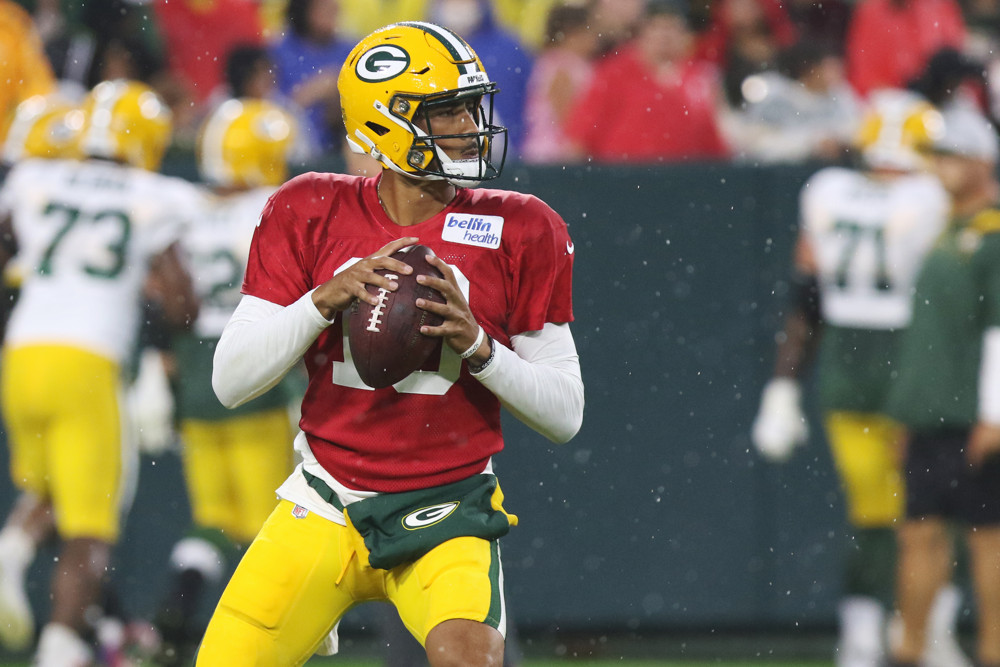
Jordan Love could arguably be the best young quarterback on the list. A former 1st-round pick, Love’s first game action will be this week’s preseason game against Houston. Bieniemy and staff like Love’s upside and feel like they can mold him into a Mahomes-esque type of player. Plus, he most likely is under contract for four more years.
The only quarterback who was on the list of available players that had a higher IQR than Bridgewater in 2020: Gardner Minshew. Minshew brings 20 starts of experience in the NFL with a 3.4 TD-to-INT ratio.
The idea behind this QB room is to get someone in on a one-year deal who can bridge the gap before finding the future leader of the team. Love could be that guy, but he still needs development. Minshew likely isn’t the future, but he’s someone who works hard and will bring competition to the position.
The quarterbacks selected most often in the submissions were Jordan Love – Packers (77%) and Gardner Minshew II – Jaguars (36%).
Running Back
| Player | Tm | TP/60 | Yrs left-2021 Cap |
| James Robinson | Jaguars | 0.6 | 2-$782K |
| Devin Singletary | Bills | 2.3 | 2-$1.1M |
| Chase Edmonds | Cardinals | -0.1 | 1-$1.0M |
| Justin Jackson | Chargers | 3.4 | 1-$920K |
| Kyle Juszczyk | 49ers | 0.5 | 5-$2.275M |
Though his Total Points number doesn’t show it, James Robinson performed very well in 2020. His 1,414 scrimmage yards were the most by an undrafted rookie in the common-draft era. With his success combined with his cap hit, it’s hard to argue against taking him. Plus, he’ll only be a Restricted Free Agent when his contract is up.
In two seasons, Devin Singletary has amassed over 1,400 yards and averaged 4.8 YPA. While his touchdown numbers are down, he still brings plenty of production and elusiveness out on the field.
In addition to his 22 Total Points in 2020, he ranked 4th among RBs with 100 carries in Broken/Missed Tackle Rate at 12%. He’s still learning in the passing game, but as he becomes more adept in that aspect, Singletary is poised to turn into an all-around back real soon.
In 16 games in 2020, Chase Edmonds averaged 4.6 YPA on 97 rushes, but he made strides in the passing game. He caught 53 passes for over 400 yards and 4 TD. He also showed the ability to return kicks, averaging over 23 YPR on 18 returns. With just one year left on his deal at 25 years old, Edmonds still has the potential to be a change-of-pace contributor.
The last running back on our depth chart is Justin Jackson, who has averaged 4.9 yards in limited duty the last three seasons.
As the lone fullback on the roster, Kyle Juszczyk is one of the best. He can run, catch, and block. His versatility allows him to line up all over the field and play special teams. Plus, he just signed a new deal and is under contract through 2025.
Bieniemy’s offenses don’t feature the fullback much, but with the skill and versatility of a guy like Juszczyk, he’ll be able to get him in enough of a prominent role to warrant the cap hit.
The running backs selected most often in the submissions were James Robinson – Jaguars (41%) and Chase Edmonds – Cardinals (36%). The fullback selected most often in the submissions was Kyle Juszczyk – 49ers (41%).
Wide Receiver
| Player | Tm | TP/60 | Yrs left-2021 Cap |
| Adam Thielen | Vikings | 1.4 | 4-$5.9M |
| Michael Gallup | Cowboys | 0.8 | 1-$2.67M |
| Marquise Brown | Ravens | 0.5 | 2-$3.2M(+option) |
| Mecole Hardman | Chiefs | 1.1 | 2-$1.36M |
| Zach Pascal | Colts | 1.1 | 1-$3.38M |
| Rashard Higgins | Browns | 1.9 | 1-$1.128M |
Adam Thielen is one of the biggest WR names on the list, and while he’s about to turn 31 and the 2022 cap hit jumps up to almost $17 million, it’s hard to match his consistent production from the past five seasons.
Adam Thielen – 2020 Stats
| Stat | Value | Rank |
| TD | 14 | 3rd |
| Receiver Rating | 119 | T-11th |
Thielen’s production still isn’t too far behind where it was in his career-year of 2018, assuming he can stay healthy.
A 3rd-round pick in 2018, Michael Gallup has been a reliable target in Dallas. In 2020, Gallup hauled in 90% of on-target throws, gained a 1st Down nearly 75% of the time, and drew 6 DPI penalties.
While his 2020 numbers are a step down from 2019 when he amassed 1,107 yards and 2.2 Yards Per Route Run, that can likely be attributed to Dak Prescott’s injury. Plus he took a positive step from Year 2 to Year 3 by limiting his drops and becoming a more physical receiver.
Marquise Brown is the only Ravens receiver to see 50 targets over the last two years and he did both seasons. Brown’s On-Target Catch Rate did fall from 96% in 2019 to 86% in 2020, but his ADoT went up by almost two yards to 13.4. His 2020 Broken/Missed Tackle Rate of 14% is respectable, and something that he’ll likely be counted upon for his new team.
Two spots behind Adam Thielen in Receiver Rating in 2020 is Mecole Hardman at 116. While he doesn’t see a lot of balls come his way in an offense that features Tyreek Hill and Travis Kelce, Hardman is a gadget player who excels with the ball in his hands and can stretch the field vertically.
He needs to continue to improve upon his 14% Drop Rate which ranked 5th-worst last season, but his speed, quickness, and versatility can’t be taught. Plus, having been with Bieniemy, he’ll have little to learn about the offense.
Zach Pascal and Rashard Higgins make good depth receivers.
Pascal ranked in the Top 40 in receiver rating, broken/missed tackle rate, and on-target catch rate last season.
Higgins ranked second in Yards Per Target, matched Thielen in Receiver Rating, and was one of two receivers with at least 50 targets who didn’t drop a pass in 2020 (Allen Robinson).
The wide receivers selected most often in the submissions were Michael Gallup – Cowboys (77%), Mecole Hardman – Chiefs (55%), and Adam Thielen – Vikings (55%).
Tight End
| Player | Tm | TP/60 | Yrs left-2021 Cap |
| Robert Tonyan | Packers | 1.5 | 1-$1.5M |
| Drew Sample | Bengals | 0.2 | 2-$1.5M |
| Adam Trautman | Saints | 0.8 | 3-$1.0M |
| Foster Moreau | Raiders | 0.7 | 2-$972K |
The 27-year old Robert Tonyan had a breakout season in 2020. Tonyan registered 586 yards on 52 receptions in 2020 and his 11 touchdowns tied for most in the league among TEs, and he also had a 98% On-Target Catch Rate with 0 drops. Additionally, his 148.3 Receiver Rating led all TEs.
In 2020, Drew Sample carved out more of a receiving role than he previously had by catching 40 passes with a 95% On-Target Catch Rate and a 17.5% Broken/Missed Tackle Rate on 53 targets.
Should Tonyan leave after 2021 and Sample continues his progression, he’s likely to be the all-around player that the Bengals thought he could be when they selected him in the 2nd round in 2019.
With Jared Cook on the Saints roster, it’s clear Adam Trautman wasn’t going to get too many looks from Drew Brees in 2020. A 3rd-round pick just last season, Trautman was limited to just 16 targets. However, on those 16 targets, he had 15 catches, averaged 10.7 Yards Per Target, and dropped 0 passes.
There’s still development to be had, but a team can do much worse at their TE3.
Check out the Film Breakdown we did on Trautman before the 2020 season here.
Foster Moreau rounds out the Tight End room. He has 28 catches, 7 for touchdowns with no drops the last two seasons.
The tight ends selected most often in the submissions were Robert Tonyan – Packers (45%) and Hayden Hurst – Falcons (36%).
Offensive Line
| Tackle | ||||
| Player | Tm | TP/60 | Yrs Left-2021 Cap | |
| Alejandro Villanueva | Ravens | 1.7 | 2-$4.75M | |
| Isaiah Wynn | Patriots | 2.3 | 2-$3.64M | |
| Chuks Okorafor | Steelers | 2.0 | 1-$2.39M | |
| Jesse Davis | Dolphins | 1.9 | 2-$4.585M | |
| Guard | ||||
| Player | Tm | TP/60 | Yrs left-2021 Cap | |
| Joel Bitonio | Browns | 1.9 | 2-$10M | |
| Cesar Ruiz | Saints | 2.1 | 3-$2.88M + option | |
| Oday Absouhi | Chargers | 2.2 | 1-$1.6M | |
| Austin Corbett | Rams | 1.8 | 1-$1.5M | |
| Center | ||||
| Player | Tm | TP/60 | Yrs left-2021 Cap | |
| Ryan Jensen | Buccaneers | 1.7 | 1-$10M | |
| Pat Elflein | Panthers | 1.3 | 3-$1.357M | |
The term “Blown Block Rate” is going to get used a lot here. If you’re looking for a better understanding of what it means, check out this article that explains it.
The offensive line was a focal point during this draft, as the Total Points numbers indicate. It includes some solid young stars in the making with a strong, veteran presence.
We’re going to take a quick-hitter approach to breaking them down.
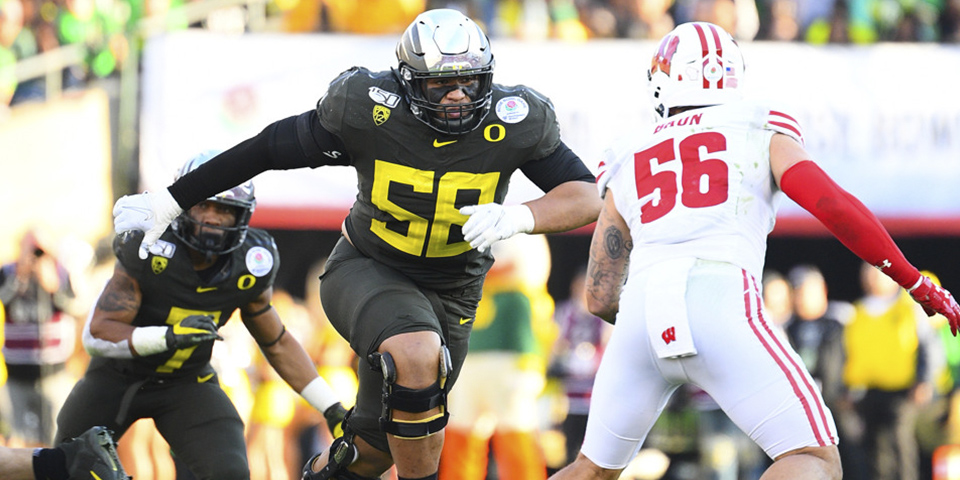
Alejandro Villanueva is a consistent, reliable, and durable lineman who started every game the past five seasons for the Steelers.
Key Stat: He ranked Top-15 in most pass blown blocks in 2020 with 22, but only had 5 run blown blocks after having none in 2019.
Isaiah Wynn came into the league in 2019 as a 1st-rounder and while he’s started all 18 games he’s played in, injuries have derailed his season both years.
Key Stat: In 10 games during 2020, his 0.4% Adjusted Blown Block Rate on Runs ranked 2nd-best among Tackles with at least 200 run snaps.
After playing sparingly as a depth lineman his first two seasons, Chukwuma Okorafor started 15 of 16 games for the Steelers at RT in 2020.
Key Stat: His 1.5% Adjusted Blown Block Rate ranked 9th-best among Tackles with at least 200 pass snaps.
Jesse Davis has started 46 of 47 games for the Dolphins in the past three seasons and he’s played every line position except for center during that time.
Key Stat: His blown block numbers have been a bit high during his career, but his 1.8% Adjusted Blown Block Rate on Passes while at right guard in 2020 was the best of his career.
Joel Bitonio is regarded as one of the best guards in football and hasn’t missed a snap for the Browns in the last four years while playing almost exclusively at left guard.
Key Stat: While he’s effective in the run game, his 0.9% Adjusted Blown Block Rate in 2020 ranked 5th among guards with at least 200 pass plays.
As a 1st-round pick in 2020, Cesar Ruiz played in 14 games and started 9 of them at right guard. A center in college, the Saints slid Ruiz to guard with center already occupied by Erik McCoy.
Key Stat: The versatile interior lineman’s 1.1% Adjusted Blown Block Rate on Runs ranked 13th among guards.
Oday Aboushi is already the definition of a journeyman, being a part of five teams in seven seasons and just signed a one-year deal in 2021 with the Chargers, his sixth team.
Key Stat: His 0.9% Adjusted Blown Block Rate on Passes in 2020 ranked 6th among guards with at least 200 pass plays.
Austin Corbett played in 14 games with just a single start for the Browns, however, since coming to LA, he started 23 of 24 games, playing every snap for the team in 2020.
Key Stat: He only had 7 Run Blown Blocks and his 1.4% Adjusted Blown Block Rate on Runs ranked 19th among guards.
After playing sparingly his first three seasons in the league, Ryan Jensen has started every game in the past four seasons between Baltimore and Tampa Bay, helping lead the Buccaneers to a Super Bowl victory last season.
Key Stat: His 1.3% Adjusted Blown Block Rate on Passes ranked 19th among centers with at least 200 pass snaps.
Pat Elflein started 43 of 44 games for the Vikings from 2017-20, but finished off the 2020 season starting all 6 games he played with the Jets. With his contract up, he signed a three-year deal with Carolina in the offseason.
Key Stat: At center in 2018, he had a 1.0% Adjusted Blown Block Rate on Passes in 535 pass snaps.
The offensive linemen selected most often in the submissions were Cesar Ruiz – Saints (45%), Wyatt Teller – Browns (41%), La’el Collins – Cowboys (36%), Isaiah Wynn – Patriots (32%), and Kevin Zeitler – Ravens (32%).
Defensive Line
| Defensive End | ||||
| Player | Tm | TP/60 | Yrs left-2021 Cap | |
| Vinny Curry | Jets | 1.9 | 1-$1.2M | |
| Chase Winovich | Patriots | 2.9 | 2-$1.1M | |
| Mario Edwards Jr. | Bears | 3.2 | 3-$1.7M | |
| Zach Allen | Cardinals | 1.9 | 2-$1.17M | |
| Jacob Tuioti-Mariner | Falcons | 2.2 | 1-$850K | |
| Alton Robinson | Seahawks | 2.7 | 3-$868K | |
| Defensive Tackle | ||||
| Player | Tm | TP/60 | Yrs left-2021 Cap | |
| Bilal Nichols | Bears | 1.8 | 1-$2.26M | |
| Sheldon Rankins | Jets | 1.3 | 2-$4.455M | |
| Tershawn Wharton | Chiefs | 1.7 | 2-$782K | |
| Tyquan Lewis | Colts | 1.9 | 1-$1.389M | |
| John Penisini | Lions | 1.3 | 3-$823K | |
This is a deep defensive line that brings good production, especially rushing the passer, at a low cap hit.
Though he had a bit of a down year in 2020, Vinny Curry brings consistency to the edge. In just 11 games, Curry was still able to amass 3 sacks and 24 pressures. His Pressure Rate of 15% ranked 6th among DEs with at least 20 pressures.
He misses a few too many tackles and is inconsistent in the run game, but he’ll be counted upon to get to the passer first and foremost.
Chase Winovich recorded 5.5 sacks in both seasons and improved his pressure numbers from 29 in 2019 to 53 in 2020. His 18% Pressure Rate in 2020 was tops among all DEs with at least 20 pressures.
Additionally, he saw 43 snaps in coverage, showing his versatility and range as an edge defender.
Mario Edwards Jr. has worn a new uniform each of the last four seasons, but has still produced multiple sacks in each.
Even though he’ll miss the first two games of 2021 with a suspension, Edwards is coming off a year in which he amassed a career-high 4 sacks to go along with 18 pressures.
Zach Allen is a big, strong defender who can play against the run and rush the passer.
While he lined up nearly 58% of the time in a 5-technique or wider, he has the ability to play anywhere along the defensive line, something he showed in 2020 by lining up at least once at every technique.
Jacob Tuioti-Mariner doesn’t have the size to play over the center, but can play 3-technique and out, while also standing up on the edge, playing as an off-ball linebacker, or even sliding into the slot when the formation requires it. As a pass rusher in 2020, he racked up 20 pressures and a 11% Pressure Rate.
As a 5th-round pick in 2020, Alton Robinson contributed to the Seahawks defense as a pass rusher on the edge. In just 195 pass rush snaps, he had 4 sacks and 16 pressures.
At the defensive tackle spot, it all starts with Bilal Nichols. He had his best season in 2020, a season in which he recorded 40 tackles, 5 sacks, and 29 pressures.
He has some work to do in the run game, but he’ll give opposing offenses a tough time if he’s able to get push and rush the passer from the interior.
Sheldon Rankins is a 2016 1st-round pick who started every game of the 2017 and 2018 seasons, but has had his season cut short in 2016, 2019, and 2020 due to injury. He just signed a two-year deal with the Jets after spending his first five seasons in New Orleans.
In 12 games last season, Rankins racked up 18 pressures. If he can stay healthy, his career year of 8 sacks and 39 pressures in 2018 isn’t far off.
Tershawn Wharton is another undrafted rookie that surpassed expectations in 2020. As a part of the defensive line rotation in Kansas City, Wharton recorded 2 sacks and amassed 20 pressures, which ranked 3rd-best on the team.
Wharton may be undersized as an interior defender, and that’s likely a reason he struggles with consistency against the run, but he’s a solid rotational defender that plays with a high motor.
Tyquan Lewis is a former 2nd-round pick who can play the edge or reduce down and play the 3-tech. He finished 2020 with 4 sacks and 18 pressures, while appearing in all 16 games.
Lastly, at 335 pounds, John Pensini is more run stuffer than pass rusher. He totaled 35 tackles as a rookie for the Lions last season.
When looking at the defensive line group as a whole, it’s clear there needs to be improvement against the run, but with the emphasis put on the passing game in today’s NFL, it’s important to have linemen who can rush the passer, and that’s what we have here.
The defensive ends selected most often in the submissions were Jadeveon Clowney – Browns (36%) and A.J. Epenesa – Bills (32%). The defensive tackles selected most often in the submissions were Vita Vea – Buccaneers (50%) and Sheldon Richardson – Vikings (36%).
Linebacker
| Player | Tm | TP/60 | Yrs left-2021 Cap |
| Eric Wilson | Eagles | 2.2 | 1-$1.38M |
| Rashaan Evans | Titans | 1.3 | 1-$3.68M |
| Nicholas Morrow | Raiders | 2.1 | 1-$4.5M |
| A.J. Klein | Bills | 2.5 | 2-$6.4M |
| Jayon Brown | Titans | 1.5 | 1-$3.45M |
| Samson Ebukam | 49ers | 2.7 | 2-$3.75M |
| Cole Holcomb | Washington | 3.9 | 2-$909K |
| Tae Crowder | Giants | 1.8 | 3-$799K |
| Cody Barton | Seahawks | 1.2 | 2-$1.07M |
Depth and production was a key cog in the drafting at the linebacker position. There are plenty of rotational pieces who can rush the passer, cover, and stop the run. Not only are they adept on defense, but many of them are key special teams players as well.
While the starters have only one year left on their contracts, the team has the financial flexibility to bring them back or can move on to roll with the guys down the roster and/or replace them with free agents or draft picks after 2021.
Let’s start with one of the better cover linebackers, Eric Wilson. Wilson signed a one-year deal with the Eagles in the offseason after spending his first four seasons in Minnesota.
Wilson did it all in 2020, his first season as a full-time starter. He amassed 118 tackles (tied-13th among LB), 13 TFL, 3 sacks, 13 pressures, 3 interceptions (tied-most), and rated among the top linebackers in yards allowed per coverage snap.
Though he isn’t going to thump in the run game, he’s one of the better cover linebackers out there.
Rashaan Evans has played nearly 1,800 snaps in the past two seasons on defense for the Titans. In those two seasons, he’s accumulated 203 tackles, 15 TFL, and 3 sacks. One of the most impressive stats is his Broken/Missed Tackle Rate went from almost 14% in 2019 down to just 4% in 2020.
Evans struggled some in coverage, but did improve in 2020. The Titans didn’t pick up his 5th-Year Option, so he’s just on a one-year deal to show what he can do with his new team.
Las Vegas Raiders Linebacker Nicholas Morrow rounds out the starting three. Undrafted in 2017 out of Greenville College, Morrow has played in all but two games since.
In 2020, he had his best all-around season to date with 77 tackles, 9 TFL, 3 sacks, 12 pressures, and a 42.5 Passer Rating Against (7th among LBs with min 10 targets).
Morrow is another versatile linebacker who can do just about anything asked of him.
A.J. Klein has been a key rotational linebacker and special teams player throughout his career with the Panthers, Saints, and Bills. While he took a step back as a run defender in 2020, he still produced in coverage and as a pass rusher.
In coverage, his 4 passes defensed ranked tied-5th among LBs with at least 10 targets and he ranked in the Top 20 in yards per coverage snap. As a pass rusher, he recorded 5 sacks with a 7% Sack Rate (6th among LBs with min 10 pressures) and 16 pressures with a 24% Pressure Rate (14th).
The team chose linebacker for both selections from the Titans in the Expansion Draft by also taking Jayon Brown. Brown started all 24 games he played in the past two seasons, but was limited to just 10 in 2020 after an elbow injury forced him to miss the rest of the season.
After recording 103 tackles in 2019, he was still able to make 75 in limited action in 2020. Additionally, in 28 pass rush snaps, he forced pressure 15% of the time.
However, he’s at his best in coverage, where he allowed a Deserved Catch Rate of just 79% on 30 targets.
Samson Ebukam just signed a two-year deal with the 49ers, but joins the team after spending his first four seasons in LA where he was a standout special team’s player and effective pass rusher for the Rams.
While his overall tackle numbers were down in 2020, he still tied a career high with 4.5 sacks and added a 16% Pressure Rate with 24 pressures.
Cole Holcomb was a surprise contributor for Washington after being drafted in the 5th round of the 2019 NFL Draft. Not only did he make the team, but he started 15 of 16 games and racked up 104 tackles as a rookie.
A knee injury forced him out of five games at the beginning of 2020, but he still managed to total 70 tackles, 8 TFL, and 2.5 sacks. His 5.4% Broken/Missed Tackle Rate was 13th-best among LBs with at least 25 solo tackles.
Though he had a 100% Deserved Catch Rate in coverage, his 41.7 Passer Rating Against ranked 6th.
The 2020 Mr. Irrelevant pick of the NFL Draft was anything but irrelevant in his rookie season. Tae Crowder worked his way onto the field for 11 games, starting 6 of them, while dealing with a hamstring injury.
He totaled 56 tackles, 3 TFL, and a sack. While he didn’t rush the passer often, he registered a 19% Pressure Rate when doing so.
Cody Barton is the definition of depth at the linebacker position. Barton has played in all 32 games since coming into the league as a 3rd-round pick in 2019 and has played about 70% of special teams snaps during that time. He’s still improving as a defender, but guys who can play on nearly every special teams unit usually find a way to make a team.
The linebackers selected most often in the submissions were Melvin Ingram – Steelers (41%), Jayon Brown – Titans (41%), and Danny Trevathan – Bears (36%).
Cornerback
| Player | Tm | TP/60 | Yrs left-2021 Cap Hit |
| Byron Jones | Dolphins | 2.2 | 4-$16.1M |
| Carlton Davis | Buccaneers | 3.6 | 1-$2.75M |
| Bryce Callahan | Broncos | 4.4 | 1-$8.5M |
| Mike Hilton | Bengals | 3.3 | 4-$5.35M |
| Jourdan Lewis | Cowboys | 2.4 | 3-$2.64M |
| Desmond King II | Texans | 2.0 | 1-$3.19M |
| Jimmy Moreland | Washington | 2.4 | 2-$874K |
This cornerback group as a whole excels in man coverage. Not to mention all of the Total Points put up in 2020 between them. With the NFL becoming more of a passing league, it’s likely Nickel and Dime coverages will be used more and more, so the thought was to make sure there is plenty of depth at the position, especially in the slot.
Byron Jones is one of the biggest names that went unprotected. Although the Dolphins were happy to get his contract off their books, he has four years left on his deal. Not many times will one of the better corners in the league in recent years be up for the taking.
While Jones had a down year by his standards in 2020, he still managed two interceptions and three passes defensed.
Carlton Davis had the biggest 2020 season of the group, en route to a Super Bowl victory for the Buccaneers. Davis had the most 2020 Total Points on this team aside from Bridgewater. He put up good numbers even being targeted 4th-most in the league.
Carlton Davis in 2020
| Stat | Value | Rank |
| Interceptions | 4 | T-3rd |
| Deserved Catch Rate | 78.3% | |
| Passer Rating Against | 73.1 | 27th* |
| Passer Rating (Man) | 63.0 | T-24th** |
* Minimum 30 snaps
** Minimum 15 attempts
For a Denver secondary that had a plethora of injuries in 2020, Bryce Callahan stepped up in a big way.
Among CBs with at least 15 targets in man coverage, he had the best Passer Rating Against of just 23.6, and his 3.4 Yards Per Attempt ranked 2nd.
MIke Hilton has been regarded as one of the best slot corners in the game over the last few seasons for the Steelers, which is why he just signed a big four-year contract with rival Cincinnati in the offseason.
Overall, Hilton’s 53.3 Passer Rating Against ranked 4th-best in 2020 among CBs with at least 30 targets.
Jourdan Lewis is another slot corner who has played well in Dallas the past few seasons. Not only can he cover, but he’s been solid as a tackler and pass rusher from the slot as well. In the last two seasons, Lewis has registered 6 sacks and 9 pressures.
While he needs to limit the pass interference penalties, he brings strong depth to the slot position.
Desmond King II is another one of those slot corners that can do a bit of everything. Since coming into the league in 2017, he has 8.5 sacks and 36 pressures. Additionally, he’s been an effective punt and kick returner.
Rounding out the group is Jimmy Moreland from Washington. Since coming into the league as a 7th-round selection out of James Madison, Moreland has played in 30 of 32 games, starting 10 of them. His 63.0 Passer Rating Against in 2020 tied for 15th.
When looking at his man coverage, his 52.1 Passer Rating Against was 13th.
The cornerbacks selected most often in the submissions were Desmond King II – Texans (41%), Donte Jackson – Panthers (36%), and Steven Nelson – Eagles (36%).
Safety
| Player | Tm | TP/60 | Yrs left-2021 Cap | |
| Rodney McLeod | Eagles | 2.5 | 1-$1.76M | |
| Terrell Edmunds | Steelers | 1.0 | 1-$3.4M | |
| Xavier McKinney | Giants | 0.7 | 3-$1.91M | |
| Taylor Rapp | Rams | 2.7 | 2-$1.27M | |
| Josh Metellus | Vikings | -3.4 | 2-$780K | |
| Jaylinn Hawkins | Falcons | 1.3 | 3-$946K |
Even at 31-years old, Rodney McLeod has been considered one of the better safeties in the league. With McLeod, injuries are a concern. He’s had knee surgery in 2018 and 2020 and post-season shoulder surgery in 2019.
Despite the injuries, he’s registered 14 interceptions during his career. In 2020, even though he only played in 13 games, he was outstanding in coverage. His 56% Deserved Catch rate was best among all safeties with at least 15 targets.
Additionally, McLeod’s 41% Completion% Allowed ranked 2nd-best.
If injuries remain an issue in 2021, he’s only got one year left on his contract, but if he can stay healthy, he will be a force to contend with on the back-end of this defense.
Terrell Edmunds also just has one year left on his deal after Pittsburgh declined to pick up his 5th-Year Option in the offseason. Edmunds had 103 tackles in 2019 and while that number fell to 66 in 2020, he still registered a career-high 2 interceptions.
Edmunds is the only safety of the group who saw at least 5 targets in man coverage last year, and he ranked 6th out of 78 safeties with just a 41.8 Passer Rating Against.
2020 2nd-round pick Xavier McKinney saw action in just six games last year due to a broken foot. When he was in the lineup, he recorded 24 tackles and an interception with just a 7.7% Broken/Missed Tackle Rate. He’s young and has plenty of talent, so he’s worth taking a chance on for depth at the position.
Taylor Rapp is another former 2nd-round pick who also saw time on IR in 2020. He’s seen action in 24 games over the past two seasons with 3 interceptions and 6 passes defensed.
In limited 2020 action, he allowed a 50.0 Passer Rating Against.
Josh Metellus and Jaylinn Hawkins are young safeties who saw very limited snaps on defense in 2020, but were special teams contributors. Metellus played over 50% of special teams snaps for the Vikings, while Hawkins played over 30% of them for the Falcons.
The safeties selected most often in the submissions were Xavier McKinney – Giants (36%) and Marcus Williams – Saints (36%).
Specialists
| Kicker | ||||
| Player | Tm | TP/60 | Yrs left-2021 Cap | |
| Joey Slye | Panthers | 3.3 | 1-$850K (RFA) | |
| Punter | ||||
| Player | Former Team | TP/60 | 2021 Cap Hit | |
| Jack Fox | Lions | 8.7 | 1-$780K (ERFA) | |
| Long Snapper | ||||
| Player | Former Team | TP/60 | Yrs left-2021 Cap | |
| Jon Weeks | Texans | N/A | 1-$988K | |
The theme at the specialists positions is that these three players came from teams that were slated to pick in the top 8 selections of last year’s NFL Draft. These rosters had a little less talent to choose from, hence why the specialists came from these teams and not a better team with a higher talent pool.
Joey Slye is a young kicker with a huge leg. He’s still improving his accuracy (he ranked in the bottom half of the league in success on field goals and extra points), but the power is there.
While he was only 1-of-6 from 50+ in 2020, he was 8-of-11 in 2019. Another plus is his kickoff ability, where he posts a career Touchback Rate of nearly 91%.
In 2020, Jack Fox softened the blow of losing Sam Martin and was a pleasant surprise for the Lions. The rookie Pro-Bowler’s highlight was tying for the league lead in Net Punt Average (47.0). Fox is the type of punter that can flip field position and pin offenses deep in their own territory.
While there isn’t a lot to discuss at the long snapper position, Jon Weeks is an 11-year pro who hasn’t missed a single game for the Texans. The 35-year old, and 2015 Pro Bowl selection, should help with the continued development of two young kickers.
The kicker selected most often in the submissions was Younghoe Koo – Falcons (55%). The punter selected most often in the submissions was Michael Dickson – Seahawks (23%). The long snapper selected most often in the submissions was Morgan Cox – Titans (18%).
Conclusion
While we don’t think this is the exact way the NFL would go about doing an Expansion Draft, this would be an interesting concept and a way to allow the expansion team an opportunity to be relatively competitive within its first few years.
During the 2002 Expansion Draft for the Texans, all teams were forced to only put up five players for the team to draft. Even with some guidelines given as to who teams could list, it doesn’t feel like that’s a way to allow a new team to be competitive.
Houston went 7-9 its third season, but didn’t go over .500 until going 9-7 in 2009 and didn’t make the playoffs until 2011. You can find out more about the guidelines for the 2002 Expansion Draft and the list of available players here.
An expansion process is an intriguing form of roster building. Fantasy Football takes households by storm every fall, and in essence, drafting for an expansion team is much like Fantasy Football, just with a limited player pool and dealing with every position. Maybe one day, an expansion draft concept will become as commonplace as Fantasy Football Leagues, Mock Drafts, and Big Boards.
We’ve got one more article to come. Next week, we’ll take a look at how this team would do.







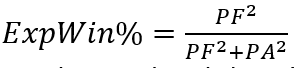 and use partial derivatives to convert it into a formula for points-per-win at a league level that depends only on the scoring environment (in points per game, PPG):
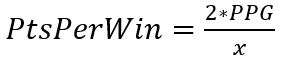 , where x is the
  value that makes the Pythagorean win expectancy most accurate when it’s used as the exponent instead of squaring each term. For 2016 to 2019, with a PPG just over 45, z = 0.73.