Author: Dominick Ricotta

  • The Transformation of Kodai Senga

    The Transformation of Kodai Senga

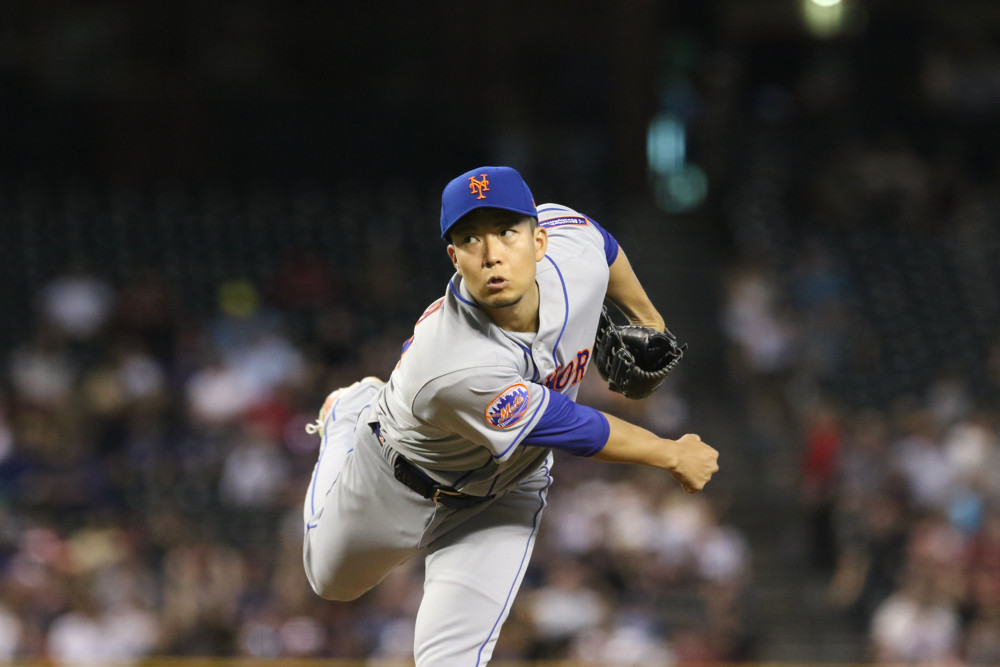
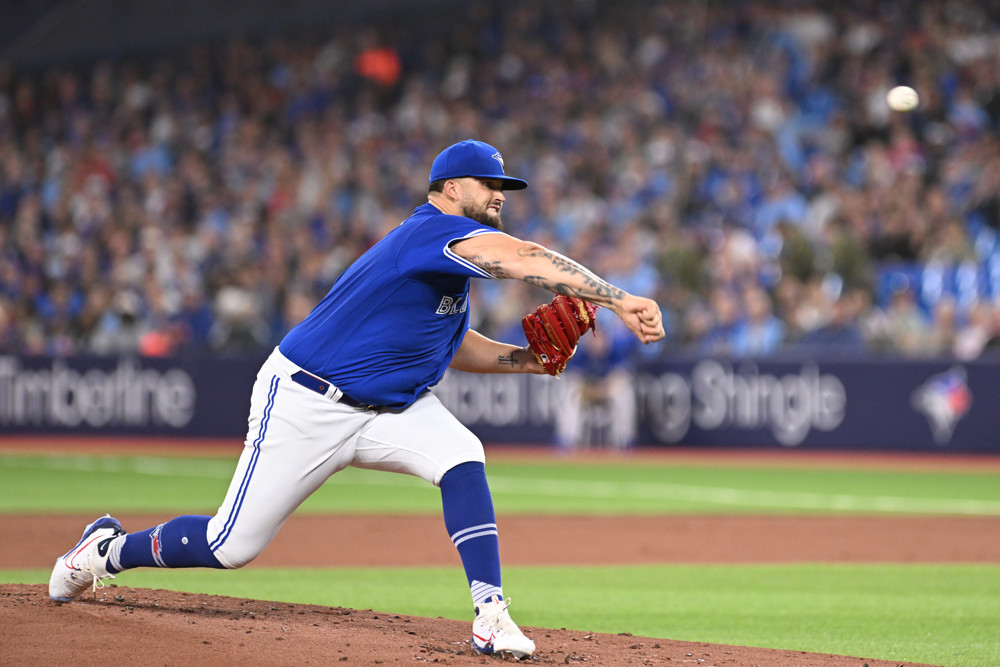
    Photo by Wilfred Perez/Icon Sportswire

    Kodai Senga has come to Major League Baseball and immediately cemented himself as a top of the rotation pitcher. In his first season in MLB Senga has put up the 12th-lowest ERA among qualified pitchers with a 3.19. He’s also totaled the 9th highest K% (28%) and the 15th best swinging strike rate (12.5%).

    It’s worth mentioning that Senga is doing this with a baseball completely different from what he was used to. MLB baseballs are slightly bigger and less tacky compared to NPB baseballs. 

    Senga had a 4.14 ERA in his first 7 starts. But in his 8th start, May 17 vs the Rays, it seems like things clicked for him. In that start Senga went 6 innings, struck out 12 and allowed only 1 earned run. There’s been notable differences in how Senga has used all of his pitches since that game. The results have been there. He’s dropped his season ERA by nearly a full point.

    Brandon Tew and I wanted to see how much he’s changed from last season in Japan. Brandon will touch on how he worked in Japan in 2022 and I will dive into Senga this season. If you want a more in-depth look at Senga in NPB you can read it here.

    4-seam fastball

    NPB: Senga was reliant on early-count fastballs to get ahead of hitters early. This would bite him every now and then as he gave up 4 HRs off the fastball. The threat of getting beaten on a badly-located fastball was still minimal so it didn’t stop him from using it.

    MLB: Senga’s 4-seam is still his most used pitch but the usage continues to decline. This is mostly because the shape of it isn’t great. It has just above-average ride so he struggles to get swings and misses (a 16.7% whiff rate). 

    Senga doesn’t even rank in the Top 200 in fastball induced vertical break (iVB) with an iVB of 16.4 inches, not far above the league average of 15.7. For reference, the best iVB is Felix Bautista with 20.5 inches. Basically, Senga’s fastball doesn’t have much deception compared to others.

    Hitters aren’t necessarily crushing his fastball relative to other pitchers. they have a .267 avg, .424 slug with 6 home runs (MLB average fastball numbers are .270 and .448). The problem for Senga was the counts in which he has used the fastball. He was using the fastball in the “traditional” fastball counts, so hitters were ready for it. 

    Here’s a graphic from Baseball Savant showing Senga’s usage by count in his first 7 starts. He was using the 4-seamer earlier in counts, similar to when he used it in Japan. Now he’s started to use the cutter early in counts and save the fastball for late in the ABs. With 2 strikes the fastball usage has gone from 28% to 37%.

    The splits this season for the fastball when the batter is ahead vs when the batter is behind show decisively different numbers, particularly with his whiff rate.

     Batter ahead: .288 avg .441 slg 8% whiff

     Batter behind: .234 avg .404 slg 24% whiff

    Using the fastball late in counts is super effective because of the way it tunnels with his forkball. Because his forkball is so nasty, hitters have to be ready for it late in counts. Senga uses this to his advantage and surprises them with his fastball. 

    Cutter

    NPB: Senga mainly attacked the best hitters in NPB with his cutter. He threw it mainly inside to LHBs but he would throw the pitch to different quadrants. Including down and away from RHBs or backdooring it to lefties. 

    MLB: Senga’s cutter has become not just his most important pitch, but one of the best pitches in all of baseball. The cutter has totaled a 17 Run Value, the highest for a cutter, and 10th-best for any pitch in baseball. 

    In 127 ABs ending with one, hitters have only a .205 avg and .268 slg. He generates a 51% ground ball rate against it. His ability to make it move late and get just under the barrel makes it difficult for hitters to square up. 

    Similar to when he was in NPB, he will throw it anywhere, but he can change the shape of it too. Sometimes it cuts, sometimes it goes straight down, and sometimes he can make it move arm side

    This usage by count breakdown shows his usages since the May 11 start. His cutter usage has seen a big increase in counts where the hitter has the advantage. In the first 7 starts, he used it 34% when he was behind in the count, it’s up to 51% since.

    Forkball

    NPB: The forkball was Senga’s best weapon. He threw it more than any other pitch in 2-strike counts and over half his strikeouts came with it. The pitch would consistently fool hitters because they had to gear up for his fastball.

    MLB: Senga’s forkball is one of the nastiest pitches in all of baseball. For pitch types with at least 100 plate appearances here are some ranks for Senga’s forkball:

     .128 avg (7th-lowest)            

     .152 slg (2nd-lowest)                 

     58.6% whiff (1st)            

     55.9% K (2nd)

    The tunnel effect he gets on the forkball and 4-seamer make it incredibly difficult for hitters to pick up on. Senga’s average vertical break on the forkball is 37.5 inches. 

    The key is that it stays on the same plane as the fastball for such a long time then drops off a cliff. Here’s an example in video form from Pitching Ninja.

    Not only is Senga’s tunneling with his forkball and fastball elite but the velocity differential between the 2 pitches is one of the best in baseball (compared to other pitchers’ splitter/fastball differential). Senga gets a 12.4 mph difference between the 2 pitches, 2nd-best to only Fernando Cruz who gets 12.8 mph.

    Curveball

    NPB: Senga had two different curveballs, a 12-6 curve (mid 70s MPH) and one that was slurvy (low 80s mph). He had trouble keeping the shape consistent with both of them. He struggled to use the pitches effectively because of that but the change of speed helped keep hitters off balance. 

    MLB: Senga has separated his two curveballs since coming to MLB. His curveball this season is 12-6 with big drop and thrown super slow (73 MPH). 

    He uses it to surprise hitters and steal strikes a few times a game. He’s thrown 61 CBs, 49 of them have been first pitches of ABs. 

    Sweeper 

    MLB: We think the slurvy variation of Senga’s curveball in Japan is what is being classified as his sweeper. 

    His sweeper has a lot of drop and not much sweep. Compared to other sweepers thrown at similar velocity (81 MPH) and release height to Senga’s, he gets 4 inches more drop and 2.1 inches less sweep.

    The sweeper has been his worst pitch. Hitters are 7 for 21 with a .952 slug, including 4 homeruns. The break of the sweeper is pretty lazy and thus easy for hitters to track.

    Slider

    NPB: Senga’s slider was always a work in progress. He spun it well but was never consistent. He only used it to give hitters a different look, it wasn’t a main part of his plan.

    MLB: The slider he began throwing as an alternative to the sweeper has been effective. Hitters are only 5-for-25, with all the hits being singles. It’s a gyro slider with high spin and sharp break. He’s done a great job of picking certain hitters and spots to use it in.

    Summation

    These 12 strikeouts against the Diamondbacks on July 5 show how difficult Senga can be to face with his repertoire. Bad swings on forkballs, fastballs taken down the middle, plus some help from the pitch clock. 

    Senga’s already put his name into the Rookie of the Year conversation. As he continues to evolve, he could become the favorite after a few more starts.

  • The Hottest of Hot Zones: Josh Naylor vs Low Pitches

    The Hottest of Hot Zones: Josh Naylor vs Low Pitches

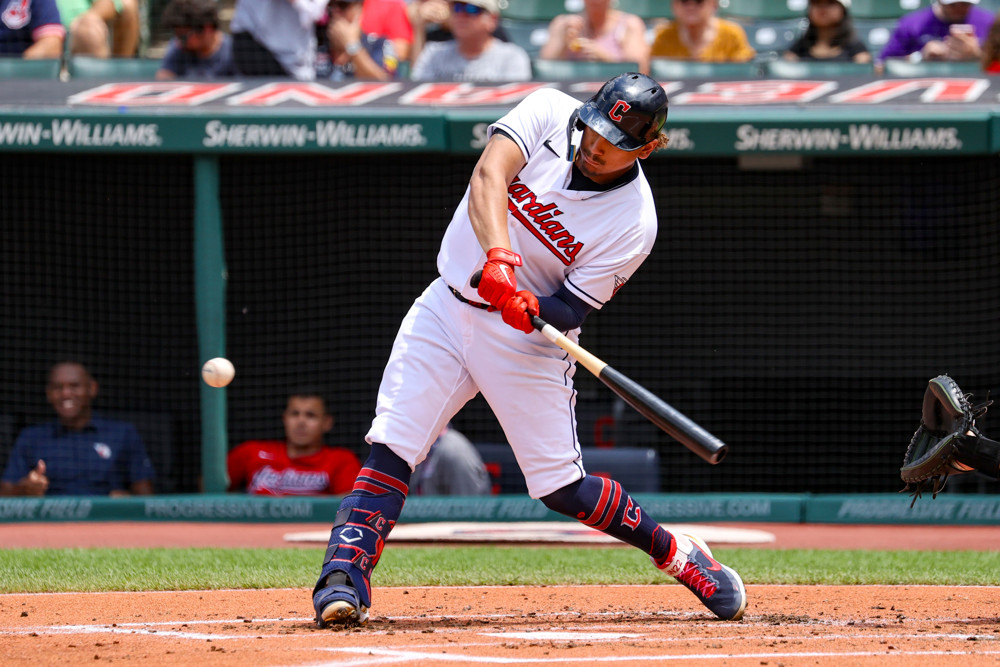
    Photo: Frank Jansky/Icon Sportswire

    Guardians 1B Josh Naylor is having a breakout season in 2023 and deserves some recognition. Naylor is 7th in baseball in batting average (.307), 14th in slugging (.511), 20th in OPS (.856), and 26th in wRC+ (129). These numbers somehow weren’t good enough for Naylor to be an all-star. 

    One area that Naylor has improved in is against pitches in the lower-third of the zone (and below). These are his numbers against those pitches for 2023:

    AB AVG SLG OPS 2B HR K Miss%
    119 .311 .529 .875 8 6 28 30%

    When looking at the MLB averages for low pitches, it makes what Naylor has done even more impressive. This season the league’s numbers against them are: .222 avg, .347 slg, .648 ops. 

    In 2022 Naylor really struggled against pitches in this part of the zone (.188 avg, .391 slg, .686 ops). He’s changed his approach against low pitches this year and it’s paid off incredibly well:

    2022 2023
    Swing % 41% 48%
    Miss % 35% 30%
    Chase % 29% 37%

    Naylor is swinging more, chasing more, but swinging and missing less. For a hitter with so much power like Naylor, being less selective is a good thing. He doesn’t need a perfect pitch to hit. He can do damage against any pitch he can make contact with. 

    He made some changes in his stance that have him getting to the low part of the zone quicker. The most noticeable change is closing his stance. He was way open last season and would have to step far towards the plate 

    Being more closed has Naylor in a more athletic position pre-pitch and there’s less movement in his swing. It’s helped him be more on time this season. If he does get out in front, the minimized movement means he can stay back and adjust easier. 

    Naylor is also holding his hands slightly higher. His bat is now parallel with the ground. Last season he had it at more of an angle. 

    Naylor’s favorite pitches to attack in the lower part of the zone are curveballs, sliders, and 2-seamers. He has 2 HRs against all three pitch types. He’s a tough out if a pitcher wants to attack him down with these pitches: 

    Curveball (28 AB): .286 avg / .607 slug

    Slider (24 AB): .375 avg / .667 slug

    2-seam(15 AB): .467 avg / .933 slug

    Video Breakdown

    Leg kick. As mentioned before, Naylor being more closed in his stance has changed his leg kick. Instead of a big step towards home plate he’s lifting the leg and slightly stepping towards home. He’s getting his foot down quicker but he’s still anchored on his back leg and using the strength of his lower half to build power. 

    Front shoulder tucked. Another product of Naylor being more closed in his stance is that he does a better job of keeping his front shoulder closed. His hips start to fly open but that shoulder stays exactly where it is until Naylor is ready to swing. Keeping his front shoulder tucked for as long as possible helps him stay back on breaking balls. 

    Torque. Naylor puts his entire body into every swing he takes, he never gets cheated. Every time he makes contact he wants to hit the ball as hard as possible. It reminds me of Bryce Harper.

    Both of his feet are moving at the point of contact, they both end up facing the pitcher. He’s shifting the energy built up from the ground all the way to his upper body. His ability to stay balanced even with all that force in his swing is impressive. 

    Side view

    There’s so much torque in this swing from Naylor but it’s still a controlled swing. He doesn’t have much of a load and his hands follow his lower half through the zone. Naylor sits on his back hip to generate his power then it explodes through his body. 

    HR vs Carlos Carrasco 

    An absolutely beautiful swing here from Naylor. His entire body is right on time, his barrel takes a short direct path to the ball, and he crushes it. His front foot opens, almost facing towards right center, because of all the torque in this swing. 

    HR vs Mitch Keller 

    Naylor stays back on this first pitch curveball so well. This is one that he probably would’ve been way out in front of in 2022 and grounded out or swung and missed. This year though, it’s a pitch he’s crushed.

    His lower half starts to open up but his front shoulder and hands stay back. Taking a curveball low and away and hitting it 404 feet to right-center shows Naylor’s pure strength.

    HR vs Corbin Burnes

    Naylor turns on this 97 mph fastball with ease. He has incredibly quick hands and that’s on full display here. The barrel of the bat follows his hands through the zone giving it the shortest path to the ball. Even with 2 strikes, Naylor is taking his most powerful swing. 

    Wrap up

    Josh Naylor didn’t make the All-Star team but he’s definitely playing at an All-Star level. A few small changes in his stance and approach have made him one of the most consistent and dangerous hitters in baseball, particularly against pitches in the lower part of the zone. Pitchers and fans should take heed.


  • The Hottest of Hot Zones: J.D. Martinez vs High Pitches

    The Hottest of Hot Zones: J.D. Martinez vs High Pitches

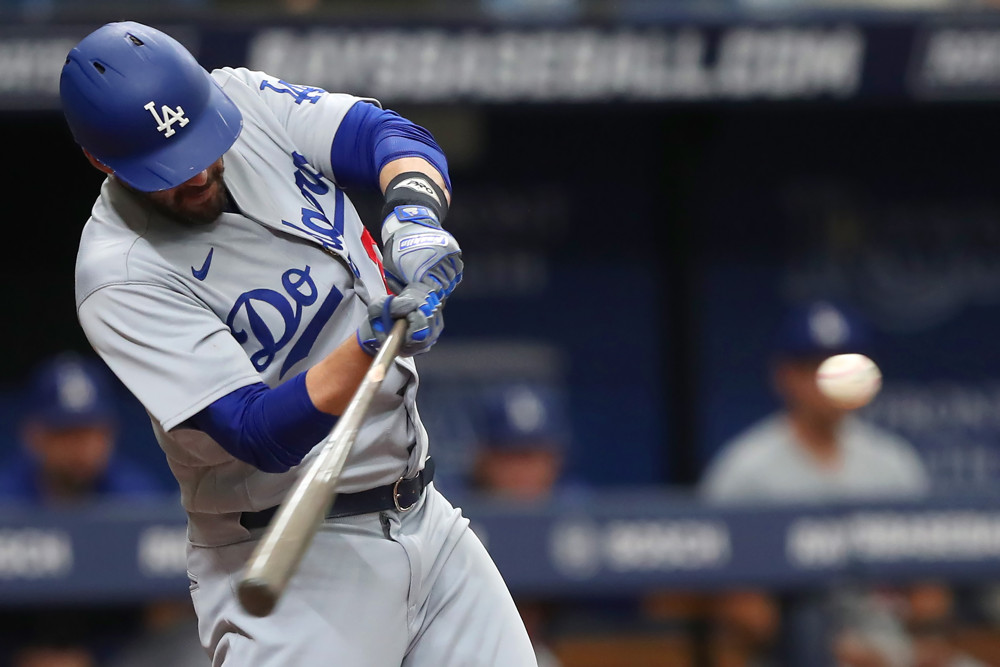
    Photo: Cliff Welch/Icon Sportswire

    J.D. Martinez has been one of the best hitters in baseball for multiple years now. One thing that really separates him from the rest is his willingness and ability to evolve at the plate.

    Since he signed with the Tigers in 2014 he’s had a wRC+ of at least 119 every full season. (2020 shortened season his wRC+ was 76). Teams must have thought Martinez would start to decline since he’s 35 years old now which is why the Dodgers were able to sign him for a 1 year, $10 million contract before the season started.

    The deal was an absolute steal for the Dodgers. He currently has the 6th best slugging percentage (.558), 7th best hard hit% (55%), 5th best barrel% (18%), and his 127 wRC+ is good for 31st in baseball.

    One of the areas Martinez has been able to transform is his ability to hit pitches up in the zone (and above it). He was never a terrible hitter against high pitches but this season he has turned into one of the better ones in baseball. Here are his numbers:

    J.D. Martinez vs Pitches in Upper-Third Of Strike Zone & Above

    AB AVG SLG OPS 2B HR K Miss%
    70 .288 .638 .971 5 7 29 31%

    Martinez’s numbers, especially his slugging percentage, blow away the league averages on pitches in the upper-third and above. League averages: .229 avg, .392 slug, .737 ops.

    In 2022 Martinez hit .303 against high pitches but he was not slugging nearly as well as he is this season. In 76 ABs he slugged .461 with 2 HR and 6 2B. He’s being more aggressive in 2023, swinging at 49% of pitches in this area (45% in 2022) and swinging and missing less (35% in 2022).

    This heat map from Baseball Savant shows Martinez’s HRs this season. The majority of his HRs have been hit on pitches located middle up or up and away.

    Martinez has done most of his damage up in the zone against fastballs, as you’d expect, with 5 of those 7 home runs hit against them. He’s 5-for-8 with 2 home runs against (likely inadvertently-thrown) high sinkers.

    Pitchers can get Martinez to chase fastballs if they get them up out of the zone in the right spot. He has a 47% chase rate and 39% whiff against 4-seamers up, striking out 22 times.

    Video Breakdown

    Martinez has spoken extensively in the past about how much watching video helps him at the plate. So what are a few things he’s looking for?

    Rubber band effect. Similar to what I touched on in my Mookie Betts breakdown, Martinez relies on the rubber band effect. When he lifts his leg he starts to load his hands backwards and up. Once his foot touches down he begins to bring his hands through the zone. The timing is key for J.D.

    Keeping the back elbow tucked. No matter where the pitch is located, Martinez likes to keep his back elbow tucked until he makes contact with the ball. It helps him stay through the ball and keep his barrel in the zone for as long as possible.

    Rotation of his top half. Martinez stands practically straight up and really doesn’t hit with his legs too much, which shows you how strong he is. All of his power is coming from his top half. Focus on his back foot, it doesn’t pivot as much as other hitters. Martinez isn’t building energy from the ground up. All the energy and power is being generated from his core and upper body.

    Ump cam view of 3 run HR vs Musgrove (hanging slider)


    Martinez takes full advantage of a 0-2 hanger from Musgrove. The ump cam is a great look at Martinez’s load and how he is able to keep his barrel in a great hitting position for as long as possible.

    Broadcast view


    Double vs Alvarado  

    This double off José Alvarado also comes with 2 strikes. Alvarado’s cutter is one of the nastiest pitches in baseball. Hitters are 7-for-39 against it and 4-for-31 when he throws it with 2 strikes.

    https://twitter.com/MLBReplays/status/1667408999031926784?s=20


    Martinez’s bat is at around a 45-degree angle when he’s ready to bring his hands down to swing. That angle helps him reach these pitches up since it minimizes the distance the barrel needs to travel.

    The rotation of his top half is really evident here, you can read his entire name on the back of his uniform when his front foot plants. Even though his top half is rotating so much his head is staying completely still and his eyes are focused on the point of contact.

    HR vs Trevor Williams

    On a 1-0 count Martinez is happy to go with this fastball away and drive it to the right center field gap.


    Most hitters try to pull this pitch. As I mentioned before, even on this up-and-away pitch, Martinez keeps his back elbow tucked until after he makes contact with the ball.

    Wrap up

    There are better hitters than Martinez when it comes to hitting the high pitch. Both Ronald Acuna Jr. (.407/.797) and Shohei Ohtani Jr. (.387/.882) are ridiculous up there. But I wanted to spotlight how Martinez’s evolution at the plate to be better against pitches in the upper part of the zone has taken him to a new level and made him a vital part of the Dodgers’ offense.

  • The Hottest of Hot Zones: Mookie Betts vs Inside Pitches

    The Hottest of Hot Zones: Mookie Betts vs Inside Pitches

    One of a series of four pieces looking at how the best hitters dominate pitches thrown to different areas.

    Every hitter in baseball has a certain part of the zone they absolutely love a pitch to be located in. I wanted to look at the outside and inside quadrants of the zone to see which players are the best and what makes them the best. 

    I looked at some data for each quadrant and picked the player that really stood out in each. Then I dove into some video to see why each hitter has the ability to do so much damage in that zone.

    Best Hitter vs Inside Pitches

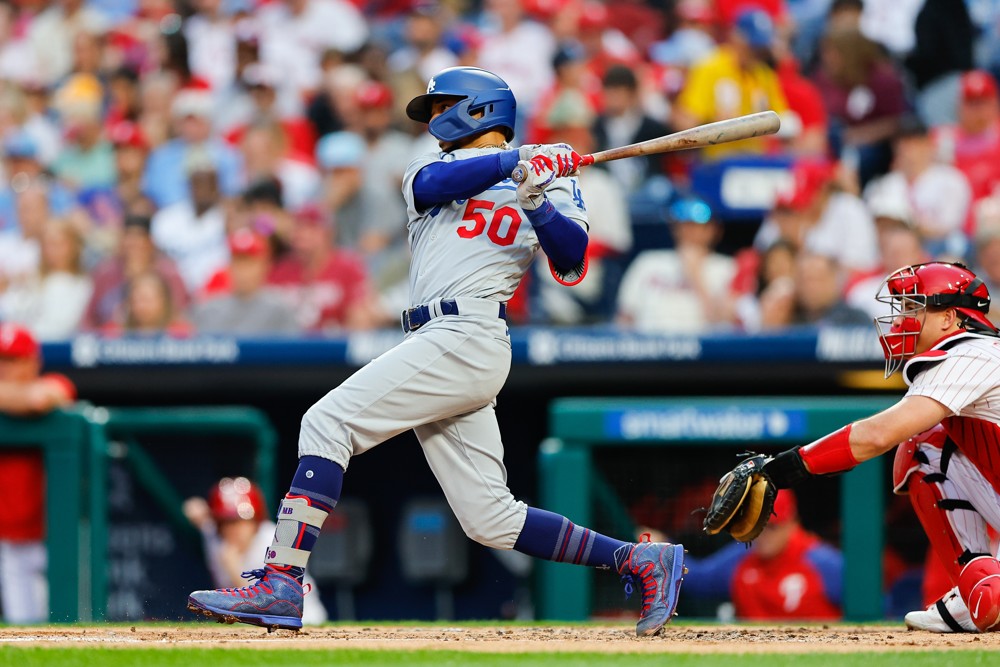
    Mookie Betts

    The numbers

    AB AVG SLG OPS 2B HR K Miss%
    82 .329 .744 1.230 4 10 13 14%

    Betts’ .329 avg on inside pitches is around .100 points higher than league average (.244). His .744 slug is almost double the league average(.423). Betts isn’t just taking his hits, he’s mashing pitches inside. 

    When Mookie Betts is at the plate there’s three things he’s focused on:

    1. Lift the ball
    2. Pull the ball
    3. Hit the ball hard

    Betts ranks 12th in MLB in fly ball (48%) and 18th in pull percentage(48%). He also ranks 43rd in Hard Hit% (46%). This has translated to a .407 avg and a .898 slug when he pulls the ball. 

    This spray chart from Baseball Savant is for all of his balls in play. The majority of his hits are to the left side of the field, especially when he goes for extra bases.

    This is why Mookie is able to crush pitches inside, primarily inside and down. On pitches down and in and in the strike zone, Mookie has 9 hits (2 2B and 5 HR). His average exit velocity is 98.7, his highest in any zone. 

    If you’re trying to get a swing and miss inside, good luck. He has a 14% miss rate on those pitches.

    Mookie’s favorite pitches inside are sinkers and sliders and it doesn’t matter if he’s facing a lefty or righty. Six of his home runs have come against those pitches.  He has no real holes inside against righties.

    Betts does struggle somewhat against 4 seamers from lefties, mostly if they pitch them up and in but he still crushes sinkers and sliders from lefties. 

    Video Breakdown

    A few things in Mookie’s swing that make him one of the best hitters in baseball:

    • “Rubber band effect”. Betts has the drift just like we saw with Corbin Carroll (article about him here). The difference is Mookie’s hands are moving backwards as the rest of his body is moving forward. Once his front foot touches down he starts to explode his hands through the zone.
    • The direct path of the barrel. He doesn’t waste any motion in the swing. The barrel takes the shortest path possible. A lot of hitters that want to lift the ball have long loopy swings but Mookie’s is short and direct.
    • The follow through. He doesn’t have a big follow through like we see so often in baseball now. Betts holds on with both hands and a lot of times the bat doesn’t go past his left shoulder. 

    I was watching the U.S. Open while writing this and noticed Betts swing is very similar to a golfer hitting a wedge: Dropping the head of the club/bat directly to the ball and having no follow through.

    Searching Twitter I found a video of Betts golfing in 2022 and the swings are very similar. 

    Side view of HR  vs Josh Hader (96 MPH 4s middle in)

    Turning on a 96 MPH fastball from Josh Hader is not something you see every day. Mookie’s short swing and bat speed is on full display here.

    HR vs Luis Severino 4-seam

    Severino wanted to throw this pitch away but misses middle in and Betts makes him pay. Betts does so well to pull his hands in and get the barrel to this 95 MPH fastball. 

    Watch how short of a path his barrel takes. What helps him have that short path to the inside quadrant is the vertical position of his bat before he swings. This is unlike Carroll (again, read what I wrote about him here) who holds his bat more horizontal. 

    HR vs Logan Webb sinker

    Logan Webb produces a grounder on 67% of the balls in play on sinkers to right-handed batters. Normally a sinker in that location is a fantastic pitch, but not to Mookie. 

    As Betts’ hands move down into the zone the barrel follows right behind them. Because he’s so direct to the ball he’s able to get under this sinker. His back elbow is touching his belt and he can still generate enough power to drive this to left center. 

    Betts has a plan at the plate and is able to execute it to perfection. Of course, he makes it seem way easier than it actually is. His eye at the plate, hand speed and pure athleticism really separate him from other players.

    COLD ZONE

    Focusing on pulling and lifting the ball is great for pitches on the inside quadrant, but not so much on the outside quadrant. Mookie really struggles on pitches away: In 114 AB ending with a pitch outside he has 20 hits (.175 avg).  

    If a pitcher needs a strikeout they have to attack him away, his swing and miss percentage is 24.5% and he’s struck out 38 times. The heat map from Baseball Savant below shows all of Betts’ strikeouts this season.

    Baseball is a difficult game, every hitter has a hole in their swing. The best hitters take advantage when pitchers make a mistake and throw it where they like it. Betts is just one example of that.

  • The Hottest of Hot Zones: Corbin Carroll vs Outside Pitches

    The Hottest of Hot Zones: Corbin Carroll vs Outside Pitches

    One of a series of four pieces looking at how the best hitters dominate pitches thrown to different areas.

    Every hitter in baseball has a certain part of the zone they absolutely love a pitch to be located in. I wanted to look at the outside and inside quadrants of the zone to see which players are the best and what makes them the best. 

    I looked at some data for each quadrant and picked the player that really stood out in each. Then I dove into some video to see why each hitter has the ability to do so much damage in that zone.

    Best Hitter vs Outside Pitches

    Corbin Carroll

    The numbers

    Per our internal tracking, these are Carroll’s numbers on pitches we classify as being on the outer-third of the plate or off the outside corner.

    AB AVG SLG OPS 2B HR K Miss%
    105 .362 .686 1.128 6 8 26 21%

    Corbin Carroll hasn’t just been one of the best rookies in baseball, but one of the best players. His ability to cover the outside part of the plate is exceptional. Carroll doesn’t just slap singles to the opposite field, he hits for power. 

    This spray chart from Baseball Savant shows all of his hits this season. Carroll loves to use the left side of the field.

    Carroll is 2nd in MLB with a 1.020 slug to the opposite field. He leads MLB with 7 HR to the opposite field, ahead of Pete Alonso, Rafael Devers, and Randy Arozarena. 

    Carroll’s .362 avg is well above the league average of .221 on pitches away. While his slugging percentage of .686 is more than double the league average(.325). He is particularly good against right-handed pitching, against whom he has 8 home runs on outside pitches.

    If you pitch him up and away he’s going to torch the ball. In at-bats ending on pitches in the zone up and away Carroll has 9 hits (1 2B, 4 HR) and an average exit velocity of 97.4 MPH. That’s Carroll’s highest average exit velocity in any part of the zone.

    Carroll doesn’t care what pitch you throw him. His pitch recognition is exceptional and his willingness to go the other way gives him the ability to hit fastballs, breaking balls and offspeed pitches.

    Lefties don’t pitch him away as much since it’s easier for them to pitch him inside. I think we’re gonna see a lot more of him getting hit by pitches. Matt Strahm, a lefty for the Phillies, hit him in back to back plate appearances which led to the benches clearing. When lefties do pitch Carroll away, he has no problem handling it.

    Video Breakdown

    There are a few things that stand out in his swing that make Carroll such a great hitter:

    • The drift forward once he lifts his leg, keeping all the power anchored in his back leg ready to explode forward.
    • The quiet hands. Once he gets crouched down the hands do not move. They follow his body as he drifts but they stay at the same height and angle the whole time
    • The connection. His hands follow the rest of his body. Watch how his hands follow his left hip through the zone.

    Side view of Home Run vs Brent Honeywell Screwball (middle away)

    HR vs Tanner Houck 4-seam

    His ability to keep his bat level through the top of the zone helps him get to this pitch. His bat is practically horizontal when he is getting ready to swing. This means the barrel’s path to the high pitch is as short as possible.

    Grand Slam vs Will Vest 4-seam


    Carroll keeps his front shoulder closed as long as he can, letting the ball get deep. He trusts his hands to get to the ball and knows he has the power being generated from his lower half to really drive it. 

    One thing I love here is that with 2 strikes Carroll cuts his swing down and still hits a grand slam. He goes to a two-hand follow through on this swing, usually he lets go with one hand.  

    Carroll’s swing mechanics combined with his ability to recognize pitch type and pitch location make him one of the best outside quadrant hitters in baseball. Pitchers should proceed with caution when they want to pitch him there.


  • Alek Manoah’s Mechanics: Perhaps a Little Off?

    Alek Manoah’s Mechanics: Perhaps a Little Off?

    After finishing 3rd in the AL in Cy Young voting in 2022 Alek Manoah has had a rough start to 2023. He has a 5.53 ERA and 6.16 FIP . Hitters are hitting .274  with a .458 slugging percentage and wOBA of .375. His expected numbers (.278 xBA , .474 xSLG, .382 xwOBA) aren’t too different either so this isn’t necessarily a case of a pitcher having bad batted ball luck.

    One thing that makes Manoah so enjoyable to watch is his ultra competitiveness and bulldog mentality on the mound. Even when he had bad games in 2022 he fought through it. This season though, he can’t seem to get over the hump. Look at how his numbers have dropped.

      Swing Contact Chase SwStr HardHit  Barrel K% BB%
    2022 49% 77% 35% 11% 32% 5.4% 23% 6.5%
    2023 44% 80% 28% 8.6% 43% 8.4% 18% 14.9%

    Hitters are swinging less but making contact more frequently. When they make contact they’re hitting the ball hard at a rate 11 percentage points higher than last season and their barrel rate is 3 percentage points higher. His swinging strike and chase rates are down. Those numbers being down means his K% is down and BB% is way up.

    The velocities on his sinker, slider, and 4-seam are down 1 MPH and his command has been poor, especially on the sinker. He’s throwing it basically middle-middle. Last season he would pepper the corner of the plate on his arm-side. He doesn’t have the ability to control the inside part of the plate to righties anymore. These heat maps come from Baseball Savant.

    The slider is Manoah’s most important pitch when he’s effective. While his slider command hasn’t changed much, the metrics of the slider are different. He’s getting 1.6 inches less sweep. The pitch also doesn’t have the same sharp break that it did in 2022. It looks like it’s breaking earlier and it’s easier for hitters to track and either do damage or lay off it.

    Alek Manoah’s Slider

      Velo (mph) Spin Rate (rpm) Vertical (in) Horizontal (in)
    2022 81.5 2216 41 14.5
    2023 80.9 2180 40.9 12.9

    His slider is his favorite pitch to throw with two strikes  and this season he’s been getting hurt on it. He’s thrown it 37% of the time and hitters are 9 for 37 (.243 avg) with 3 HR and only 20% of their swings missed.

    In 2022, he threw 2 strike sliders 36% of the time and hitters hit .156 (22-for-141) with 2 HR and missed on 29% of their swings.

    Mechanical Issues

    I’ve watched a lot of video on Manoah and noticed there are three key moments throughout his delivery that are clearly different from last season.

    1. His hand placement at the leg lift apex
    2. His hand placement and timing when the leg starts to come down
    3. His shoulder tilt when his heel touches down.

    His body is completely disconnected, so there’s not the same fluidity and intensity in his delivery. His arm is lagging behind his lower half at the beginning of the motion. It’s causing him to be about one tenth of a second slower to the plate on average than he was last year. When there aren’t any intentional changes in the motion, one-tenth of a second can make a huge difference.

    2022    1.56 seconds average time to plate

    2023    1.64 seconds

    You can watch a year-to-year comparison for the slider and fastball here:


    Now let’s break it down with stills.

    In the pictures below (2023 left, 2022 right) I highlight the three main issues with Manoah’s delivery. The first two pictures against Judge are synced at first leg movement. It shows how far behind he is this season compared to last. The side-by-side against the Tigers and A’s shows how different his leg height is when his hand is waist high. Then the final picture against Judge is synced at Manoah’s heel touch.

    2023 (L) vs 2022 (R)

    Hand placement at leg apex.

    In 2022 his hands already began to drop.

    In 2023, his hands are still as high as when he started the leg lift. This has his arm behind the rest of his body during his delivery and slows his entire body down so the arm can catch up.

    2023 (L) vs 2022 (R)

    Hand at waist. In 2022 when his hand was at his waist it was behind his left knee because he was bringing his hand down earlier. 2023 the left knee is already down ready to straighten out but his hand is still at the waist.

    2023 (L) vs 2022 (R)

    These photos are synced at first leg movement. Manoah is clearly further into the delivery in 2022.

    In 2023 he’s lagging behind and throwing off his entire momentum.

    Heel Plant. Manoah’s shoulder tilt is incredibly different. Instead of being parallel to each other his front shoulder is a lot higher. His throwing arm is coming into the throwing position at a different angle.

    This is making him get under the ball more and is the main reason his slider has a different shape and less bite to it. It’s also affecting his command and velocity of his fastballs because he isn’t getting through the ball well enough.

    Causes

    It’s difficult to pinpoint the exact cause without speaking with Manoah but there are a few things that can be factors.

    The first potential cause is the pitch clock. Manoah was one of the slowest pitchers based off tempo in  2022 and still ranks among the 20 slowest both with the bases empty and runners on base in 2023.

    The pitch clock could be causing him to rush between pitches and not be able to fully set himself before delivering. The shorter time between pitches could also have him more fatigued. We don’t know if that’s the case.

      Bases empty Runner on
    2022 20.7 sec 24.8 sec
    2023 18 sec 21 sec

    The second potential factor is Manoah’s comfort on the mound. The pitch clock could play a part in comfort but Manoah has also moved his position on the mound pretty frequently going back to last season, which we could tell from looking at his horizontal release point data (we think he’s changing his position, thus producing different numbers). He moved closer to the middle of the mound in an effort to get a better attack angle against lefties. Lefties have given him more trouble than righties in the past.

    The change didn’t affect his numbers too much in 2022, but this season both righties and lefties are crushing him.

    AVG OBP SLUG
    2022 vs LHB  .237 .313 .367
    2023 vs LHB  .277 .407 .471
    AVG OBP SLUG
    2022 vs RHB  .159 .211 .249
    2023 vs RHB  .269 .370 .441

    Manoah has been been tinkering with his position almost every game this year and is slowly getting back to where he was in the first half of 2022. It can’t be easy switching mound positions almost every game while also worrying about the pitch clock and fighting your mechanics.

    Manoah has shown that when he’s right he’s one of the best pitchers in baseball. Pitchers go through slumps and the great ones always find their way back to being dominant. I expect as the season goes on that Manoah will figure this out, as he’s too competitive and talented not to. He might just need more time to adjust.

  • Reviewing Candidates For The New-Look Shift

    Reviewing Candidates For The New-Look Shift

    On March 3, in a spring training game between the Boston Red Sox and Minnesota Twins, the Red Sox deployed a new shift for the first time in a game. Naturally, the Red Sox did this against Joey Gallo, who pulls the ball more than almost anyone in MLB. Gallo ranked No. 1 in pull percentage in 2022 for left-handed hitters with a rate of 55% (among those with a minimum of 250 plate appearances). 

    Boston moved CF Adam Duvall to short right field in the “triangle”. Raimel Tapia, the left fielder, is in CF slightly shaded towards left and the right fielder Alex Verdugo is in straight away RF. Gallo had to be rolling his eyes as he walked into the batter’s box. All this talk in the offseason about short RF being a land full of hits for lefties was quickly shot down by this alignment.

    The key to the new shift rule is that it restricts only infielders from moving. Infielders must be on the infield dirt and on their side of second base. Second basemen can’t be playing in shallow right field and we won’t see 3 infielders in the triangle defense, or as we call it at SIS, “a Full Ted Williams shift.” And of course, there’s no more Manny Machado catching fly balls in the right field corner.

    The new rules don’t have any restrictions for outfielders though. Outfielders can go anywhere they want. Teams can still do 5-man infields if the situation calls for it. This also means that we can see new versions of the Full Ted Williams shift we’ve become so accustomed to.

    As we’ve learned with shifts in the past, hitters won’t change their approach just because the defense is giving them a wide open side of the field. This shift won’t be different, but the risk is certainly higher for defenses than shifts we’ve seen in the past. 

    Data is king when it comes to shifts and Gallo’s data fully supports using this shift against him. This made me wonder, who else could have this shift used against them? 

    I looked at all left-handed hitters and found nine players that have similar ball-in-play data in terms of ground ball rates and pull rates that I wanted to take a closer look at. All these players saw traditional shifts regularly the past few years. The new shift, leaving LF wide open, means a higher degree of risk in shifting these guys. 

    So I’m going to act as if I’m an advance scout, with recommendations on how I would shift these players. I’m also going to keep in mind that I can’t just judge off the hitter’s tendencies. I have to look at my pitcher too and understand there are certain nuances to my choices.

    I used a combination of FanGraphs ball in play data (which we’re the source for) and Sports Info Solutions visuals to make assessments. With each player, you’ll see their outfield fly ball and line drive spray chart, though I also consulted their groundball charts and their charts for offspeed pitches in making these writeups.

    The rankings in each section are percentile rankings of the 132 left-handed hitters with a minimum of 150 plate appearances

    Joey Gallo

    >>Percentile rankings in parentheses

    Pull % Oppo% Fly Ball % GB + LD Pull% Fly Ball Oppo%
    55% (99th) 18% (3rd) 53% (99th) 73% (99th) 24% (1st)

    Gallo meets all the criteria for a player for whom we’d want to use this shift. He rarely hits opposite-field fly balls. He has the highest grounder and liner pull percentage and 85% of his grounders and short liners are to the right side of 2B.

    Here’s his spray chart on flies and liners to the outfield.

    Recommendation: Shift at will. 

    Against RHP, he will hit more fly balls but not many to LF. If he hits a grounder or liner it’s going to be pulled. Also strikes out 38% and walks 14% of the time. 

    Against LHP, Gallo hits a ton of ground balls to the pull side and struggles to put the ball in play, strikes out 48% and walks 12%.

    If he beats us to the opposite field once there’s a good chance it won’t happen twice in a series.

    Daulton Varsho

    >>Percentile rankings in parentheses

    Pull% Oppo% Fly Ball% GB + LD Pull% Fly Ball Oppo%
    55% (99th) 16% (1st) 44% (75th) 63% (92nd) 23% (1st)

    Recommendation: Use shift vs. RHP. Can use vs. LHP but that comes with a high risk factor. Shift more with high-percentage ground ball pitchers and against RHPs with low fastball usage. 

    With RHP on the mound Varsho hits more fly balls but still doesn’t use the opposite field. Hits into the “triangle” position of short RF more than anywhere else on flies and line drives. RHP with low-fastball usage is the best instance to shift. 

    Against LHP he hits more grounders and pulls them. Won’t use the opposite field on fly balls often but he will on line drives. 

    Kyle Schwarber

    >>Percentile rankings in parentheses

    Pull% Oppo% Fly Ball% GB+LD Pull% Fly Ball Oppo%
    44% (72nd) 19% (8th) 51% (97th) 60% (85th) 27% (2nd)

    Recommendation: Shift with LHP

    Against RHP he will use every part of the field. Takes advantage of pitchers not wanting to throw inside to him. Fly ball percentage and his ability to use all parts of the field make him a no-shift option. 

    When facing LHP, Schwarber doesn’t hit fly balls to the opposite field. He can hit a line drive that way but not frequently enough to worry about. A LHP with low fastball usage is an exceptional time to shift. 

    Jose Ramirez (specifically as an LHB)

    >>Percentile rankings in parentheses

    Pull % Oppo% Fly Ball% GB + LD Pull% Fly Ball Oppo%
    49% (93rd) 20% (13th) 50% (92nd) 59% (83rd) 27% (2nd)

    Recommendation: Do not shift. 


    Ramirez does a great job of using all fields, has barrel control and takes what the pitcher is giving him. He does have the tendency to pull grounders and line drives (did so 83% of the time as a left-handed batter) but his fly ball numbers make shifting dangerous. 

    Mike Yastrzemski

    >>Percentile rankings in parentheses

    Pull% Oppo% Fly Ball% GB + LD Pull% Fly Ball Oppo%
    45% (76th) 23% (32nd) 46% (82nd) 60% (85th) 38% (46th)

    Recommendation: Despite how often he pulls his grounders and short liners (nearly 90% of time), do not shift. Doesn’t hit enough grounders and fly ball trends contradict the shift.

    Against RHP, he has similar numbers, except for the higher line drive% and lower grounder%. Still sprays the ball around the whole field and lifts the ball more times than not.

    Against LHP, Yastrzemski hits a fly ball half the time but uses every part of the field evenly. Line drives he hits mostly up the middle. 

    Trent Grisham

    >>Percentile rankings in parentheses

    Pull% Oppo% Fly Ball% GB + LD Pull% Fly Ball Oppo%
    47% (84th) 25% (53rd) 43% (72nd) 62% (89th) 43% (74th)

    Recommendation: Do not shift. He has too much speed and he sprays his fly balls well.

    Against RHP he pulls more grounders but hits fewer of them. Great ability to use all fields when lifting the ball.

    Against LHP Grisham hits a lot of grounders but also hits a lot of fly balls. He sprays fly balls all around the field which makes him difficult to shift.

    I’m going to summarize three other hitters in brief. If you want to see more details about them, you can find them on my Twitter.

    Anthony Rizzo

    Rizzo is risky to shift but there are a couple of caveats. When playing in Yankee Stadium we can use it with a RHP because of the short porch in RF. Our CF and RF can shade towards the opposite field. Anything hit well to RF is going to be a double or a homerun either way. Also, if you have a left-handed pitcher who is almost exclusively an offspeed pitcher, it could work based on Rizzo’s tendencies.

    Cody Bellinger 

    Though Bellinger pulls a high rate of groundballs and line drives, he hits too many fly balls to center field and the opposite field for a shift to be worth it.

    Max Muncy

    Though Muncy pulls nearly 90% of his grounders and short liners is another for whom it’s mostly high-risk to use this shift, except in highly-specific situations. The one time to use it would be with a lefty pitcher with a high ground ball rate (maybe a Tim Mayza). He sprays his fly balls too much for it to be worthwhile otherwise.

    For more detail on these hitters and “The Joey Gallo Shift,” follow Dom on Twitter at @domricotta15

  • Josh Hader Has Found Deception Again

    Josh Hader Has Found Deception Again

    Back in July I wrote about what could be causing Josh Hader’s struggles. His April and May were on par with Hader’s usual dominance but June and July were a different story. Hader was getting hit more often and harder than ever before.

    The only issue I was able to find was with Hader’s release point. He wasn’t throwing from his usual low arm slot, and it was leading to less deception. Hitters were able to recognize his pitches better than before.

    Hader continued to struggle in August, allowing a .464 avg and 1.207 OPS. But September, and two appearances in October, were different. The Padres seem to have unlocked the dominant Josh Hader we all remember, and just in time for the playoffs. Since September 1, Hader allowed just a .114 batting average and .322 OPS. So what happened?

    His vertical and horizontal release points haven’t changed much since July. There’s less than an inch difference for the fastball and slider, though they are trending in the right direction.

    (All images via Hader’s page on Baseball Savant)

    There is one noticeable difference in Hader’s delivery though. His extension down the mound has increased slightly, about 4 inches. A few extra inches of extension isn’t going to increase the perceived velocity too much. Usually, it takes about a foot of extra extension to start seeing a difference.

    But it does tell me that Hader has started to straighten out his mechanics . The release point might not be where it’s been in past seasons, but the extra extension could be helping him compensate for his changed release point.

    July and August were statistically Hader’s worst months of the season. He gave up a combined 25 earned runs in those months. Every other month he’s given up only 4 earned runs.

    July was also his the month in which both his extension and release point reached its smallest point, per the data. Once Hader was traded to San Diego in August, both areas improved.

    August was still a struggle and Padres fans were starting to worry (a lot of them read my previous article). The way he’s performed since September started must have them feeling good going into the postseason. His numbers are down across the board and he’s looking dominant yet again.

      August September/October
    ERA 19.06 0.87
    K-BB 9-7 13-2
    First Strike % 44% 62%
    Swinging Strike % 13% 17%

    Hader faced the same number of batters in the two months but his numbers couldn’t be more different. Other than the nearly 18-point difference in ERA, the biggest thing that stands out is the First Strike %. He’s attacking the zone early and often. This has led to his K% rising and his BB% plummeting.

    Hitters are swinging more frequently at his pitches in the zone but making contact less. This can be attributed in part to some added deception with his extra few inches in release extension. The new game plan the Padres have for him is playing big a role.

    Hader’s fastball usage is up to nearly 80% and he’s throwing it in the zone 60% of the time. He’s being more aggressive and trusting his fastball with confidence. His swing and miss % on the fastball in September is up to 35%, up from 24% in July/August.

    As I mentioned in my first article about him, Hader looks to attack the top part of the zone with his fastball. His numbers in that quadrant of the zone have improved when looking at August versus September/October.

      Usage% AVG Strike % Chase%
    August 38% .333 46% 20%
    Sept/Oct 47% .133 68% 34%

    He’s been able to spot the fastball more in the upper quadrant and has added back the “rise” to the pitch. Just look at the 14 percentage-point increase in chase rate and the 22 percentage-point increase in strike percentage. Hader’s been able to get hitters to swing under fastballs up and out of the zone like we’re so used to seeing him do.

    The numbers show that something has clicked for him. The eye-test proves it also, hitters are not as comfortable in the box against him. He’s back to getting ugly swings and blowing fastballs by everyone.

    Even with all of Hader’s ups and downs this season, his fastball metrics have remained incredibly consistent. There were no dips in velocity or spin rate, even when he struggled.

    His average spin rate per month has been between 1,932-2,047 rpm all season. While his average velocity per month has been 97mph, with the exception of April (96mph), July did feature an inch less of vertical movement on the fastball, but that’s really the only time the fastball metrics have waivered.

    Hader has figured out something new with his slider though. He’s throwing it harder and with fewer inches of drop. The added extension is most likely playing a big role in this. He’s finishing his pitches better and potentially able to pull down on his slider more to get the added velocity and slightly higher spin.

      APRIL JULY AUGUST SEPTEMBER
    Velocity 83 84 85 86
    Vertical Break 37” 38” 38” 36”
    Spin rate 2,378 2,436 2,562 2,517

    >> Data from BaseballSavant.com

    In September Hader’s slider averaged 86 mph, the highest slider velocity for a month of his career. He increased his spin rate by about 150 rpm from April to September. He’s also getting an inch less of drop to the slider due to the added velocity.

    Hader throws a gyro slider so his horizontal break is never going to be something he needs to worry about. He hasn’t given in to the sweeper craze of 2022. He wants his slider to break straight down which is why I don’t think he messed around with the horizontal break (and the Statcast data backs that up).

    Even with the increased velocity of his slider, Hader has trusted his fastball more as a Padre. His slider is filthy but when you throw 97 mph with a low arm slot and a high riding fastball, why wouldn’t you use it 80% of the time? In his first three seasons in the big leagues, his fastball usage was up around 80%, so the Padres are having him get back to basics.

    Padres fans have to be happy with the way Hader finished the regular season. He’s been trending in the right direction since the calendar hit September and didn’t falter at all during the month. The Padres game plan of throwing more fastballs has given him a jolt of confidence. His first postseason appearance with San Diego will be fascinating to watch.

  • Playing The Field: Targeting Defensive Improvements At The Trade Deadline

    Playing The Field: Targeting Defensive Improvements At The Trade Deadline

    Defense is incredibly important for sustained success. We’ve written about it before and it’s still true.

    In 2021 the Yankees and Red Sox were the only playoff teams not ranked in the top 15 of Defensive Runs Saved. The World Series champion Braves finished the season 8th in Runs Saved. One of their midseason additions was Adam Duvall, the 2021 Gold Glove winner in right field. The Dodgers and Astros are consistently Top 10 in Runs Saved and both teams consistently make deep postseason runs.

    The Yankees subsequently made major improvements in the infield and at catcher and have gone from 29th in 2021 to 1st this season. The Red Sox, who spent much of the season in the Top 10, currently rank 11th. But not every team has made that kind of climb

    So, I wanted to see which teams with realistic postseason aspirations can improve defensive holes in their roster at the trade deadline.

    Defense gets somewhat overlooked at the trade deadline but the Braves in 2021 showed how important trading for defense can be. Most players mentioned here aren’t big splash trades. They are role players that can take these teams to the next level.

    The current 2022 team rankings in Runs Saved can be found here.

    Atlanta Braves (+11 DRS, T-16 in MLB) 3 GB in NL East, 1st in Wild Card

    Last season the Braves were one of the most active teams at the trade deadline, trading for Duvall and Eddie Rosario. This season, the need may be there again. Duvall was just shut down for the season with a wrist injury so the Braves will need to fill that void.

    Michael Harris II has been exceptional in CF since being called up, posting 5 Runs Saved. He needs a little more support in the corners, where Ronald Acuna Jr. is at -3 Runs Saved and left field has been a revolving door among Rosario, Marcell Ozuna and Guillermo Heredia. All are offense-first players.

    The Braves offense is one of the best in baseball, so adding someone who is defense-first shouldn’t cause them too much of a hit.

    Left Field -10
    Right Field -4

    Michael A. Taylor would be an interesting defensive addition. Taylor led center fielders in Runs Saved last season and ranks tied for first in 2022. He’s played both corner outfield positions and his presence would allow the Braves to essentially have two center fielders in the game at the end of the game. Taylor and Harris next to each other would be an incredibly exciting defense to watch.

    The Royals might not want to trade Taylor. He’s theirs for a reasonable $4.5 million next season if they don’t deal him. But he’d be a great glove for any team in this pennant race.

    Tampa Bay Rays (14 DRS, 14th in MLB) 3rd in Wild Card

    After finishing 4th in Runs Saved in 2021, Tampa Bay has dipped slightly, this season. Tampa Bay is usually closer to the top 5 in Runs Savedbut currently ranks 14th. The Rays had some major injuries, with Wander Franco missing time and now Kevin Kiermaier being shut down for the season. Thankfully for them they have Taylor Walls to back up Franco but other positions have been problematic for their defense.

    Kiermaier is annually in the discussion for best defensive outfielder in baseball. His loss is going to be huge down the stretch for the Rays. He’s finished top 5 in CF in Runs Saved in every season since 2015. Brett Phillips has been a good replacement for Kiermaier in past seasons but his numbers are underwhelming in center field (-5 Runs Saved) in 2022. He’s been much better in right field (8 Runs Saved).

    One thought is that the Rays didn’t want the extra year of Taylor (mentioned above as a Braves option), that they could try to snag Bradley Zimmer from the Blue Jays but it seems unlikely the teams would trade given that they are playoff rivals.

    First base is the other problem area for Tampa to try to shore up and a position that has plenty of options. Ji-Man Choi has played the majority games at first. He currently has -2 Runs Saved but he isn’t known for his defense.

    An addition of Christian Walker would make Tampa’s infield defense one of the best in baseball. Walker is the runaway leader in Defensive Runs Saved at first base but would be a more expensive piece to trade for since he’s not a free agent until 2025.

    Josh Bell is the other first baseman Tampa Bay can go after. The reason to get Bell is for his bat, but he’s been much better defensively than he has been in previous seasons. He’s currently at 2 Runs Saved, though he’s never finished a season with a positive Runs Saved total. He averaged -6 Runs Saved from 2016 to 2019 but has progressed to the point of rating slightly above average.

    Other names to watch would be Dominic Smith of the Mets and Michael Chavis of the Pirates, both of whom have played the position at about an average level for their respective careers.

    Seattle Mariners (38 DRS, 8th in MLB) 2nd in Wild Card

    While it’s hard to criticize the 6th-best defense in baseball the Mariners have a big hole in left field (-10 Defensive Runs Saved). Jesse Winker gets the majority of playing time there and currently has -11 Runs Saved, the worst out of all LFs in baseball. Winker’s never been known for his defense but this season has been even worse than past seasons. It’s hard to see them getting an everyday left fielder to play over Winker but I think a defensive replacement and someone who could hit would be a great fit.

    Tommy Pham is one for them to consider. Pham has 4 Runs Saved in left field, would be a solid late-game replacement for Winker, and could play vs left-handed pitching. He’s never been great defensively but is definitely an upgrade over Winker, because of his speed and ability to cover more ground.

    The only issue with Pham being acquired is the price, he’s signed through 2023.

    Robbie Grossman is a potentially cheaper option for whom 2023 wouldn’t be a concern (he’d be one for the Braves too). He’s a little better than Winker in the field, currently has 2 Runs Saved, and is a potential useful bat as a switch-hitter.

    San Francisco Giants (-30 DRS, 28th in MLB) 3 games out of Wild Card

    The Giants have been one of the biggest disappointments defensively in 2022 and their bad defense has caused them to sink, to the point where they might not be buyers any more.

    Here are some of the positions that have been the biggest problem.

    Second Base -13
    Third Base -14
    Shortstop -8
    Left Field -18

    They need help all over the field so there are plenty of options available for them. The Giants love to move players around and use utility players. There are a couple players that fit that bill that shouldn’t cost too much to acquire.

    Joey Wendle of the Marlins would be the perfect fit in San Francisco. Wendle has played 2B, 3B, and SS for Miami this season and has positive career Runs Saved in all three positions (3 Runs Saved overall in 2022). His contract includes a club option for 2023 so he could be more than just a one-year rental. Wendle would dramatically improve the defense at any position they decide to play him.

    In left field Joc Pederson, Luis Gonzalez, and Darin Ruf have played the most. All three of these guys have struggled, with each at -4 Runs Saved or worse there. Options like those previously mentioned (Taylor, Grossman) are out there. Another potential fit could be Sam Hilliard of the Rockies as a late-game replacement. He has experience at all three outfield spots and would be a defensive upgrade.

    Philadelphia Phillies (-22 DRS, 26th in MLB) Tied for 3rd Wild Card

    Going into the season the Phillies knew defense would be an issue. Signing Nick Castellanos and Kyle Schwarber were moves meant to bolster the offense. The Phillies planned on having Bryce Harper play RF but once he started to have shoulder issues, he could only DH.

    Castellanos has been the worst defensive right fielder this season with -12 Runs Saved. Schwarber is second to last in left with -7. The outfield isn’t the only problem area for the Phillies defensively though. The entire team has had defensive issues.

    Third Base -11
    Shortstop -8
    Left Field -5
    Center Field -7
    Right Field -14

    Wendle is a great fit here too. As I mentioned for the Giants, Wendle has been exceptional in multiple infield positions. He’s a match for any team looking to add a glove at the deadline.

    Matt Reynolds of the Reds could be an infield option for Philly as a useful defensive replacement. Reynolds has 1 Run Saved at third base and 3 Runs Saved at at shortstop.

    Reynolds would be a defensive upgrade over Didi Gregorius and Bryson Stott at shortstop and/or a potential ninth-inning replacement for Alec Bohm at third base. It’s a very small pickup that could have a good payoff.

    Considering how bad the outfield defense has been, a big-time defensive stud would make a nice splash for the Phillies. Jackie Bradley Jr. of the Red Sox would give them an elite defender to put between Schwarber and Castellanos … if the Red Sox were willing to trade him.

    Bradley Jr. has played mostly right field for Boston this season and has 6 DRS there. In center field he’s at -1 Runs Saved but his track record is excellent. He makes defense look incredibly easy and could cover ground like few other outfielders.

    Bradley another player for whom next season is a consideration, as he has a mutual option in his contract, but given the Phillies’ desire to win, the price could be worth it.

  • What’s going on with Josh Hader?

    What’s going on with Josh Hader?

    Milwaukee Brewers closer Josh Hader, one of the most dominant pitchers in baseball, is currently in a slump, having allowed nine runs in his last two outings.

    Pitching slumps usually don’t get talked about as much as hitting slumps but both are similar. Pitchers can get into bad funks, develop new habits, and lose their usual way of what makes them so great.

    A closer look at a combination of video and data from Hader, who was unhittable for the first two months of the season, led us to find something that was a little different compared to his usual dominant self.

    His pitches may be easier for hitters to pick up

    What’s changed?

    The average horizontal and vertical movement on his fastball and slider have not changed much. His velocity and spin rates are consistent with what they usually are. His mechanics are just as clean and fluid.

    But some of the advanced metrics are starkly different from 2021 to 2022. It seems like Hader has lost some of the deception that made him great.

    2021 2022
    Batted Ball Events 96 61
    Barrel % 6% 16%
    Hard Hit % 30% 36%
    First Strike % 60% 53%
    Zone Swing 68% 61%
    Zone Contact 69% 74%
    Swinging Strike % 21% 16%

    One thing that always separated Hader is his low arm slot and how far towards the first base side of the mound he throws from. The best version of Hader throws his fastball up in the zone and get swings and misses. His fastball always has some of the best “rise” to it because its coming from such a low slot. Hitters can’t touch it.

    This season it appears that Hader is throwing from a slightly different average release point. This may be making it easier for hitters to pick him up.

    Hitters are swinging less at pitches in the zone but when they do swing, they are making contact more frequently. Not only are they making contact but they are barreling his pitches almost three times as much as last season. Since his pitch metrics haven’t changed, this could be a product of his new release point.

    Baseball Savant’s 3D pitch illustrator is an awesome way to show the difference between his average release points in 2021 and 2022. Not only is the average release in 2022 higher and less horizontal from the middle of the mound but he also has two different release points for righties and lefties. In 2021 the fastball had only one release point. The slider had two but they were very close together.

    Horizontal Release Point Vertical Release Point
    2021 FB 3 feet, 1 inch 5 feet, 4 inches
    2022 FB 2 feet, 10 inches 5 feet, 6 inches
    2021 SL 3 feet, 5 inches 5 feet, 1/2 an inch
    2022 SL 3 feet, 2 inches 5 feet, 3 inches

    Hader’s throwing from around 2 to 3 inches higher and 2 to 3 inches less horizontally than he was last season. It’s affected his fastball more than his slider but both pitches have been hit more. The change in release height gives the pitch less of an appearance of rising and reduces its effective velocity. The pitch is now coming from a more conventional arm slot.

    Hader usually owns the top of the zone, especially with the fastball, but this season is different. Hader’s already given up more hits on the fastball in 2022 (14) than in 2021 (12). And more hits in the upper third of the zone already too.

    2021: 5 hits, 64 outs vs upper-third fastballs

    2022: 6 hits, 21 outs vs upper-third fastballs

    Hader’s fly ball percentage has also gone up from 46% to 56%.

    April/May vs June/July

    Considering that Hader didn’t give up a run until June, it seemed worthwhile to break everything down month by month. The Baseball Savant vertical release graph below shows his fastball and slider release point has been increasing as the season has progressed. This has coincided with his struggles.

    April and May

    Vs fastball: .086 BA in 35 at-bats (3-for-35)

    Vs slider: .000 BA in 17 at-bats

    But once the calendar hit June, things started to change

    June and July

    Vs fastball: .306 in 36 at-bats (11-for-36)

    Vs slider: .300 in 20 at-bats (6-for-20)

    Even though the release point changes are small, it’s the only thing that we’ve noticed about Hader has changed physically. For a pitcher like Hader that is so quick to the plate and usually repeats his delivery incredibly well, perhaps the change is affecting him.

    Baseball is a game of struggles and the great ones always find their ways out of slumps. It’s hard not to see a way that Hader gets back to his usual self because he’s proved for so long how great he is. The Brewers need him to be the old Hader in the second half.