Category: MLB Draft

  • College Baseball Prospect Rankings: No. 2 – Kumar Rocker

    College Baseball Prospect Rankings: No. 2 – Kumar Rocker

    Over the next couple weeks leading up to the 2021 MLB Amateur Draft, Sports Info Solutions will be publishing a series of scouting reports from three of our Video Scouts for the top-10 collegiate draft prospects and five honorable mentions. Each player is graded by the 20-80 scouting scale, given a comprehensive evaluation, and assigned a floor and a ceiling comparison, which indicate–if a player makes the Major Leagues–the range of the type of player into which he can develop.

    To read all the reports, click here.

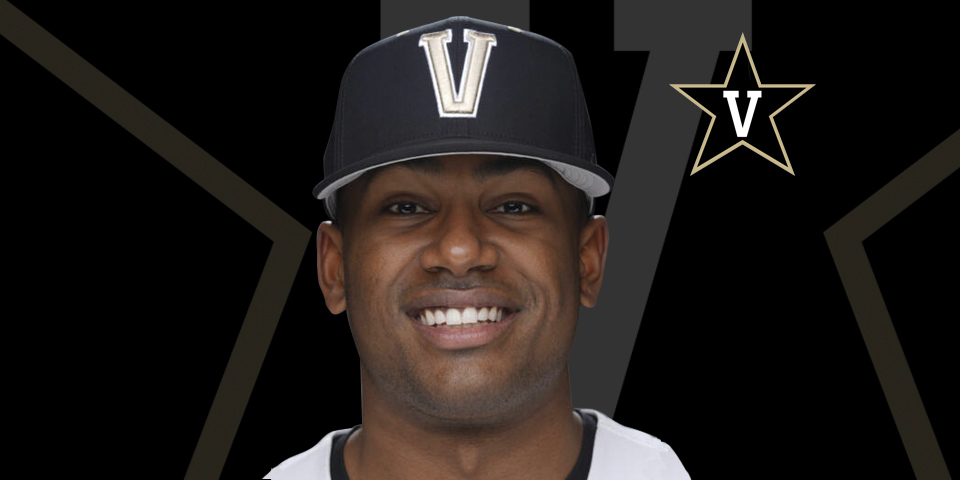
    Kumar Rocker

    College Vanderbilt (Jr. 2021)
    Bio R/R 6-5, 245
    Date of Birth 11/22/1999
    Fastball 55 (65)
    Slider 65 (70)
    Cutter 45 (60)
    Changeup 45 (55)
    Control 50 (55)
    Future Value 65

    Written by Brandon Tew

    Analysis:

    Kumar Rocker is one of the most prominent college baseball players in recent memory.. A highly ranked high school prospect out of Georgia, he turned down considerable money to attend Vanderbilt. The decision led to a dominant collegiate career for a pitcher who became a household name. With a plus fastball and wipeout slider to go with above average control. Rocker has the chance to be a special draft pick for a team.

    Early College Career:

    Rocker stepped on campus in Nashville and immediately became a weekend starter for the Commodores, throwing 99 ⅔  innings during his freshman season with an impressive 12-5 record and 3.25 ERA. Rocker’s powerful fastball and slider combo allowed him to put up eye-popping numbers with 114 Ks to 21 BBs. The slider became a force and a true weapon for Rocker down the stretch of the 2019 season. This was highlighted by a 19 strikeout no-hitter vs Duke in a Super Regional where he struck out all 19 batters with his filthy slider. Rocker backed up the 2019 performance during the 2020 shortened season with a 1.80 ERA in 15 innings, compiling 28 strikeouts and 8 walks. The  stuff shown by Rocker in his first two seasons in Nashville made him the consensus No. 1 pick in this draft before the season started.  

    2021:

    At the beginning of the 2021 season, Rocker continued to star, not allowing an earned run until his fifth start of the season, which was his first conference start against South Carolina on March 19. Rocker surrendered 2 earned runs and walked 2 batters but struck out 14 in 8 innings.  He then experienced a velocity dip from the usual 93-96 mph fastball with an 88-92 mph fastball against Missouri in his next start. He still overwhelmed hitters at the lower velo and produced a solid start of 6 innings, 2 runs, and 5 strikeouts. Ultimately, Rocker got his fastball back to its normal velocity two starts later. While he struggled and gave up 6 runs to Georgia on April 8 and Alabama on May 7, Rocker overall had great numbers in 2021. With a 14-4 record and 2.73 ERA Rocker threw 122 innings, with  179 strikeouts and 39 walks. The question marks surrounded Rocker in terms of his No. 1 overall pick status, but he proved himself as a top pitcher in the draft still as Vandy usually won when he took the ball.

    Scouting Report:

    Rocker is built like a tight end playing baseball. The 6’5 245 lb. righty is an intimidating force on the mound. Rocker’s fastball sits at 92-95 and has touched 98 mph this season. Rocker has experienced dips in his velocity this season and velocity fluctuation throughout his starts. This has made Rocker’s fastball even at a low to mid 90s velocity look average at times. When at its best, his four-seam has explosiveness out of his hand and blows by hitters at the top of the zone. Rocker can lose command of his fastball, losing his release point in his long delivery. When dialed in, Rocker can spot the baseball in all 4 quadrants, showing great control and throwing consistent strikes. The issue for Rocker is maintaining command of his fastball and not leaving it in the middle of the plate. He’s also had starts where he’s been wild, walking 5 batters against Alabama in a 5-inning start.  Rocker has a fastball that still flashes ‘plus’ potential in pro ball and with a secondary offering like his slider. He just needs more consistent command of the pitch going forward.

    The slider is Rocker’s shiny jewel covered in dirt as he buries the pitch for swinging strikes constantly.  His slider is truly an amazing pitch, working at usually 81-86 mph it’s devastating for college hitters to face. It’s one of the best breaking balls in college baseball history and is unhittable when Rocker is on. 

    The slider is Rocker’s shiny jewel covered in dirt as he buries the pitch for swinging strikes constantly. 

    With gyro spin, Rocker creates a true vertical drop on the pitch.  The baseball doesn’t just “fall off the table,” it dive- bombs and explodes towards the ground with very late action to it. Rocker uses the tunneling of his fastball and slider to baffle hitters and the pitch has been so dominant and nasty because it looks like his fastball until at the last split second when it disappears.  

    What makes the pitch even more special is how Rocker can manipulate its speed and break; depending on the count he can throw a slower slider for a strike in the zone and then amp it up to get a swing and miss out of the zone as a putaway pitch. 

    The next step for Rocker is to have consistent command and feel of the pitch throughout his entire start. The ability to spot the fastball and then work the slider right in that exact tunnel, especially down in the zone, will make Rocker’s slider even better. It’s a true plus plus pitch and could get swings and misses in the majors right now. 

    Rocker’s changeup gives him a potential above average third offering. The development of this offspeed pitch will go a long way in whether Rocker reaches his potential as a frontline starter or if he becomes a dominant reliever with a fastball and slider repertoire.  

    Rocker has started to throw his mid 80s changeup more this season, trying to show off his full arsenal of pitches to scouts. Rocker is comfortable throwing the pitch and works it mainly down and away from LHBs. In Rocker’s last start of the season against Mississippi State in the National Championship game, he didn’t have his best stuff that night. He went to the changeup in a few key moments early in the game and got some roll-over ground balls. 

    With the Bulldogs laying off his great slider, Rocker had to find other ways to get hitters out with spotty fastball command that day. Rocker has good movement and fade on his changeup though and has a decent feel for the pitch. While it can get firm at times, It’s a pitch that should become average or above average and allow Rocker to progress as a starter in professional baseball. 

    Rocker added a cutter this season that has also become a more reliable and consistent offering for him over the course of the season. It has more horizontal break than his slider and works from 86-91 mph. When he throws it well it’s a great pitch to keep hitters off of his slider and fastball. He gets lots of weak contact on the pitch and isn’t afraid to throw it to both sides of the plate. Rocker has proven he can backdoor the pitch to LHBs, catching the outside part of the plate as it starts on the edge of the right handed batter’s box.  His confidence has grown in the pitch and he now throws it early in games. 

    On his error in the 1st inning of the Championship Game, Rocker got a weak comebacker on a Cutter at 86 mph thrown away from a RHB. This pitch has plus potential and plays up when it’s in the same tunnel as his fastball and slider. This gives Rocker a solid 4-pitch mix with above-average control.

    Lastly, Rocker’s delivery and big game mentality are what scouts look for.  The ceiling I have for Rocker is high, really high, but at his best Rocker reminds me of John Smoltz. 

    The delivery for Rocker is fluid and he has great tempo as he brings his hands over his head just as Smoltz. He then has a nice belt-high leg kick and slightly extended leg before he strides down the mound with good extension towards the plate. Rocker’s delivery is repeatable and he gets to a great position right before the foot strike. He loses his high ¾ release point at times but it’s something he can definitely clean up in the future once he’s in pro ball. 

    Where I think  Rocker separates himself from a lot of other pitchers in this draft class and why I gave him the bump to a 65 future value is his big game performance and mentality. He wants the baseball in the biggest games. He dominated early and often in the NCAA tournament. In the three elimination games before his last college start against Mississippi State, Rocker was 3-0 with a 0.84 ERA and 41 strikeouts in 21 1/3 innings. While he didn’t perform his best in his last start he walked off the mound with his team still in the ball game. This is the type of pitcher MLB teams want with a top-10 pick and rarely ever get. In the biggest games Rocker shows up and he takes the ball with the mindset that his team is going to win. This is something Smoltz did a lot in big games throughout his career. He has the highest upside of any prospect in the draft and has all the tools to reach his full potential if he can put it all together.

    Summation:

    While  it’s too much to predict Rocker as a future Hall of Famer, he will have an extremely high ceiling. He can be a very productive MLB pitcher. A team is going to get a powerful pitcher with pure stuff and a highly competitive attitude. Rocker was hyped when he stepped on the campus of Vanderbilt and he lived up to and surpassed the hype.  He has a solid 4-pitch mix and one of the best breaking pitches in the entire draft. Rocker is the type of pitcher a team will be glad they drafted on July 11 because they might be drafting the best pitcher in the draft.

    Projection:

    A right-handed power pitcher with a plus fastball and nasty slider that gives him the chance to be a truly dominant frontline starter and future All-Star.

    Ceiling: John Smoltz

    Floor: Dellin Betances

    Draft Expectation: Top 10 pick

  • College Baseball Prospect Rankings: No. 3 – Henry Davis

    College Baseball Prospect Rankings: No. 3 – Henry Davis

    Over the next couple weeks leading up to the 2021 MLB Amateur Draft, Sports Info Solutions will be publishing a series of scouting reports from three of our Video Scouts for the top-10 collegiate draft prospects and five honorable mentions. Each player is graded by the 20-80 scouting scale, given a comprehensive evaluation, and assigned a floor and a ceiling comparison, which indicate–if a player makes the Major Leagues–the range of the type of player into which he can develop.

    To read all the reports, click here.


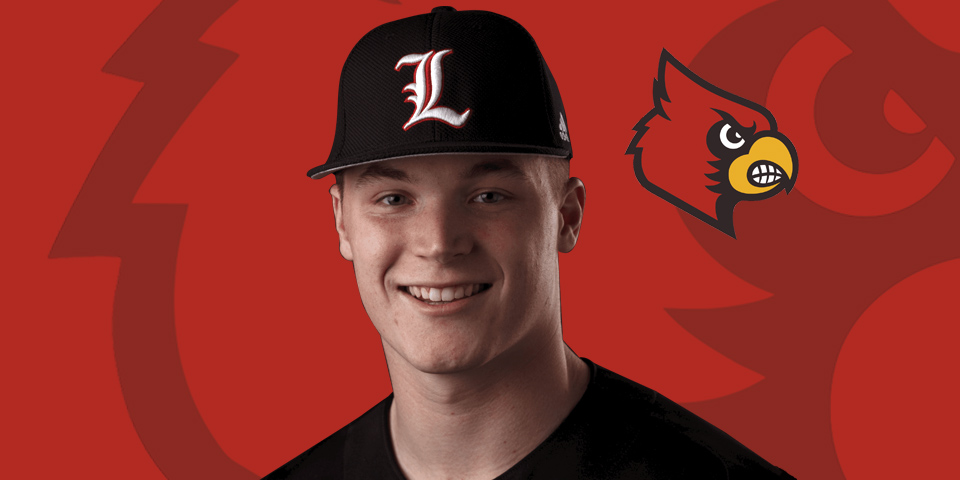
    Henry Davis

    College Louisville (Soph 2021)
    Bio R/R 6-2 210
    Date of Birth 9/21/1999
    Hit 55 (65)
    Power 60 (70)
    Run 40 (45)
    Field 40 (45)
    Arm 65 (70)
    Future Value 65

    Written By Dominick Ricotta

    Analysis

    Henry Davis is by far the best bat in the 2021 MLB Draft. That is not a knock on any other player in the draft, as there are some good hitters out there, but Davis is on his own planet when comparing him to the others. He has the ability to barrel up any pitch, has a great approach at the plate, and is incredibly strong.

    If you like exit velocity, Henry Davis will be one of your favorite hitters. As a catcher he can struggle to frame and block pitches but his arm is elite and makes up for some of his deficiencies defensively. 

    Early College Career

    Davis had a quiet freshman year at Louisville in 2019, slashing .280/.345/.386 with 3 HR in 132 AB. He struck out 18 times and walked 13 times, which is fantastic as a freshman and shows he has always had an understanding of the strike zone.

    In the shortened 2020 season Davis’ numbers jumped dramatically. He finished with a slash of .372/.481/.698 with 3 HR in 43 AB, adding 8 walks and 4 strikeouts. Of course 43 at-bats is too small of a sample size to be sure that Davis could sustain that for an entire season, so 2021 was a big prove it year for him.

    Behind the plate Davis successfully caught 12 out of 35 base stealers in 2019 and 2020 combined. He also allowed 13 passed balls, which many scouts thought would be an issue if Davis wanted to stay at catcher.

    2021

    Davis certainly proved that 2020 was legit. He finished 2021 hitting .370/.482/.663 with 15 HR in 184 AB. The most impressive part of the season might be his 31 walks and 24 strikeouts, not many hitters have more walks than strikeouts throughout a season. It’s a testament to his elite eye and approach at the plate, which is different from most power hitters that we see today. 

    Defensively he caught 13 of 28 base stealers and had 3 passed balls. He showed great improvement blocking pitches in the dirt in 2021.

    If you like exit velocity, Henry Davis will be one of your favorite hitters.

    Scouting Report

    In the batter’s box Davis does not try to do too much, he has a simple approach and a great eye. His barrel is flat through the zone which translates to a lot of line drives. He doesn’t try to pull or lift the ball, he sprays hits to every part of the field. He has an unreal amount of raw power that even with this approach he still hits home runs and extra base hits. 

    Davis has a slightly open stance, with his knees bent similar to how Albert Pujols bends his knees. His leg kick is unusual, he sways his foot towards home plate and then back to where it lines up with his back foot, so when he swings his feet are level. This type of leg kick puts him on his back leg and almost anchors it down, which gives him the ability to generate power from that back leg. 

    He holds his hands near his right shoulder with the bat resting on his shoulder. When he loads up he gets great extension and really coils his body to get ready to explode to the ball. On the load up he puts the head of the bat behind his head, which can be problematic, but because of Davis’ short swing and quick hands it doesn’t affect him. 

    Davis uses his quick hands to cover every part of the strike zone. He can turn on an inside pitch and barrel it up, one of the more impressive at-bats from him this season was against Ryan Cusick (No. 9-rated prospect). Davis turned on Cusick’s explosive 95mph fastball inside for a home run. Davis does a great job of pulling his hands into his body and he is so strong he trusts that if he can get the barrel to the ball it will go far. 

    If a pitcher pitches him on the outside part of the plate Davis is happy to take that pitch up the middle or the other way. If the pitcher tries to pitch high in the zone, Davis has that great level swing path that allows him to reach those pitches. He is an incredibly tough out because of his willingness to keep it simple, taking what the pitcher gives him, focus on hitting line drives, and putting the ball in play.

    Davis’ eye at the plate is another reason why he is so difficult to get out. His 31 walks to 24 strikeouts in 2021 shows just how patient he is.. He waits for his pitch that he feels he can drive, he doesn’t beat himself by chasing bad pitches. He seems to like being aggressive in high leverage situations, swinging at the first pitch frequently with runners in scoring position.

    If he does happen to get fooled on a pitch Davis does a great job of adjusting mid-swing. His leg kick gives him the ability to stay back as long as possible so he can adjust to the breaking balls. His hands are so quick that if he gets fooled on a fastball he can make up for it and still do damage.

    Behind the plate Davis is an intriguing fielder. Because of his 6-1 210 frame he struggles to crouch down low like a traditional catcher would. When there is nobody on base he drops down to one knee.

    Every other situation he is on both feet in the crouch. He tries to widen his legs as much as he can to get low, but that leaves a huge gap between his legs and also affects his ability to slide laterally and blocks pitches that aren’t right at him. Davis blocks pitches with his glove instead of dropping to his knees to use his chest protector. He actually did a great job blocking pitches with his glove but it isn’t a sustainable technique, especially when MLB pitchers throw harder and have more spin on their pitches.

    Davis needs some work on framing but his big body makes that difficult. He can’t subtly move behind the plate and steal pitches. His defense behind the plate is probably the only thing that will need to improve for Davis to be a star at the next level. 

    One part of his defense that won’t need to improve is Davis’ arm. He has an elite arm that makes up for his slower pop time. The throws are incredibly strong and accurate, which made it difficult to run on him. Most catchers his size can struggle with catching base stealers but it might be the thing to keep him behind home plate as he progresses through the minors.

    Summation:

    Henry Davis will be a successful MLB player if he keeps on the path he is on right now. His raw power at the plate is going to improve and translate to more home runs and extra base hits. He will start to understand the strike zone and situations even better than he already does. His defense will most likely improve but if not he can be a DH or possibly even first base since his hands are so good.   

    Projection:

    Multiple All-Star appearances, .300 avg potential

    Ceiling: Travis d’Arnaud (when healthy)

    Floor:  Omar Narváez

    Draft Prediction: Top-5 pick

  • College Baseball Prospect Rankings: No. 4 Ty Madden

    College Baseball Prospect Rankings: No. 4 Ty Madden

    Over the next couple weeks leading up to the 2021 MLB Amateur Draft, Sports Info Solutions will be publishing a series of scouting reports from three of our Video Scouts for the top-10 collegiate draft prospects and five honorable mentions. Each player is graded by the 20-80 scouting scale, given a comprehensive evaluation, and assigned a floor and a ceiling comparison, which indicate–if a player makes the Major Leagues–the range of the type of player into which he can develop.

    To read all the reports, click here.

    TY MADDEN, RHP

    College University of Texas (RS SO. 2021)
    Bio R/R 6-3, 215 lbs.
    Date of Birth 2/21/2000
    Fastball 55(60)
    Slider 50(60)
    Curveball 50(55)
    Changeup 35(45)
    Control 50(55)
    Future Value 55

    Written by Brandon Tew

    Analysis:

    While Madden’s future value doesn’t stack up to some of the pitchers behind him on our list, his proven track record and limited injury history pushed him higher in our rankings. Madden’s success in the Big 12 Conference and his workhorse mentality will make him a 1st round pick on July 11. Madden possesses all the tools to become an MLB pitcher, with two-plus pitches and above-average control. Madden could reach the Majors faster than some of his draft mates. 

    Early College Career:

    Taking the mound early in his freshman year in Austin. Madden quickly proved his reliability to the Texas coaching staff. Appearing in 15 games with 8 starts, Madden tossed a solid 42 1/3 innings with a 4-1 record and 3.40 ERA. Serving as the Saturday starter in the Covid-19 shortened 2020 season, Madden struck out 26 batters and walked only 4 over 25 innings pitched. He posted a dominant 1.80 ERA to go along with his outstanding K/BB ratio. Madden showed his potential in 2020 to be a top-of-the-line starter in the country and didn’t disappoint in 2021.

    2021:

    Madden was handed the keys to the car this season as Texas’ ace. He faced the 2021 national champions out of the gate in Mississippi State on Feb. 20 and showed glimpses of his plus fastball and slider combo. He struck out 5 Bulldogs in 4 innings. He followed that performance with consecutive scoreless outings against BYU and Houston. He struck out 25 Cougars in those two games, including a 14-strikeout shutout against Houston on March 5.

    Madden continued to dominate Big 12 competition, surrendering 3 ER or more only twice during conference play. He routinely pitched deep into games past the 100-pitch mark.

    Madden would face Mississippi State two more times during the season, this time in the College World Series, which would be his last two starts of 2021. He pitched brilliantly in both allowing only 2 ER in each contest and striking out 18 batters in 13 innings. In a must-win game on June 25, Madden earned the win for his team, demonstrating his competitive mindset and big-game attitude.

    Over the course of the season, Madden proved to be one of the most consistent Friday night starters in the nation. With a 2.45 ERA and a 3.1 K/BB ratio, Madden climbed up draft boards into the top half of the 1st round.

    Scouting Report:

    Madden is a strong, sturdily built right-handed power pitcher who is more comfortable working down in the zone than up. He has a plus fastball that sits at 94-96 mph, and he routinely reaches back for more, even touching 99 mph this season. Madden added velocity from his first two seasons in Austin when he sat 90-93 mph.

    While his fastball doesn’t have spectacular movement, it works and plays up with his command and control of the pitch. He throws strikes consistently with it hitting triple-digits on the radar gun, and can spot the pitch down in the zone with a little sinking action to the pitch. That said,  Madden must improve his command of the pitch if he’s going to continue throwing this type of fastball. He can leave it up in the zone and miss high and arm side. Madden still allows hard contact on the pitch when it’s up.

    Madden’s slider is his best pitch and he utilizes it against both lefties and righties. The breaking ball is tight and has great late action to it with a slider profile that is more prevalent now in baseball than ever. The pitch has a sharp break and stays in the tunnel with his fastball extremely well.

    When thrown properly the gyroscopic spin of the ball pulls the pitch down hard towards the plate. The three best sliders from college pitchers in this draft all possess this spin profile. Madden could have a plus-plus slider like Sam Bachman and Kumar Rocker if he’s able to create more depth to the pitch and command it even better. Madden has a solid plus combo in his slider and fastball.

    His command of both his fastball and slider down and glove side adds to the deception of both pitches. Being able to spot the ball down and across his body creates a unique tunneling action for the pitch as it comes out of his hand and stays on the downward plane. The slider bites late and dives down and into a LHBs back foot and away from the barrel of a RHB. The next evolution of both pitches is the ability to throw the fastball with better command to his arm side and throw the slider with even better command for a strike. The combo is disgustingly good when thrown with power and command and is the reason Madden is seen as a prospect that is likely to make the majors. 

    Madden rarely throws his curveball and he throws it more as an offering early in counts to keep hitters honest and try to steal a strike. With Madden’s ability to throw the pitch consistently for a strike or at the very least miss at the top of the zone. It could become an above-average offering for him just to sprinkle into his arsenal with his fastball and slider as a third pitch.

    If the curveball doesn’t become a reliable third pitch then he needs his changeup to progress. It’s a fringe-average pitch that he could use really well for lefties. He almost exclusively threw the pitch to LHBs this season and used it sparingly. The pitch has traits of a quality changeup but he needs to generate confidence in the pitch if he is going to use it in pro ball. Whether it’s the curveball or changeup, Madden needs a reliable third pitch to emerge if he wants a chance to reach his potential as a starter for an MLB team.

    Summation:

    At the end of the day Madden is the prototypical right handed power pitcher that MLB teams dream of on draft day. He has a smooth and effortless delivery and less injury risk than most. Madden throws a lethal fastball and slider combination that could make him at the very least a productive MLB reliever. The separator for Madden will be the improvement of his command and the development of a quality third pitch. Madden’s lesser risk for injury and his proven track record make him tantalizing as a prospect for teams as a 1st-round pick in this Draft.

    Projection:

    A right-handed power pitcher with a plus-fastball-and-slider combo that will make him a productive MLB pitcher as a starter or reliever if he reaches the big leagues.

    Ceiling: Carlos Carrasco

    Floor:  Daniel Bard

    Draft Expectation: Top-15 pick


  • College baseball prospect rankings: No. 5 Sal Frelick

    College baseball prospect rankings: No. 5 Sal Frelick

    Over the next couple weeks leading up to the 2021 MLB Amateur Draft, Sports Info Solutions will be publishing a series of scouting reports from three of our Video Scouts for the top-10 collegiate draft prospects and five honorable mentions. Each player is graded by the 20-80 scouting scale, given a comprehensive evaluation, and assigned a floor and a ceiling comparison, which indicate–if a player makes the Major Leagues–the range of the type of player into which he can develop.

    To read all the reports, click here.

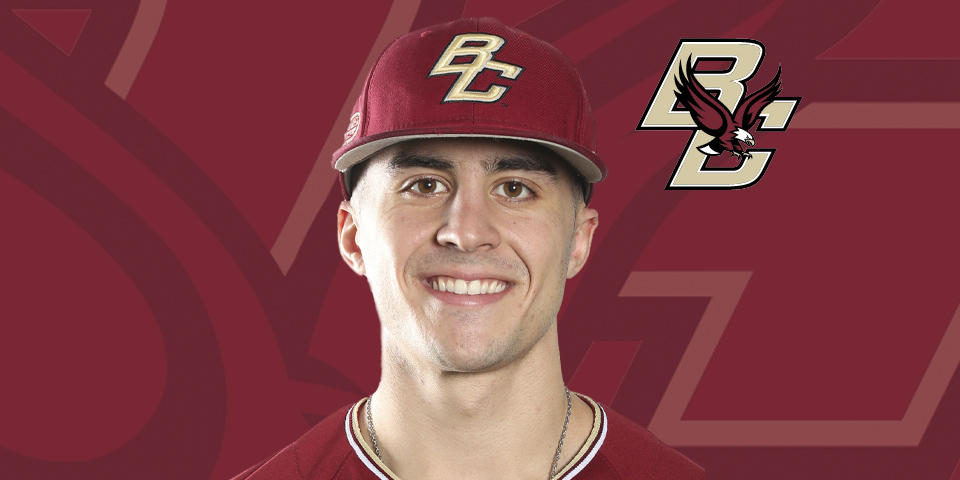
    SAL FRELICK, INF/OF

    College Boston College (JR, 2021)
    Bio L/R 5-9, 175 lbs.
    Date of Birth
    Hit 45 (60)
    Power 35 (45)
    Run 70 (70)
    Field 50 (60)
    Arm 50 (50)
    Future Value 60

    Written by Adam Lan

    Analysis:

    Frelick is a multi-sport athlete who oozes athleticism, allowing scouts to dream big on his potential.  While the physical ability is tremendous, it is still somewhat raw, but the plus makeup makes it easy to see a high floor in addition to the vast ceiling. 

    Frelick was a three-sport star in high school, playing quarterback and winning the Gatorade POY for Massachusetts in football, as well as being an accomplished hockey player. Although he explored options that would allow him to play both baseball and football collegiately, he ended up going to Boston College to focus solely on baseball.  

    Early College Career:

    As a freshman in 2019, Frelick immediately flashed the tools that will undoubtedly make him a high draft pick, hitting .367/.447/.513 with 4 HR, 32 RBI, 30 R, and 18 SB in just 39 games, due to a knee injury. More impressively, Frelick had 22 walks to 16 strikeouts as a true freshman. 

    The outstanding debut did not go unnoticed, as Frelick was voted to the All-ACC Second Team, ACC All-Freshman team, and was named a Freshman All-American by several respected publications. Expectations were high going into 2020, and like most people, it was not a great year for Frelick. In just 15 games before the season was canceled, Frelick hit .241/.380/.414 with 2 HR, 4 RBI, 17 R, and 7 SB. Albeit a small sample size, the speed and plate discipline still stood out. Frelick once again walked more than he struck out with 11 walks vs 6 strikeouts.  

    With no Cape Cod league in 2020 to make up for the lost at bats, Frelick plied his wares in the Futures Collegiate Baseball League for the North Shore Navigators and did not disappoint. In 35 games, Frelick hit .361/.438/.594 with 7 HR, 22 SB, and once again had more walks than strikeouts. 

    Although the expectations were high for Boston College, the team would underwhelm in 2021, as the individual parts did not add up to team success. This was no fault of Frelick who, despite getting pitched around at times, carried over his success in the Futures Collegiate Baseball League to Boston College.

    FRELICK’S MOST FLASHY TOOL IS HIS SPEED … HIS OUTSTANDING PLATE DISCIPLINE IS PERHAPS HIS MOST EXCITING TOOL.

    Frelick hit .359/.443/.559 flashing more extra base power, hitting 6 HR, 25 extra base hits, and 13 SB. He totaled 27 walks and 28 strikeouts. Frelick’s outstanding season made him a Golden Spikes Semifinalist, 3rd Team All-American from Baseball America, earned him a spot on the All-ACC First team, as well as ACC Defensive Player of the year and becoming the first player in school history to win an ABCA/Rawlings Gold Glove.

    Scouting Report

    Perhaps the most impressive accomplishment  in a long line of impressive feats, is the defensive progression Frelick made at Boston College. Playing mostly shortstop in high school, Frelick had never played in the outfield before moving to right field in 2019. He eventually settled in center field.  Frelick quickly took to the outfield, displaying a natural feel for reads, which combined with his plus athleticism resulted in a plethora of highlight-reel plays. 

    Frelick has a strong and accurate arm and plays defense with a reckless abandon that will surely endear him to fans of whichever team drafts him. While his defensive home likely lies in center due to his plus speed, his versatility will serve him well at the next level as he has shown the ability to play shortstop and second base. 

    Frelick’s most flashy tool is his speed, but as evidenced by his career 60/50 walk-to-strikeout rate, his outstanding plate discipline is perhaps his most exciting tool.

    Frelick is not afraid to attack pitchers, jumping on a pitch he can drive, but his mastery of the strike zone allows him to exhibit patience, working counts and getting on base where he can flash his plus speed. Frelick’s short, simple swing and plus bat speed let him cover the plate top to bottom, and while he is more of a slap hitter with gap power, he has shown the ability to drive the ball, leading some scouts to think more power is on the way. 

    Summation:

    Possessing some of the most tantalizing tools at the collegiate level, Frelick actually has a rare combination of high floor and high ceiling. His plus speed, plate discipline, and ability to make solid contact should all translate to the next level, but given his relative lack of ABs due to injury, COVID, and being a northeastern multi-sport high school prospect, more progression is still possible.

    Projection:  Potential 5 tool outfielder with plus speed and excellent bat-to-ball skills

    Ceiling: Victor Robles (with fewer strikeouts)

    Floor: Myles Straw

    Draft Expectation: Top-15 pick

  • College Baseball Prospect Rankings: No. 6 – Sam Bachman

    College Baseball Prospect Rankings: No. 6 – Sam Bachman

    Over the next couple weeks leading up to the 2021 MLB Amateur Draft, Sports Info Solutions will be publishing a series of scouting reports from three of our Video Scouts for the top-10 collegiate draft prospects and five honorable mentions. Each player is graded by the 20-80 scouting scale, given a comprehensive evaluation, and assigned a floor and a ceiling comparison, which indicate–if a player makes the Major Leagues–the range of the type of player into which he can develop.

    To read all the reports, click here.

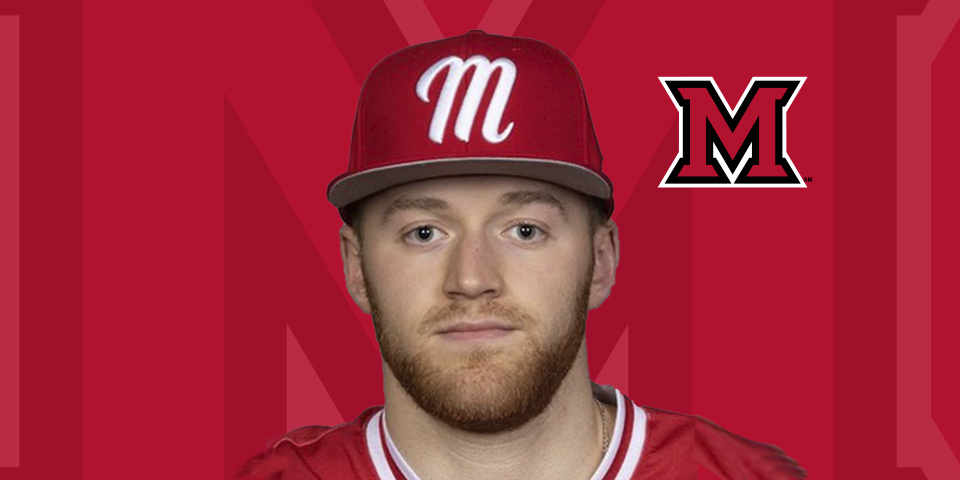
    SAM BACHMAN, SP

    College Miami University (OH) (JR. 2021)
    Bio R/R 6-1, 235 lbs.
    Date of Birth 9/30/1999
    Fastball 60(70)
    Curveball 60(70)
    Change Up 45(55)
    Control 45(50)
    Future Value 60

    Written by Brandon Tew

    Analysis:

    Sam Bachman started skyrocketing up draft boards this college season with his loud fastball and slider combo that might be the best in the entire 2021 draft. With two potential 70-grade pitches, Bachman arguably possesses the highest upside of any pitching prospect in the draft. The control of these tantalizing offerings and the development of a third pitch will be key for Bachman during his pro career.

    Early College Career:

    Bachman stepped on campus his freshman year for the RedHawks in 2019 and instantly experienced success, posting a 3.93 ERA in 14 starts. He backed up that First Team All-MAC performance with a 3.42 ERA in 4 starts during the shortened 2020 season. Bachman’s reliability and fastball-slider combo was already on scouts’ radar during his first two seasons in Oxford, Ohio, but he turned his repertoire into a nightmare for hitters going into the fall of 2020.

    2021:

    Bachman made some slight mechanical tweaks and increased his fastball velocity this season, making it one of the best in this year’s draft. Sitting at 95-97 mph comfortably and touching up to 101 mph this spring, it has impressive arm side run and bores into RHBs constantly.  The horizontal movement of his fastball excites many scouts. He throws a 2-seam fastball that moves but can also reach triple digits on the radar gun, something that is hard to find in a pitching prospect.

    The pairing of this fastball with a mid-80s slider that climbs up to the low 90s at times had scouts flocking to his starts this spring. Bachman dominated MAC competition this season with an impressive 1.81 ERA and a minuscule .147 opponent’s batting average. He also mowed down hitters, striking out 93 batters in 59 ⅔  innings. The competition Bachman faced wasn’t the best, but with high strikeout totals and some improved control of his fastball and slider, Bachman possesses the tools to produce at the next level.

    Scouting Report:

    Bachman pitches with an aggressive mindset throwing his 2-seam fastball in to righties to start at bats. The horizontal movement Bachman gets on the pitch is different from most fastballs. This allows the pitch to run in on the hands of right-handed batters, making it difficult to square the pitch up. Bachman creates movement on the ball by getting on the side of the baseball and throwing from a lower ¾ arm slot.

    Bachman tunnels his fastball extremely well with his slider which adds to the deception of the pitch. Bachman has worked hard to get more of a gyroscopic or bullet-like spin to his slider which allows gravity to yank this pitch towards the ground as it approaches the plate. This creates late action as the ball “falls off the table,” something that many pitchers want from a wipeout slider. The gyro spin keeps the baseball in the tunnel with his fastball longer, enhancing the effectiveness of both pitches. 

    The development of Bachman’s slider has been key for him. Bachman has the ability to manipulate the spin on the pitch and drop it in for a strike, keeping hitters honest early in the count and then putting them away late with the same pitch. 

    There are some questions about his potential as an MLB starter. He needs to develop a dependable third pitch. He threw his changeup sparingly during the spring, but it shows real promise.  Bachman throws  a traditional changeup, gripping it in a 2-seam fashion; he creates good fading action  to the pitch when thrown well and the pitch does stay in the same tunnel as his fastball and slider.  The potential of this pitch is above-average to plus and will be a big factor in if he stays as a starter or reliever in pro ball.

    Another question mark for Bachman is control, as he did walk 4.1 batters per 9 innings in his first two seasons. He did lower that to only 2.6 walks per 9 in 2021. If his improved control and command continues, he will have a good shot at being a starter.

    He needs to continue to develop his fastball control and command as he can get wild and lose his release point at times. If he can spot the fastball, both glove side and arm side, then it can become a dangerous weapon. He’s more comfortable throwing to the glove side of the plate, but proved this season he can attack hitters’ arm side, especially righties, allowing the 2-seamer to ride in on the hands.

    Using a high-effort delivery with quick tempo, Bachman starts with his hands down in front of him at his belt. He takes a quick step back and works his hands quickly to his chest along with a high leg kick to his chest as well. He has a nice drop-and-drive on his back leg, loading before he extends with powerful energy as his plant foot drives towards the plate. 

    With a shorter and quicker arm action from his low ¾ arm slot Bachman has a quick and deceptive delivery and pitches with high intensity and a fast tempo. This style of delivery can cause fatigue late into his starts and he has had problems with arm soreness this spring. Bachman will have to work on this if teams plan to employ him as a starter. He only pitched into the 7th inning twice in 12 starts this season

    Summation:

    Whether Bachman starts or relieves for a team will depend on the development of his changeup and the control and command of his pitches. With improved control this spring it projects to be at least average for him in professional baseball. The nastiness of Bachman’s fastball and his slider could allow him to move through a minor league organization quickly. His upside is enormous, and he has the potential to be an impact power arm at the next level. 

    Projection:

    High floor reliever with an elite fastball and slider combo. With the development of a changeup and better control he has starter potential.

    Ceiling: Luis Severino

    Floor: Diego Castillo

    Draft Expectation: Top 15 pick

  • College Baseball Prospect Rankings: No. 7 – Gunnar Hoglund

    College Baseball Prospect Rankings: No. 7 – Gunnar Hoglund

    Over the next couple weeks leading up to the 2021 MLB Amateur Draft, Sports Info Solutions will be publishing a series of scouting reports from three of our Video Scouts for the top-10 collegiate draft prospects and five honorable mentions. Each player is graded by the 20-80 scouting scale, given a comprehensive evaluation, and assigned a floor and a ceiling comparison, which indicate–if a player makes the Major Leagues–the range of the type of player into which he can develop.

    To read all the reports, click here.

    Gunnar Hoglund, RHP

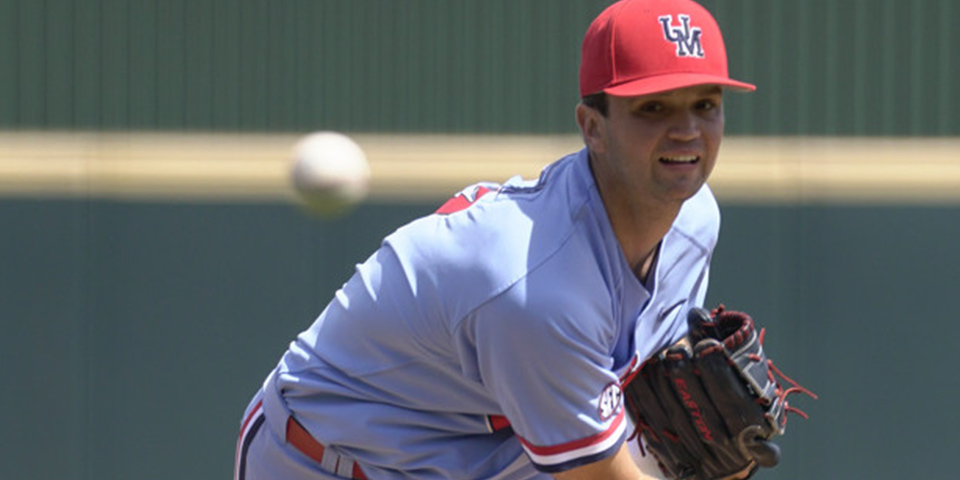
    College University of Mississippi (JR.2021)
    Bio L/R 6-4, 220 lbs
    Date of Birth 12/17/1999
    Fastball 50(55)
    Curveball 40(50)
    Slider 45(55)
    Change Up 45(55)
    Control 65(70)
    Future Value 60

    Written by Brandon Tew

    Analysis:

    Gunnar Hoglund is an intriguing pitching prospect. He possesses top-10 talent for this year’s draft, but an elbow injury suffered during his May 7 start against Texas A&M  and subsequent Tommy John Surgery means he might fall down draft boards come early July. The arm talent and ability to throw consistent strikes means some teams will consider Hoglund in the 1st round. This is why he remains a top college prospect on our list.

    2021:

    Hoglund dazzled at times during his junior season at Ole Miss. He demonstrated strikeout stuff with stellar command, while putting up 14 and 13 strikeouts in consecutive starts against Louisiana-Monroe and Auburn in mid-March. Hoglund tossed 14 scoreless innings in those two starts and quickly climbed draft boards. He shined throughout most of the season, posting a  2.87 ERA in 62 2/3 innings, striking out 39% of his opponents and walking only 7%. Hoglund displayed one of the most polished repertoires in the nation.

    Scouting Report:

    Hoglund attacks hitters and pounds the strike zone, consistently throwing strikes and commanding all his pitches. Hoglund’s above-average fastball sits around 92-94 mph and touched 96 mph at points this season. He throws the fastball to both sides of the plate, showing control of the pitch along with command and willingness to throw it in and out against both lefties and righties.

    He spots the fastball  away from hitters, allowing  him to attack with his slider (80-85mph) that has sharp action and tunnels well with his fastball. To righties, he will start the slider on the outer part of the plate and let it dive down and away. He forces hitters to swing at his slider late in counts because he spots the fastball early and often.

    Hoglund attacks hitters and pounds the strike zone, consistently throwing strikes and commanding his pitches.

    With a great feel for his fastball, Hoglund throws first-pitch strikes and stays ahead of hitters. He can challenge lefties with his slider and back foot it down and in, but his above-average changeup (80-83 mph) has become a solid weapon against LHBs. He pitches down and away, letting  his changeup fade away from hitters as a swing-and-miss pitch.  His curveball is a work in progress and he rarely throws it (14 times in the 2021 season). If he can get good separation on it from his slider, Hoglund can turn it into an average show-me offering, as a change-of-speed pitch in MLB.

    Hoglund stays on the edge of the plate with superb fastball location, getting weak contact and limiting the damage he allows. If Hoglund does lose control of his fastball, it can get hit pretty hard when left in the middle of the plate.  With average velocity on his fastball in today’s game, Hoglund needs to continue to pitch on the edges of the plate and locate his fastball to limit the advantages professional hitters can take on his mistakes. Hoglund counteracts this by pitching backwards at times and keeping hitters off-balance with a first-pitch changeup or slider in the zone for a strike. This will be a key part of his development in pro ball and will help him continue to have success.

    Hoglund’s delivery is simple and easy to repeat out of his high ¾ arm slot. He starts with his hands up at his face, bringing them down to his belt and back up in rhythm as he takes a step back, and settles on his back leg with a nice and easy leg lift to his belt. He then keeps great tempo with a slight double pump and tap of his glove, keeping his timing intact as he comes down the mound with his plant foot.

    Hoglund doesn’t overthrow and his delivery is smooth and very repeatable, which enhances his strike throwing. With great control of his pitches, he grades a potential 70 on the 20-80 scale. Hoglund can make slight adjustments during an at bat when he gets off track and can continue to throw strikes to all four quadrants of the zone.

    With this delivery, Hoglund projects well as a starting pitcher in his pro career. Despite the elbow injury ending his college career, he should stay relatively healthy as a mid-rotation starter.  His smooth arm action and longer arm circle makes his secondary pitches, especially his changeup projectable as a plus or even plus-plus pitch. The deception and movement of both his slider and changeup should only get better as he polishes those two pitches in the minors and pairs them with outstanding fastball command.

    Summation:

    Hoglund is a polished right-handed pitcher who has performed in the SEC against premier competition in 2020’s shortened season and most of 2021. This proven track record should have him staying in the 1st round despite his Tommy John Surgery in May. Hoglund is seen as a safer bet to be a starter in MLB than others on the draft board.

    With 3 above-average pitches and outstanding overall command, Hoglund should fit in as a mid-rotation guy at the next level as a No. 3 or No.4 starter, but with continuing improvements and good recovery from his surgery, Hoglund can still reach his full potential.

    Projection:

    Mid-Rotation starter with outstanding command and  a solid 4-pitch mix.

    Ceiling: Zack Greinke

    Floor: Mike Leake

    Draft Expectation: Middle-Late 1st round

  • College Baseball Prospect Rankings: No. 8 – Matt McLain

    College Baseball Prospect Rankings: No. 8 – Matt McLain

    Over the next couple weeks leading up to the 2021 MLB Amateur Draft, Sports Info Solutions will be publishing a series of scouting reports from three of our Video Scouts for the top-10 collegiate draft prospects and five honorable mentions. Each player is graded by the 20-80 scouting scale, given a comprehensive evaluation, and assigned a floor and a ceiling comparison, which indicate–if a player makes the Major Leagues–the range of the type of player into which he can develop.

    To read all the reports, click here.

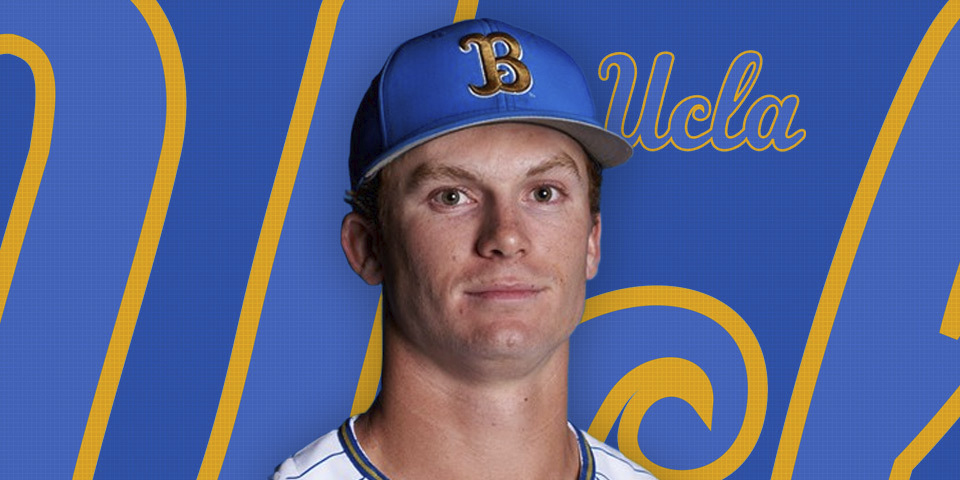
    Matt Mclain, INF

    College UCLA (Jr. 2021)
    Bio R/R 5-11, 180 lbs.
    Date of Birth 8/6/1999
    Hit 65(70)
    Power 55(65)
    Run 70 (70)
    Field 55 (60)
    Arm 55 (60)
    Future Value 60

    Written By Dominick Ricotta

    Analysis

    Matt McLain is one of the safest, low risk picks in the 2021 MLB Draft. He has shown amazing bat-to-ball skills,  elite speed, quick hands, and is as reliable as it gets in the infield.

    Early college career

    McLain had a difficult start to his college career at UCLA in 2019, hitting .203 with a .276 OBP, .355 SLG and striking out 64 times in 217 AB. He was playing CF in 2019, so he was out of his usual element of the infield, which could have led to him struggling at the plate. During the shortened 2020 season McLain looked like himself again, he hit .397 with a .422 OBP and .621 SLG, but that season was too short to really be confident McLain was back. 

    2021

    This season he proved that his abilities and the hype around him was no fluke. Back at his normal position of shortstop for a full season, McLain looked comfortable at the plate and in the field. He hit .333 with a .434 OBP and .579 SLG, striking out 34 times and also walking 34 times in 183 AB. McLain hit 9 HR and hit them to every part of the ballpark.  He also stole 9 bases in 10 attempts. Defensively he committed 7 errors in 201 chances, with all of them coming in the first 2 months of the season (including 4 in the first 5 games). McLain has all the tools to become an All-Star player in MLB and he showcased them all season long.

    Scouting Report

    At the plate, McLain is extremely comfortable and relaxed. His stance is slightly open and he holds the bat almost straight up, in a great hitting position. He doesn’t have too much of a load up, he moves his hands back a little bit and doesn’t drop them at all. the bat stays in that great hitting position throughout. His leg kick is not big but he hovers his foot off the ground until he is ready to plant it and explode toward the baseball. He keeps his legs and his hands connected well, he doesn’t let his hips fly open too early. McLain’s balance is excellent. He doesn’t swing and fall over and he always finishes the swing in the same position. 

    One of the most impressive things about McLain at the plate is his approach. He is the classic No. 2 hitter. He stays patient, has an-above average eye, doesn’t try to lift the ball, and has superb bat-to-ball skills. McLain usually likes to take the first pitch to force the pitcher to throw a strike, but in big spots he can jump on the pitcher early and do damage. When he takes pitches he is never in-between. It’s impressive and shows how well he recognizes pitches and how well he knows the strike zone. He doesn’t start his swing and stop mid-swing. He knows very early whether or not he wants to swing.

    McLain has a simple “old school” approach to hitting, he doesn’t try to pull the ball or lift the ball. His barrel stays level through the zone and it stays in the zone for a long time. He focuses on putting the ball in play and hitting the inside part of the ball. He hits pitches in every quadrant of the zone, he trusts his hands to reach the outside corner and his hands are so quick he can turn on the inside pitch. He also has the ability to stay on top of the high pitch because of his level swing, which most MLB players struggle with because of their launch angle swings. 

    The biggest worry about McLain is whether or not his power will translate to the MLB. This season he hit 9 HR and he sprayed them to all parts of the field. He has some natural power and is still getting stronger as he develops. Being able to hit home runs to center and right center shows he has the ability and strength to be more of a power hitter. But his approach at the plate is just not one that power hitters have. Hopefully whoever drafts him does not try to groove his swing into having more launch angle because his approach now is outstanding and refreshing to see in 2021. 

    McLain stole 9 bases this season but only attempted 10 steals. He has elite speed and should have used it more. He is incredibly hard to double up even on routine double plays grounders. There probably isn’t too much room for him to improve his speed but learning to use it more will make him a real problem on the bases. 

    In the field McLain is an above average defender and could be a versatile player. At SS he has good range but his hands are the most impressive tool. His glove is reliable. If he can get to a ball there’s a great chance he will field it cleanly. He releases throws super quickly and it doesn’t matter which way he is moving or what kind of throw he needs to make. He makes quick throws on the run, with his feet planted, and when turning double plays. The throws are always accurate and strong, even when he is going to his right or coming in on slow choppers.  

    His footwork is smooth which helps him release throws quickly. His feet get into good position to throw when fielding the ball, he doesn’t cross his legs and does a great job of shuffling.  McLain does well going to his right, he gets around the ball using his speed and fields the ball on his forehand.  There were some occurrences where McLain would take one or two too many shuffles before throwing the ball. It really didn’t hurt him too often but it’s a bad habit to get into and could potentially cause problems with MLB runners.

    McLain’s range and ability to make strong throws from anywhere should keep him at SS in the MLB but there is a good chance he moves over to 2B because of his body type. It wouldn’t be surprising to see him play some 3B too, as his hands are so good that he should be able to play anywhere in the infield.

    Summation

    McLain’s hitting ability, speed, quick hands, and reliable glove make him a sure bet to make MLB eventually. He has shown he has the ability to do everything on a baseball field. There are no big holes in his game and nothing that might stop teams from drafting him early in the 1st round. There’s uncertainty about how much he could improve his abilities, since he already looks developed, but he won’t need to improve much to become a top-tier MLB player. 

    He will most likely move over to 2B but definitely has the defensive abilities to stay at SS and be above average defensively. His versatility should make him an even better draft piece.

    Projection

    Everyday 2B, won’t hit too many HRs, will be a high average and on-base hitter. All-Star potential.

    Ceiling: Whit Merrifield

    Floor: Kevin Newman

    Draft Prediction: 1st round 10th-15th pick

  • College Baseball Prospect Rankings: No. 9 – Ryan Cusick

    College Baseball Prospect Rankings: No. 9 – Ryan Cusick

    Over the next couple weeks leading up to the 2021 MLB Amateur Draft, Sports Info Solutions will be publishing a series of scouting reports from three of our Video Scouts for the top-10 collegiate draft prospects and five honorable mentions. Each player is graded by the 20-80 scouting scale, given a comprehensive evaluation, and assigned a floor and a ceiling comparison, which indicate–if a player makes the Major Leagues–the range of the type of player into which he can develop.

    To read all the reports, click here.

    Ryan Cusick, RHP

    College Wake Forest University(So.2021)
    Bio R/R 6-6, 235 Ibs
    Date of Birth 11/12/1999
    Fastball 65(70)
    Curveball 55(65)
    Change Up 30(35)
    Control 35(45)
    Future Value 55

    Written by Dominick Ricotta

    Analysis:

    Cusick is one of the most interesting arms in the 2021 draft class. He has electric stuff and has been dominant at times, but his control is a big problem. His ceiling is extremely high because of his exploding fastball (90-101MPH) and sharp breaking ball (72-85 MPH) but he also has the potential to struggle due to the control issues.

    Cusick has been moved up and down draft boards all season because he will need some work, but has the raw tools to be an elite pitcher at the next level. Right now he profiles better as a reliever than a starter, since he only has two legitimate pitches, but he has been trying to develop a third pitch in a changeup (87-93 MPH). Cusick has swing-and-miss ability with both his fastball and curveball, striking out 108 batters in 70 innings. On the flip side, he has also walked 32 batters and has thrown 7 wild pitches in those 70 innings, which highlights his control issues. His 2021 stats are not great, but when you watch Cusick you see the elite potential right away. His best stat is 13.9 K per 9, which ranked ninth in the nation.

    Cusick is an imposing figure on the mound at 6 feet 6 inches and a solid athletic body.  His release is from a high ¾ slot and everything he throws comes downhill. His motion is simple but tends to be inconsistent, which plays into the control issues.

    Once he gets into his motion he holds his hands around his stomach and has a small glove tap as his leg comes up. His right arm drops back fairly slowly, with good extension, and then explodes as he starts to throw the pitch. He comes at the batters with a slight crossfire but the plant foot can get lost at times. Cusick leans back slightly when he plants his foot and this can cause him to fly open too early. 

    Cusick’s fastball is by far his best pitch and his favorite pitch (we estimate about 70% usage). The ball explodes out of his hand with rise and tail to it, topping out at 101 MPH. Cusick already has the ability to get good spin on the ball. Per FanGraphs, his 2,400 RPM average spin on the fastball is higher than the MLB average of 2,350 rpm. When used in the top of the zone it can be nearly impossible to hit. At best, batters, foul it back because the great rise on Cusick’s fastball coupled with its location at the top of the zone makes it hard to get on top of the pitch.


    While Cusick’s fastball is his best pitch, his curveball can be his key to climbing up the ranks to the MLB.

    At Wake Forest this season Cusick was trying to throw the fastball low in the zone but would frequently miss up and the ball would end up belt high to the batter. This is when Cusick would get hurt and pitches would get hit hard off of him. When he committed to pitching up in the zone he was able to overpower more hitters and miss more bats. If he keeps doing that consistently, he should be able to have more success.

    While Cusick’s fastball is his best pitch, his curveball can be his key to climbing up the ranks to the MLB. It is a big breaking ball with sharp downward movement and it tunnels well with his fastball before it falls off the table. At its best it has 12-6 movement, but he can also make it slurvy. He isn’t afraid to throw the pitch in any count, and has the ability to throw it for a strike to start an at-bat or can bounce it and get missed swings to end an at-bat.

    The reason for the 55 current value on this pitch is because of Cusick’s inability to throw a consistent breaking ball every time. He can get wild and leave the breaking ball up in the zone or it can lack spin and not break as sharply. A lot of times when he misses, he misses up and to his arm side, which is most likely due to his motion and flying open too early. 

    There were times during 2021 where he did not have his breaking ball at all, which meant hitters could sit fastball and do damage on that pitch. It will be important for him to make this pitch consistent because when it’s on, it’s one of the better breaking balls in the draft and it plays off his fastball very well.

    The spin rate on his curveball is below the MLB average but has room to grow. Whichever team drafts him should be able to help him spin it and control it even better. 

    Cusick did not throw his changeup very often this season (only a couple per game) and when he did throw it, it wasn’t great. It doesn’t have much vertical drop to it but it has a lot of horizontal run. It definitely needs work to become a pitch he can use going forward, even if he can’t get it to have great vertical drop.

    Having a pitch that moves horizontally and at a different speed to play off of his two main pitches will be important to keep hitters off balance.

    The biggest thing for Cusick will be improving his control. His 4.1 BB/9 will obviously need to be lowered to succeed at the next level. When he misses he misses big, the pitches end up far out of the zone or on the other side of the plate from the catcher’s glove. He had one start this season with no walks but gave up 6 runs and 4 home runs in 6 1/3 innings pitched. Instead of missing out of the zone he was missing badly in the zone leaving a lot of pitches in the middle of the plate. 

    His pitches are so good that he does not need to spot everything perfectly. He just needs to be in the right quadrant of the zone. He had six games this season with at least 10 strikeouts, including 2 games with 12 strikeouts against two good offenses in Notre Dame and Florida State. Even when Cusick gives up walks or home runs he is never shaken and battles through these starts. He’s shown resiliency on the mound and always focuses on the next pitch and the next batter. He had only one start shorter than 5 innings all season. 

    Summation:

    Cusick has certainly shown he has the tools to be an elite level pitcher in the MLB. He will need some work but could end up being a top-of-the-rotation starter if he develops a third pitch. Tyler Glasnow is the pitcher Cusick should be looking to emulate his game after. Glasnow was good with his fastball-curveball combination but once he added his slider he became one of the best pitchers in baseball (pre-injury).

    If Cusick can’t figure out a 3rd pitch, his fastball and curveball combination is still good enough for him to become an important bullpen piece. As long as his command improves in the minors, Cusick will be in the majors in no time. The mental toughness shown throughout an up and down 2021 season is a great sign that while facing adversity Cusick can still be successful. 

    Projection:

    Frontline starter that will have high strikeout numbers, All-Star potential in a best-case scenario.

    Ceiling: Tyler Glasnow

    Floor: Nick Pivetta 

    Draft Expectation: Middle of 1st round

  • College Baseball Prospect Rankings: No. 10 – Jud Fabian

    College Baseball Prospect Rankings: No. 10 – Jud Fabian

    Over the next couple weeks leading up to the 2021 MLB Amateur Draft, Sports Info Solutions will be publishing a series of scouting reports from three of our Video Scouts for the top-10 collegiate draft prospects and five honorable mentions. Each player is graded by the 20-80 scouting scale, given a comprehensive evaluation, and assigned a floor and a ceiling comparison, which indicate–if a player makes the Major Leagues–the range of the type of player into which he can develop./

    JUD FABIAN, OF

    College University of Florida (Sophomore, 2021)
    Bio R/L 6-2, 190 lbs.
    Date of Birth Date of Birth: 9/27/2000
    Hit 35 (55)
    Power 45 (60)
    Run 55 (55)
    Field 50 (55)
    Arm 50 (55)
    Future Value 55

    Written by Adam Lan

    Analysis:

    Early college career

    Fabian is a 5-tool prospect who was thrust into the spotlight in Florida at a young age. Eligible to be drafted in 2019, Fabian, a lefthanded throwing, righthanded hitting outfielder instead chose to graduate high school early and enroll at the University of Florida in January 2019. Starting 54 games in center field as a true freshman, Fabian hit .232 with 7 home runs and 26 RBI, while tying for the team lead with 28 walks and 7 stolen bases.

    Though prone to striking out,  Fabian exhibited strong on-base skills early on with a .353 OBP and 28 walks (against 45 strikeouts).  Eager to build off his uneven freshman campaign, Fabian was off to a torrid start in 2020 showcasing the full range of tools that have scouts lining up to watch him play.  The power, patience, and burgeoning hit tool were all in sync, as Fabian was hitting .294 with 2 SB and a team leading 5 HR and 13 RBI in just 17 games before the season was cut short due to Covid-19. While the strikeouts (18 of them) remained high, the OBP jumped up to .407 thanks to 13 walks.  

    The accolades followed his incredible 2020 start, as Fabian was a unanimous Preseason First Team All-American, Preseason All-SEC First Team outfielder and ranked No. 5 in Baseball America’s Preseason top 150.

    2021

    However like many other athletes, Fabian was not immune to a rocky start once actual games resumed in 2021.  Fabian, who has had a tendency to hunt fastballs and struggle with breaking balls, actually struggled to catch up to fastballs up in the zone versus elite competition the first month of the 2021 season, going 1-for-13 with 7 strikeouts vs Miami in the opening days of the season and 0-for-13 with 11 strikeouts vs South Carolina a month later.

    Shortly after the South Carolina series however, everything began to click and Fabian began destroying fastballs and everything else in his path, flashing the tools that had many scouts believing he would be the first collegiate bat off the board in the 2021 Draft.

    From April 2 to May 14, Fabian reached base safely in 23 consecutive games, batting .304/.441/.759. Fabian would go on to be named a 2021 Third Team All-American and to the All-SEC First Team, as well as the All-SEC Defensive Team. Fabian’s most prominent tool, his power, came to the forefront as well, as he  became just the fifth player in the history of the University of Florida to hit 20 home runs in a season. Fabian finished the year with a .249/.364/.560 overall slash line to go along with 51 runs, 46 RBI, 6 SB. He had 79 strikeouts but also had 40 walks.

    While he certainly hasn’t had the most conventional trajectory, starting his collegiate career early and lacking a full, uninterrupted season coupled with the usual off season development, we can look to his success in the Cape Cod league the summer after his freshman season to see how his immense skill set might translate to professional baseball.  Fabian’s plus power and above average pitch recognition propelled him to a .290/.350/.500 line hitting 6 home runs in 35 games as an 18-year-old playing against players who on average were two years older than him. It was this eye opening performance that really put Fabian on the map and showcased his complete tool set . 

    Scouting Report

    While predominantly a pull hitter, Fabian’s swing, and power, plays to all fields.  His fluid swing helps him to generate easy power and his quick hands allow him to turn on pitches inside, but while he has the ability to cover most of the zone, he has struggled with pitches high and in. 

    Fabian’s willingness to steal a base and above-average speed give him the ability to approach double digit in steals as he makes the transition to full-season professional ball. In addition to his offense, Fabian’s athleticism shows up in the field as well. He’s an above-average defender in center field,  consistently taking good routes to the ball with the ability to make highlight-reel plays due to his exceptional reads off the bat. If he does get bumped off center by a more physically gifted defender, he would excel in either corner due to his accurate arm and quick release.

    Summation:

    Possessing every tool in the tool box, Fabian is a safe bet (or as safe as they come) to have some sort of major league career. His power and defense are the carrying tools, as he should be able to hit 25 home runs and play above-average defense. However, his ceiling will ultimately be determined by his hit tool and his propensity to strike out.

    Projection: 

    Potential 5-tool outfielder with plus power.

    Ceiling: Mitch Haniger

    Floor: Stephen Piscotty

    Draft Expectation: Mid-Late 1st Round Pick

  • New baseball podcast: MLB Draft Evaluation

    New baseball podcast: MLB Draft Evaluation

    LISTEN HERE

    On this episode of the Sports Info Solutions Baseball Podcast, Mark Simon (@MarkASimonSays) is joined by Baseball America writer Carlos Collazo (@CarlosACollazo) to talk about last week’s MLB Draft and how different players rate from a defensive perspective. First, they discuss the preparation heading into the draft and the challenges of trying to evaluate a player’s defense at the amateur level (1:17). Then, Carlos gives a scouting report on Mets draftee Pete Crow-Armstrong, ranging from his defense to his makeup (5:20).

    They also discuss No. 1 overall pick Spencer Torkelson and whether he was well equipped to make the move to third base (9:15). Next, Carlos shares his thoughts on Austin Martin to the Blue Jays and the idea of whether a player being versatile at the collegiate level was a good thing (11:16). Then, he talks about the top defensive prospect among infielders, Cubs draftee Ed Howard, and what makes him so promising as a fielder (14:11). One of Carlos’ favorite players in the draft was Garrett Mitchell, who went to the Brewers, and he explains why Mitchell rates so well (16:33). Then he talks about two catchers he likes a lot – Patrick Bailey of the Giants and Drew Romo of the Rockies (19:05).

    Lastly, he provides a lengthy list of players who rate well in various analytic measurements, whether they be offense or pitching-based (23:51).

    Check out Carlos and his work at baseballamerica.com. Thanks for tuning in. Stay safe, and don’t forget to rate and review the show!