Category: Baseball

  • Orioles’ Defense Now A Great Strength

    Orioles’ Defense Now A Great Strength

    Behold the Orioles, a team on the verge of .500, and riding an 8-game winning streak. The Orioles offense ranks 27th in the majors in OPS. Their pitching staff ranks 27th in strikeouts, which means a lot of balls in play against them.

    And that’s why the defense has been so important to this team. The Orioles are currently ranked 4th in the majors in Defensive Runs Saved in 2022. Here’s how that’s happened.

    Jorge Mateo made things much better.

    The Orioles haven’t finished a season with a positive Runs Saved from their shortstops since 2016 (the J.J. Hardy era). Their shortstops cost them 15 runs with their defense last season.

    Jorge Mateo’s presence at the infield’s most important position has completely changed the tenor of the Orioles defense.

    He’s at 10 Runs Saved through 80 games in 2022.

    Mateo excels where Orioles shortstops of the past didn’t – at making plays on balls hit to his right.

    Orioles Shortstops Defense – Getting Outs on Balls Hit to SS right

    Name Plays Made/Opportunities Success Rate
    Jorge Mateo 2022 71/118 60%
    Orioles SS in 2021<< 130/258 50%

    >> Freddy Galvis, Ramon Urias, Richie Martin, Jorge Mateo, Pat Valaika

    >> Opportunities = any play with a SS out rate of > 0

    In practice, that looks like this


    Cedric Mullins can go get it

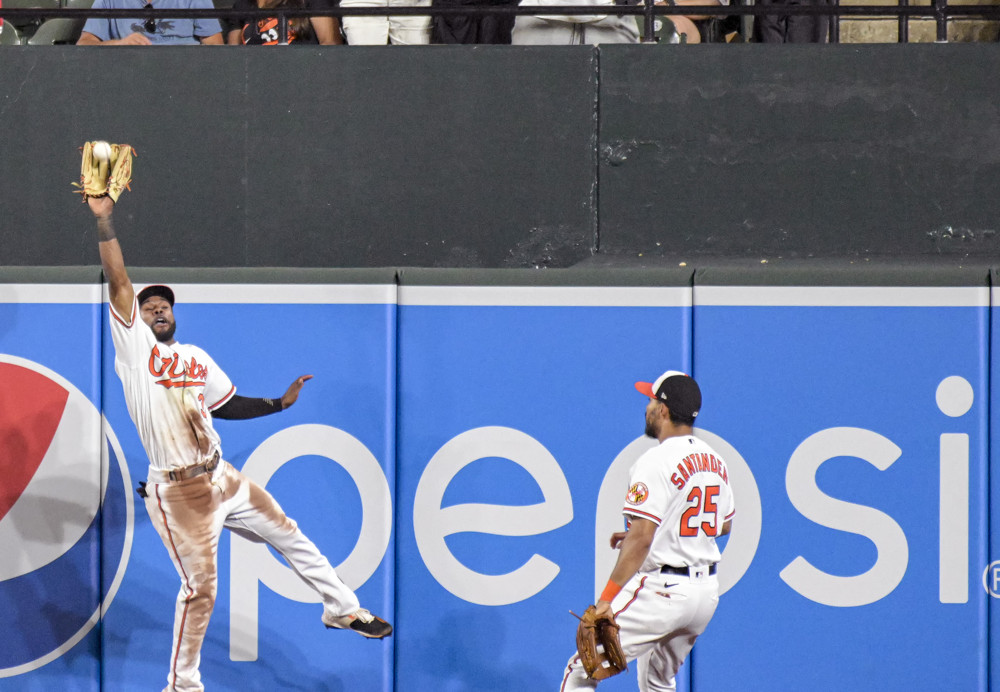
    Cedric Mullins is covering a little more ground than last season. He’s using his speed to take away potentially highly-damaging hits. He’s at 6 Runs Saved, up from -1 last season.

    Review done by our Video Scouts shows that Mullins has 38 catches on 69 sprinting attempts this season. That’s a 55% success rate, 10 percentage points higher than in 2021.

    Had Mullins caught balls off sprints at the same rate as last season (45%) he would have caught only 31 of those balls.

    Look at the difference for Mullins in plays made in which he was credited with at least 0.5 Runs Saved to plays in which he was demerited at least a half-run. That tells us that he’s making the tough catches while not missing the plays he should make.

    2021 2022
    Credited with >= 0.5 Runs 14 8
    Demerited at least 0.5 Runs 25 8

    Per Statcast’s numbers, Mullins has increased the amount of ground he’s covered relative to the average outfielder, from just shy of a foot better on the average play in 2021 to 1.7 feet better in 2022.

    And sometimes, just a couple of inches make all the difference.


    One other point on Mullins – his arm has regularly cost him Runs Saved (last season he totaled -4 runs saved from his arm) but not in 2022. There may be some skill improvement there, but that’s also partly a product of volume – because the Orioles opponents don’t have as many runners on base, there are fewer chances to advance or score on Mullins’ arm.

    Adley Rutschman showed up

    Orioles catchers combined for -15 Runs Saved last season. This was largely a product of Pedro Severino’s defensive struggles. They’re at 0 right now. They were in danger of being worse but Adley Rutschman’s arrival has stabilized the position.

    Rutschman has 2 Runs Saved. In his small sample size (34 games), he’s a little above average at both pitch-framing and pitch-blocking. Neither is surprising, as our minor league defensive numbers viewed Rutschman’s skills favorably.

    With Rutschman now fully entrenched, catcher goes from a position of worry to a position of potential future strength.

    But that’s not all …

    Let’s note a few other things going right for the Orioles defense at the moment.

    * The return of Ramon Urias from an oblique injury that cost him nearly a month, should provide a boost to the defense.

    Urias, who split time at second, short, and third last season, has saved 7 runs in 44 games. The Orioles other third basemen have cost the team 6 runs. Baltimore’s third basemen combined for -4 Runs Saved in 2021.

    * The Orioles’ best outfield alignment this season is one with Mullins in center field, Austin Hays in left field and Anthony Santander in right field. That’s been the look that the Orioles have gone with in five of the eight games in their current winning streak.

    Hays and Santander have a combined 4 Runs Saved at their respective positions. For Hays, it’s all about his arm. He has 7 assists without the help of a cutoff man this season.

    Santander had 13 runs saved in right field combining 2019 and 2020, slipped to -3 in 2021, but is back to 3 in 2022.

    Yes, the Orioles defense has been a total team effort. Last season, Baltimore had only two positions at which it recorded a non-negative Runs Saved total. This season, it has 8.

  • 2022 MLB Draft Scouting Report: LHP Parker Messick

    2022 MLB Draft Scouting Report: LHP Parker Messick

    Part of a series of scouting reports on intriguing players in the 2022 MLB Draft. To read all the reports (and reports from past years), click here.

    PARKER MESSICK, LHP

    College Florida State University (RS SO. 2022)
    Bio L/L 6-0, 225 lbs.
    Date of Birth 10/26/2000
    Fastball 40(45)
    Slider 40(50)
    Curveball 40(45)
    Changeup 55(60)
    Control 50(55)
    Future Value 45

    >> Number in parentheses represents Future Value projection

    Scouting Report Written by Brandon Tew

    Draft Expectation: 2nd – 3rd Round

    Analysis:

    Why are we writing about a guy who may not go in the first round?

    Because Parker Messick is one of the most intriguing arms in the 2022 MLB Draft. He possesses a fastball with a touch below average velocity, but a true plus weapon in his changeup. Messick attacks hitters with extreme competitiveness and has succeeded at every level in his career. 

    College Career:

    Messick was one of the best freshman pitchers in college baseball but then he raised his game in 2021. He was named ACC Pitcher of the Year with 126 strikeouts in 90 innings pitched and a 3.10 ERA. 

    Messick backed up his 2021 performance with a very good 2022 season. His numbers dipped slightly to a 3.38 ERA in 98⅔ innings pitched with 144 strikeouts this spring (5th in Division I).

    Pitch Delivery

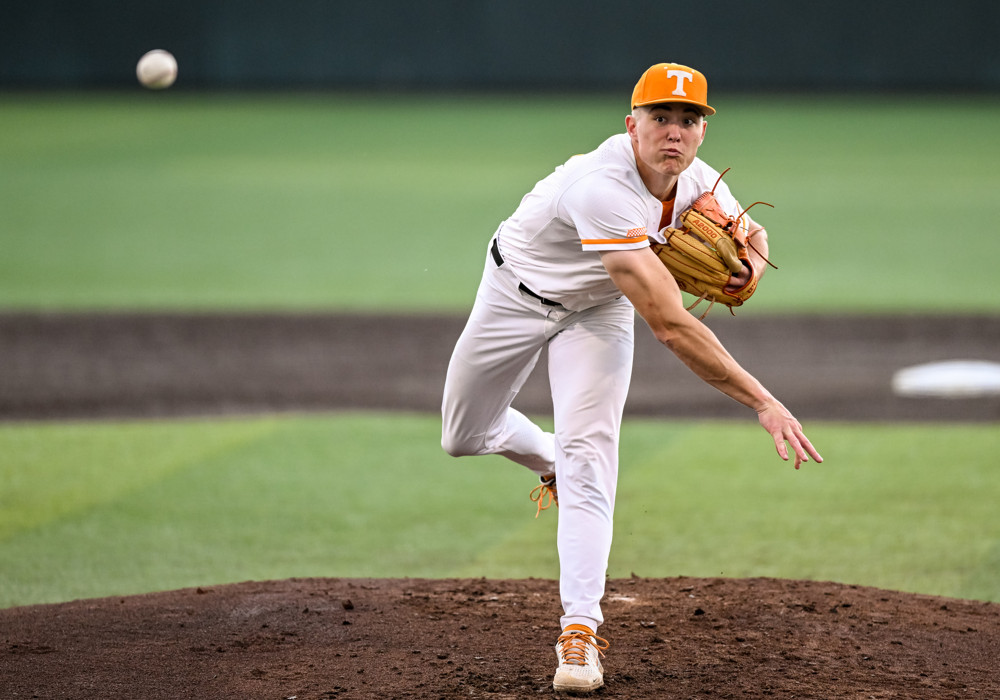
    Messick is a sturdily-built 6-foot left-handed pitcher who goes right after hitters, pounding the zone with fastballs.

    Messick works at a high tempo and with a funky delivery. The windup is simple yet deceptive as he gets his arm back behind him in a unique position and hides the ball well until he comes toward the plate. 

    The drop and drive Messick creates off the rubber helps him release the ball with good extension as he whirls his back leg around his front half. This allows Messick’s fastball to play up. He has pretty good carry through the zone too and will sneak high fastballs by hitters when thrown at the very top of the zone.

    Pitch Profiles

    The fastball, as with any pitcher, is a key for Messick. There was an increase in his velo up one to two mph from the 2021 season. In 2022 Messick sat more 90-93 MPH, touching 94, whereas in 2021 he was more 88-91. 

    At times Messick’s command will flash plus and really stand out. When at his best, Messick can control both sides of the plate with not only his fastball, but also his changeup. Messick also has a great understanding of working up and down in the zone throwing to all quadrants.

    After giving up only six dingers in 2021 Messick surrendered 15 home runs in 2022 mostly due to poor fastball location. The execution of his fastball is what has made him such a productive pitcher but he needs even more consistent command of the pitch at the next level. 

    Messick has never had an issue throwing strikes, with a 66.5% strike rate in his college career and a 6.7 K/BB ratio. It has always been command of his fastball that has hurt him at times.

    His changeup is one of the best in college baseball, as batters are left looking foolish in its wake. His 14-strikeout performance against Duke on March 25 showed just how lethal the fastball and changeup combo can be.

    The changeup is a plus pitch, one that just dies, hitting a wall in front of the plate. Messick’s ability to kill spin and create incredible depth with the pitch is what makes swings look awful against it.

    But what makes it really effective is the arm speed he generates on the pitch. The combination of that arm speed and movement masks the velocity difference between his fastball and changeup really well. 

    Messick has a great feel for the pitch and can throw it below the zone with good fade, or down at the knees to steal a strike. He can also cut it if he wants a different action on the pitch, which shows an advanced feel.

    Messick separates himself from most other pitchers with his confidence to throw a changeup to both sides of the plate to any batter. 

    Pitchers will usually work down and away from hitters with changeups. But Messick has no fear with it as it routinely dives underneath barrels as a true swing-and-miss pitch for him.

    Messick’s breaking pitches are vital for continued success. He has improved the shape of his slider and added sharpness to it. The pitch keeps hitters off of his changeup. 

    His curveball has a tendency to become more of a slurve-type pitch from his arm slot and blends at times with his slider. He could scrap the pitch altogether. 

    The shape of his slider, when thrown well, is effective and should continue to improve for him. It has become a pitch he’s more and more comfortable with. The tunneling of the fastball and changeup down is already very good, so a breaking pitch that he can pair with his fastball, both high and low, will be important.

    Makeup

    Messick wants the ball, oozes confidence, and commands the mound every time he pitches. That level of competitiveness and mentality is what will carry him long term. Messick turns into an electric factory when he’s on the mound, complete with celebratory air punches.

    Messick’s strikeout reactions are passionate and that’s how he approaches pitching, with a fierce mentality that he is better than the batter in the box. There’s no denying that he has the competitiveness and attitude of a pro.

    Summary:

    Messick is a left-handed strike-thrower with extreme competitiveness. The improvement of his breaking pitches will determine his future, but his changeup is one of the best in the draft.

    Projection:

    A left-handed pitcher with a plus changeup and starter or swing-man potential depending on the development of his breaking pitches.

    Ceiling: Matthew Boyd

    Floor:  Jalen Beeks

  • Stat of the Week: Don’t forget Julio Rodríguez’s Defense

    Stat of the Week: Don’t forget Julio Rodríguez’s Defense

    People are wowed, and rightfully so, by 21-year-old Mariners rookie center fielder Julio Rodríguez.

    They love his power (15 home runs) and his speed (21 stolen bases), and his combination of skills is reminiscent of Mariners legend and Hall of Famer Ken Griffey Jr.

    They should also take note of his defense.

    Rodríguez has 1 Defensive Run Saved this season. Being just above average may not sound like a big deal, but it is. It’s a huge upgrade from last season, when an inexperienced Jarred Kelenic (better suited for right field) and his teammates combined to cost Seattle 16 runs with their defense in center field.

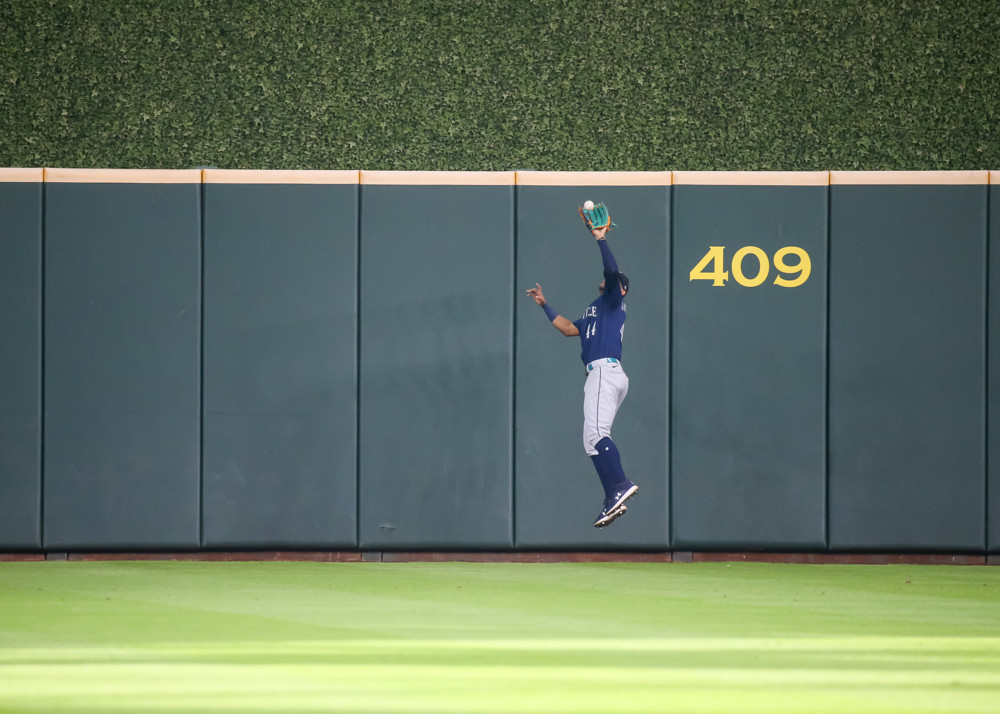
    At 6-foot-3, Rodríguez takes advantage of his long stride when closing in on deep fly balls. He ranks in the top-third of outfielders in the Statcast stat “Burst”, which measures effectiveness in breaking toward a fly ball from 1.51 to 3.0 seconds after it makes contact with the bat. He can cover 90 feet in 3.83 seconds, a time that ranks in the Top 20 in the sport.

    Rodriguez has saved 4 runs with his defense within the range component of Defensive Runs Saved, the part most connected to turning batted balls into outs.

    The key there is that Rodríguez has caught 61 of 69 balls classified by our system as deep, an 88% success rate. Kelenic caught 51 of 86, which is 59%. This is one reason why the Mariners are on pace to allow 245 doubles and triples this season, 69 fewer than last season.

    And if you’re into degree of difficulty, check out some of Rodríguez’s best work on deep balls.

    This one had a 22% catch probability.

    This one was 32%.

    And this one in front of his fan base (“The J-Rod Squad”) was 36%.

    Rodríguez is not far removed from better numbers. Of the three balls he missed on which he was most penalized, two came at Citi Field in mid-May and were ones he barely missed (one in less-than-ideal weather conditions).

    The biggest blemish on his ledger is that he’s lost two runs from his arm. Baserunners have taken an extra base against him at a 58% rate, the ninth-highest rate among 35 qualifying center fielders. He’s also yet to record an assist without the help of a cutoff man.

    The Mariners have made a big move in the standings the last couple of weeks, winning 12 of 15 games. Rodríguez’s profile is likely to be raised even more as Seattle makes a push towards making the playoffs for the first time since 2001 and ending baseball’s longest postseason drought.

  • NPB Dominance Deep Dive: Nao Higashihama & Shota Imanaga

    NPB Dominance Deep Dive: Nao Higashihama & Shota Imanaga

    This is the third in our series of articles scouting NPB pitchers through the lens of their best work – the no-hitters they’ve thrown this season. Previous articles looked at those thrown by Roki Sasaki and Yoshinobu Yamamoto. In this piece, we’ll look at the two others.

    Higashihama’s No-Hitter

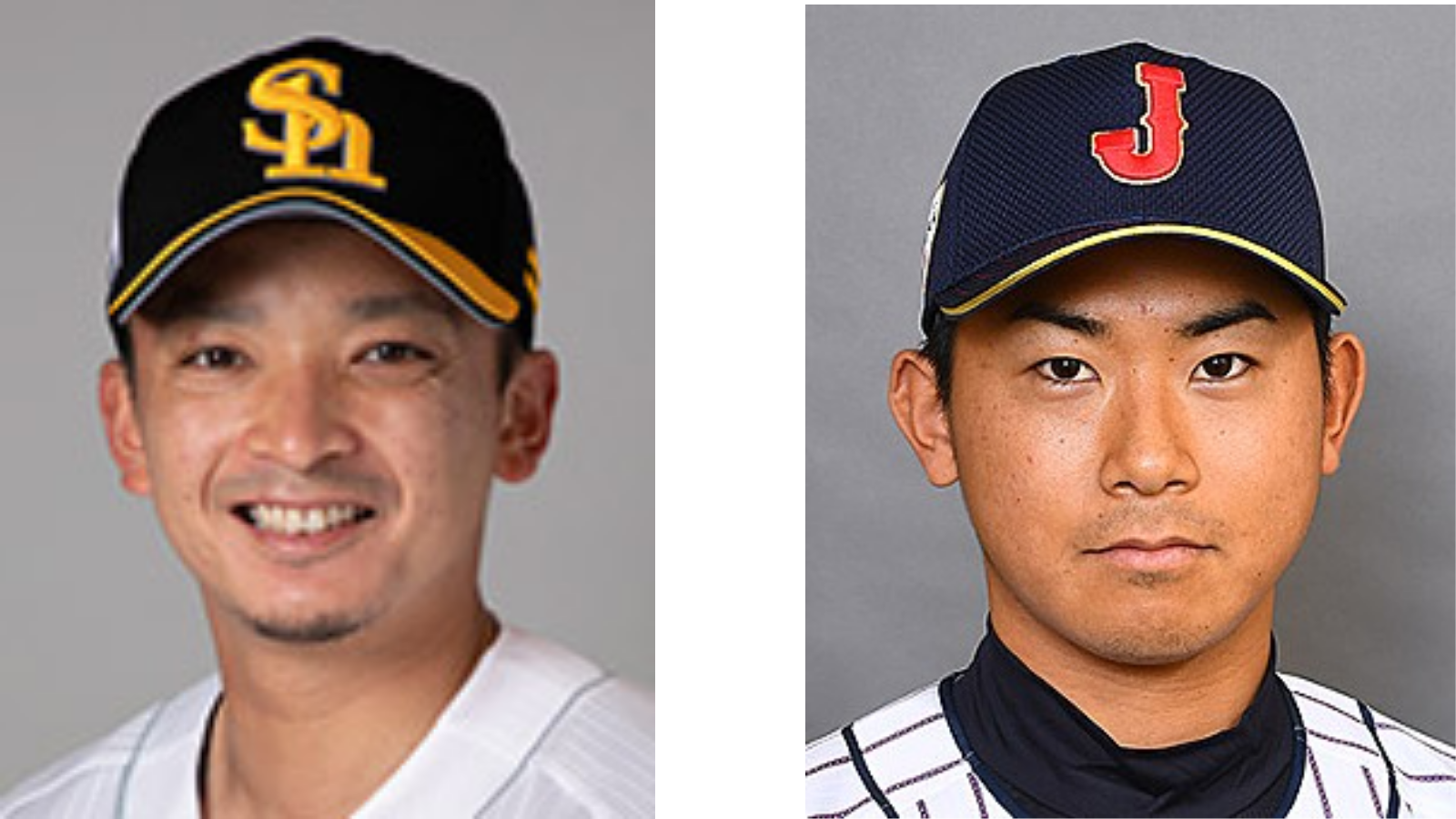
    Nao Higashihama, a 31-year-old veteran of the SoftBank Hawks, threw his first career no-hitter on May 11 against the Seibu Lions.

    Higashihama has a 2.30 ERA this season  and 0.88 WHIPdespite averaging only 5.7 K per 9 (down from his career average of 7.6).

    The veteran righty peppered the strike zone with 64 strikes on 97 pitches. His path to success was in working the outer edges and staying out of the middle of the plate.

    Higashihama’s fastball was around 92 mph and he does a good job of hiding the baseball behind his right leg to get a little more deception. He typically works away from right-handed batters and this outing was no exception as he threw 26 sliders and 19 fastballs to them in this start.

    The slider is meant to work down in the zone and tunnel with his fastball to get righties out. The ball has a good tight spin out of his hand and he throws the pitch in and around the zone with the intent of creating weak contact, rather than swings and misses. The slider, at an average of 87 mph, has sharp bite and creates a lot of ground balls when tossed down and away from righties.

    The difference between Roki Sasaki and Higashihama is the willingness to throw certain pitches. Higashihama primarily stayed fastball and slider to right-handed batters throwing only nine splitters as a show-me pitch at around 89 mph to right-handed batters, keeping them honest.

    His approach to lefties is a different story, Higashihama pounded a weak spot in the zone to lefties on the outer part of the plate as he showed the two lefties in Seibu’s lineup fastball in, and then out, followed by the splitter as his out pitch.

    What’s really impressive is that with two strikes on a hitter, Higashihama mixed all three of these pitches incredibly well.

    He threw 9 fastballs, 9 splitters and 7 sliders in two-strike counts in this game. With only 6 strikeouts and 16 whiffs total, Higashihama repeatedly induced weak-contact grounders.

    Compare this with the hard-throwing Sasaki who had 22 whiffs and 19 strikeouts total, with 20 whiffs on his splitter and just two on his fastball. Sasaki at times lived in the middle of the zone throwing a lot of strikes and getting many foul balls or takes with his fastball. Sasaki relentlessly attacked hitters with first-pitch fastballs, throwing 21 of them out of his 27 hitters faced, a 71% strike rate (15-of-21).

    Higashihama mixes up his first pitch usage with 10 fastballs, 6 split-fingers, and 10 sliders. He also had a high strike rate with his fastball, 72%, as he painted corners on batters.

    Higashihama with his balanced pitch selection ended up collecting 14 ground ball outs in the game out of the 19 balls in play, and didn’t allow a hard-hit ball in the entire game. The pitchability of Higashihama was on full display as he even worked in a slow 72 mph curveball late in the game for a strike during the 3rd at-bat of the 6th inning, It was an effective wrinkle the second time through the order.

    Higashihama kept hitters off-balance in a completely different way than Sasaki but both relied on a good number of fastballs to set up hitters. This is universally thought of as one of the better ways to approach hitters: establish the fastball early for a strike, which opens different avenues for your secondary pitches to get batters out.

    And though we’re all about evaluating pitching here, we need to remember to give props to his defense.


    Shota Imanaga’s No-Hitter

    Shota Imanaga of the Yokahama Baystars had the most unique game plan for his no-hitter on June 7 against the Nippon-Ham Fighters. The 28-year-old lefty sprayed the ball all over the zone, throwing 77 strikes on 117 pitches.

    Imanaga has a 2.75 ERA and 0.92 WHIP this season. He’s much more of a strikeout pitcher than Higashihama, averaging 9.2 per 9 innings.

    When he did miss his intended target, he usually put the pitch in a good spot for a miss. If he wanted to go down and away from a right-handed batter with a fastball, he might miss up in the zone with it, but still on the outer part of the plate.

    The fearlessness the lefty displayed was evident as he constantly tried to change eye levels with high fastballs up-and-in, followed by soft stuff down. In contrast, Higashihama and Sasaki were more horizontal in their approaches, working the bottom third of the zone in and out.

    The difference in first-pitch usage was also drastic. Imanaga, unlike the other two, threw the kitchen sink at the plate, with 13 fastballs, 7 splitters, 5 cutters, and 3 curveballs thrown on the first pitch of at-bats.

    Imanaga loved the use of his cutter/slider hybrid to keep hitters off the barrel. He throws the pitch with his hand more behind the ball, which looks more like a cutter with just a tiny bit of cut. However, he threw the cutter-type pitch in slider situations, down and glove side in the zone.

    The grip above creates just a little cut to the ball and that’s what Imanaga is looking for as he throws it primarily glove side.

    Imanaga wasn’t looking for the harder or more horizontal sweep of a slider. Imanaga threw 23 fastballs and 23 cutters vs left-handed batters, tunneling that pitch away very well in this game, and mixing and matching speeds.

    Against right-handed batters he threw more splitters, 27 of them, almost all down and arm-side away. Both the split and cutter were used similarly to Higashihama with the idea of weak contact more than strikeouts.

    Imanaga sprinkled in the curveball, which was actually hit hard at times, including a screaming line drive in the 6th that he snared to preserve his no-no, a great defensive play with a little luck as well.

    During Imanaga’s no-hitter, he allowed four hard-hit balls.

    Overall, Imanaga got a good number of swings and misses, with 20 of them, compared to Sasaki’s 23, Yamamoto’s 21 and Higashihama’s 16. He also had 7 strikeouts with his fastball, 4 looking and 3 swinging, the most of all three pitchers.

    Imanaga was effectively wild in and out of the zone with his misses. He added two more strikeouts with the cutter, blending a little bit of what Sasaki and Higashihama did well in both of their starts into his one: a good fastball and a good cutter/slider with a good amount of splitters to right-handed batters.

    Japanese baseball lends a different perspective into the game and this season so far has provided no shortage of dominant pitching performances to watch. Higashihama and Imanaga’s no-hitters looked different from Yamamoto’s and Sasaki’s. It’s cool to see how different pitchers dominate and we’ll keep looking out for more NPB excellence the rest of the season.

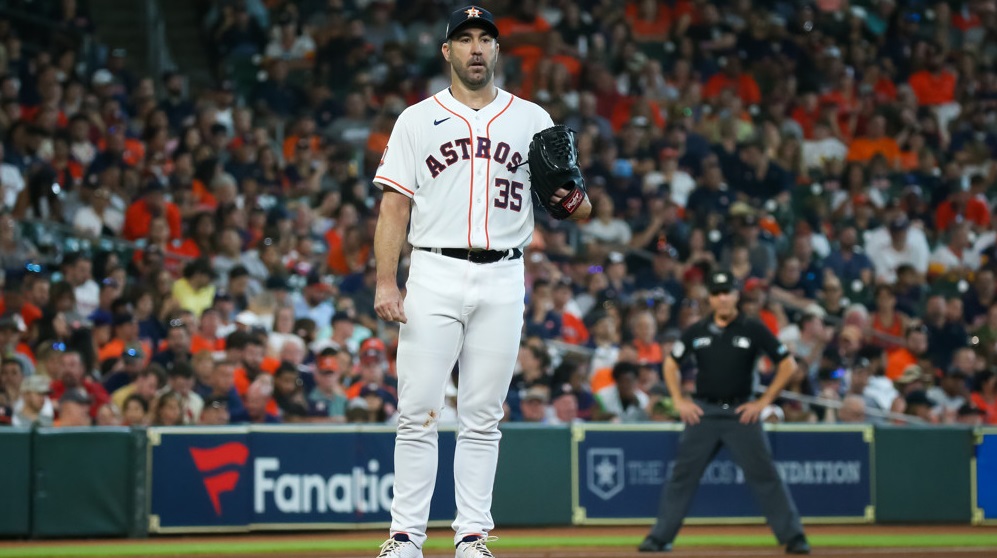
  • Justin Verlander owes his defense a thank you (again)

    Justin Verlander owes his defense a thank you (again)

    Justin Verlander’s first inning pitched in more than 20 months required him to get through Shohei Ohtani, Mike Trout, and Anthony Rendon.

    Verlander struck Ohtani and Rendon out. But it was Trout’s at-bat that foreshadowed what’s come for Verlander this season.

    Trout cranked a 96-MPH fastball at the top of the zone to deep left center field.

    And then this happened.

    Chas McCormick’s leaping catch saved at least a double, maybe more (our Video Scouts did not deem it to be a home run robbery). Verlander ended up pitching five innings of one-run ball, the first of many successful starts in his return.

    Verlander enters his start tonight with a 2.03 ERA and a 2.68 RA-9 compared to a 3.38 FIP. ERA/FIP differentials that large usually lead to questions about what the cause is.

    In this case, we feel most of the difference can be explained with this stat:

    No team’s defense has contributed more to their pitcher in fielding balls this season than the Astros has to Verlander.

    Most Defensive Runs Saved for a Pitcher – From Positioning, Range, Throwing

    Name Team Runs Saved
    Justin Verlander Astros 11.6
    Reid Detmers Angels 10.0
    Jordan Montgomery Yankees 9.9
    Cal Quantrill Guardians 8.9
    Beau Brieske Tigers 8.8

    Now, when we say this, it’s important to point out that defense takes into account two things – the player’s positioning and the player’s skill in making the play.

    Positioning

    The Astros are a pretty aggressive team in maneuvering their infield defense. They rank 9th overall in how often they use any kind of infield shift (70% of balls in play have come against one) and 4th in how often they put three infielders on the pull side (47% of balls in play have been against one).

    The payoff, at least for Verlander, comes on plays like these. Take note of the comments of the play-by-play announcer.

    The Astros have just over 5 Positioning Runs Saved for Verlander this season. There are other teams with about that many – the Cardinals for Adam Wainwright and the Red Sox for Michael Wacha among them.

    What makes the Astros’ defense for Verlander distinct is how their skill factors in.

    Skill

    This play is a good example of one that literally saved a run for Verlander.

    Defensive Runs Saved operates in a more theoretical world estimating Runs Saved values from the out probabilities of every play made and not made. It doesn’t consider the context in which the play was made (in other words, man on second base, two outs).

    That play had a 36% out probability for the team and was worth 0.49 Runs Saved Runs Saved.

    McCormick’s catch on Trout, the play referenced at the beginning of this article, was a 46% catch probability and was worth 0.56 Runs Saved.

    Verlander has had his share of nice defensive plays behind him this season. Take his last start against the Mets, which featured three of what we call Good Fielding Plays (one resulting in injuries, since healed, to Jeremy Pena and Yordan Alvarez).

    In sum, the out-making skill of the Astros defense has saved Verlander 6.5 runs.

    There are other teams that have saved that many runs for their pitchers with their defensive skill. But none has combined skill and positioning like the Astros have for their ace.

    What’s funny is that we wrote a similar piece on Verlander and his defense in 2019. As Verlander has moved into the end phase of his Hall of Fame career, he’s needed a little help to last as long and be as effective as he has. He seems to be on the right team for that.

  • June’s MLB Defensive Player of the Month

    June’s MLB Defensive Player of the Month

    It doesn’t matter where you put Cardinals infielder Tommy Edman in the field. Wherever he goes, he’s going to make the play.

    Edman is the MLB leader in Defensive Runs Saved this season with 16. He’s also the Sports Info Solutions Defensive Player of the Month for June.

    Edman finished the month with 9 Defensive Runs Saved, the most of any player. He had 5 Runs Saved at shortstop and 4 Runs Saved at second base.

    He joins our previous Defensive Player of the Month winners: Rays outfielder Brett Phillips in April and Orioles shortstop Jorge Mateo in May. Edman was the runner-up to Phillips in voting by Sports Info Solutions staff that month and got the most votes this month.

    What’s most impressive about Edman’s defense this season is not just in how he makes plays but in how he limits mistakes. Our Video Scouts track nearly 60 types of Defensive Misplays & Errors. Edman has only 2 Misplays & Errors in 380 innings as a second baseman this season.

    By comparison, Brewers second baseman Kolten Wong, who has won three of the last four Fielding Bible Awards, has 23. Last year’s winner Whit Merrifield has 9.

    Three other second basemen often lauded for their defense – Trevor Story, Marcus Semien, and Ozzie Albies – have all been charged with Misplays & Errors at a rate at least four times higher than Edman has.

    Similarly at shortstop, Edman has 4 Misplays & Errors in 265 innings. His per-inning Misplay & Error rate ranks 1st.

    Our runner-ups for the honor this month were Rockies second baseman Brendan Rodgers and Yankees catcher Jose Trevino.

    Rodgers had 7 Defensive Runs Saved in June, the most by a second baseman. His 8 Good Fielding Plays, which are awarded for more than 30 types of plays a player can make, were the most of any second baseman.

    Rodgers has engineered quite the defensive turnaround this season, improving from -5 Runs Saved at second base in 2021. The notable differences in his game are in fielding balls hit to his right and in converting double play opportunities.

    Trevino has been the perfect pickup for the Yankees, who obtained him from the Rangers just before the season started. He easily led catchers in Defensive Runs Saved in June and is the runaway leader this season with 12. He ranks No. 1 in our pitch-framing stat, Strike Zone Runs Saved.

    To listen to an interview we did with Tommy Edman on The Sports Info Solutions Baseball Podcast last season, click here

  • Dominance Deep Dive: Yoshinobu Yamamoto’s no-hitter

    Dominance Deep Dive: Yoshinobu Yamamoto’s no-hitter

    We previously wrote about Roki Sasaki’s perfect game with the promise of more articles to come on great pitching in NPB. So now let’s examine the June 18 no-hitter for one of Japan’s brightest young stars, Yoshinobu Yamamoto of the Orix Buffaloes.

    The 23-year-old Yamamoto dominated the Seibu Lions lineup, the first team to be held hitless twice in a season since 1971 when the Nishitetsu Lions did the same.

    Yamamoto has been brilliant during his young career, sporting a 1.83 ERA in 699  innings pitched since he debuted in 2017. He also won the Sawamura Award (Japan’s Cy Young) last season as NPB’s top pitcher.

    What he’s got

    He combines excellent stuff and great command, attacking the strike zone with a refined and electric pitch mix, and a ruthless attitude as well.

    His mindset is pouring in strikes with a hard 94-mph fastball; and in his no-hit game he achieved a 71-percent strike rate on 45 fastballs.

    His four-seamer carries well through the zone and stays on plane all the way to the mitt. This causes hitters to swing consistently underneath the pitch when high in the zone. His fastball created eight swings and misses and six strikeouts (three looking and three swinging).

    His incredible command of the pitch is very noticeable as he exhibits precision hitting the catcher’s glove constantly. It wasn’t until the bottom of the fifth that Yamamoto allowed his only baserunner, a walk on four pitches.

    Besides this one hiccup, he was dialed in, throwing the fastball to all four quadrants of the zone. In the 9th, he threw his hardest pitch at 96.3 mph, dotting the outside corner for a strike – upping velocity without sacrificing command.

    He got 26 strikes on 34 splitters, generating 10 swings and misses on the pitch. These whiffs were set up by throwing the fastball down in the zone, at the knees.

    His splitter shows excellent fading action, moving down and arm side with a lot of movement. It netted 5 ground ball outs and 2 swinging strikeouts, because batters couldn’t lift the pitch in the air.

    Yamamoto also manipulates the shape of the splitter at times, as it resembles a sinker at around 92 mph. The pitch on average hits 90 mph, four off his average fastball.

    If the batter lets the harder sinker-type split go, it might catch the bottom of the zone similar to his low four-seamer. If you swing, you may look foolish as the late-fading splitter vanishes.

    Grip pressure is key to what variation he throws. Yamamoto puts pressure on his pointer finger on the back half of the baseball seam and then pronates it by turning his arm over. When he pronates less, his grip causes the baseball to sink, and when he turns his arm over, he creates more fade to the pitch.

    When Yamamoto throws high fastballs in the zone, he creates a beautiful pairing with his unique curveball. He uses a Ginoza grip, turning his wrist over and showing the back side of his hand to the batter.

    Then, he pushes or flicks the baseball, causing the pitch to tumble towards the plate with amazing 12-6 action off his finger. The breaking pitch falls out of the sky as it comes towards the plate with impressive sharpness.

    Along with fantastic sharpness, Yamamoto throws this curveball at a higher velocity than most, averaging around 77 mph. He can even get this pitch into the low 80s at times, whereas most curveballs with this grip usually are thrown in the low 70s.

    Still, he primarily throws fastballs and splitters, throwing only 16 curveballs during this game. He mixes in the curveball, not only as a change-of-speed pitch but to keep hitters off of his high fastball.

    He went to his fastball more with two strikes, throwing 17, compared to eight splitters and six curveballs, with his one and only slider thrown with two strikes in the 7th as well.

    He showed a balanced first-pitch usage with 10 fastballs, 13 splitters, two curveballs, and one cutter. He attacks both right-handed and left-handed batters with fastballs, splitters, and curves in the same locations.

    And when you add in a cutter at around 90 mph glove side (5 of 6 thrown for strikes), he creates another way to keep hitters from timing up and barreling his fastball. Hitters must respect the mix of his pitches.

    A willingness to throw any of his three primary pitches at any time causes hitters fits. Yamamoto’s combination of stuff and command is truly fun to watch and was on full display during his masterful no-hitter.

  • Commanding the Mound: Cade Horton & Dylan DeLucia

    Commanding the Mound: Cade Horton & Dylan DeLucia

    The College Baseball World Series provided plenty of great performances, none bigger than the pitching of Cade Horton from Oklahoma and Dylan DeLucia from Ole Miss.

    Cade Horton:

    Cade Horton dominated with a newly-found slider he learned from teammate Ben Abram just 3 weeks prior. The pitch has sharp late action and good depth in the upper 80s. It’s turning into an elite pitch as it darts underneath bats.

    Horton leaned heavily on the slider which has become a true plus pitch for him that flashes plus-plus now. With a standard slider grip and a simple thought process behind it, he throws it like a fastball until the very last moment, when he gets out in front of it.

    The result is a pitch that gets tremendous depth and is tight in spin, making it hard to pick up.

    Add in an explosive fastball with late life and some natural cut, along with a nice big curve in the low to mid-80s and you get a pitcher whose confidence and his draft stock have skyrocketed with each pitch.

    Horton produced a gaudy stat line in Omaha:

    13 1/3 IP, 9 H, 4 ER, 1 BB, and 24 strikeouts!

    Yes, 24 strikeouts, including 13 Rebels in the 2nd game of the CWS Finals, the most in a Finals appearance.

    Dylan DeLucia:

    Dylan DeLucia was a major reason why Ole Miss lifted the trophy in Omaha this season. The big right-hander became the dominant force of the CWS.

    Collecting 2 wins in 16 2/3 IP with 1 ER, 8 H, 0 BB, and 17 K over two starts, the 22-year-old junior relentlessly attacked hitter after hitter.

    DeLucia uses his fastball with late life and arm-side movement and a short mid-80s slider to attack the lower part of the strike zone.

    DeLucia showed no fear going right at hitters he demonstrated consistent control of the strike zone and just enough command to miss bats and barrels.

    Even when DeLucia had a slider back up on him or a fastball miss in the zone, batters could not square him up in the CWS.

    The pair of pitches work in tandem and stay on the same plane to the plate throughout the first 50 or so feet. The combo works well movement-wise with a short late break in two opposite directions just getting the ball off the barrel of the bat.

    DeLucia had a great feel for his slider and fastball, but even when DeLucia had a slider back up on him or a fastball miss in the zone, batters could not square him up. The righty has good deception in his delivery and got swings and misses in and out of the zone.

    He worked in and out of trouble to reach the CWS finals against Arkansas. When DeLucia’s Ole Miss team needed it the most he delivered the best performance of his college career: Nine shutout innings of four-hit ball. He was the ultimate competitor that day and demonstrated a bulldog mentality on the mound in both of his CWS starts.


    DeLucia won “Most Outstanding Player” at the College World Series and delivered on the biggest stage in college baseball by being fearless and going right at hitters.

    Both DeLucia and Horton showed that a belief in your pitches and confidence to command not only the strike zone but a presence to command the mound can go a long way in succeeding.

  • Vladimir Guerrero Jr. Has Found His Defensive Game

    Vladimir Guerrero Jr. Has Found His Defensive Game

    I will admit to some surprise when I looked at the list of Defensive Runs Saved leaders at first base.

    That Christian Walker of the Diamondbacks ranked first with 10 – and first by a wide margin – wasn’t what got me. It was that Vladimir Guerrero Jr. ranked No. 2. Better than Matt Olson, and Freddie Freeman, and Anthony Rizzo and many others (see the full list here)

    Yep, Guerrero has 6 Defensive Runs Saved at first base (he had -4 in 2020 and 2 in 2021). And there are a few things to point out about that.

    One is that Guerrero is pretty good at going to his right. The Blue Jays give him a lot of responsibility when a right-handed batter is up because of how aggressively they shift some of those hitters. Guerrero is often left to cover a wide swath of ground and he has been up to the challenge.


    And though some of his tosses to the pitcher covering may be a little askew, he does have a rifle arm when it’s needed.

    Over the last three seasons, Guerrero has converted 43% of opportunities on balls hit to his right into outs (he’s at a still-robust 40% this season). Only Walker (50%) and Evan White (44%) rank higher among first basemen among the 35 players with the most opportunities in that time.

    With as good as Guerrero was at going to his right, that came with meh numbers on ‘at-em balls’ and balls hit to his left. But this season, Guerrero has cleaned that up. He’s turned 45 of 47 opportunities on those balls into outs this season (96%). His success rate on them in 2020 and 2021 was 78%.

    While we can give Guerrero credit for good range, he’s also been much better at handling throws.

    In 2021, our Video Scouts charged Guerrero was 15 Defensive Misplays & Errors for failing to catch a throw from a teammate. In 2022, he has only 2 such Misplays & Errors.

    Part of that is that the Blue Jays are situated better, with Matt Chapman now regularly at third base and Bo Bichette’s throwing a little bit better than it was last season at shortstop.

    But that’s not to say that Vlad can’t pick it.


    We’ve credited Guerrero with 13 Good Fielding Plays related to catching throws – in line with the 19 he had last season – but without all those mistakes that brought down his and the Blue Jays’ defensive numbers.

    So yes, Guerrero hasn’t hit like he did last season, when he walloped 48 home runs and was an MVP candidate. But it does seem like – at age 23 – he’s still growing as a player – just in a little bit of a different way than you might have expected.

  • Shane Bieber Showing That Velocity Isn’t Everything

    Shane Bieber Showing That Velocity Isn’t Everything

    Remember when Kevin Pillar was hit in the face last year and he talked about how, in today’s game, velocity was more important than pitchability?

    When you look around the league you realize Pillar is completely right. If you can throw 95 MPH or harder, you’ll get a chance to pitch. It doesn’t matter if you know where it’s going or not. The average fastball velocity in MLB continues to increase each year.

    But Guardians pitcher Shane Bieber is breaking the trend of velocity over pitchability. Over the past 3 seasons Bieber’s average fastball velocity has dropped. There was a noticeable decrease once Bieber came back from a shoulder injury in 2021, and that injury could be playing a factor. When looking at his stats, he’s still an elite pitcher. His overall stats are not too different than past seasons, including his 2020 Cy Young season.

    Shane Bieber Fastball Usage

    Season Usage
    2018 57%
    2019 46%
    2020 38%
    2021 36%
    2022 38%<<

    >> 41% slider usage, up from 26% in 2021

    Bieber’s average fastball velocity dropped from 94 to 93 from 2020 to 2021 and then from 93 to 91 in 2022. With the lower-velocity fastball, his gameplan has completely changed, Bieber is throwing more SL than ever before. But his fastball is still his most important pitch because Bieber gets elite tunneling on his pitches and they all play off each other exceptionally well.

    The slider and curveball stay on the same plane as the fastball, and then they completely drop. Both breaking balls have great depth, which makes it even harder for hitters to pick up. Bieber does a fantastic job of commanding all his pitches to play off this tunneling effect.

    The Baseball Savant heat maps for his pitches are beautiful. He has a gameplan and executes it how he wants. He uses the fastball up to play off the big break of his slider and curveball. The best example of Bieber’s tunneling ability can be seen here, thanks to the Pitching Ninja. It makes him incredibly difficult to hit and Bieber’s intelligence on the mound is adding to the difficulty.


    With a lower average fastball velocity Bieber is pitching to more contact. His walk rate is down to 5.7% this season. The last season in which he had a lower rate was 2019. His pitches per plate appearance (3.69), which would be the lowest of his career if maintained. His strikeout rate isn’t as high as it usually is. It’s currently at 26.5% this season. That’s down from 41% in 2020 and 33% in 2021, but still good for 12th among qualified pitchers.

    Of course, fewer walks and strikeouts mean Bieber is giving up more contact. His contact rate is 71%, well below the league average of 76% but higher than either of his last two seasons. The key though is the quality of contact.

    Bieber’s hard-hit rate is currently at 31%, slightly above league average. The Guardians do rank 2nd in Defensive Runs Saved and I’m sure this gives Bieber more confidence in pitching to contact, knowing that he has a good defense behind him.

    Bieber does a great job of keeping hitters off balance. As we saw with his pitch usage, he has become a slider first pitcher, but depending on the count, he isn’t afraid to attack hitters with fastballs. He will attack RHBs and LHBs very differently, righties have seen only 30 of the 218 curveballs he’s thrown this season.

    Bieber Pitch Usage – vs LHB (RHB in parentheses)

    Pitch Type Usage              Bieber Ahead Bieber Behind 
    Slider 26%   (52%) 21%    (60%) 36%    (52%)
    Fastball 29%   (43%) 19%    (31%) 43%    (45%)
    Curveball 37%    (4%) 56%    (7%) 16%    (1%)


    Pitch Type First Pitch 2 Strikes Full Count
    Slider 32%    (47%) 12%    (59%) 35%    (50%)
    Fastball 35%    (51%) 24%    (29%) 35%    (45%)
    Curveball 17%    (.5%) 63%    (13%) 30%    (4%)

    The fastball gets its highest usage when Bieber needs a strike. This is when hitters need to attack him or else the at-bat gets more and more difficult.  His slider and curveball both get around 40% whiff rates, which is why he loves going to these pitches when he’s ahead and with 2 strikes.

    Left-handed batters have an incredibly difficult task when trying to figure Bieber out. He uses all three of his main pitches consistently against them. Righties only have to worry about the fastball and slider.

    He also mixes in a nasty backdoor slider to LHBs that he can spot on the corner consistently. The splits certainly prove this.

    LHB slashline     .195/.231/.293                 32% K rate

    RHB slashline    .285/.335/.424                22% K rate

    Bieber does mix in a changeup 3% of the time, with all but one being thrown to LHBs. The majority of those changeups are thrown first pitch to those lefties, when Bieber is trying to steal a strike. That’s just another wrinkle he keeps in his back pocket.

    Other than one start against the Blue Jays, Bieber has been elite all year. He’s allowed 3 runs or fewer in 12 of 13 starts and pitched at least 6 innings in 9 of 13. His 3.00 ERA is good for 28th in MLB among those with at least 50 innings pitched (which puts him in the top 25% of that group). He’s showing that if you throw 91 MPH fastballs you can still get outs by pitching intelligently and commanding your pitches.

    Even with all the changes Bieber has made, he is still considered one of the best pitchers in baseball. Usually when pitchers lose velocity and have to change, they struggle for a season or two.  The 27-year-old Bieber, has proved even before his prime that he is one of the more intelligent pitchers in the game today. I’m excited to watch him transform as he progresses and maybe he will be able to add velocity again, or maybe he will use the Justin Verlander strategy, and save some for late in games.

    Either way, Bieber is one of the best pitchers in baseball to watch today, and one of my favorite pitchers to watch and try to think along with. Try to lock in on one of his starts and see how difficult it is for hitters to try and figure him out!