Category: NPB

  • Masahiro Tanaka Is Not What He Used To Be

    Masahiro Tanaka Is Not What He Used To Be

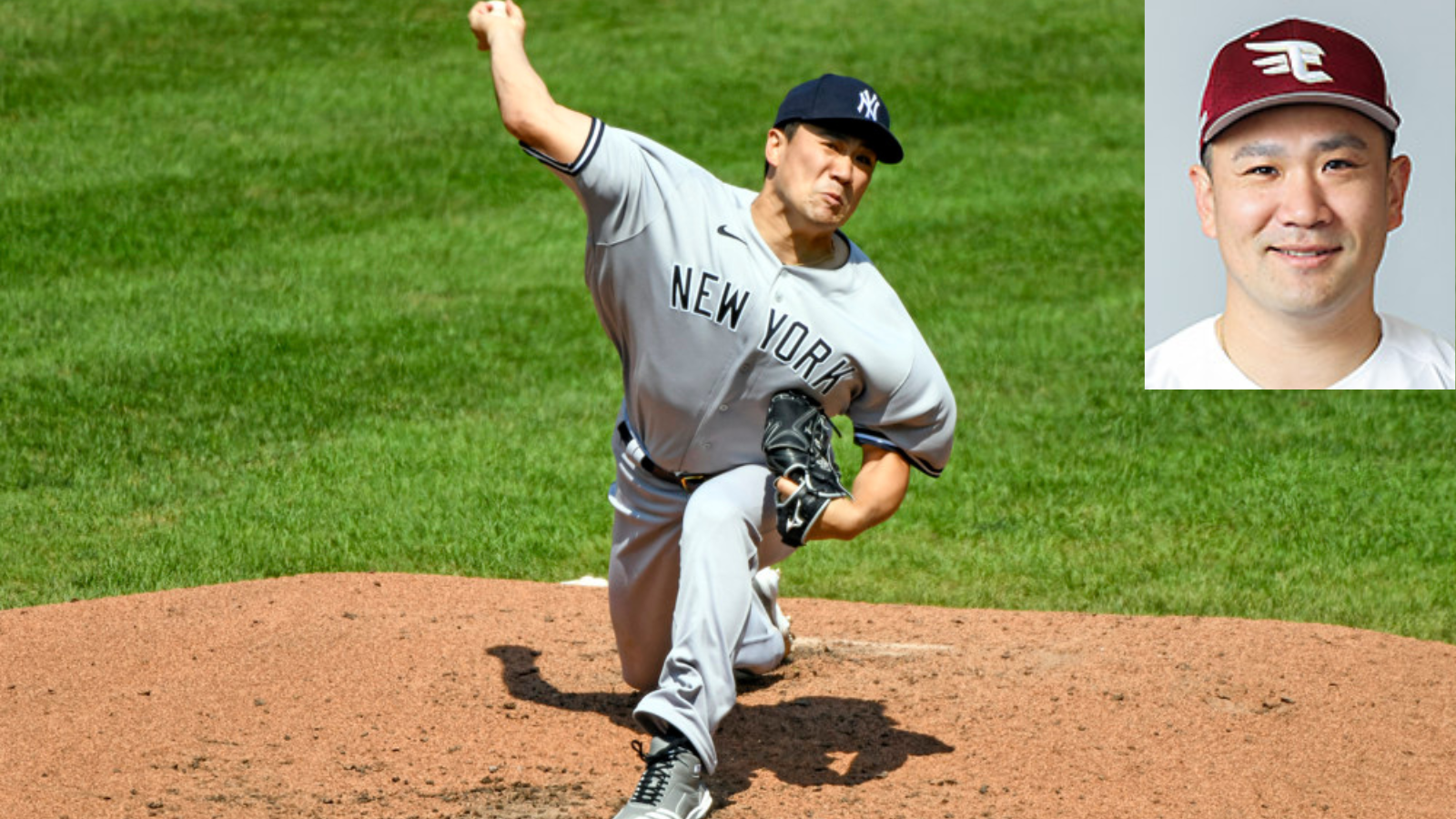
    Masahiro Tanaka is arguably one of the greatest NPB pitchers in league history and is credited with one of the most successful pitching seasons in NPB.

    He finished his 2013 season with a perfect 24-0 record in 28 appearances and 27 starts amassing a 1.27 ERA in 212 innings with 183 strikeouts and just 32 walks. The man was a machine who mowed through NPB lineups. 

    Now in his return as an older player after his MLB career with the Yankees, Tanaka has had mild success with extreme highs and lows. He has been so disappointed in his performance that he took a pay cut last off-season.

    His whiff rate was down to 10% on his fastball the last two seasons and a lowly 9% this season. In comparison, his fastball had a whiff rate of 17% in 2019 for the Yankees. 

    This is obviously context-dependent too as NPB hitters are less prone to striking out than MLB hitters as they fight off fastballs. The drop in whiff rate for his fastball isn’t surprising but 8.8% is a concerning number.

    His fastball has lost a touch of velocity averaging 91.3 mph last season and 90 mph this season. Tanaka does “gas pedal” his fastball at times, throwing at different speeds throughout the game, although last time out he was using more two-seams than four-seams to get some slight movement on the pitch.

    His below-average velocity right now on his fastball means he has to have spot-on command of the pitch, and right now that fluctuates. At his very best it’s a pitch he can still dot on both sides of the plate.

    The pitch has always played up due to Tanaka’s stride length and lower release point. He gets 6’10” in stride length according to a Sports Science breakdown of Tanaka from almost nine years ago. 

    The mechanics of Tanaka are almost the same throughout his career. Everything is still smooth and the stride length and extension are still there.

    Tanaka uses his fastball 41% of the time the past two seasons, 43% of the time on the first pitch. With the dip in velocity and shape, Tanaka should continue to use his two-seamer more and lessen the usage of his four-seamer.

    Tanaka also looks to have ditched his cutter so far this season after throwing the pitch 7% of the time in 2022 he has scrapped it. Isolated, the cutter is not a good pitch but, when he threw it, he used it to start at-bats 35% of the time with a 71% strike rate in 2022. He also used it a lot to RHBs down and away in 2019, targeting that part of the zone on 41 of 44 cutters in 2019 and it was much of the same in 2022.

    The pitch had an OPS against of 0.865 in 2022, almost identical to his changeup at 0.864. Those were by far his two worst-performing pitches.

    The Cutter

    CUT Grip 2022 – 7%   2023 – 0 pitches so far.
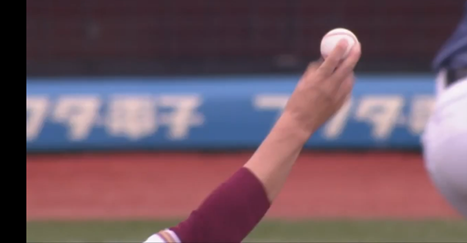
    He’s used the cutter in a more traditional sense against LHBs, up and in on the hands. I think the use of the pitch to both RHBs and LHBs could still be effective. Though the pitch has been inconsistent in movement, even just giving hitters something else to think about could help his fastball out. However, it’s no longer a necessity in his arsenal and the 0.865 OPS on the pitch underscores why he might have dropped it altogether.

    The non-fastballs with grips.

    SL Grip   2022 – 24%    2023 – 34%
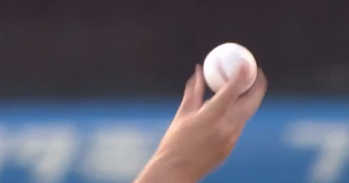
    Splitter Grip  2022 – 20%    2023 -20%
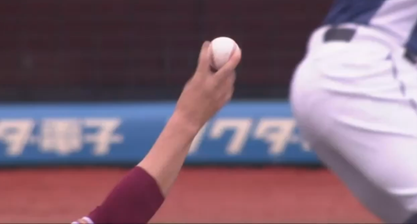
    CH Grip   2022 – 4%   2023 – 3%
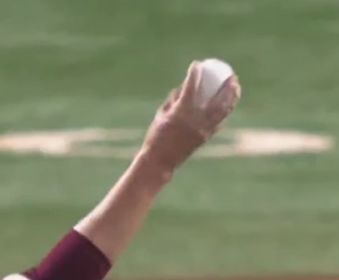
    CB Grip 2022 – 3%   2023 – 3%
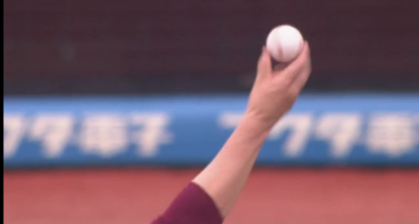
    The slider is Tanaka’s go-to pitch generating a 41% whiff rate over the span of the last two seasons though it is his second favorite two-strike pitch behind his fastball. His fastball velocity and life are down but he continues to throw the pitch the most in two-strike counts.

    There’s some factoring in comfort and batter but maybe going away from leaning on the fastball will help him. I’m a big advocate for throwing your best pitches in the most high-leverage situations and generating swings and misses. 

    If Tanaka started to lessen the number of fastballs in two-strike counts and rely more on his two different slider shapes and his splitter, he could see more strikeouts as a result. A 6 K/9 this season is the lowest total of his career and a full strikeout less than 2022. 

    He lands all his pitches for above a 60 percent strike rate which is the threshold for having decent control of a pitch. His slider and splitter actually are higher at 69 and 70%. His fastball is at a second-worst rate of 63%. He doesn’t need to throw the fastball to get a strike. 

    The NPB is still geared toward establishing the fastball which serves a purpose but leaning heavily on it in two-strike counts seems detrimental at times for him. 

    Although fastball command is more important than anything with his diminished velocity, more sliders and splitters could give him an edge and he can still throw his fastball if he mixes better early in counts. He also has to pitch from ahead so he needs to land strike one no matter what pitch he is throwing.

    Tanaka has to command his pitches better though. There are numerous examples of his fastball and the rest of his arsenal being left in the middle of the plate. When he’s on, he has the ability to locate all his pitches well to any quadrant. His lone run allowed the last time out was a slider hung over the middle of the plate that got crushed for a homer.

    Tanaka loves to pound hitters inside with his two-seamer to both LHBs and RHBs but he started to throw the pitch more glove side his last start.

    There are countless examples of Tanaka using his two-seam to lock up batters, especially on glove side to LHBs. His conviction in throwing this pitch is key for him because, with a low whiff rate, he can still generate called strikeouts on hitters.

    via GIPHY

    via GIPHY

    via GIPHY

    The Defense

    Tanaka’s defense has let him down at times this season, especially as a ground ball pitcher whose strikeouts are declining, he needs the help of solid defense behind him.

    Rakuten DRS ranks by position among the six Pacific League teams (through Sunday’s games):  

    1B – 5th  

    2B – 5th  

    SS – T-4th  

    3B – T-5th

    Conclusion

    Going back to one of my points, pitching backward could also help by landing more curves and sliders early in counts to keep hitters off of his fastball. There are ways around his inconsistent fastball production and diminished velocity. He still flashes brilliance with his propensity to keep the ball on the ground but hard-hit balls still lead to varied results.

    With good control, an argument could be made that he’s throwing too many strikes rather than creating more whiffs with his slider and splitter.

    Tanaka is one of my favorite pitchers to watch when he’s at his best, aggressively attacking the zone with a deep pitch mix. He still has moments of great success but to find more consistent outings he will need to command his pitches better and rely less on his fastball to generate more swings and misses.
  • WBC Players to Watch: Cuba, Chinese Taipei, China

    WBC Players to Watch: Cuba, Chinese Taipei, China

    There are many players participating in the World Baseball Classic that will be familiar to MLB fans. Team USA, among others, will be made up entirely of current Major League players. However, many teams will be featuring professional players outside of North America. In previous pieces, we looked at prominent NPB hitters & fielders and pitchers and KBO hitters, fielders, and pitchers.

    That doesn’t quite cover everyone that we want to talk about. Remember, we cover the game globally, and thanks to our NPB and KBO data we can tell you about players on some of the other WBC teams that you might want to check out.

    Cuba

    Team Cuba features many talented Cuban players and for the first time Major League stars will be participating in WBC play as well. Team Cuba features a nasty bullpen with two relievers from NPB who have been at times dominant out of the pen in Japan. 

    Starting with Liván Moinelo who is as nasty as they come. Moinelo took over the closer role this season for the Softbank Hawks and produced his best season so far in NPB. Last season he posted his best K/9 at 14.9 and actually got his BB/9 down to 3.4, the lowest of his career last season. 

    The stuff is there but control has always been the question mark for him as he can snap his head off target causing him trouble in locating his pitches consistently. His 43% strikeout rate ranks 1st among the 66 pitchers with at least 35 innings pitched. His 9.9 % walk rate was the 15th-highest. 

    He has a 12.7 K/9 and 4.2 BB/9 in his six seasons in Japan. Moinelo is a wild card in terms of control but if he is throwing strikes, Team Cuba will have a menace on the mound because of his pure stuff. 

    Moinelo’s heater sits around 94-95 mph and has amazing ride at the top of the zone. Here he is slamming the door shut for one of his 24 saves last season. 

    via GIPHY

    Add in a slider at 88 mph and a changeup around 83 mph and Moinelo at times is unhittable in NPB. The lefty power pitcher has racked up his fair share of swords with all of his offerings. Here’s a look at the slider and changeup. His stare in after a decent take on his changeup shows just how much he expects to strike guys out when he’s dialed in.

    via GIPHY

    via GIPHY

    By the numbers, his changeup is his best offering with an opponent batting average of just .036 and a whiff rate of 35% on the pitch. His ability to neutralize right handed hitters with the pitch was a big step this season.

    To me his curveball has the most potential though, and is arguably one of the best curveballs not in MLB. The breaking pitch is a lethal mix of spin and velocity. The curve just drops out of the sky and into the strike zone at around 80 mph.

    via GIPHY

    Raidel Martinez was the most successful closer last season in NPB. He led the league in saves with 39 and had a sub one ERA at 0.97 Moinelo was at 1.03. Pitching for the last-place Chunichi Dragons in the Central league, Martinez was lights out. 

    He’s 95-97 mph with the fastball from the right side mainly thrown at the top of the zone.It has good ride when it’s on, but can flatten out if he doesn’t stay on top of the ball and repeat his delivery well. At its best it stays above the barrel as a swing-and-miss pitch.

    via GIPHY

    He also has a slider that generates depth hovering around 90 mph. It’s average but flashes potential and is a pitch he can mix in to keep hitters off of his fastball up.

    via GIPHY

    His splitter is late diving and his best secondary offering. He racks up a lot of strikeouts with the pitch but has also been using it as a weak contact inducer. Getting lefthanded hitters to roll over on the pitch a lot this past season.

    via GIPHY

    He keeps mixing in a slower changeup as a change of speed pitch especially early last season this one was around 82 mph. It’s solid but the splitter is always going to be his main secondary.

    via GIPHY

    Something in his back pocket is the ability to quick-pitch with such a high leg kick and slower tempo Martinez does speed up his delivery at times and catches batters looking. This at-bat ended in a quick pitch as Shiomi Yasutaka goes back to the dugout shaking his head. With major strides in control, Martinez is able to do more things like this to disrupt timing.

    via GIPHY

    Both of these Cubans will get a chance to display their talents to scouts this WBC and both might have futures as high-leverage relievers in MLB if they choose to ever sign with a team. After battling control issues early both seem to have turned the corner and are ready to shut down teams when the bullpen door swings open for Team Cuba.

    Chinese Taipei (Taiwan)

    Team Chinese Taipei will showcase many players with brief MLB experience, such as pitchers C.C. Lee and Chih-Wei Hu, and defensive standout infielder Tzu-Wei Lin. Current Red Sox infielder Yu Chang will likely also play a big role on the team.

    The most interesting pitcher on Team Chinese Taipei is 21 year old right hander Jyun-Yue Tseng. Tseng has a very small frame for a pitcher (he’s listed at 5’8” and 149 lbs), but he can still generate high velocity. Here he is throwing 96 MPH with some tailing action:


    Tseng has been a dominant reliever in Taiwan so far, striking out 126 hitters and posting a 2.31 ERA over 105 ⅓ innings. The WBC is a good opportunity for Tseng to showcase his stuff against teams with multiple major leaguers like The Netherlands and Cuba in pool play.

    On the position player side, Po-Jung Wang and Nien-Ting Wu both have significant playing time in NPB.

    Wang is a legend in Taiwanese baseball, though he has struggled recently in Japan. The 2016 season was his first full season playing in Taiwan, and he dominated the league. He became the first player in CPBL history to reach 200 hits in a season (the previous record was 176), and finished the year with a .414 batting average.

    From 2015 through 2018 Wang hit .386 with a 1.100 OPS and 86 home runs in 378 games in Taiwan. He was posted after the 2018 season and signed with the Nippon-Ham Fighters. While he has punished farm team pitching, he has struggled in NPB games, as the outfielder has managed only a .235 career average since the move.

    Wang has primarily played left field for Nippon-Ham, with occasional appearances in right field and at DH. He grades out really well as a left fielder by DRS, but his playing time has diminished as his hitting struggles have continued. Wang will hope that getting some games against lesser pitching in WBC pool play will jump-start his bat for this season.

    Wu is a utility infielder who spent time at first, second, and third base last year for Seibu and graded out as serviceable at all three spots, with his range holding him back.

    As a hitter, Wu has struggled to hit for average in NPB, but has managed to post on-base percentages above .300 in each of the last three years due to his approach at the plate. Like Wang, Wu will hope to have a surprise showing facing pitching that is not of the same caliber he is used to facing in NPB.

    China

    Team China does not have many familiar names to North American fans. Veteran minor leaguer Ray Chang is the most accomplished player on the team, having spent 12 seasons in the minor leagues. However, Chang has not played affiliated baseball since 2016.

    On the pitching side, Team China features an interesting KBO pitcher Kwon Ju of the KT Wiz. Ju has spent the last 4 seasons pitching exclusively in relief, and has averaged less than an inning per appearance in the last three seasons.

    Ju takes the idea of pitching backwards to the extreme. He only averages 89 MPH with his fastball, but he only threw a fastball 31% of the time last year. He leans on his changeup and the occasional splitter (he threw them a combined 62% of the time) to mess with a hitter’s timing.

    Since Ju’s changeup is not as taxing on the arm, Team China may opt to use him in longer outings or potentially as a starter (he has 51 career KBO starts). Regardless of how he is used, hitters will have to adjust to his unique approach on the mound.

  • World Baseball Classic Preview: Japan Hitters & Fielders To Watch

    World Baseball Classic Preview: Japan Hitters & Fielders To Watch

    Team Japan Position Players to Watch

    Samurai Japan has been the most successful team in WBC history, winning the tournament back-to-back in 2006 and 2009, followed by third-place finishes in 2013 and 2017. The wait for the next WBC is almost over and Japan fields arguably its best team ever. You will know the names of Japanese stars who have made the jump to MLB in terms of position players, as Shohei Ohtani leads this team and others like Lars Nootbaar are there too (Nootbar is expected to start in CF for Japan). But you might have yet to learn some of the stars in NPB who will become key contributors to this team and lineup.

    The power bats

    I have made my thoughts well known that I believe the best power bat not playing in MLB resides in NPB and his name is Munetaka Murakami (just read this article!). The third baseman for the Yakult Swallows has become one of the most feared power bats in Japan and had a season that rivaled Aaron Judge’s stateside. Murakami slashed .318/.458/.711 leading to a 1.168 OPS as he racked up 56 HR and 134 RBIs in 141 games. He surpassed Sadaharu Oh’s 55 HR breaking the record for most HRs by a Japanese-born player in a single NPB season. 

    Murakami is an elite hitter with patience and power that makes him dangerous in every at-bat. As a left-handed hitter, Murakami has a similar setup and swing to Matt Olson. As a young hitter in NPB Murakami’s biggest struggle, like most young hitters, was his propensity for striking out but Murakami has cut his K% and increased his BB% in the last three seasons.

    Season K% BB%
    2020 22.3% 16.9%
    2021 21.6% 17.2%
    2022 20.9% 19.2%

    His understanding of the strike zone and willingness to look for pitches down he can do damage on has led to Murakami’s meteoric rise as one of the best power hitters in the world. He has the barrel control and strength to hit balls hard in different parts of the zone. 

    His exit velocities compare to that of the impressive numbers put up by some of the elites in MLB. Murakami’s WBC debut will just be a showcase of what’s to come in upcoming NPB seasons and an eventual MLB move. Here’s an opposite-field HR for the lefty off of Kodai Senga last season.

    via GIPHY


    Speaking of exit velocities and hard-hit balls Hotaka Yamakawa is the only hitter in NPB who comes close to producing the hard-hit rates Murakami does (they rank 1-2 in hard-hit rate at 45% and 44%, respectively). Yamakawa is a hefty right-handed power hitter who swings with bad intentions as the DH of the Seibu Lions. The dichotomy of Yamakawa’s approach and swing can be seen in these back-to-back pitches against former New York Yankee Masahiro Tanaka. 

    via GIPHY

    via GIPHY

    via GIPHY


    Yamakawa uses a lot of rhythm and timing with a big leg kick that he straightens out before coming out of a powerful backside. His unique swing and sell-out for power make him fun to watch. In 8 NPB seasons, he slashed .270 /.381 / .557 with 284 HRs. 

    He was 2nd in NPB last season behind Murakami with 41 HRs in 129 games he was also 2nd in WAR with 6.5 behind Murakami’s gaudy 10.2. Yamakawa might get a real chance to show off his power in this tournament, as he’s slated to play 1st Base for Team Japan with Ohtani in the DH spot when he isn’t pitching.

    The NPB Mainstays

    Team Japan features some players who can play defense at an elite level and some you most certainly haven’t had the chance to see play. Takuya Kai was a draft mate of Kodai Senga’s in 2010 during the NPB Draft. Kai would go on to make a name for himself as a defensive catcher. He’s a career .221 hitter with an OPS of .652 in nine NPB seasons. Last year he batted .180 in 130 games for Softbank. 

    The reason he’s the likely starting catcher for Team Japan is because of his defense alone. He’s won six consecutive Mitsui Golden Gloves and has been the catcher for Softbank’s dynasty run where they won 6 of 7 Japan Series titles from 2014 – 2020. Kai is a decent strike-stealer and really shines calling a game behind the plate. Kai also controls the running game and has a rocket arm with reported pop times in the mid-1.8s and lower.  

    Here at SIS we actually track pop times for NPB games and some of the most impressive pop times from Kai came when he threw out 10 consecutive base stealers. Kai had pop times of 1.79 and 1.83 to 2nd base in the same game in late March 2019. These times would exceed and or match JT Realmuto’s times in MLB from last season. It’s safe to say he might have lost a little juice but he’s still in his prime and has one of the best pop times in the world. 

    Here’s an article from 2018 showing Kai with six caught stealings to win the 2018 Japan Series MVP. At some point, you have to stop running against this man but he shut down a very active Hiroshima team in that Japan Series.

    This level of defensive excellence helped Kai take home the first NPB Fielding Bible Award in 2020 he can work the strike zone but needs consistency. Here’s one example: Nippon-Ham was not pleased with this strike call on a low pitch to end the game.


    via GIPHY

    Tetsuto Yamada is one of the best infielders in Japan and won a 2015 Central League MVP slashing .329/.416/.610 with 38 HRs and 34 SBs. He produced 3 more 30-30 seasons and was a three-time Central League stolen base leader though his speed has diminished more recently with only 22 combined bags swiped in the last three seasons.

    Yamada has cemented his status as a top-of-the-order table setter for Yakult and especially his teammate, Murakami. While his offensive production last season might not have been MVP levels, he was the MVP of the Tokyo Olympics and helped Japan win a Gold Medal in 2021, primarily as the DH. He also has WBC experience with a .296/.412/.593 slash line in the 2017 competition. 

    Yamada is as consistent as it gets at second base and his consistency as a defender also stands out. He’s not an elite defender but he makes solid plays and his athleticism allows him to get to groundballs that other 2B might have trouble with. He won the NPB Fielding Bible Award in 2021 at 2B because of this consistency and his athleticism.

    The grounder below shows Yamada ranging to his right on a dive and is a great example of his athleticism on display.

    via GIPHY

    Yamada will be a solid bat and glove for this Japan team and his level of consistency will be something Japan will appreciate having at second base.

    Team Japan has the best baseball player in the world in Ohtani but there are some position players playing domestically that are worth the attention as well, even outside of these four. Team Japan might have its best WBC team ever and will look to succeed on the international stage again this March.  

  • World Baseball Classic Preview: Yoshinobu Yamamoto & Roki Sasaki

    World Baseball Classic Preview: Yoshinobu Yamamoto & Roki Sasaki

    Samurai Japan has one of the best pitching staffs in the WBC this year. The names Shohei Ohtani and Yu Darvish will be known by MLB fans but a couple of young pitchers across the Pacific Ocean have been making waves in NPB. 

    The young aces

    Two of the best young pitchers in baseball reside in NPB and will be critical factors in Team Japan’s success in this upcoming WBC. Starting with the best pitcher in NPB the last few seasons, Yoshinobu Yamamoto. Yamamoto has dazzled as the Ace of the Orix Buffaloes and was a major factor in why they won the 2022 Japan Series title over the Yakult Swallows. 

    Yamamoto is coming into the WBC off of back-to-back stellar seasons in NPB. In 2021 he had an ERA of 1.39 in 193 2/3 IP with 206 Ks to 40 BBs. He finished with a FIP- of 55. Yamamoto was truly dominant in 2021 and backed that up with more dominance in 2022.

    Last season Yamamoto continued his success with a 1.68 ERA in 193 IP and 205 Ks to 42 BBs almost identical numbers to 2021. His FIP- of 60 led the pack among qualified pitchers. 

    Yamamoto has one of the prettiest curveballs in the world. With excellent command of the pitch as a get-me-over pitch for a strike or a swing-and-miss pitch in the dirt.

    Here are some different ways Yamamoto uses his curveball:

    via GIPHY

    via GIPHY

    Yamamoto has an interesting way of throwing his curveball and it makes the pitch even more effective than most curves. The Ginoza Grip, which I pointed out in my deep dive piece a few months ago, is worth revisiting. Yamamoto shows the back of his hand and flicks the ball or pushes it with his thumb, creating topspin on the ball at a higher efficiency and causing sharp movement. 

    via GIPHY

    Yamamoto’s curveball averaged 79.6 mph which is a high velocity for this type of curveball. Last season. He got 54 Ks with the pitch and it had the lowest slugging percentage of any pitch in his arsenal at .165. 

    There’s a deadly combo between Yamamoto’s fastball and curve. His fastball is electric. He can throw 97 mph with ease and he routinely sat around 94 mph last year.

    Although fastball command is a true separator for Yamamoto as there are countless examples of him painting the edges of the plate, like an artist. Going back to his no-hitter against Seibu he was pinpoint most of the game, spotting the fastball where he wanted it.

    Just look at some of these fastballs knife through the edges of the zone:

    via GIPHY

    via GIPHY

    He’s able to spot his fastball in all four quadrants of the strike zone at any point in the at-bat so hitters have to respect it.

    What I had originally called his splitter or even a sinker-type splitter is more of a sinker than a splitter or forkball. Yamamoto creates a little bit of sidespin and backspin on the ball, almost throwing a hybrid between the two pitches. This is what most Japanese pitchers refer to as the shuuto, which more or less is a sinker.

    Yamamoto’s ability to throw this pitch both for a strike at the bottom of the zone and diving away starting at the knees makes it a true strikeout weapon for him. He recorded 76 strikeouts with the pitch last season and routinely used it with two strikes. He had a 40.3 % whiff rate on the pitch last season.

    via GIPHY

    Yamamoto, who also throws a slider and a cutter, has one of the best pitch repertoires in NPB and he’s about to showcase it on the world stage again.

    Roki Sasaki is probably the best pitching prospect not in MLB. I broke down his perfect game last season when he struck out 19 Orix Buffaloes on April 10th. He backed that performance up with another 8 innings of perfect baseball before being pulled at 102 pitches. 

    The young ace of the Chiba Lotte Marines has started only 31 games in his NPB career going back to 2021 but he’s been a phenom so far.

    In those 31 starts he has a 1.95 ERA and has struck out 241 batters in 192 2/3 IP with an 11.3 K/9 and a 1.8 BB/9. Like Yamamoto, Sasaki controls the strike zone and pumps in strikes. He might not throw with as much command as Yamamoto to this point but he locates to both the arm and glove side with his fastball which sets up his nasty splitter. 

    He is also one of the hardest throwers in the world, routinely touching triple digits with his four-seam fastball. He averaged 98.3 mph last year and struck out 58 batters with his heater. He’s also able to throw with smoothness and ease. Add in long limbs and a powerful move down the mound as he gets great extension toward the plate, making his fastball even better.

    via GIPHY

    via GIPHY


    via GIPHY

    The fastball has life and carry through the zone and it explodes out of his hand. Above you can see even a little tailing action back to the plate. The fastball control – in the zone and down at the knees – sets up his splitter.

    Sasaki’s splitter is a roller coaster ride of a pitch that waits until the last split-second to drop out of the sky as it darts toward the dirt. His splitter is one of the best strikeout pitches in the world. He got 106 strikeouts with it last season 95 of them swinging. Nearly half the swings against it resulted in misses.

    Batters have to commit to the pitch because of his fastball and the late action on the pitch causes batters to routinely swing over the top of it. He’s also able to create different movements either cutting or fading the pitch depending on what he wants. 

    via GIPHY

    via GIPHY


    via GIPHY

    The slider and curveball are works in progress as Sasaki is mainly a two-pitch pitcher for now but the slider does have promise as he can create depth with just a little bit of cut away from the batter to keep them off of his splitter. It produces a 48% whiff rate which is actually better than his splitter.

    He throws the splitter sparingly though, same as his curveball and slider, which he threw 90 times each last season. He throws the slider more in two-strike situations and his curve as a strike stealer early in counts.

    via GIPHY

    Sasaki and Yamamoto at ages 21 and 24 respectively are some of the best young pitchers on the planet. Japan is expected to advance to the knockout stages of the tournament and Team USA might be on a collision course to face one or both of these young pitchers in the semifinals.

  • 2022 NPB & KBO Fielding Bible Awards

    2022 NPB & KBO Fielding Bible Awards

    For the third straight year, Sports Info Solutions is rewarding defensive excellence on a global level. Today, we announce the winners of the NPB and KBO Fielding Bible Awards.

    The awards were voted on by a panel of experts and members of SIS’ operations staff, who spent the entire season tracking NPB and KBO games. Among our voters were Jeeho Yoo (Yonhap News Agency, South Korea), John Gibson (Japanese Baseball Weekly Podcast), and Jason Coskrey (Japan Times).

    Each voter ranked their top three players at each position in the league they covered, as well as a multi-position (utility) player, with 5 points awarded for a first-place vote, 3 for second and 1 for third. Eligibility for voting was based on playing-time requirements.

    (note that in accordance with Japanese and Korean customs, we are listing the players with their family name first)

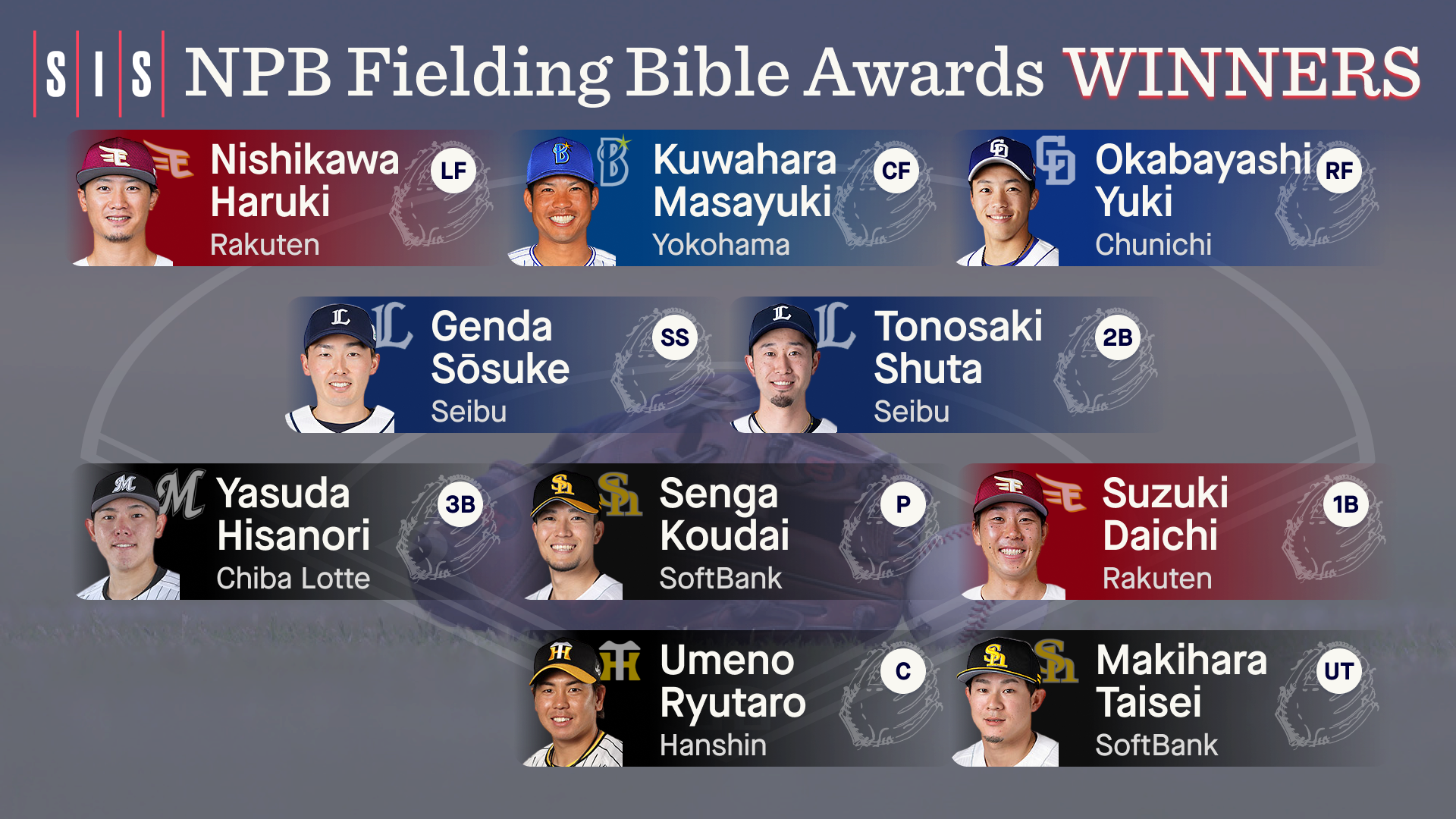
    Seibu Lions shortstop Genda Sōsuke became the first NPB player to win a Fielding Bible Award at the same position twice in the award’s three-year history. Genda, who previously won the award in 2021, saved 20 runs with his defense this season, easily the most among NPB shortstops

    Genda’s Seibu teammate, second baseman Tonosaki Shuta, also won the Fielding Bible Award at his position. Tonosaki led NPB second basemen with 26 Runs Saved. Genda and Tonosaki had more Runs Saved at their positions than any MLB player.

    Two other pairs of teammates won, first baseman Suzuki Daichi and left fielder Nishikawa Haruki of the Rakuten Golden Eagles and pitcher Senga Koudai and multi-position player Makihara Taisei of the Fukuoka SoftBank Hawks. Senga is one of the top free agent pitchers and is available to MLB teams this offseason. Makihara goes by the nickname “King Joker” because of his utility role.

     Nishikawa, Genda, Tonosaki, Okabayashi Yuki (right field), and Umeno Ryutaro (catcher) were the winners who recorded at least 10 Runs Saved at their respective positions. Umeno had arguably the most dominating season in the league, finishing with 23 Runs Saved. The next-closest catcher among eligible candidates had only 12.

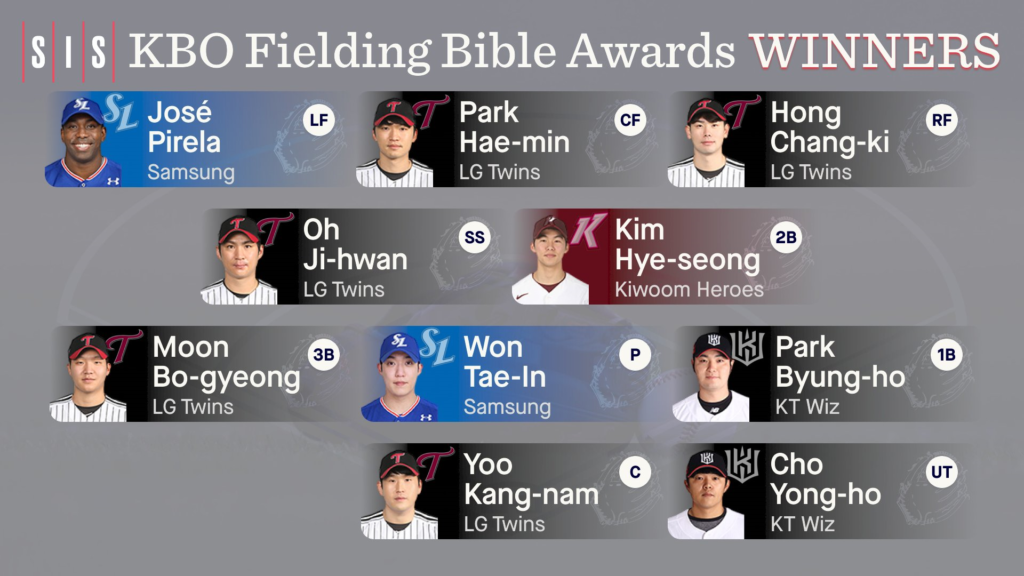
    The LG Twins led KBO in Defensive Runs Saved in 2022 and their players earned the rewards of that. Five of them won a Fielding Bible Award at their respective position.

    Catcher Yoo Kang-nam, shortstop Oh Ji-hwan, third baseman Moon Bo-gyeong, center fielder Park Hae-min, and right fielder Hong Chang-ki all were winners for LG. Oh, Kim, and Park each won at their positions for the second time, the only three players who have won twice at their positions in the three-year history of the award

    Yoo, Moon, and Hong were the three winners to finish with at least 5 Runs Saved at their respective positions. Defensive Runs Saved are calculated using an MLB basis and KBO Runs Saved totals are generally considerably lower than their MLB counterparts.

    Two former major leaguers won a Fielding Bible Award. First baseman Park Byung-ho, who played for the Twins in 2016, won in his first season with the KT Wiz, for whom he also hit 35 home runs. And left fielder José Pirela, who also had a great offensive season, was one of two winners on the Samsung Lions along with pitcher Won Tae-in. Pirela formerly played in the majors from 2014 to 2019 for the Yankees, Padres, and Phillies.

  • NPB Free Agent Scouting Report: Masataka Yoshida

    NPB Free Agent Scouting Report: Masataka Yoshida

    Masataka Yoshida is expected to be posted by the NPB Champion Orix Buffaloes. This is a bit of a surprising move, as there had not been much buzz around Yoshida being posted until after the playoffs concluded.

    That does not mean that Yoshida is not deserving of a look. He has been one of the most consistent hitters in the Pacific League over the last half-decade, posting a batting average of at least .300, an on-base percentage of at least .400, and a slugging percentage of at least .500 in each of the last six seasons.

    Yoshida does have a reputation as a slugger, though that is a little misleading. He has never reached 30 home runs in a season (he hit a career high 29 in 2019), and has hit 21 home runs in each of the last two seasons.

    Below is a great side view of Yoshida hitting a walk-off home run in Game 5 of the Japan Series:

    https://twitter.com/baseballcosmo/status/1585631003753971716

    And here is the normal broadcast view:


    Yoshida has a bit of an uppercut in his swing, which allows him to maximize his power output from his smaller frame. Listed at 5’8” and 176 lbs, his frame is reminiscent of Dustin Pedoria’s and, like Pedroia, Yoshida has to put everything he has into his swings.

    Despite the effort exerted on them, Yoshida demonstrates elite plate discipline skills. He struck out only 41 times this season (an 8% rate) while walking 80 times (16%), though the walk rate was boosted by 18 intentional walks. If we remove the intentional walks he still maintained a healthy 13% walk rate.

    Yoshida isn’t just piling up stats against weaker arms either. The Pacific League is home to many of Japan’s best young pitchers. While he does not have to face teammate Yoshinobu Yamamoto, he has hit well against fellow MLB hopeful Koudai Senga, NPB wonderkid Roki Sasaki, and veteran Masahiro Tanaka. He’s a combined 19-for-53 (.358) with 10 walks against them. He’s also 10-for-24 (.417) in the last three seasons against the Pacific League’s top lefty relievers, Yuki Matsui and Livan Moinelo.

    While Yoshida’s offensive stats look very good, there is another wrinkle to consider with him. NPB teams do not shift much in general, but Yoshida was an exception as he faced the shift regularly. With MLB teams unable to put three fielders on the right side, or put an infielder in short right field, Yoshida might find more holes in MLB infields to get hits through.

    While Yoshida has proven everything he can with the bat in NPB, the rest of his game has some questions. Defensively he is likely limited to only left field. Yoshida’s size makes him too small for first base, where longer reach is desired to catch errant throws from infielders.

    His arm can also be a liability in right field, where he has played just over 600 innings since 2018, when we began tracking NPB data. In that time Yoshida has allowed runners to take an extra base (for example, go first to third on a single) on 64% of their opportunities in right field. Yoshida played only 23 innings in right field in 2021, and did not play there at all in 2022.

    As a left fielder, teams could look for a way to maximize his abilities defensively. Over the last five years, Yoshida has totaled -15 DRS in 3,103 innings in left, averaging -3 DRS in around 600 innings per year (we judge NPB players using MLB out probabilities).

    In the range and positioning component of DRS he has rated above-average on “shallow” plays in each year, while scoring negatively on “deep” plays in each year. If a team wants to use him in the outfield, they could dig deeper to determine how to optimally position him in left field in hopes of masking his deficiencies.

    How much he can play in the field is also a concern. From 2018-2020 Yoshida played in every game for Orix, though he only played more than 100 games in the outfield in 2018. In the last two seasons he has missed some time and also seen more time at DH.

    In 2022, played left field in only 39 of his 119 games, slotting in as the DH in his other 80 games. A positive COVID test and a hamstring injury limited his ability to stay on the field. He did start at left field in 9 of Orix’s 11 playoff games, while playing DH in the other two.

    Similar to his defense, Yoshida’s speed is a bit of a question mark, and maybe more of a liability following his hamstring injury. He is slower than the typical small-framed outfielder, though his speed is much closer to below-average than basepath-clogging.

    He was 4-for-4 stealing bases this season (with no attempts in 2021), suggesting he was opportunistic with his opportunities. Given his .447 OBP he was on base frequently, but ran sparingly. He also rarely finds an extra gear on liners in the gap, totaling exactly 1 triple in each of the past three seasons, and 7 total over his seven-year career.

    Yoshida has been the best hitter that Orix has had since Ichiro, and will likely find a MLB home this off-season. While there are some questions regarding his defense, his elite offensive production will likely overshadow those other concerns.

  • Dominance Deep Dive: Munetaka Murakami’s Power

    Dominance Deep Dive: Munetaka Murakami’s Power

    For our series on dominance in NPB this season, we’ve taken a deep dive into some of the best pitching performances in the league.

    Now, we turn our attention to the batter’s box and the NPB’s best hitter. Munetaka Murakami, the 22 year-old third baseman for the Yakult Swallows, must be considered one of the best power hitters in all of baseball with his stellar 2022 campaign. 

    Murakami won a Central League MVP in 2021 and he’s backing that up in 2022 with video game numbers during a historic season. With a .341/.477/ .760 slash line and a 1.237 OPS entering the week, he leads the entire league in the traditional Triple Crown with 51 HRs, 125 RBIs, He’s also going for the slash line Triple Crown, which he currently leads as well.

    Murakami debuted in 2018, but his first full season came in 2019 when he slugged 36 homers and slashed a respectable .231/.332/.481 with an .814 OPS. That season, his major flaw was 184 strikeouts, the most strikeouts in an NPB season by a Japanese-born player.

    Sporting a K% of 31.0% and a 12.5 BB% in 2019, Murakami caused damage but swung and missed a lot.  He’d get a lot better when it came to avoiding the latter.

    Season K% BB%
    2020 22.3% 16.9%
    2021 21.6% 17.2%
    2022 19.4% 19.6%

    Since that first full season he’s cut down on his chases and done more damage on pitches in the strike zone.

     His 47% hard-hit rate is the best in NPB. Only one other player is closer than 10 percentage points (Hotaka Yamakawa, who has 37 home runs, is at 44%)


    MONTH Hard-Hit Rate Avg Launch Angle
    APRIL 42% 11.4
    MAY 41% 12.7
    JUNE 56% 8.8
    JULY 51% 21.6
    AUGUST 46% 15.6
    SEPTEMBER 44% 3.9 (9 Balls in Play)


    Murakami has been hitting the ball hard all season, especially since the start of June. That month he had a 56% hard-hit rate and an astronomical .559 BABIP.

     In July he was still very productive but, as noted in the table above, his launch angles were off.

    Here’s an at-bat from July where the pitcher starts Murakami with a slow curve that he takes on the outer edge. Pitchers will usually start him with a slow curve or splitter to mess with his timing, then attack inside with fastballs, and righty pitchers will use cutters trying to get the ball up under his hands.


    via GIPHY


    This particular at-bat ended in a flyout to right field. The frustration on Murakami’s face was visible, as that cutter got in on him towards the handle of the bat, limiting his ability to extend his hands. 

    via GIPHY


    This is where hitters have to succeed with not only high exit velocities but also optimal launch angles. Murakami produces the most damage on down-and-in pitches and creates loft from that part of the zone. Understanding this and coaxing flyouts on pitches up in the zone against him is key.

    While he does face high velocity in the upper part of the zone regularly. He takes these pitches with ease, rocking back on his heels and maintaining great balance. He doesn’t bail or turn away and stays in against these hard pitches. 

    Teams have decided the only spot they can really attack is up near his hands. Murakami has adjusted to the league and is more selective in this area of the zone. You have to get the ball up though because he punishes mistakes that are down.

    Murakami picked up steam again in July, hitting home runs in 5 consecutive plate appearances, an NPB record.

    Murakami’s batting stance and swing remind me of Matt Olson. With slightly more bent knees to start, his bat position and stance are almost identical to Olson’s. 

    Olson and Murakami both use their hands out in front of their bodies as a timing mechanism, but also as a way to create tension and energy in the body.

    Murakami relies on a medium-high leg kick to get energy stored into his back leg and hip. Olson’s load is a toe-tap, but both of them load into the back hip and create a solid back side and foundation for stored energy. The bat is in nearly the same spot and angle in the middle of the load.

    The biggest difference is when both batters load. For Olson, his hands end up a bit higher and farther back because of a slight turn in the front shoulder. Olson has great bat speed, which he uses to great success.

    The short and compact swing by Murakami allows him to let the ball travel deeper into the zone. Murakami stays inside the ball better and pulls the ball less than Olson.

    At the point of contact, both rotate around their front half as they uncoil their stored energy through the zone. The leverage created from their attack angle downward to the ball is what helps them both hit towering home runs. Both have exceptional bat speed but also smoothness and looseness that is created by excellent rhythm at the beginning of their swings. 

    Here’s a side view of Murakami’s swing. The flow of his swing mechanics is beautiful to watch as his head also stays still through the entire process.

    via GIPHY


    Timing can be an issue, with a slight susceptibility to the splitter. Murakami will swing and miss when out on his front side, whiffing over the top of these types of offspeed pitches.

    via GIPHY


    He also flicks off-speed pitches into the gap by delaying rotation and placing the barrel on the ball. Even though he is out of sync and into his front side on this pitch, Murakami uses the strength in his arms and hands to lift the baseball into the outfield.

    via GIPHY


    Another example of his power is this mishit on this decent fastball down and in. The power to bully this ball over the wall opposite-field is impressive. The reaction of the pitcher Kodai Senga says it all. 

    via GIPHY


    Murakami is an elite hitter. What separates him from most is how often he hits the ball hard, and his knack for being able to hit well even when his timing is off. Couple this with bat speed and strength and he’s a dominating power hitter.

    The scary part is he’s only 22 years old and there are no signs of him slowing down. The confidence, patience, and talent Murakami exhibits are all culminating in one of the best seasons ever.

  • NPB Dominance Deep Dive: Nao Higashihama & Shota Imanaga

    NPB Dominance Deep Dive: Nao Higashihama & Shota Imanaga

    This is the third in our series of articles scouting NPB pitchers through the lens of their best work – the no-hitters they’ve thrown this season. Previous articles looked at those thrown by Roki Sasaki and Yoshinobu Yamamoto. In this piece, we’ll look at the two others.

    Higashihama’s No-Hitter

    Nao Higashihama, a 31-year-old veteran of the SoftBank Hawks, threw his first career no-hitter on May 11 against the Seibu Lions.

    Higashihama has a 2.30 ERA this season  and 0.88 WHIPdespite averaging only 5.7 K per 9 (down from his career average of 7.6).

    The veteran righty peppered the strike zone with 64 strikes on 97 pitches. His path to success was in working the outer edges and staying out of the middle of the plate.

    Higashihama’s fastball was around 92 mph and he does a good job of hiding the baseball behind his right leg to get a little more deception. He typically works away from right-handed batters and this outing was no exception as he threw 26 sliders and 19 fastballs to them in this start.

    The slider is meant to work down in the zone and tunnel with his fastball to get righties out. The ball has a good tight spin out of his hand and he throws the pitch in and around the zone with the intent of creating weak contact, rather than swings and misses. The slider, at an average of 87 mph, has sharp bite and creates a lot of ground balls when tossed down and away from righties.
    The difference between Roki Sasaki and Higashihama is the willingness to throw certain pitches. Higashihama primarily stayed fastball and slider to right-handed batters throwing only nine splitters as a show-me pitch at around 89 mph to right-handed batters, keeping them honest.

    His approach to lefties is a different story, Higashihama pounded a weak spot in the zone to lefties on the outer part of the plate as he showed the two lefties in Seibu’s lineup fastball in, and then out, followed by the splitter as his out pitch.

    What’s really impressive is that with two strikes on a hitter, Higashihama mixed all three of these pitches incredibly well.

    He threw 9 fastballs, 9 splitters and 7 sliders in two-strike counts in this game. With only 6 strikeouts and 16 whiffs total, Higashihama repeatedly induced weak-contact grounders.

    Compare this with the hard-throwing Sasaki who had 22 whiffs and 19 strikeouts total, with 20 whiffs on his splitter and just two on his fastball. Sasaki at times lived in the middle of the zone throwing a lot of strikes and getting many foul balls or takes with his fastball. Sasaki relentlessly attacked hitters with first-pitch fastballs, throwing 21 of them out of his 27 hitters faced, a 71% strike rate (15-of-21).

    Higashihama mixes up his first pitch usage with 10 fastballs, 6 split-fingers, and 10 sliders. He also had a high strike rate with his fastball, 72%, as he painted corners on batters.

    Higashihama with his balanced pitch selection ended up collecting 14 ground ball outs in the game out of the 19 balls in play, and didn’t allow a hard-hit ball in the entire game. The pitchability of Higashihama was on full display as he even worked in a slow 72 mph curveball late in the game for a strike during the 3rd at-bat of the 6th inning, It was an effective wrinkle the second time through the order.

    Higashihama kept hitters off-balance in a completely different way than Sasaki but both relied on a good number of fastballs to set up hitters. This is universally thought of as one of the better ways to approach hitters: establish the fastball early for a strike, which opens different avenues for your secondary pitches to get batters out.

    And though we’re all about evaluating pitching here, we need to remember to give props to his defense.


    Shota Imanaga’s No-Hitter

    Shota Imanaga of the Yokahama Baystars had the most unique game plan for his no-hitter on June 7 against the Nippon-Ham Fighters. The 28-year-old lefty sprayed the ball all over the zone, throwing 77 strikes on 117 pitches.

    Imanaga has a 2.75 ERA and 0.92 WHIP this season. He’s much more of a strikeout pitcher than Higashihama, averaging 9.2 per 9 innings.

    When he did miss his intended target, he usually put the pitch in a good spot for a miss. If he wanted to go down and away from a right-handed batter with a fastball, he might miss up in the zone with it, but still on the outer part of the plate.

    The fearlessness the lefty displayed was evident as he constantly tried to change eye levels with high fastballs up-and-in, followed by soft stuff down. In contrast, Higashihama and Sasaki were more horizontal in their approaches, working the bottom third of the zone in and out.

    The difference in first-pitch usage was also drastic. Imanaga, unlike the other two, threw the kitchen sink at the plate, with 13 fastballs, 7 splitters, 5 cutters, and 3 curveballs thrown on the first pitch of at-bats.

    Imanaga loved the use of his cutter/slider hybrid to keep hitters off the barrel. He throws the pitch with his hand more behind the ball, which looks more like a cutter with just a tiny bit of cut. However, he threw the cutter-type pitch in slider situations, down and glove side in the zone.

    The grip above creates just a little cut to the ball and that’s what Imanaga is looking for as he throws it primarily glove side.

    Imanaga wasn’t looking for the harder or more horizontal sweep of a slider. Imanaga threw 23 fastballs and 23 cutters vs left-handed batters, tunneling that pitch away very well in this game, and mixing and matching speeds.

    Against right-handed batters he threw more splitters, 27 of them, almost all down and arm-side away. Both the split and cutter were used similarly to Higashihama with the idea of weak contact more than strikeouts.

    Imanaga sprinkled in the curveball, which was actually hit hard at times, including a screaming line drive in the 6th that he snared to preserve his no-no, a great defensive play with a little luck as well.

    During Imanaga’s no-hitter, he allowed four hard-hit balls.

    Overall, Imanaga got a good number of swings and misses, with 20 of them, compared to Sasaki’s 23, Yamamoto’s 21 and Higashihama’s 16. He also had 7 strikeouts with his fastball, 4 looking and 3 swinging, the most of all three pitchers.

    Imanaga was effectively wild in and out of the zone with his misses. He added two more strikeouts with the cutter, blending a little bit of what Sasaki and Higashihama did well in both of their starts into his one: a good fastball and a good cutter/slider with a good amount of splitters to right-handed batters.

    Japanese baseball lends a different perspective into the game and this season so far has provided no shortage of dominant pitching performances to watch. Higashihama and Imanaga’s no-hitters looked different from Yamamoto’s and Sasaki’s. It’s cool to see how different pitchers dominate and we’ll keep looking out for more NPB excellence the rest of the season.

  • Dominance Deep Dive: Yoshinobu Yamamoto’s no-hitter

    Dominance Deep Dive: Yoshinobu Yamamoto’s no-hitter

    We previously wrote about Roki Sasaki’s perfect game with the promise of more articles to come on great pitching in NPB. So now let’s examine the June 18 no-hitter for one of Japan’s brightest young stars, Yoshinobu Yamamoto of the Orix Buffaloes.

    The 23-year-old Yamamoto dominated the Seibu Lions lineup, the first team to be held hitless twice in a season since 1971 when the Nishitetsu Lions did the same.

    Yamamoto has been brilliant during his young career, sporting a 1.83 ERA in 699  innings pitched since he debuted in 2017. He also won the Sawamura Award (Japan’s Cy Young) last season as NPB’s top pitcher.

    What he’s got

    He combines excellent stuff and great command, attacking the strike zone with a refined and electric pitch mix, and a ruthless attitude as well.

    His mindset is pouring in strikes with a hard 94-mph fastball; and in his no-hit game he achieved a 71-percent strike rate on 45 fastballs.

    His four-seamer carries well through the zone and stays on plane all the way to the mitt. This causes hitters to swing consistently underneath the pitch when high in the zone. His fastball created eight swings and misses and six strikeouts (three looking and three swinging).

    His incredible command of the pitch is very noticeable as he exhibits precision hitting the catcher’s glove constantly. It wasn’t until the bottom of the fifth that Yamamoto allowed his only baserunner, a walk on four pitches.

    Besides this one hiccup, he was dialed in, throwing the fastball to all four quadrants of the zone. In the 9th, he threw his hardest pitch at 96.3 mph, dotting the outside corner for a strike – upping velocity without sacrificing command.

    He got 26 strikes on 34 splitters, generating 10 swings and misses on the pitch. These whiffs were set up by throwing the fastball down in the zone, at the knees.

    His splitter shows excellent fading action, moving down and arm side with a lot of movement. It netted 5 ground ball outs and 2 swinging strikeouts, because batters couldn’t lift the pitch in the air.

    Yamamoto also manipulates the shape of the splitter at times, as it resembles a sinker at around 92 mph. The pitch on average hits 90 mph, four off his average fastball.

    If the batter lets the harder sinker-type split go, it might catch the bottom of the zone similar to his low four-seamer. If you swing, you may look foolish as the late-fading splitter vanishes.

    Grip pressure is key to what variation he throws. Yamamoto puts pressure on his pointer finger on the back half of the baseball seam and then pronates it by turning his arm over. When he pronates less, his grip causes the baseball to sink, and when he turns his arm over, he creates more fade to the pitch.

    When Yamamoto throws high fastballs in the zone, he creates a beautiful pairing with his unique curveball. He uses a Ginoza grip, turning his wrist over and showing the back side of his hand to the batter.

    Then, he pushes or flicks the baseball, causing the pitch to tumble towards the plate with amazing 12-6 action off his finger. The breaking pitch falls out of the sky as it comes towards the plate with impressive sharpness.

    Along with fantastic sharpness, Yamamoto throws this curveball at a higher velocity than most, averaging around 77 mph. He can even get this pitch into the low 80s at times, whereas most curveballs with this grip usually are thrown in the low 70s.

    Still, he primarily throws fastballs and splitters, throwing only 16 curveballs during this game. He mixes in the curveball, not only as a change-of-speed pitch but to keep hitters off of his high fastball.

    He went to his fastball more with two strikes, throwing 17, compared to eight splitters and six curveballs, with his one and only slider thrown with two strikes in the 7th as well.

    He showed a balanced first-pitch usage with 10 fastballs, 13 splitters, two curveballs, and one cutter. He attacks both right-handed and left-handed batters with fastballs, splitters, and curves in the same locations.

    And when you add in a cutter at around 90 mph glove side (5 of 6 thrown for strikes), he creates another way to keep hitters from timing up and barreling his fastball. Hitters must respect the mix of his pitches.

    A willingness to throw any of his three primary pitches at any time causes hitters fits. Yamamoto’s combination of stuff and command is truly fun to watch and was on full display during his masterful no-hitter.

  • Dominance Deep Dive: Roki Sasaki’s Perfect Game

    Dominance Deep Dive: Roki Sasaki’s Perfect Game

    Nippon Professional Baseball (NPB),  Japan’s professional baseball league, has featured three no-hitters and one perfect game so far in the 2022 season. 

    What fascinated me about these is the uniqueness and similarities of each of these three starts, as well as how the quest for perfection or hitless ball by a pitcher can be achieved by three completely different approaches to pitching. 

    I’m going to review those four games, one in this article and the other three in the near future. 

    Rōki Sasaki’s Perfect Game 

    On April 10, arguably the best pitcher in Japan and one of the best on the planet right now, dazzled. 

    Twenty-year-old Rōki Sasaki of the Chiba Lotte Marines tossed the first perfect game in 28 years, striking out 19 Orix Buffaloes during the game. 

    Sasaki masterfully filled the strike zone with 82 strikes and just 23 balls.

    Sasaki pounded the zone with a first-pitch exploding fastball in 21 of the 27 at-bats. It averaged 99 MPH and touched 102 that day.

    Sasaki’s fastball displays late life and pops through the  zone, and when he is dialed in he commands the inner and outer thirds of the plate and loves to work down in the zone.

    The fastball, especially knee-high, sets up his go-to pitch: a nasty splitter that batters constantly swing over the top of.

    This dive-bomb splitter comes in at around 91 mph and masquerades as his four-seam fastball for 50 feet before darting down into the ground.


    Sasaki displays the unique ability to manipulate the pitch and cut the splitter too, creating movement more like a slider when thrown to right-handers. When this happens, the pitch takes off and darts away from righties.

    In the picture below, Sasaki fades this splitter away, applying even pressure on the ball, where he’s more worried about the pronation or the turning of his arm over, and letting the pitch run away from a left-handed batter.

    This pitch variation allows Sasaki to be a dominant two-pitch pitcher, as he threw only three curveballs and three sliders during the perfect outing – two pitches behind his stellar fastball and splitter. And that he has great feel for the splitter at this stage of his career – that’s highly impressive.

    The slider is getting better, but he lacks the excellent command of his splitter and currently the curveball is a get-me-over change-of-speed in the upper 70s. Oftentimes, both breaking pitches were used early in counts to keep hitters honest. The four-pitch mix is still crazy impressive from the young Sasaki, but the split remains his go-to weapon as was the case in his perfect outing.

    With the ability to control the strike zone and attack the lower third, Sasaki’s splitter and fastball cause serious problems for hitters. He struck out 15 Buffaloes with the split and the other four with fastballs that were on the black and in the middle of the zone.

    The attacking of the zone down with an elite fastball causes hitters to commit early on his nasty splitter that can drop out of the zone in the blink of an eye.

    This approach is a stark contrast to most other starters in the league and most of baseball.

    Sasaki is a true unicorn on the mound and creates a completely different pitching profile than what hitters see on a daily basis.