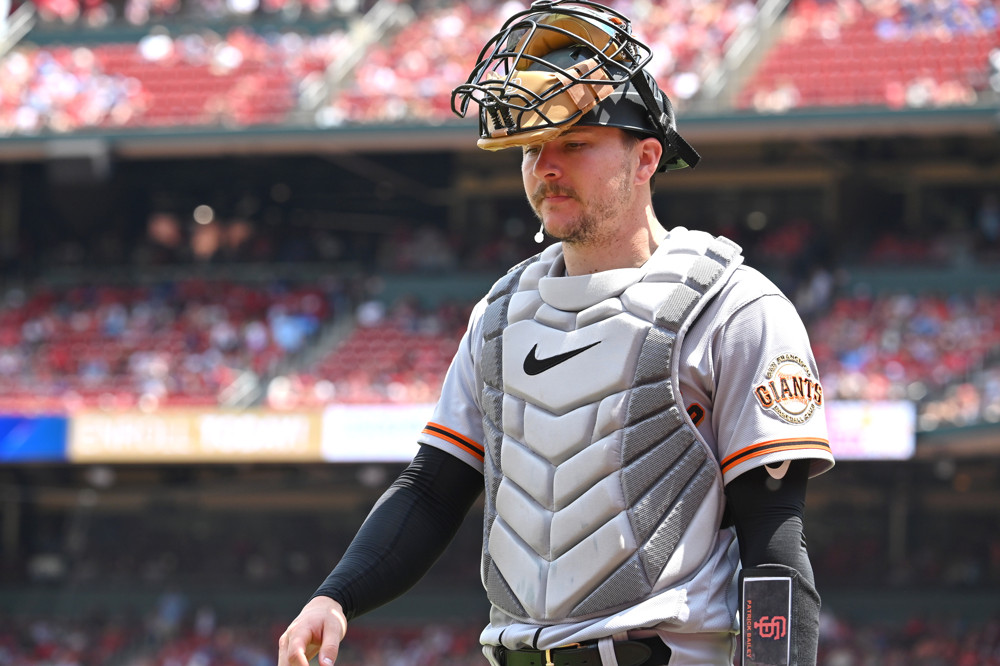
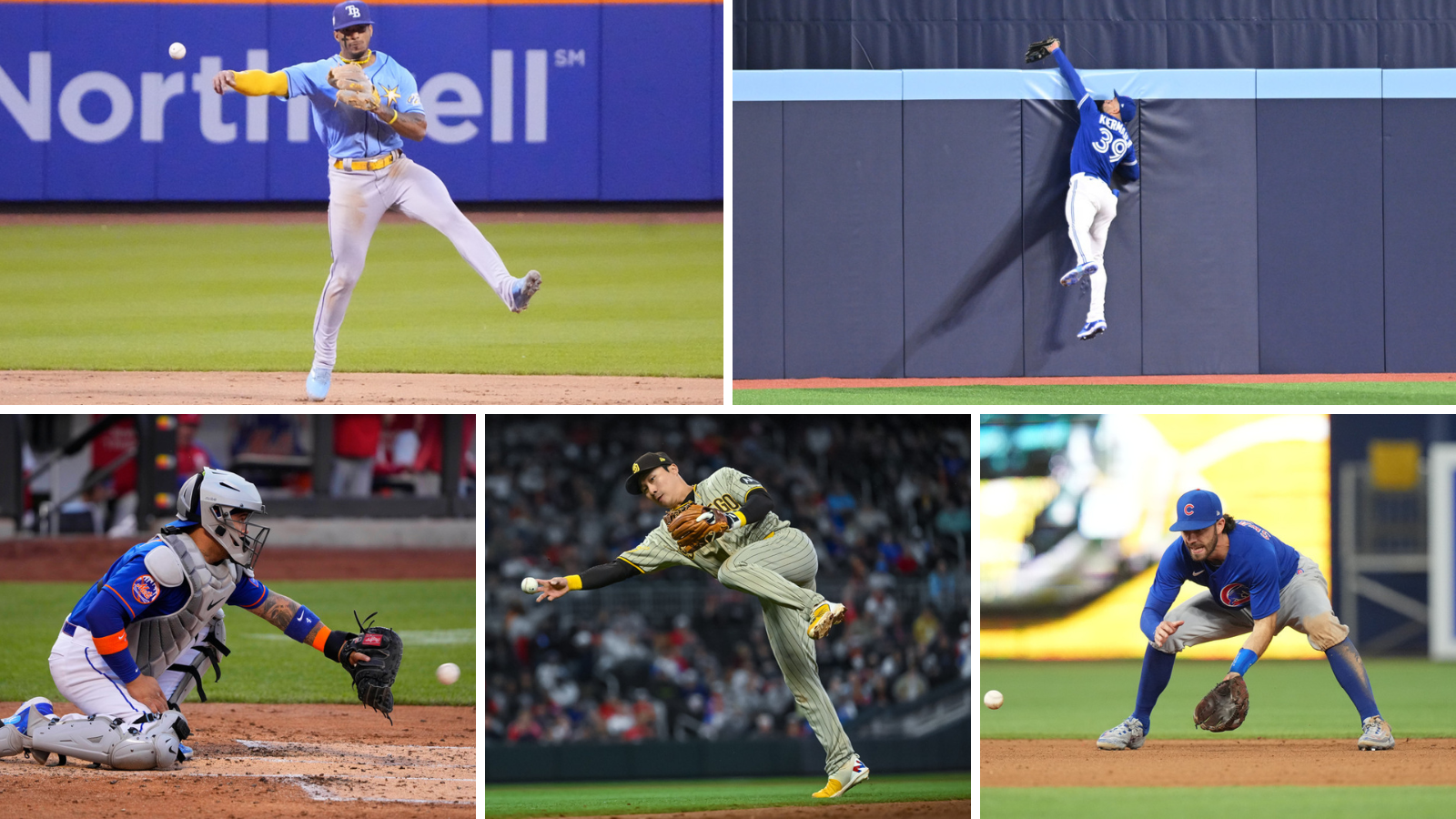
With all due respect to Diamondbacks catcher Gabriel Moreno and Mets catcher Francisco Álvarez, the best defensive catcher in a promising group of rookie catchers may be Patrick Bailey of the Giants.
Bailey ranks tied for 2nd among catchers with 7 Defensive Runs Saved, one behind Moreno, despite playing in only 26 games this season. His strengths have been in throwing out basestealers (3 Runs Saved thanks to 8 caught stealing in 21 attempts) and pitch framing (2 Runs Saved).
Most Defensive Runs Saved (2023) – Catchers
Name
Team
Defensive Runs Saved
Gabriel Moreno
Diamondbacks
8
Patrick Bailey
Giants
7
Cam Gallagher
Guardians
7
Jonah Heim
Rangers
6
Seby Zavala
White Sox
6
Alejandro Kirk
Blue Jays
6
In his 215 innings, Giants pitchers have a 3.10 ERA and 4-to-1 strikeout-to-walk ratio with Bailey catching. The Giants pitchers have combined for a 4.27 ERA and a 2.8-to-1 strikeout-to-walk ratio with their four other catchers in 2023.
Bailey is also hitting .318 with an .867 OPS in his first 95 plate appearances. He’s a big part of why the Giants are 25-10 in their last 35 games.
“Growing up you face guys [and think] this guy’s not throwing hard, but I can’t hit it.
Like, it seems invisible, right? I keep fouling it off. Well now it’s either got really good vertical [movement] or it’s in the approach angle and low release. And now you can quantify that a pitcher does this well. So our gameplan should be, alright, how do we maximize his strength?
And then do some stuff to get hitters off the strength.”
2) Positioning his body is key to framing a pitch on the corner
“[First] I’m angling my body back towards the plate. Then I go into what I would call my glove prep. So I would kind of position my glove towards the right foot to kind of give myself an angle back to the plate.
And then as I’m catching the ball, just trying to make it one fluid motion back to the zone.”
3) He feels like he belongs and that’s reflected in his hitting
“I think a lot of the hitting has come from just not having to feel pressure where, you know, [in the] minor leagues, sometimes you feel like you gotta hit your way to certain spots here.
I know defense and catching is gonna be a lot of the value I bring to a team. So kind of whatever I can do at the plate will be a bonus. And it’s been a nice bonus so far, but I’m gonna just try to keep at it.”
It’s going to be difficult for a rookie catcher to win a Gold Glove Award or Fielding Bible Award, but Bailey seems to be doing something every series to both help his team win and impress voters.
To listen to our interview with Bailey, check out The Sports Info Solutions Baseball Podcast, which you can find here or wherever you get your podcasts.
One of a series of four pieces looking at how the best hitters dominate pitches thrown to different areas.
Every hitter in baseball has a certain part of the zone they absolutely love a pitch to be located in. I wanted to look at the outside and inside quadrants of the zone to see which players are the best and what makes them the best.
I looked at some data for each quadrant and picked the player that really stood out in each. Then I dove into some video to see why each hitter has the ability to do so much damage in that zone.
Best Hitter vs Inside Pitches
Mookie Betts
The numbers
AB
AVG
SLG
OPS
2B
HR
K
Miss%
82
.329
.744
1.230
4
10
13
14%
Betts’ .329 avg on inside pitches is around .100 points higher than league average (.244). His .744 slug is almost double the league average(.423). Betts isn’t just taking his hits, he’s mashing pitches inside.
When Mookie Betts is at the plate there’s three things he’s focused on:
Lift the ball
Pull the ball
Hit the ball hard
Betts ranks 12th in MLB in fly ball (48%) and 18th in pull percentage(48%). He also ranks 43rd in Hard Hit% (46%). This has translated to a .407 avg and a .898 slug when he pulls the ball.
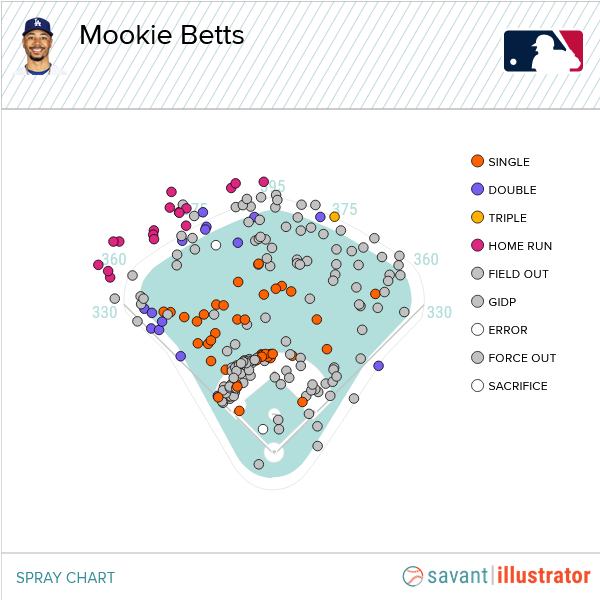
This spray chart from Baseball Savant is for all of his balls in play. The majority of his hits are to the left side of the field, especially when he goes for extra bases.
This is why Mookie is able to crush pitches inside, primarily inside and down. On pitches down and in and in the strike zone, Mookie has 9 hits (2 2B and 5 HR). His average exit velocity is 98.7, his highest in any zone.
If you’re trying to get a swing and miss inside, good luck. He has a 14% miss rate on those pitches.
Mookie’s favorite pitches inside are sinkers and sliders and it doesn’t matter if he’s facing a lefty or righty. Six of his home runs have come against those pitches. He has no real holes inside against righties.
Betts does struggle somewhat against 4 seamers from lefties, mostly if they pitch them up and in but he still crushes sinkers and sliders from lefties.
Video Breakdown
A few things in Mookie’s swing that make him one of the best hitters in baseball:
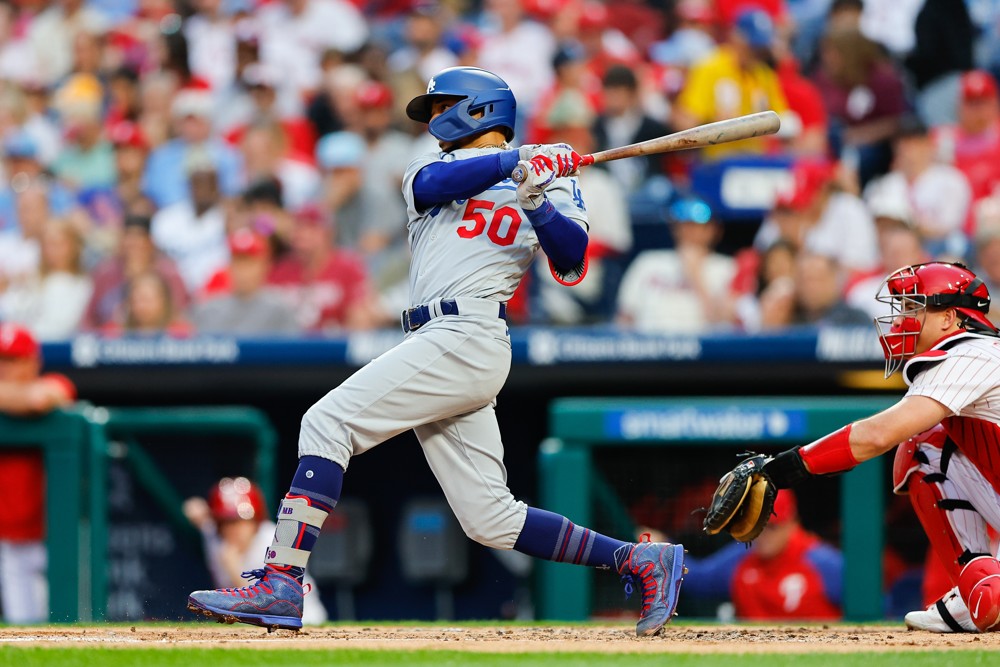
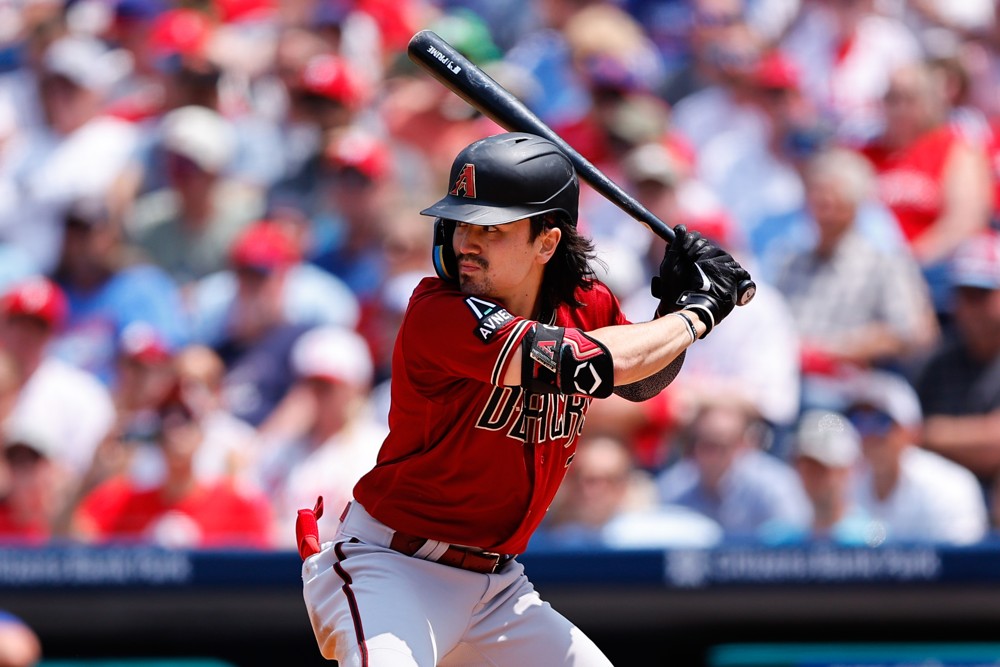
“Rubber band effect”. Betts has the drift just like we saw with Corbin Carroll (article about him here). The difference is Mookie’s hands are moving backwards as the rest of his body is moving forward. Once his front foot touches down he starts to explode his hands through the zone.
The direct path of the barrel. He doesn’t waste any motion in the swing. The barrel takes the shortest path possible. A lot of hitters that want to lift the ball have long loopy swings but Mookie’s is short and direct.
The follow through. He doesn’t have a big follow through like we see so often in baseball now. Betts holds on with both hands and a lot of times the bat doesn’t go past his left shoulder.
I was watching the U.S. Open while writing this and noticed Betts swing is very similar to a golfer hitting a wedge: Dropping the head of the club/bat directly to the ball and having no follow through.
Searching Twitter I found a video of Betts golfing in 2022 and the swings are very similar.
Side view of HR vs Josh Hader (96 MPH 4s middle in)
Turning on a 96 MPH fastball from Josh Hader is not something you see every day. Mookie’s short swing and bat speed is on full display here.
HR vs Luis Severino 4-seam
Severino wanted to throw this pitch away but misses middle in and Betts makes him pay. Betts does so well to pull his hands in and get the barrel to this 95 MPH fastball.
Watch how short of a path his barrel takes. What helps him have that short path to the inside quadrant is the vertical position of his bat before he swings. This is unlike Carroll (again, read what I wrote about himhere) who holds his bat more horizontal.
HR vs Logan Webb sinker
Logan Webb produces a grounder on 67% of the balls in play on sinkers to right-handed batters. Normally a sinker in that location is a fantastic pitch, but not to Mookie.
As Betts’ hands move down into the zone the barrel follows right behind them. Because he’s so direct to the ball he’s able to get under this sinker. His back elbow is touching his belt and he can still generate enough power to drive this to left center.
Betts has a plan at the plate and is able to execute it to perfection. Of course, he makes it seem way easier than it actually is. His eye at the plate, hand speed and pure athleticism really separate him from other players.
COLD ZONE
Focusing on pulling and lifting the ball is great for pitches on the inside quadrant, but not so much on the outside quadrant. Mookie really struggles on pitches away: In 114 AB ending with a pitch outside he has 20 hits (.175 avg).
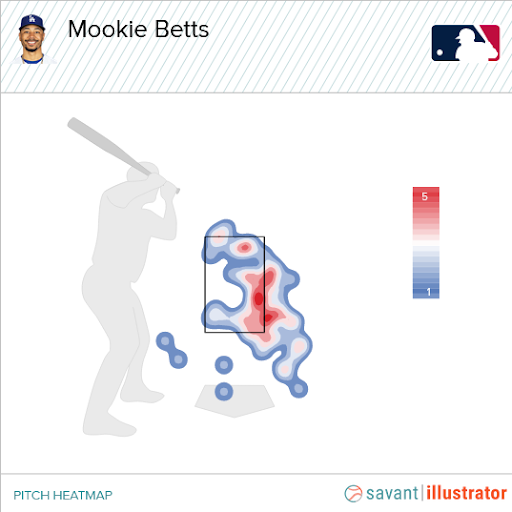
If a pitcher needs a strikeout they have to attack him away, his swing and miss percentage is 24.5% and he’s struck out 38 times. The heat map from Baseball Savant below shows all of Betts’ strikeouts this season.
Baseball is a difficult game, every hitter has a hole in their swing. The best hitters take advantage when pitchers make a mistake and throw it where they like it. Betts is just one example of that.
One of a series of four pieces looking at how the best hitters dominate pitches thrown to different areas.
Every hitter in baseball has a certain part of the zone they absolutely love a pitch to be located in. I wanted to look at the outside and inside quadrants of the zone to see which players are the best and what makes them the best.
I looked at some data for each quadrant and picked the player that really stood out in each. Then I dove into some video to see why each hitter has the ability to do so much damage in that zone.
Best Hitter vs Outside Pitches
Corbin Carroll
The numbers
Per our internal tracking, these are Carroll’s numbers on pitches we classify as being on the outer-third of the plate or off the outside corner.
AB
AVG
SLG
OPS
2B
HR
K
Miss%
105
.362
.686
1.128
6
8
26
21%
Corbin Carroll hasn’t just been one of the best rookies in baseball, but one of the best players. His ability to cover the outside part of the plate is exceptional. Carroll doesn’t just slap singles to the opposite field, he hits for power.
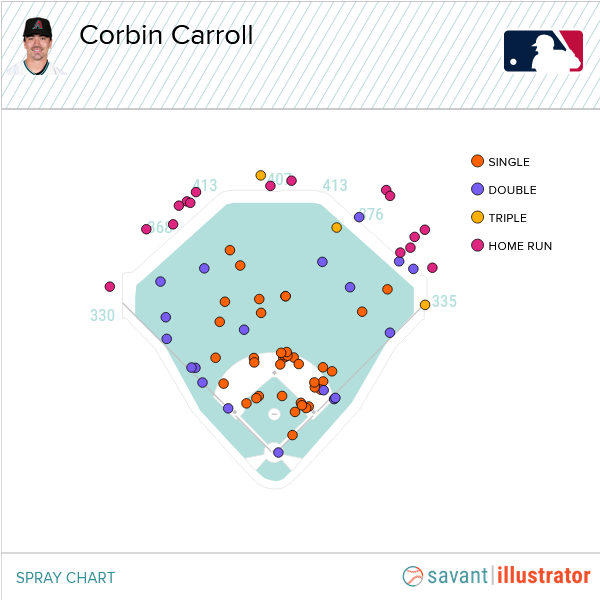
This spray chart from Baseball Savant shows all of his hits this season. Carroll loves to use the left side of the field.
Carroll is 2nd in MLB with a 1.020 slug to the opposite field. He leads MLB with 7 HR to the opposite field, ahead of Pete Alonso, Rafael Devers, and Randy Arozarena.
Carroll’s .362 avg is well above the league average of .221 on pitches away. While his slugging percentage of .686 is more than double the league average(.325). He is particularly good against right-handed pitching, against whom he has 8 home runs on outside pitches.
If you pitch him up and away he’s going to torch the ball. In at-bats ending on pitches in the zone up and away Carroll has 9 hits (1 2B, 4 HR) and an average exit velocity of 97.4 MPH. That’s Carroll’s highest average exit velocity in any part of the zone.
Carroll doesn’t care what pitch you throw him. His pitch recognition is exceptional and his willingness to go the other way gives him the ability to hit fastballs, breaking balls and offspeed pitches.
Lefties don’t pitch him away as much since it’s easier for them to pitch him inside. I think we’re gonna see a lot more of him getting hit by pitches. Matt Strahm, a lefty for the Phillies, hit him in back to back plate appearances which led to the benches clearing. When lefties do pitch Carroll away, he has no problem handling it.
Video Breakdown
There are a few things that stand out in his swing that make Carroll such a great hitter:
The drift forward once he lifts his leg, keeping all the power anchored in his back leg ready to explode forward.
The quiet hands. Once he gets crouched down the hands do not move. They follow his body as he drifts but they stay at the same height and angle the whole time
The connection. His hands follow the rest of his body. Watch how his hands follow his left hip through the zone.
Side view of Home Run vs Brent Honeywell Screwball (middle away)
HR vs Tanner Houck 4-seam
His ability to keep his bat level through the top of the zone helps him get to this pitch. His bat is practically horizontal when he is getting ready to swing. This means the barrel’s path to the high pitch is as short as possible.
Grand Slam vs Will Vest 4-seam
Carroll keeps his front shoulder closed as long as he can, letting the ball get deep. He trusts his hands to get to the ball and knows he has the power being generated from his lower half to really drive it.
One thing I love here is that with 2 strikes Carroll cuts his swing down and still hits a grand slam. He goes to a two-hand follow through on this swing, usually he lets go with one hand.
Carroll’s swing mechanics combined with his ability to recognize pitch type and pitch location make him one of the best outside quadrant hitters in baseball. Pitchers should proceed with caution when they want to pitch him there.
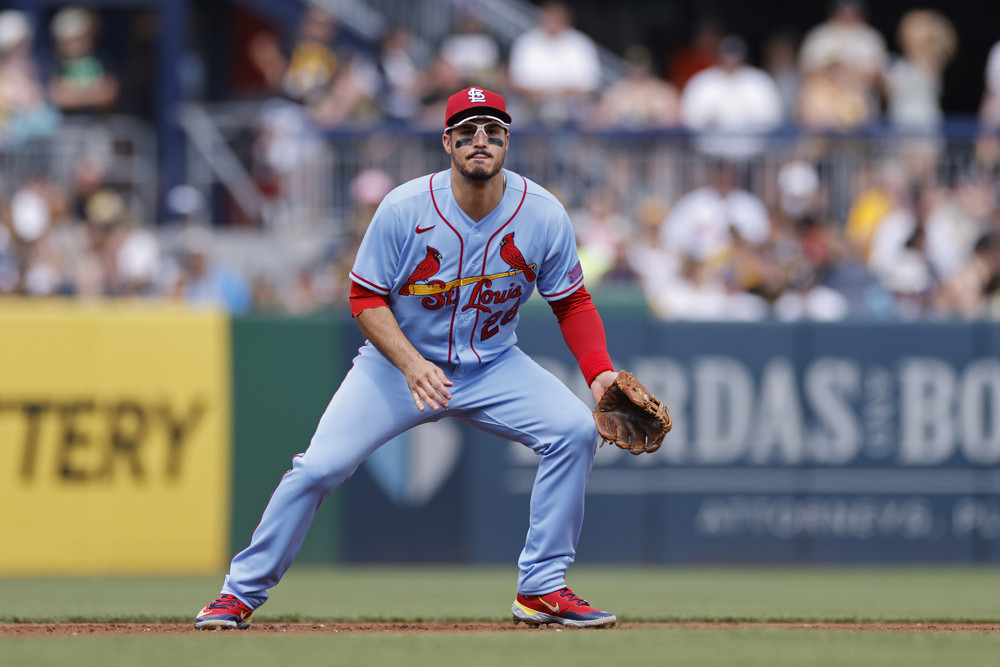
What Nolan Arenado did at third base from 2013 to 2022 was extraordinary. If it were easy to average 15 Defensive Runs a season at the hot corner, lots of players would do it. But Arenado stands alone with his skill and has the hardware in Gold Gloves (10) and Fielding Bible Awards (5) to back it up.
But this 2023 season has been befuddling in many ways for the Cardinals. One of those ways is that Arenado’s defense has not been close to its usual standards.
Arenado enters Thursday with -1 Runs Saved. That’s -1 as in negative-1.
He’s not anywhere close to his usual spot near the top of the MLB leaderboard. The top three are currently Arenado’s division rival, Ke’Bryan Hayes, who is tied at the top with Arenado’s replacement with the Rockies, Ryan McMahon, followed by Arenado’s former high school teammate, Matt Chapman.
Now, we’re only a little more than 40% of the way through the season and there are reasons that awards are given out for 162 games rather than 60 to 70. Arenado could easily rip off a great defensive stretch and make up a lot of ground in a short amount of time.
That would mean believing in his track record over the small sample.
The track record is fantastic. The small sample is … not.
What’s Going On?
What’s missing from Arenado’s play this year is that he’s not making the great play AND he’s on pace to do worse on the easier ones as well.
We could cherrypick this any number of ways, but for the purposes of simplicity, let’s look at plays Arenado made that were worth at least a half-run in Defensive Runs Saved—these are generally the toughest balls on which to get outs.
And then we’ll look at plays that cost him at least a half-run. These are generally easy plays on Arenado’s ledger.
Nolan Arenado Plays Made – By Value of Play
Season
>=0.5 Runs
<=-0.5 Runs
2020
11
8
2021
15
26
2022
19
24
2023
3
15
This is a good mix of seasons. In the shortened 2020 season, Arenado was otherworldly. He led all third basemen in Runs Saved. In 2021, he dipped a bit and had his worst season to date, finishing it with 6 Runs Saved. In 2022, a few more really nice plays and fewer mistakes led to a much better season.
Even Arenado’s previous “bad” year is pretty far from what he’s been in 2023. What stands out is that Arenado is lacking the jaw-dropping play.
Video Review
Here are some of the plays that made Arenado so valuable in 2022.
The charge and throw has always been a big part of his repertoire. Here are two of them.
Arenado has also mastered going to his left, cutting off balls that would be tough plays for his shortstops and taking care of them himself.
These occasionally require dives
Quick moves and spins
And sometimes they’re just “ho-hum”
There were somanyoftheselastyear that were “ho-hum” and beyond. His top 20 defensive plays by Run Value consisted almost entirely of charge-and-throws and cut-off balls hit to his left.
What’s most noticeable about Arenado when watching these is that he can make a throw from any angle and adjust his velo as needed to get the batter at first base.
That’s why Cardinals broadcaster Chip Caray would have such confidence that Arenado was going to make a play like this one against Mookie Betts and the Dodgers on May 19.
Entering that day, Arenado seemed reasonably on track from a statistical perspective. He had 4 Defensive Runs Saved. But since May 19, Arenado has -5 Runs Saved, the worst total for anyone playing the position in that time.
Since then, Arenado has had a collection of botches uncharacteristic of his defensive nature, not just on the balls he typically vacuums up, but on other kinds of plays too. Nine of the 15 plays that cost him at least a half-run have come in this time. Here are 3 of them.
There’s More
I want to point out two other things that I noticed in my video and data study. First, from 2018 to 2022, Arenado has ~400 more touches on his forehand than on his backhand. His ratio of forehand touches to backhand touches is about 1.6-to-1.
This season, that ratio of opportunities is almost exactly 1-to-1 (72 backhand touches, 71 forehand touches). As an infielder you’d ideally want as many forehand chances as possible. Arenado has consistently converted them at about a 94% rate. Backhands, as you can see here, are harder.
Nolan Arenado – Backhand Play Success Rate
Plays Made/Touches
Backhand Out Rate
2018-2022
570/641
89%
2023
58/72
81%
The other thing I wanted to note is that in looking at Arenado’s season, it seems lacking in the kinds of chances that Arenado typically makes the most of: barehand plays.
The last four full seasons, Arenado has attempted a barehand 37, 36, 28, and 21 times, converting 56 of 122 into outs. This season, he’s had only 5 opportunities, converting 2. We’re not attempting to create an excuse for Arenado but I think a lack of opportunities is coming into play here, thus giving Arenado fewer chances to raise his Runs Saved total.
In sum, you might say that we should cut Arenado some slack, given that this is primarily a one-month funk. That’s fair.
But if you want to post 15 Runs Saved in a season at third base and win Fielding Bible Awards, chances are your season’s going to need some of the kinds of plays that Arenado has yet to make. And if the Cardinals want to make up the ground necessary to be in the playoff race, they’re going to need their third baseman to defend like his old self.
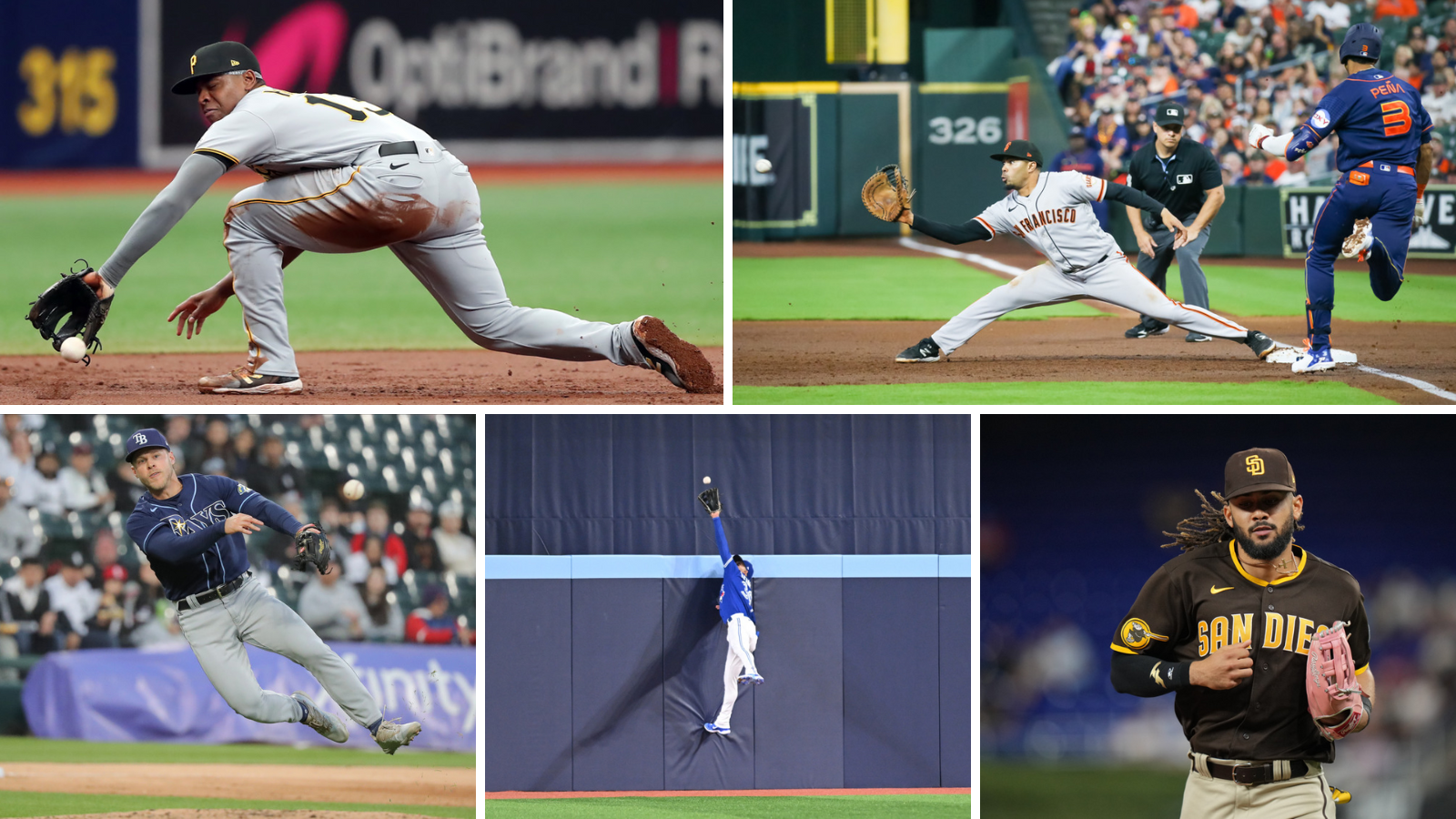
We’re about two-and-a-half months into the season and with that level of sample size accumulated, we can try to evaluate some of the top contenders for this year’s Fielding Bible Awards.
This will be our 18th year selecting the top defensive player at each position (plus a multi-position winner).
We looked at up-the-middle players in a writeup last week, so this we’ll look at the corner infield and corner outfield spots, as well as the multi-position award.
First base is a tough position to evaluate because of the question of how you evaluate throw handling in relation to play making (fielding grounders, liners, popups). We have methods for both though we do put considerable weight on play making
There are some surprising names at the top of the leaderboard. LaMonte Wade Jr. has completely remade his offensive and defensive game and stepped up to replace a Giants longtime standout, Brandon Belt. He’s the co-leader at the position with 5 Defensive Runs Saved.
He shares the lead with Rangers first baseman Nathaniel Lowe, who has gone from -9 Runs Saved in 2022 to 5 Runs Saved in 2023. On the last episode of our company’s baseball podcast, his teammate Marcus Semien articulated one reason for Lowe’s improvements being more certainty over what balls he could get in the absence of defensive shifts.
“Me not being deep in right field (for shifts) is helping us,” Semien said. “If I’m over a couple of steps to my left now, closer to him, he’s able to move over to the (1st base) line. There were plays last year where he had to go to his right to get an out and we didn’t get outs … that are now outs. If I’m close to him, I just tell him ‘go to the base’ (rather than field the ball). If I’m over and more straight up, he knows he has to go get it.”
But both Wade and Lowe don’t have good throw-handling numbers (what we’d call Scoop Runs Saved). So it’s certainly reasonable to say that some of the usual position standout, like Anthony Rizzo, Paul Goldschmidt, or Christian Walker, are still be viewed as a strong contender. Rizzo, Pete Alonso, and Carlos Santana are just one run off the Runs Saved lead.
Just keep an open mind to possibilities outside the norm given the data so far.
Third Base
This is shaping up as a really good three-player race. Ke’Bryan Hayes, who led all third basemen in Defensive Runs Saved in each of the last two seasons, has been strong wire to wire in 2023. He leads all third basemen with 12 Runs Saved.
Ryan McMahon has stepped up his game the last few weeks and now ranks 2nd to Hayes with 9 Runs Saved. And Matt Chapman seems to be healthier and closer to top form than he was last season.
Chapman’s 8 Runs Saved rank 3rd and he’s eradicated the throwing issues that cost him 3 Runs Saved off his total last season. Since the start of May, McMahon and Chapman are 1-2 in Runs Saved at third base.
It’s hard to believe but through ~500 innings at the position, Nolan Arenado has a negative Runs Saved total (-1).We’d expect him to turn that around, but at the moment, we don’t view him as being at the top of the pecking order. The numbers point in other directions.
Left Field
The 2022 Fielding Bible Award winner, Steven Kwan, totaled -2 Runs Saved through the end of April. He’s bounced back since, to 4 Runs Saved, which vaults him onto a list of contenders. Only one player has more Runs Saved than him in left.
That would be Daulton Varsho of the Blue Jays, whose 6 Runs Saved are the most at the position. Varsho has shown he can handle all three outfield spots well, so it’s not surprising that he’s excelling in left field.
Several other players are in the mix, including our co-Defensive Player of the Month for May, Austin Hays of the Orioles (4 Runs Saved). While Kwan’s game is largely about his range, Varsho and Hays offer value both with how often they catch the ball and in how well they throw it to deter baserunner advancement. Hays and Kwan lead left fielders in Runs Saved since the start of May.
One sleeper, J.J. Bleday of the Athletics, who has 4 Runs Saved in minimal time in left field. He’s started the last 11 games and if he plays at this level the rest of the season, he’ll definitely be in the discussion.
Right Field
Fernando Tatis Jr. had a lot of ups and downs at shortstop, but he has acclimated to his new home in right field beyond expectations. He’s saved an MLB-best 10 Runs there, almost entirely through an array of nice catches.
While Ramón Laureano’s range was sometimes problematic in center field, that’s been less of an issue in right field since he moved there last season, even as the Athletics have sputtered. His value is spread out well between his range and his arm. His 9 Good Fielding Plays match the number he had in center and right field combined last season in half as many innings.
Alex Verdugo, Adolis García, and Will Brennan would be the other names to watch here. Verdugo has a good history in left field and has converted that to right field this season. Garcia has the most Outfield Arm Runs Saved in right field and Brennan is right behind him.
Multi-Position
Our multi-position ballot factors in both versatility and skill and it’s hard to project who will be on it and who won’t.
But for now, we’d peg Ha-Seong Kim as the favorite given that he’s been terrific whether the Padres put him at second base, shortstop or third base. He leads the majors with 16 total Runs Saved. Taylor Walls of the Rays also lands in the versatile middle infielder and third baseman class. He has 5 Runs at third base and 3 at shortstop.
In terms of versatility, though he’s currently at -1 Runs Saved, it is hard to beat last year’s Fielding Bible winner, Tommy Edman, and last year’s Gold Glove winner, Brendan Donovan, even if their Runs Saved numbers don’t warrant it just yet. Edman has just added a new position to his repertoire, center field. He’s played four positions this season. Donovan has played six, though at the moment, he doesn’t have positive Runs Saved at any of them. But he does have 1 Run Saved at second base since the start of May.
We normally bring up home run robberies at the beginning of the season and then again in The Bill James Handbook. But we have reason to bring them up again two months into 2023. Our company has been tracking home run robberies in detail since 2004. We take this seriously. Our Video Scouts discuss and audit their decisions as to whether a ball cleared or was going to clear a fence when it was brought back.
There have been 34 home run robberies so far in 2023 (33 catches and one ball not caught that was knocked down). That’s just over two-thirds of the way to last year’s total (53) and nearly halfway to the highest total within the last 20 years, 69 in 2019. The season is only about 40% complete to this point.
Aaron Judge, Mike Trout, and Luis Robert Jr. have each robbed two home runs this season. Twenty eight other players have snagged one apiece. The Red Sox got one in back-to-back innings earlier this week, the second team to do that in the last three seasons (the 2021 Rangers are the other). Before those two, the last team with a home run-robbing catch in back-to-back innings was the Tigers, both by Nook Logan, against the Orioles in 2005.
But back to this season, what’s going on here?
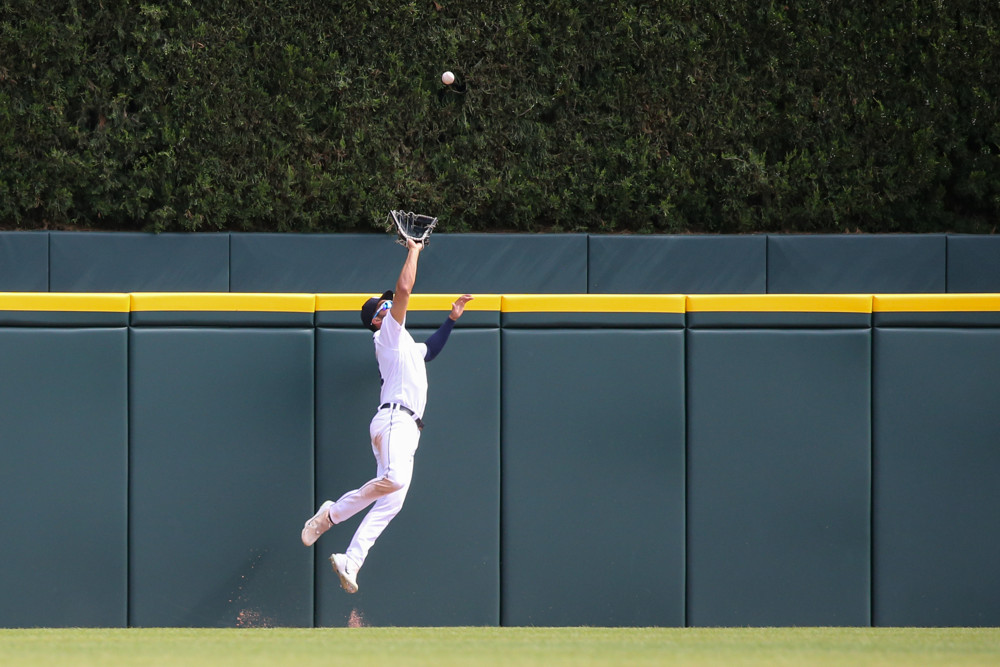
We can pinpoint one aspect. Lowered outfield fences in two ballparks have led to five home run robberies that may not have happened in other seasons.
In Rogers Centre, the height of the center field fence was lowered from 10 feet to 8 feet this past offseason. That has enabled two robberies, one by Kevin Kiermaier and the other by Robert Jr. Those were the first home run robberies in that ballpark since Kevin Pillar stole one in 2018.
In Comerica Park, the heights of the center and right field walls was lowered from 8.5 feet to 7 feet and the height of the wall in right center was lowered from 13.5 feet to 7 feet. That made three home run robberies by Tigers outfielders more likely – ones by Matt Vierling, Kerry Carpenter, and Riley Greene.
Comerica is typically a friendly park for outfielders who can rob home runs (there were five home run robberies in 2022). Watch Carpenter’s robbery and you’ll see it wouldn’t have been one with an 8.5-foot wall. Vierling’s and Greene’s would have been close calls.
It’s hard to project an “on-pace-for” total with home run robberies, as from 2004 to 2022 (not including the 2020 season), 20% of them came in August, the highest percentage for any calendar month, with May, June, July, and September all around 16% to 17%.
In terms of this season in comparison to the record-setting 2019: The 2023 and 2019 seasons started on approximately the same day and in looking at home run robberies by date, the 2023 season is about three weeks ahead of the 2019 season’s pace. In 2019, the 34th home run robbery came on June 30. This season, it came on June 7.
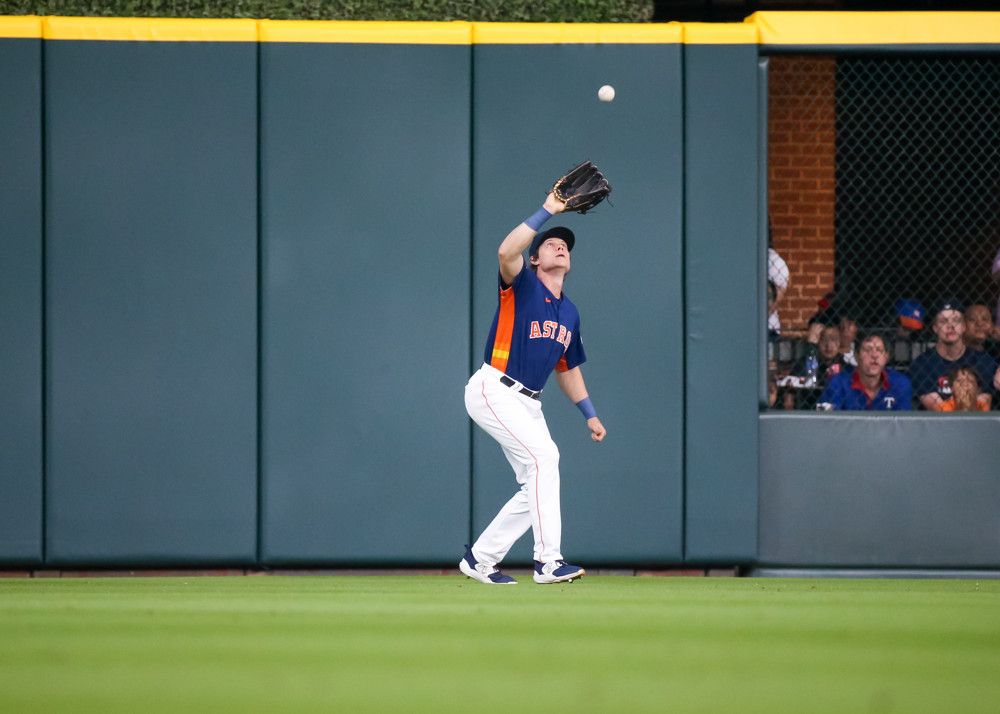
It seems like every day we’re seeing another great catch from an Astros center fielder, whether it be Jake Meyers or Chas McCormick. Combined, Astros center fielders rank tied for 4th in MLB in Defensive Runs Saved with 7.
We talked to McCormick in the past, but we just talked to Meyers on our most recent episode of The Sports Info Solutions Baseball Podcast (click here to listen). We wanted to know how he did what he did to make some of these great-looking plays. He walked us through three of them.
May 22 vs Owen Miller
This ball was hit 405 feet to center field at 105 MPH off the bat and with a 23-degree launch angle. Meyers had 5 seconds to catch this ball, and in his fastest one-second, he was running nearly 20 miles-per-hour (close to 29 feet per second). Our catch probability on this ball was 30% given where the ball was hit, how hard it was hit, and where Miller was playing.
Meyers rates well in Statcast’s jump stats. He caught this ball because he read it well off the bat (a jump about 8 feet better than average) and because his pre-game prep came in handy. This was his first game in Milwaukee.
“I thought I got a really good jump on it. It wasn’t really high in the air. My initial reaction when I got to Milwaukee was that there wasn’t a whole lot of space in center field. The wall seems pretty close. I had a feeling I was going to have plays up against the wall. And it was two innings into the first game, a ball hit right next to the wall. I knew I could catch it. That was something I knew might happen.
During BP I always go look with our outfield coach, Gary Pettis. We check out the wall, see how the ball is bouncing off. I like to check the wall. Every wall has different stuff. New parks you have to really go do your homework.
During BP is also the best time to get reps in. I think that’s key for young outfielders. Treat BP like the game and you’ll get a lot better.
I was okay. (I’m careful) because of what happened to me in 2021 (a torn labrum trying to catch a ball in the postseason), it’s something I have to continually learn about. You’re more valuable on the field than off, but you need to make the plays that you can make. So it’s finding the fine line of when to take risks and when not to.”
May 9 vs Brandon Drury
This ball was hit 111 MPH at an 11-degree launch angle. That’s an extremely low line drive and thus it has a low catch probability, 24%. This ball is supposed to be a hit. But major league center fielders like Meyers, who understand how to read a ball off the bat, can make this kind of play.”
“I knew that one was hit hard. That one was a little more backspun, so it carried out to me a little bit and that gave me a chance to get under it.
(In terms of reading swings), that’s something my dad, who played in the minor leagues, taught me to do growing up. That was something I focused on that I think other guys didn’t really focus on. I also pitched growing up and in college (at Nebraska). That was a tool that he taught me for both (pitching and outfield). And now I do it subconsciously in games now.”
June 3 vs Shohei Ohtani
This was trickier than a ball with a 65% out probability should be. But out probabilities, while very useful, don’t necessarily take everything into account. In this case, Meyers got a poor jump, stat-wise, but was still able to recover. There was a good reason for the non-instant reaction to this one.
“I couldn’t tell how he hit that ball. That one was more of a topspin ball. Sometimes to get to the ball, you get to a good position and you just have to be athletic and try and catch the ball. The No. 1 rule is catch the ball. It doesn’t matter how you do it, just catch it … When I’m on the field, it’s intuition. There isn’t much going on upstairs with me. Kind of play the game like I know how to.”
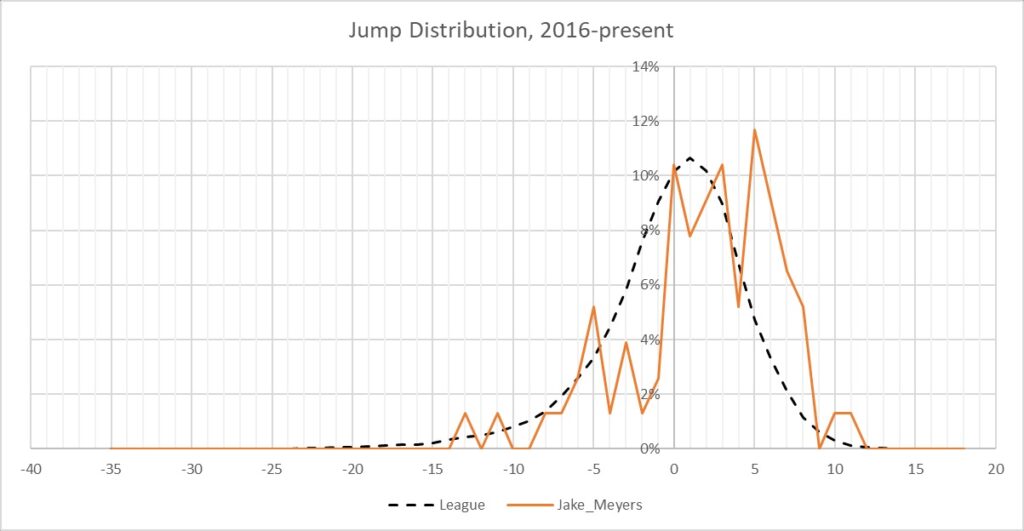
We mentioned before how when it comes to jumps that Jake Meyers is among the best outfielders in the game. MLB’s Tom Tango helped us out and sent along this chart that shows just how much better Meyers is at getting jumps than other outfielders.
The orange line shows the frequency with which Meyers gets a jump between -40 and +20 feet above an average CF. The black dashed line shows the MLB rates. Meyers gets jumps 4 to 8 feet better than an average outfielder much more often than an average outfielder.
For more on Meyers, his interactions with Dusty Baker, and the toughest type of play he’s tried to make in the big leagues, AND an interview with Marcus Semien, check out The Sports Info Solutions Baseball Podcast.
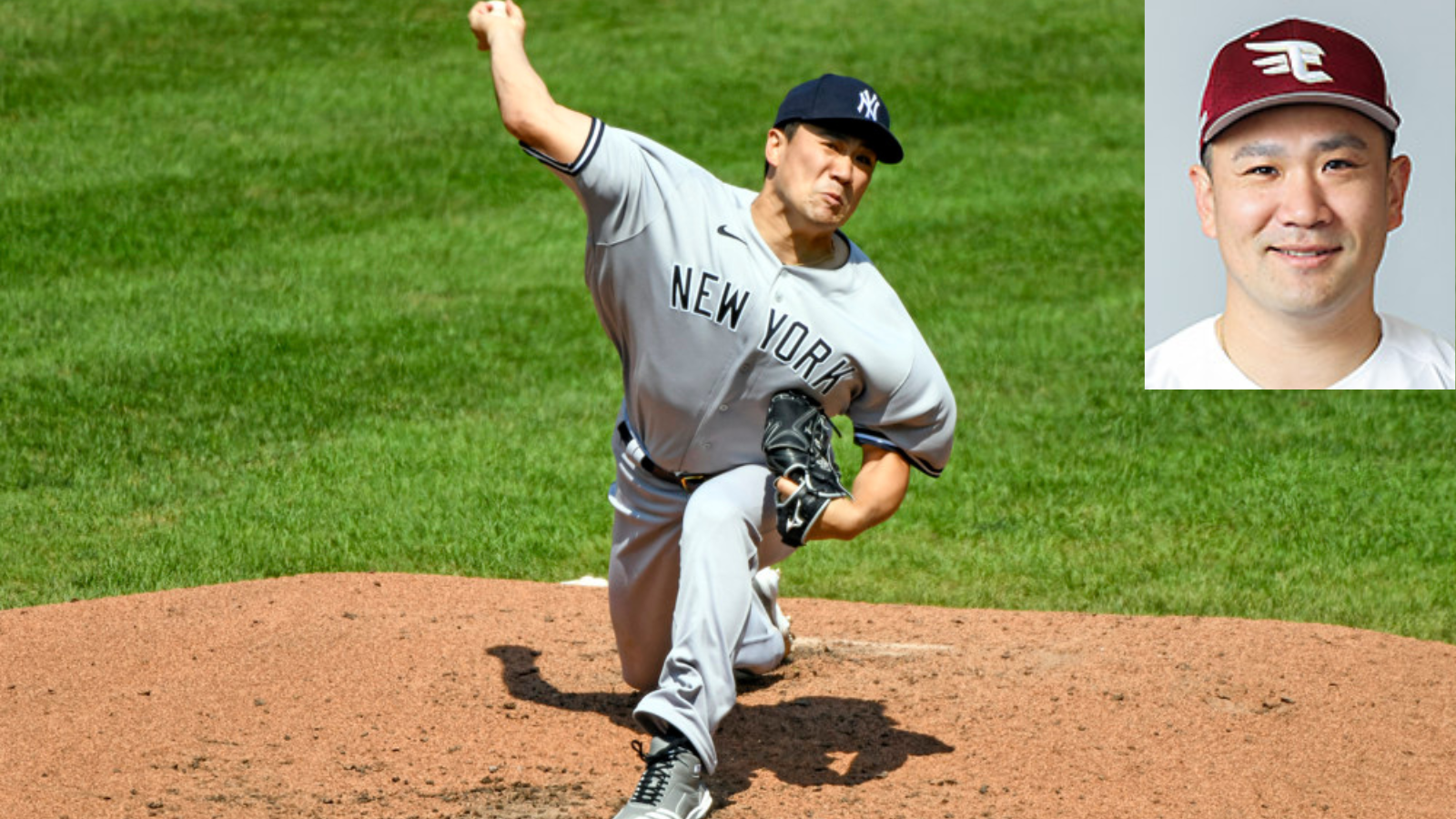
Masahiro Tanaka is arguably one of the greatest NPB pitchers in league history and is credited with one of the most successful pitching seasons in NPB.
He finished his 2013 season with a perfect 24-0 record in 28 appearances and 27 starts amassing a 1.27 ERA in 212 innings with 183 strikeouts and just 32 walks. The man was a machine who mowed through NPB lineups.
Now in his return as an older player after his MLB career with the Yankees, Tanaka has had mild success with extreme highs and lows. He has been so disappointed in his performance that he took a pay cut last off-season.
His whiff rate was down to 10% on his fastball the last two seasons and a lowly 9% this season. In comparison, his fastball had a whiff rate of 17% in 2019 for the Yankees.
This is obviously context-dependent too as NPB hitters are less prone to striking out than MLB hitters as they fight off fastballs. The drop in whiff rate for his fastball isn’t surprising but 8.8% is a concerning number.
His fastball has lost a touch of velocity averaging 91.3 mph last season and 90 mph this season. Tanaka does “gas pedal” his fastball at times, throwing at different speeds throughout the game, although last time out he was using more two-seams than four-seams to get some slight movement on the pitch.
His below-average velocity right now on his fastball means he has to have spot-on command of the pitch, and right now that fluctuates. At his very best it’s a pitch he can still dot on both sides of the plate.
The pitch has always played up due to Tanaka’s stride length and lower release point. He gets 6’10” in stride length according to a Sports Science breakdown of Tanaka from almost nine years ago.
The mechanics of Tanaka are almost the same throughout his career. Everything is still smooth and the stride length and extension are still there.
Tanaka uses his fastball 41% of the time the past two seasons, 43% of the time on the first pitch. With the dip in velocity and shape, Tanaka should continue to use his two-seamer more and lessen the usage of his four-seamer.
Tanaka also looks to have ditched his cutter so far this season after throwing the pitch 7% of the time in 2022 he has scrapped it. Isolated, the cutter is not a good pitch but, when he threw it, he used it to start at-bats 35% of the time with a 71% strike rate in 2022. He also used it a lot to RHBs down and away in 2019, targeting that part of the zone on 41 of 44 cutters in 2019 and it was much of the same in 2022.
The pitch had an OPS against of 0.865 in 2022, almost identical to his changeup at 0.864. Those were by far his two worst-performing pitches.
The Cutter
CUT Grip 2022 – 7% 2023 – 0 pitches so far.
He’s used the cutter in a more traditional sense against LHBs, up and in on the hands. I think the use of the pitch to both RHBs and LHBs could still be effective. Though the pitch has been inconsistent in movement, even just giving hitters something else to think about could help his fastball out. However, it’s no longer a necessity in his arsenal and the 0.865 OPS on the pitch underscores why he might have dropped it altogether.
The non-fastballs with grips.
SL Grip 2022 – 24% 2023 – 34%
Splitter Grip 2022 – 20% 2023 -20%
CH Grip 2022 – 4% 2023 – 3%
CB Grip 2022 – 3% 2023 – 3%
The slider is Tanaka’s go-to pitch generating a 41% whiff rate over the span of the last two seasons though it is his second favorite two-strike pitch behind his fastball. His fastball velocity and life are down but he continues to throw the pitch the most in two-strike counts.
There’s some factoring in comfort and batter but maybe going away from leaning on the fastball will help him. I’m a big advocate for throwing your best pitches in the most high-leverage situations and generating swings and misses.
If Tanaka started to lessen the number of fastballs in two-strike counts and rely more on his two different slider shapes and his splitter, he could see more strikeouts as a result. A 6 K/9 this season is the lowest total of his career and a full strikeout less than 2022.
He lands all his pitches for above a 60 percent strike rate which is the threshold for having decent control of a pitch. His slider and splitter actually are higher at 69 and 70%. His fastball is at a second-worst rate of 63%. He doesn’t need to throw the fastball to get a strike.
The NPB is still geared toward establishing the fastball which serves a purpose but leaning heavily on it in two-strike counts seems detrimental at times for him.
Although fastball command is more important than anything with his diminished velocity, more sliders and splitters could give him an edge and he can still throw his fastball if he mixes better early in counts. He also has to pitch from ahead so he needs to land strike one no matter what pitch he is throwing.
Tanaka has to command his pitches better though. There are numerous examples of his fastball and the rest of his arsenal being left in the middle of the plate. When he’s on, he has the ability to locate all his pitches well to any quadrant. His lone run allowed the last time out was a slider hung over the middle of the plate that got crushed for a homer.
Tanaka loves to pound hitters inside with his two-seamer to both LHBs and RHBs but he started to throw the pitch more glove side his last start.
There are countless examples of Tanaka using his two-seam to lock up batters, especially on glove side to LHBs. His conviction in throwing this pitch is key for him because, with a low whiff rate, he can still generate called strikeouts on hitters.
Tanaka’s defense has let him down at times this season, especially as a ground ball pitcher whose strikeouts are declining, he needs the help of solid defense behind him.
Rakuten DRS ranks by position among the six Pacific League teams (through Sunday’s games):
1B – 5th
2B – 5th
SS – T-4th
3B – T-5th
Conclusion
Going back to one of my points, pitching backward could also help by landing more curves and sliders early in counts to keep hitters off of his fastball. There are ways around his inconsistent fastball production and diminished velocity. He still flashes brilliance with his propensity to keep the ball on the ground but hard-hit balls still lead to varied results.
With good control, an argument could be made that he’s throwing too many strikes rather than creating more whiffs with his slider and splitter.
Tanaka is one of my favorite pitchers to watch when he’s at his best, aggressively attacking the zone with a deep pitch mix. He still has moments of great success but to find more consistent outings he will need to command his pitches better and rely less on his fastball to generate more swings and misses.
This position’s leaders in Defensive Runs Saved are 3 names you probably wouldn’t have expected at the start of the year – Cam Gallagher,Francisco Álvarez, and Seby Zavala.
But let’s break this race down to 3 of the key component parts
T1. Francisco Alvarez, William Contreras, Austin Hedges
Preventing SBs
Elias Díaz and Gabriel Moreno
3. Connor Wong
Pitch Blocking
Nick Fortes
J.T. Realmuto
Cam Gallagher
Second Base
Ha-Seong Kim is looking like a player who could win both the Fielding Bible Award at 2nd base and the award for multi-position excellence. With 10 Runs Saved at 2nd Base, he has twice as many as Marcus Semien, Andrés Giménez, Thairo Estrada and Maurico Dubon.
Key stat for Kim: He has 8 Plays Saved on balls hit to his right, most of any second baseman despite ranking 16th in opportunities on balls hit to his right (Plays Saved is our version of Outs Above Average – we’ve tracked it since 2003).
Of note:
– Andrés Giménez has the second-most Runs Saved at 2B since the start of 2022.
– Marcus Semien has the MOST Runs Saved at 2B since the beginning of 2021.
– Thairo Estrada totaled -12 Runs Saved at 2nd base last season, but is +5 in 2023
– Mauricio Dubon has 10 Runs Saved at 2B in ~750 career innings
(MLB-leader caliber if pro-rated as a full season).
Shortstop
The top spot in Defensive Runs Saved is held by Wander Franco (Rays).
Key stat: Franco is the only current shortstop who rates at least 4 Plays Saved both on balls hit both to his left AND to his right (again, ‘Plays Saved’ is our version of OAA).
It does similar for Dansby Swanson, who ranks 2nd among SS in Runs Saved (he goes from T-15th in Offensive WAR to 5th in Position Player WAR because of his defense).
Ten shortstops have at least 4 Runs Saved, including last year’s Gold Glove winners (Dansby Swanson and Jeremy Peña), and the Fielding Bible Award winner (Jorge Mateo). We’ve also seen strong shortstop defense from three rookies in this group of 10 – Ezequiel Tovar, Anthony Volpe, and Zach Neto.
Center Field
Kevin Kiermaier (Blue Jays), who was just named Co-Defensive Player of the Month for May, is the leader here with 12 Defensive Runs Saved. He is also the runaway leader in Runs Saved as a CF since the stat was first tracked in 2004.
He currently leads center fielders in both the Range component of Defensive Runs Saved AND the throwing component.
Luis RobertJr. is Kiermaier’s closest contender with 10 Runs Saved. Robert Jr.’s total is boosted by 2 HR robberies. He and Aaron Judge lead MLB in that stat.
Jake Meyers may also be positioned to make a run. His 6 Runs Saved are 3rd-best and he rates positively in Plays Saved on shallow-hit, medium-hit, and deep-hit balls.
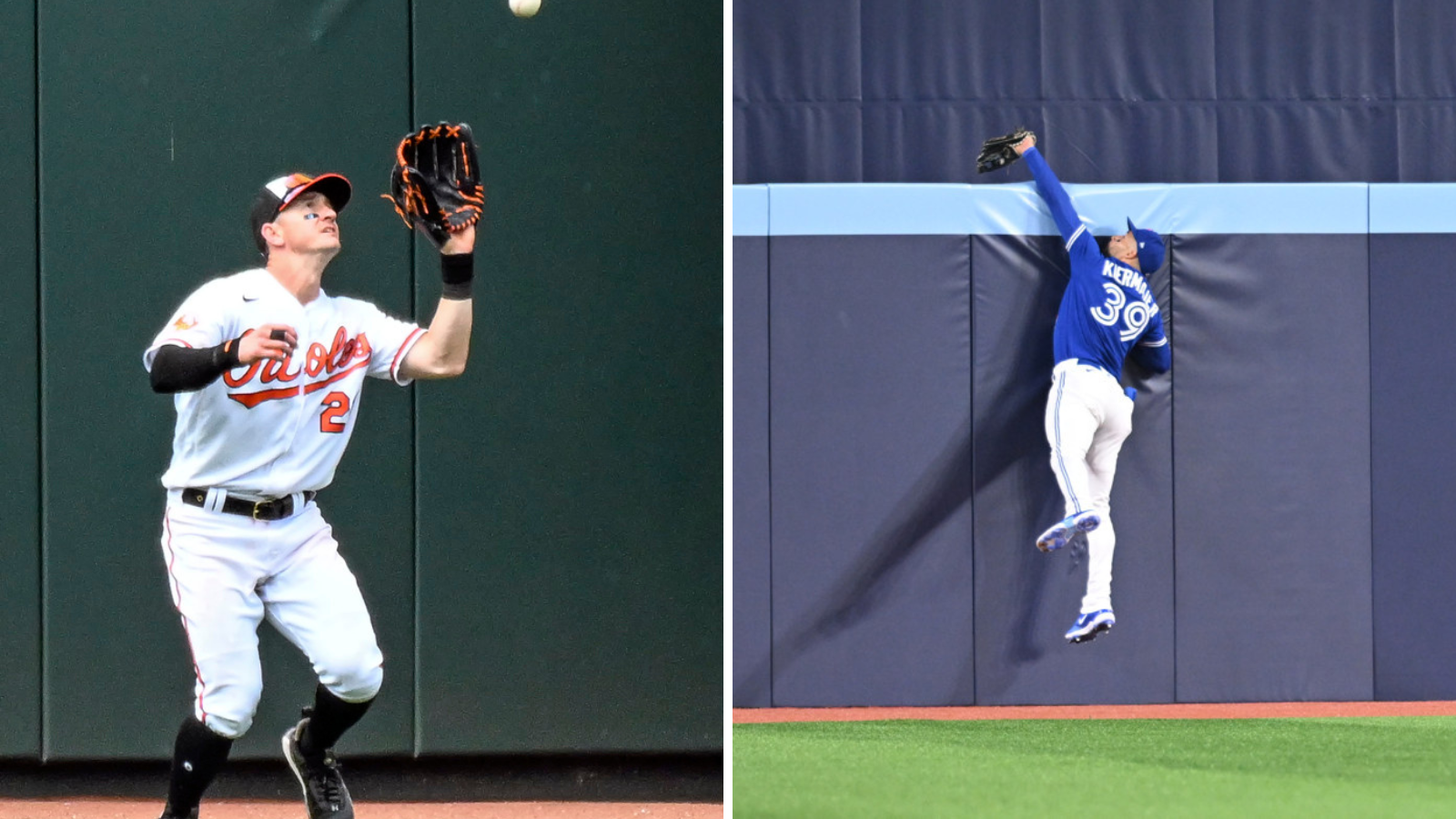
If I told you that the winners of the SIS/Fielding Bible Awards Defensive Player of the Month were “Kiermaier and Hays” you might say “You mean Kiermaier and Hayes,” as in Blue Jays center fielder Kevin Kiermaier and our April winner, Pirates third baseman Ke’Bryan Hayes.
But we’d reply that no, that’s not the case. The co-winners this month were Kiermaier and Orioles left fielder Austin Hays. That’s Hays, with neither an ‘E’ and his name or an ‘E’ in his game.
Hays had 10 Defensive Runs Saved in May, the most of any player. For the season, he flipped his total from -5 Runs Saved at the end of April to a positive 5 Runs Saved at the end of May.
Among his highlights were this catch against Josh Jung
and thesethrows to nail George Springer and Whit Merrifield, respectively.
For the most part, Hays’ month was about taking care of business. He made the plays he was supposed to make at an extremely high rate and continued upon his past success at deterring baserunner advancement. As such, he ended the month leading all left fielders in Defensive Runs Saved and could be a strong contender for a Fielding Bible Award if he keeps this going.
Similar to Hays, good throws played a part in Kiermaier tallying 6 Defensive Runs Saved and 6 Good Fielding Plays, each tied for the most by a center fielder in May.
Kiermaier’s throwing highlights included this one to get Rob Refsnyder, this one catching Ryan Mckenna and this one to nab Wander Franco.
It wouldn’t be a month without a Kiermaier jaw-dropping catch and his most memorable one for May was a leaping grab at the fence against Gunnar Henderson.
Kiermaier ended May No. 1 among center fielders in Defensive Runs Saved. He’s trying to become the first player to win 3 Fielding Bible Awards in center field. Kiermaier, Lorenzo Cain, and Carlos Beltrán each have 2 at the position (Cain also has a multi-position award).
And while Kiermaier has an ‘E’ in his name, like Hays, he has no ‘E’ in his game. Neither has been charged with an error this season.