Category: Baseball

  • An Appreciation of Brett Phillips’ Defense

    An Appreciation of Brett Phillips’ Defense

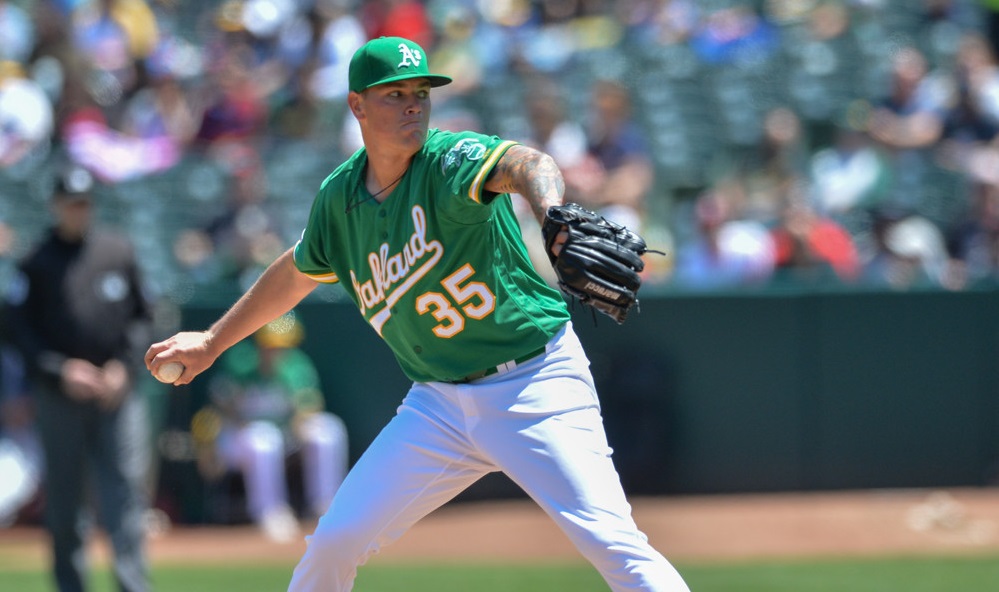
    “That’s what I do best: catch baseballs. We all know that.”

    — Brett Phillips on Monday night talking about his sprint/catch on a foul ball as a pitcher against the Athletics.

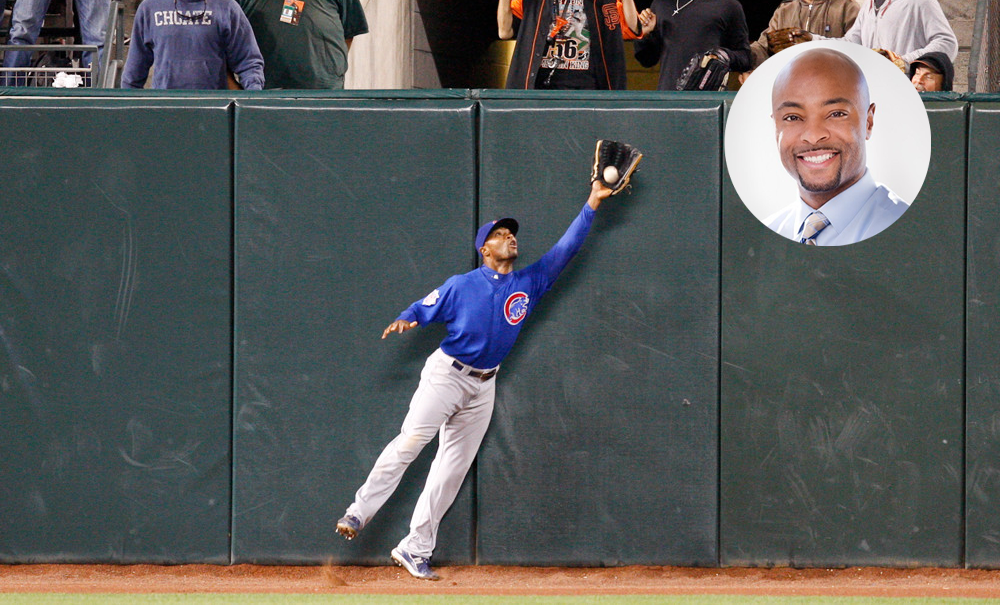
    He’s not wrong. In fact, he’s slightly undervaluing himself. A more accurate version of that quote would be “That’s what I do best: play defense.”

    Since Phillips’ career began in 2017, he’s totaled 35 Defensive Runs Saved as an outfielder in just under 1,600 innings.

    On a per-inning basis, he ranks No. 1 among outfielders in Runs Saved.

    Most Defensive Runs Saved Per 1,000 Innings

    Outfielders Since 2017

    Name Runs Saved Per 1,000
    Brett Phillips 22.0
    Byron Buxton 18.5
    Kevin Kiermaier 17.5
    Mike Tauchman 16.2
    Mookie Betts 15.8
    Jarrod Dyson 15.5

    >> Among 150 outfielders with most innings played

    And it’s worth noting that it’s not just his range that is pushing him to the top.

    Phillips ranks third among outfielders in Range Runs Saved Per 1,000 Innings in that time.

    He also ranks second among outfielders in Outfield Arm Runs Saved Per 1,000 Innings. He’s shown a strong arm since his first MLB game.

    Here are both lists:

    Most Range Runs Saved Per 1,000 Innings

    Outfielders Since 2017

    Name Runs Saved Per 1,000
    Byron Buxton 16.1
    Harrison Bader 14.8
    Brett Phillips 14.4
    Mookie Betts 12.9
    Joey Rickard 12.3

    Most Outfield Arm Runs Saved Per 1,000 Innings

    Outfielders Since 2017

    Name Runs Saved Per 1,000
    Joey Gallo 6.5
    Brett Phillips 6.3
    Ramón Laureano 6.2
    Marwin Gonzalez 6.1
    Juan Lagares 5.5

    We went through video and pulled out some favorites spanning the entirety of Phillips’ career. These are far from all of his great plays but certainly show an assortment of the skills he has that allow him to post such numbers.


  • Stat of the Week: Who Is The 2nd-Best Defensive Team in MLB?

    Stat of the Week: Who Is The 2nd-Best Defensive Team in MLB?

    By MARK SIMON

    The Cardinals seem to be the clearcut best defensive team in baseball entering 2022. They return all five of the players who won Gold Gloves on last year’s team, including Fielding Bible Award winners Paul Goldschmidt and Tyler O’Neill.

    Six of their players finished in the Top 20 in the NL in the SABR Defensive Index, which combines many defensive metrics (including Defensive Runs Saved) into one number, in 2021. The Cardinals’ defense should carry them a long way.

    But what’s harder to assess is this:

    Who is the second-best defensive team in baseball?

    When we posed that question to Ken Rosenthal on the new episode of The SIS Baseball Podcast, his first response was the Dodgers, which makes sense.

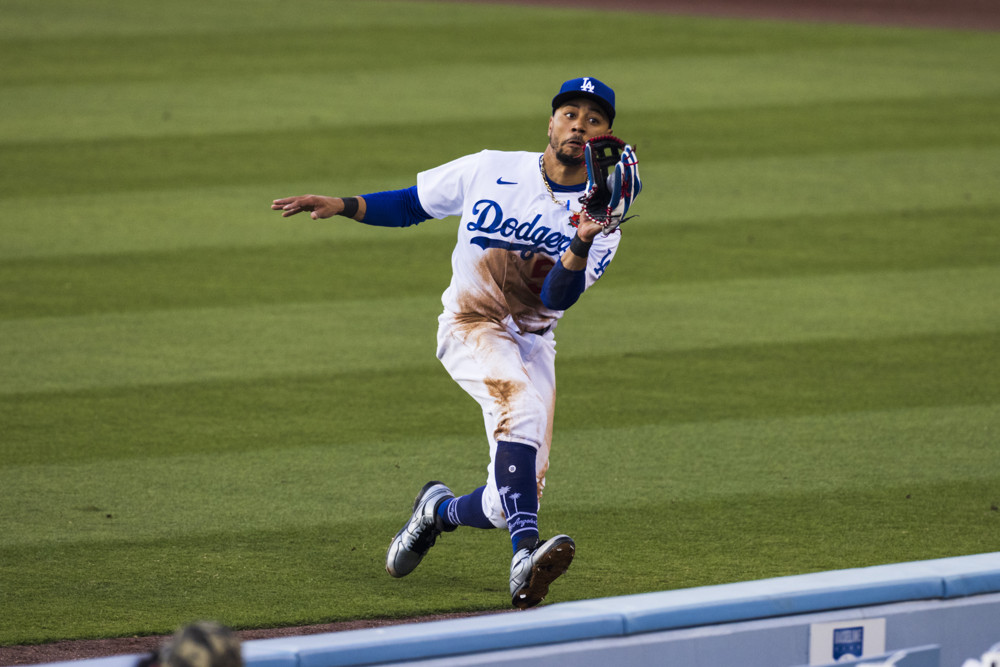
    The Dodgers’ top defender is Mookie Betts, who ranked first or second in Defensive Runs Saved in right field in each season from 2016 to 2020 before slipping out of the top 10 in 2021 in what was an injury-impacted season.

    The Dodgers also play multiple other players with good defensive track records including centerfielder Cody Bellinger, first baseman Freddie Freeman, shortstop Trea Turner, and part-time catcher Austin BarnesGavin Lux is also slated to see a considerable amount of time at second base, where he’s totaled 13 Runs Saved in a little over 500 innings (not even a half-season).

    Much like the Cardinals, the Dodgers don’t have any significant defensive holes. This is a product of the defensive versatility on their roster, with players like Chris Taylor, who played at least eight games at six different positions in 2021.

    Ken’s other response was the Rays, who could have the best defensive outfield in baseball, with center fielder Kevin Kiermaier flanked by Randy Arozarena  and Manuel Margot in the corners. Those three were the primary starters for a group that ranked third among outfields in Defensive Runs Saved last season.

    Whether the Rays rank as a good or great defensive team could depend on just how good shortstop Wander Franco is. Franco had 6 Runs Saved in 63 games at that position in 2021. If he plays every day in 2022 and racks up Runs Saved at a similar pace, Tampa Bay’s defense should be impressive.

    Other contenders for consideration among MLB’s elite defensive teams include:

    The Braves, who now have three-time Fielding Bible Award winner Matt Olson at first base. Each of their other regular infielders – Ozzie Albies, Dansby Swanson, Austin Riley – has at least one standout season under their belt. The Braves also have two outfielders with super-strong arms in Adam Duvall and Eddie Rosario.

    The Marlins, who finished seventh in Defensive Runs Saved last season and added three solid defensive players, Jacob StallingsJoey Wendle, and Avisail Garcia. Stallings in particular will shore up a weakness at catcher. He led the position in Runs Saved in 2021.

    And there are a bunch of teams that could be near the top. If Matt Chapman and George Springer are healthy and if Bo Bichette can improve his throwing, the Blue Jays can put a pretty good group on the field. If Bobby Witt Jr. plays well at shortstop or third base and Whit Merrifield handles right field a little better than he has in the past, the Royals are formidable.

    And the Red Sox have three very good outfielders in Kiké HernándezJackie Bradley Jr. and Alex Verdugo. Their question mark is in the infield with Rafael DeversXander Bogaerts, and Bobby Dalbec.

    Who do you think are the best defensive teams in baseball? Tweet at @SIS_Baseball and let us know.

    You can check out the rest of our 2022 season preview conversation with Ken Rosenthal and Braves coach Eric Young Sr. here.

  • KBO (Alumnus) Scouting Report: Aaron Brooks

    KBO (Alumnus) Scouting Report: Aaron Brooks

    Newest St. Louis Cardinals pitcher Aaron Brooks has much less of a MLB track record than fellow MLB-turned-KBO pitcher Dan Straily, but they had quite similar results in the KBO. 

    Brooks spent parts of four seasons in the Majors, putting up a 9-13 record and 6.49 ERA while pitching for the Royals, Athletics, and Orioles. When he moved to his new league, those numbers improved considerably

    Season W-L ERA IP WHIP BB/9 K/9
    2020 KBO 11-4 2.50 151 1/3 1.02 1.4 7.7
    2021KBO  3-5 3.35 78 1.40 1.8 6.3

    Brooks is a strike thrower who has never put up big strikeout numbers. He has struggled to limit hits since he is around the zone so much. He had only one full season where he allowed less than a hit per inning, and that was his 2020 season in Korea.

    Pitch Mix

    Pitch Type Usage (2021) Average Velocity (MPH)
    Fastball 46% 92
    Changeup 24% 84
    Slider 22% 86
    Curveball 8% 80

    Despite not generating a lot of strikeouts, Brooks does have some traits that should get him noticed. His fastball is not overpowering, averaging 92 MPH, but that is a little deceptive. He throws a four-seam and two-seam fastball, and his four-seam tends to be a couple MPH harder than his two-seam. His four-seam averages around 93, and topped out at 96 MPH in 2021. His four-seam and two-seam fastballs also have a large separation in movement, allowing them to function as two distinct pitches.

    For a contact-inducing pitcher, Brooks does have some swing-and-miss pitches in his arsenal. In 2021 hitters swung and missed on 33% of swings against his slider, and 35% of swings on his curveball (KBO miss rates are 29% and 27% respectively). However, his fastballs produced whiffs on only 10% of swings (league average is 14%). Since he threw so many fastballs, that limited his ability to strike hitters out.

    Brooks’ three most-used pitches were all good at generating ground balls, as his fastball produced grounders on 52% of balls in play, his slider 53%, and his changeup produced 73% thanks to its noticeable vertical drop (all well above the league averages for those pitch types). Each pitch actually had a higher ground ball rate in 2020 than in 2021.

    One note on Brooks that explains why his 2021 innings total was so low. He was released from the Kia Tigers in 2021, due to an issue with a product he had shipped from the US to Korea. He ordered a vape pen that customs found to contain traces of marijuana, which is illegal in South Korea. After his release, Brooks reportedly signed a minor league deal with the Padres, though he did not get into any games for the Padres or their affiliates.

    Outlook

    Brooks could fill a depth starter role for the Cardinals, but he might have a bit more upside than Straily. 

    If he changes his pitch mix to throw more of his secondary pitches, he’ll need them to be as successful as they were in the KBO to boost his strikeout rate (which will be harder against tougher competition). That could make him a viable fourth or fifth starter. He could also try to convert to a bullpen role as a groundball-inducing middle reliever.

    The Cardinals were able to turn Miles Mikolas from a successful starter in NPB to an effective one in the states. They’ll be trying to work the same magic with Brooks here.

  • Stat of the Week: Who could be 2022’s Defensive Runs Saved Leader

    Stat of the Week: Who could be 2022’s Defensive Runs Saved Leader

    By MARK SIMON

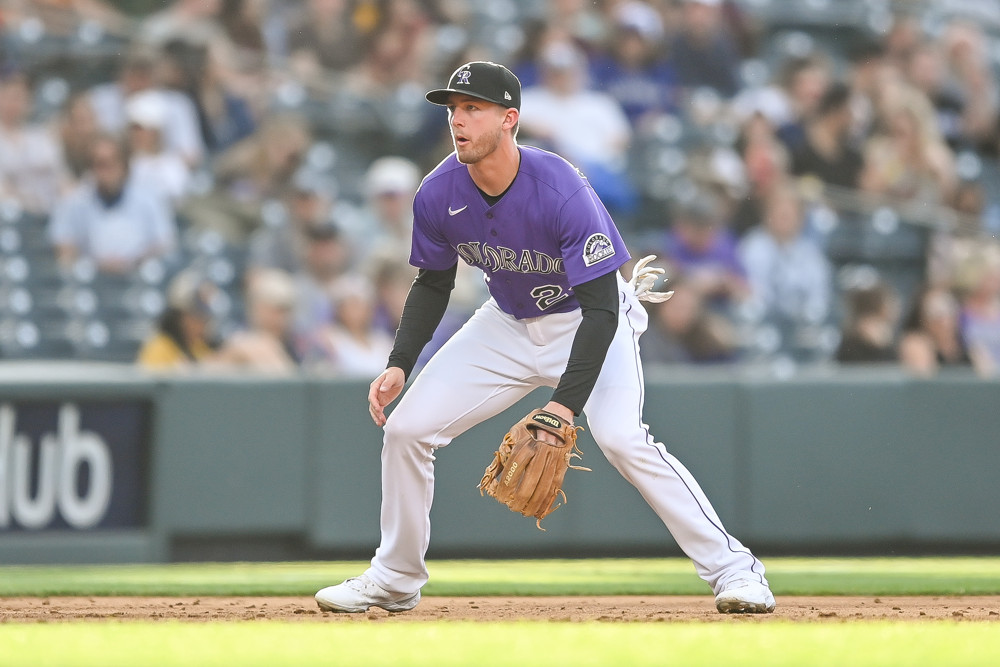
    Rockies infielder Ryan McMahon led the majors with 22 Defensive Runs Saved in 2021. He saved 13 runs at third base and 9 runs at second base, excelling in both spots.

    And though McMahon didn’t win either a Gold Glove or Fielding Bible Award for his efforts, there was a hearty reward waiting for him this season in a 6-year, $70 million contract from the Rockies.

    Now McMahon will be trying to do something that’s never been done since we began tracking Runs Saved in 2003 – lead the majors in that stat in consecutive seasons.

    Normally we focus on positional comparisons for Defensive Runs Saved, but the overall leader makes for some fun defense-related bragging rights.

    McMahon has the skills to repeat. He’s solid at fielding balls to both sides. He also boasts a strong list of highlight-reel plays. He ranked 2nd in Good Fielding Plays per 100 Innings at both third base and second base last season. For those unfamiliar, we track approximately 30 types of Good Fielding Plays, with examples being “Ground Ball (or Line Drive) Out” which references Web Gem-caliber plays, and “Keeping the Ball in the Infield.”

    Two players on the Twins may have something to say about McMahon’s efforts to stand atop the Runs Saved leaderboard. Shortstop Carlos Correa led the position with 20 Runs Saved last season, which ranked 3rd overall in MLB.

    We wrote about Correa’s defensive excellence earlier this winter, noting how he excels at making plays in which he leaves his feet. The key for Correa and especially for his teammate, center fielder Byron Buxton, is health. Correa missed considerable time due to injuries in each season from 2017 to 2019.

    Buxton has saved 21 Runs the last two seasons but has played in only 100 out of a possible 222 games in that time. His single-season career high is 22 Runs Saved, which he did in 2017, the only time in a seven-year career that he played in at least 100 games.

    Playing time would also be a question in considering catcher Jacob Stallings as a possible overall leader. Stallings finished with 21 Runs Saved in 2021, one run shy of the lead, and was among the top pitch blockers and pitch framers in the sport. He’ll have a new team and new pitching staff to work with as he was traded in the offseason from the Pirates to the Marlins.

    There are a good number of other players who are candidates to be the MLB Runs Saved leader, including Royals center fielder Michael A. Taylor, Cardinals center fielder Harrison Bader, Blue Jays third baseman Matt Chapman, and Pirates third baseman Ke’Bryan Hayes.

    Past leaders to consider include Yankees outfielder Joey Gallo and Cardinals third baseman Nolan Arenado, who shared the Runs Saved lead in 2020, new Tigers shortstop Javier Báez, whose 32 Runs Saved in 2019 are the most by anyone in a season within the last five seasons, and Rays center fielder Kevin Kiermaier, whose 38 in 2015 led MLB.

    And speaking of overall leads, Cubs shortstop Andrelton Simmons enters the season with 197 career Runs Saved. That’s three shy of Adrián Beltré, whose 200 are the most total Runs Saved for any player since SIS began tracking the stat in 2003. Simmons, who led MLB with a record 41 Runs Saved in 2017, had 15 Runs Saved at shortstop last season, so he may still be a contender for seasonal honors too.

    MLB Defensive Runs Saved Leaders – Last 5 Seasons

    Season Player
    2017 Andrelton Simmons
    2018 Nick Ahmed
    2019 Javier Báez
    2020 Nolan Arenado & Joey Gallo
    2021 Ryan McMahon
  • Luis Arraez: When Small Samples Add Up On Defense

    Luis Arraez: When Small Samples Add Up On Defense

    How does one player accumulate a considerable amount of defensive value without playing any one position too often?

    Glad you asked.

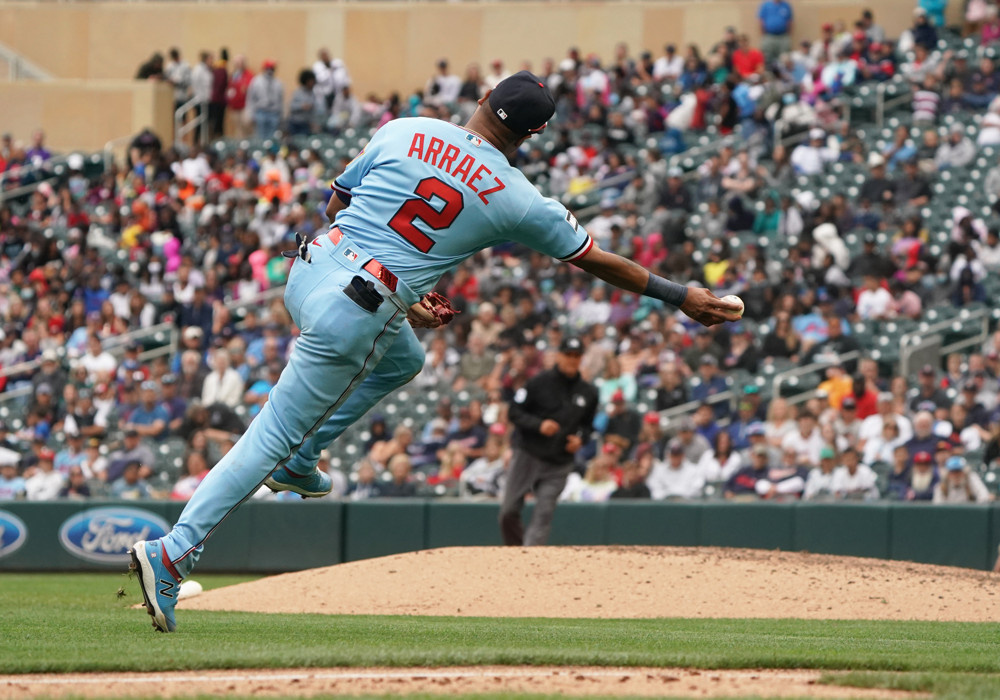
    Let’s look at Twins utility man Luis Arraez.

    Arraez is currently projected as the Twins DH because Jorge Polanco is pegged for second base and Alex Kiriloff should be in left field. That might make you think Arraez is not capable in the field.

    But actually …

    In 2019, Arraez came up with the Twins and immediately impressed as a hitter, batting .334/.399/.439 in 366 plate appearances.

    His defense left a bit to be desired. He totaled -11 Defensive Runs Saved and cost the Twins 9 runs with his defense at his main spot, second base.

    In 2020, things turned for the better. Arraez missed a chunk of the season due to injury and played only 31 games. But he fared better (or at least didn’t fare badly) with 2 Runs Saved.

    In 2021, the Twins went back to using Arraez as a full-time utility player. He tallied 10 Runs Saved, 5 at third base, 2 at second base and 3 in left field.

    The improvement at second base is easy to explain from a numerical perspective. In 2019, Arraez recorded at least one out on 80 of 147 plays in which he had a >0% chance of making the play.

    In 2021, he also made 80 plays, but on 116 opportunities, 31 fewer opportunities than 2019.

    He was better both to his left and to his right.

    Luis Arraez Out Rates at 2B

    2019 2021
    Balls To His Left 51% (57 plays) 61% (44 plays)
    Balls To His Right 46% (70 plays) 60% (42 plays)

    One example: This play had an out probability of 20% and was worth 0.6 runs.

    At third base, Arraez saved 5 runs in 55 games. I’m not going to make any judgements over whether what he did in 55 games could be done in 130, but in those 55, his out rates hold up well.

    Arraez got at least one out on 45% of balls hit to his left. Matt Chapman’s 2021 rate was 46%. And Arraez got at least one out on 30 of 41 balls hit to his right, a 73% out rate. Chapman was 65-of-92, 71%.

    Here, Arraez makes a barehand play on Randy Arozena’s slow grounder, good for about a half-run saved on a ball with a 39% out probability.

    And this play was liked by both the opposing team’s announcers and our system. It netted him nearly 0.6 runs saved and had a 25% out probability (admittedly Omar Narváez being the runner helped).


    Lastly, in left field, Arraez had 3 Runs Saved in 27 games.

    This was a product of Arraez basically catching what he was supposed to catch – He was at 0 Runs Saved for Range and Positioning after making 36 plays on 50 opportunities (compared to 31 of 48 in 2019) – and because a few players made the mistake of testing his arm. He had 3 assists without a cutoff man, which produced 2 of his Runs Saved.

    As you’ll hear at the end of that clip “He can play anywhere.”

    Looks like that’s true. At least it was in 2021.

  • Get to know our VP of Baseball, Bobby Scales

    Get to know our VP of Baseball, Bobby Scales

    Mark Simon sat down with our new VP of Baseball, Bobby Scales, to learn about his background, why he came to SIS, and his favorite MLB moments!

    Where did you grow up – tell us about your family?

    Bobby Scales: My dad, Bobby Sr., has been in some form of sales his entire adult life. Once we moved to Atlanta, he and my Uncle Harvey got into insurance and he did that for 30 plus years. My mom Edith worked for 10 years at Highland Park High School in Detroit then for Georgia Power in Supplier Diversity for 28 years. I’m an only child and I grew up in Roswell, Ga. Graduated from Milton High School class of 1995.

    (Milton High Big Leaguers are: Kyle Farnsworth ‘94, Me ‘95, Dexter Fowler ‘04, Dylan Cease ‘14).

    Where do you live now and tell us about your current family?

    BS: I live just north of Atlanta, GA and I have an eight year old son named Bobby III, we call him Trey.

    Why are you coming to SIS?

    BS: I’m at SIS because my “why” has always been to have an impact on the sports world. Baseball to this point has been my vehicle and my area of expertise. In coming to SIS, I believe that I will impact baseball in a different way than the previous 23 years of my career.

    What skills do you bring?

    BS: My ability to communicate with people, listen, and help drive solutions to issues is my strong suit. I was always the “glue guy” in most teams I played on. Building a cohesive unit and moving the team or individual to the next dot is something that I take a tremendous amount of pride in. SIS is no different. There is a long history of success in the data-driven solutions industry. My job is to help SIS Baseball stay on that path!

    Why do you like baseball as much as you do?

    BS: The game is beautiful in that there are individual battles combined with team choreography on virtually every play. The tactical battles between the managers, the battle between the pitcher and hitter both physically and mentally, the choreography of a ball that goes in the gap and the teamwork and decision making that goes into a great relay to a base.  It can be beautiful or it can be a debacle. The possibility of these things happening on virtually every play is the beauty of baseball to me.

    You had 5,000 pro at-bats, but only a little over 100 in MLB. What kept you going in your pro career? 

    BS: The honest belief that there were players that were getting major league opportunities that I knew in my soul weren’t as good as me. Especially in the middle and end of my career, looking at games on television and having just played a series against a given guy or a given pitcher.

    “That guy had nothing for me last week and now he’s got the ball in the show….c’mon man!!!”

    I said that so many times in my career, I had to get there.

    You played every position but catcher and pitcher – did you have a favorite? 

    BS: Second base. My favorite thing was turning a double play because back then they could come get you at second. When a guy came in hard, wiped you out and you still turned it… there’s nothing better.

    You’re at SIS – so with our being a company that was built on defensive stats – you’re obligated to tell us about your best defensive play. What was it? 

    BS: Houston, 2009 Miguel Tejada was making a bid for his 2,000th hit and he hit a one-hopper off the pitcher’s mound, back up the middle. I was shaded that way and I caught the ball about two steps off the back of the infield, then made the “Jeter” jump throw to Derrek Lee at 1st to get Tejada out.

    What was your ‘Welcome to the Big Leagues’ moment? 

    BS: Getting absolutely wiped out on a double play turn by Lance Berkman…..hell yeah I turned it though!

    You hit 3 major league HRs. What do you remember about them?

    BS: Well, I only hit three, so I remember everything about all of them!

    No. 1: Wrigley Field at night, a pinch-hit homer against San Diego in the 7th. Edwin Moreno’s first pitch was a heater up over the plate. I knew I touched it, but because it was windy at Wrigley and I hadn’t played there a ton, I didn’t know for sure. It went in the seats and I was flying around the bases and didn’t break stride.

    When I got in the dugout Alan Trammell gave me the throat slash-sign meaning I was done. So, I walked in the clubhouse to change out of my spikes and the MLB doping was there and asked to drug test me!

    I thought the guy was kidding, but he was dead serious.

    By the time I got out they had already got the ball. A 20-year-old Northwestern student caught it and wanted to meet me. They brought him to the clubhouse and we spoke briefly. I think he ended up with a Derrek Lee jersey and bat for my ball! 

    No. 2: Wrigley at night, batting right-handed, pinch-hit off Randy Wolf. Battled him for eight pitches, he hung a changeup and I hit it in the seats in left field.

    Fun fact: Bobby was 7-for-17 with 5 runs scored and 2 home runs as a pinch-hitter for his career

    No. 3 Matt Maloney in Cincinnati. Batting right-handed. It was a fastball in on a 1-1 count and very possibly the longest homer I hit in my life.

    Which teammates served as the best example for you in terms of being a good teammate and a good leader?

    BS: Derrek Lee, Ryan Dempster, Alfonso Soriano. They all lead in different ways, but if you’re looking at examples of true professionalism, those guys are at the top of the heap.

    You’ve spent a considerable amount of time in player development. What do you enjoy most about that?

    BS: The best thing about PD is the day-in and day-out quest to help an individual get to the next dot in their career. Whether it was a player, a coach, or a young intern in the office, doing whatever needed to help people advance their careers is something that I really enjoyed. Regardless of what people think, this game is about relationships. Building those relationships is essential to anything we are trying to do!

    What are the challenges a player has to deal with mentally when he goes into a slump?

    BS: The biggest mental hurdle, when it isn’t going well, is truly remembering that you can hit. When you are in a deep one there are times where you think you are the worst player on the planet and it’s a constant struggle not to go down every rabbit hole you can think of just to get a hit.

    For me the worst was all of the people telling you “it’s going to be okay.” Literally everyone in your life is trying to make you feel better and, at the moment, the last thing you need is more voices. Obviously, everyone is different but I used to tell people “If I’m in a bad one…do not call because I’m not answering, let me be mad…I’ll be okay.”

    What sorts of things does baseball need to do moving forward to grow the sport?

    BS: Let go of the past and do what’s best for today’s baseball!

    Baseball holds on to the past as much as any sport I know.

    “Honor the past, live in the present and have an eye for what’s next.”

    That isn’t the exact quote and I don’t know who to attribute it to but I think it’s very applicable. We have such a reverence for the way things were that it’s held us back from growth. From the written rules, unwritten rules, format/length of the season, marketing of players, hiring practices, etc.

    There are a ton of things that are in need of evolution. 

    Quick-hitters

    Favorite player growing up? Barry Larkin….not close.

    Favorite little-known player growing up? Tony Womack because as I started to get older I felt like I could model my game after him and be successful doing it.

    Favorite teams? Detroit Pistons/ Liverpool Football Club/ Mercedes Benz F1

    Favorite moment rooting for your team? Jan. 1, 1998, Michigan against Washington State in the Rose Bowl. I was a junior at Michigan and it was everything it was supposed to be. We beat WSU, won the Rose Bowl, and the National Championship.

  • Stat of the Week: Trevor Story’s New Homes

    Stat of the Week: Trevor Story’s New Homes

    Trevor Story is a man on the move in more ways than one.

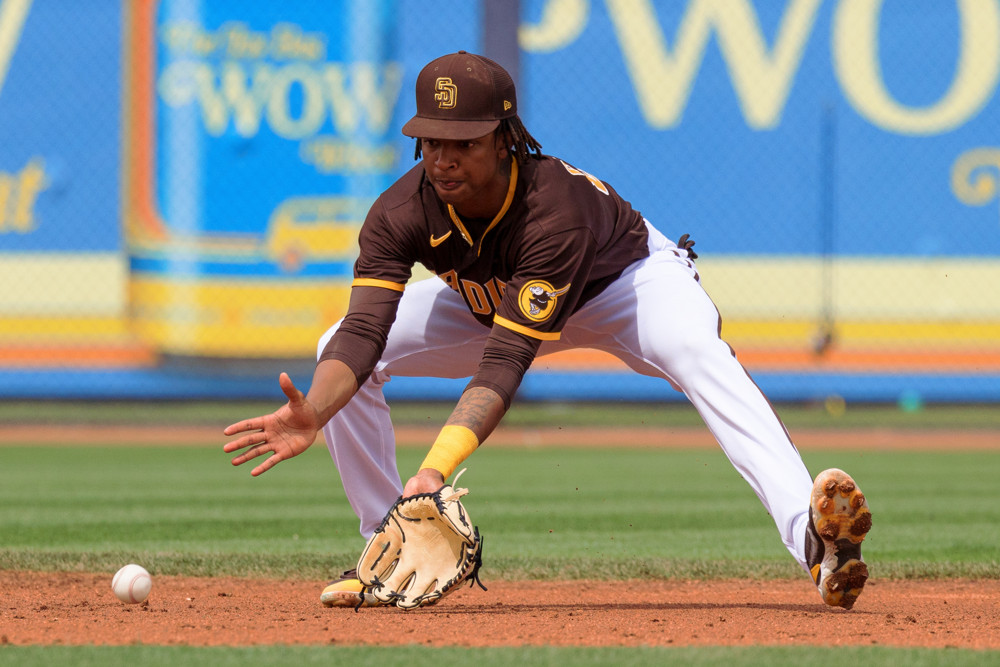
    Story signed a six-year deal with the Red Sox where, at least for 2022, he’ll be their everyday second baseman. Xander Bogaerts will be the Red Sox starting shortstop. Story has never played second base in the major leagues and hasn’t played there at any level since playing 24 games in the minors in 2015.

    There are a couple of things to unpack in Story’s story (couldn’t resist).

    Goodbye Coors, Hello Fenway

    Story is leaving the most hitter-friendly ballpark in baseball in Coors Field. There isn’t a stadium that plays close to as hitter-friendly as Coors does, but Story’s still in a pretty good spot.

    Over the last three seasons, Fenway Park ranks first in the AL in our Ballpark Index rankings in doubles and runs scored, and ranks second in batting average.

    Our Ballpark Index compares stats for a team and its opponent in home games and road games. For example, from 2019 to 2021, the Red Sox and their opponents had 884 doubles in Red Sox home games and 652 doubles in Red Sox road games. There were 36% more doubles in home games, giving Fenway Park a Ballpark Index of 136.

    One thing worth noting: Coors Field had a Ballpark Index of 116 for home runs by right-handed hitters the last three seasons. Fenway Park’s Ballpark Index for home runs by right-handed batters is 95.

    In The Bill James Handbook 2022, our projections for Story were a .280/.353/.545 slashline with 36 home runs.

    Our spring update, with his home ballpark changed to Fenway Park, dropped those numbers to .262/.338/.510 with 33 home runs. The move is projected to cost Story about 50 points in OPS, as he was at .898 in the Handbook and .848 in our update.

    That sort of decline would not be as steep as those experienced by other prominent Rockies, like Troy Tulowitzki and Nolan Arenado, upon leaving Coors Field.

    Fenway Park vs Coors Field – Ballpark Factors – Last 3 Seasons


      Fenway Park Coors Field
    AVG (RHB) 106 122
    Runs 112 134
    Doubles 136 120
    Home Runs (RHB) 95 113

    The move to second base

    Red Sox manager Alex Cora said that Bogaerts, a potential free agent after this season will remain at shortstop, even though Story’s numbers at the position are far better. In fairness, there are concerns regarding Story’s arm, as an elbow injury significantly impacted his throwing last season.

    Story could move back to shortstop in the future, but for now, let’s consider him as a second baseman, and he should be a pretty good one.

    Even with the elbow issue, Story’s 9 Runs Saved were the most by an NL shortstop last season. His 36 Runs Saved as a shortstop since 2019 trail only Javier Baez’s 40 in that span.

    Story is a good athlete and a smart defender. His 78 Good Fielding Plays over the last three seasons are easily the most among shortstops.

    The shortstop-to-second base switch is one that a fair number of players have handled without issue. Marcus Semien, who had saved 11 runs at shortstop in 2018 but then cost the team 6 in 2020, made the switch for the Blue Jays and finished second among second basemen with 11 Runs Saved in 2021. Jorge Polanco cost the Twins 39 runs at shortstop from 2016 to 2020, but saved 3 at second base in 2021. Jean Segura is another current example of a player who made the switch.

    It’s tough to put a number on Story’s projected defense but given all that we know, it wouldn’t be surprising if he was one of the better defensive second basemen in the game – which even with the drop-off in offense would still make him a highly-valuable player.


  • Sports Info Solutions Announces Partnership With Northwoods League

    Sports Info Solutions Announces Partnership With Northwoods League

    COPLAY, PA  – March 22, 2022 – The Northwoods League, a leader in the development of elite college baseball players and SIS, a leading sports data and analytics provider, today announced a partnership naming SIS as the exclusive Official Data Provider of the league.

    As part of the partnership, SIS will collect, analyze and distribute historical and live real-time Northwoods League Sports and Betting Data. SIS will be granted the exclusive right to license and distribute the relevant data to sports betting operators and media. The deal also awards SIS limited rights to distribute video highlights via SIS platforms and through licensed sports betting operator platforms. 

    Dan Hannigan-Daley, CEO of Sports Info Solutions, said, “Baseball is in our blood at SIS and to be able to support the Northwoods League with data and betting products as the US sports betting market grows is something we’re exceptionally excited about, for all parties – the Northwoods League and its teams, SIS, sportsbooks and most of all baseball fans!” 

    “We are extremely excited about this game changing partnership with SIS. I’m particularly pleased that SIS is so invested in the game of baseball and look forward to them helping to bring a whole new level of exposure to the Northwoods League.”, said Northwoods League Chairman, Dick Radatz, Jr.

    SIS will support Northwoods’ integrity and social responsibility efforts, including efforts regarding bet types, anti-piracy, and problem gambling, alongside partner operators and those offering wagering on the Northwoods League.

    ###

    About SIS

    Pioneers in the sports data space since 2002, their mission is to enrich and optimize the decision-making process for sports teams, sportsbooks, and sports fans. Learn more at www.sportsinfosolutions.com.

    About Northwoods League

    The Northwoods League is the proven leader in the development of elite college baseball players. It is the largest organized baseball league in the world with 22 teams, drawing significantly more fans, in a friendly ballpark experience, than any league of its kind. 

    CONTACTS:

    SIS

    Kelsea Benoit

    kbenoit@ww2.sportsinfosolutions.com

    Northwoods League

    Matt Bomberg

    matt@northwoodsleague.com

  • The Defensive Excellence of Matt Chapman & Matt Olson

    The Defensive Excellence of Matt Chapman & Matt Olson

    With two big trades, the Athletics dismantled one of the great corner infield combinations in recent MLB history.

    The trades of Matt Chapman to the Blue Jays and Matt Olson to the Braves should have prominent effects on their new teams.

    After all, they are getting the standard-setters at their respective positions.

    Chapman’s 78 Runs Saved are the most at third base since his debut season, 2017. He led the position in Runs Saved in 2018 and 2019 and won the Fielding Bible Award for defensive excellence there in both those seasons.

    A hip injury and subsequent surgery slowed Chapman down in the shortened 2020 season, as he finished with 2 Runs Saved. But he rebounded to total 10 in 2021, tied for fourth-most there. Ke’Bryan Hayes led the majors with 16 Runs Saved at third base last season and won the Fielding Bible Award. Chapman finished second in Fielding Bible voting and won the AL Gold Glove.

    “Everybody I’ve talked to says that the first year back off this kind of hip surgery is a bit of a grind, where you’re still trying to learn how to use your body the right way again,” Chapman said last season in an appearance on the Sports Info Solutions Baseball Podcast. “I’ve got a good feeling that after [2021], I’m going to be fresh and ready to go in upcoming years.”

    Chapman should be a considerable upgrade for the Blue Jays, who haven’t finished a season with positive defensive value at third base since the 2016 season. Last season, Toronto played one third baseman with standout defensive numbers, Santiago Espinal (8 Runs Saved in 81 games), but that was offset by the six other players who played the position, who combined to cost the team 8 runs with their defense.

    Most Defensive Runs Saved at 3B – Since 2017

    Player DRS
    Matt Chapman 78
    Nolan Arenado 71
    Manny Machado 28
    Ryan McMahon 23
    Ke’Bryan Hayes 20

    Olson, like Chapman, has the most Defensive Runs Saved at his position since 2017. Olson’s 34 edge out Joey Votto, who has 32.

    Braves fans loved everything about their former first baseman Freddie Freeman, but by Runs Saved, there is no comparison between the old and new first basemen. Olson has Freeman by a 34-11 margin over the last five seasons.

    Olson has won three Fielding Bible Awards. He finished second in the voting in 2021 to Paul Goldschmidt.

    Olson had an odd defensive start to last season. In fact, he and Chapman were both negative (Olson -5, Chapman -2) in Defensive Runs Saved in mid-May. Both looked a lot like their old selves the rest of the way. Olson finished the season with 6 Runs Saved.

    Olson also appeared on our company podcast prior to the 2020 season and talked about the idea of getting on a roll on defense.

    “Being in that zone is much more based off preparation and focus,” Olson said, comparing fielding to hitting. “There’s a lot more factors in being at the plate and getting hot. If you’re prepared for every pitch, paying attention to who’s hitting, who’s pitching, tendencies, you can put yourself in a way-better position to succeed out there. When you’re prepared like that and the ball is hit your way, there’s never any sort of panic. I just react.”

    Most Defensive Runs Saved By 1B – Since 2017

    Player DRS
    Matt Olson 34
    Joey Votto 32
    Paul Goldschmidt 29
    Brandon Belt 23
    Anthony Rizzo 21
  • Nick Martinez makes his way to the Padres

    Nick Martinez makes his way to the Padres

    Just before MLB implemented a freeze on all transactions, news broke that Nick Martinez was on the verge of signing a four-year, $20 million contract with the Padres. Fans may remember Martinez from his days as a back-end starter for the Rangers from 2014-2017. Over those four years, Martinez went 17-30 with a 4.77 ERA and averaged 5.1 K/9 against 3.2 BB/9.

    After spending four years in Japan, what adjustments did Martinez make to earn such a contract? Let’s start by taking a look at his stats from his stint in Japan:

    Season Team Innings W-L ERA WHIP BB/9 K/9
    2018 Nippon-Ham 161 2/3 10-11 3.51 1.29 2.2 5.2
    2020 Nippon-Ham 76 2-7 4.62 1.53 4.7 7.8
    2021 SoftBank 140 2/3 9-4 1.60 1.04 2.4 8.8

    Nick Martinez, an overview:

    Martinez missed roughly a season and a half from 2019 into 2020 after suffering a forearm strain. He also had two Injured List assignments in his brief MLB career, so he has a bit of an injury history to beware of.

    Martinez’s biggest strength as a MLB pitcher was his ability to throw strikes. He kept that up in Japan, with the exception of 2020. While he does throw strikes, Martinez is more of a control pitcher than a command pitcher. He does a good job of leaving pitches out of the middle of the zone, but hitters can expect pitches in or near the zone. Due to this, Martinez is dependent on his defense to help him out on balls in play.

    Martinez also increased his strikeout rate while in Japan. In 2018, his 14% strikeout rate matched his MLB best from 2015 and 2017, but by 2021 he had nearly doubled it to 25%.

    Martinez was never known for working deep into games as a Ranger, but he was a workhorse when on the mound in 2021. He pitched at least 6 innings in 20 of his 21 starts. He could have added more innings to his 2021 total, but was delayed entering the country by Japan’s immigration policies. He didn’t make his season debut until May 1.

    How has he improved?

    There are two factors that have led to Martinez’s improvement, with the first being increased velocity. In 2015 Martinez averaged 90 MPH on his fastball, and increased that to 92 MPH over the next two seasons. While we don’t currently track pitch data from NPB, a look at some footage shows that Martinez was typically sitting around 94 MPH with his fastball in 2021.

    How he has done this is not immediately clear, but it could be related to his injury rehab. Since Martinez missed a full season with a forearm injury, the rehab process likely involved a focus on strengthening different muscle groups in his body. This buildup of muscle strength (and possibly also an alteration in mechanics to use his whole body in his delivery) would lead to increased velocity. (Shoutout to my wife, Autumn, who was able to go into much more detail than I could comprehend on the subject).

    The added velocity may also have given him the confidence to throw the pitch up in the zone with more regularity. As recently as 2016, Martinez was a contact pitcher who threw more two-seam fastballs than four-seams. With the added velocity, he throws more four-seam fastballs, with many at the top of the zone (and above).

    The second factor that has led to Martinez’s resurgence is his improved changeup. In his last MLB season the changeup was the least-used pitch in his repertoire (12% usage), and it averaged 86 MPH. Martinez’s changeup was not impressive when he pitched in Texas, but he appears to have changed his grip since he was last in the Majors. He now throws the pitch with a vulcan grip, with the ball between his middle and ring fingers and with those fingers spread farther apart.

    This change gives his changeup an average velocity of 81 or 82 MPH. Combined with his improved fastball velocity, Martinez now has double the speed differential between his fastball and changeup from when he was last in MLB, and that combination was much more effective in NPB.

    Since Martinez has improved his changeup, he has also increased his usage of it. He throws it as his main secondary pitch to both left handed and right handed hitters, and gets many early, ugly swings on hitters expecting fastballs.

    What to expect:

    Since Nick Martinez last pitched in MLB, he has added velocity to his fastball and improved his changeup. Combined with his cutter and curveball, he has something that resembles a traditional starter’s repertoire.

    One comparable pitcher could be Chris Flexen, who jumped from the KBO to Seattle last year, posting a 3.61 ERA (4.30 FIP) in 179 ⅔  innings in 2021. Like Martinez, Flexen limits walks and does not post gaudy strikeout totals.

    A change in home park might help Martinez too, as the Ballpark in Arlington was a hitter’s paradise, while Petco Park is more pitcher friendly. Martinez has allowed 1.5 HR/9 in his MLB career, though that number was over 2.0 if you just look at 2016 and 2017. 

    By our assessment, with improved pitches and a more-friendly home field to pitch in, Martinez could settle in as a reliable back-end starter for the Padres in 2022.