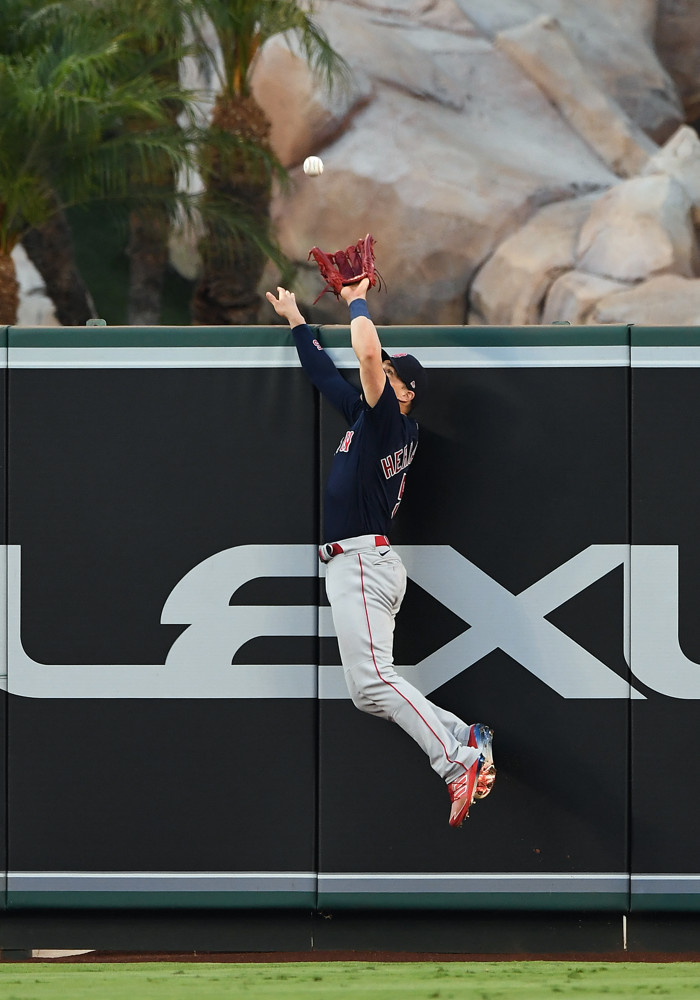
Category: Baseball

  • Going Deeper: How Brandon Crawford won a Gold Glove in 2021

    Going Deeper: How Brandon Crawford won a Gold Glove in 2021

    By MARK SIMON

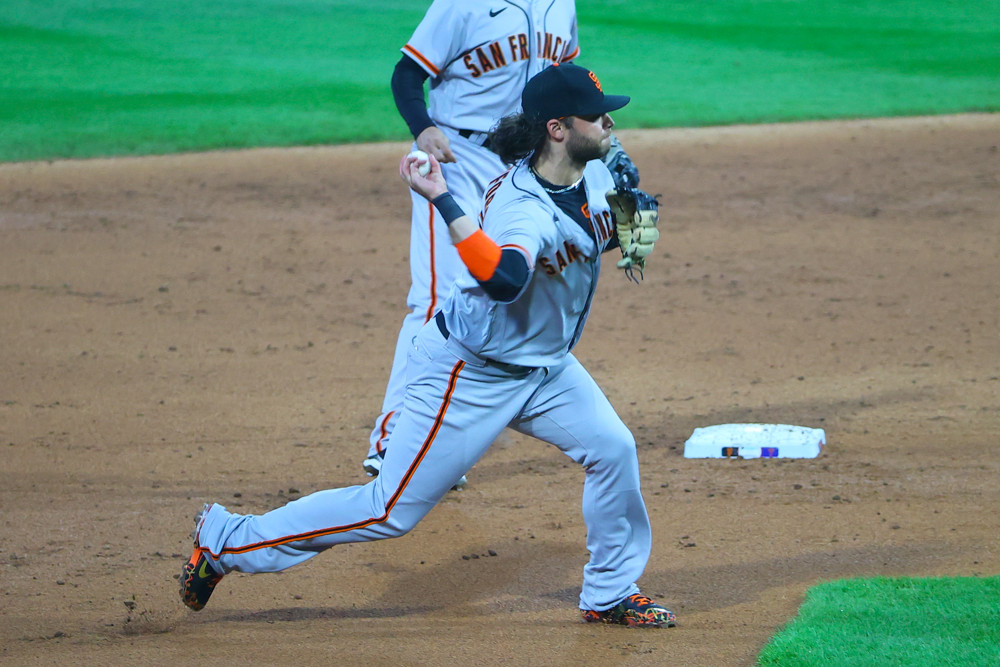
    Giants shortstop Brandon Crawford won his fourth career Gold Glove Award last week and while he might not have had the best defensive statline among the NL finalists, we’ll say that it was a deserved honor.

    Crawford had a great season at the plate and a very good one in the field for a division-winning team. He’s going to finish strongly in the MVP voting on Thursday.

    I was on the conference call that Crawford did with the media the night he won and I was amused because there was a Michael Jordan touch of “And I took that personally” to some of his comments.

    Crawford first said that winning this Gold Glove felt better than his previous three, saying that he was “kind of being told by everyone basically that my defense is falling off, that I’m not the same guy anymore, that I’m getting old, that kind of stuff.”

    He then later added “I don’t think in 2019 that I became some kind of terrible defender, even though the analytics didn’t like me.”

    Reading between the lines here, it sounds like Crawford’s awareness of stats like his -10 Defensive Runs Saved from 2019 (only one shortstop rated worse) or similar numbers from other sources were at least a little bit of a motivating force for him these last two seasons.

    I think that’s pretty cool.

    I’m sure plenty of hitters are motivated by numbers in their batting statline. I think it’s good to see them motivated by their fielding numbers too.

    Feeling Fitter

    In acknowledging what made him a better defender in 2021 than past years, Crawford pointed out that he put less wear-and-tear on his body.

    The numbers bear that out.

    Our Video Scouts track how often a player slides, dives, and jumps. This data actually gets factored into our proprietary injury prediction model. We’ve determined that players who slide, dive, and jump more often have a higher risk of getting injured.

    Makes sense, right?

    Crawford did go all out for plays less often than he did two seasons ago in a similar number of innings.

    Crawford’s slides, dives, jumps
    2019 63 instances
    2021 45 instances

    So having a little bit of a healthier body could have played some part in the improvement.

    But I wanted to see what was tangibly better about Crawford in 2021, particularly as it applied to his range and throwing. He went from -8 Runs Saved in those areas in 2019 to +7 Runs Saved in 2021.

    One thing that Crawford referenced was that he took fewer risks on throws. I couldn’t find anything to bear this out within the throwing component of his Runs Saved total, though he did have six throwing Defensive Misplays or Errors in 2019 compared to just two in 2021, so there appears to be some truth to that.

    But by our measures, 2021 was all about Crawford’s range being considerably better than 2019 and something more resembling his prime years.

    Range Review

    One thing SIS can do is tally out conversion rates for players based on where batted balls are hit.

    Here are Crawford’s from 2019 and 2021:

    How Often Did Brandon Crawford Convert An Out On Balls Hit …

    Season To His Left Straight-On To His Right
    2019 57% 90% 55%
    2021 61% 92% 54%

    The improvements are as high as 4% on balls hit to his left, with a 1% drop on balls hit to his right.

    Those numbers sound small, so let’s give a little context around them.

    In terms of actual plays made, the difference between 2019 and 2021 on balls hit to his left is notable because shortstops make plays on balls hit to their left most often.

    Had Crawford fielded the 251 balls hit to his left with the same out rate as he had in 2019, he would have turned 10 fewer batted balls into outs.

    That’s a considerable number, especially when you think of it like you’d think of a hitter.

    Imagine being a hitter who went 80-for-250. That’s a .320 batting average.

    Now imagine that hitter going 70-for-250. That’s a .280 batting average.

    The differences on straight-on balls and balls hit to his right are less stark. The +2% and -1% gaps don’t have the same impact, both because they’re smaller percentages and because there are fewer opportunities on those balls.

    So we’ve ascertained that Crawford being better to his left was key to his Runs Saved improvement.

    We should note that he improved to a similar out rate on balls to his left in the smaller sample of the 2020 season…so this was about making an improvement and maintaining it for a 162-game season.

    But why would he be better to his left?

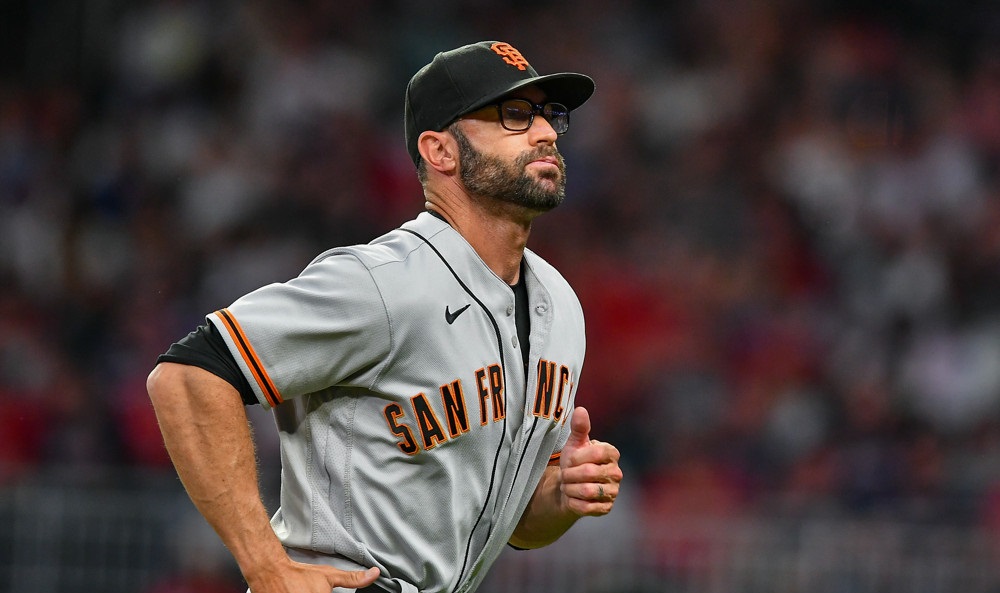
    In 2020 the Giants brought in a largely new coaching staff, with Gabe Kapler replacing Bruce Bochy as manager. And we talked with bench coach Kai Correa, who works with infielders, on The SIS Baseball Podcast in April.

    Citing Evan Longoria as an example, Correa said that as infielders aged, it was up to coaches to provide ways to adapt to their lessened foot speed and arm strength. Options to do so are presented to the player like a menu of suggestions to give the player ownership in the process.

    In Crawford’s case, we’re guessing the option he chose involved something that moved him back a step or two, to give him more time to react to a hard-hit ground ball.

    We say that because these are the average Statcast fielder depths for Crawford.

      From Home Plate
    2019 147 Feet
    2021 149 Feet

    The couple-feet differential in average depth was consistent whether the Giants were shifting or not.

    Also, when Kapler was hired as Giants manager, one of the points he made to Andrew Baggarly of The Athletic about Crawford was that he needed to be “more consistent in his pre-pitch routine.”

    That took a little more digging and some hunting through camera angles that showed those moments. It’s video we can’t share here, though I’ll try to describe it. The contrast between 2019 and 2021 was in Crawford’s movement as the pitcher was about to make his pitch.

    It wasn’t as dramatic as the crow hop that Kevin Newman of the Pirates used but more of what was described in Baggarly’s article–a slight adjustment in positioning followed by his coming set in a centered position.

    He also moved slightly in one direction, which allowed him to move more quickly in the opposite direction (I highly recommend the article linked two paragraphs up to learn more about this). As a result, Crawford was less likely to be caught flat-footed, as he sometimes was in 2019.

    The last aspect of this was that the Giants defensive positioning was on-point in 2021, particularly in defensive shifts. They led the majors in our Shift Positioning Runs Saved stat. The good positioning likely made for easier balls to handle AND less need to slide, dive, and jump.

    Film Review

    So what does the difference in Crawford 2019 and Crawford 2021 look like on film?

    Let’s see if we can sum it up in two sets of plays.

    Here’s one from 2021 that he made:

    It best shows the benefit of playing a little deeper, as Crawford was at 152 feet, three feet deeper than average, with Anthony Rizzo at-bat.

    This is a play worth about 0.6 runs because our out probability for it is only 20%.

    It’s very difficult to find plays that are identical, but let’s contrast that with this one:

    This play had an out probability over 90%–and we’re making an educated guess that a lot of those outs came on plays where the fielder was positioned a little deeper (our positioning model accounts for lateral position, not depth). On this play, Crawford was positioned a full ten feet shallower than his average in 2021.

    And then let’s look at two balls with a lot of zip on them to illustrate the difference in how he reacted to balls.

    Here’s one he made in 2021, again worth 0.6 runs.

    And here’s one he missed from 2019, for which he was dinged the same 0.6 runs.

    And here’s a chart to go with it — showing how much better Crawford was in 2021 on hard-hit balls. It’s not close.

    Brandon Crawford On Hard-Hit Balls

    (In All Directions)


    Plays Made – Opportunities Out Conversion Rate +/- vs Expected Plays Made
    2019 63-134 47% 11 plays below expected
    2021 67-125 54% 6 plays above expected

    In summary:

    Crawford and the Giants did a good job in working together to address the issues that came up as Crawford aged. They identified a weakness and turned into something closer to a strength. And data appears to have played a role in helping out.

    Though Crawford has been quoted as saying that he’s not out to improve his defensive metrics, he just concerns himself with winning games, given the Giants’ success, it’s fair to say that the two go hand-in-hand here, no?


  • Sports Info Solutions Announces Website Launch and Rebrand

    Sports Info Solutions Announces Website Launch and Rebrand

    SIS, a leading sports data and analytics provider, has completed an extensive rebranding effort in response to continued growth and expansion into new data markets. The rebrand includes a new website, company logo, color palette, refreshed positioning, more informative product descriptions, and an exciting company video, which can be viewed on the SIS website homepage: www.sportsinfosolutions.com.

    For the last 20 years, SIS has been a trusted provider of in-depth, rich sports data to major league teams, sports media, and fans. Powered by proprietary software and a team of analysts combing through game footage for the smallest details, SIS gives teams, sportsbooks, bettors, and fantasy players the edge they need.

    Energized by the proliferation of sports data and analytics across pro sports and by continued expansion of sports betting through legislation and regulation in the U.S., SIS will take advantage of the tremendous market opportunity. Its reputation for fast, extremely reliable data is proven with its impressive and loyal customer base.

    “This rebrand has been a long time in the making, and we’re thrilled to introduce our new look to our clients and customers,” said CEO Dan Hannigan-Daley. “SIS’ updated logo and narrative better represents the quality of data, our people and our products. We’re expanding into new markets with our deep data sets, including sports betting, and this rebrand positions us as reliable, innovative leaders in the industry.”

    SIS’ updated look and use of unique, dynamic sports imagery is sure to provide an engaging experience for partners and sports fans alike. SIS partnered with Team, a Brooklyn-based strategic design studio, to creatively execute the update.

    About SIS:

    Our mission is to enrich and optimize the decision-making process for sports teams, sportsbooks, and sports fans. Learn more at www.sportsinfosolutions.com.

  • Bill James Handbook Excerpt: The Manager and the Jeopardy Champ

    Bill James Handbook Excerpt: The Manager and the Jeopardy Champ

    By MARK SIMON

    This essay is featured in The Bill James Handbook 2022, which is available now from ACTASports.com. The Handbook features 640 pages of essays, stats, leaderboards, and much more. Buy it today!

    As a fan of the TV show Jeopardy, I’ve greatly enjoyed the recent run of dominance by one of the game’s all-time best players, Matt Amodio (whose hobby happens to be studying baseball stats).

    What made Amodio so impressive was not just his knowledge base, but in how he managed a game. He played aggressively, picked the bottom clues first,  hunted down Daily Doubles, and then made big wagers on them. He bet on himself and his team (his brain cells) to come through as needed.

    In the 2021 baseball season, the game manager most similar to Amodio was Gabe Kapler of the Giants.

    Kapler has come a long way from his two rough seasons with the Phillies. In two seasons with the Giants he’s changed things up a little bit and maxed out on what he’s gotten from his team.

    The Giants have led the majors in pinch-hitter usage in each of the last two seasons by a considerable margin and in 2021, they finished with 68 more than the next-closest team.

    And Kapler made big bets on his entire bench this year. Seven different players had at least 20 pinch-hit at-bats. The Giants also led the NL in defensive substitutions with 48.

    But Kapler took it a step further. He and his coaching staff established in-game platoons that were meant to go beyond one moment in a game. The Giants had 116 substitutes (including relievers) enter a game this season and record at least two plate appearances. No other team had more than 90.

    Kapler’s other version of managing aggressively was in the composition and use of his bullpen, a mix of lefties, righties, and unusual arm angles (Tyler Rogers). The Giants used relievers on consecutive days 146 times, more than any other team. And those pitchers were great! They had an MLB-low 1.48 ERA in those situations.

    Amodio’s strategy was a winning one and had considerable staying power. Kapler’s had enough staying power to get through 2021 with 107 wins for the Giants. Whether it will work for the long term will be a greater challenge.

  • New baseball podcast episode: Writer extraordinaire Joe Sheehan

    New baseball podcast episode: Writer extraordinaire Joe Sheehan

    On this episode, baseball writer Joe Sheehan joins Mark Simon to recap the 2021 MLB season and look ahead to 2022.

    After announcing the 2021 Fielding Bible Award winners (), Mark and Joe talk about:

    • The most impressive thing about defense in MLB ()
    • -Byron Buxton’s future ()
    • – 2021 MLB Awards ()
    • – Reward Robbie Ray? ()
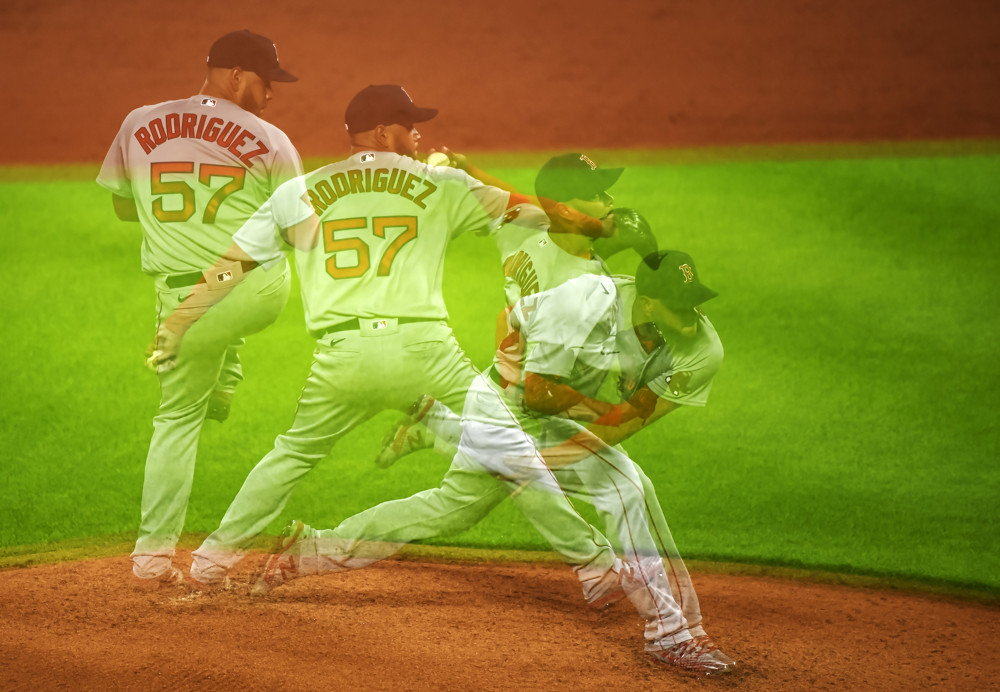
    • – The promise of Eduardo Rodriguez ()
    • – Teams to watch this offseason (Giants, Tigers & more) ()
    • – Buster Posey/Paul Goldschmidt and the Hall of Fame ()
    • – Veterans Committee candidates ()
    • – Bring on the pitch clock! ()
    • – The Baseball Revolution (

    Thank you as always for listening. Stay safe and stay well.

  • Bill James Handbook Excerpt: The Favorite Toy

    Bill James Handbook Excerpt: The Favorite Toy

    By SARAH THOMPSON

    The following essay is an excerpt from The Bill James Handbook 2022, available now from ACTA Sports.

    Bill James devised a system, dubbed “The Favorite Toy,” that determines the likelihood of a player achieving a certain milestone.

    Since most of these milestones are counting stats, the shortened 2020 season did a number on most people’s chances of hitting milestones already difficult to reach. But not all.

    Our most likely milestone to be achieved is 3,000 hits by Miguel Cabrera, clocking in at 98%. This number makes sense—he only needs 13. He began the 2021 season 134 hits short of the mark and did a good job to cover some ground. He has a non-trivial chance (28%) at reaching 2,000 RBI, though with 1,804 to the day, that’s much less guaranteed.

    What’s interesting is that in 2021, he had his most RBI collected (75) since 2016 (108), a year in which he slashed .316/.393/.563.

    Best chance of reaching 3,000 hits:
    Miguel Cabrera (98%), Freddie Freeman (28%), Manny Machado (20%)

    Best chance of reaching 2,000 RBI:
    Miguel Cabrera (28%), Rafael Devers (10%), Manny Machado (10%)

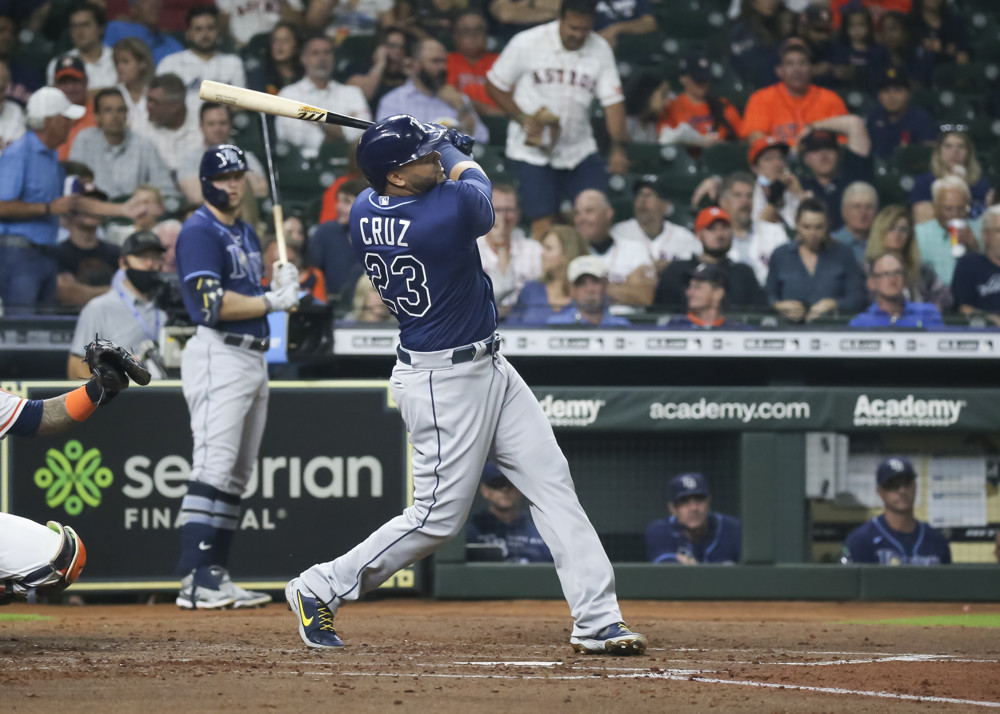
    The next-most-likely milestone is Nelson Cruz’s chance to hit 500 home runs. Having hit 32 homers in his age-40 season, it’s certainly not out of the question that he collects 51 more before he hangs up the cleats.

    Best chance of hitting 500 HR:
    Nelson Cruz (56%), Giancarlo Stanton (36%), Bryce Harper (34%)

    A name you’ll see around a lot is Fernando Tatis Jr. The combination of his youth and demonstrated power gives him non-trivial odds to hit a lot of these milestones. They’re long shots—I don’t know if we’ll ever see 762 home runs surpassed—but it’s still exciting to have these possibilities in the back of your head every time you see Tatis hit one out of the park.

    Fernando Tatis Jr. Potential Milestones

    600 HR: 11%
    700 HR: 8%
    762 HR: 4%

    We also calculate likelihoods of a pitcher throwing a no-hitter. It’s not a hard sell to present Jacob deGrom as the most likely guy to throw a no-no with a 44% chance.

    You might be surprised to see Dylan Cease not too far behind him at 37%, though. He had two one-hitters this year, but both were through 6 innings and with pitch counts of 103 and 98. While he can keep the hits down, whether or not he can be efficient enough to finish a no-hitter remains to be seen.

    Best chance of pitching a no-hitter:
    Jacob deGrom (44%), Corbin Burnes (40%), Freddy Peralta (39%)

  • Stat of the Week: The Braves Won The Marathon

    Stat of the Week: The Braves Won The Marathon

    By MARK SIMON

    On April 6, the Braves fell to 0-4 after a walk-off loss against the Washington Nationals.

    “I don’t think anybody is too worried,” said pitcher Drew Smyly.

    On July 5, Max Fried allowed six runs in an 11-1 loss to the Pirates.

    “Coming out of my hand, it didn’t feel like I was throwing pitches that were really sharp…” Fried told reporters after the game.

    After one more start on July 10, in which he allowed three runs in five innings against the Marlins, Fried’s ERA was 4.71. That same day, Ronald Acuña Jr. suffered a season-ending torn ACL. The Braves lost the following day to go into the All-Star Break 44-45.

    “It’s just another punch in the gut that we’ve got to endure,” said Braves manager Brian Snitker of Acuña’s injury.

    Despite all the struggles, Braves GM Alex Anthopolous was highly active at the trade deadline because no team had pulled away in the NL East. He remade his outfield by adding Adam Duvall, Eddie Rosario, and Jorge Soler after trading for Joc Pederson a couple of weeks prior.

    Soler was the last of the acquisitions, a player who led the AL in home runs in 2019 but had a 2021 OPS below .600 as late as July 18.

    “The power is real…” Anthopolous said of Soler.

    On July 30, the day of the trade deadline, the Braves lost to the Brewers, 9-5, to fall to 51-54. They were five games out of first place.

    Today, the Braves are World Series champions. It’s a cliché that the season is a marathon and not a sprint (or even a middle-distance race). But it’s an appropriate one because their season was about getting better over time.

    Case in point:

    Improved infield defense

    Through the end of May, the Braves ranked 15th in how often they turned groundballs and bunts into outs (74.7%). Around that time, they changed their defensive approach to utilize defensive shifts more often.

    They converted 76.8% of groundballs and bunts into outs the rest of the season, the second-highest rate in MLB. Their postseason rate was a nearly identical 76.6%.

    Max Fried got his sharpness back

    Fried rediscovered the pitches that netted him a 2.25 ERA in 2020. He pitched to a 1.74 ERA in 14 starts after the All-Star Break. Opponents hit .354 against Fried’s four-seam fastball prior to the All-Star Break. They hit .187 against it afterwards.

    Fried had much more success pitching at the top of the strike zone after the All-Star Break. Opponents hit .141 against high pitches (those in the upper-third of the zone or above) in those last 14 starts. They hit .239 in his first 14 starts.

    Outfield acquisitions pay off

    The new outfield clicked and teamed with Freddie Freeman to make the lineup much more potent. Duvall drove in 45 runs in 55 regular-season games to finish with an NL-best 113. Rosario had 14 hits and hit .560 in the six-game NLCS to win MVP honors.

    Soler rediscovered his hitting ability. His contact rate jumped from 70% with the Royals prior to the trade to nearly 77% with the Braves after it. He hit .300 with three home runs in the World Series, including a three-run shot in the clinching Game 6.

    Matzek’s long road back

    And we’d be remiss if we didn’t mention the great work of the Braves bullpen, though for one member the marathon was much longer than just this one season.

    Tyler Matzek didn’t pitch in the majors from 2016 to 2019 while dealing with “the yips”–a struggle that left him unable to throw strikes consistently.

    In 2021, his second season with the Braves, Matzek had 24 holds and no blown saves. He had five more holds (and three wins) in the postseason. In his last seven postseason appearances, he had 14 strikeouts and no walks.

    Matzek’s slider was devastating. Opposing hitters were 4-for-49 in at-bats ending with his slider in the regular season, 1-for-19 in the postseason. He threw 5-of-6 for strikes in Game 6 of the World Series, netting three outs with it.

    Matzek’s success was emblematic of the Braves in 2021. Keep playing and the good stuff will eventually come. It did–and today the Braves can call themselves baseball’s 2021 champions.

  • Bill James Handbook Excerpt: 2021’s Most Efficient Team

    Bill James Handbook Excerpt: 2021’s Most Efficient Team

    This essay is reprinted from The Bill James Handbook – 2022, which is available now from ACTASports.com. The book features dozens of essays and analysis pieces on your favorite teams and players, with articles by Bill James and the SIS Research & Development team.

    By SARAH THOMPSON

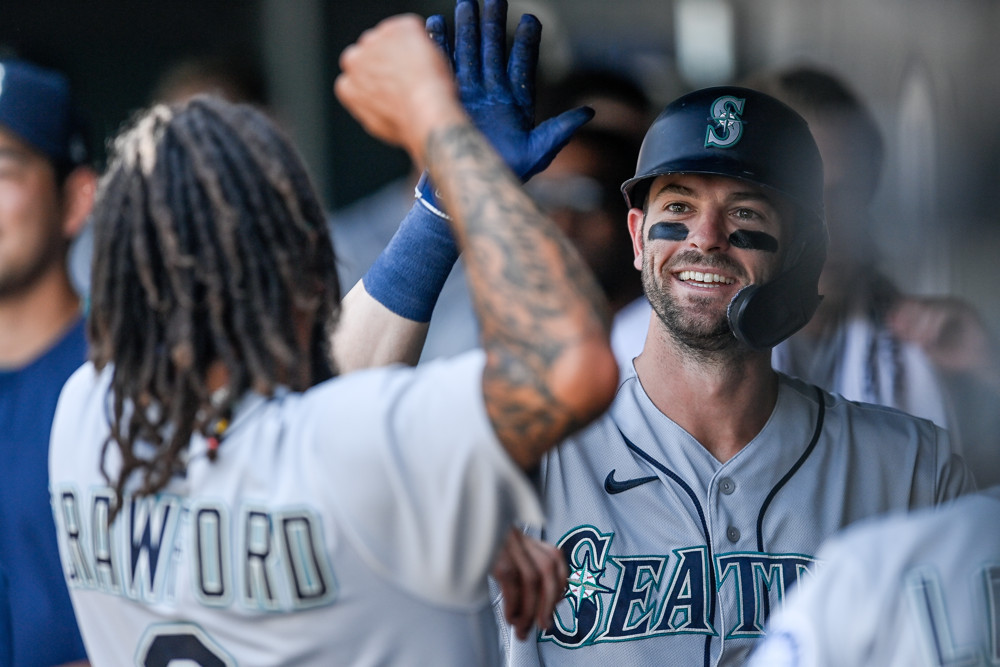
    Following a late-summer road trip in which the Mariners went 6-2, manager Scott Servais quipped during a press conference, “Someone told me our run differential was -9 on this trip. But our fun differential was +90, so we are going with that.”

    Servais may have been onto something. I don’t know how strongly correlated fun differential is with team efficiency—fun differential is what we’d call a black box—but the Mariners excelled in both.

    Their Overall Efficiency of 130 was the highest in baseball. You kind of have to be efficient to win 90 games with a -51 run differential.

    So, where’d that 130 number come from? Servais’ reported Fun Differential (90) + Number of Wins in 1-Run Games (33) + Longest Win Streak (6) + Wins in October (1) adds up to 130….

    But I’ll explain how we actually get there.

    As we can see in the following tables, the Mariners scored 697 runs. However, based on their components of offensive production, we’d expect them to have scored only 639. That’s an Offensive Efficiency figure of 109, most in MLB.

    As a reminder, when we say “expect,” we don’t mean in March we thought they’d score 639, but rather, for example, if J.P. Crawford led off the game with a triple, we’d expect that run to score.

    As far as pitching and defense, the Mariners were actually inefficient. Their Expected Runs Allowed, using the components of offensive production of their opponents, was 741, compared to their actual Runs Allowed of 748. That’s the worst Pitching and Defensive Efficiency in MLB this year.

    Based on actual Runs Scored and actual Runs Allowed, the expected win number for the Mariners is 75, and that’s the reason people talk about run differential.

    Based on Runs Created and Expected Runs Allowed, we’d expect 69 wins from the Mariners (“Efficient Wins” in the table). But they actually won 90. So where does 130 come from? Take the ratio of 90 to 69, multiply by 100, and round to get a nice integer.

    There we have it. The Mariners are the most efficient team in baseball this season, as they continue their ride as one of the most enigmatic franchises since their inception in 1977.

    Most Efficient Teams – American League

    Efficient Wins Wins Overall Efficiency
    Mariners 69 90 130
    Tigers 68 77 113
    Red Sox 82 92 112
    Angels 71 77 109
    Yankees 84 92 109


    Most Efficient Teams – National League

      Efficient Wins Wins Overall Efficiency
    Cubs 63 71 112
    Pirates 56 61 109
    Cardinals 84 90 107
    Brewers 89 95 106
    Phillies 78 82 105


  • The 2021 Fielding Bible Award Winners

    The 2021 Fielding Bible Award Winners

    SIS is pleased to announce the winners of the 2021 Fielding Bible Awards. This marks the 16th season that we have honored the best defensive players in MLB. The awards are voted on by a panel of experts who consider statistical analysis, the eye test, and any other factors that they wish to consider.

    This year’s winners are:

    Position Name Team
    1B Paul Goldschmidt Cardinals
    2B Whit Merrifield Royals
    SS Carlos Correa Astros
    3B Ke’Bryan Hayes Pirates
    LF Tyler O’Neill Cardinals
    CF Michael A. Taylor Royals
    RF Aaron Judge Yankees
    C Jacob Stallings Pirates
    P Dallas Keuchel White Sox
    Multi-Position Kiké Hernández Red Sox


    Paul Goldschmidt was the anchor of the infield, as he won his fourth Fielding Bible Award. Only Albert Pujols (5) has more. Goldschmidt finished tied for the MLB lead in Defensive Runs Saved at the position.

    The Cardinals infield led MLB at turning ground balls and bunts into outs, both because Goldschmidt could make plays and because he helped his teammates make plays by catching their throws.

    Whit Merrifield won a close vote, edging out Marcus Semien of the Blue Jays to win his first Fielding Bible Award. He ended a three-year run at second base by Kolten Wong. After playing a considerable amount of center field in 2019 and 2020, Merrifield was basically the Royals’ everyday second baseman in 2021 (save for a few cameos in the outfield).

    Everyday is the optimal word for Merrifield, who has played in every game the Royals have played the last three seasons. Merrifield’s MLB-leading 14 Runs Saved were 11 more than his previous high at second base. He led all second basemen in Good Fielding Plays and in double plays turned.

    Carlos Correa won his first Fielding Bible Award, with a breakthrough season in which his 20 Defensive Runs Saved at shortstop were five more than the next-closest player. Correa ranked third in Good Fielding Plays per 1,000 innings and had the fourth-fewest Defensive Misplays & Errors per 1,000 innings.

    Over the last three seasons, he has the second-highest rate of Good Plays and the second-lowest rate of Misplays & Errors. Correa is the second Astros player to win this award at shortstop, joining Adam Everett, who won in 2006, our first year of voting.

    Ke’Bryan Hayes dethroned Matt Chapman and Nolan Arenado as Fielding Bible Award winners to win for the first time. It was the first not won there by those two other guys since Josh Donaldson won in 2014.

    Hayes ranked first in Defensive Runs Saved at third base while ranking 17th in innings played. He finished with a three-run lead in DRS, which probably would have been more had he not been injured earlier in the season. But when he was on the field, he wowed. And now he’s the new standard setter.

    Tyler O’Neill became the first repeat winner in left field since Starling Marte in 2015 and 2016. O’Neill received the highest vote total of any player, with 14 of a possible 17 first place votes. O’Neill was the only left fielder to reach double figures in Defensive Runs Saved and had the best combination of Range Runs Saved (tied for first) and Outfield Arm Runs Saved (tied for second).

    O’Neill’s arm numbers improved considerably. He had seven assists without the aid of a cutoff man in 2021 (tied with Raimel Tapia for the most at the position) after having none in left field in 2020.

    Michael A. Taylor went 3-for-5 with a home run and two outfield assists in his Royals debut on Opening Day against the Rangers. That game didn’t set a tone for his season as a hitter, but it did set one for his season as a fielder. Taylor led all center fielders with 19 Defensive Runs Saved and he edged out Harrison Bader by one point in the voting to win his first Fielding Bible Award.

    Taylor was rewarded for having the second-best Range Runs Saved as a center fielder and the second-best Outfield Arm Runs Saved. His eight assists without the help of a cutoff man were the most at the position.

    Aaron Judge is best known for his bat, but he’s an excellent defender too. He won his first Fielding Bible Award in an interesting way, as he edged out his teammate, Joey Gallo, in a tight vote (Gallo did his work in right field for the Rangers). Judge’s defensive strength in 2021 was the deterrent value of his arm. His 5 Outfield Arm Runs Saved tied for second most by a right fielder.

    Judge also tied for the MLB lead with two home run–robbing catches and had a third robbery where he didn’t catch the ball but got his glove on it to turn a would-be home run into a triple. Our record-keeping is sophisticated enough to reward Judge for that play. Little things like that helped him win the award.

    Jacob Stallings ended the two-year run of Roberto Pérez of the Indians with a dominant defensive season and his first Fielding Bible Award. Stallings’ 21 Defensive Runs Saved were nine better than second place Austin Hedges. Stallings’ nine-run margin was the biggest for any positional winner.

    Stallings’ strengths in pitch blocking AND pitch framing were what carried him to that advantage. He led all regular catchers with a 95.5% block rate and ranked second in pitch blocks overall. He also ranked tied for fourth in our pitch-framing metric, Strike Zone Runs Saved.

    Dallas Keuchel won his fifth Fielding Bible Award and passed Mark Buehrle for the most won by a pitcher since SIS first gave out the award in 2006. Keuchel did this with a career-high 12 Defensive Runs Saved, the most by a pitcher since Buehrle had 12 in 2012, and three shy of Kenny Rogers’ record 15 in 2008.

    Keuchel’s 41 assists were the most by a pitcher in 2021. He also led MLB in Range Factor per 9 Innings. And as has been standard for him, he limited the running game, allowing only two stolen bases in six attempts.

    Kiké Hernández won the multi-position award for the second straight year. What’s impressive is that in 2020, Hernández was a second baseman who sometimes played the outfield or other spots. In 2021, he was a center fielder who sometimes played second base.

    Hernández has shown that he can handle either of those two primary spots very well. In 2020 he tied for the MLB lead in Runs Saved at second base. In 2021, he finished third in that stat among center fielders, no easy feat given the complexities of playing the outfield at Fenway Park.

    The awards are determined by a panel of 17 baseball experts, who ranked the top 10 players at each defensive position (including the multi-position players left out of Gold Glove voting) on a scale from one to 10. A first-place vote gets 10 points, second place gets nine points, third place gets eight points, etc. Total up the points for each player, and the player with the most points wins the award. A perfect score is 170 points.

    Our voting panel consisted of SIS chairman John Dewan and baseball stat pioneer Bill James, along with Emma Baccellieri (Sports Illustrated), Dan Casey (SIS), Chris Dial (sabermetrician), Peter Gammons (MLB Network/The Athletic), Christina Kahrl (San Francisco Chronicle), Zach Kram (The Ringer), Moses Massena (MLB Network), Eduardo Perez (ESPN), Hal Richman (Strat-O-Matic), Meg Rowley (FanGraphs), Travis Sawchik (The Score), Joe Sheehan (longtime writer), Mark Simon (SIS), Chris Singleton (ESPN), and the SIS Video Scout staff.

    “This year’s Fielding Bible Award winners are an impressive and well-deserving group,” said SIS chairman, John Dewan. “We expanded our voting panel to include a broader cross-section of people covering baseball and I’m confident that their vote has produced a standout collection of honorees.”

    A complete list of ballots and the history of the Fielding Bible Awards (which began in 2006) can be found online at FieldingBible.com and in The 2022 Bill James Handbook, which is available at ACTASports.com.

  • Which players will make the biggest defensive impact in the World Series?

    Which players will make the biggest defensive impact in the World Series?

    By MARK SIMON

    The Astros finished third in the majors in Defensive Runs Saved in 2021. The Braves finished eighth.

    So you can expect to see the two defenses be impactful in a positive manner, perhaps highly so, in the World Series.

    Who are the people you should be watching for and what are their best skills?

    Here’s a handy guide:

    The Braves Infield Coaching Staff/Analytics Team (32 Positioning Runs Saved)

    Two weeks ago, Mike Petriello did a comprehensive breakdown for MLB.com, noting how the the Braves went from a team that for years rarely shifted, to one that shifts among the most often in the sport … and does it well.

    The Braves ranked fourth in the majors in how often a ball in play came against one of their defensive shifts (71% of the time). The MLB average rate is about 55%.

    Their infield ranked second in how often ground balls and bunts were turned into outs (76% of the time), including first when using what we call a partial shift – two fielders deviating from their normal position- (79%).

    This postseason, they’ve turned 80% of grounders and bunts into outs, the highest rate among the eight teams that were in the LDS.

    When shifted, the Braves have turned 81% of ground balls and bunts into outs this postseason (47 of 58). By comparison, the Astros are at 70%.

    Certainly, plenty of credit goes to the players, but give the coaches their props too. The Braves finished second in MLB in our Shift Positioning Runs Saved stat.

    Carlos Correa (20 Defensive Runs Saved)

    Correa easily led shortstops in Runs Saved during the regular season. Where he excels is in maximizing his skills and minimizing his mistakes (as we wrote here.

    Over the last three seasons, Correa ranks second among shortstops in Good Fielding Plays per 1,000 innings and has the second-lowest rate of Defensive Misplays & Errors per 1,000.

    For those unfamiliar with Good Fielding Plays, imagine a tally of Web Gems and other plays that earned compliments from a broadcast crew. And think of Defensive Misplays as plays that weren’t officially scored errors, but could have been (like slipping and falling or hesitating on a DP turn).


    Adam Duvall (19 Defensive Runs Saved)

    Duvall tied Michael Taylor for the MLB lead in Defensive Runs Saved among outfielders, the primary reason being that he ranked second among outfielders in the Outfield Arm component of that stat.

    But we should also note that Duvall’s not a one-trick pony. He’s recorded at least 4 Runs Saved at each of the three outfield positions and has positive range value at each of those spots.

    For more, check out our interview with Duvall last month.

    Chas McCormick (14 Defensive Runs Saved)

    McCormick doesn’t have Duvall’s arm, but he has better value from his range and the same versatility component to his game.

    McCormick has 7 Runs Saved in right field, 5 in left field, and 2 in cente field, though he hasn’t even played 300 innings at any of those positions.

    The key is that he gets to balls. He’s fared best on those hit to shallow and medium depths. We talked to him about his defensive game earlier this season.

    Austin Riley (13 Defensive Runs Saved)

    Riley was a completely different defender in 2021 than he was in 2020, when he cost his team 10 at third base. Riley’s 13 Runs Saved this season tied Ryan McMahon for second most, trailing only Ke’Bryan Hayes’ 16.

    Riley led all third basemen with 25 Good Fielding Plays during the regular season, one more than Nolan Arenado. He was significantly better in every aspect – whether it be in shifts or straight-up, to his left or right, or with his arm or his glove.

    Kyle Tucker (11 Defensive Runs Saved)

    Tucker was solid as the Astros everyday right fielder this season. He ranked tied for third in Runs Saved at the position. Tucker’s not particularly fast, nor will he blow you away with his reactions to balls off the bats.

    But the bottom line is that he makes plays, which is the name of the game.

    The rest …

     As Joe Buck and John Smoltz pointed out in Game 6 of the ALCS, there’s a reason that the Astros play Martín Maldonado at catcher ahead of Jason Castro, the reason being Maldonado’s defensive reputation.

    Though Maldonado has a negative Runs Saved total this season (-2), he’s previously had four seasons with at least 10 Runs Saved. And he’s never recorded a negative value with regards to the basestealing component of Runs Saved. You saw him at his best getting a key caught stealing in Game 6.

    Though Travis d’Arnaud does not have a good arm, he can impact a game with both his pitch framing, where he’s almost always rated well and pitch blocking, where he had his most impactful season. He ranked fifth among catchers in percentage of potential wild pitches/based balls blocked (94.4%) (** used qualifier of 50 catchers with the most blocks).

     If you want to watch a clinic in pitcher defense, watch either Max Fried or Zack Greinke. Fried has the most Runs Saved among pitchers the last three seasons and rates best at limiting stolen bases.

    Greinke has the most Runs Saved for a pitcher over the last four seasons. You could make a case that when he’s out there, he’s the most athletic player on the field, next to Correa.

    Freddie Freeman doesn’t usually rate among the range leaders in Runs Saved by a first baseman but if you ask Braves infielders, they’ll credit Freeman for much of their defensive success. In the last three seasons, Freeman has the most Runs Saved from handling difficult throws. He’s corralled 44 in that time while recording only one Misplay & Error on them.

    Yuli Gurriel’s glove should likewise not be ignored. He’s second to Matt Olson in Defensive Runs Saved among first basemen over the last three seasons.

    Alex Bregman has a good reputation at the hot corner, one better than his 2 Runs Saved this season. Bregman didn’t have a good year when it came to making impressive plays in 2020, but in 2021 he bounced back. He had the second-highest rate of Good Fielding Plays per 1,000 innings among third basemen.

    Dansby Swanson’s Runs Saved dropped considerably from past seasons but Swanson may have righted himself in September. His 11 Good Fielding Plays from September 1 were the most of any player at any position. He made a nifty play to end the LCS too (here’s a new angle on it). I could say similar about the drop-off of Ozzie Albies, who is at 0 Runs Saved since 2020 but had 22 Runs Saved in the two seasons prior to that.

    Lastly, Eddie Rosario has had the magic touch since joining the Braves at the trade deadline. So why couldn’t Rosario be high impact in the field too?

    If he does, it will likely be with his arm, given that he typically rates well below average by our range metrics. Since 2015, Rosario is tied with Kevin Kiermaier for the second-most Outfield Arm Runs Saved with 26, two shy of Starling Marte.

    Here’s Rosario’s best throw of 2021 … so far.


  • Stat of the Week: Fielding Bible Awards Preview (Part II)

    Stat of the Week: Fielding Bible Awards Preview (Part II)

    By MARK SIMON

    Last week and this week, we’re running a two-part series on the top
    candidates for The Fielding Bible Awards, which will be announced later this
    month.

    The Fielding Bible Awards are voted on by a panel of experts who can
    vote based on whatever criteria they choose, including observation and
    subjective judgement, as well as statistical analysis. Each position has one
    overall winner, different from the Gold Gloves, which has one in each league.

    This week, Part II of our preview looks at outfielders, pitchers, and our
    multi-position player award. The multi-position award was done differently this
    year. Bill James devised a system to allow voters to consider and reward players who demonstrate a combination of versatility and the ability to play high value positions (details are in The Bill James Handbook 2022).

    (Defensive Runs Saved totals in parentheses for all awards except
    multi-position, which includes rank in Positional Value and Versatility Score)

    Left field

    Fielding Bible Favorite: Tyler O’Neill (11)

    NL Gold Glove Favorite: O’Neill; AL Favorites: Alex Verdugo (7), Randy Arozarena (7), Andrew Benintendi (7)
    Other Top Contenders: (NL) Raimel Tapia (7) (AL) Lourdes Gurriel Jr. (6)

    O’Neill won the award in the shortened 2020 season and then proved his
    legitimacy with a strong 2021. He finished the season as the overall Defensive
    Runs Saved leader in left field, making him the favorite for both a Fielding
    Bible Award and a Gold Glove. Left field has been the place for repeat winners.
    There was Crawford (2008-2009), Gardner (2010-2011), Gordon (2012-2014) and Marte
    (2015-2016) in past seasons. The AL Gold Glove race is a true toss-up with Verdugo,
    Arozarena, and Benintendi as the co-leaders in Runs Saved.

    Center Field

    Fielding Bible Favorite: Michael A. Taylor (19)

    NL Gold Glove Favorite: Harrison Bader (15);
    AL Favorites: Taylor, Kiké Hernández (14), Kevin Kiermaier (13)
    Other Top Contenders: (NL) Jackie Bradley Jr. (9) (AL) Byron Buxton (10)

    Taylor found a new home with the Royals and excelled with
    Kansas City from Day 1. He had finished as high as third in Runs Saved in
    center field with the Nationals in 2018, but led everyone at the position in
    2021. He finished just ahead of Bader, who said before the season that winning
    a Gold Glove Award was a personal goal. Note that we listed Buxton among the
    contenders – he’s not eligible for the Gold Glove because of the award’s
    innings requirement, but he is eligible for a Fielding Bible Award.

    Right Field

    Fielding Bible Favorites: Joey Gallo (12), Kyle Tucker (11), Aaron Judge (11)

    NL Gold Glove Favorite: Adam Duvall (9); AL Favorites: Gallo, Tucker, Judge
    Other Top Contenders (NL): Avisaíl García (8) (AL) Max Kepler (9)

    This is going to be a tight race. Gallo ended up edging
    out one of his new teammates, Aaron Judge, as well as Tucker, for the Runs
    Saved lead among right fielders. Judge has been a top contender in years past
    but has repeatedly run into Mookie Betts and Cody Bellinger. The common thread
    between the two Yankees is a great throwing arm. Each had more Runs Saved from
    their arm than they did from their range. Tucker and Manuel Margot tied for the most
    Range Runs Saved in right field.

    Pitcher

    Fielding Bible Favorite: Dallas Keuchel (12)

    NL Gold Glove Favorite: Zack Wheeler (5) AL Favorite: Keuchel
    Other Top Contenders: (NL) Adam Wainwright (3), Marcus Stroman (1) (AL) José Berríos (5), Zack Greinke (5)

    Keuchel was the runaway leader in Runs Saved by a pitcher and has a strong
    chance to win his fifth Fielding Bible Award, which would be the most at the
    position. Position eligibility requirements for the Gold Gloves require pitchers to average an inning per game for their team’s first 142 games, thus taking a few contenders
    for the NL Award (Taijuan Walker and last year’s winner Max Fried) out of
    consideration. Greinke, who won the award in 2018 and 2019, might be Keuchel’s
    top competition.

    Multi-Position

    Fielding Bible Favorite: Chris Taylor (highest Positional Value and Versatility Score)

    Other Top Contenders: Leury García (second-highest score), Josh Rojas (third-highest), Kris
    Bryant (fourth-highest)

    By Bill James’ scoring system, Taylor emerged as the favorite, even though
    he finished with a negative Runs Saved total. He played a considerable amount
    at important positions – 62 games in center field, 46 games at second base, and
    23 games at shortstop. Garcia’s credentials are also impressive. He played at
    least 10 games at every infield and outfield position except for first base.

    The Fielding Bible Award winners will be announced in the near future.
    Stay tuned!